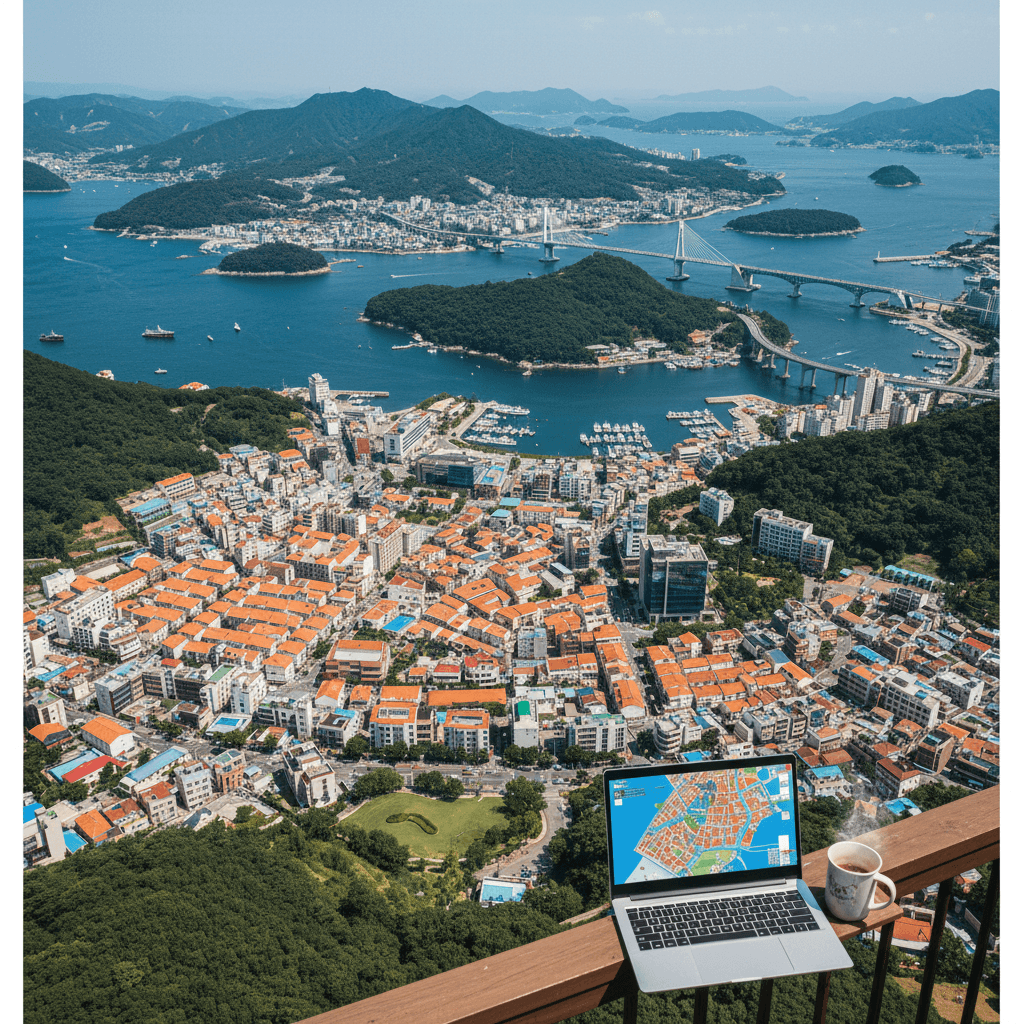
Yeosu
🇰🇷 South Korea
The Coastal Calm of Korea
If Seoul is a high speed chase and Busan is a crowded beach party, Yeosu is the deep breath you take afterward. It is a city defined by the sea, where the light reflects off the water in a way locals describe as romantic and serene. For digital nomads, it serves as a functional sanctuary. You are trading the frantic energy of the capital for a slower, more deliberate pace of life. It is the kind of place where you finish a morning of deep work and immediately find yourself on a ferry to a nearby island or walking along a wharf with the smell of salt in the air.
The vibe here is distinctly maritime. You will notice it in the way the city centers around its harbors and the way the evening revolves around the "Yeosu Night Sea," a local phenomenon celebrated in popular music. It feels less like a polished tourist hub and more like a working coastal town that has opened its doors to the remote work revolution. While it lacks the massive expat communities of larger cities, that is often why people come here. It is an immersion into a quieter, more authentic side of Korean life.
A Budget Friendly Retreat
Living in Yeosu is significantly easier on the wallet than staying in the northern hubs. You can live comfortably here for about $2,500 a month, though budget conscious travelers can make it work for closer to $1,500 if they stick to local markets and capsule living. Most of your costs go toward housing and dining, as the high quality public transit remains remarkably cheap.
- Budget Tier ($1,500): Staying at a spot like Walkerhill Darakhyu Yeosu Branch in a capsule room and eating primarily at Pocah Street or local markets.
- Mid Range Tier ($2,500): Renting a private studio or one bedroom apartment and frequenting the city's coastal cafes for work sessions.
- Comfort Tier ($4,000): Living at a high end resort like Utop Marina Hotel & Resort with full amenities and dining at upscale seafood restaurants.
The Neighborhood to Know: Deokchung-dong
Most nomads gravitate toward Deokchung-dong, specifically the area around Bangnamhoe-gil. It is the functional heart of the city's workation scene. You have the Yeosu Workation Center and Darakhyu Yeosu Office right there, offering calm, library style environments with solid internet. It is a walkable pocket where you can jump from your desk to the beach or the seafood stalls in minutes. The only real downside is the lack of housing variety; it is mostly geared toward short to mid term stays rather than long term residential leases.
If you want something more remote, the villages near Geumodo Island offer incredible views and water sports, but you will feel the isolation. It is great for a weekend retreat, but for a Tuesday morning Zoom call, Deokchung-dong is the smarter bet.
Connectivity and the Work Day
You don't have to worry about the internet. This is South Korea, so even in a coastal city like Yeosu, you are looking at speeds of 230+ Mbps. Free WiFi is everywhere, from the local buses to the smallest harbor cafes. If you need a dedicated desk, the Yeosu Workation Center is the go to spot, usually open from 9am to 6pm. It is quiet, professional, and designed specifically for people who need to get things done before heading out for a sunset hike.
For mobile data, most expats recommend grabbing a SIM from KT or SK Telecom at the airport, or using an eSIM service like rapidesim.com. Having Kakao T for taxis and Papago for translations is non negotiable here, as English proficiency is lower than what you would find in Seoul.
Safety and Practicalities
Safety is a non issue. You can walk through the seafood markets or along the coastline late at night without a second thought. The healthcare system is world class, with pharmacies and hospitals easily accessible, though you might need a translation app to explain specific symptoms to a doctor. For those looking to stay long term, the Hallyu Remote Work Visa is the new standard, requiring a minimum income of roughly $65,000 (₩88M) to qualify for a year of remote work in the country.
The best time to be here is during the spring for the cherry blossoms or the fall for the crisp air and clear skies. The summer humidity can be intense, and July and August bring heavy rains that might dampen your island hopping plans. But regardless of the season, the draw remains the same: the chance to work from a place where the ocean is always in your peripheral vision.
The Price of Coastal Serenity
Living in Yeosu feels like a bargain compared to the high-octane prices of Seoul or the trendy districts of Busan. Because it retains a more rural, maritime character, your Won goes significantly further here. Most nomads find that while they might sacrifice some big-city amenities, the trade-off is a high-quality lifestyle right on the water for a fraction of the cost.
You can comfortably live a mid-range lifestyle on roughly $2,500 per month. If you are looking to save, a budget of $1,500 is doable if you stick to capsule hotels and local markets. For those wanting the full resort experience with ocean views and high-end dining, plan for closer to $4,000.
Monthly Budget Estimates
- Budget Nomad: $1,500. This covers a stay at a capsule-style spot like Walkerhill Darakhyu, plenty of seafood from Pocha Street, and using the efficient local bus system.
- Mid-Range Professional: $2,500. This includes a private one-bedroom apartment or a long-stay hotel room, frequenting local cafes for work, and dining out at mid-tier restaurants.
- Comfortable/Upscale: $4,000. This tier allows for a suite at the Utop Marina Hotel & Resort, regular taxi use, and high-end seafood dinners overlooking the harbor.
Housing and Workspace
The neighborhood of Deokchung-dong is the primary hub for remote workers. It is walkable, scenic, and home to the Yeosu Workation Center. Rental prices vary, but short-term stays are the norm here. Travelers often recommend Walkerhill Darakhyu for its cozy, cost-effective doubles that don't skimp on the view.
- Capsule or Cozy Double: $40 to $70 per night. These are perfect for short-term stays and usually include access to shared lounge spaces.
- Mid-range Hotel or Studio: $800 to $1,400 per month. Finding traditional long-term leases can be tricky for foreigners without a residency card, so many nomads opt for monthly rates at serviced residences.
- Coworking: Free to low-cost. Spaces like the Darakhyu Yeosu Office and the Yeosu Workation Center offer professional environments often included with your stay or available for a small daily fee.
Food and Daily Expenses
Dining is where Yeosu shines. You'll spend most of your time at Pocah Street, also known as Pocha Street, where you can grab affordable Korean market eats and fresh seafood. Expect to pay around $7 to $12 for a solid local meal. A latte in a scenic Deokchung-dong cafe will run you about $4.50.
Groceries are reasonably priced, though fresh fruit can be surprisingly expensive in Korea. Most expats recommend shopping at local marts rather than convenience stores to keep the bill down. High-speed broadband is incredibly cheap, often starting around $20 per month, though most nomads just rely on the excellent free WiFi found in almost every cafe and bus.
Getting Around
Transport is one of your smallest expenses. The public bus system is efficient and cheap, and the KTX train connects you to Seoul for a weekend trip if you miss the urban chaos. For local trips, the Kakao T app is your best friend for hailing affordable taxis. If you're staying near the beach, many nomads simply rent a bike or scooter to get between their desk and the water.
- Local Bus Fare: ~$1.20 per trip.
- Taxi Start Rate: ~$3.00.
- KTX Train to Seoul: ~$40.
The Digital Nomad Visa
If you're planning to stay long-term, the Hallyu Remote Work Visa is the gold standard. It requires a minimum annual income of approximately $66,080 (₩88M). While the entry bar is high, it grants you the legal right to live in coastal spots like Yeosu while working for your home company, giving you plenty of time to explore the islands without watching your tourist visa clock.
For Digital Nomads: Deokchung-dong
If you're coming to Yeosu to actually get work done, Deokchung-dong is the undisputed hub. Located near the Expo Ocean Park, this area feels like the city's modern living room. It's the most practical base because it hosts the Yeosu Workation Center and the Darakhyu Yeosu Office, both of which offer calm, library-style environments with high-speed internet and printing facilities. Most nomads find the 9am to 6pm operating hours sufficient for syncing with Asian or European time zones.
Accommodation here is tailored for the solo professional. Walkerhill Darakhyu offers capsule-style rooms that are surprisingly cozy, often featuring ocean views that make a 12-hour workday feel a bit more inspired. You can expect to pay around $1,500 a month if you're sticking to a budget and eating at local spots. The neighborhood is highly walkable, and when the laptop closes, you're just a short stroll from Pocah Street (Pocha Street), where you'll find affordable seafood and the famous Yeosu night sea atmosphere.
- Rent: Roughly $600 to $900 for monthly guesthouse or capsule stays.
- Vibe: Productive, scenic, and exceptionally safe for solo night walks.
- Connectivity: Reliable speeds exceeding 230 Mbps are standard in local cafes and workspaces.
For Solo Travelers: The Nangman Pocha District
Solo travelers who want to soak up the "Yeosu Night Sea" made famous in Korean pop songs should head toward the coastal stretch near the Hamel Lighthouse. This isn't a traditional residential neighborhood, but it's where the social energy lives. You'll spend your evenings at the Nangman Pocha street food stalls, rubbing elbows with locals over plates of spicy octopus and leaf mustard kimchi. It's the easiest place to meet people in a city that can otherwise feel a bit quiet for outsiders.
The infrastructure here is geared toward short-term stays and hostels. It’s a bit louder than Deokchung-dong, but you’re closer to the Yeosu Maritime Cable Car and the ferry terminals. If you need to move around, the Kakao T app is your best friend for hailing quick rides, though the coastal buses are efficient and come equipped with free WiFi. Solo travelers often say the lack of English speakers is balanced out by the extreme safety and the helpfulness of locals using Papago to communicate.
For Families and Nature Lovers: Geumodo and Beachside Villages
Yeosu doesn't have a dedicated expat enclave like Busan's Haeundae, so families or those seeking a slower pace usually gravitate toward the quieter beachside villages or nearby Geumodo Island. This is where you go if you want to trade coworking spaces for hiking trails and water sports. The pace of life here is glacial in the best way possible. You'll find larger pension-style accommodations that are better suited for families than the tiny pods in the city center.
Living out here requires a bit more planning. You'll likely want to rent a car or use the local ferries to get back to the mainland for major grocery runs. A comfortable lifestyle for a family, including a multi-bedroom rental and frequent dining at mid-range seafood restaurants, will run closer to $4,000 a month. It's an ideal spot for a "slow-cation" during the spring or fall when the humidity is low and the cherry blossoms or autumn leaves are in full swing.
- Best for: Kayaking, coastal trekking, and escaping the digital grind.
- Transport: Ferries and local buses; bike rentals are popular for exploring the island perimeters.
- Pro Tip: Stock up on essentials in the city center before heading to the islands, as convenience stores are smaller and less frequent.
For Luxury Seekers: Utop Marina Area
If your budget allows for a mid-range to upscale experience, the area surrounding the Utop Marina Hotel & Resort is the place to be. This pocket of the city feels more like a resort town than a rural coastal village. You'll have access to infinity pools, fitness centers, and higher-end dining options that serve fusion seafood. Expats who are in town for short-term projects often choose this area for the amenities that mimic a Western hotel experience. Expect to spend around $2,500 a month for a mid-range stay that includes daily cafe visits and occasional upscale meals.
Connectivity and Speed
You won't have to worry about the "spinning wheel of death" while working from this coastal retreat. South Korea boasts some of the fastest internet on the planet, with average speeds exceeding 230 Mbps for both fixed and mobile connections, and Yeosu is no exception. This is plenty for heavy video calls or uploading 4K drone footage of the islands. 4G and 5G coverage is nearly universal, even when you're hopping on a ferry to Geumodo Island.
Public infrastructure here is built for the connected traveler. You'll find free, reliable WiFi on city buses and KTX trains. For a more stable personal connection, expats recommend picking up a local SIM from KT or SK Telecom at the airport. If you prefer a digital-first approach, rapidesim.com provides eSIMs that get you online the moment you touch down. For daily transactions, make sure to download Kakao T for rides and KakaoPay for seamless mobile payments at local shops.
Dedicated Coworking Spaces
Yeosu isn't a massive tech hub like Seoul, so the coworking scene is intimate rather than industrial. Most of the remote work activity is centered in Deokchung-dong, specifically around the Bangnamhoe-gil area. This neighborhood is walkable, scenic, and houses the primary spots for getting things done.
- Darakhyu Yeosu Office: Located at 1 Bangnamhoe-gil, this is a calm, library-style environment. It's perfect for deep focus work. They offer printing services and high-speed internet from 9am to 6pm.
- Yeosu Workation Center: This space shares the same address and caters specifically to the "workation" crowd. It features comfortable lounges and dedicated desks. It's a great place to meet other nomads who've escaped the city for the sea air.
The Cafe Culture Alternative
If you prefer a bit of background hum, Yeosu's cafe culture is world-class. Many nomads spend their mornings at beachside cafes near the Utop Marina Hotel or along the harbor. These spots almost always have free WiFi and power outlets. Travelers often say the trade-off for a slightly busier environment is the incredible ocean view that helps beat the mid-afternoon slump.
Keep in mind that while the internet is fast, English proficiency among cafe staff can be low. It's smart to have Papago or Naver Map ready on your phone to help with translations or finding the best laptop-friendly corners. Most cafes expect you to buy a fresh drink every few hours if you're planning a long session.
Practical Considerations for Long Stays
If you're looking to stay long-term, the Hallyu Remote Work Visa is the gold standard. To qualify, you'll need to show a minimum annual income of roughly ₩88 million (about $66,000). This allows you to soak up the serene coastal vibe legally while working for an employer back home.
For housing that doubles as a workspace, Walkerhill Darakhyu offers capsule-style rooms with ocean views that are surprisingly functional for nomads on a budget. If you need more room, look for Airbnbs in Deokchung-dong. You'll be close to Pocah Street for affordable seafood dinners once you close your laptop for the day. Expect a mid-range lifestyle here to cost around $2,500 per month, which is a steal compared to the prices in Seoul or Busan.
Peace of Mind on the Coast
Yeosu is one of those rare places where you can leave your laptop on a cafe table to take a phone call outside without a second thought. It inherits South Korea's reputation for being incredibly safe, but the vibe here is even more relaxed than the frantic pace of Seoul. Crime is remarkably low, and as a nomad, your biggest safety concern will likely be watching your step on the rocky coastal trails rather than worrying about pickpockets.
Solo travelers and female nomads frequently mention how comfortable they feel walking back to their accommodation after a late dinner at Pocah Street. The streets are well lit, and the local culture is respectful. While the city feels rural and quiet, it doesn't feel deserted or sketchy. You won't find specific "no-go" zones here; even the harbor areas at night are mostly filled with couples enjoying the famous "Yeosu Night Sea" views.
Healthcare Standards and Access
If you get sick or need a prescription, you're in good hands. South Korea's healthcare system is world class, and Yeosu has plenty of modern clinics and pharmacies. Most minor ailments can be handled at local "Uiwon" (clinics) which are scattered throughout Deokchung-dong and the city center. For anything more serious, the city has well equipped hospitals that handle emergencies efficiently.
Pharmacies are easy to spot by the large red "Yak" (약) signs. Most pharmacists speak enough English to help with basic over the counter needs, but having a translation app like Papago ready is a smart move for specific symptoms. If you have a true emergency, dial 119. The operators are trained to handle calls quickly, and the response times in the city are impressive.
Practical Health Tips for Nomads
- Health Insurance: If you're entering on the Hallyu Remote Work Visa, you'll need private health insurance with coverage of at least ₩100 million (approximately $75,000 USD in coverage). Even without the visa, most nomads find that out of pocket costs for a basic doctor's visit are surprisingly affordable, often under $30.
- Air Quality: While Yeosu's sea breezes keep the air fresher than in the capital, it's still worth downloading the AirVisual app. Fine dust (yellow dust) can occasionally be an issue during the spring months.
- Water Safety: Tap water is technically safe to drink, but almost every local and expat uses a purifier or buys bottled water. You'll find free water dispensers in nearly every office, coworking space, and restaurant.
- Emergency Apps: Download Emergency Ready, the government's official app for English speakers, which provides alerts for extreme weather or safety notices based on your GPS location.
The pace of life here is a natural remedy for burnout. Most nomads find that the combination of fresh seafood, clean coastal air, and the lack of urban stress makes Yeosu a "health retreat" in its own right. Just remember that English proficiency among medical staff in this region is lower than in Seoul, so keep your insurance documents and a translation app handy just in case.
Getting Around Yeosu
Yeosu is a breath of fresh air if you are coming from the relentless pace of Seoul. It is a city that invites you to slow down, but thanks to Korea's world class infrastructure, getting from your laptop to the beach is still incredibly efficient. Whether you are staying in the nomad hub of Deokchung-dong or exploring the further reaches of the coast, you will find that the transport system is reliable and surprisingly high tech.
Public Transit and Apps
The backbone of local travel is the city bus system. It is affordable and covers almost every corner of the mainland. Most buses come equipped with free high speed WiFi, which is a lifesaver if you need to send a quick Slack message between stops. For those who prefer a direct route, Kakao T is the non negotiable app for your phone. It is the primary ride hailing service here; just link your card or pay the driver directly. Taxis are plentiful and relatively cheap, especially for short hops between the Expo Ocean Park area and the seafood stalls at Pocah Street.
Walking and Micromobility
If you have set up shop in Deokchung-dong near the Walkerhill Darakhyu or the Yeosu Workation Center, you will find the area very walkable. The promenade along the water is flat and scenic, making it easy to hit your step count while moving between coworking spaces and cafes. Near the popular beaches and island ferry terminals, you will often find bike and electric scooter rentals. These are perfect for breezy afternoon rides along the coastline or for exploring the perimeter of the smaller islands.
Regional Connections
Getting in and out of the city is straightforward. You have two main options depending on your budget and where you are coming from:
- KTX Train: The high speed rail connects Yeosu Expo Station directly to Seoul. It is the most comfortable way to travel, taking about 3 hours.
- Yeosu Airport (RSU): Located about 30 to 60 minutes from the city center, the airport handles domestic flights. You can grab a taxi or a local bus to reach the main nomad hubs from the terminal.
Island Hopping
You cannot talk about Yeosu without mentioning the islands. Ferries run regularly from the local wharves to spots like Geumodo Island. These trips are a favorite for nomads on weekends who want to trade their monitors for hiking trails and jet boating. While the ferries are punctual, keep an eye on the weather; services can be paused during the heavy rains of July and August.
Practical Transport Tips
- T-Money Card: Pick one up at any convenience store. You can tap it for buses, subways in other cities, and even some taxis.
- Navigation: Google Maps is notoriously unreliable for transit directions in Korea. Use Naver Maps or KakaoMaps for accurate bus timings and walking paths.
- Language: English signage is decent at major hubs like the KTX station, but it thins out on local bus routes. Have Papago ready to translate bus stop names if you get turned around.
The Language Barrier
In Yeosu, the linguistic landscape is a bit different than the international bubble of Seoul. While the city is a major hub for marine tourism, English proficiency remains relatively low among the local population. You'll find that younger staff at upscale resorts like Utop Marina or the Walkerhill Darakhyu might speak conversational English, but once you step into the local markets or the seafood stalls at Pocah Street, Korean is the only currency.
Most nomads find that a "smile and point" strategy works for basic transactions, but living here for more than a few days requires some digital assistance. Locals are incredibly patient, but they don't expect you to speak the language. Learning a few polite basics like Annyeonghaseyo (hello) and Gamsahamnida (thank you) goes a long way in building rapport with the vendors in Deokchung-dong.
Must-Have Apps for Communication
Since you can't rely on English signage or spoken directions, your smartphone is your best friend. Don't bother with Google Translate here; it often misses the nuance of Korean grammar. Expats and long-term travelers consistently recommend two specific apps to bridge the gap.
- Papago: This is the gold standard for translation in Korea. It handles voice-to-voice translation brilliantly and has an image feature that lets you snap a photo of a menu at a seafood shack and see the English overlay instantly.
- Naver Map: Forget Google Maps, which is notoriously unreliable for walking directions in Korea. Naver is more accurate and allows you to search for locations using English keywords, though results are better if you paste in the Korean address.
- KakaoTalk: If you meet locals or want to book a specific service, this is the primary messaging app. Everyone in Yeosu uses it.
Connectivity and Technical Setup
The good news is that while communication might be a struggle, the infrastructure is world-class. South Korea boasts some of the fastest internet speeds on the planet, with current speeds of 230+ Mbps. You'll find free, reliable WiFi on public buses, KTX trains, and even in many public parks. If you're working from the Yeosu Workation Center, the connection is rock solid for video calls and heavy uploads.
To stay connected on the go, you have a few options for mobile data:
- eSIMs: For a short stay, an eSIM from a provider like rapidesim.com is the easiest way to get data the moment you land.
- Local SIM Cards: If you're staying for a month or more, head to a KT or SK Telecom store. You'll need your passport to register. These local plans often come with access to the provider's private WiFi hotspots found all over the city.
- Portable WiFi: Often called "WiFi Eggs," these are available for rent at the airport and are great if you're traveling with multiple devices.
Practical Phrases for Nomads
When you're settling in at a cafe in Deokchung-dong to get some work done, these phrases will make your life much easier:
- Wi-Pi iss-seumnikka? (Do you have WiFi?)
- I-geo eol-mayeyo? (How much is this?)
- Yeong-eo menu is-seumnikka? (Do you have an English menu?)
- Ju-mun-hal-ge-yo. (I would like to order.)
If you're applying for the Hallyu Remote Work Visa, which requires a minimum annual income of roughly $66,000, you'll find that having these basics down helps with the cultural immersion the visa program encourages. While Yeosu feels more rural and isolated than the big metros, the effort you put into communication is usually met with genuine hospitality from the coastal locals.
The Seasonal Rhythm
Yeosu sits on the southern edge of the peninsula, which gives it a milder, more forgiving climate than the biting winters of Seoul. Because it is a coastal city, the weather dictates the entire vibe of the place. You'll find that the city transforms from a quiet, misty port in the winter to a high energy maritime playground by mid summer.
Most nomads aim for the shoulder seasons. Spring (March to May) is arguably the most picturesque time to set up shop at a window seat in Deokchung dong. The cherry blossoms usually peak in early April, and the temperatures hover between 12°C and 18°C. It is perfect for those who want to take their laptop to a seaside cafe without needing a heavy parka or a high powered air conditioner.
Fall (September to November) is the local favorite. The humidity of the summer breaks by mid September, leaving behind crisp air and clear blue skies that make the views from the Yeosu Maritime Cable Car look like a postcard. Expect temperatures ranging from 15°C to 22°C. This is the prime season for hiking the trails on Geumodo Island after a morning of deep work.
Beating the Heat and the Rain
Summer in Yeosu is a different beast. June through August brings the heat, with temperatures regularly hitting 25°C to 30°C. However, it is the humidity and the monsoon rains that will get you. July and August are the wettest months, and the "jangma" (monsoon season) can bring heavy downpours that last for days. While the rain makes the lush hills incredibly green, it can make island hopping or visiting Pocha Street a bit of a soggy experience.
If you do visit in summer, you'll be sharing the city with crowds of domestic tourists. Yeosu is a massive summer destination for Koreans, so expect prices at resorts like Utop Marina to spike and cafes to be much louder than usual. On the plus side, the nighttime sea breeze is fantastic, and the city feels incredibly alive after dark.
Winter Workations
Winter runs from December to February. While inland Korea might be shivering in sub zero temperatures, Yeosu stays relatively temperate, usually staying between 5°C and 10°C. You won't see much snow here, but the sea winds can be sharp. It is the quietest time of year for the city. If you are looking for deep focus and don't mind a bit of a grey, moody coastal aesthetic, winter is when you'll find the best deals on long term stays and the most peace at the Yeosu Workation Center.
When to Go: At a Glance
- Best for scenery: April for cherry blossoms or October for autumn foliage and clear horizons.
- Best for budget: November to February, excluding the Lunar New Year holiday, when accommodation rates drop significantly.
- Best for social life: July and August, when the beach piers and seafood markets are packed and the nightlife picks up.
- Worst for outdoor work: July, due to high humidity and unpredictable heavy rainfall.
Most travelers find that May and October offer the ultimate balance. You get the best of the outdoor lifestyle, the ferry services to the islands are reliable, and you won't be constantly searching for the nearest industrial strength fan or heater.
Getting Settled and Staying Connected
Expect some of the fastest internet on the planet. Even in this coastal retreat, speeds consistently hit over 230 Mbps. You can comfortably take Zoom calls from a beachside cafe or upload heavy files from your guesthouse without a hiccup. Most nomads grab an eSIM before landing, but you can also pick up a physical SIM from KT or SK Telecom at the airport or local shops in town.
For focused deep work, head to Deokchung-dong. This neighborhood is the unofficial nomad headquarters. You'll find Darakhyu Yeosu Office and the Yeosu Workation Center right on Bangnamhoe-gil. These spaces are quiet, library-style environments with great views of the water. They usually operate from 9am to 6pm. If you prefer a more social vibe, the local cafe culture is massive; just look for places with "Ocean View" in the name and you'll likely find plenty of power outlets and free WiFi.
Cost of Living and Housing
Yeosu is significantly more affordable than Seoul or Busan, though your biggest expense will be accommodation since the "digital nomad" infrastructure is still growing. Most remote workers opt for monthly rentals through Airbnb or stay at nomad-friendly spots like Walkerhill Darakhyu. It's a capsule-style hotel that feels more like a sleek cabin, perfect for solo travelers who want to wake up to the sea without paying resort prices.
Estimated Monthly Budgets
- Budget ($1,500): Staying in capsule hotels or basic guesthouses, eating mostly at Pocah Street and local markets, and using public buses.
- Mid-Range ($2,500): A private studio or one-bedroom apartment, frequenting mid-range cafes, and dining out at seafood specialty restaurants.
- Comfortable ($4,000+): Staying at high-end spots like Utop Marina Hotel & Resort, taking frequent taxis, and enjoying upscale dining and island tours.
Navigation and Language
Public transport is cheap and efficient. The KTX train connects you to Seoul in a few hours, and local buses cover most of the city. Download Kakao T for ride-hailing; it's the Korean equivalent of Uber and works much better than trying to flag a car on the street. For navigating the streets, Naver Maps or Kakao Maps are far more accurate than Google Maps in Korea.
English proficiency isn't very high here compared to the capital. You'll want Papago installed on your phone for instant translations. Learning a few basics like Annyeonghaseyo (hello) and Gamsahamnida (thank you) goes a long way. If you need to ask for the WiFi password, just say WiPi issseumnika?
The Digital Nomad Visa
South Korea recently introduced the Hallyu Remote Work Visa, which is a game changer for long-term stays. To qualify, you'll need to show an annual income of at least ₩88 million (approximately $66,080). This allows you to stay for up to two years. For shorter stints, many nomads simply enter on a tourist waiver, but always check the latest requirements for your specific nationality before booking.
Safety and Health
Yeosu is incredibly safe, even late at night. You can leave your laptop on a cafe table while you grab a refill without much worry, though basic common sense still applies. If you get sick, the healthcare system is world-class. Local pharmacies are everywhere for minor issues, and for emergencies, you should dial 119. Most doctors in larger clinics speak at least some English, but having your translation app ready is helpful for specific symptoms.
When to Visit
Spring (March to May) is the sweet spot. The cherry blossoms are out, and the air is crisp. Fall (September to November) is also fantastic for hiking and island hopping. Avoid July and August if you can; the humidity is intense, and the frequent summer rains can put a damper on the coastal lifestyle. Winters are mild compared to Seoul, usually hovering between 5 and 10 degrees Celsius, but the sea breeze can make it feel much colder.
Frequently asked questions
When is the best time to visit Yeosu for digital nomads?
How hot and rainy is Yeosu in summer?
How much does it cost to live in Yeosu as a digital nomad?
Where do most digital nomads stay in Yeosu?
Is English widely spoken in Yeosu?
What internet and connectivity options are available in Yeosu?
Which apps do digital nomads need in Yeosu?
Need visa and immigration info for South Korea?
🇰🇷 View South Korea Country GuideEasy Landing
Settle in, no stress