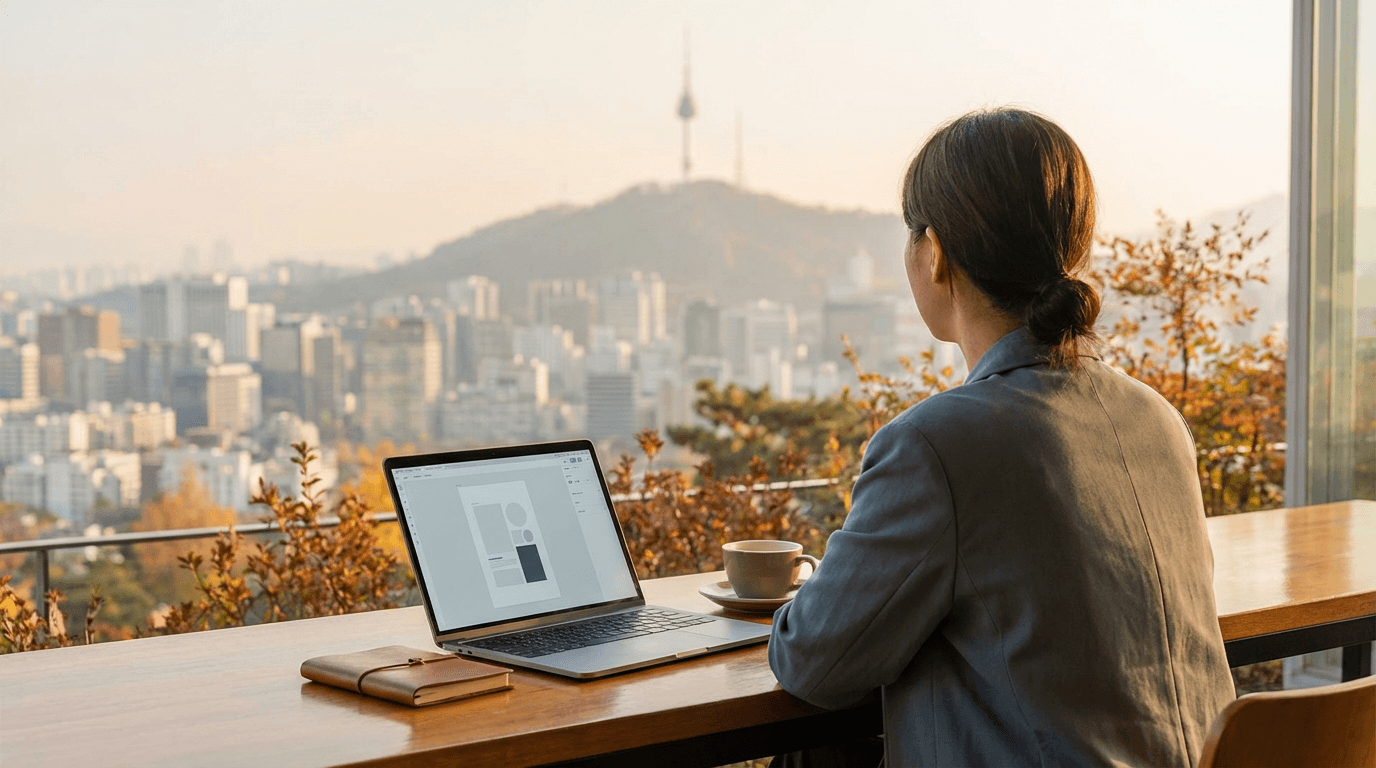
South Korea landscape
🔌Plug & PlayWorkcation Visa
🇰🇷

South Korea

Complete Digital Nomad Guide

Brandon Richards
Brandon Richards ·

Policy Stability

Stamped Nomad Exclusive
8/10Stable

How likely visa and immigration policies are to remain unchanged

Quick Facts

Nomad Visa Cost

$243

Income Requirement

$65,195/mo

Max Stay

24 months

Renewable

Yes

Cost of Living

$1,800/mo

Avg Internet

153 Mbps

Safety Score

8/10

Healthcare

High

Coworking

High

English Friendly

Medium

Time Zones

GMT+9

Entry Methods Available

Visa Free

Best For

solofamiliescityasia-base

South Korea has rapidly evolved into a top-tier destination for remote workers, balancing hyper-modern infrastructure with deep-rooted tradition. Before you pack your laptop and head to a Seoul cafe, you need to get your paperwork in order. The country offers a flexible range of entry options depending on your nationality and how long you plan to stay.

The K-ETA and Visa-Free Entry

If you're from one of the 113 countries with a visa-waiver agreement, entering South Korea is remarkably straightforward. Citizens from many regions, including the United States, Canada, Australia, and most of Europe, can typically stay for 30 to 90 days without a formal visa.

For these travelers, the K-ETA (Korea Electronic Travel Authorization) is the standard requirement. You must apply at least 72 hours before boarding your flight. The application fee is approximately 10,000 KRW (about 7-8 USD). However, there is currently an exemption period for certain countries through December 31, 2026. It is always best to check your specific eligibility on the official K-ETA website before booking your tickets.

Standard Visa Categories

If your country isn't on the visa-free list, or if you need to stay longer than a standard tourist visit allows, you'll need to apply for a traditional sticker visa. These are categorized by how many times you plan to cross the border:

  • Single Entry Visa: Valid for 90 days from the date of issuance. This allows for one entry only; if you leave to visit Japan or Vietnam, you cannot return on the same visa.
  • Double Entry Visa: Valid for 6 months. This permits two separate entries, with a maximum stay of 30 days per visit.
  • Multiple-Entry Visa: These allow for unlimited entries for the entire duration of the visa's validity, making them ideal for nomads who plan to use Korea as a regional hub.

Entry Requirements and Compliance

Regardless of which path you take, your passport must be valid for the duration of your stay. Immigration officers are strict about matching your activities to your visa type. While many nomads enter on tourist status to scout locations or work quietly from a co-working space, ensure you aren't engaging in local employment without a specific work permit.

For those looking into long-term residency, specialized visas like the F-2 or skilled worker categories like the E-7-4 exist, though these require significantly more documentation and often a local contract. If you find yourself needing to change your status or apply for a formal extension while in the country, you should process everything through the official immigration portal to ensure your stay remains legal.

Quick Reference Summary

  • K-ETA Cost: ~10,000 KRW
  • K-ETA Processing Time: Minimum 72 hours
  • Visa-Free Duration: 30-90 days (varies by nationality)
  • Standard Stay: 90 days for single entry

The Korean government is increasingly digital-nomad friendly, but they value precision in paperwork. Double-check your specific country's requirements on the government visa website well in advance of your departure date to avoid any issues at the boarding gate.

Source 1 | Source 2

A New Era for Remote Workers: The Workation Visa

South Korea officially joined the digital nomad race on January 1, 2024, with the launch of the F-1-D Workation visa. Before this, remote workers had to juggle short-term tourist entries or "visa runs" to neighboring countries. This new permit changes the game by allowing you to live in the country while legally maintaining your job back home.

The goal of this program is to encourage "workations" where you can explore the bustling streets of Seoul or the quiet beaches of Jeju Island without rushing. It is a multi-entry visa, meaning you can travel in and out of the country as much as you like during your stay.

Income and Eligibility Requirements

This visa isn't for everyone. Korea has set a relatively high financial bar compared to other digital nomad destinations. You need to prove you earn more than double South Korea's gross national income (GNI) per capita from the previous year. Currently, this sits at approximately USD $65,000 to $66,000 annually, or roughly â‚©88,102,000.

Beyond the paycheck, there are specific boxes you must tick to qualify:

  • Age: You must be at least 18 years old.
  • Employment: You must be an employee of a foreign company. At this stage, the visa is not open to freelancers or the self-employed.
  • Experience: You need at least one year of work experience in your current industry.
  • Health Coverage: You must hold private health insurance that covers at least â‚©100 million for hospital treatment and emergency evacuation.
  • Background: A clean criminal record is mandatory.

How Long Can You Stay?

The F-1-D visa grants an initial stay of one year. If you find yourself falling in love with the local lifestyle, you can renew it once for another year, bringing your total stay to two years. There is no minimum stay required, giving you the flexibility to use Korea as a home base while exploring the rest of Asia.

If you plan to stay longer than 90 days, you are required to head to a local immigration office to register as a foreigner. This must be done within your first 90 days of arrival and is a necessary step for getting settled into local life.

The Application Process

The turnaround time for this visa is fairly quick, usually taking between 10 and 15 days. You can apply at a South Korean consulate in your home country. If you are already in South Korea on a short-term visa, you can often apply for a change of status without having to fly back home.

Make sure you have these documents ready for your appointment:

  • A valid passport and a recent passport-sized photo.
  • The completed visa application form.
  • Proof of income, such as pay stubs, bank statements, or an employment contract.
  • An employment certificate from your company.
  • A federal criminal background check.
  • Your private health insurance certificate.
  • The processing fee, which ranges from USD $45 to $200 depending on your location.

If you have a spouse or dependent children, they can join you. You will just need to provide official family relationship documents during the application process.

Taxes and Working Locally

While this visa allows you to live in Korea, it does not allow you to work for Korean companies. Your income must come entirely from foreign sources. If you stay in the country for more than 183 days, you will likely be considered a tax resident. This means you could become liable for South Korean taxes on your worldwide income.

It is also a good idea to check with your employer about "permanent establishment" risks. If your work involves activities that directly impact the Korean market, your company might face unintended tax consequences. Consulting a tax professional before you make the move is a smart way to avoid any surprises later on.

The Basics: Visa-Free Entry

South Korea is incredibly welcoming to digital nomads from around 100 different countries. If you hold a passport from the United States, Canada, Australia, Japan, or most EU nations, you can generally breeze through immigration for a stay of up to 90 days. This is the simplest way to test the waters in Seoul or Busan without committing to a long-term residency visa.

You just need a passport that is valid for at least 6 months beyond your planned departure date. While this entry is technically for tourism or business meetings, many nomads use this window to work remotely while exploring the peninsula. Just remember that there is no "visa on arrival" for those who aren't on the exempt list; if your country isn't visa-free, you must secure a visa through a Korean embassy before you fly.

The K-ETA Requirement

For a while, Korea made things even easier by waiving the electronic authorization requirement for many travelers. However, that grace period ended on December 31, 2025. Starting January 1, 2026, almost all visa-exempt travelers must once again apply for a K-ETA before boarding their flight.

The process is straightforward and entirely digital. You should submit your application through the official K-ETA portal at least 72 hours before you head to the airport. Once approved, it is valid for 3 years (or until your passport expires) and allows for multiple entries.

  • Cost: KRW 10,000 (roughly USD 7-8).
  • Processing Time: Usually within 24 to 72 hours.
  • Validity: 3 years for multiple 90-day stays.

Regional Exceptions and E-Visas

If you are looking for a shorter stint or a specific entry point, there are a few niche options. Some travelers can access Jeju Island visa-free for 30 days even if they don't qualify for the mainland exemption. There are also specific 15-day transit allowances if you enter through regional hubs like Muan Airport to explore the Jeolla provinces.

For those who aren't from visa-exempt countries, the South Korean government has expanded its E-Visa system. You can check your eligibility and apply through the Korea Visa Portal. This saves you a physical trip to the consulate, though the requirements for documentation are much stricter than the K-ETA.

Staying Longer and the "Border Run"

Standard tourist entries are strictly capped at 90 days. If you want to stay longer, the government generally expects you to apply for a specific long-term visa, such as a study or work permit, from an embassy abroad. Extensions for tourists are rare and typically only granted for emergencies or medical reasons.

Some nomads attempt "border runs" to Japan or Taiwan to reset their 90-day clock. While there is no explicit law forbidding this, Korean immigration officers have the final say at the border. If they see a pattern of someone living in the country on back-to-back tourist entries without a local job or residency, they may deny entry. If you plan to stay for more than six months, looking into the specific Digital Nomad Visa (F-1-D) is a much safer bet.

Overstaying and Penalties

South Korea takes its immigration laws seriously. Overstaying your allowed 90 days can result in heavy fines, potential detention, and a long-term ban from re-entering the country. Even an accidental overstay of one or two days can flag your passport for years. Always keep a close eye on your entry stamp and leave yourself a buffer of a few days in case of flight cancellations or delays.

Summary of Tourist Costs

  • K-ETA Fee: KRW 10,000 (approx. $7.50 USD). Paid online via credit card.
  • Tourist Visa (Non-Exempt): Fees vary by nationality and embassy location.
  • E-Visa: Costs vary based on the specific visa category and your home country.

Source 1 | Source 2

Long-Term Stay Options

South Korea is no longer just a destination for a quick stopover. The government has aggressively modernized its visa system to attract remote talent and high-net-worth individuals. While the country doesn't offer a specific "freelancer" or "retirement" visa by name, you can achieve the same results through investment, points-based residency, or the newly minted digital nomad track.

The Workcation (Digital Nomad) Visa

This is the most exciting development for the remote work community. If you work for a company outside of South Korea, you can now stay for 1 year with the option to extend for one more, giving you a 2-year window to live as a local. It is designed specifically for those with high earning power who want to experience Seoul's cafe culture or Jeju Island's beaches without finding a local employer.

  • Income Requirement: You must prove an annual income of at least $64,000 USD (roughly double the Korean GNI).
  • Insurance: Private health insurance with coverage of at least 100 million KRW is mandatory.
  • Fees: Usually between $50 and $200 USD depending on your home country's embassy.
  • Process: Apply through a Korean embassy or consulate before you arrive.

Residency Through Investment (D-8)

If you have capital and want to start a business, the D-8 Corporate Investor visa is your "Golden Visa" equivalent. This is a path for people looking for more permanence than the nomad visa offers. It usually requires an investment of at least 100 million KRW (approximately $75,000 USD). Processing takes about 5 to 8 weeks in total, and while the initial stay is 1 to 3 years, it is easily extendable if the business remains active.

The Points-Based System (F-2-7)

For those who want to integrate deeper into Korean society, the F-2-7 visa is the gold standard. It uses a points system that rewards age, education, and language proficiency. If you have a Master’s degree from a top-tier university or earn more than $64,000 USD annually, you are already halfway there. Completing the Korea Immigration and Integration Program (KIIP) will also give you a significant points boost.

  • Duration: Between 1 and 5 years depending on your score.
  • Flexibility: This visa allows you to work for almost any employer or be self-employed.
  • Cost: Application fees range from 200,000 to 400,000 KRW.

Family and Heritage Visas

If you have Korean ancestry or a Korean spouse, your path is much simpler. The H-2 visa allows overseas Koreans from specific regions to work in various sectors for up to 3 years. Meanwhile, the F-6 Family Residence visa is for those married to Korean citizens. It offers unlimited stay potential and the most freedom of any visa type, though it requires proof of a stable relationship and basic Korean language skills.

The Road to Permanent Residency (F-5)

The F-5 visa is the ultimate goal for many expats because it never expires and removes almost all restrictions on your activities. To get here, you generally need to live in Korea for 5 years or more under a qualifying status like the D-7, E-7, or F-2. You will need to show "self-support ability," which usually means having a clean criminal record and a solid income. High-level investors or those with PhDs in high-tech fields can often fast-track this process.

All foreigners staying longer than 90 days must register their address with the local immigration office. Keep in mind that rules for the digital nomad visa are still evolving. You should always check for the latest updates through the Hi Korea official portal or your local embassy before booking a flight.

Source

Understanding the Cost Landscape

South Korea offers a high-tech lifestyle that feels like living in the future, but it comes with a price tag that reflects its status as a global economic hub. While it is generally more affordable than New York or London, it is significantly pricier than Southeast Asian nomad hotspots like Chiang Mai or Bali. Your biggest expenses will be housing and social outings, but you can offset these with incredibly efficient, low-cost public infrastructure.

The 2025-2026 projections show a clear divide between the capital and the rest of the country. If you choose Seoul, expect to spend between $1,500 and $2,300 per month for a comfortable mid-range lifestyle. If you prefer the coastal breeze of Busan, you can live a similar life for about $1,300 to $2,000. Those looking to stretch their budget even further often head to cities like Daegu, where monthly costs can dip closer to $1,200.

The Seoul Experience

Living in the heart of the action in neighborhoods like Gangnam, Hongdae, or Itaewon puts you at the center of the world's fastest internet and a 24-hour cafe culture. However, these areas command a premium.

  • 1BR Rent: Budget options start at $600, while comfortable studios in trendy areas range from $785 to $1,000. Premium apartments often exceed $1,200.
  • Food & Dining: A mix of grocery shopping and local eats costs $400 to $500. Street food remains a bargain at $5 to $10 per meal.
  • Transport: The subway system is world-class. A monthly T-money pass costs around $50 to $70, though heavy taxi use will push this over $150.
  • Workspace: Dedicated coworking desks at hubs like WeWork typically run $200 to $300 per month.

The Busan Alternative

Busan offers a slightly more relaxed pace and a lower cost of entry, particularly regarding housing. It is the go-to for nomads who want the beach within reach without sacrificing high-speed connectivity.

  • 1BR Rent: You can find decent studios in areas like Haeundae for $650 to $850. Budget seekers can find basic spots for $500.
  • Food & Dining: Expect to spend 10% less than in Seoul, with a comfortable monthly budget of $350 to $450.
  • Transport: Public transit is equally efficient here, costing roughly $60 to $90 for most nomads.
  • Workspace: Coworking spaces are gaining popularity and are cheaper than the capital, averaging $150 to $250.

Hidden Costs and Practicalities

When planning your move, keep in mind that the South Korean rental market often relies on "key money," which is a large upfront deposit. As a digital nomad, you will likely avoid this by using short-term rentals or platforms like Airbnb, but these carry higher monthly rates than local long-term leases.

Health insurance is another factor. Since nomads are not typically eligible for the public national system, you will need a private international plan. These range from $100 to $150 per month for solid coverage. If you are applying for the official Digital Nomad Visa, you must prove an annual income of over $65,000, which is a high bar compared to other nations.

Daily life is made easier by the lack of tipping culture and the abundance of free, high-quality Wi-Fi in almost every public space. While a couple might spend upwards of $3,300 to live luxuriously in Seoul, a solo traveler can easily enjoy the best of Korean culture for a fraction of that by utilizing local markets and the extensive bus network.

Choosing where to set up your laptop in South Korea usually comes down to a trade-off between high-octane urban energy and coastal relaxation. While the entire country is blanketed in some of the world's fastest internet, often exceeding 150 Mbps, the lifestyle varies significantly between the capital and the southern coast.

Seoul: The Hyper-Connected Hub

Seoul is the undisputed heavyweight for digital nomads. It is a city that truly never sleeps, where you can find a 24/7 "study cafe" on almost every block in neighborhoods like Hongdae or Gangnam. If you thrive on networking and a fast-paced environment, this is your base. The nomad community here is the largest in the country, coordinating through active Discord and WhatsApp groups.

Most nomads gravitate toward Itaewon for its international food scene or Hongdae for its youthful, artsy vibe. For a more professional atmosphere, Gangnam offers high-end coworking spaces, though you will pay a premium for the zip code. You can find dozens of dedicated workspaces through Coworker.com or stay at specialized coliving spots like Hoppin.

  • Pros: Elite internet speeds, endless 24/7 cafes, massive nomad network, and world-class nightlife.
  • Cons: Higher cost of living, dense crowds, and limited access to quiet nature.
  • Monthly Budget: Approximately $2,050 including rent and dining out.

Busan: The Coastal Alternative

If Seoul feels too claustrophobic, Busan is the perfect middle ground. It is South Korea's second-largest city, located just 3 hours from the capital via the KTX bullet train. You get the infrastructure of a major metropolis but with the added bonus of Haeundae Beach and a much more laid-back "summer" energy.

The nomad scene in Busan is smaller but growing rapidly. You will find plenty of laptop-friendly cafes overlooking the ocean and creative hubs like the Gamcheon Culture Village. It is significantly more affordable than Seoul, especially when it comes to short-term rentals and fresh seafood. English is less common here than in Seoul's expat districts, so having a translation app handy is a must.

  • Pros: Beautiful beaches, lower rent, and a better work-life balance.
  • Cons: Smaller international community and fewer English speakers.
  • Monthly Budget: Roughly $1,500 to $1,700.

Jeju Island: The Nature Escape

Jeju is Korea's answer to Hawaii. It has evolved from a honeymoon destination into a legitimate nomad hotspot. It is ideal for those who want to spend their mornings hiking Hallasan or surfing before logging on for the day. The island is dotted with unique themed cafes and a surprising number of coliving spaces designed specifically for remote workers.

Life on Jeju is much slower. The nightlife is focused on quiet local bars rather than massive clubs. While the internet is still excellent, you will likely need to rent a car or get comfortable with the bus system to truly explore. It is the best choice for a "deep work" retreat or a month of decompression.

  • Pros: Incredible nature, volcanic landscapes, and a very safe, quiet environment.
  • Cons: Requires a flight to reach, limited nightlife, and unpredictable island weather.
  • Monthly Budget: Around $1,400 to $1,600 depending on your transport choices.

Quick Comparison

While your choice depends on your personality, here is how the three stack up on the essentials:

  • Best for Networking: Seoul. The volume of meetups and coworking events is unmatched.
  • Best for Budget: Jeju or Busan. You will get much more square footage for your money.
  • Best for Infrastructure: Seoul. Everything from 24-hour gyms to English-speaking clinics is concentrated here.
  • Safety: All three cities rank exceptionally high with very low crime rates.

For most first-timers, starting in Seoul for a month to get your bearings before heading south to Busan or Jeju is the smartest play. With the new Workation Visa allowing stays of up to 2 years for those meeting income requirements, you have plenty of time to experience all three.

The World’s Gold Standard for Speed

If your productivity relies on a fast connection, you have come to the right place. South Korea consistently leads global rankings for internet infrastructure. You can expect fixed broadband speeds to average around 250 Mbps, while 5G mobile coverage reaches over 90% of the population. Whether you are uploading large video files from a high-rise in Seoul or hopping on a Zoom call from a coastal town in Busan, the connection is rarely the bottleneck.

Fiber optic availability is near-universal in urban centers. Even in more remote areas, speeds typically exceed 100 Mbps. This infrastructure makes South Korea one of the few places where you can reliably work from almost anywhere, including the subway system, which offers some of the fastest public transit WiFi on the planet.

Coworking Spaces and Work-Friendly Cafes

The coworking scene is concentrated in Seoul hubs like Gangnam, Yeouido, and Jongno, but you will find excellent pockets of innovation in Busan and Daegu as well. While many local "study cafes" cater to students, digital nomads usually gravitate toward full-service hubs that offer networking opportunities and ergonomic setups.

  • WeWork: With multiple locations including Yeoksam Station and Seoul Square, this is the most reliable choice for international travelers. Expect high-speed WiFi and community events. Pricing starts around â‚©299,000 per month for coworking access.
  • Regus: Found in major business districts like Apgujeong, Regus offers a more corporate environment. Day passes are available for approximately â‚©50,000, while monthly flexible plans start near â‚©300,000.
  • The Executive Centre: This is a premium option for those needing a polished business presence. Hot desks start at â‚©315,000 per month, and dedicated desks go for â‚©360,000. They often feature barista bars and global pass options.
  • Davinci Meeting Rooms: Ideal for those who only need a professional space for a few hours. Located near Gangnam Station, these collaborative spaces cost between $6 and $45 per hour depending on the room size.
  • Local Alternatives: Outside the major brands, look for spaces like Crystal Beach in Busan or Hyundai Knowledge Industry Center in Hanam. Day desks here are often budget-friendly, ranging from â‚©18,500 to â‚©22,000.

If you prefer a more casual vibe, the cafe culture is unparalleled. Chains like Starbucks and Ediya provide stable, free WiFi, though they can get loud during lunch rushes. Independent "work cafes" are also common; these usually expect you to buy one drink every few hours in exchange for a dedicated outlet and a quiet atmosphere.

Staying Connected on the Move

Do not rely solely on public hotspots. Getting a local SIM or eSIM is straightforward and affordable. You can pick these up at Incheon International Airport upon arrival for instant activation, which is often easier than trying to navigate registration at a neighborhood shop later.

  • Unlimited 5G Plans: Providers like KT offer "Digital Nomad" packages. These usually run between â‚©30,000 and â‚©50,000 per month and include massive data caps of 100GB or more.
  • Short-term Tourist SIMs: If you are only staying for a few weeks, you can grab a 30-day card with 20GB to 50GB of data for â‚©20,000 to â‚©40,000. These almost always allow for tethering, so you can use your phone as a backup hotspot.
  • Major Providers: Stick with KT, SK Telecom, or LG U+. All three offer reliable nationwide coverage, though KT is often cited as the most foreigner-friendly for short-term registrations.

For the best experience, check out the KT official site or WeWork South Korea to book your space or data plan before you land. Having your connectivity sorted early allows you to dive straight into the local culture without worrying about where your next signal is coming from.

The Gold Standard of Care

South Korea's healthcare system is consistently ranked among the top three globally, and for good reason. It combines cutting-edge medical technology with a high level of efficiency that leaves many Western systems in the dust. Whether you are in a high-tech clinic in Gangnam or a regional hospital in Jeju, the quality of care remains remarkably high.

For digital nomads, the system is split into two worlds: the public National Health Insurance (NHI) and the private sector. While the quality of medical treatment is identical across both, the experience differs in terms of language support and how you pay the bill. Most expats find that the sheer density of medical facilities, especially in Seoul, makes getting a same-day appointment for almost anything a breeze.

Public vs. Private: What to Expect

  • Public (NHI): This is a universal single-payer system. Once you have your Alien Registration Card (ARC) and have lived in the country for six months, you are generally required to enroll. It covers about 90% of the top hospitals. You pay a monthly contribution based on your income, and in return, the government subsidizes a massive chunk of your medical bills.
  • Private & International Clinics: These are the go-to for many nomads during their first few months. Places like Severance Hospital or Samsung Medical Center have dedicated international wings. You will find fluent English-speaking staff and faster service, though you will pay higher out-of-pocket rates if you aren't yet on the NHI.

Insurance Requirements for the Workation Visa

If you are applying for the F-1-D Workation Visa, the Korean government has specific insurance mandates you must follow. You cannot simply rely on a basic travel policy that covers lost luggage. Your policy must be active for the entire duration of your stay, up to 2 years.

Your insurance policy must include:

  • A minimum coverage of â‚©100 million (roughly $75,000) for medical treatment.
  • Coverage for medical evacuation and repatriation to your home country.
  • Proof of coverage written in English or Korean for the visa application.

On average, nomads pay about â‚©114,000 ($100) per month for these specialized policies. It is a fraction of what you would pay for similar coverage in the United States, and it ensures you are never stuck with a massive bill after an emergency.

Pharmacies and Prescriptions

Pharmacies are everywhere in Korea, often marked by a bright red or green "Yak" (약) sign. If you have your ARC and are registered with the NHI, your prescriptions are heavily subsidized. You will usually pay the pharmacist directly after your doctor’s visit. In major metro areas, pharmacists often speak enough English to explain dosage, but it helps to have a translation app ready just in case.

Emergency Situations

If things go wrong, the emergency response system is world-class. You can dial 119 for an ambulance. If you are struggling with a language barrier during a medical crisis, the Immigration Contact Center provides 24/7 bilingual support to help translate for emergency responders. Most emergency rooms in Seoul have staff who can communicate in English, and the wait times are typically much shorter than what you would experience in North America or Europe.

Cost Breakdown

  • Monthly Private Insurance: Approximately â‚©114,000.
  • NHI Contribution: Calculated based on income, typically around 5% of your monthly earnings.
  • Routine Doctor Visit: Often under â‚©20,000 with NHI; roughly â‚©50,000 to â‚©100,000 at international clinics without insurance.

The Reality of Digital Banking

If you are used to the seamless experience of neobanks in Europe or North America, South Korea might feel like a step back in time. While the country is incredibly high-tech, its banking system remains notoriously closed off to non-residents. You will likely rely on a hybrid strategy, using your international cards for daily spending while keeping a stash of cash for smaller vendors and traditional markets.

Popular fintech solutions like Wise and Revolut are fantastic for short-term stays, but they have a major catch. Neither company currently issues cards to South Korean residents. If you already have a card from your home country, it will work perfectly fine for tapping at convenience stores or cafes. However, if you lose that card while in Seoul, you cannot simply order a replacement to your Airbnb. You should always carry at least two different cards from different providers to avoid being stranded.

ATM Strategy and Fees

Cash is still a big part of life in Korea, especially for recharging your T-money transit card, which usually requires physical banknotes. Not all ATMs accept foreign cards. Look for machines labeled Global ATM, which are common in subway stations and major bank branches like KB, Hana, or Shinhan.

  • Transaction Limits: Most ATMs have a withdrawal limit per transaction, often around 300,000 to 1,000,000 KRW.
  • Operator Fees: Expect to pay between 3,000 and 5,000 KRW per withdrawal, regardless of what your home bank charges.
  • Wise Limits: You get a small amount of free withdrawals depending on your plan, but anything over that incurs a 2% fee.
  • Revolut Limits: Similar to Wise, Revolut hits you with a 2% fee once you cross your monthly plan threshold.

Can You Open a Local Account?

Opening a bank account as a digital nomad is difficult but not impossible if you have the right paperwork. If you are on a standard tourist visa, most banks will flatly refuse you. To get a fully functional account with an online banking app and a local debit card, you generally need an Alien Registration Card (ARC). This card is issued to those on long-term visas, such as the new Workcation (Digital Nomad) visa or a student visa.

If you do manage to get an ARC, head to a Hana Bank or Woori Bank branch. These banks are generally more foreigner-friendly and often have English-speaking staff at major branches in Seoul neighborhoods like Itaewon or Hongdae. You will need your passport, your ARC, and a local phone number. Without a local account, you will find it nearly impossible to use popular local apps like KakaoPay or Coupang, which require local identity verification.

Sending Money Home or Abroad

Moving money into Korea is straightforward with services like Wise. It is significantly cheaper than a traditional SWIFT wire transfer. However, moving money out of Korea is a different story. The country has strict foreign exchange regulations to prevent capital flight. If you earn local income and want to send it home, you will need to prove the source of funds and visit a bank in person to set up your designated "foreign exchange bank."

The Crypto Factor

South Korea is a global hub for cryptocurrency, but the "Kimchi Premium" makes it a unique environment. This refers to the price gap where crypto often trades higher on Korean exchanges like Upbit or Bithumb than on international ones. As a foreigner, you are largely barred from using these local exchanges because they require a verified local bank account and a resident ID. If you plan to fund your stay via crypto, stick to your international platforms and withdraw to your home bank account before spending in Won.

A Quick Financial Checklist

  • Primary Card: Use a travel-friendly card with 0% foreign transaction fees.
  • Backup: Keep a secondary card from a different network (e.g., one Visa and one Mastercard).
  • Transit: Budget about 50,000 KRW in cash immediately upon arrival to buy and load a T-money card.
  • Emergency Cash: Keep $200 USD in crisp, clean bills. Money changers in Myeongdong offer better rates for cash-to-cash swaps than most banks.

Moving Your Family to South Korea

Relocating to Korea with children involves a bit more paperwork than a solo nomad trip, but the infrastructure for families is world-class. The country is exceptionally safe, and once you get past the initial bureaucracy, the quality of life for kids is high. From ultra-modern playgrounds to a culture that deeply respects children, it is a welcoming environment for parents.

The F-3 Dependent Visa

If you are heading to Korea on a work or professional visa, your spouse and unmarried children under the age of 19 will typically apply for the F-3 Dependent Family visa. This is the standard path for families, though it is important to remember that F-3 holders are generally not permitted to work in Korea. If your spouse intends to work, they will likely need to secure their own independent work visa.

The rules for this visa became stricter recently. You can no longer arrive on a tourist visa and try to "flip" to an F-3 while inside the country. You must apply at a Korean consulate or Visa Application Center in your home country before you travel. Expect a processing time of about 4 months, so plan your departure date accordingly.

To qualify, the principal visa holder must meet specific annual income thresholds based on family size:

  • Family of 2: KRW 23.96M
  • Family of 3: KRW 30.15M
  • Family of 4: KRW 36.59M
  • Family of 5: KRW 42.65M

You will need to provide original marriage and birth certificates that have been apostilled or legalized. These documents must be issued within 3 months of your application date to be considered valid by immigration officials.

Education and International Schools

While local Korean schools are excellent, the language barrier and high-pressure environment lead most digital nomad families toward international schools. Most of these institutions follow American, British, or International Baccalaureate (IB) curricula. Seoul is the primary hub for these schools, but you will find excellent options in other major cities as well.

Tuition is a significant expense, often ranging between KRW 25M and 40M per year per child. Popular choices for expat families include:

  • Seoul International School (SIS): Known for a rigorous academic environment and American curriculum.
  • Yongsan International School of Seoul (YISS): A popular choice in the heart of the city with a diverse student body.
  • Korea International School (KIS): Offers campuses in both Seoul and Jeju Island.
  • Chadwick International: Located in the Songdo International Business District in Incheon.

Healthcare for Kids

South Korea’s healthcare system is one of its biggest selling points. Once you are registered for the National Health Insurance (NHI), your children will have access to the same high-quality care as locals. This usually covers 60% to 80% of medical costs. A standard pediatric visit often costs between KRW 5,000 and 20,000 out of pocket.

Major hospitals like Severance or Asan Medical Center have dedicated international clinics with English-speaking staff. Pediatric care is specialized and easy to find in almost every neighborhood, with many clinics staying open late or on weekends to accommodate working parents.

Family-Friendly Hubs

While you can live anywhere in Korea, three cities stand out for families due to their amenities and expat-friendly infrastructure:

Seoul

  • Pros: Most international school options, English-speaking doctors, and massive parks like Seoul Forest.
  • Best Neighborhoods: Yongsan (central), Songpa (near Lotte World), and Mapo.

Incheon (Songdo)

  • Pros: A "smart city" designed with families in mind. It has wide sidewalks, massive central parks, and is very stroller-friendly.
  • Best Neighborhoods: Songdo International District.

Busan

  • Pros: A more relaxed pace of life by the ocean. Great for families who want access to beaches and a slightly milder winter.
  • Best Neighborhoods: Haeundae and Marine City.

Safety and Daily Life

South Korea is consistently ranked as one of the safest countries in the world. Violent crime is extremely rare, and it is common to see young children taking the subway or walking to school alone. Public spaces are designed for families; most subway stations have elevators for strollers, and major malls have high-end "nursing rooms" that are cleaner and better equipped than most hotel rooms.

If you need childcare for younger children, private daycare or "nursery" costs generally run between KRW 0.8M and 1.5M per month. For older children, the famous Korean "Hagwons" (after-school academies) offer everything from taekwondo to coding, usually costing KRW 0.5M to 1M per month depending on the frequency of classes.

The Gold Standard of Physical Safety

South Korea remains one of the safest hubs on the planet for remote workers. You’ll quickly notice a unique local phenomenon: people leaving $2,000 MacBooks on cafe tables while they grab a lunch break. This isn't luck; it is a culture built on deep respect for personal property, backed by a sophisticated network of AI-integrated CCTV. Whether you are a solo female traveler or a late-night coder, the safety rating for walking alone at night is a consistent 10/10.

Public transport is equally secure and efficient. From the Seoul subway to the KTX high-speed rail, you can expect a clean, harassment-free environment. While physical crime is nearly non-existent, the 2026 landscape has seen a slight shift toward "invisible" crimes. Digital nomads should stay alert for housing fraud and digital scams on public Wi-Fi networks.

Navigating Common Scams

The risks in Korea are rarely physical, but they can hit your wallet if you aren't careful. Long-term renters often face housing scams where "landlords" vanish with deposits. Always verify listings through reputable local apps or licensed real estate offices. If you are seeking healthcare, avoid unregistered medical brokers who inflate prices for foreigners; stick to established hospitals or clinics.

  • Transportation: Avoid "International Taxis" or unregistered drivers at airports. Use Kakao Taxi to ensure fair, metered pricing.
  • Digital Security: Use a VPN on public cafe networks to mitigate the medium risk of data sniffing.
  • Nightlife: Be wary of "upselling" in tourist-heavy districts like Itaewon, where drink prices can suddenly triple for foreigners.

Social Dynamics and LGBTQ+ Life

Korean society is a blend of hyper-modern tech and traditional Confucian values. While the country is incredibly peaceful, it remains culturally conservative. There is no specific legislation protecting LGBTQ+ individuals, and public displays of affection are generally rare for all couples. However, the younger generation is increasingly open, and a massive 95.4% social media penetration means finding "found family" and queer-friendly spaces in Seoul is easier than ever through local digital communities.

The infrastructure is becoming more "solo-friendly" by the day. You'll find a wealth of co-working spaces, female-only housing options, and restaurants designed for honbab (solo dining). This makes it easy to live an independent lifestyle without the social friction found in other parts of Asia.

The Digital Ecosystem

English isn't widely spoken once you leave the main districts of Seoul or Busan. To survive, you need to ditch Google and embrace the local tech stack. Google Maps is notoriously unreliable for walking directions in Korea; download Naver Maps instead. For everything from chatting with locals to booking a hair appointment, KakaoTalk is the undisputed king, used by 97.1% of the population.

Connectivity is a non-issue. South Korea offers world-class internet speeds that make video calls and heavy data transfers seamless. You can grab an eSIM immediately upon arrival to stay connected without needing an Alien Registration Card (ARC) right away.

Integration and the Workation Visa

If you want to stay long-term, the 2026 "Workation" visa is your best bet. It allows you to live in Korea for up to 2 years while working for an overseas company. The requirements are high, aiming for "elite" nomads, but the perks include access to a vibrant expat community and specialized "K-Culture" immersion programs.

  • Income Requirement: You must prove an annual income between $60,000 and $85,000 USD (roughly â‚©88.1 million).
  • Health Insurance: Private coverage with a minimum of $75,000 USD in emergency benefits is mandatory.
  • Community Hubs: Focus your search on Seoul or Busan to find the highest density of English-speaking co-working spaces and networking events.

To blend in, use local delivery apps like Coupang Eats or Baemin instead of international equivalents. Not only is it cheaper, but it’s the fastest way to feel like a local in a country that truly never sleeps.

Understanding the 183-Day Rule

The most important number to remember when setting up your base in South Korea is 183. If you spend 183 days or more in the country during a single calendar year (January 1 to December 31), the National Tax Service generally considers you a tax resident. This applies regardless of whether you are on a tourist bridge or the specific digital nomad visa.

While physical presence is the primary trigger, it isn't the only one. The government looks at the big picture of your life. If you have immediate family living with you, own substantial assets in the country, or hold an occupation that clearly requires you to stay long-term, you might be classified as a resident even if you haven't hit that 183-day mark yet. It is a case-by-case evaluation based on your specific circumstances.

Tax Rates and the Five-Year Grace Period

South Korea uses a progressive tax system with rates that can climb as high as 42%. However, there is a significant silver lining for newcomers. For your first 5 years of residency, you are typically only taxed on your Korean-sourced income. This usually refers to money earned while you are physically working within Korean borders.

Once you cross that five-year threshold, the rules shift, and you become liable for taxes on your worldwide income. For most digital nomads staying for a year or two on the Workation visa, this means you'll likely stay within the more favorable "Korean-sourced only" window.

Filing and Compliance

If you qualify as a resident, you need to mark May 31 on your calendar. This is the hard deadline for filing your annual tax return for the previous year's income. You should keep meticulous records of your entry and exit dates, housing contracts, and bank statements to prove exactly how long you've been in the country.

  • Residents (183+ days): Taxed on worldwide income, though restricted to Korean-sourced income for the first 5 years. Must file by May 31.
  • Non-Residents (Under 183 days): Only taxed on income sourced directly from Korea. Filing requirements depend on specific tax treaties.
  • Registration: If you stay longer than 90 days, you must register for a foreigner registration card, which links your residency status to your tax profile.

Double Taxation and Treaties

South Korea maintains a vast network of tax treaties designed to prevent you from paying twice on the same dollar. These treaties determine whether you owe tax to Korea or your home country and allow you to claim foreign tax credits. Because these agreements vary wildly between nations, you should check the specific treaty between your home country and South Korea via the National Tax Service portal.

Working with Crypto

South Korea is a major hub for digital assets, but the tax rules for nomads are straightforward: there is no special exemption for crypto. If you are a resident, any gains are generally treated as part of your worldwide income. Since regulations in this space move fast, it is wise to keep your trade history exported and ready for review if you plan on cashing out while living in Seoul or Busan.

Key Summary of Obligations

  • Income Scope: Progressive rates up to 42%.
  • Reporting: Annual declaration required even if no tax is due under a treaty.
  • Record Keeping: Maintain a log of all physical days spent in-country to avoid residency disputes.
  • Local Advice: Rules for 2026 and beyond may shift; always verify your status with a local tax professional if your stay exceeds six months.

Getting Connected and Staying Online

Korea is arguably the most connected country on the planet, but accessing that speed as a foreigner requires a bit of strategy. For digital nomads staying longer than two weeks, your best bet is Chingu Mobile. They offer excellent English support and flexible 3-month plans that are much cheaper than daily tourist SIMs. You can pick up your card at the airport or have it delivered to your Airbnb.

If you want the absolute lowest price for a local number, LG U+ offers a 3-month plan for â‚©130,000, which works out to about â‚©43,000 per month. Make sure to reserve this online before you land to skip the long queues at Incheon. For those who only need data and don't care about a local number, an eSIM from SimOptions costs $44.90 for 30 days of unlimited 4G data on the SK Telecom network. Airalo also has a 10-day unlimited plan for $32 if you are just passing through.

Whatever you do, try to get a plan that includes a Korean phone number. Many local apps, from food delivery to taxi hailing, require a Korean number for identity verification. Without it, you will find yourself locked out of the most convenient parts of Korean life.

Navigating the Streets

Forget about Google Maps here. It doesn't work well for walking directions or real-time transit because of local security regulations. Instead, download Naver Map or KakaoMap. Both have English interfaces and provide incredibly accurate data for buses, subways, and even the exact exit number you should use at a station.

For getting around late at night, Kakao T is the local version of Uber. You can hail standard taxis or private cars through the app. It is reliable and much safer than trying to flag down a cab on a busy Friday night in Gangnam.

Where to Set Up Your Base

Each neighborhood in Seoul has a distinct personality, so choose based on your workflow. Hongdae is the go-to for younger nomads; it is packed with themed cafes, affordable street food, and a high concentration of co-working spaces. If you prefer an international environment where English is spoken everywhere, Itaewon is your best bet. It is the expat hub of the city and has the best variety of foreign cuisine.

For those who want a high-end, professional atmosphere, Gangnam offers lightning-fast WiFi and sleek office spaces, though it comes with a higher price tag. If you want to be in the middle of the action with easy access to every subway line, Myeongdong is a central shopping district that keeps you connected to the rest of the city.

Life Admin: Food, Language, and Safety

You won't go hungry in Korea. Baemin and Coupang Eats are the two giants of food delivery. They are famous for their speed, often delivering hot meals in under 20 minutes. You will need that local SIM card to set up an account and access the best discounts.

When it comes to the language barrier, Papago is far superior to Google Translate for Korean. It handles slang and honorifics much better; it also has a great image translation feature for reading menus or instructions on your washing machine. For daily communication, KakaoTalk is the only messaging app that matters. Everyone from your landlord to your new friends will expect to reach you there.

In case of an emergency, keep these numbers saved in your phone:

  • 119: Fire and Ambulance
  • 112: Police
  • 1339: Tourist Assistance (English speakers available)

Pro-Tips to Avoid Common Headaches

  • Don't rely on roaming: It is expensive and often throttles your speed. A local SIM is almost always better.
  • Check your hardware: If you plan on using an eSIM, verify your phone is unlocked and compatible before you buy. Data-only eSIMs usually won't let you receive the SMS codes needed for local apps.
  • Bring your Passport: You will need your physical ID to register any local SIM card. Digital copies are rarely accepted at physical stores.
  • Use a Dual SIM setup: Keep your home SIM active for bank 2FA codes while using a Korean SIM for your daily data needs.

For finding a place to stay, Airbnb is easy for short stints, but for stays over a month, look at Xiaoo or specialized Facebook groups for sublets. If you are feeling brave, searching for "게스트하우스" (guesthouse) on Naver can often land you a better monthly rate than the international platforms.

Latest Nomad News

South Korea Extends K-ETA Exemptions for Remote Workers

The extension of the K-ETA exemption for 22 countries through 2026 significantly simplifies entry and travel planning for digital nomads visiting South Korea.

South Korea Updates Immigration Strategy for Skilled Workers

The South Korean government has launched a comprehensive strategy to expand high-skilled visa pathways and create new residency channels for foreign vocational graduates. The plan includes a regional immigration package aimed at depopulated areas, offering more long-term residency options for those willing to work outside major cities.

South Korea Updates Skilled Employment Visas

The Ministry of Justice is consolidating 39 employment visas into three skill-based levels and expanding Top-Tier Visa eligibility for science and tech professionals. New visa categories, including the E-7-M for technical graduates, aim to simplify the path for skilled foreign workers and researchers.

South Korea Expands Automated Entry to 42 Countries

Citizens from 24 additional nations, including Canada and EU states, can now use automated immigration gates, significantly speeding up entry into South Korea.

South Korea Updates Top-Tier and K-core Visa Paths

South Korea has launched the 2030 Immigration Policy Future Strategy, introducing the K-core visa for junior college graduates and expanding Top-Tier visa eligibility for researchers. These changes aim to streamline residency paths for high-tech professionals and skilled regional workers.

More Guides from East Asia

Stay Updated on South Korea

Get notified about visa changes, policy updates, and new information for digital nomads in South Korea.