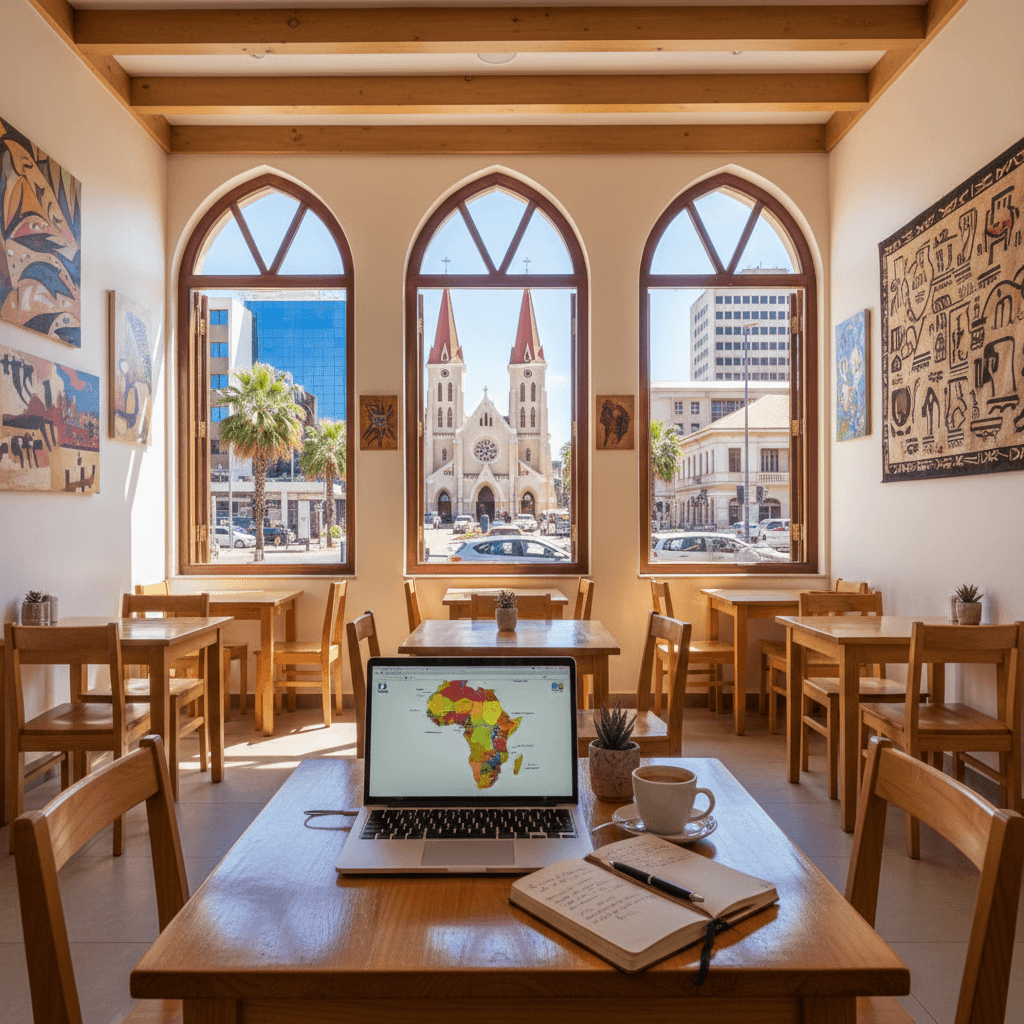
Windhoek
🇳🇦 Namibia
Windhoek isn't your typical African capital. Nestled high in the Khomas Highlands, it feels more like a quiet mountain sanctuary than a chaotic metropolis. You'll notice the contrast immediately: well paved streets and orderly German colonial architecture sitting right alongside the energy of indigenous African heritage. It’s a place where you can grab a world class craft beer and a bratwurst for lunch, then spend your afternoon browsing contemporary art at the National Art Gallery.
The vibe here is relaxed and outdoorsy. Most nomads find that the city moves at a slower pace, which is a welcome relief if you’re coming from the intensity of Cape Town or Nairobi. It’s remarkably clean and safe, though you’ll still want to keep your wits about you in the central district after dark. What really sets Windhoek apart is the silence of the surrounding desert. You’re never more than a short drive from the vast, open wilderness, making it a dream for anyone who wants to balance deep focus work with weekend safaris.
The Cost of Living
Namibia is affordable, but it isn't "Southeast Asia cheap." You’re paying for some of the best infrastructure on the continent. Most solo nomads find that a budget of $1,700 to $2,000 per month allows for a very comfortable lifestyle.
- Budget Nomad: $1,500 to $2,000. This covers a modest apartment on the outskirts, eating local street food like kapana for $3 to $5, and using local taxis.
- Mid-range: $2,500 to $3,000. This gets you a central apartment, daily meals at spots like Joe’s Beerhouse, and a dedicated desk at a coworking space.
- Comfortable: $4,000+. At this level, you’re looking at luxury rentals in Eros, a private car rental for desert trips, and high end dining.
Where to Plant Your Flags
Where you stay depends on whether you want to walk to work or wake up to mountain views. Central Windhoek is the go to for first timers. It’s walkable and puts you right near Independence Avenue, though traffic can get a bit noisy during the day. If you want something quieter, Eros is the upscale expat favorite. It’s scenic and safe, but you’ll definitely need a car or a reliable taxi app to get around.
Many nomads also split their time with the coast. Swakopmund is about four hours away and offers a cooler, misty climate with great ocean views and surprisingly fast internet. It’s a popular weekend escape for those who find the Windhoek heat a bit much in January or February.
Internet and Productive Hubs
Don't expect lightning speeds across the board, but the infrastructure is reliable. Citywide averages hover around 10 to 13 Mbps, but specific hubs like Hotel Uhland have been clocked at over 100 Mbps. For a professional environment, most nomads head to The Village, which is a beautiful, greenery filled complex perfect for deep work. CcHUB is another great option if you want to be around the local tech and startup crowd.
For mobile data, grab a SIM from MTC or Telecom Namibia at the airport. You can get 10GB to 20GB for roughly $10 to $20, and the 4G coverage within the city limits is excellent.
Getting Around and Staying Safe
Public transport is mostly informal minibuses, which can be confusing for newcomers. Most expats and nomads rely on taxis or car rentals. If you’re planning to see the Sossusvlei dunes or the Namib Desert, a car is non-negotiable. Namibia2Go offers long term rentals like a Suzuki Jimny for about $50 a day, which is the best way to reclaim your freedom on weekends.
Safety wise, Windhoek is one of the more secure capitals in Africa. Petty crime exists, so don't flash your MacBook in unlit areas, but violent crime against travelers is rare. Healthcare is also solid; private clinics in the city are high quality, and pharmacies are easy to find. Just make sure you have travel insurance that covers medical evacuations if you plan on heading deep into the bush.
The Social Scene
The nightlife isn't legendary, but it's cozy. It’s more about sundowners and long dinners than 4 a.m. clubbing. To meet people, check out the Punta App or join the local expat groups on Facebook. The community is small, so you’ll start seeing the same faces at the coworking spaces and cafes pretty quickly. People are generally warm and polite, though they value punctuality and a formal greeting. If you want to see the city at its best, visit between May and October. The days are a perfect 22°C to 25°C, the sky is a constant blue, and the air is crisp and dry.
The Nomad Budget Breakdown
Windhoek is a breath of fresh air for nomads who want an African base without the chaotic price tags of Cape Town or the intensity of Lagos. It sits in a sweet spot of affordability where your dollar stretches surprisingly far, especially if you enjoy high quality meat and local craft beers. Most solo nomads find that a monthly budget of $1,500 to $2,000 covers a comfortable lifestyle with a mix of eating out and weekend adventures.
If you are looking for a more upscale experience, bumping that budget to $2,500 or $3,000 allows for a central apartment in a modern complex and frequent car rentals for desert trips. While rent will be your biggest line item, the day to day costs like mobile data and local transport are negligible for most Western earners.
- Budget Tier ($1,500 to $2,000): Best for those staying on the outskirts or in modest studios. You'll spend about $800 to $1,200 on rent and stick to street food or home cooking.
- Mid-range Tier ($2,500 to $3,000): This covers central living near Independence Avenue. Expect to pay $1,200 to $1,800 for a well equipped apartment and eat at mid-range spots like Joe's Beerhouse regularly.
- Comfortable Tier ($4,000+): This is luxury territory. You can afford a high end villa in Eros, a permanent car rental, and fine dining every night.
Housing and Neighborhoods
Finding a place usually happens through sites like Nomadstays or the Punta app. Many travelers prefer the Central Windhoek area because it is walkable to the National Museum and the main coworking hubs. It is vibrant during the day, though you should keep your wits about you at night as petty crime can happen in the quieter corners of the city center.
For a more relaxed, residential vibe, expats often head to Eros. It is nestled against the mountains and offers incredible views and better security, though you will definitely need a car or a reliable taxi contact to get around. If you want to escape the heat entirely, some nomads split their time between Windhoek and Swakopmund on the coast, where $1,200 still gets you a great spot with ocean views.
Day to Day Expenses
Eating out is a highlight here. You can grab quick street food for $3 to $5, while a solid sit down meal at a mid-range restaurant usually lands between $10 and $15. If you are going all out at an upscale steakhouse, expect to pay $25 or more. A local beer is usually just a couple of dollars, making the social scene very accessible.
Getting around is cheap but requires a bit of planning. The city doesn't have a massive ride hailing presence yet, so many nomads rely on local taxi apps or pre arranged drivers. If you want to explore the Sossusvlei dunes or the Namib Desert, renting a rugged vehicle like a Suzuki Jimny from Namibia2Go will cost about $50 per day on a monthly lease. It is a steep expense, but most find it worth it for the freedom to explore the backcountry.
Connectivity and Coworking
Internet is reliable but not lightning fast by default. Citywide speeds hover around 10 to 13 Mbps, but specific nomad friendly spots like Hotel Uhland have been clocked at 112 Mbps. For a guaranteed professional setup, most people head to CcHUB or The Village. Monthly memberships there range from $100 to $200 and provide the most stable connection in town.
Mobile data is surprisingly affordable. You can pick up a SIM card from MTC or Telecom Namibia at the airport or in town for a few dollars. A 20GB data package usually costs between $10 and $20, which is perfect for staying connected while you are out exploring the highlands.
Windhoek isn't your typical African capital. It feels more like a quiet mountain town that happens to have great infrastructure and a unique German-meets-African personality. Finding the right base depends on whether you want to walk to your morning espresso or need a quiet view of the Khomas Highlands to stay productive.
The Solo Nomad: Central Windhoek
If you're traveling alone and don't plan on renting a car immediately, stay central. Most nomads gravitate toward the area around Independence Avenue and the National Museum. It's the most walkable part of the city, keeping you close to the action without the need for a constant taxi budget.
- The Vibe: Energetic and convenient. You're steps away from the CcHUB tech space and the legendary Joe's Beerhouse for a post-work pint.
- Rent: Expect to pay around $1,200 to $1,800 for a serviced apartment or a room at a nomad-friendly spot like Hotel Uhland, which is famous for its 112 Mbps WiFi.
- Pros: Easy access to coworking hubs, museums, and the National Art Gallery.
- Cons: It gets busy during the day, and like any city center, you'll need to stay vigilant about petty crime after the sun goes down.
The Long-Term Expat: Eros
Expats who plan to stick around for a few months usually head north to Eros. It's an upscale, leafy neighborhood nestled against the hills. It feels worlds away from the city center but is only a five-minute drive from the main business district.
- The Vibe: Quiet, scenic, and professional. It's where you go when you want to look at the mountains while you answer emails.
- Rent: Prices for a comfortable one-bedroom or small house start around $1,800.
- Pros: Excellent safety, reliable utilities, and some of the best views in the city.
- Cons: You'll definitely want a car or a reliable taxi app, as public transport is basically non-existent here.
Families and Slow Travelers: Klein Windhoek and Luxury Suburbs
For those traveling with a crew or just looking for a "home away from home" feel, Klein Windhoek is the go-to. It's one of the oldest and most established neighborhoods, offering a mix of high-end villas and spacious guesthouses. It’s also home to The Village, a professional coworking space that many nomads prefer for its quiet, garden-like atmosphere.
- The Vibe: Residential and secure with a touch of luxury.
- Rent: High-end family homes or luxury apartments usually run $2,500 and up.
- Pros: Close to top-tier private clinics and some of the city's best cafes.
- Cons: It's the most expensive pocket of the city, and the social scene is more about private dinner parties than public nightlife.
The Coastal Alternative: Swakopmund
While technically a 4 to 5 hour drive from Windhoek, many nomads treat Swakopmund as the city's "extended neighborhood." If the dry heat of the capital gets to be too much, travelers often move to the coast for a month. It’s a colonial-era town where the desert literally meets the Atlantic Ocean.
- The Vibe: Relaxed, foggy, and adventurous. It’s the adventure capital of the country.
- Rent: You can find decent spots for $1,000 to $1,500, though prices spike during the December holiday season.
- Pros: Fast internet at hubs like Desert and Ocean coworking and a cooler climate.
- Cons: It can feel very touristy, and you're far from the main international airport.
Most nomads find that a $2,500 monthly budget allows for a very comfortable lifestyle in any of these areas. If you're on a tighter $1,700 budget, look for guesthouses on the outskirts of the center where you can still grab a $5 taxi to your favorite cafe.
Connectivity and Speed
Internet in Windhoek is a bit of a mixed bag, but it's far more reliable than most first-timers expect. The citywide average hovers around 10 to 13 Mbps, which is plenty for Slack, emails, and standard video calls. If you need more horsepower for heavy uploads or 4K streaming, you'll want to hunt down specific hubs. Spots like Hotel Uhland are known among nomads for clocking in at 112 Mbps, proving that high speed is available if you know where to book.
Mobile data is your best friend here. Most expats recommend grabbing a SIM card immediately upon landing at Hosea Kutako International Airport. MTC and Telecom Namibia are the primary providers. You can usually get 10 to 20GB of data for roughly $10 to $20 USD. Coverage is solid throughout the city, though it drops off quickly once you head into the deeper desert areas for weekend trips.
Top Coworking Spaces
The coworking scene is small but tight-knit, focused mainly in the central business district. These spaces are often the best way to bypass the slower speeds of residential WiFi and meet the local tech community.
- CcHUB: This is the go-to spot for the tech-heavy crowd. It has a strong focus on entrepreneurship and innovation. It's the place to be if you want to network with local developers and startup founders.
- The Village: Located in a beautiful, leafy complex, this space is a favorite for freelancers who prefer a more professional, aesthetic environment. It's surrounded by gardens and cafes, making it easy to grab a high-quality coffee between meetings.
- Desert & Ocean: While technically a few hours away in Swakopmund, many nomads who base themselves in Windhoek spend a week or two here. It offers great views and a coastal breeze that provides a nice break from the inland heat.
Expect to pay between $10 and $20 for a day pass, or $100 to $200 for a monthly membership. Most spaces are open during standard business hours, so if you're working for a company in a wildly different time zone, check their after-hours access policies first.
Work-Friendly Cafes
If you prefer the hum of a coffee shop, Windhoek has several spots where nobody will glare at you for opening a laptop. Independence Avenue has the highest concentration of these. You'll find a mix of German-influenced bakeries and modern bistros with decent WiFi.
- The Village Garden: Part of the same complex as the coworking space, this outdoor-heavy cafe is great for morning work sessions when the weather is mild.
- Slowtown Coffee Roasters: Widely considered the best coffee in the city. It's more of a "quick task" spot than a place to camp out for eight hours, but the caffeine and connectivity are top-tier.
- Joe's Beerhouse: While it's famous for dinner and drinks, the quieter afternoon hours are surprisingly good for casual admin work, provided you don't mind the quirky, rustic decor.
Practical Workflow Tips
Power outages aren't a massive issue in Windhoek compared to some neighboring countries, but they can happen. Most professional coworking spaces have backup systems, but it’s smart to keep your laptop and power banks topped up just in case. If you're planning on staying in an Airbnb, ask the host for a speed test screenshot before you commit. Many modern apartments in Central Windhoek or Eros have fiber connections, but older buildings might still rely on spotty ADSL. For those staying long-term, the Namibia Digital Nomad Visa is a game-changer, allowing you to stay for 6 months while working for offshore clients.
Staying Safe in the Khomas Highlands
Windhoek generally feels much safer than other major African hubs like Johannesburg or Nairobi, but it isn't a place where you should completely let your guard down. Most nomads feel comfortable walking around central areas during the day, especially near Independence Avenue. However, the streets empty out quickly after dark, and that is when petty crime like bag snatching or phone theft becomes a real risk.
The general rule of thumb among expats is to avoid walking alone at night, even for short distances. Stick to taxis or ride-hailing services once the sun goes down. While there are no specific "no-go" zones heavily flagged for visitors, being extra vigilant in the busier downtown district is smart. Keep your valuables out of sight and don't leave bags unattended in cafes or coworking spaces like The Village.
- Emergency Police: Dial 10111
- Ambulance/Medical: Dial 112
- Safety Tip: If you are driving a rental car, never leave luggage or electronics visible on the seats when parked.
Healthcare Quality and Access
If you need medical attention, Windhoek is the best place to be in Namibia. The city has a solid network of private hospitals and well-stocked pharmacies. Most digital nomads and expats head straight to private clinics rather than public facilities to ensure faster service and modern equipment. Facilities like the Mediclinic Windhoek provide high standards of care that align with what you would expect in Europe or North America.
Pharmacies are widespread throughout the city and in shopping malls, making it easy to grab basic prescriptions or over the counter meds. English is the official language, so you won't have any trouble communicating your symptoms to a doctor or pharmacist. Just keep in mind that private care requires upfront payment or proof of comprehensive travel insurance.
Practical Health Considerations
The biggest health "threat" in Windhoek isn't a tropical disease, it is the environment. The city sits at an altitude of about 1,650 meters and has a semi-arid climate. The sun is incredibly intense, and the air is dry. You will likely find yourself drinking twice as much water as usual to avoid dehydration and headaches. Sunscreen is a daily requirement, not an option.
- Vaccinations: Standard boosters (Hepatitis A, B and Typhoid) are recommended, but Windhoek is not a high-risk malaria zone. If you plan to travel north toward the Etosha region, you should consult a doctor about antimalarials.
- Tap Water: The tap water in Windhoek is generally considered safe to drink, though many nomads prefer filtered water or bottled options for the taste.
- Insurance: Ensure your policy covers medical evacuation if you plan on doing deep desert excursions or safaris, as rural healthcare is much more limited than in the capital.
Digital Nomad Logistics
For those staying long term, the Namibia Digital Nomad Visa is a game changer. It allows you to stay for up to 6 months, provided you can prove an income of at least $2,000 per month. Most people handle the application at the migration office in Windhoek. It is a relatively straightforward process that gives you legal peace of mind while you work from spots like CcHUB or enjoy a beer at Joe’s Beerhouse after a shift.
The Logistics of Getting Around
Navigating Windhoek is a bit of a mixed bag. The city is spread out among the hills, and while the central business district is manageable on foot, you'll need wheels to see the rest of it. Public transport isn't the formalized system you might find in Europe or North America. Instead, locals rely on a network of shared white minibuses. They're cheap but can be confusing for newcomers since they don't follow a strict schedule or map.
Most nomads stick to taxis or ride-hailing apps for daily commutes. While the big global names aren't here yet, local alternatives and radio taxis are the standard. A short trip across town usually costs between $5 and $10. If you're staying in Central Windhoek near Independence Avenue, you can walk to many coworking spaces and cafes, but be cautious about walking alone after dark; even though the city is generally safe, petty crime happens in the shadows.
Car Rentals and Long-Term Wheels
If you plan on staying for more than a few weeks, you'll likely want your own vehicle. Namibia is built for the road trip, and many of the best sights are hours away from the capital. For daily city use, a standard sedan works fine, but most expats recommend a 4x4 if you're planning to head into the desert on weekends.
- Daily Rentals: Expect to pay around $30 to $50 for a basic car.
- Long-term Rentals: Companies like Namibia2Go offer monthly deals on rugged vehicles like the Suzuki Jimny for roughly $50 per day (approx €1,500 monthly).
- Cycling: You can find bike or scooter rentals for $5 to $10 a day, though the hilly terrain and heat can make this a workout.
Arriving in Windhoek
Your first experience with the local infrastructure will be the Hosea Kutako International Airport (WDH). It’s located about 45 kilometers outside the city, which is roughly a 30 to 40 minute drive. Don't expect to hop on a train or a city bus from the terminal.
The most reliable way to get to your accommodation is a pre-booked shuttle or an airport taxi. These typically cost between $10 and $20. Some hotels, like Hotel Uhland, can arrange transfers for you, which saves the headache of negotiating a price after a long flight. Once you're in the city, the infrastructure is solid with well-maintained paved roads, making the transition into nomad life relatively smooth.
Connectivity on the Move
Since you can't always rely on finding open WiFi while you're out and about, getting a local SIM card is the first thing you should do. You can grab one right at the airport or at shops in the Maerua Mall. MTC and Telecom Namibia are the primary providers. Most nomads find that $10 to $20 gets them a generous data package of 10GB to 20GB, which is plenty for using navigation apps or checking emails between meetings at The Village or CcHUB.
The Linguistic Landscape
You'll find that getting around Windhoek is refreshingly easy if you speak English. It's the official language and the primary medium for business, government, and education. Most nomads find that proficiency levels are high, especially in central hubs, coworking spaces like CcHUB, and popular spots like Joe's Beerhouse. You won't need to struggle with a language barrier for daily tasks like ordering coffee or negotiating a car rental.
The city's history has created a fascinating mix of sounds. While English is the bridge, you'll hear a lot of Afrikaans and German in the streets, reflecting the colonial past. Many locals are multilingual, often switching between these and indigenous languages like Oshiwambo, which is the most widely spoken native tongue in the country. It's a unique auditory experience that makes the city feel distinctly different from its neighbors in Southern Africa.
Useful Local Phrases
Locals appreciate it when you make an effort with a few words, even if everyone speaks English. Because of the cultural blend, you can use a mix of greetings depending on who you're talking to.
- Moro: A common greeting (Oshiwambo)
- Dankie: Thank you (Afrikaans)
- Guten Tag: Good day (German)
- Nawa: Good or fine (Oshiwambo)
Staying Connected
Communication infrastructure in Windhoek is reliable but requires a bit of strategy. Don't rely solely on public WiFi; most expats recommend getting a local SIM card immediately. MTC and Telecom Namibia are the two main providers. You can pick these up at the airport or at various shops in the city center for about $10 to $20, which usually gets you 10GB to 20GB of data.
Internet speeds vary quite a bit. While the city average sits around 10 to 13 Mbps, specific nomad friendly locations are much faster. For example, Hotel Uhland is known for its 112 Mbps connection. If you're planning on heavy Zoom calls or uploading large files, stick to dedicated coworking spaces like The Village or CcHUB, where the infrastructure is built for remote work.
Digital Tools and Etiquette
For translations or deciphering German menus in the Eros neighborhood, Google Translate works perfectly well. Most logistics happen over WhatsApp, so make sure your local number is linked to your account. It's the standard way to communicate with landlords, tour operators, and new friends you meet at nomad events.
Cultural etiquette in Windhoek is a blend of German punctuality and African warmth. When starting a conversation, always lead with a friendly greeting before jumping into your request. If you're invited to a social gathering or a business meeting, being on time is expected. It's a polite, structured environment where a little bit of courtesy goes a long way in making connections.
Communication Costs at a Glance
- Local SIM Card: $10 to $20 for a solid data package.
- Coworking Day Pass: $10 to $20 at places like The Village.
- Monthly Coworking: $100 to $200 for full access and reliable speeds.
- Mobile Apps: Use Punta App or Facebook groups to find the local expat community.
Weather & Seasonal Overview
Windhoek sits high in the Khomas Highlands, nearly 1,700 meters above sea level. This elevation keeps the city from feeling like a sweltering desert oven, even when the sun is at its peak. You can expect a semi-arid climate where the sky stays blue and clear for the vast majority of the year.
The city operates on two main seasons: the dry season and the rainy season. Because it's in the southern hemisphere, the seasons are flipped from Europe or North America. Most nomads find the dry winter months from May to October to be the absolute sweet spot for productivity and exploration.
The Best Time to Visit: May to October
This is the prime window for Namibia. The air is crisp, the humidity is non-existent, and daytime temperatures hover comfortably between 22°C and 25°C (72-77°F). It is perfect weather for sitting outside at The Village with a laptop or grabbing a craft beer at Joe's Beerhouse after work.
You should pack layers, though. While the days are sunny and mild, the desert air loses heat fast once the sun drops. Winter nights in June and July can plummet to 0°C (32°F). If you are staying in a local apartment, keep in mind that many don't have central heating, so a thick hoodie and a space heater will become your best friends.
- Pros: Ideal for safaris, no rain, comfortable working temperatures, and clear nights for stargazing.
- Cons: July and August are peak tourist months, so car rental prices for those weekend trips to Sossusvlei might spike.
The Challenging Season: January to March
If you aren't a fan of heat, you might want to avoid mid-summer. From January through March, the mercury often climbs past 30°C to 33°C (86-91°F). This is also when the "big rains" happen. While Namibia is dry, the summer thunderstorms can be intense and sudden, occasionally turning dusty roads into small streams for an hour or two.
Travelers often say the humidity stays manageable compared to tropical hubs, but the afternoon heat can make walking around the central district near Independence Avenue a bit of a chore. If you do visit during this time, ensure your accommodation, like the apartments near Eros, has reliable air conditioning.
Shoulder Season: November and December
This is the transition period. It gets hot, and you'll see the first clouds building up in the afternoon. It is a popular time for "snowbirds" from the northern hemisphere to arrive, seeking the Namibian sun. Prices are moderate, and the landscape starts to turn from dusty brown to a surprising shade of green.
Quick Monthly Climate Guide
- January to March: Hot and wet. Highs of 30°C+. Expect afternoon downpours.
- April: The "green" month. Rain tapers off, and the air cools down. Very pleasant.
- May to August: Dry and cool. Sunny days at 23°C, but very cold nights. This is peak nomad season.
- September to October: Warming up. Dry, windy, and clear. Great for desert trips before the heat peaks.
- November to December: Hot and dry with occasional early storms. Highs around 30°C.
For those planning a long term stay via the 6-month digital nomad visa, aiming for an arrival in April or May allows you to enjoy the entire dry season. You will get the best of the outdoor lifestyle, easy weekend drives to the coast at Swakopmund, and the most reliable conditions for exploring the highlands.
Cost of Living
Windhoek is surprisingly affordable for those coming from Western Europe or North America. Most nomads find they can live comfortably on a budget of $2,500 to $3,000 per month, though you can certainly scrape by on $1,500 if you opt for the outskirts and stick to local markets. If you want a luxury experience with a private car and high end dining, plan for $4,000 or more.
- Rent: Central studios or apartments with verified WiFi, like those near Independence Avenue or at Hotel Uhland, run about $1,200 to $1,800 monthly.
- Food: Street food and casual local spots cost $3 to $10 per meal. A mid range dinner at a spot like Joe's Beerhouse will set you back about $15 to $20.
- Transport: While central areas are walkable, a car rental for weekend desert trips is a major expense. Expect to pay around $50 per day for a sturdy vehicle like a Suzuki Jimny.
Where to Base Yourself
The city's layout is influenced by its highland geography, so picking the right neighborhood determines how much you'll rely on taxis. Expats typically gravitate toward these three areas:
- Central Windhoek: This is the heartbeat of the city. It is highly walkable and puts you near the National Museum and major coworking hubs. It is convenient, though you should stay alert for petty crime after dark.
- Eros: Located in the hills, this is a quieter, more upscale residential choice. It offers great views and a safer feel, but you will definitely need a car or ride hailing apps to get around.
- Swakopmund: While a four hour drive from the capital, many nomads spend a few weeks here for the coastal breeze and faster internet. It has a distinct German colonial vibe and a very active nomad community.
Internet and Productive Spaces
Don't expect lightning speeds everywhere. Citywide averages hover around 10 to 13 Mbps, but professional spaces offer much better stability. For the best connection, nomads recommend CcHUB for a tech focused environment or The Village for a more relaxed, freelancer friendly atmosphere. Monthly memberships at these spots usually cost between $100 and $200.
For mobile data, grab a SIM card immediately at Hosea Kutako International Airport. MTC and Telecom Namibia are the primary providers. You can get 10GB to 20GB of data for roughly $10 to $20, which is reliable enough to use as a hotspot in a pinch.
Visas and Logistics
Namibia has stepped up its game with a Digital Nomad Visa. It allows you to stay for 6 months provided you can prove a monthly income of $2,000 and have health insurance. You can apply through the migration office in Windhoek.
Banking is straightforward with local branches of Standard Bank, but most travelers suggest using Wise or Revolut for better exchange rates. When dining out, a 10% tip is the standard practice for good service. English is the official language and is spoken with high proficiency, so you won't struggle to communicate, though learning a few Afrikaans or German phrases can be a great icebreaker.
Safety and Health
Windhoek is generally safer than many other Southern African capitals. The main rule is simple: don't walk alone at night, especially in the central business district. Stick to taxis or reputable shuttles after the sun goes down. For health needs, the city has high quality private clinics and pharmacies that are well stocked. In an emergency, dial 10111 for police or 112 for an ambulance.
When to Visit
The climate is semi arid and sunny almost every day. Most travelers aim for the dry season from May to October, when temperatures are a pleasant 20°C to 25°C. Avoid the January to March window if you don't like heat; temperatures often soar above 30°C and heavy rains can make travel to the desert more difficult.
Need visa and immigration info for Namibia?
🇳🇦 View Namibia Country GuideHidden Gem
Worth the effort