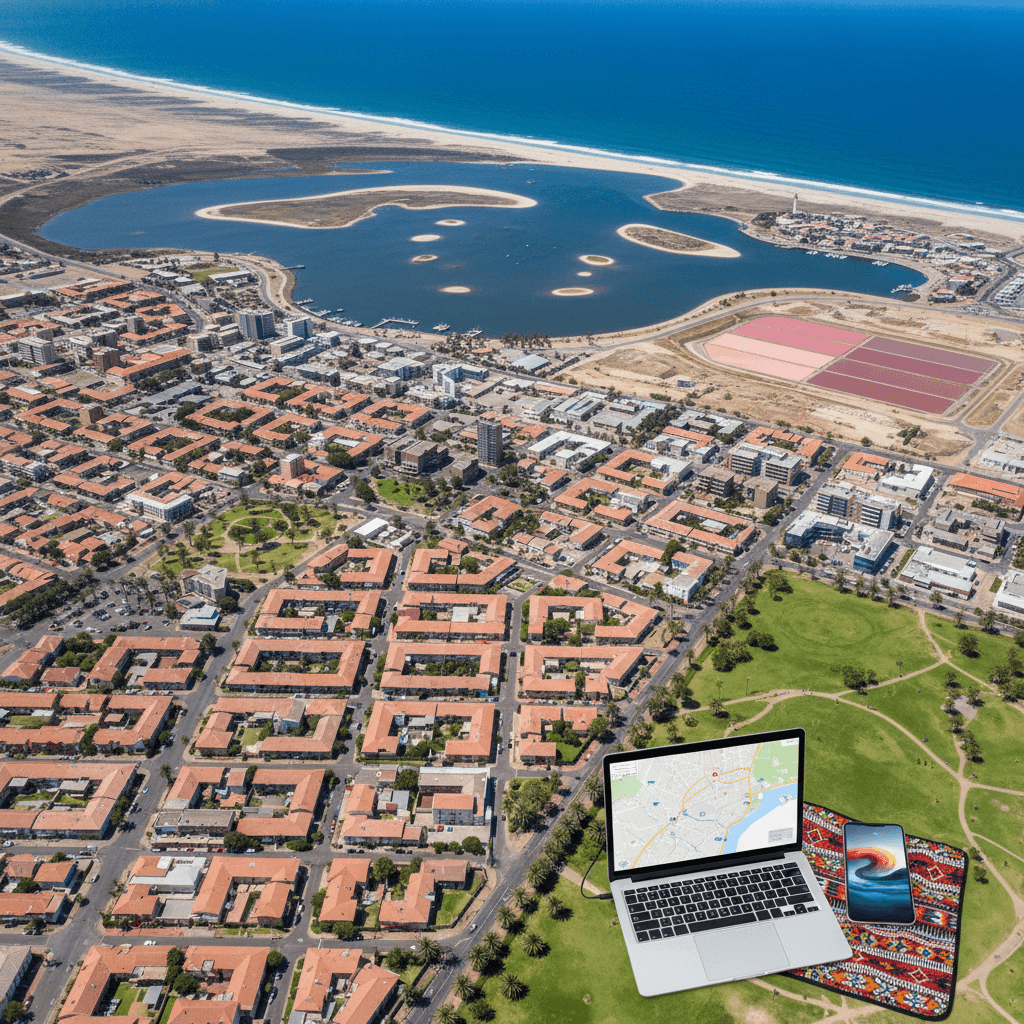
Walvis Bay
🇳🇦 Namibia
Walvis Bay doesn't try to impress you. That's, honestly, a big part of the appeal. It sits on Namibia's Atlantic coast where the Namib Desert meets the cold Benguela Current and the result is this quietly surreal place where you can watch flamingos wade through a lagoon in the morning, smell salt and diesel from the working harbor by noon and be back at your laptop by two without feeling like you've missed anything.
The vibe is slow, deliberate and a little rough around the edges. This is a port town first, a tourist destination somewhere further down the list and it doesn't pretend otherwise. The streets aren't polished, the nightlife is modest at best and the expat scene is small enough that you'll recognize faces within a week.
Most nomads who land here are either passing through to Swakopmund or they've deliberately chosen quiet over convenience, the city rewards the latter. Afrikaans is woven into daily life alongside English and Oshiwambo, so conversations shift mid-sentence, shop signs layer two languages and the accent has this flat, unhurried quality that matches the pace of everything else.
What makes Walvis Bay genuinely different from other affordable coastal destinations is the strangeness of its geography. The air is dry and cool even in summer thanks to the cold current offshore, so none of that oppressive humidity you'd get in, say, a Southeast Asian beach town. The fog rolls in some mornings, thick and grey, muffling the harbor sounds and making the whole place feel weirdly cinematic.
The downsides are real. There's no dedicated coworking culture, the social scene takes effort to crack and if you need the energy of a city around you to stay productive, Walvis Bay will wear on you fast. It's not for everyone, frankly.
But if you want low costs, clean air and zero distractions, it delivers. Monthly living runs around $857 all-in for one person, budget travelers can get by on less and the seafood alone, fresh oysters at the lagoon for a few dollars, is reason enough to stay an extra week.
Walvis Bay is the kind of place that turns out to be more interesting than it looks on a map, just not in ways you can easily explain to someone who hasn't been.
Walvis Bay won't drain your savings. Most nomads get by comfortably on $800 to $1,200 a month and if you're willing to share a place or live a bit further from the waterfront, you can push that down to $500 to $700 without much sacrifice.
Rent is, honestly, the biggest variable. A studio or one-bedroom in a central neighborhood runs roughly $387 to $474 a month, which is reasonable for a coastal city with this kind of scenery. Go further out toward the quieter residential edges and you're looking at $300 to $400, though you'll want a car because walkability drops off fast out there.
Typical Monthly Costs
- Rent (studio/1BR central): $387 to $474
- Rent (outskirts/shared): $300 to $400
- Street food or fast lunch: $2.65 to $3.25
- Mid-range dinner for two: around $21
- Monthly transport: $25 to $30
- Internet (home broadband): around $66
- Gym membership: around $37
- Doctor's visit: around $17
Food is where Walvis Bay, turns out, quietly impresses. Fresh oysters and seafood are genuinely cheap here because you're buying them practically at the source and a sit-down dinner at a decent spot like Anchors Waterfront won't wreck your budget the way a similar meal would in Cape Town or Windhoek. Street food is almost absurdly affordable, you can eat well for under $4 at lunch without trying.
Internet costs more than you'd expect for a city this size, around $66 monthly for a home connection and speeds range from 13 to 50 Mbps depending on your provider and neighborhood. MTC is the more reliable choice. A mobile data SIM runs almost nothing upfront, with 5GB bundles going for around $5.40.
The one cost that catches people off guard is transport. There's no Uber here, traditional taxis charge around $7.72 for an 8km ride and if you're moving around daily that adds up faster than the official $25 monthly estimate suggests. Renting a car is worth pricing out if you're staying more than a few weeks, it gives you access to day trips and cuts the taxi dependency entirely.
For Digital Nomads: Long Beach
Long Beach is, honestly, the default choice for remote workers and it's easy to see why. You're walking distance from the ocean, the salt air hits you the moment you step outside and the scenery makes a 9am call feel a lot less painful. Rent runs higher than elsewhere in Walvis Bay, closer to the $474 range for a decent one-bedroom, but most nomads find the tradeoff worth it.
The area gets some tourist foot traffic, which can feel intrusive on quieter streets. Still, it's the most walkable stretch of the city and the promenade gives you a solid place to decompress after work.
For Expats: Meersig
Meersig is where longer-term expats tend to land, turns out it's the waterfront luxury option in a city that doesn't have many of them. Properties here are in high demand, prices reflect that and you won't find many bargains. But the neighborhood is calm, well-maintained and the kind of place where you actually want to spend an evening on a patio rather than escape to somewhere else.
Expats recommend it for the community feel, small as it's. The Walvis Bay expat scene is frankly thin, so being in a neighborhood where familiar faces show up at the same spots matters more than it would in a bigger city.
For Families: Fairways
Quiet. Secure. That's the short version of Fairways. It's a residential area that doesn't try to be anything other than what it's, which makes it genuinely good for families who want predictability over excitement. You won't get ocean views and the nearest good seafood spot requires a drive, but the tradeoff is a neighborhood where kids can actually move around without constant supervision.
Rent on the outskirts, including areas like Fairways, can drop to the $300-400 range, which is weirdly affordable given how livable the area is.
For Solo Travelers: The Lagoon Area
The Lagoon area is central, practical and doesn't pretend to be glamorous. Self-catering units are available and affordable, amenities are basic but functional and you're close enough to the waterfront that the smell of brine and low tide becomes your morning alarm. Solo travelers often say it's the easiest base for day trips out to Sandwich Harbour or Swakopmund, which are genuinely worth the effort.
Walvis Bay isn't going to win any awards for coworking infrastructure. It's a port city, not a tech hub and the digital nomad scene here is, honestly, pretty thin. That said, it's more workable than you'd expect if you come in with realistic expectations.
WiFi in cafes and hotels runs 13 to 50 Mbps in most urban spots, which is enough for video calls and cloud work without much frustration. The connection holds up better than the infrastructure suggests it should, turns out MTC and Telecom Namibia have decent urban coverage here. Don't bank on it being rock-solid every single day though, there are drops.
For dedicated coworking, Regus has a location in Walvis Bay with flexible memberships running roughly $100 to $200 a month depending on access level. It's not a buzzy nomad hub with cold brew on tap, it's a quiet, functional office space, which honestly suits the pace of this city just fine. Most nomads end up working from hotel lobbies or cafes when they want a change of scenery and the coffee culture here is good enough to make that bearable.
For mobile data, grab a SIM from MTC or TN Mobile when you arrive. Starter SIMs cost almost nothing, somewhere between $0.40 and $5 and data bundles are genuinely affordable: 5GB for 7 days runs about $5.40 and you can get up to 18GB for around $15.50. You'll need your passport to register, buy at any MTC shop or the airport. eSIMs are available but the options are limited, so physical SIM is the safer bet.
A few practical notes on working here:
- Best cafes for work: spots near the lagoon tend to have decent WiFi and enough ambient noise to feel productive without being distracting
- Coworking cost: Regus flexible desk, $100 to $200 per month
- Data bundles: MTC 5GB (7 days) around $5.40, 18GB around $15.50
- Backup plan: mobile hotspot via MTC, speeds are reliable enough to use as your primary connection if needed
The nomad community here is small. There are no weekly meetups, no Slack groups, no coworking happy hours. You'll find expats through Facebook groups if you look, but mostly you're working solo. For some people that's the whole point of coming here.
Walvis Bay is, honestly, one of the safer port towns in southern Africa, but that doesn't mean you switch your brain off. Petty crime is the main concern: pickpocketing and car break-ins happen around the central market and transport hubs, it's annoying but rarely escalates to anything worse. Violent crime is low compared to Windhoek or Johannesburg, still, avoid wandering unlit residential streets after dark or sitting distracted on your phone at a busy taxi rank.
Some outer suburbs feel uneasy at night, the city center thins out quickly after sunset and that emptiness can feel unsettling even when nothing's actually wrong. Most nomads stick to Long Beach and Meersig after dark, where there's at least some foot traffic and the odd open restaurant. Common sense goes a long way here.
Emergency numbers to save immediately:
- Police: 10111
- Ambulance: 112
Healthcare is, weirdly, better than you'd expect for a city this size. Welwitschia Private Hospital is the go-to for anything serious, English-speaking staff, decent equipment and a level of care that won't leave you panicking. The public Walvis Bay State Hospital exists, but unless you have no other option, it's not where you want to spend a sick afternoon. Medixx clinic handles general GP visits well and a standard doctor's consultation runs around $17, which is frankly a relief after paying Western prices.
Pharmacies are stocked with common medications, you won't be scrambling for basics. That said, bring any specialist prescriptions from home because sourcing niche drugs locally is a real headache.
Healthcare options at a glance:
- Private hospital: Welwitschia Private Hospital, English-speaking staff, quality care
- Public hospital: Walvis Bay State Hospital, basic facilities
- Clinic: Medixx, good for general GP needs
- GP visit cost: approximately $17
- Pharmacies: well-stocked for common medications
Travel insurance isn't optional here, it's the one thing that turns a medical situation from a financial disaster into a minor inconvenience. Evacuation to Windhoek or South Africa for complex care is sometimes necessary and those bills without coverage are brutal. Sort it before you land.
Walvis Bay isn't built for getting around without a car. The city sprawls, walkability scores hover around 40 out of 100 and the promenade is honestly the only stretch where walking feels like a real option rather than a last resort.
Public transport exists, technically. Private minibuses and shared taxis cover the main routes for around $0.74 a ticket or roughly $24 a month if you're committing to it, but the network is patchy and schedules are, turns out, more of a suggestion than a timetable. There's no Uber here, no Bolt, nothing like that.
Traditional taxis are your go-to for point-to-point trips. Expect to pay around $7.72 for an 8km ride, which adds up fast if you're moving between neighborhoods daily, so most nomads who stay longer than a week or two just rent a car and be done with it. It's the honest move.
Renting a car opens everything up. Sandwich Harbour, the salt works, the dunes just south of town, none of it's accessible without wheels and Swakopmund is only about 30km up the coast. Bike and scooter rentals do exist through operators like M.N.G Tours, bikeability sits around 45 out of 100, the terrain is flat which helps, but the roads aren't exactly designed with cyclists in mind.
Getting in from Walvis Bay Airport is straightforward. The airport sits about 15km from the city center, shuttles and private taxis handle transfers without drama, Southern Taxi Shuttles being one of the more reliable options locals mention.
A few practical notes on moving around:
- Shared taxis: Cheapest option, around $0.74 per trip, but routes are limited and waits can be long
- Private taxis: No app, flag them down or ask your accommodation to call one; roughly $7.72 for 8km
- Car rental: Strongly recommended for anything beyond the town center or lagoon area
- Bikes/scooters: Available through tour operators, fine for flat coastal stretches, weirdly underused given the terrain
- Airport transfers: Shuttle or taxi, 15km, book ahead during peak season
The bottom line: budget for transport, it's not optional here and don't assume you'll walk your way through a week of errands.
English is the official language and you'll have no trouble using it anywhere in Walvis Bay, from the harbor offices to the corner café. Most locals in urban and tourist-facing areas speak it fluently, sometimes with a soft Namibian lilt that takes a day or two to tune into. Don't stress about language barriers here.
That said, Afrikaans is genuinely everywhere, it's the mother tongue for a large chunk of the population and the default language in many shops, markets and casual conversations between locals. Oshiwambo is also common, especially among workers who've relocated from the north. What you'll actually hear on the street is a fluid mix of all three, sometimes mid-sentence, which locals call "Namlish." It's, honestly, charming once you stop trying to follow every word.
A few Afrikaans phrases go a long way socially. Locals notice when you make the effort and it tends to warm things up fast in places like the lagoon-side stalls or the smaller grocery shops off the main drag.
- Hello: Aahola (Oshiwambo) or Hallo (Afrikaans)
- Thank you: Dankie (Afrikaans)
- Do you speak English?: Praat jy Engels? (Afrikaans)
- Please: Asseblief (Afrikaans)
Google Translate handles Afrikaans well, turns out it's one of the better-supported African languages on the app, so keep it handy if you wander into a conversation that outpaces you. Oshiwambo support is patchier, frankly, but you're unlikely to need it for day-to-day nomad life.
Written communication is almost entirely in English. Signage, menus, government forms, hospital paperwork at Welwitschia Private, lease agreements on Property24, all English. You won't find yourself squinting at a menu trying to decode anything.
Phone and WhatsApp are the dominant communication tools here. Locals use WhatsApp for everything, booking taxis, coordinating with landlords, connecting with the small expat Facebook groups. Get a local MTC SIM early, data bundles are cheap (5GB for around $5.40) and it'll make every practical interaction smoother. Email response times can be slow, nobody's in a rush in Walvis Bay, that's just the pace of the place.
Walvis Bay sits on the cold Benguela Current, which means it doesn't behave like the rest of southern Africa. While Namibia's interior bakes in summer heat, the Atlantic keeps temperatures here surprisingly moderate year-round, though "moderate" comes with a catch: the fog. Dense, damp, Atlantic fog rolls in most mornings, especially in winter and it clings to everything. Your jacket, your lens, your mood.
May through October is the sweet spot. Days sit comfortably between 20 and 25°C, rainfall is almost nonexistent and the light is sharp and clear once the fog burns off by mid-morning. Most nomads who've spent time here agree this is when the city feels best, the flamingos are out on the lagoon, the dunes at Sandwich Harbour are walkable without sweating through your shirt and evenings are cool enough to actually enjoy sitting outside.
Summer (November through April) is, honestly, a different experience. Temperatures push toward 26 to 30°C and the humidity climbs, which wouldn't be unbearable except the fog gets thicker and stranger, sometimes lasting well into the afternoon. Rain stays low compared to inland Namibia, but when storms do come through they're abrupt and can mess up day trips to Swakopmund or the dunes. It's not miserable, it's just not ideal.
Here's a quick breakdown by season:
- May to October (dry winter): 20 to 25°C highs, 12°C nights, very low rain, morning fog common but clears. Best overall conditions.
- November to December (shoulder): 26°C highs, humidity rising, occasional storms, still manageable.
- January to April (summer): 25°C average highs but feels warmer with humidity, low-to-medium rain, fog heaviest and most persistent.
One thing travelers get wrong: packing light clothes and nothing else. Even in summer, evenings drop fast, the ocean wind is real, it bites. Bring a layer you'd actually wear, not just a thin cardigan.
If you're choosing between months, aim for July or August. The fog is still there in the mornings, that's just Walvis Bay, but afternoons are clear, wildlife activity peaks and you won't be competing with peak tourist pricing either.
Get a MTC or TN Mobile SIM on arrival, it's the single most useful thing you'll do your first day. Starter packs run about $0.40 to $5 and data bundles are genuinely cheap: 5GB for roughly $5.40, valid seven days. Buy at any mobile shop or the airport, bring your passport to register, it's a quick process.
ATMs from Standard Bank and FNB are scattered around town and work reliably with foreign cards. Revolut and Wise hold up fine for transfers, but carry some cash because markets and smaller spots won't take cards and nobody here is apologetic about that.
For accommodation searches, Property24.co.na is, honestly, the most useful local listing site. Expect to pay around N$15,000 a month and up for a decent one-bedroom, which works out to roughly $800 on the low end. Langstrand and Meersig list some of the nicer waterfront options, though they go fast.
Getting around takes adjustment. There's no Uber, taxis are traditional and cost around $7.72 for an 8km ride and the minibus system is cheap at under $1 a ticket but turns out to be confusing if you don't already know the routes. Renting a car is worth it if you're planning day trips, because Sandwich Harbour and Swakopmund don't wait for shuttle schedules.
Healthcare is decent for a city this size. Welwitschia Private Hospital handles most things competently, staff speak English and a basic doctor's visit runs about $17. Keep travel insurance current regardless. Emergency numbers: 10111 for police, 112 for ambulance.
A few customs things to know:
- Tipping: 10 to 15 percent is standard at restaurants, not optional
- Greetings: take them seriously, a quick nod doesn't cut it here
- Dress: conservative away from the beach, weirdly easy to misjudge this one
- Language: English works everywhere in town; knowing "Dankie" (thank you) and "Praat jy Engels?" (do you speak English?) in Afrikaans goes further than you'd expect
Walvis Bay is quiet, frankly. The expat community is small, nomad meetups are basically nonexistent and Facebook groups are your best bet for connecting with anyone. That's fine if you came for the flamingos and the fog. Just don't arrive expecting a social scene.
Need visa and immigration info for Namibia?
🇳🇦 View Namibia Country GuideHidden Gem
Worth the effort