Valletta
🇲🇹 Malta
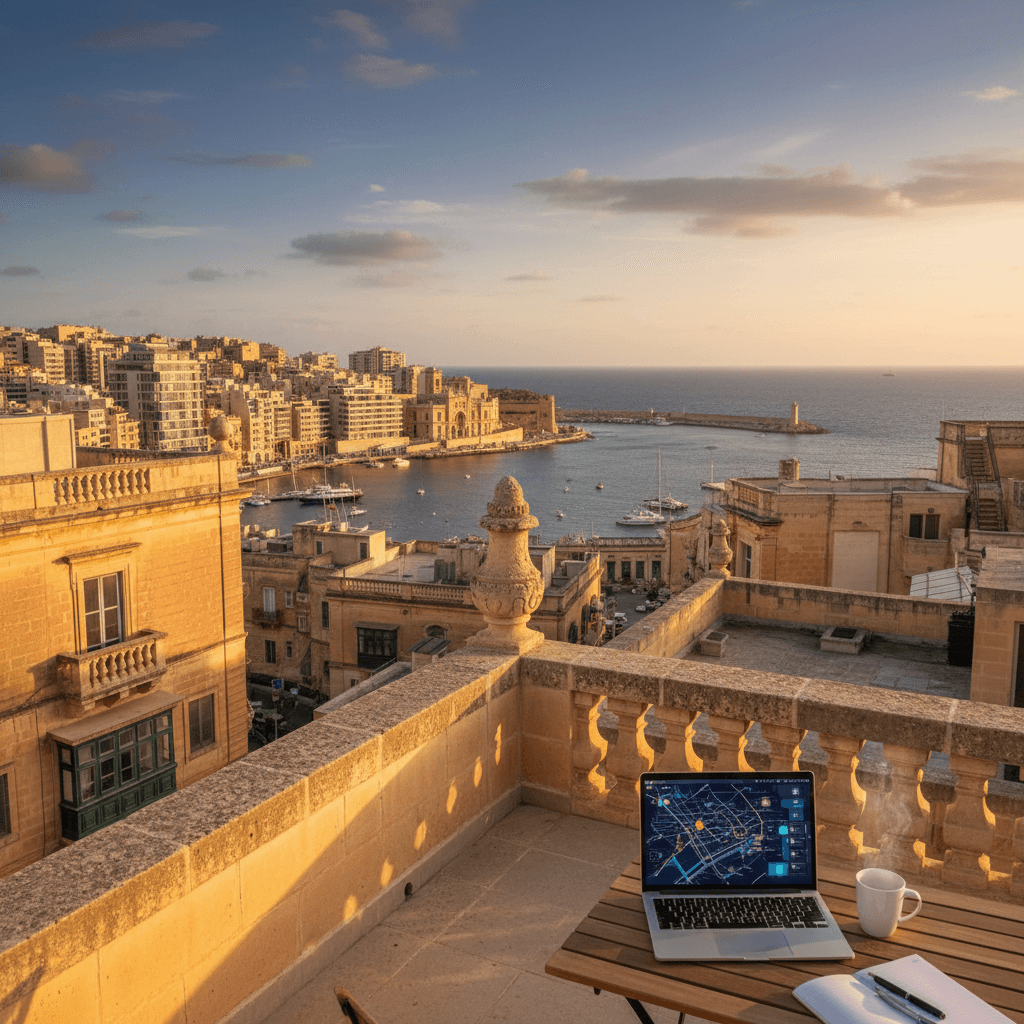
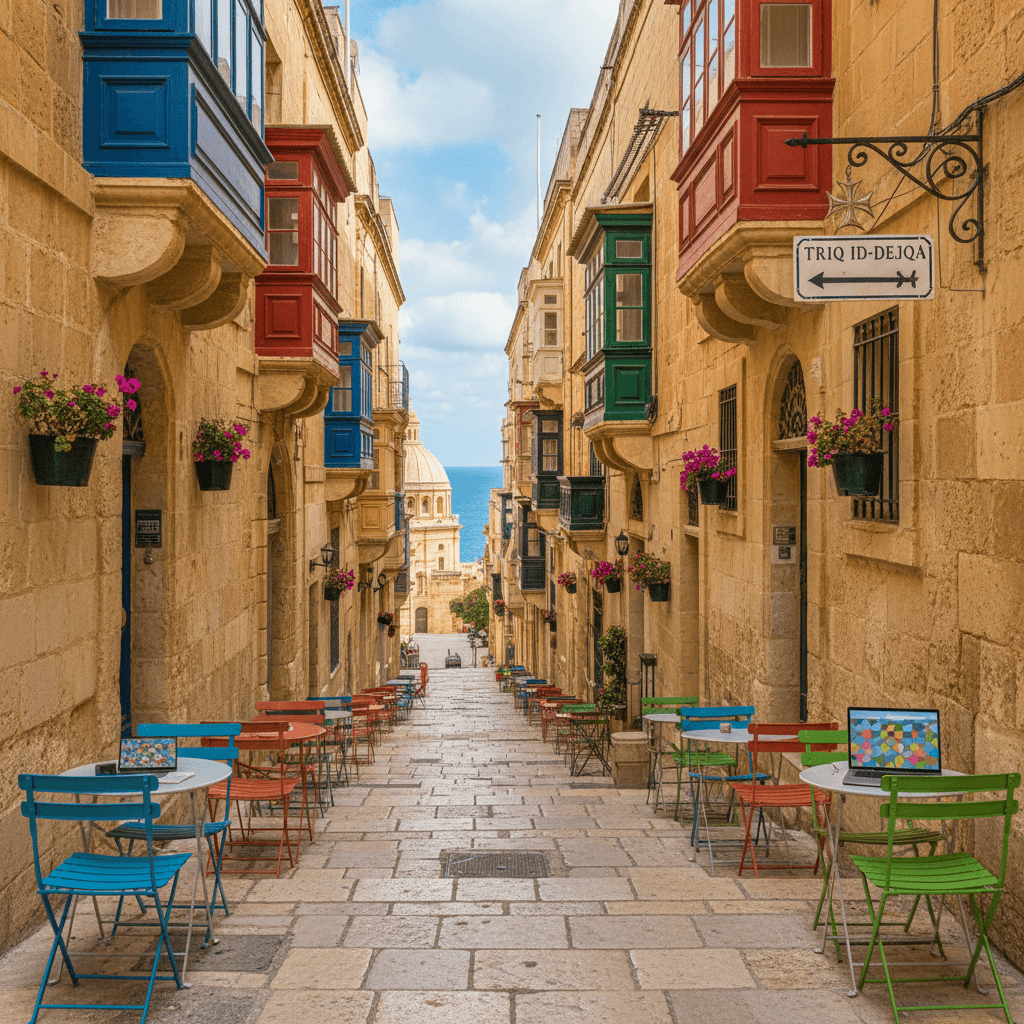
Valletta is, honestly, one of the smallest capitals in the world and that compactness is the whole point. You can walk the entire city in under 20 minutes, which sounds limiting until you realize every block has a baroque church, a crumbling palazzo with sun-bleached shutters or a cafe terrace where the smell of coffee and pastizzi drifts out onto the street. It doesn't feel like a capital. It feels like a village that got very fancy a few centuries ago and never quite let go of itself.
The vibe is slow. Not frustratingly slow, just Mediterranean slow, the kind where lunch stretches past 2pm and nobody's rushing anywhere. Mornings are quiet and golden, the limestone buildings catching the light in a way that makes even a grocery run feel cinematic. By midday in summer, the heat off the stone is brutal and most people disappear indoors. That's not a metaphor, it's a survival strategy.
Culturally, Malta is a genuinely strange mix. British colonial infrastructure, Italian food sensibilities, deeply Catholic Maltese identity and a growing wave of EU expats and remote workers who've figured out that English is an official language here and the airport's well connected. The result is a city that's easy to land in, the bureaucracy is manageable, the locals are direct but warm and the learning curve isn't steep.
What makes Valletta different from other nomad spots isn't the coworking spaces or the fiber speeds. It's the density of actual history you're sitting inside, the city is a UNESCO World Heritage Site and it shows and the fact that you can watch a Grand Harbour sunset from a fortification wall that's been there since the 1500s. That does something to your headspace, turns out.
The downsides are real. It's pricier than most nomads expect, the tourist crowds in peak season are genuinely annoying and the hills will punish you if you're carrying groceries. Nightlife seekers tend to migrate to Sliema or St. Julian's after a few weeks, Valletta's wine bars close early and Paceville is a different world entirely.
Still, most people who come for a month end up staying three. That's probably the clearest thing you can say about it.
Valletta isn't cheap. Most nomads arrive expecting Mediterranean affordability and leave a little surprised, a little poorer and honestly, a little annoyed at themselves for not budgeting more carefully. A realistic monthly budget for a single person runs €1,800 to €2,500 and that's not living lavishly.
Rent is the biggest hit. A one-bedroom in Valletta's center runs €900 to €1,157 a month and landlords here don't negotiate much, posting prices and expecting you to take it or leave it. Drift toward Gzira or the edges of Sliema and you'll find studios closer to €800 to €892, which, surprisingly, still gets you decent space and much better transport links than people expect.
Food is where you can actually control the damage. Pastizzi from a street counter cost almost nothing, a proper lunch menu at a mid-range spot like I Pupi Pizzeria runs around €17 and a sit-down dinner for two at somewhere upscale will clear €80 without much effort. Budget nomads who cook at home and grab street food regularly can eat well for €300 to €400 a month, it just takes a bit of discipline when every other corner smells like fresh bread and garlic.
Here's how the tiers break down in practice:
- Budget (€1,200 to €1,500): Shared housing, street food daily, Tallinja bus pass at €33/month
- Mid-range (€1,800 to €2,000): Solo one-bedroom, mix of cooking and eating out, occasional Bolt ride
- Comfortable (€2,500+): Premium apartment, coworking at Grand Central (€37/day or €217+/month), upscale dining a few nights a week
Transport is turns out one of the cheaper line items. The Tallinja monthly bus pass covers the whole island for €33 and Bolt handles airport runs for €15 to €20. Coworking, though, adds up fast if you're using it daily.
The honest take: Valletta costs more than Lisbon, more than most of Southeast Asia and roughly the same as a mid-tier Western European city. What you're paying for is the location, the walkability, the history literally outside your window. Whether that trade-off works depends entirely on what you're earning.
For Digital Nomads
Valletta itself is the obvious pick and honestly, it earns it. You're walking distance from coworking spaces like Grand Central on Strait Street, good cafes and sea views that make a 2pm coffee break feel absurd in the best way. The streets smell like pastizzi grease and old stone, the baroque facades are genuinely beautiful, it just costs more than most nomads expect.
Rent for a one-bedroom runs €900 to €1,157 in the center, which adds up fast when you factor in coworking passes. Most nomads find Valletta great for inspiration but lean toward Sliema or St. Julian's for day-to-day convenience, faster grocery runs and a slightly less tourist-clogged atmosphere during peak season.
For Expats and Young Professionals
Sliema and St. Julian's are, turns out, where most long-term expats actually land. There's a real community here, InterNations runs regular events in St. Julian's, Facebook expat groups are active and the waterfront has enough rooftop bars to keep things social without requiring a plan. Paceville, the nightlife pocket inside St. Julian's, gets loud and chaotic on weekends, it's fine if you're not sleeping nearby.
Gzira sits just between Sliema and the ferry terminal and is weirdly underrated for expats on a tighter budget. Rent drops noticeably, buses connect you everywhere and you're still a ten-minute walk from Sliema's waterfront. It's not charming. But it's practical and that matters when you're settling in for six months or more.
For Families
Pembroke and Swieqi are quieter, greener and built around actual residential life rather than tourism. Schools are nearby, there's room to breathe and you won't hear club music at midnight. The tradeoff is real though: you'll need a car, Valletta feels far on a Tuesday morning and the areas don't have much character to speak of.
For Solo Travelers
Stay in Valletta proper. Full stop. The walkability alone justifies the higher rent if you're only here for a few weeks and the concentration of cafes, wine bars and UNESCO-listed streets means you can fill a day without trying. The hills are steep, your calves will notice, but the harbor views from the Upper Barrakka Gardens make that a reasonable trade.
Connectivity in Valletta is, honestly, better than the city's age would suggest. Speeds run between 47 and 148 Mbps depending on your café or coworking space and most nomads find it reliable enough for video calls without much fuss. That said, older buildings with thick stone walls can kill a signal fast, so check before you commit to a long-term rental.
For dedicated coworking, you've got a few real options. Grand Central on Strait Street is the most established, day pass around €35-40, monthly hot desk €300-400 depending on plan. It's well-run, the community is decent and the location is genuinely good. Business Labs Malta in Birkirkara (not Valletta) is worth checking if you need a more corporate setup for client calls or occasional meeting rooms.
Cafés work fine for lighter days. Most places don't mind you camping for a few hours, turns out the work-from-café culture is pretty normalized here, just order something every hour or so and you won't get any looks. Caffe Cordina in Republic Square is gorgeous but gets crowded with tourists by midmorning, so go early or skip it for a deadline day.
For mobile data, the main providers are:
- Epic: Best value, €9.99 for 8GB over 28 days, widely recommended by nomads
- GO: Solid coverage, slightly pricier plans
- Melita and Vodafone: Both reliable, worth comparing if you need more data
Pick up a SIM at the airport on arrival, it's the easiest move, most shops in Valletta stock them too. Epic's Value Pack is, weirdly, one of the cheapest prepaid options in the EU for what you get.
One honest downside: coworking costs here aren't cheap relative to what you'd pay in Lisbon or Tbilisi and there aren't many options, so if Grand Central is full or doesn't suit your vibe, your choices thin out quickly. Nomads who stay longer than a month often just negotiate a fixed desk and treat it as a sunk cost. It's not ideal, but it works.
Malta is, honestly, one of the safer countries in Europe and Valletta specifically has very low street crime. Pickpocketing happens but it's rare; the bigger concern most nomads flag is Paceville late on weekends, where the nightlife crowd gets rowdy and things can get messy. Stick to Valletta's center and Sliema at night and you'll be fine.
Emergency services are reached by dialing 112, which covers police, ambulance and fire. English-speaking operators answer, so there's no language barrier when it counts.
Healthcare is solid. Mater Dei Hospital, located just outside Valletta in Msida, is the main public facility and it's genuinely well-equipped by European standards, expats tend to be pleasantly surprised by the quality. That said, public wait times can drag, so most nomads staying longer than a month opt for private clinics in Sliema or St. Julian's, where you'll get seen quickly and the cost is still reasonable compared to the UK or US.
Pharmacies are everywhere, they're easy to spot by the green cross and staff almost always speak English. You can pick up a lot over the counter here that would require a prescription elsewhere, which is useful if you're managing something minor and don't want to bother with a clinic visit.
Travel insurance is worth having. Public care is accessible but private is faster and dental work especially isn't covered if you're not a resident. Most nomads carry a policy that covers both medical evacuation and outpatient visits, it's not expensive and removes a lot of headache.
A few practical things worth knowing:
- Emergency number: 112 (police, ambulance, fire)
- Main hospital: Mater Dei, Msida (public, good quality, slower)
- Private clinics: Sliema and St. Julian's (faster, English-speaking)
- Pharmacies: Widespread, English spoken, good over-the-counter access
- Avoid: Paceville after midnight if you're not looking for that scene
The sun, turns out, is its own health consideration. Summers are brutal, 30°C plus with no shade on Valletta's limestone streets and the heat radiates off the stone in a way that catches people off guard. Drink water constantly in July and August.
Valletta is, honestly, one of the most walkable capitals in Europe. The whole city sits on a peninsula about one kilometer wide, so most of what you need is within a 15-minute walk. That said, those streets are steep, the summer heat is punishing and the cobblestones will destroy cheap shoes.
For anywhere outside the city walls, you're relying on the Tallinja bus network. A single ride costs €2 to €2.50 and covers two hours of travel. Visitors staying for a week often find the Explore Card worth it, which offers unlimited travel for seven days at €25. Buses connect Valletta to Sliema, St. Julian's and the airport without much hassle, though they run late fairly often and the timetable is more of a suggestion than a commitment, especially on weekends.
Ride-hailing is where things get genuinely convenient. Bolt is the go-to app here, cheaper than eCabs and more reliable than flagging anything down, with airport runs to Sliema typically landing around €15 to €20. The public bus to the airport (route TD) costs just €3.50 and takes 25 to 40 minutes, it's perfectly fine if you're not rushing.
For two-wheeled options:
- Tallinja Bike: pay-per-minute from €0.13/min, decent for flat stretches near the waterfront
- Whizascoot: app-based scooter rentals, useful for hopping between Sliema and St. Julian's without waiting for a bus
Renting a car is, turns out, more trouble than it's worth if you're based in Valletta itself. Parking is a genuine nightmare inside the walls, traffic in Sliema gets ugly during school runs and the one-way street logic in the capital will test your patience. Save it for day trips to Mdina or the Blue Lagoon, where buses are slow and inconvenient.
Ferries run between Valletta and Sliema or the Three Cities, they're cheap, fast and weirdly underused by most visitors. The Gozo ferry from Ċirkewwa takes about 25 minutes and is a straightforward day trip. For getting around Malta day-to-day, the bus pass plus Bolt covers almost everything, most long-term nomads here don't bother with anything else.
Malta has two official languages: Maltese and English. In practice, you'll get by entirely in English, it's spoken fluently by almost everyone you'll encounter, from landlords to baristas to government clerks. Don't stress about learning Maltese before you arrive.
That said, knowing a few words goes a long way with locals. Maltese sounds, honestly, like nothing else you've heard before, a mix of Arabic roots, Italian lilt and the occasional English word dropped in mid-sentence. You'll hear it everywhere in Valletta's streets and markets, fast and musical, occasionally punctuated by what sounds like Italian swearing.
- Iva: Yes
- Le: No
- Jekk jogħġbok: Please
- Grazzi: Thank you
- Titkellem bl-Ingliż?: Do you speak English? (You'll rarely need this, but locals appreciate the effort.)
Most Maltese people are, turns out, genuinely pleased when foreigners attempt even a single word. It's not expected, so it lands well. Google Translate handles Maltese reasonably well for written text, though spoken Maltese is trickier to parse because it moves fast and blends heavily with Italian phrases.
Italian is weirdly common here too. Decades of Italian television, geographic proximity and cultural overlap mean many Maltese people understand basic Italian and menus, signage and shop names often mix both languages. If you speak Italian, you'll feel right at home, it opens doors that English alone sometimes doesn't.
Written communication is almost always in English for anything official, administrative or business-related. Contracts, lease agreements, bank documents, coworking memberships at places like Grand Central or Tempodesk, all in English. No translation headaches, no guesswork.
Phone and data communication is straightforward. Epic, GO, Melita and Vodafone all sell SIMs at the airport and in shops across Valletta. Epic's Value Pack runs around €10-11 for ample data over 28 days, which covers most remote work needs alongside coworking Wi-Fi. WhatsApp is the default for everything here, landlords, coworking contacts, expat groups on Facebook. Download it before you land, everyone communicates through it and showing up without it will slow you down.
Malta runs hot and dry in summer, mild and occasionally soggy in winter. That's the basic shape of it and honestly it's one of the more forgiving Mediterranean climates you'll find.
April through June and September through October are the sweet spots. Temperatures sit between 19°C and 28°C, the sea's warm enough to swim in without wincing and the tourist crowds haven't fully taken over the narrow streets of Valletta yet. The light in October is particularly good, that low golden afternoon kind that makes the honey-colored limestone glow and you can still eat outside without sweating through your shirt.
July and August are brutal. Genuinely. Temperatures hit 30°C and above, the air carries a gritty, dry heat that clings to you after five minutes outside and the streets smell of warm stone and sunscreen. Valletta's steep hills, which are charming in April, become a slog. Most nomads who've done a full summer say the same thing: get out by midday or don't bother. If you're already here, the coworking spaces are air-conditioned, the sea hits 26°C in August, it's a tradeoff.
Winter is mild by northern European standards but wetter than people expect. January sits around 15°C maximum, which sounds fine until you realize Maltese buildings aren't insulated for cold, the tile floors are freezing and rain can come in sideways off the sea for days at a stretch. November through February sees the most rain, turns out January averages around 13 rainy days, which won't ruin your stay but will affect your mood if you came expecting sunshine.
Quick breakdown by season:
- Spring (Apr,Jun): 19,26°C, low rain, ideal for walking and working outdoors
- Summer (Jul,Aug): 28,32°C, zero rain, very crowded, exhausting heat by afternoon
- Autumn (Sep,Oct): 22,30°C, minimal rain, warm sea, best overall balance
- Winter (Nov,Mar): 12,18°C, frequent rain, quieter city, cheaper accommodation
If you're picking one month, go with October. The city's yours, the weather's cooperative and you won't hate yourself after climbing the hill to the Upper Barrakka Gardens.
Malta runs on English, so you won't hit a language wall, but a few Maltese phrases go a long way with locals. Jekk jogħġbok means please, grazzi is thank you and honestly, just attempting them gets you a warmer reception at the corner bar than any amount of polite English ever will.
SIM Cards and Banking
Pick up an Epic SIM at the airport before you even grab your bags. Their Value Pack runs about €9.99 for 8GB over 28 days, it's genuinely the easiest setup on the island. For banking, Revolut and Wise handle day-to-day spending without the brutal conversion fees; if you need a local account, BOV and HSBC both have English-speaking staff and are used to dealing with expats.
Getting Around
Valletta itself is walkable, though those steep limestone streets will remind your calves of that fact by day two. The Tallinja bus pass costs €33 a month, covers the whole island and is, turns out, one of the better deals you'll find here. For airport runs, Bolt is cheapest at around €15 to €20 to Sliema; the direct TD bus costs €3.50 if you're not in a hurry and don't mind a stop or two.
Finding a Place to Stay
Short-term, Airbnb and Booking.com work fine. Long-term is a different story, Facebook groups are, frankly, where most nomads actually find apartments and landlords often prefer a quick message over a formal agency process. Budget for €800 to €900 minimum for a decent studio outside the city center, more if you want Valletta proper.
Weather and Timing
Summers are brutally hot. July and August hit 30°C with no real relief, the stone streets radiate heat back at you and the tourist crowds make the narrow alleys feel airless. April through June and September through October are the sweet spots, warm enough to swim, cool enough to actually think. Winters are mild but wetter than most people expect, January brings real rain.
Quick Customs to Know
- Tipping: 10% is standard at sit-down restaurants, not optional.
- Churches: Cover your shoulders and knees; they'll turn you away at the door.
- Driving: Malta drives on the left, not the right, which catches a lot of visitors off guard.
- Day trips: Ferries to Gozo run regularly; buses reach Mdina and the Blue Lagoon without needing a car.
Need visa and immigration info for Malta?
🇲🇹 View Malta Country GuideNomad Haven
Your home away from home