Uvita
🇨🇷 Costa Rica
The Pulse of the South Pacific
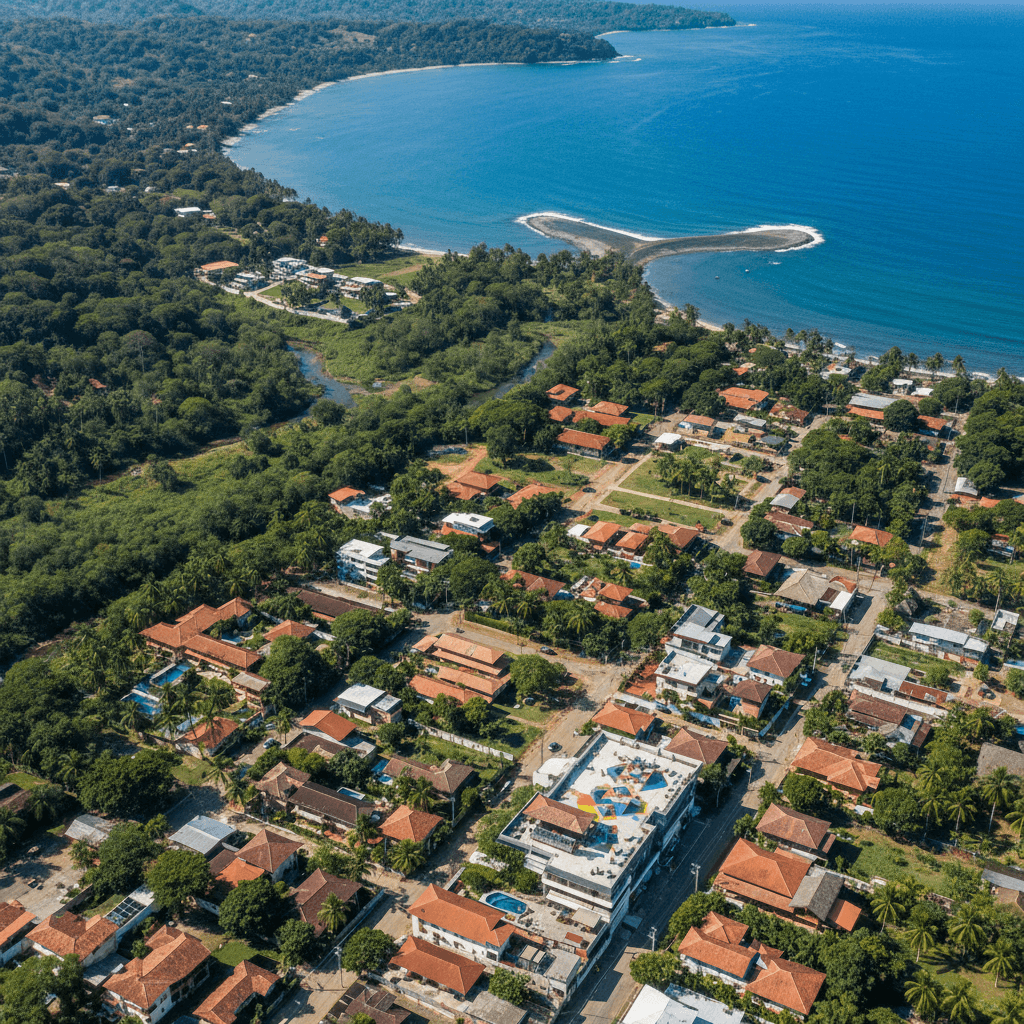
Uvita isn’t the place you go to "see and be seen." Unlike the high-energy surf scenes of Santa Teresa or the developed tourism of Tamarindo, Uvita feels like a deep, collective exhale. It is a town defined by the rhythm of the tides and the literal shape of the land. The iconic Whale’s Tail sandbar at Marino Ballena National Park isn’t just a photo op; it’s a daily reminder that nature runs the show here. You’ll find yourself trading late-night parties for 5:30 AM wake-up calls to catch the mist rising off the jungle canopy.
The vibe is eco-conscious and intentionally slow. It’s where the rainforest actually meets the ocean, meaning your morning Zoom call might be soundtracked by howler monkeys or the heavy patter of tropical rain. Nomads who thrive here are usually those seeking a "green" lifestyle over a "glam" one. You’ll spend your afternoons exploring the Uvita Waterfall, surfing the consistent breaks at Playa Hermosa, or spotting humpback whales during the peak seasons of December to March and mid-July to November.
The trade-off for this tranquility is a sense of isolation that can occasionally feel heavy. There’s no real "downtown" in the traditional sense, and the humidity is a constant companion that will test your patience and your electronics. It’s a place that rewards self-sufficiency. If you need a curated social calendar to feel connected, you might find Uvita a bit too quiet. But if you want to work from a cafe with a view of the primary rainforest, you’ve found your spot.
Cost of Living Breakdown
While Uvita is gaining popularity, it remains more affordable than the northern hubs of the Nicoya Peninsula. Most nomads find they can live comfortably on a budget of $2,500 to $3,500 per month, though you can certainly squeeze by on less if you stick to local sodas and inland housing.
- Budget Tier ($1,500 to $2,000): Expect a simple studio or 1-bedroom apartment in the town center for $500 to $800. You’ll be eating mostly at local "sodas" where a casado costs $8 to $12, and using a bicycle or local buses to get around.
- Mid-Range ($2,500 to $3,500): This covers a modern 1-bedroom with AC and a pool, often priced between $800 and $1,200. You’ll likely want a scooter or a rugged vehicle, and you’ll dine out at international spots a few times a week.
- Comfortable ($4,000+): This budget secures a luxury villa in the mountains with Pacific views for $1,500+. You’ll definitely need a 4x4 vehicle and will be frequenting the upscale bistro scene.
Where to Set Up Base
The geography of Uvita is split between the flat coastal plains and the steep, lush mountains that rise immediately behind the highway. Your choice of neighborhood completely dictates your daily experience.
- Central Uvita & Bahia: This is the heart of the action for solo nomads. It’s relatively walkable, close to the national park entrance, and has the best concentration of cafes and grocery stores. You’ll sacrifice some privacy for better WiFi and easier social connections.
- The Mountains (Uvita/Dominical Hills): Expats and families often gravitate here for the cooler breezes and jaw-dropping ocean views. You will 100% need a 4x4 vehicle to navigate the steep, unpaved tracks. It’s peaceful and private, but you’ll feel the isolation more acutely.
- Dominical: Located about 15 minutes north, Dominical is Uvita’s grittier, surf-obsessed sibling. It has a more concentrated "backpacker" feel and a legendary Sunday market, though it lacks the infrastructure and modern amenities found in Uvita.
Connectivity & Work Culture
Internet reliability has improved drastically, with fiber optic now reaching many central rentals and cafes. However, the jungle is still the jungle. Power outages are common during heavy rain, so a backup battery and a local SIM card are mandatory. Most nomads use Kolbi or Claro for data; you can grab a starter kit for about $10 and top it up for $30 a month for decent speeds.
The coworking scene is still emerging, often taking the form of "work-friendly" cafes rather than dedicated office spaces. You’ll find people perched with laptops at spots overlooking the waves or tucked into garden cafes in the town center. Expect to pay $10 to $20 for a day pass at the few formal hubs that exist, which usually include high-speed backup and a community of like-minded remote workers.
Practical Realities
Uvita is generally safe, but petty theft is the most common headache. Never leave your bag unattended on the beach while you go for a swim, and don’t leave valuables in your car, even for a few minutes. For healthcare, pharmacies are plentiful for minor issues, but for anything serious, you’re looking at a one-hour drive to San Isidro or Quepos.
Getting around is the biggest hurdle. While the town center is walkable, the best waterfalls, secret beaches, and mountain viewpoints require wheels. If you aren’t renting a car, look into the InDriver app or local taxis, which usually charge $5 to $20 for short hops. If you’re coming from San Jose, the bus is a bargain at $15, but a private shuttle for $100 is much faster and delivers you right to your doorstep.
The Price of Pura Vida
Living in Uvita is a strategic move for nomads who want the Costa Rican experience without the "Disney-fied" price tags of Tamarindo or Nosara. While the South Pacific coast is getting more popular, it remains more affordable than the northern hubs. You can maintain a comfortable lifestyle here for significantly less than in the States or Western Europe, provided you don't try to recreate a suburban lifestyle in the middle of the jungle.
Most remote workers find they fall into one of three budget tiers:
- The Budget Conscious ($1,500 to $2,000/month): This covers a modest studio or one bedroom apartment in the town center, eating at local "sodas" (family run diners), and using a bicycle or your own two feet to get around.
- The Mid Range Nomad ($2,500 to $3,500/month): This is the sweet spot. It gets you a modern one bedroom with AC and perhaps a shared pool, frequent dinners at international cafes, and a budget for a scooter rental or occasional car trips.
- The High End Experience ($4,000+ /month): At this level, you're looking at luxury villas in the mountains with infinity pools overlooking the Whale's Tail, a private 4x4 vehicle, and high end dining several nights a week.
Housing and Neighborhoods
Where you park your laptop changes your cost and your lifestyle drastically. Uvita isn't a single walkable strip; it's a collection of zones spread between the highway and the hills.
Central Uvita and Bahia
- Rent: $500 to $1,200 for a one bedroom.
- Vibe: Best for those who want to be near the action. You're close to the BM Supermercado, pharmacies, and the entrance to Marino Ballena National Park.
- Pros: You can survive without a car here. Internet is generally most stable in this corridor.
- Cons: It can feel a bit dusty during the dry season and lacks the "jungle retreat" feel of the hills.
The Uvita and Dominical Hills
- Rent: $1,200 to $2,500+ for larger homes or modern apartments.
- Vibe: Total seclusion with incredible ocean views.
- Pros: Cooler breezes and constant wildlife visits. It's the "dream" Costa Rica.
- Cons: A 4x4 vehicle is mandatory. These roads are steep and turn into mud slides during the heavy rains of October. You'll also pay a premium for electricity if you run AC to combat the humidity.
Daily Expenses and Lifestyle
Groceries will likely be your biggest surprise. Imported goods like peanut butter, berries, or specific cheeses are pricey. Stick to the local farmers markets (Ferias) for produce and you'll save a fortune. A "casado" (a plate of rice, beans, protein, and salad) at a local soda costs about $8 to $12, while a meal at a trendy vegan spot or a seafood grill will run you $20 to $30 per person.
Connectivity is no longer the headache it used to be. Most central rentals offer reliable fiber optic, but it's smart to have a backup. Pick up a Kolbi or Claro SIM card at the airport or a local shop; $20 to $40 a month usually covers a generous data plan. If your home WiFi flickers during a storm, you'll find a growing number of laptop friendly cafes near the beach charging $10 to $20 for a day pass or just the price of a few strong coffees.
Transportation and Logistics
Uvita is spread out, and unless you stay right in the town core, you'll need wheels. A basic bike rental is roughly $5 to $10 a day, while a scooter costs between $20 and $40. For those heading into the mountains, a 4x4 rental can easily eat $800 to $1,200 of your monthly budget. Many expats recommend using the InDriver app for local hops or sticking to the public buses for trips to nearby Dominical, which only cost a few dollars.
Don't forget the "hidden" costs of the South Pacific. The humidity is relentless, meaning you'll spend more on laundry and potentially more on electricity for dehumidifiers or AC. Also, factor in the $6 daily entry fee to the National Park if you plan on walking the Whale's Tail every morning, though many nomads find ways to time their beach walks with low tide at non gated entry points.
Central Uvita and Bahia Ballena
This is the heartbeat of the region and the smartest choice for remote workers and solo travelers who want to minimize logistics. Living here puts you within walking distance of the Marino Ballena National Park, where the famous Whale's Tail formation sits. You'll find the highest concentration of cafes with reliable WiFi and the few emerging coworking spots that make working from the jungle feasible.
- Rent: $500 to $800 for a studio or modest one bedroom; $1,200 for modern builds.
- Food: Local sodas serve casados for $8 to $12, while mid-range spots average $15 to $25.
- Pros: Most walkable area, best internet reliability, and easy access to the beach and grocery stores like BM Supermercados.
- Cons: Higher risk of petty theft if you leave bags on the beach; limited nightlife beyond a few quiet bars.
The Uvita and Dominical Hills
If you're moving with family or as a long-term expat, the mountains overlooking the coast are where you'll find the peace and space Uvita is known for. These neighborhoods offer cooler breezes and incredible wildlife sightings right from your porch, but the lifestyle changes significantly once you leave the flat valley floor. You're trading convenience for privacy and sweeping ocean views.
- Rent: $1,500 to $2,500+ for multi-bedroom homes with pools.
- Food: Mostly home cooking; grocery runs require a vehicle.
- Pros: Cooler temperatures, total privacy, and frequent visits from toucans and monkeys.
- Cons: A 4x4 vehicle is mandatory for the steep, unpaved roads; internet can be spotty during heavy rain.
Dominical Beachfront
Located about 15 minutes north of Uvita, Dominical is the go-to for serious surfers and younger nomads. It has a more bohemian, rugged energy than Uvita. The town is essentially one dirt road lined with surf shops and open-air cafes. It's smaller and more social, making it easier to meet people if you're traveling alone.
- Rent: $800 to $1,500 for beach-adjacent bungalows.
- Food: Street food and beach tacos for $5 to $10; upscale seafood for $30+.
- Pros: World-class surf breaks, very social atmosphere, and a compact layout.
- Cons: Can feel overly touristy during the December to April peak season; the beach is rocky and less suited for casual swimming than Uvita.
Practical Living Tips
Most nomads find that while Uvita is growing, it still feels like a collection of small outposts rather than a unified city. To get around, locals and long-termers use the InDriver app or local taxis, which cost between $5 and $20 for short hops. If you plan to stay in the hills, factor in at least $800 a month for a decent 4x4 rental if you don't buy one outright.
For connectivity, expats recommend grabbing a Kolbi or Claro SIM card immediately. You can get unlimited data plans for roughly $30 a month, which serves as a vital backup when the mountain WiFi flickers during a tropical downpour. While the "Pura Vida" pace is real, the humidity is equally intense; always check if your rental price includes the electricity bill, as running AC can easily add $150+ to your monthly costs.
Connectivity in the Jungle
Working from Uvita feels like a well kept secret among the remote work crowd. While the town is famous for the Whale's Tail and dense rainforests, the infrastructure has caught up significantly. You will find reliable fiber optic internet in the central town area and most beachside rentals. It is stable enough for Zoom calls and heavy uploads, though speeds rarely hit the blistering levels you would find in San José.
The main challenge is the geography. If you choose a rental up in the mountains for those incredible ocean views, the signal becomes hit or miss. Thick jungle canopy and heavy tropical rain can interfere with traditional setups. Many nomads living in the hills rely on Starlink or point to point wireless providers to stay online during the rainy season.
For your mobile backup, grab a local SIM card immediately. Kolbi and Claro are the two heavy hitters here. You can pick these up at the airport or at small shops in town for about $10. Topping up with an unlimited data plan usually costs between $20 and $40 per month. Having a hotspot is a lifesaver when the power flickers during a localized afternoon thunderstorm.
Coworking and Community Hubs
Uvita does not have the massive, corporate style coworking spaces you find in Medellin or Lisbon. Instead, the scene is more organic, centered around "work friendly" cafes and smaller community hubs that cater to the Costa Ballena crowd. Prices for a desk usually hover between $10 and $20 for a day pass, or $100 to $200 for a monthly membership.
- The Digital Nomad Vibe: Most people work from beachside cafes or open air restaurants in central Uvita. These spots offer high speed WiFi and plenty of outlets in exchange for ordering a few coffees or a $12 lunch special.
- Dominical Options: Just 15 minutes north, Dominical offers a few more established setups and beachfront cafes where the crowd is a bit more social. It is a common "office" swap for Uvita residents looking for a change of scenery.
- Amenities: Expect the basics like ergonomic chairs (sometimes), backup generators, and air conditioning in dedicated indoor rooms. Outdoor spots rely on ceiling fans and the ocean breeze.
Practical Tips for Remote Workers
Power outages are a reality in the South Pacific, especially from May to November when the rain is heaviest. Most professional nomads here invest in a small UPS (Uninterruptible Power Supply) or ensure their laptop battery is always at 100% before the afternoon clouds roll in. It is part of the trade off for living in such a biodiverse area.
If you need to take frequent confidential calls, be aware that many spaces are open air. The sound of cicadas, tropical birds, or a passing motorcycle can be loud. If your job requires total silence, prioritize a rental with a dedicated, air conditioned office space rather than relying solely on local cafes.
Meeting other workers happens naturally at the surf breaks or during weekend hikes to the waterfalls. While the social scene is quieter than Tamarindo, the connections made here tend to be deeper. Expats and long term nomads often coordinate through local Facebook groups or WhatsApp chats to organize beach bonfires and co working days, making it easy to build a network if you are willing to step out of your home office.
Staying Safe in the Jungle
Uvita is widely considered one of the safer pockets of Costa Rica for remote workers. The community is tight knit, and the vibe is more about sunrise yoga than late night parties. Most nomads feel perfectly comfortable walking through the town center or the beachfront areas during the day. However, like any tourist destination, petty theft is the most common headache. Opportunistic crimes, such as "smash and grabs" from rental cars or bags swiped from the sand while you're swimming at the Whale's Tail, do happen.
Expats recommend a few simple habits to keep your gear secure. Never leave valuables in your car, even if they're hidden under a seat, and avoid leaving your laptop bag unattended in open air cafes. At night, stick to well lit areas of central Uvita. If you're staying in the more isolated mountain rentals, ensure your property has secure locks or a gate, as these secluded spots can occasionally be targets for break ins when left empty. For any immediate emergencies, dial 911 just as you would in the States.
- Beach Safety: Don't leave phones or wallets on the sand at Marino Ballena National Park while you're in the water.
- Home Security: If you're renting a villa in the hills, look for properties with "alarma" stickers or gated access.
- Solo Travel: Most solo travelers find the area welcoming, but it's best to use local taxis or ride hailing apps like InDriver for late night trips back to your rental.
Healthcare and Medical Services
For everyday issues like a nasty sunburn, a surf scrape, or a stomach bug, Uvita is well equipped. You'll find several "farmacias" (pharmacies) in the town center that are staffed by knowledgeable pharmacists who can provide over the counter remedies for minor ailments. There are also private clinics in town that can handle basic consultations, blood work, and minor stitches. Most of these doctors speak decent English and are used to treating the expat community.
If you're dealing with something more serious, you'll need to head out of town. The nearest major public hospital is in San Isidro de El General, which is about a 60 minute drive up the mountain. Alternatively, there are high quality medical facilities in Quepos, roughly 45 minutes north. Because Uvita is a bit isolated, having comprehensive international health insurance is a must. It's often a requirement for the digital nomad visa anyway, and it ensures you can access private hospitals in San José if you need specialized care.
- Pharmacies: Farmacia Ibarra and Farmacia Uvita are reliable spots for prescriptions and first aid.
- Emergency Transport: If you don't have a 4x4, keep the number of a local taxi driver handy for quick trips to the clinic.
- Water Quality: While tap water in many parts of Costa Rica is drinkable, many nomads in Uvita prefer filtered water or 5 gallon jugs (garrafones) to avoid any potential stomach sensitivity.
Practical Wellness Tips
Living in the South Pacific means dealing with intense humidity and tropical insects. Dehydration is a common issue for newcomers who underestimate the heat while hiking or working from non air conditioned cafes. Expats suggest carrying an electrolyte powder and staying on top of your water intake. Also, keep high strength repellent on hand; the "no-see-ums" (sand flies) on the beach can be particularly annoying at sunset, and dengue is an occasional risk in the region during the peak of the rainy season from September to November.
The 4x4 Reality
In Uvita, your choice of transport determines where you can actually live. If you're staying in the town center or near the entrance to Marino Ballena National Park, you can get by on foot or with a sturdy cruiser bike. However, the most stunning nomad rentals are tucked away in the mountains overlooking the Whale’s Tail. For these spots, a 4x4 vehicle isn't just a suggestion; it's a requirement to handle the steep, unpaved gravel inclines that turn slick during the rainy season from May to November.
Renting a car is the biggest expense for most expats here. Expect to pay $50 to $80 per day for a basic SUV during the dry season. If you're staying long term, many nomads look for private leases through local Facebook groups or use apps like InDriver, which is the go-to ride-hailing choice since Uber doesn't operate in the area. A short hop across town usually costs between $5 and $15 depending on your negotiating skills.
Public Transit and Shuttles
If you're arriving from San José, the Tracopa bus is the most reliable budget option. It’s a 4 to 5 hour journey that costs roughly $10 to $15. The bus drops you at the main station in Uvita, which is central to supermarkets and banks, but you'll likely need a taxi to get your luggage to a rental. For a more seamless trip, shared shuttles like Easy Ride ($69) or Monkey Ride ($65) offer door-to-door service from the airport per person.
For quick trips to Dominical, which is only 15 minutes north, local buses run frequently along the Costanera Highway. It's a cheap way to swap the quiet vibes of Uvita for the surf-heavy atmosphere of its neighbor for the afternoon.
Two Wheels and Walking
Within the flat "downtown" grid of Uvita, walking is feasible for errands. You'll find most of the essentials like the BM Supermarket and various pharmacies clustered near the main intersection. For a bit more range without the car price tag, many nomads rent scooters or electric bikes. Prices generally hover around $25 to $40 per day for a scooter, though weekly rates are much better.
- Bicycles: Best for central Uvita and beach access; roughly $10 per day.
- Taxis: Look for the official red cars; always agree on the price before the wheels move.
- Walking: Stick to the daylight hours; the roads lack sidewalks and lighting can be non-existent after sunset.
Navigation Tips
Google Maps is generally reliable for the main roads, but Waze is the preferred app for most locals and expats in Costa Rica. It tends to have better real-time data on road conditions, which is vital when a heavy afternoon downpour might turn a secondary road into a stream. If you're heading into the hills for a viewing, always download your maps for offline use before you leave the main highway, as cell signals from Kolbi or Claro can drop out once you're under heavy canopy.
Most travelers find that a hybrid approach works best. They’ll walk or bike for daily coffee runs and gym sessions, then rent a 4x4 for a few days each month to explore nearby waterfalls like Catarata Uvita or to make the 1 hour drive to San Isidro de El General for specialized shopping and healthcare.
The Pura Vida Language Barrier
Spanish is the heartbeat of Uvita, but you won't need to be fluent to get by in the town center or around the Marino Ballena National Park. Because Uvita has transitioned from a sleepy fishing village into a hub for eco-conscious expats and remote workers, English proficiency is quite high in cafes, boutique hotels, and surf schools. You can easily order a vegan bowl or negotiate a monthly rate for a 4x4 rental in English without much friction.
That said, the vibe changes once you step away from the tourist-facing businesses. If you're heading to a local soda for a $10 casado or visiting a hardware store in the town core, a little Spanish goes a long way. Locals are famously patient and welcoming, but they appreciate the effort. Most nomads find that learning basic phrases isn't just about utility; it's the fastest way to transition from a temporary visitor to a respected member of the community.
Must-Know Localisms
You can't live in the South Pacific without embracing Pura Vida. While it literally translates to pure life, in Uvita it serves as a hello, a goodbye, a way to say everything is cool, or even a response when something goes slightly wrong, like the power flickering during a tropical downpour. It is the ultimate social lubricant.
- Tico / Tica: What Costa Ricans call themselves.
- Soda: A small, locally owned restaurant serving traditional, affordable food.
- ¿Cuánto cuesta?: How much does it cost? Essential for the Saturday farmers markets.
- Con gusto: You'll hear this instead of "de nada" for "you're welcome." It means "with pleasure."
Digital Tools and Connectivity
For those moments when your Spanish fails you, digital backups are a necessity. Travelers often recommend downloading the Spanish pack on Google Translate for offline use, especially since cell signal can drop when you're exploring the mountain trails or heading toward the waterfalls where the jungle canopy is thick.
If you're staying for more than a week, don't rely on your home roaming plan. Expats recommend picking up a local SIM card to stay connected. You can find Kolbi or Claro starter kits at small shops in central Uvita for about $10. A monthly data plan usually runs between $20 and $40, which is plenty for using WhatsApp, the primary communication tool for everything from booking a massage to chatting with your landlord.
Social Etiquette for Nomads
Uvita is quieter and more intimate than the party scenes in Tamarindo or Santa Teresa. Communication here is slower and more polite. It's common to greet people with a friendly "Buenos" when passing on the street or entering a shop. Since the nomad community is smaller, your reputation travels fast. Being patient with the slower pace of service and showing an interest in the local environment will open more doors than a flashy laptop setup ever will.
Most social coordination happens in Facebook groups or through WhatsApp communities centered around the local coworking spots. If you want to meet people, skip the cold emails and just show up at a beachside cafe or a community yoga class. In this part of Costa Rica, a face-to-face conversation still carries more weight than a LinkedIn message.
The Two Seasons of the South Pacific
In Uvita, the weather isn't just a backdrop; it dictates your entire daily schedule. Because the South Pacific is significantly wetter than the popular Guanacaste region to the north, the landscape stays lush and green year round, but you'll need to plan your work sprints around the clouds. The temperature remains steady between 75°F and 85°F (24-29°C) during the day, dropping to a comfortable 70°F (21°C) at night.
The dry season runs from December through April. This is when you'll get those postcard perfect blue skies and the most reliable conditions for remote work. Most nomads prefer this window because the humidity is manageable and the power grids are less likely to flicker during a thunderstorm. It is also the peak of the social calendar, though "peak" in Uvita is still much quieter than the party scenes in Santa Teresa or Tamarindo.
The rainy season, or "green season," kicks off in May and lasts through November. Mornings are usually sunny and clear, which is when you'll want to hit the Whale's Tail or get your surfing in. Around 2:00 PM or 3:00 PM, the sky typically opens up. If you're staying in the mountain areas or the Uvita hills, these tropical downpours are intense. September and October are the wettest months, often seeing heavy, persistent rain that can make the unpaved mountain roads tricky without a 4x4 vehicle.
When to Visit for the Best Experience
- December to March: This is the prime window for sunshine and outdoor activities. It is the best time for digital nomads who want to ensure their gear stays dry and their weekend hiking plans don't get washed out.
- August to September: While it is rainier, this is the peak of the Humpback Whale migration. Seeing the whales gather near the Marino Ballena National Park is a massive draw for nature lovers, even if you have to carry an umbrella.
- May and June: Often called the "shoulder season," these months offer a sweet spot. Prices for mid range rentals drop slightly from their $1,200 peak, the dust from the dirt roads settles, and the afternoon rains provide a nice excuse to hunker down in a cafe and focus on work.
The Humidity Factor
If you're coming from a dry climate, the humidity in Uvita will be a shock. In the height of the rainy season, moisture is everywhere. Long term expats recommend investing in "dry boxes" for expensive camera gear and laptops, as the damp air can be tough on electronics over time. Most modern rentals in central Uvita include A/C, which doubles as a dehumidifier, but if you choose a rustic mountain cabin, you'll be living a very "open air" lifestyle.
For those who hate the heat, the mountain neighborhoods offer a slight reprieve. Even a few hundred meters of elevation can shave a few degrees off the temperature and provide a much needed breeze that you won't find down in the thick jungle air of the beachfront.
Practical Seasonality Tips
- Book Early for January: High season rentals disappear months in advance. A 1BR near the beach that usually goes for $800 can easily spike or be fully booked by November.
- Monitor the Roads: If you visit in October, stay in central Uvita or near the main highway. The secondary roads to the hills can become muddy and difficult, even for experienced drivers.
- Whale Watching: The two seasons are August to October (southern humpbacks) and December to March (northern humpbacks), both offering excellent whale watching opportunities.
Connectivity and Tech Setup
While the jungle vibes are strong, Uvita has stepped up its game for remote workers. You can find reliable fiber optic internet in the town center and near the beach, though speeds vary once you head into the hills. Most nomads pick up a local SIM card from Kolbi or Claro. You can grab these at the airport or small shops in town for about $10, with unlimited data plans running between $20 and $40 per month.
If you need a dedicated workspace, the coworking scene is growing. While you won't find massive corporate hubs, places like Beachside Cafes in the Costa Ballena area serve as unofficial headquarters for the laptop crowd. Expect to pay $10 to $20 for a day pass or roughly $150 a month for consistent access to high speed WiFi and a community of like minded professionals.
Cost of Living Breakdown
Uvita is generally more affordable than high end spots like Nosara, but it isn't "cheap" by Central American standards. Most digital nomads find they can live comfortably on $2,500 to $3,500 per month.
Budget Tier ($1,500 to $2,000/month)
- Housing: Simple studios or 1BR apartments in central Uvita for $500 to $800.
- Food: Eating at local "sodas" (small family run eateries) for $5 to $12 per meal.
- Transport: Relying on the public bus and walking.
Mid-Range Tier ($2,500 to $3,500/month)
- Housing: Modern 1BR rentals with views or AC for $800 to $1,200.
- Food: Mixing home cooking with mid range dining at $15 to $25 per plate.
- Transport: Renting a scooter or occasionally using ride hailing apps.
Getting Around the Whale's Tail
The town layout is spread out, so your choice of neighborhood dictates your transport needs. Central Uvita is walkable for errands, but getting to the best surf breaks or mountain viewpoints requires wheels. There is no Uber here; instead, locals and expats use InDriver or private taxis. Short trips usually cost between $5 and $20. Also, factor in the $6 USD entry fee to the National Park per visit if you plan on walking the Whale's Tail.
If you plan to stay in the mountains for those epic ocean views, a 4x4 vehicle is mandatory. The steep, unpaved roads turn into muddy slides during the rainy season. For those staying closer to the beach, bike rentals are a steal at $5 to $10 a day, while scooters go for about $20 to $40.
Safety and Health Essentials
Uvita is remarkably safe, but don't let the "Pura Vida" spirit make you careless. Petty theft is the most common issue. Expats recommend never leaving bags or electronics unattended on the beach, especially at the Marino Ballena National Park. Lock your doors and keep valuables out of sight in your car.
For medical needs, local pharmacies can handle minor ailments and prescriptions. If something more serious happens, you'll need to drive about an hour to San Isidro de El General or Quepos for a full hospital. Always carry international health insurance that covers emergency medical evacuation, as it is often a requirement for the digital nomad visa anyway.
Weather and Timing
The South Pacific coast is lush for a reason: it rains a lot. To catch the best weather and the famous whale watching seasons, aim for December through April. This is the dry season when the sun is out and the humidity is manageable. If you arrive in September or October, be prepared for heavy tropical downpours that can last for days and occasionally knock out power in remote areas.
Need visa and immigration info for Costa Rica?
🇨🇷 View Costa Rica Country GuideHidden Gem
Worth the effort