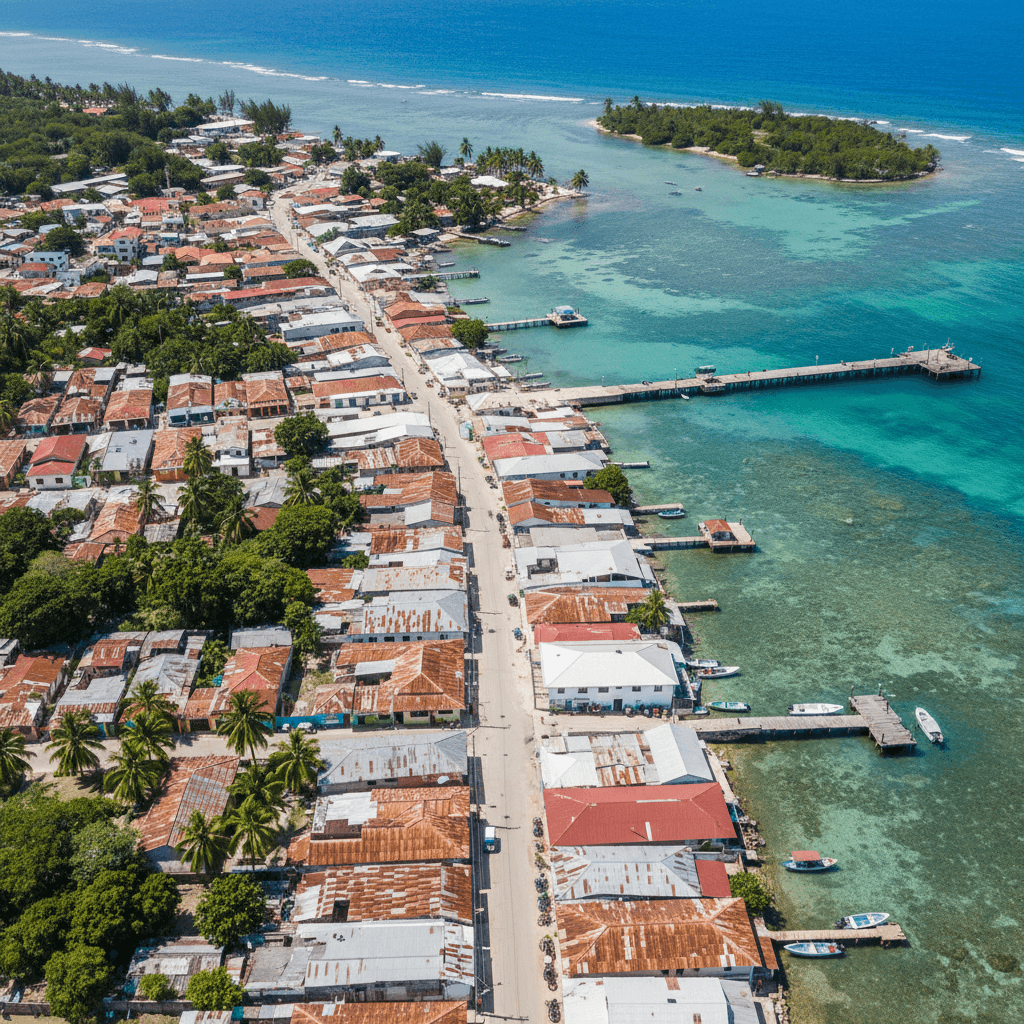
Utila
🇭🇳 Honduras
The Lowdown on Utila
Utila is the scruffy, charismatic little brother of the Bay Islands. While Roatan gets the cruise ships and luxury resorts, Utila belongs to the divers, the backpackers, and the nomads who don't mind a bit of grit with their sunset. It is a tiny limestone rock where the main road is a chaotic dance of golf carts, bicycles, and pedestrians, and the primary currency is how many dives you have in your logbook. If you are looking for high end malls or polished infrastructure, you will hate it here. If you want a place where the local baker knows your name and the Caribbean Sea is your backyard, you might never leave.
The vibe is relentlessly casual. You will spend most of your time in flip flops, and the "multicultural" tag actually feels real here. The island is a blend of traditional Garifuna culture, English speaking islanders, and a rotating cast of international nomads. There is a palpable sense of disconnection that is getting harder to find. It is the kind of place where you go for a week to get your PADI certification and wake up three months later realizing you have become part of the furniture.
What It Costs to Live Here
Utila remains one of the most affordable corners of the Caribbean, though prices are creeping up as more remote workers discover the island. Most people find they can live comfortably on $1,200 to $1,800 USD per month. If you are on a tight budget, sharing a house and eating baleadas can get you by on $800 to $1,200 USD.
- Housing: A basic studio in Utila Town runs between $300 and $500 USD. If you want something quieter toward East Harbour or Sandy Bay, expect to pay $400 to $700 USD for more space and better views.
- Dining: Street food like baleadas or fresh fried fish costs $2 to $5 USD. A mid range meal at a local soda is around $6 to $10 USD, while a splurge on lobster at La Pirata might hit $20 to $25 USD.
- Transport: You won't need a car. Most nomads rent a bicycle for $5 USD a day or a scooter for $20 USD. A quick golf cart taxi ride across town is usually $2 to $5 USD.
The Neighborhood Breakdown
The island is small, but where you park your laptop matters. Most of the action is concentrated on the west side, making everything accessible by foot or bike.
Utila Town (West End)
This is the heart of the island. It is where you will find the dive shops, the grocery stores, and the best social scene. It is walkable and cheap, but it can get noisy at night and petty theft is a minor nuisance if you aren't careful with your gear.
East Harbour and Sandy Bay
Expats and families usually migrate here. It is much quieter with better access to nature and actual beaches. The trade off is that you are further from the cafes and might need a boat or a longer bike ride to get into town for supplies.
Internet and the Nomad Workflow
Internet is the biggest hurdle on the island. Speeds usually hover between 20 and 50 Mbps, which is fine for emails and most calls, but heavy storms can knock things sideways. Most veterans recommend having a backup plan. Pick up a Tigo or Claro SIM card for about $10 USD (20GB) to use as a hotspot when the Wi-Fi gets moody.
For a guaranteed connection, Utila Coworking is the gold standard, offering air conditioning and stable speeds for $5 to $10 USD a day. If you prefer a more social setting, The Lodge at Utila is a nomad favorite where you can work for the price of a coffee.
Safety and Local Life
Utila is significantly safer than mainland Honduras. The community is tight knit, and people look out for one another. Violent crime is rare, but don't leave your phone on a beach towel while you swim. Healthcare is basic; there is a clinic in town for minor scrapes or infections, but anything serious requires a ferry ride to Roatan or the mainland. If you are diving, make sure your insurance is airtight.
Socializing happens naturally at the docks or during Wednesday night beach bonfires. English is spoken by almost everyone in the service industry, but knowing basic Spanish phrases like "Buenos dias" goes a long way with the locals. It is a place that rewards those who slow down, respect the reef, and don't mind a little humidity with their morning coffee.
The Caribbean on a Budget
Utila is famously one of the most affordable corners of the Caribbean. While prices have ticked up slightly over the last year, it still beats the mainland and neighboring Roatán for value. You can live a comfortable life here without burning through your savings, especially if you embrace the island's laid back, no frills lifestyle. Most nomads find that their biggest expense is diving, not their daily overhead.
For a solo traveler, monthly budgets generally fall into three tiers:
- Budget: $800 to $1,200. This covers a shared room or a basic studio, plenty of street food baleadas, and a few beers at the local dive bars.
- Mid-range: $1,200 to $1,800. This is the sweet spot for most digital nomads. It gets you a private one bedroom apartment, a mix of cooking at home and eating out, and a dedicated desk at a coworking space.
- Comfortable: $2,000+. At this level, you’re looking at a beachside apartment in East Harbour, frequent seafood dinners at spots like La Pirata, and regular weekend trips or private boat charters.
Housing and Neighborhoods
The island is small, but where you park your laptop matters. Most nomads stick to Utila Town on the west side. It’s the heart of the action where you can walk to every dive shop and cafe. Expect to pay between $300 and $500 for a studio or simple one bedroom here. It can get noisy at night, and you'll want to keep an eye on your belongings in the busier areas, but the convenience is hard to beat.
If you need peace and quiet, look toward East Harbour or Sandy Bay. Rents are a bit higher, ranging from $400 to $700, but you’re trading the party vibe for nature and better beach access. Just keep in mind that some of these spots require a boat or a long bike ride to get into town for supplies. You can find the best deals by checking the Utila Rentals Facebook group or asking around at Island Properties.
Food, Drink, and Socializing
Eating like a local is the key to staying under budget. Street vendors sell fresh baleadas or fried fish for $2 to $5. Local "sodas" serve up hearty plates for under $10. When you want to treat yourself, head to Bite on the Beach for fish tacos around $10, or go upscale at La Pirata where a lobster dinner will run you about $20 to $25.
The social scene revolves around the water. Most expats meet at dive centers like Utila Dive Center or during the Wednesday night beach bonfires. If you’re looking for a community of remote workers, join the Utila Digital Nomads Facebook group. It’s a tight knit community where everyone knows everyone within a week.
Connectivity and Logistics
Internet is the main hurdle. Speeds usually hover between 20 and 50 Mbps, which is fine for emails but can get shaky during tropical storms. Utila Coworking is the most reliable spot on the island, charging $5 to $10 a day for air conditioning and stable WiFi. For a more casual vibe, grab a coffee at The Lodge at Utila and work from their cafe area.
Getting around is easy since the island is so compact. You won't find public buses here. Most people walk or rent a bike for about $5 a day. If you need something faster, a scooter rental is roughly $20 a day. For quick trips across town, hail a golf cart taxi for $2 to $5 per ride. Cash is king on the island; while there is a Banco Atlántida ATM in town, it’s smart to bring a backup card like Wise or Revolut to manage fees.
Healthcare and Safety
Safety is generally high, though petty theft happens in the touristy West End. Don't leave your phone on a beach towel while you swim, and avoid poorly lit paths after dark. For health issues, there is a basic clinic in town and several pharmacies like Farmacia Utila. For anything serious, you’ll need to take the ferry to Roatán, so having travel insurance that covers medical evacuations is a smart move.
For Digital Nomads and Solo Travelers
If you want to be where the heartbeat of the island is, head straight for Utila Town, specifically the West End. This is the island's social hub and the most walkable area by far. You will find the highest concentration of dive shops, cafes, and fellow travelers here. It is the best spot for networking and finding a community quickly.
Most nomads gravitate toward Utila Town because it hosts the best infrastructure for work. Utila Coworking is the go-to spot, offering air conditioning and reliable speeds for $5 to $10 a day. If you prefer a more casual setting, The Lodge at Utila or Rio Coco Cafe are popular for those who can work over a coffee. Be prepared for a bit of noise and the occasional party vibe, as this area is also home to the island's nightlife and popular hostels like Pangaea.
- Monthly Rent: $300 to $500 for a studio or one bedroom apartment.
- Vibe: Social, energetic, and convenient.
- Best for: Networking, short-term stays, and those without their own transport.
For Long-Term Expats and Privacy Seekers
Those planning to stay for six months or more often look toward Sandy Bay or the areas just past the East Harbour. These neighborhoods offer a significant step up in peace and quiet compared to the main drag. You will trade the convenience of being next door to the bars for larger living spaces and a more authentic island feel.
Expats recommend these areas because they are often more affordable for larger homes, though you will likely need to rent a bike for about $5 a day or a scooter for $20 a day to get into town for supplies. The housing here is more varied, ranging from simple wooden houses to more modern builds. It is a tight-knit community where neighbors actually know each other, making it feel less like a tourist stop and more like a home.
- Monthly Rent: $400 to $700 for larger private spaces.
- Vibe: Relaxed, residential, and green.
- Best for: Remote workers who need quiet for deep focus and expats looking to integrate into the local community.
For Families and Nature Lovers
If you are bringing the kids or just want to wake up to the sound of waves rather than golf carts, look at the eastern edges of the island or the more secluded spots in East Harbour. These areas are much quieter and feel safer for families. The beaches are less crowded, and there is more room for kids to explore the outdoors without the constant foot traffic of the West End.
The trade-off here is accessibility. Some of the most beautiful spots are only reachable by boat or a long trek on unpaved paths. Families often find that the extra effort is worth it for the privacy and the proximity to nature. You will be further from the main grocery stores and the clinic in town, so stocking up on supplies becomes a weekly ritual rather than a daily errand.
- Monthly Rent: $600 to $900+ for multi-bedroom houses.
- Vibe: Peaceful, scenic, and isolated.
- Best for: Families, couples on a retreat, and anyone who wants to disconnect from the dive-party scene.
Which Neighborhood Fits Your Budget?
The cost of living fluctuates based on how close you are to the water and how much "island luxury" you require. While Utila remains one of the most affordable Caribbean islands, prices have seen a slight uptick recently. Here is how the neighborhoods generally break down by budget:
- Budget (Under $1,200/month): Stick to Utila Town. You can find shared housing or basic studios for $300, eat $3 baleadas from street vendors, and walk everywhere to save on transport.
- Mid-Range ($1,200 to $1,800/month): Sandy Bay is your best bet. You can afford a nice private one bedroom for $500, rent a bike for the month, and mix your meals between local sodas and nicer seafood spots like Mancini's.
- Comfortable ($2,000+/month): Look for beach apartments in the East Harbour or high-end rentals on the outskirts of town. This budget allows for a modern apartment with consistent AC, frequent boat taxis, and dining out at the island's best seafood restaurants daily.
The Reality of Island Connectivity
Working from Utila requires a mindset shift. You won't find the fiber optic speeds of Medellin or Mexico City here. Most connections settle between 20 and 50 Mbps, which is plenty for Slack, emails, and standard video calls, but heavy uploads might test your patience during a tropical storm. The island's infrastructure is basic, and power outages occasionally happen when the weather gets wild.
Most nomads rely on a "hybrid" setup. While your rental might have WiFi, it's smart to have a local SIM as a backup. Tigo and Claro are the two main players. You can grab a prepaid SIM at the airport or small shops in town for about $10, which usually nets you around 20GB of data for the month. If you're planning a long stay and need bulletproof reliability, keep an eye out for rentals already equipped with Starlink, which is becoming the gold standard for remote workers on the island.
Top Coworking Spots
If your Airbnb's WiFi isn't cutting it, or you just need some air conditioning to survive the midday heat, Utila has reliable spots to set up shop.
- Utila Coworking: This is the island's dedicated workspace. It's affordable at $5 to $10 per day and offers the most stable internet and consistent AC. It's a great place to meet other nomads who aren't just here to dive.
- The Lodge at Utila: A more relaxed, café-style environment. You can usually snag a table for the price of a $3 coffee. It's perfect for deep work sessions where you don't need a formal desk.
Digital Nomad Community & Networking
The social scene in Utila is heavily centered around the dive shops, but the remote work community is growing. You won't find massive tech conferences here, but you will find a tight-knit group of expats and travelers who gather at Pangaea Hostel or for Wednesday night beach bonfires.
To find housing or tech support, most people skip the apps and head straight to Facebook. Groups like Utila Digital Nomads and Expats in Utila are the best places to find apartment leads or ask about current internet speeds in specific neighborhoods. If you're looking for a desk mate, just head to one of the main dive centers like Utila Dive Center; half the people getting certified are usually working remotely between their morning and afternoon dives.
Practical Tech Tips
- Cash is King: While you can use Wise or Revolut for some transfers, most local shops and landlords want lempiras or dollars. Hit the Banco Atlántida ATM in town early in the week, as they sometimes run out of cash by Sunday.
- Power Protection: If you're bringing expensive gear, a small surge protector is a wise investment. The island grid can be temperamental.
- Offline Maps: Download the Google Translate offline Spanish pack and local maps. While English is common, having the backup helps when you're exploring the quieter parts of East Harbour where signal can drop.
The Safety Vibe
Utila is a rare breed in Central America. While the mainland often makes headlines for the wrong reasons, life on the island feels worlds away. It is a tight-knit community where locals and expats look out for one another. You can generally walk through Utila Town at night without looking over your shoulder, though it is smart to stick to the main, lit strips. Most nomads find the island incredibly relaxed, often forgetting to lock their bikes while grabbing a coffee.
That said, petty theft does happen, particularly in the busier stretches of the West End. It is usually a crime of opportunity; leaving a smartphone on a beach towel while you go for a swim or leaving a laptop visible through a window is asking for trouble. Stick to the populated zones and avoid wandering down unlit, isolated jungle paths after dark. If you are staying in a hostel or a shared rental, use the lockers provided.
The real safety concerns here are actually environmental. The sun is intense, and dehydration hits fast if you are not careful. Since the island is famous for diving, the biggest physical risks are usually related to the water. Always dive with reputable shops like Utila Dive Center and follow your dive computer religiously. If you get into trouble, the emergency number is 911, but keep in mind that emergency response times can be slower than what you are used to back home.
Healthcare and Medical Resources
For a small rock in the Caribbean, Utila handles basic health needs surprisingly well. There is a public clinic in Utila Town that can manage minor ailments, infections, or small stitches. For anything more serious, you will likely need to take the ferry or a short flight to Roatán, which has more advanced hospital facilities. Because of this, travelers often say that having robust travel insurance is a non-negotiable part of the budget.
- Pharmacies: You will find plenty of these in town. Farmacia Utila is the go-to for most expats; they stock everything from basic antibiotics to high-quality sunscreen and stomach meds.
- Dive Safety: The island is equipped with a hyperbaric chamber to treat decompression sickness, which is reassuring for the thousands of divers who visit each year.
- Insurance: Make sure your policy specifically covers scuba diving and emergency medical evacuation to the mainland or Roatán.
Practical Wellness Tips
The tap water on Utila is not potable. You will need to buy large five-gallon jugs of purified water for your apartment, which usually cost around $2 to $3 for a refill. Most long-term rentals will have a dispenser ready for you. If you are eating out, the ice in cocktails and the water used to wash salads at established restaurants is generally purified, so you do not need to be overly paranoid about "Bali belly" style issues here.
Mosquitoes and sandflies (locally called no-see-ums) are the primary pests. They are most active at dawn and dusk, especially on the beaches in East Harbour or Sandy Bay. Most nomads recommend buying local coconut oil or high-DEET repellent at the pharmacies to keep the itching at bay. If you have a specific prescription medication you take daily, bring a full supply with you. While the local pharmacies are good, they might not always have specific brand-name maintenance drugs in stock when you need them.
Life on Utila moves at the speed of a golf cart. This isn't a place of sprawling highways or complex transit networks; it's a compact island where your feet are often your primary mode of transport. In Utila Town, everything is clustered around the main road that hugs the harbor, making it easy to hop between your dive shop, the coworking space, and your favorite baleada stand without ever needing a motor.
The Local Favorites: Bicycles and Scooters
While walking works for the immediate town center, most long term nomads eventually rent some wheels to reach the quieter stretches of Sandy Bay or the breeze on the East Harbour side. Bicycles are the standard choice for the eco conscious and budget travelers. Verify current bicycle rental rates with Utila Bike Rental directly, as pricing may have changed. If you are planning to stay for a month or more, expats recommend buying a used cruiser and selling it before you leave.
For those who want to avoid breaking a sweat in the 30°C heat, scooters are the way to go. You can find rentals at shops like Utila Bike Rental for roughly $25-$35 USD per day, though weekly and monthly rates are significantly cheaper if you negotiate in person. Just keep an eye out for the occasional pothole and the wandering iguanas that claim right of way on the island's narrow paths.
Taxis and Tuk-Tuks
You won't find Uber or any formal ride hailing apps here. Instead, the island relies on a fleet of motorized tuk-tuks and golf cart taxis. These are perfect for hauling groceries or getting your luggage to a remote Airbnb. A standard ride within the town limits usually costs between $2 and $5 USD. Most nomads keep a few local drivers' numbers on WhatsApp to coordinate pickups, as flagging one down in the quieter residential areas can be hit or miss after dark.
Arriving and Leaving
Getting to the island is part of the adventure. Most travelers arrive via the Utila Dream Ferry from La Ceiba on the mainland. The ride takes about 45 minutes to 1 hour and costs roughly $32-$64 USD one-way (approximately $60+ USD for a round trip). It is a reliable service, but the crossing can get choppy during the rainy season from October to November, so keep some motion sickness tablets handy.
If you prefer to skip the waves, there are small bush planes that fly into Utila Airport (RTB). Once you land, expect to pay $10 to $15 USD for a taxi or shared van to take you into the heart of town. It is a quick five minute drive, but the convenience of avoiding the ferry terminal crowds is often worth the extra spend.
Island Hopping
If you find yourself craving a change of pace, Roatán is just a ferry ride away. Many nomads take weekend trips there for more developed infrastructure or different dive sites, with tickets costing around $30 USD. For a more rugged experience, you can charter small boats to the nearby Cays, which offer a true "deserted island" feel away from the main town's social buzz.
- Scooter Rental: $25-$35 per day
- Tuk-Tuk Ride: $2 to $5 per trip
- Mainland Ferry: $60+ round trip
- Airport Transfer: $10 to $15
Ultimately, Utila is a place where you'll spend more time in flip flops than in a vehicle. The small scale of the island is its biggest draw, allowing for a lifestyle that is almost entirely pedestrian. Whether you're commuting to Utila Coworking or heading to Bite on the Beach for sunset drinks, the journey rarely takes more than ten minutes.
The Bilingual Island Pulse
Utila is a linguistic outlier compared to mainland Honduras. While Spanish is the national tongue, the island's history as a former British colony and its current status as a global diving hub mean English is everywhere. You'll hear a unique Bay Islands English dialect from the locals, mixed with standard Spanish and a cocktail of European languages from the rotating door of dive instructors.
For nomads, this makes life incredibly easy. You can walk into almost any shop, dive center, or cafe in Utila Town and be understood in English. Around 80% of people working in the tourism and service sectors are fluent. That said, don't expect a carbon copy of North American English; the local lilt is rhythmic and fast, occasionally blending Caribbean slang that might take a few days to tune your ears to.
When to Use Spanish
While you can survive on English alone, speaking Spanish is the fastest way to move from "tourist" to "local" status. It's particularly useful when dealing with government officials, some taxi drivers, or when buying fresh produce from street vendors. Showing effort goes a long way with the community.
Expats recommend learning a few functional phrases to smooth over daily interactions:
- "Buenos": A shortened, catch-all greeting used morning, noon, and night.
- "¿Cuánto cuesta?": How much does it cost? Use this at the fruit stalls.
- "Cerveza, por favor": A beer, please. You'll use this often at The Reef.
- "La cuenta, por favor": The bill, please.
Digital Tools and Connectivity
Since the internet can be finicky during tropical storms, having your translation tools ready for offline use is a smart move. Most nomads download the Spanish offline pack on Google Translate before they arrive. It's a lifesaver when you're trying to explain a specific hardware need at a local shop or discussing a lease agreement for an apartment in East Harbour.
For those looking to improve their skills while on the island, Duolingo is the standard starting point, but the best practice happens at the communal tables of Utila Coworking or during the Wednesday night beach bonfires. The community is small enough that people are generally patient and happy to help you practice your verb conjugations over a $3 baleada.
Communication Etiquette
Communication here is informal but polite. It's customary to greet people as you pass them on the narrow streets of the West End. A simple "Buenos" or a nod is expected. When it comes to business, things move at "island time." If you're messaging a landlord or a boat captain, they likely won't use email. WhatsApp is the undisputed king of communication on Utila. Whether you're booking a dive with Utila Dive Center or ordering a taxi, do it via WhatsApp.
If you're planning to stay for more than a week, grab a local SIM card from Tigo or Claro. You can get 20GB of data for about $10 a month. This ensures you have a backup for Google Translate and WhatsApp when the cafe Wi-Fi decides to take a siesta. Travelers often find that Tigo has slightly better coverage on the eastern side of the island, while Claro holds its own in the main town area.
The Dry Season: Peak Nomad Life
If you want the quintessential Utila experience, aim for the window between December and April. This is when the island is at its most social and the weather is most predictable. Temperatures hover around a comfortable 29°C (84°F), and the humidity stays manageable compared to the sweltering summer months. Most nomads find February and March to be the absolute sweet spot; the rain has cleared out, the water visibility is world-class for diving, and the island vibe is high.
During this peak season, you can expect dry days and cool Caribbean breezes in the evenings. It is the best time for working from outdoor spots like Bite on the Beach without worrying about a sudden tropical downpour soaking your laptop. Keep in mind that because the weather is so good, prices for short-term rentals in Utila Town can spike, and the most popular dive hostels fill up fast. If you are planning a stint during these months, try to lock in your housing a few weeks early.
The Transition: Whale Sharks and Humidity
As the calendar flips to April and May, the heat starts to crank up. You will see highs hitting 30°C to 31°C (86°F to 88°F), and the air gets noticeably thicker. While the humidity can be a bit draining if your rental doesn't have AC, this period is a favorite for nature lovers. March through September is the primary window for spotting whale sharks. Many travelers say the chance to snorkel with these giants makes the extra sweat worth it. Just make sure your coworking choice, like Utila Coworking, has reliable air conditioning to keep you productive during the midday heat.
The Rainy Season: What to Expect
The wet season typically runs from May through November, with the heaviest rainfall usually hitting in October and November. During these months, the island sees between 200mm and 400mm of rain. These aren't always just quick afternoon showers; storms can linger, and the wind can get aggressive enough to delay the ferry from La Ceiba. If you are a digital nomad who relies on a steady connection, be aware that heavy storms can occasionally knock out the power or make the local 20 to 50 Mbps internet even more spotty than usual.
While October and November are the months most travelers avoid due to hurricane risks and gray skies, there are perks to visiting during the "off" times:
- Lower Costs: You can often negotiate better long-term rates on apartments in East Harbour or Sandy Bay.
- Quiet Vibe: The bars and dive shops are less crowded, giving you more face time with the local expat community.
- Lush Scenery: The island turns incredibly green, and the dust from the dirt roads disappears.
Quick Climate Breakdown
- January to March: The prime dry season. Highs of 29°C and minimal rain (50 to 100mm). Perfect for diving and outdoor work.
- April to June: Hot and humid. Whale shark season is in full swing. Great for boat trips but you will want AC.
- July to September: Hot with occasional heavy tropical storms. The water is warm, but the humidity is at its peak.
- October to December: The wettest months. Expect 150 to 400mm of rain. Best for budget hunters who don't mind a slower, wetter pace of life.
Ultimately, your timing depends on your tolerance for rain versus your budget. If you want the sun, the social scene, and the best diving, stick to February. If you are looking to disappear for a few months and save some cash, the tail end of the year offers a much more secluded, rugged experience.
The Lifestyle and Cost of Living
Living on Utila is about trading high speed infrastructure for a barefoot, community focused existence. It remains one of the most affordable corners of the Caribbean, making it a magnet for divers and nomads who want their dollars to stretch. A solo traveler can get by on $800 to $1,200 per month if they're happy with a shared room and street food. For a more standard nomad setup with a private one bedroom apartment and regular dining out, expect to spend between $1,200 and $1,800. If you want a high end beach house and upscale seafood every night, you'll still likely stay under $2,500.
Rent in Utila Town generally runs between $300 and $500 for a studio. If you head toward East Harbour, prices for beachside spots climb to $400 or $700. Food is a bargain if you stick to the local staples. You can grab a baleada or fresh fish from a street stall for $2 to $5, while a mid range meal at a local soda costs about $10. High end dinners featuring lobster or fresh catch at places like La Pirata will set you back $15 to $25.
Choosing Your Base
The island is compact, roughly 9km by 4km, but where you park your bags changes your experience significantly. Most nomads gravitate toward Utila Town (West End) because it's walkable and puts you in the heart of the social scene. You'll be steps away from dive shops and cafes, though it can get noisy and has a slightly higher risk of petty theft.
For those staying longer or traveling with family, East Harbour and Sandy Bay offer a quieter, nature focused vibe. The beaches are better here and housing is often more spacious, but you'll sacrifice some convenience as there are fewer amenities nearby. If you're here specifically for the nightlife and dive culture, the West End beaches are packed with party hostels and ocean views, though the infrastructure is basic and it gets crowded during peak season.
Internet and Productive Spaces
Connectivity is the biggest hurdle on the island. Speeds usually hover between 20 and 50 Mbps, which is fine for most tasks but can get spotty during the tropical storms. Most professionals rely on Utila Coworking, which offers air conditioning and reliable WiFi for $5 to $10 a day. For a more casual setup, you can grab a coffee at The Lodge at Utila restaurant area, though it's primarily a resort. Bite on the Beach is another popular spot for working with a view.
Local SIM cards are a must. You can pick up a Tigo or Claro card at the airport or in town for about $10, which usually includes 20GB of data. Many long term residents are now bringing in Starlink kits to bypass local outages, so it's worth asking your landlord if they have a satellite backup.
Getting Around and Safety
You won't find public buses here. In Utila Town, your feet are your best asset. For longer trips, golf carts and taxis are the standard, usually costing $2 to $5 per ride. Many expats rent bicycles for about $5 a day or scooters for $20 from shops like Utila Bike Rental. There's no Uber or Lyft; instead, locals use WhatsApp to coordinate with drivers.
Safety is generally a non issue if you use common sense. The island has a tight knit community feel that's much safer than mainland Honduras. Stick to lit paths at night and keep an eye on your belongings in crowded bars. For healthcare, there's a basic clinic in town for minor scrapes or infections, but anything serious requires a ferry ride to Roatan. Since dive related injuries are a specific risk here, always ensure your insurance covers hyperbaric chamber treatments.
Practical Essentials
- Banking: Cash is king. There are ATMs at Banco Atlantida in town, but they occasionally run out of bills. Use Wise or Revolut to minimize transaction fees.
- Language: Spanish is the official tongue, but English proficiency is incredibly high, especially in the dive community. You'll get by fine with English, though a "Buenos" goes a long way with locals.
- Weather: Visit between December and April for the best weather. Avoid October and November if possible, as heavy storms can shut down the ferry and kill the internet for days.
- Apartment Hunting: Skip the big booking sites for long term stays. Join the Utila Rentals Facebook group or check Marketplace once you arrive.
- Eco Etiquette: The reef is the island's lifeblood. Use reef safe sunscreen, never touch the coral, and support shops that prioritize conservation.
Need visa and immigration info for Honduras?
🇭🇳 View Honduras Country GuideEasy Landing
Settle in, no stress