Ushuaia
🇦🇷 Argentina
The End of the Road Experience
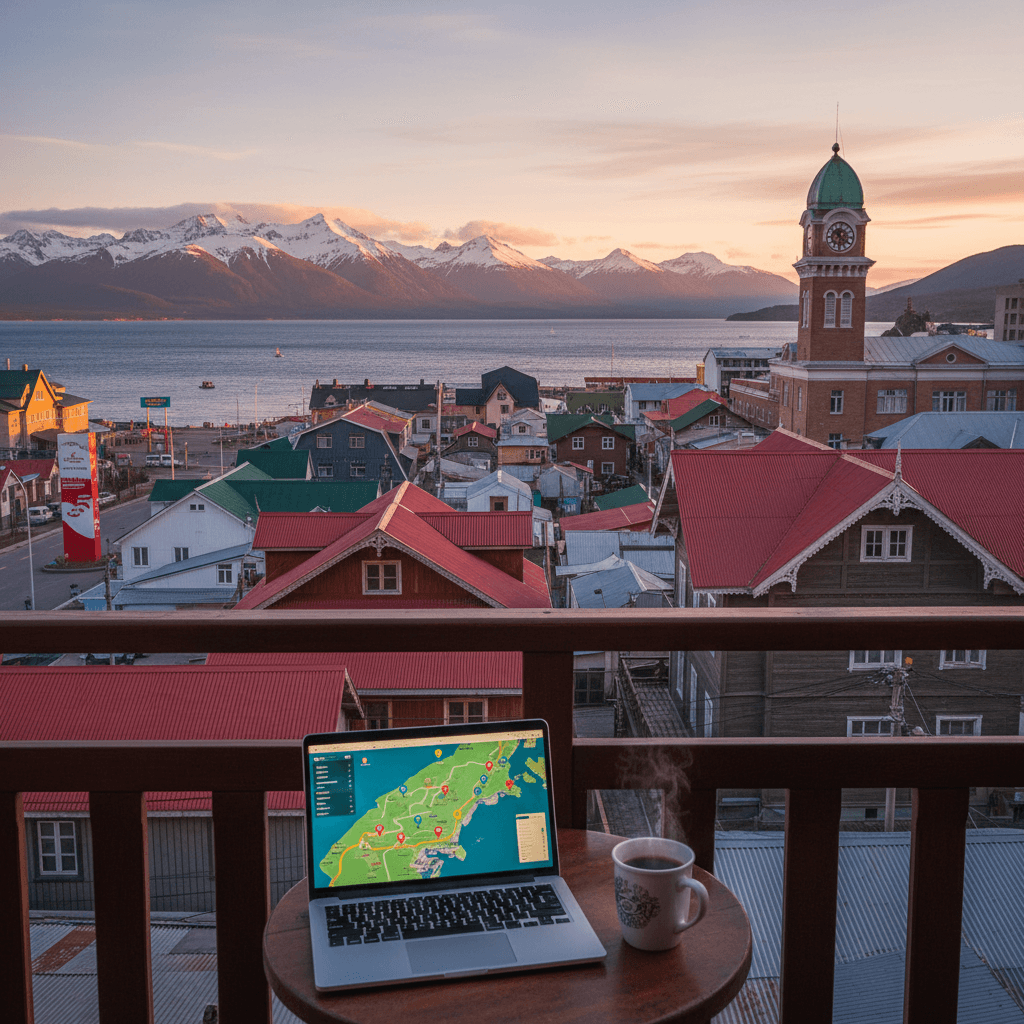
There is a specific kind of silence that hits you when you step off the plane in Ushuaia. It is the quiet of a place that knows it is the last stop before the Great White South. Perched between the jagged, snow-dusted Martial Mountains and the dark waters of the Beagle Channel, this city doesn't feel like the rest of Argentina. It feels like a frontier town that decided to get cozy.
Most nomads come here for the "End of the World" bragging rights, but they stay for the raw, unpolished edge of the landscape. It is a town of colorful, wind-battered houses and steep streets that remind you of a rugged version of the Swiss Alps. You aren't here for the high-speed fiber or the 24/7 clubbing; you're here because you want to work with a view of glaciers and spend your lunch breaks scouting for penguins or trekking through Tierra del Fuego National Park.
The Local Rhythm
The vibe is decidedly outdoorsy and unpretentious. You'll see more people in Gore-Tex than in Gucci. Because the weather is notoriously fickle, locals have a "make the most of it" attitude. If the sun is out, everyone is on the trails; if it's snowing in November, everyone is in the pubs sharing a craft beer and a plate of king crab.
Culture here is a mix of maritime history and indigenous Yámana heritage. You can feel the weight of history at the Museo del Fin del Mundo or the old prison, but the modern pulse is driven by the seasonal influx of Antarctica-bound explorers. This gives the city an international, transitory energy that keeps the small-town atmosphere from feeling too insular.
What to Love and What to Tolerate
Living at the tip of the continent comes with a unique set of trade-offs. It is a lifestyle choice for those who prefer hiking boots over heels.
- The Draw: It is incredibly safe. You can walk the waterfront at 2:00 AM without a second thought. The air is some of the cleanest on the planet, and the community is tight-knit and welcoming to those who respect the land.
- The Challenge: Your wallet will feel the distance. Because almost everything is trucked or flown in, costs are significantly higher than in Buenos Aires or Salta. A comfortable lifestyle here can run you about $1,960 a month, and even a mid-range budget sits around $700.
- The Infrastructure: The nomad scene is still in its infancy. While you'll find reliable enough connection for basic remote work, the average speed hovers around 3-20 mbps. It is enough for a Zoom call, but maybe not for uploading 4K video during a storm.
The Emotional Pull
Travelers often describe a sense of "clarity" in Ushuaia. There is something about being at the geographical limit of the inhabited world that puts your inbox into perspective. It is the perfect spot for a "deep work" retreat or a season of soul-searching. You'll spend your evenings at places like La Cabaña, drinking tea at the base of a glacier, realizing that the nearest major city is thousands of miles away. It’s lonely in the best possible way.
Expect to spend your days navigating the wind and your nights tucked into warm, wood-paneled bars like those along San Martín street. It is a place of extremes, where the sun barely sets in the summer and barely rises in the winter, making every day feel like a small adventure against the elements.
The Southernmost Price Tag
Living at the edge of the world comes with a literal price. Because almost everything in Ushuaia has to be trucked or flown in across thousands of miles, you'll notice a significant jump in prices compared to Buenos Aires or Salta. It is easily one of Argentina's most expensive hubs, but for many nomads, the access to the Martial Mountains and the Beagle Channel makes the "End of the World" tax feel like a fair trade.
Most travelers find that a mid-range lifestyle here sits around $700 per month, though that requires some discipline with dining out. If you want a truly comfortable setup with a private apartment and frequent excursions to the national park, you should budget closer to $1,960 per month. On the extreme end, ultra-budget backpackers can scrape by on $400 per month by sticking to hostel dorms and cooking every single meal at home.
Housing and Neighborhoods
The rental market is the biggest hurdle here. Since Ushuaia is a tourism magnet, many of the best apartments are tied up in short-term vacation rentals. Expats recommend focusing your search on the central area near the waterfront if you want to be within walking distance of the few reliable cafes with decent WiFi. While specific neighborhood price brackets fluctuate, you can expect housing to be the primary driver of your monthly burn rate.
- Central Ushuaia: This is where the action is. You'll be near the main shops on San Martín and the best restaurants, but you'll pay a premium for the convenience.
- Mountain Side: The views are incredible as you move uphill towards the glacier, but the wind gets fiercer and you'll likely need to rely on the local bus system or taxis to get into town.
Daily Expenses and Dining
Eating out is a highlight, though it can eat a hole in your wallet quickly. The city is famous for its king crab (centolla) and Patagonian lamb, which are pricey even by international standards. For daily life, most nomads mix casual dining with home cooking to keep costs manageable.
- Mid-range dinner for two: Expect to pay a bit more than the Argentine average for a nice sit-down meal with wine.
- Groceries: Prices at local supermarkets are noticeably higher than in the north, especially for fresh produce and imported goods.
- Connectivity: A local SIM card from Claro or Movistar with 2 to 5GB of data will cost you between $15 and $25. It is a smart investment since cafe WiFi can be temperamental during storms.
Connectivity and Remote Work Logistics
Working from Ushuaia requires a bit of patience. The average internet speed hovers around 11 mbps. While that is enough for basic Zoom calls and emails, it isn't the place for heavy video editing or massive data transfers. Most nomads find that the cozy atmosphere of local cafes makes up for the modest speeds, though dedicated coworking infrastructure is still quite limited.
If you're planning a stay, travelers often suggest downloading offline maps like Maps.me or Google Maps immediately. Once you leave the city limits for a hike or a trip to Tierra del Fuego National Park, cell service drops to zero. Being prepared means you won't have to rely on expensive roaming or non-existent signals when you're out exploring.
The Bottom Line
Ushuaia isn't a "budget" destination. It's a lifestyle choice for those who want to trade the heat of the north for crisp mountain air and a safe, tight-knit community. Plan for a budget that is at least 30% higher than what you'd spend in other Argentine cities, and you'll find the experience of living at the tip of the continent more than worth the extra pesos.
The Digital Nomad Hub: Downtown (Centro)
If you need to get work done, stay near the waterfront. The central strip along Avenida San Martín is where you will find the highest concentration of cafes with decent WiFi and the city's limited coworking options. Most nomads gravitate here because it is the only part of town where you can walk to a grocery store, a pharmacy, and a pub within ten minutes.
- The Vibe: Busy but cozy. It feels like a frontier town mixed with a ski resort.
- Internet: This is your best bet for the average 11 mbps speeds, though evening peak hours can still be a crawl.
- Must Visit: Grab a table at one of the local cafes; while specific coworking brands are sparse, the cafe culture is welcoming to laptop users.
The Expat Choice: Barrio Alakalufes and Upper Heights
Expats looking for a long term stay often move away from the tourist rentals downtown and head toward the residential areas climbing the Martial Mountains. These neighborhoods offer incredible views of the Beagle Channel but come with a steep walk. You will likely want a car if you settle here, as the public bus system exists but can be hard to track during a snowstorm.
- The Vibe: Quiet, residential, and very safe. You will be living next to local families and seasonal mountain guides.
- Cost: While a comfortable monthly budget sits around $1,960, renting a house in these areas can be more cost effective than a nightly Airbnb in the center.
- Practical Tip: Check if your rental uses microwave internet links, as heavy wind or snow can knock out your connection for hours.
For Solo Travelers: Near the Port
If you are in Ushuaia to meet people or catch a boat to Antarctica, stay as close to the Port of Ushuaia as possible. This area is packed with hostels and bars where you can find live music and local brews. It is the social heart of the city, making it easy to find a hiking partner for the weekend.
- The Vibe: International and high energy. It is the place to swap stories with people from all over the world.
- Social Scene: Most solo travelers congregate at the local pubs to escape the cold. It is the easiest place to network since there are few formal nomad meetups.
- Connectivity: Pick up a $15 to $25 SIM card at a shop nearby to stay connected while you wander.
For Families and Nature Lovers: Near the Martial Glacier
Families often prefer the outskirts near the base of the Martial Glacier. It is further from the "city" noise and closer to the trails. You can spend your afternoons at La Cabaña, a famous local tea house that is a hit with kids and adults alike. It feels less like a city and more like a mountain retreat.
- The Vibe: Alpine and serene. You are surrounded by forests and trailheads.
- Safety: Like the rest of Ushuaia, it is incredibly safe with a very low crime rate, making it ideal for kids to explore.
- Transportation: Budget for taxis or a rental car, as the walk into town is long and the weather is notoriously unpredictable.
Connectivity at the Edge of the World
Working from the southernmost city on the planet comes with a specific set of expectations. While you aren't exactly working from a dial-up connection, you should adjust your workflow for a slower pace. Average download speeds in Ushuaia are around 3-20 Mbps, which is plenty for emails, Slack, and standard video calls, but might struggle if you're trying to upload massive 4K video files or sync heavy databases.
Most nomads find that hotel and hostel WiFi is generally reliable for basic tasks. However, reliability can fluctuate. Many local providers rely on microwave links that can be affected by the region's famously unpredictable weather. During peak evening hours, when the rest of the city settles in to stream movies, you might notice your connection dipping. If you have a high-stakes meeting, it's always better to have a backup plan ready.
Coworking and Quiet Corners
Ushuaia doesn't have the sprawling coworking infrastructure you'll find in Buenos Aires or Córdoba. The scene here is much more intimate and, at times, limited. While dedicated spaces do exist, they aren't always well-advertised or open 24/7. Many remote workers opt for a "cafe hopping" strategy instead.
- The Cafe Culture: You'll find several cozy spots with a warm, alpine vibe that are welcoming to laptops. La Cabaña, located near the base of the Martial Glacier, is a favorite for those who want a view with their tea, though the connection there is better for deep work than video calls.
- Central Hubs: Most of the workable cafes are concentrated along the main waterfront and the central streets. Look for places with "WiFi" signs in the window, but always buy a coffee or a snack every couple of hours to keep the local owners happy.
- The Nomad Vibe: Because the community is small, you'll likely run into the same three or four people working from their laptops. It's a great way to make friends, but don't expect a high-energy networking environment.
Mobile Data and Backup Plans
A local SIM card is your best friend here. You can pick one up at the airport or at various shops in town for roughly $15 to $25. This usually gets you a decent data package of 2GB to 5GB. The three big players are Claro, Movistar, and Personal. Their coverage is solid within the city limits and along Route 3, but it disappears the moment you head into the backcountry or deeper into Tierra del Fuego National Park.
Expats recommend keeping a "dead zone" kit on your phone. Before you head out for a hike or even just to a different part of town, download your maps on Google Maps or Maps.me. It's also smart to keep your translation apps and important contact numbers available offline. If the city's main internet link goes down due to a storm, your mobile hotspot might be the only thing keeping you online.
Practical Tips for Remote Workers
If you're planning a stay, keep these logistical realities in mind to avoid a mid-workday crisis:
- Time Zone Alignment: Argentina is ART (UTC-3). This works beautifully for those working with East Coast US companies, but European nomads should prepare for some late nights.
- Power Stability: While total blackouts aren't a daily occurrence, they can happen during heavy winter storms. Always keep your laptop and power banks fully charged.
- Peak Usage: If you have a bandwidth-heavy task, try to get it done in the early morning. The network is noticeably snappier at 8:00 AM than it is at 8:00 PM.
- Hardware: There are very few specialized electronics stores here. If you lose your MacBook charger or break your high-end mouse, you might be waiting weeks for a replacement to be shipped in at a high cost. Bring spares of your essential gear.
Safety in the Southernmost City
Ushuaia is one of the safest places you can hang your hat in South America. Because it is a relatively small, isolated community, it lacks the frantic energy and opportunistic crime found in Buenos Aires or Rosario. Most nomads find they can walk the streets at night with their laptops in their bags without a second thought. The vibe is much more "mountain town" than "metropolis," where neighbors know each other and the local police are generally helpful and approachable.
While you don't need to worry much about pickpockets on San Martin (the main street), the real safety risks here are environmental. The weather in Tierra del Fuego is notoriously fickle; locals joke that you can experience all four seasons in a single afternoon. If you are heading out for a trek in Tierra del Fuego National Park or up to the Martial Glacier, the golden rule is to tell someone where you are going. Cell service drops to zero the moment you leave the city limits, so having a plan and a return time is your best insurance policy.
- Emergency Contacts: Keep a list of local numbers saved offline. You won't have data on the trails.
- Solo Travel: It is highly rated for solo travelers and women, with a very low incidence of harassment compared to other regional hubs.
- Gear: Safety here means staying dry. Hypothermia is a bigger threat than theft, so never skimp on a high quality waterproof shell.
Healthcare and Medical Services
If you get sick at the end of the world, you aren't stranded. Ushuaia has a functioning healthcare system that handles everything from routine checkups to emergency surgeries. The Hospital Regional Ushuaia Gobernador Ernesto M. Campos is the primary public facility. It is located near the waterfront and handles the bulk of the region's emergencies. For those with private insurance, there are also smaller clinics that offer a more streamlined experience with shorter wait times.
Most expats recommend carrying a private international insurance policy like SafetyWing or World Nomads. While public healthcare in Argentina is technically free even for foreigners, the public system can be slow and bureaucratic. Private clinics will expect payment upfront or a guarantee from your insurer. If you need specialized care or complex surgeries, be aware that patients are often stabilized here and then flown to Buenos Aires, as the local facilities have their limits due to the city's remote location.
Pharmacies and Prescriptions
You will find farmacias on almost every other block in the city center. They operate on a rotation system called "de turno," meaning at least one pharmacy in town is open 24 hours a day. If you arrive late and find your nearest shop shuttered, check the sign in the window; it will list which pharmacy is currently on duty for the night.
- Prescriptions: Many medications that require a script in the US or Europe can be bought over the counter here, but it is always better to bring your original doctor's note to avoid any confusion.
- Supplies: Stock up on any specific brands of sunscreen or specialized skincare before you arrive. Imported goods are expensive here, and the selection can be limited.
- Water: The tap water in Ushuaia is generally safe to drink and quite fresh, coming straight from the mountain runoff, though some nomads prefer a filter for the taste.
Practical Tips for Staying Healthy
The Antarctic sun is no joke. Even when it feels freezing, the UV rays at this latitude are intense due to the thinning ozone layer nearby. Travelers often forget to apply SPF when it's snowing, but you'll feel the burn quickly if you're out on the water or the glaciers. Additionally, the air is quite dry; staying hydrated and using a good moisturizer will save you from the "Fuegian itch" that many newcomers experience during their first week in town.
Navigating the End of the World
Ushuaia is a compact, rugged city built on a steep slope between the Martial Mountains and the Beagle Channel. Because of this vertical layout, getting around involves a mix of legwork, local buses, and taxis. While it's not a sprawling metropolis, the weather can change from sun to sleet in ten minutes, which usually dictates how you'll choose to travel on any given day.
Walking the Center
The city center is highly walkable, especially along Avenida San Martín, the main commercial artery. This is where you'll find most of the gear shops, cafes, and restaurants. If you're staying in a central hostel or apartment, you can easily handle your daily errands on foot. Just keep in mind that any street running perpendicular to the water is a serious climb. You'll definitely get your cardio in just walking back from the supermarket.
Public Buses (Colectivos)
For longer trips or to reach residential neighborhoods further from the port, the local bus system is your best bet. There are several lines that crisscross the city, though they don't run as frequently as the buses in Buenos Aires. To ride, you'll need a SUBE card, which is the same rechargeable smart card used throughout Argentina. You can pick these up and top them up at small kiosks (kioscos) around town. Most nomads find the buses reliable enough for non-urgent trips, but the schedules can be a bit loose during heavy snow.
Taxis and Remises
When the wind picks up or you're heading out for a nice dinner, taxis and remises (private car services) are the go-to choice. They are everywhere and relatively affordable compared to US or European prices, though they are more expensive than in other parts of Argentina. You can hail a taxi on the street in the center, but for a remise, it's better to have your accommodation call one for you. They use meters, so you don't have to worry about haggling over the fare.
Getting to the Great Outdoors
If you're here to hike, you'll need to look beyond the city transit system. To reach Tierra del Fuego National Park or the trailhead for Laguna Esmeralda, most travelers use the shuttle vans (combis) that depart from the main bus terminal near the port.
- National Park Shuttles: These run on a fixed schedule and will drop you off and pick you up at designated spots within the park.
- Car Rentals: If you want total freedom to explore Route 3, renting a car is a popular but pricey option. It's the best way to reach remote spots like Estancia Haberton at your own pace.
- Airport Transfers: The Ushuaia airport is only about 5-6 km from downtown, a 7-12 minute taxi ride. A taxi is the most straightforward way to get to your rental, and you can grab a local SIM card right at the airport kiosks when you land to help with navigation.
Connectivity on the Move
While you'll have decent cell coverage (4G/LTE) from providers like Claro, Movistar, or Personal within the city limits and along the main highway, don't rely on it once you hit the trails. Digital nomads often recommend downloading offline maps on Google Maps or Maps.me before heading out. Data packages usually cost between $15 and $25 for a few gigabytes, which is plenty for navigating town but won't help you much in the backcountry where the signal completely vanishes.
The Linguistic Landscape
In Ushuaia, Spanish is the undisputed king. While you might expect a high level of English due to the steady stream of Antarctica-bound cruise passengers, the reality on the ground is different. Most locals you'll interact with in grocery stores, pharmacies, or local buses speak little to no English. It's a town where knowing how to ask for the bill or clarify a price in Spanish isn't just a courtesy; it's a daily necessity.
Expats and long term nomads find that the language barrier is one of the biggest hurdles to feeling truly integrated here. While high end hotels and major tour operators catering to international crowds have bilingual staff, the "End of the World" vibe extends to the language as well. You'll find a much more authentic experience if you can navigate the local Castellano, which carries that distinct Argentine rhythm and the use of "vos" instead of "tú."
Digital Communication and Connectivity
Since you can't rely on everyone speaking English, your phone becomes your most important translator. Most travelers recommend downloading the Spanish offline dictionary on Google Translate before you even land. Relying on a live connection is risky because, while the city center has decent coverage, the signal drops the moment you head toward the Martial Glacier or into the National Park.
For staying connected with locals or booking services, WhatsApp is the universal tool. Whether you are trying to coordinate a rental, checking if a cafe has a spare table, or reaching out to a local guide, don't bother with emails or standard texts. If a business has a phone number listed, they almost certainly use it for WhatsApp. It's also a great way to use the voice-to-text translation features if your Spanish is still a work in progress.
Practical Tips for Getting By
- Pick up a local SIM: Don't rely on international roaming, which can be spotty and expensive. Grab a SIM card from Claro, Movistar, or Personal at a shop in the city center. Expect to pay between $6 and $25 for a decent data pack of 2GB to 5GB.
- Offline Maps: Always have Maps.me or Google Maps data downloaded for the entire Tierra del Fuego region. If you're hiking, the trail markers are okay, but having GPS without needing a cell tower is a lifesaver.
- Learn the basics: Focus on "Survival Spanish" related to logistics. Terms for "bus stop," "cash only," and "slow internet" will come in handy more often than you think.
- The "End of the World" lag: Be patient with communication. The remote location means internet speeds average around 11 mbps, and heavy weather can occasionally disrupt microwave links. If someone doesn't reply to your message immediately, it might just be the Southern Patagonian winds messing with the signal.
Social Integration
The community in Ushuaia is tight knit and generally very welcoming, but they appreciate the effort of a "Buen día" or "Hola." If you're looking to practice your Spanish, the local bars and pubs are your best bet. People here are proud of their unique geography and are usually happy to chat with nomads who show a genuine interest in the local culture, even if the conversation involves a lot of hand gestures and translation apps. It's a small town at heart, and a little linguistic effort goes a long way in turning a service encounter into a friendly connection.
Expect the Unexpected
Living at the tip of the continent means you are at the mercy of the Southern Ocean. The weather here is famously fickle, and locals often joke that you can experience all four seasons in a single afternoon. Even in the height of summer, a sunny morning can dissolve into a sideways sleet storm by lunch. If you are the kind of nomad who needs a predictable climate, Ushuaia might test your patience. If you love dramatic skies and crisp air, it is paradise.
The city stays cool year round, with a heavy emphasis on cold and unpredictable conditions. You will rarely see the thermometer climb above 15°C (59°F), even on the warmest days. Because of the high latitude, daylight hours swing wildly. In the summer, the sun hangs in the sky until nearly midnight, giving you endless energy for post work hikes. In the winter, the sun barely peeks over the horizon for seven hours, which can be a bit of a grind if you are prone to the winter blues.
The High Season: Summer (December to March)
This is the prime window for most travelers and digital nomads. The weather is at its most "stable," with average highs between 10°C and 14°C (50°F to 57°F). This is the best time for exploring Tierra del Fuego National Park or taking a boat out on the Beagle Channel to see the penguin colonies. Since it is peak season, the city feels alive, but it also means prices for short term rentals and hotels hit their highest points. You will want to book your accommodation months in advance if you plan to be here for the holidays.
The Ski Season: Winter (June to August)
If you are a fan of winter sports, Ushuaia is a top tier choice during the Argentine winter. The city becomes a base camp for skiers and snowboarders heading to Cerro Castor. Temperatures hover around 0°C (32°F), and snowfall is frequent. The vibe in town shifts to cozy fireside sessions at local pubs and cafes. While the days are short, the atmosphere is incredibly intimate. Just keep in mind that heavy snow can sometimes mess with the microwave internet links that many local businesses rely on, so have a backup data plan ready.
The Shoulder Months: Spring and Autumn
April, May, September, and October are the quietest months. Autumn is particularly stunning as the lenga forests turn deep shades of red and orange. Prices tend to dip during these windows, making it a better time for budget conscious nomads to snag a deal on a long term stay. However, these months are also the most volatile. You might get a week of beautiful, calm weather followed by three days of gale force winds that make walking down the street a genuine workout.
Packing Essentials for the End of the World
Since the weather changes on a dime, your wardrobe needs to be modular. Expats and long term travelers here swear by a few specific items to stay comfortable:
- High quality windbreaker: The wind in Tierra del Fuego is no joke and can cut through standard hoodies.
- Waterproof footwear: Even if you aren't hiking, the streets can get slushy or muddy quickly.
- Merino wool layers: They are perfect for transitioning from a chilly outdoor walk to a heated cafe without overheating.
- Offline maps: Since reception drops the moment you leave the city limits, download your maps before you head out on a weekend trek.
Best Time for Your Goals
- For hiking and wildlife: Aim for January or February to get the most daylight and manageable temperatures.
- For budget stays: Look at October or April, when the crowds thin out but the landscapes are still beautiful.
- For the ski scene: July and August offer the most reliable snow cover for the slopes.
Connectivity and the Digital Grind
Working from the edge of the world requires a bit of strategic planning. Most nomads find the internet in Ushuaia generally reliable for standard tasks, but you shouldn't expect the lightning speeds of Buenos Aires. Average speeds hover around 11 Mbps. While that's fine for emails and Slack, it can get dicey during peak evening hours or when heavy weather rolls in, as much of the region relies on microwave internet links.
You won't find a massive coworking scene here yet. Infrastructure is modest, and many remote workers prefer setting up in cozy cafes. La Cabaña, located at the base of the Martial Glacier, is a local favorite for its tea house vibes and views. For mobile backup, pick up a local SIM card from Claro, Movistar, or Personal. You'll pay between $15 and $25 for a 2GB to 5GB data package. Just remember that once you head into the backcountry or Tierra del Fuego National Park, your signal will likely vanish.
Budgeting for the Remote Life
Living at the tip of the continent comes with a premium. Because almost everything has to be shipped in, your daily expenses will be higher than in the rest of Argentina. A comfortable lifestyle for a nomad usually hits around $1,960 per month, though budget travelers can scrape by on $400 to $700 if they stick to hostels and cook their own meals.
- Monthly Rent: This is your biggest variable. Prices fluctuate significantly depending on the season and proximity to the Beagle Channel waterfront.
- SIM Cards: Budget $15 to $25 for initial setup and data.
- Dining: While high-end restaurants exist, casual mid-range spots are the norm for locals.
Getting Around Town
Ushuaia is a small, tight-knit community where the central area is quite walkable. Most of the action is concentrated near the waterfront, so if you stay central, you won't need much transport. For longer trips, there is a local public bus system, though many expats prefer walking or using local taxis. If you're planning on exploring Route 3 or heading to the national park, consider renting a car or booking a shuttle, as ride-hailing apps aren't as prevalent here as they are in the north.
Safety and Health
This is one of the safest spots in South America. The small-town atmosphere means crime is minimal, and most travelers feel perfectly comfortable walking around at night. The real "danger" here is the environment. The weather is unpredictable, and it can go from sunny to snowing in an afternoon. If you're heading out for a hike, always tell someone your expected return time and download offline maps like Maps.me or Google Maps, because you won't have data on the trails.
Language and Local Life
Spanish is the primary language, and while you'll find English speakers in the tourism industry and high-end hotels, it's not guaranteed in the grocery store or local bars. Learning some basic Spanish phrases will go a long way. The social scene revolves around cozy pubs and live music. It's a "get away from it all" kind of place, so the nightlife is more about a quiet craft beer with friends than clubbing until sunrise. To meet people, head to the local bars or join a hiking group; the shared love for the outdoors is the quickest way to make friends in the Fuegian community.
Need visa and immigration info for Argentina?
🇦🇷 View Argentina Country GuideOff the Radar
Pioneer territory