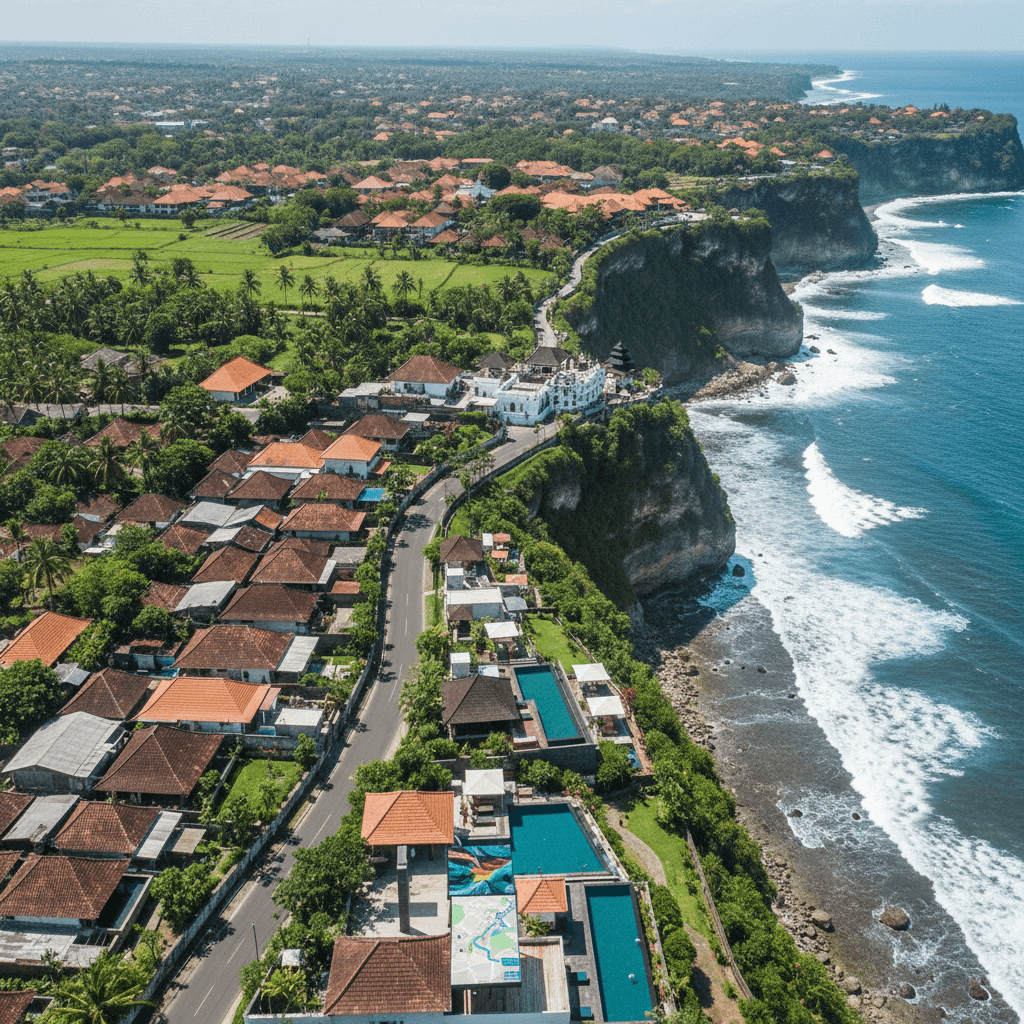
Uluwatu
🇮🇩 Indonesia
The High-Cliff Soul of Bali
If Canggu is Bali’s frantic, caffeine-fueled engine, Uluwatu is its sun-drenched, salt-crusted soul. Perched on the limestone cliffs of the Bukit Peninsula, this area feels worlds apart from the urban sprawl of the north. It is a place where your daily rhythm is dictated by the tides rather than your Google Calendar. You'll find a tight-knit community of pro surfers, wellness junkies, and remote workers who have traded the convenience of a "walking city" for the raw, rugged beauty of the Indian Ocean.
The vibe here is unapologetically slower. Most nomads start their mornings with a surf at Bingin or a yoga session at The Space before settling into a cafe with a laptop. It is less about "hustle culture" and more about lifestyle design. You are here because you want to see the sunset from a clifftop temple and fall asleep to the sound of crashing waves, even if it means occasionally hunting for a stable WiFi signal or navigating steep, winding roads on a scooter.
What It Costs to Live Here
Living in Uluwatu is generally more affordable than Canggu, though prices have crept up as its popularity grows. Most landlords expect at least two months of rent upfront, and you will pay a premium of about 20% if you insist on a month-to-month arrangement.
- Bootstrapping ($1,170 to $1,390/month): This budget gets you a room in a shared villa about 10 minutes from the beach, daily meals at local warungs for $1, and a scooter to get around.
- Comfortable ($1,900 to $2,400/month): The sweet spot for most expats. You'll have a private 1-bedroom villa with AC and a pool, eat at mid-range cafes like Suka Espresso, and keep a full-time coworking membership.
- Premium ($3,165 to $4,430/month): This covers a contemporary 2 or 3-bedroom villa with ocean views, regular surf lessons, and dining at upscale spots where meals run $25 or more.
The Neighborhood Breakdown
Choosing where to plant your flag depends entirely on how close you need to be to the water and the "action."
- Bingin: The heart of the expat community. It is a labyrinth of narrow alleys and limestone paths leading down to the sand. It is quiet, bohemian, and perfect if you want to walk to your morning surf.
- Padang Padang: A bit more developed and great for first-timers. It has a high concentration of shops and restaurants, making it feel slightly more "central" than the secluded corners of the peninsula.
- Suluban (Blue Point): This is the trendy hotspot. It is home to world-class surf breaks and upscale clifftop bars. It is pricier, but you are paying for the proximity to the most iconic views in Bali.
- Ungasan: Located further inland, this is where you'll find the best infrastructure. It has larger supermarkets, better roads, and is popular with families and long-term residents.
The Digital Nomad Reality
Working from Uluwatu requires a bit more intentionality than other hubs. While the internet has improved significantly, with fiber-optic speeds hitting 100 to 150 Mbps at major hubs, power outages can still happen. Most seasoned nomads keep a local SIM card from Telkomsel or Indosat as a backup hotspot, which costs around 150,000 IDR ($9) for a monthly data pack.
If you need a professional environment, Uluwatu Hub is the go-to for 24/7 access and a community feel for about 2.5 million IDR ($158) a month. For those who prefer an upscale aesthetic, Hedonist Co-Working offers ultra-fast 300 Mbps speeds and meeting rooms. If you prefer the "cafe office" life, The Cashew Tree and The Loft are staples, though it is polite to order something new every 90 minutes to keep your seat.
Safety and Logistics
Uluwatu is safe, but it isn't a place for the faint of heart on the road. A scooter is a necessity here, typically costing 750,000 IDR ($47) per month to rent. If you aren't comfortable on two wheels, Grab is the primary ride-hailing app, though some local transport zones can be restrictive about where they pick up passengers.
For healthcare, you aren't stranded. BIMC Hospital in Nusa Dua is the gold standard for foreigners, and the newly opened Bali International Hospital provides world-class specialist care. Just remember that "Bali Belly" and heatstroke are the most common ailments, so stick to bottled water and keep the mosquito repellent handy to avoid Dengue.
The Price of Paradise
Living the cliffside dream in Uluwatu is generally more affordable than the hectic streets of Canggu, though prices have crept up as the Bukit Peninsula gains popularity. Most digital nomads find they can live a high quality life here for significantly less than in Western hubs, provided they embrace the local scooter culture and mix warung meals with trendy cafe brunches.
Expect to pay a premium for proximity to the waves. If you want to walk to the surf in Bingin or Padang Padang, you'll likely shell out between 10 million and 16 million IDR ($630 to $1,010 USD) for a decent one bedroom villa. Heading inland toward Ungasan offers better value, where 12 million to 18 million IDR ($760 to $1,140 USD) often gets you a more modern, spacious setup with easier road access.
A few financial realities to keep in mind:
- Upfront Costs: Most landlords expect the first month and a security deposit upfront. If you want a month to month lease without a long term commitment, expect a 20% price hike.
- Scooter Rentals: This is your biggest non-negotiable expense. A reliable bike costs around 750,000 IDR ($47 USD) per month.
- Connectivity: While fiber is usually included in villa rentals, a 10GB mobile data backup via Telkomsel or Indosat will run you about $2-3 USD.
Monthly Budget Tiers
Your lifestyle in Uluwatu depends entirely on how often you trade local Balinese flavors for imported comforts. Here is how the monthly spending typically breaks down for different lifestyles.
The Bootstrapper ($1,170 to $1,390 USD)
- Housing: A private room in a shared villa, likely a 10 minute drive from the beach.
- Food: Heavy reliance on local warungs like Nasi Campur spots where meals cost $1 to $2.
- Work: Working from home or using day passes at local cafes.
The Comfortable Nomad ($1,900 to $2,400 USD)
- Housing: A private 1BR villa with AC, a pool, and weekly housekeeping.
- Food: A mix of local spots and mid-range cafes like Suka Espresso or The Loft, where meals average $5.
- Work: A dedicated monthly membership at Uluwatu Hub or The Space.
- Extras: Regular gym sessions and a few sunset Bintangs at $3 a pop.
The Premium Lifestyle ($3,165 to $4,430 USD)
- Housing: A contemporary 2 or 3 bedroom villa with ocean views in Suluban.
- Food: Frequent dining at upscale clifftop restaurants where dinners can exceed $25.
- Work: Full 24/7 access to premium spaces like Hedonist Co-Working.
- Extras: Private surf coaching, high end wellness retreats, and regular spa treatments.
Daily Expenses and Coworking
Daily life in the Bukit is manageable if you track the small things. A morning coffee typically costs $2, while a short 3km trip via Grab costs about $3 if you aren't brave enough for a scooter yet. For those who need professional environments, coworking prices are standardized across the region.
Uluwatu Hub
- Monthly Unlimited: 2.5 million IDR ($158 USD)
- Perks: 24/7 access, two onsite pools, and very reliable fiber optic internet.
Lemanja
- Day Pass: 250,000 IDR ($16 USD)
- Perks: A quieter, 30 seat environment with 140 Mbps speeds and pool access for post work dips.
Most long term residents suggest budget travelers stick to Nyang Nyang for cheaper, secluded housing, while those who need to be in the thick of the social scene should focus their search on Bingin. Regardless of where you land, the lack of a "commute" and the abundance of $1 street food makes Uluwatu one of the most attractive value propositions in Indonesia for 2025.
For the Solo Nomad: Bingin and Padang Padang
If you're landing in Uluwatu with a laptop and a surfboard, Bingin is likely where you'll end up. It's the heart of the nomad scene, characterized by limestone alleys and cliffside cafes. Most nomads find the walkability down to the beach a fair trade for the steep stairs. You'll pay around 10 to 16 million IDR ($630 to $1,010 USD) for a decent one bedroom villa here. It's quiet at night, but you're never more than a five minute scooter ride from a social hub like The Cashew Tree.
Just down the road, Padang Padang offers a bit more convenience. It’s better for those who don't want to hunt for every amenity. The main strip is packed with spots like Suka Espresso and The Loft, which are unofficial offices for remote workers during the day. It feels a bit more "holiday" than Bingin, but the proximity to Uluwatu Hub makes it a practical base for hitting deadlines.
For the Long-Term Expat: Ungasan
Expats who've moved past the "honeymoon phase" of Bali life often migrate toward Ungasan. It’s the most developed part of the Bukit peninsula and feels more like a lived in community than a tourist zone. You’ll find larger supermarkets, local markets, and better road infrastructure that doesn't get as choked up during sunset hours. Rent is slightly higher for modern builds, ranging from 12 to 18 million IDR ($760 to $1,140 USD), but you get more square footage and reliable power for your money.
Living here means you're centrally located. You can reach the beaches of the west coast or the high end beach clubs of the south in 15 minutes. It’s the preferred choice for those who want a mix of local Balinese life and Western comforts without the constant turnover of short term tourists.
For Families: The Developed South
Families usually gravitate toward the Ungasan and Melasti areas. The primary draw is the proximity to international schools and the wider, flatter roads that make driving a car much less stressful than the narrow tracks in Bingin. Many villas here are built in gated complexes, providing an extra layer of security and a neighborhood feel for kids.
The lifestyle here is built around weekend trips to Melasti Beach or Sundays Beach Club. While it lacks the bohemian grit of the surf breaks further west, it offers the stability families need. You're also closer to BIMC Hospital in Nusa Dua, which is a major factor for parents prioritizing healthcare access.
For the Privacy Seeker: Nyang Nyang and Suluban
If you're looking to disconnect, Nyang Nyang is the final frontier of Uluwatu. It’s secluded and still feels largely undiscovered. You can find villas for 8 to 14 million IDR ($505 to $885 USD), but the trade off is a lack of nearby infrastructure. You’ll be doing a lot of driving for a specialty coffee or a coworking desk. It’s ideal for writers or creatives who want dramatic cliff views and absolute silence.
On the flip side, Suluban (often called Blue Point) is for those who want to be in the thick of the action but with a premium edge. It’s home to high end resorts and trendy spots like Hedonist Co-Working, which offers speeds up to 300 Mbps. It’s pricier and can get loud with the Single Fin crowd on Sundays, but for a solo traveler who wants luxury and world class surf at their doorstep, it’s the place to be.
Neighborhood Comparison at a Glance
- Bingin: Best for surf culture and social nomads. Rent: $630 to $1,010.
- Ungasan: Best for families and long termers. Rent: $760 to $1,140.
- Nyang Nyang: Best for privacy and budget stays. Rent: $505 to $885.
- Suluban: Best for luxury and high speed internet. Rent: $1,000+.
The internet situation in Uluwatu has come a long way from the days of spotty signals and frequent blackouts. While it still trails behind the "tech-hub" feel of Canggu, you'll find that fiber-optic connections are now the standard at most modern villas and dedicated workspaces. Speeds generally hover between 50 and 150 Mbps, which is plenty for Zoom calls or uploading video content. Just keep a local SIM card handy as a backup; the occasional power flicker during a tropical storm can still knock out a router for a few minutes.
Top Coworking Spaces
If you need more than just a laptop-friendly cafe, Uluwatu has a handful of heavy hitters that offer ergonomic chairs, air conditioning, and reliable backup power.
- Uluwatu Hub: This is the community anchor for many nomads. It’s open 24/7 and features an on-site restaurant, two pools, and plenty of parking. A monthly unlimited pass goes for about 2.5 million IDR ($158).
- Hedonist Co-Working: If you want an upscale vibe, this place delivers with high-speed fiber and a professional atmosphere. It’s open 24/7 and doubles as a social club with a high-end bar and chill zones. Day passes are available for 195,000 IDR (~$12), while those looking for a more permanent setup can book a dedicated desk for 5 million IDR (~$315) per month.
- Lemanja: A smaller, more intimate spot with around 30 seats. It’s great if you prefer a quieter environment. Day passes are 250,000 IDR ($16) and include pool access and a billiards table for breaks.
- The Space: This is the go-to for the wellness-focused crowd. They offer 4K monitors for those who can't live on a 13-inch laptop screen, and they can even provide a legal business address if you’re setting up a more permanent operation.
The Cafe Office Culture
Working from cafes is a local pastime here, but the etiquette is different than in the West. Most nomads find that ordering a fresh meal or a coffee every 90 minutes keeps the staff happy. These spots are perfect for casual tasks, but they can get loud during the lunch rush.
- Suka Espresso: Famous for its breakfast, but the WiFi is solid and the coffee is some of the best in the Bukit.
- The Cashew Tree: Located in Bingin, this spot has a massive garden vibe. It’s better for creative work than deep focus, as it’s quite open-air and social.
- The Loft: A reliable choice with plenty of power outlets and a menu built for people sitting for a few hours.
Mobile Data and Connectivity
Don't rely solely on your villa's WiFi. Grab a local SIM card immediately. Telkomsel generally has the best coverage across the Uluwatu cliffs, though XL Axiata is a popular and slightly cheaper alternative. You can get a 10GB data package for roughly $7, or an unlimited monthly plan for about 150,000 IDR ($9). If your phone supports it, an eSIM is the most convenient way to get connected the moment you land at Ngurah Rai International Airport.
Most expats recommend having a "dual-sim" setup. Use the local fiber for your heavy lifting, but keep that 4G/5G hotspot ready for those rare moments when the Uluwatu infrastructure decides to take a siesta.
Staying Safe on the Bukit
Uluwatu is generally a very safe place to live and work. The vibe is significantly more relaxed than the high traffic areas of Kuta or Seminyak, and violent crime is extremely rare. Most expats and nomads feel comfortable riding scooters late at night or walking to local cafes without much worry.
The biggest safety concern is petty theft, specifically bag snatching. This typically happens on darker stretches of road when people leave their bags in the front basket of a scooter or hanging loosely over their shoulder. Local experts recommend keeping all valuables inside the under seat storage compartment (the "jok") while driving. Scooter theft can also happen, so always lock your handlebar and park in well lit areas or designated villa parking.
When it comes to getting home after a few drinks at Single Fin or Ulu Cliffhouse, skip the bike. The roads in Uluwatu are winding, often poorly lit, and can be unpredictable with stray dogs or patches of gravel. Grab is the go to app here. It is reliable, cheap, and much safer than trying to negotiate with unofficial street taxis or risking a ride on two wheels.
Healthcare and Medical Facilities
Medical care in Bali has seen a massive upgrade recently. While there are local clinics (Puskesmas) for minor issues, most nomads head to international standard facilities for anything serious. BIMC Hospital remains the gold standard for foreigners, with branches in Nusa Dua and Kuta that offer 24 hour emergency rooms and English speaking doctors.
For more specialized care, the Bali International Hospital in Sanur is a flagship facility, featuring 255 beds and dedicated departments for cardiology and neurology. If you are looking for medical services, Siloam Hospitals Bali in Kuta is another option with modern diagnostic equipment. For emergencies, you can reach the hotline at 150 919, which supports both English and Bahasa Indonesia.
Pharmacies, known locally as Apotek, are everywhere. You can get most basic medications, antibiotics, and even some specialized prescriptions over the counter. However, if you take controlled substances, always bring a physical copy of your prescription to avoid issues at the border or when restocking.
Common Health Risks
Living the tropical dream comes with a few standard health hurdles. You will likely encounter at least one of these during a long stay:
- Bali Belly: This is the classic traveler's diarrhea. Most nomads find it happens from cross contamination or drinking tap water. Stick to bottled or filtered water, even for brushing your teeth if you have a sensitive stomach.
- Dengue Fever: Mosquitoes are active during the day, especially in the rainy season. Use repellent with DEET and make sure your villa has good netting or "Baygon" plug ins.
- Heatstroke: The sun on the Bukit cliffs is unforgiving. Expats recommend staying hydrated with coconut water (available at every warung for about $1) and avoiding heavy outdoor activity between noon and 3:00 PM.
Insurance Requirements
While you can pay out of pocket for a basic GP visit (usually $30 to $60), a serious accident or a night in the hospital can quickly run into the thousands. Most high end hospitals like BIMC prefer to see proof of international health insurance before admission for non emergencies. Make sure your policy specifically covers scooter accidents, as many providers will void your claim if you do not have a valid international motorcycle license or if you weren't wearing a helmet.
The Scooter Life
In Uluwatu, your mobility is directly tied to two wheels. Unlike the flat, walkable streets of some European hubs, this region is defined by winding limestone cliffs and long, sun-drenched stretches of tarmac connecting isolated beaches. Most expats and nomads consider a scooter a non-negotiable part of their daily kit.
Monthly rentals typically run around 750,000 IDR ($47 USD) for a standard Honda Vario or Scoopy. If you prefer something with more power for the hilly terrain, expect to pay between 1.5 million and 3 million IDR for a Yamaha NMAX or Honda PCX. Daily rates hover between 50,000 and 100,000 IDR ($3 to $6) depending on your bargaining skills and the bike's condition.
Safety is the big conversation here. The roads are narrower than in Canggu and can get slick during the rainy season. Always wear a helmet, keep your phone in the under-seat compartment to avoid snatch-and-grab theft, and ensure you have an International Driving Permit. Local police occasionally set up checkpoints, and not having the right paperwork can lead to an on-the-spot fine.
Ride-Hailing and Apps
If you aren't comfortable on a bike, your smartphone is your best friend. Grab is the king of the road in Uluwatu, followed closely by Gojek. These apps are incredibly reliable for getting around without the stress of driving yourself.
- GrabBike: The fastest way to move. A 3km trip usually costs about $3 USD. It's perfect for solo travelers who want to skip the traffic.
- GrabCar: Essential for grocery runs or heading out to dinner in a group. While more comfortable with AC, cars often get stuck in bottlenecks near Padang Padang and the Uluwatu Temple.
- Blue Bird Taxi: The most trusted traditional taxi meter service. You can hail them through their own app or find them near major resorts, though they are often pricier than Grab.
One thing to keep in mind is the local transport "communities." In certain pockets of Bingin and Padang Padang, there are zones where Grab and Gojek drivers are restricted from picking up passengers to protect local taxi drivers' livelihoods. You can always get dropped off anywhere, but for pickups in these specific zones, you might need to walk a few hundred meters to a main road or use a local driver.
Long Distance and Airport Transfers
Uluwatu feels a world away from the rest of Bali, but it's only about 45 to 60 minutes from Ngurah Rai International Airport depending on traffic. A private car transfer usually costs between 250,000 and 400,000 IDR ($16 to $25). Most nomads book these through their villa hosts or via the Grab app upon arrival.
For day trips to Ubud or the northern waterfalls, hiring a private driver for the day is the standard move. It typically costs around 600,000 to 800,000 IDR ($38 to $50) for 8 to 10 hours. This includes fuel and the driver's time, making it a stress-free way to explore the island while you answer emails from the backseat.
Walking in Uluwatu
Walking is generally reserved for the beach or very short hops within a specific neighborhood like Bingin. The lack of sidewalks, intense tropical heat, and steep inclines make it impractical for getting between neighborhoods. If you're staying in a clifftop villa, you'll likely find yourself walking down hundreds of stairs to reach the surf, which is a workout in itself. For everything else, you'll want a motor.
The Linguistic Landscape
In Uluwatu, you'll find a linguistic blend that reflects its status as a global surf mecca. While Bahasa Indonesia is the official language, Balinese is the heart and soul of the local community. You'll hear it spoken in the temples and among staff at the warungs. Because the Bukit Peninsula has been a magnet for international travelers for decades, English is widely spoken in almost every cafe, villa, and surf shop.
Most nomads find they can get by quite easily with just English. However, the vibe here is much more community focused than in the high traffic areas of Seminyak. Learning even a few phrases of Bahasa Indonesia goes a long way in building rapport with the locals who make this place special. It isn't just about being polite; it often helps when negotiating long term scooter rentals or villa prices.
Key Phrases for Daily Life
If you want to move beyond the tourist bubble, start with these basics. Most locals will appreciate the effort, even if your pronunciation isn't perfect.
- Suksma: Balinese for "Thank you." Use this instead of the Indonesian "Terima kasih" to see a local's face light up.
- Berapa?: "How much?" Useful for market stalls and local warungs.
- Tidak pedas: "Not spicy." Vital if you aren't ready for the kick of real Balinese sambal.
- Bisa kurang?: "Can you go lower?" The standard way to start a friendly negotiation at a market.
- Permisi: "Excuse me." Use this when passing through a crowded area or entering a shop.
Communication Tools & Apps
Digital communication is the lifeblood of the Uluwatu expat scene. You won't be making many traditional phone calls here. Instead, your digital life will revolve around a few specific platforms.
- WhatsApp: This is the primary way everything happens. You'll use it to book surf lessons at Bingin, chat with your villa owner, and even order water delivery. Most businesses list their WhatsApp number on their Instagram profile.
- Grab & Gojek: These apps are non negotiable for life in Bali. They have built in translation features that allow you to message drivers in English while they see the text in Indonesian. It makes coordinating a pickup at Padang Padang incredibly smooth.
- Google Translate: The camera feature is a lifesaver for reading menus at smaller local eateries or understanding signs at the pharmacy.
Connectivity & SIM Cards
Staying connected is generally affordable, but coverage can be spotty in the limestone cliffs of the southern coast. Telkomsel is the gold standard for coverage in the Bukit, especially if you're heading down to more secluded spots like Nyang Nyang. You can expect to pay around 150,000 IDR ($9 USD) for a solid monthly data package.
Expats recommend getting a local SIM card at a reputable shop rather than the airport to save on "tourist tax" markups. If your phone supports it, an eSIM is a convenient backup, though physical SIMs usually offer better local rates. For those working remotely, always ask your villa host for a speed test screenshot before committing to a long stay. While fiber is common now, the salt air and tropical storms can occasionally knock out lines, making a Telkomsel hotspot a necessary backup plan.
Social Etiquette & Non-Verbal Cues
In Bali, how you say something is often more important than the words you use. The culture is deeply rooted in "Tri Hita Karana," which emphasizes harmony. Keeping a level head and a smile, even when there's a misunderstanding about a Grab order or a laundry bill, is the fastest way to resolve issues. Raising your voice is generally seen as a loss of face and rarely gets results.
When communicating with locals, remember to use your right hand for giving or receiving items, like cash or business cards. The left hand is traditionally considered "unclean." It's a small gesture, but it shows a level of respect for local customs that doesn't go unnoticed by the community in Uluwatu.
The Seasonal Split: Dry vs. Wet
Uluwatu follows the classic Balinese tropical rhythm, but its position on the Bukit Peninsula gives it a unique edge. Because it sits on a limestone plateau, it stays slightly drier and breezier than the humid jungles of Ubud or the swampy lowlands of Canggu. You'll basically choose between two distinct seasons, each with its own trade-offs for your workflow and surf sessions.
The Dry Season (April to October) is the undisputed heavyweight champion for visitors. This is when you'll get those postcard-perfect blue skies and consistent offshore winds that turn the Bukit into a world-class surf stadium. For digital nomads, this is the most social time of year; the cafes are full, the coworking spaces like Uluwatu Hub are humming, and the sunsets at Single Fin are legendary. Expect temperatures to hover around 27°C to 30°C (80°F to 86°F) with low humidity that makes scooter rides actually pleasant.
The Wet Season (November to March) brings a different vibe. It doesn't rain all day every day, but when it pours, it’s a deluge. Humidity spikes, and the landscape turns a vivid, electric green. The upside? Prices for villas in Bingin or Nyang Nyang often drop, and the crowds thin out significantly. If you're a remote worker who thrives on "deep work" and doesn't mind the sound of rain on a tin roof while you're on Zoom, this is a great time to snag a deal. Just be prepared for the occasional power flicker or internet hiccup during heavy storms.
Month-by-Month Breakdown
- April to June: These are the "sweet spot" months. The rain has stopped, the landscape is still green, and the massive July tourist crowds haven't arrived yet. It's the best time for finding long-term villa rentals before the peak season premium kicks in.
- July and August: Peak season. The Bukit is packed, prices for short-term stays are at their highest, and you'll need to book your spot at Hedonist Co-Working in advance. The surf is biggest during these months, attracting pros from around the globe.
- September and October: Another fantastic window. The weather remains dry and sunny, but the "summer" vacationers have headed home. The water is still warm, and the vibe in Padang Padang returns to a chill, local pace.
- November to March: The rainy period. January and February are typically the wettest months. While the west-facing breaks get messy, the "east side" of the peninsula starts working for surfers. It's the quietest time for the digital nomad community.
The Nomad Perspective: When to Land
Most long-term expats recommend arriving in late March or early April. Landing right at the tail end of the rainy season allows you to scout for housing and negotiate better monthly rates before the high-season rush begins in June. If you're looking for a one-month "workation," September is the goldilocks month; the weather is flawless, the infrastructure isn't overwhelmed, and the social scene is active but not chaotic.
Keep an eye on the Balinese lunar calendar, specifically for Nyepi (the Day of Silence), which usually falls in March. For 24 hours, the entire island shuts down completely. No lights, no travel, no working, and even the airport closes. It's a profound cultural experience, but if you have a hard deadline for a global client, you'll need to plan your "offline" time accordingly.
Surfing and Water Conditions
If your "best time to visit" is dictated by the waves, you'll want to aim for May through September. This is when the Indian Ocean sends consistent, long-period swells to breaks like Uluwatu, Padang Padang, and Bingin. During the wet season, the winds shift, often making the famous spots "onshore" and messy. However, the water temperature stays a comfortable 26°C to 29°C (79°F to 84°F) year-round, so you can leave the thick wetsuit at home regardless of when you arrive.
Connectivity and Power
Internet in Uluwatu has come a long way, but it still feels a bit more "island style" than the fiber optic speeds you'll find in Canggu. Most modern villas and cafes offer speeds between 50 and 150 Mbps, which is plenty for Zoom calls and uploading content. However, power outages happen occasionally, especially during the rainy season. Expats here swear by having a local backup.
Pick up a local SIM card from Telkomsel or XL Axiata as soon as you land. A monthly plan with 10GB of data usually costs around 150,000 IDR ($9 USD). If your phone supports it, an eSIM is a great secondary option for those days when the villa WiFi decides to take a siesta.
Coworking and Cafe Etiquette
Uluwatu is a sprawling area, so your choice of workspace usually depends on where you're staying. If you need a dedicated desk and a community vibe, check out these spots:
- Uluwatu Hub: A favorite for its 24/7 access and on-site pools. A monthly unlimited pass goes for about 2.5 million IDR ($158 USD).
- Hedonist Co-Working: This is the place for high speed needs, boasting 300+ Mbps and a sleek, air conditioned environment.
- Lemanja: A quieter, boutique option with around 30 seats and a daily rate of 250,000 IDR ($16 USD).
- The Space: Popular with the wellness crowd, they offer 4K monitors and a professional atmosphere right next to their yoga studio.
If you prefer the "laptop cafe" life, Suka Espresso and The Cashew Tree are the go to spots. The unwritten rule among nomads is to order something every 90 minutes to keep the staff happy. Most cafes are open to remote workers, but always check for "no laptop" signs during busy brunch hours.
Transport and Getting Around
Public transport doesn't really exist here. To get anywhere, you'll need two wheels. Most expats rent a scooter for about 750,000 IDR ($47 USD) per month. If you aren't comfortable riding, don't wing it. The roads are narrow and can be slippery. Download Grab or Gojek; a 3km trip on the back of a motorbike taxi usually costs around $3 USD.
Staying Healthy
The most common hurdle for newcomers is "Bali Belly." Stick to bottled or filtered water, even for brushing your teeth if you have a sensitive stomach. For anything serious, the BIMC Hospital in Nusa Dua or the Siloam Hospital are the gold standards for international care. If you need a pharmacy, look for a Kimia Farma or Guardian; they carry most basics over the counter.
The new Bali International Hospital in Sanur is now the flagship facility for the region, featuring 255 beds and world class specialists. It's a bit of a drive from Uluwatu, but it's the best option for complex medical needs. Always keep the emergency hotline 150 919 saved in your phone.
Safety and Local Lore
Uluwatu is generally very safe, but common sense goes a long way. Petty theft like bag snatching can happen on darker roads at night. Keep your phone in your scooter trunk rather than a dashboard pocket while riding. Travelers often say the biggest danger isn't the people, it's the monkeys at Uluwatu Temple. They are professional thieves, so keep your sunglasses and hats secured when visiting.
Money Matters
While more places accept cards now, cash is still king at local warungs and smaller shops. Use ATMs attached to actual banks like BNI or Mandiri to avoid card skimming. If you're renting a villa long term, be prepared to pay at least two months upfront. Most landlords expect a deposit plus the first month of rent to secure the keys.
Need visa and immigration info for Indonesia?
🇮🇩 View Indonesia Country GuideEasy Landing
Settle in, no stress