Turku
🇫🇮 Finland
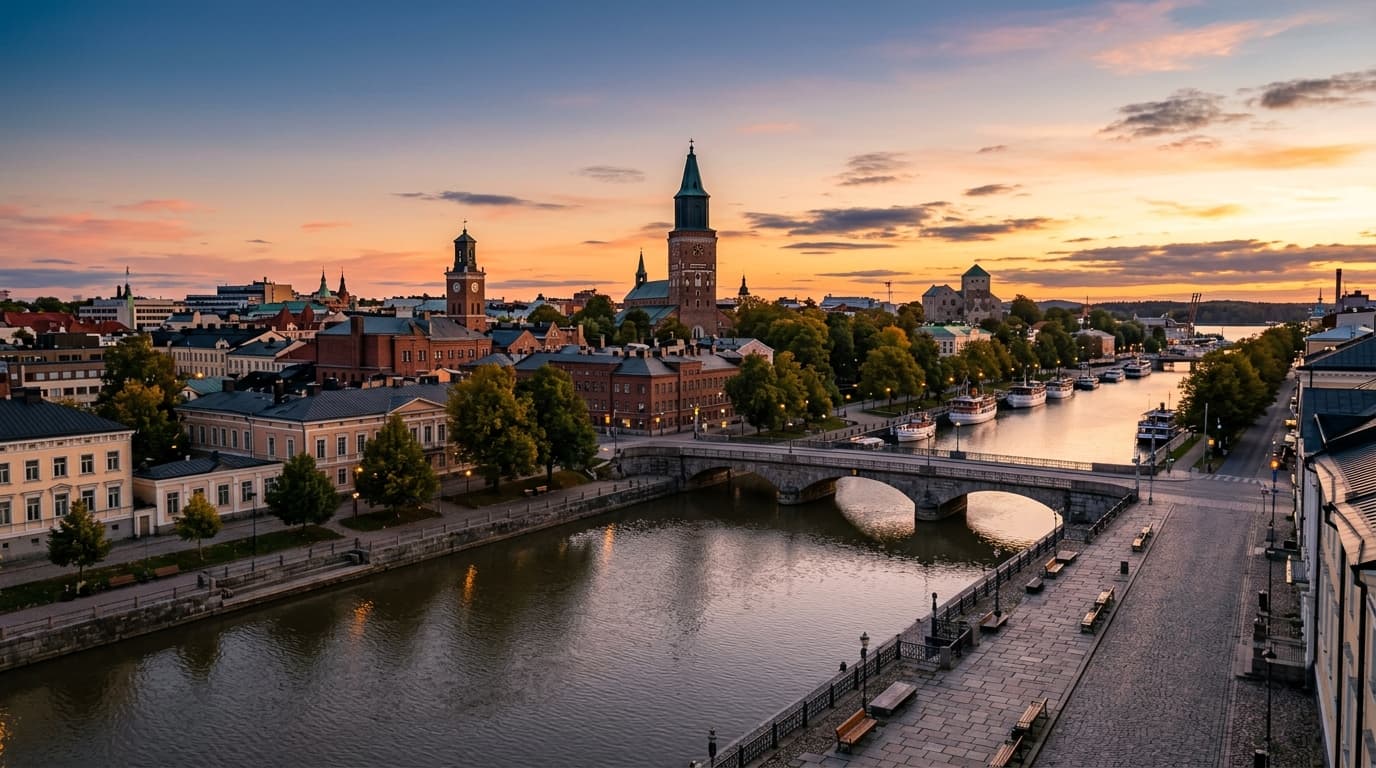
Turku feels like Finland turned down a notch. It’s older than Helsinki, cheaper than Helsinki and a lot calmer, with the Aura River doing most of the heavy lifting for atmosphere, especially on bright summer evenings when people spill onto the banks and the water reflects the boats, cyclists and café lights.
The city has a strong student pulse thanks to the University of Turku, Åbo Akademi and the applied sciences crowd, so it doesn’t feel sleepy, just controlled. You’ll hear more bike bells than car horns, more Finnish and Swedish than English and plenty of quiet, practical conversation in cafes where people work for hours on laptops without drama.
That’s a big reason digital nomads tend to settle in easily here. The internet is reliable, bureaucracy is generally efficient and daily life is straightforward, from Föli buses to healthcare to finding a decent coffee near the center.
- Best for: people who want a slower Nordic base with nature close by.
- Not ideal for: anyone chasing big-city nightlife or a loud social scene.
- Main trade-offs: Nordic prices, dark winters and a fairly reserved local social rhythm.
Turku’s mood changes hard with the seasons. Summer is all riverfront chatter, ferries, salty air from the harbor and weekend trips toward the archipelago. Winter can feel long and a bit punishing, with low daylight, wet cold and that gray, slushy silence that settles over the streets by mid-afternoon.
Still, plenty of expats like it because the basics are solid and the city doesn’t chew up your energy. It’s safe, clean and easy to move around and if you want a reset after work, you can be on an island, in the forest or on a ferry before most bigger cities have even finished their commute.
Good neighborhoods for the vibe
- Keskusta: the easiest place to live without a car, with the river, cafes and Market Square close by.
- Port Arthur: prettier and more residential, with wooden houses and higher rents.
- Student Village and Nummi: cheaper, younger and livelier, though the crowd skews student-heavy.
Turku isn’t flashy and that’s the point. It’s a place for people who like their cities walkable, their evenings low-key and their weekends outdoors, not for anyone hoping for instant social fireworks.
Turku is cheaper than Helsinki, but it’s still Finland, so don’t expect Southeast Europe prices. A frugal student can scrape by on about €1,100 to €1,400 a month, while most digital nomads land closer to €1,600 to €2,100 if they want a private place and a normal life. A comfortable setup, with a better apartment, regular dining out and some nightlife, usually pushes past €2,200.
The big win is rent. Turku’s student housing and outlying districts are manageable, especially if you can live without a polished downtown address. The market is tighter than it looks, though and good apartments go fast. Deposit demands are usually one to 2 months’ rent, so the upfront hit can sting.
Typical monthly costs
- Shared or student housing: €250 to €450 in TYS or similar student setups.
- Outer neighborhoods: €550 to €750 for a basic 1BR in places like Nummi, Räntämäki or Runosmäki.
- City center: €850 to €1,150 for a 1BR near Kauppatori or the river.
- Port Arthur: €900 to €1,200+ if you want a pretty wooden-house neighborhood with real demand.
Groceries are sane by Finnish standards, not cheap by global standards. A single person usually spends €200 to €300 a month cooking at home. Lunches are the easiest place to save money, especially around the university, where student cafeterias can run under €6 with subsidy and still feel like a relief on a wet, gray afternoon.
Restaurant prices climb fast once you leave lunch specials behind. Kebab plates, burgers and Asian buffets usually sit around €8 to €13, while a proper dinner with a drink can easily reach €40 to €70 a person. That’s before the bill lands with the familiar Nordic finality that makes people quietly check their bank app under the table.
Everyday expenses
- Groceries: €200 to €300 monthly if you cook.
- Lunch: €6 to €10 at student cafes, €8 to €13 for casual spots.
- Mid-range dinner: €17 to €32 for a main and soft drink.
- Public transport: about €40 to €60 monthly or €3.15 for a single Föli ticket.
- Taxi in town: roughly €8 to €10 from the center to Student Village.
Coworking isn’t outrageous, but it’s not bargain-bin either. Expect about €20 to €35 for a day pass, €150 to €250 for a hot desk and more for a dedicated setup. Regus and other serviced spaces exist, though many nomads just work from home and pop into a cafe when they want more noise than their apartment radiator gives them.
Bottom line, Turku works if you want Nordic order, good internet and a slower pace without Helsinki rent. It won’t feel cheap if you’re coming from Lisbon or Budapest. It will feel calm, clean and a little expensive every time you buy coffee, but that’s the trade-off here.
Nomads
Turku works best for nomads who want a slower pace, solid internet and less sticker shock than Helsinki. The center around Kauppatori and the Aura river is the easiest base if you want to walk to cafes, hop on Föli buses and work near the riverfront without feeling stranded.
- Best pick: Keskusta, especially near the river and Market Square. Expect city-center 1BR rents around €850 to €1,150 ($922 to $1,255), plus some traffic noise and summer foot traffic.
- Good value: Nummi and nearby student-heavy blocks. You’ll find simpler apartments around €550 to €750 ($597 to $814) and you’re close to the University of Turku.
- Coworking: Day passes usually run €20 to €35 ($22 to $38), while hot desks tend to land around €150 to €250 ($163 to $271) a month.
Port Arthur or Portsa, is the prettier option if you can stomach higher rent. The wooden houses, narrow streets and quiet evenings feel great, but inventory’s tight and good flats disappear fast.
Expats
Expats who want a tidy, safe base with good services usually settle in the center or Portsa. Turku’s social scene is smaller and more reserved than many people expect, so don’t count on instant friendships, especially outside the university crowd.
- Most practical: Keskusta for errands, doctors, restaurants and buses.
- Most charming: Port Arthur for character and a calmer residential feel.
- Most affordable: Student Village and Nummi if you qualify for student housing or don’t mind a younger, noisier crowd.
Daily costs are still Nordic. A basic lunch is usually €8 to €13 ($9 to $14), a mid-range dinner can hit €17 to €32 ($18 to $35) and groceries for one person often come in around €200 to €300 ($217 to $326) a month if you cook at home.
Families
Families often like Turku because it’s compact, bikeable and doesn’t feel frantic. You can get across town fast, the infrastructure is reliable and weekend trips to the archipelago are easy when the weather turns decent.
- Best fit: quieter blocks in Nummi, parts of Räntämäki and better streets in Runosmäki if you want more space for less money.
- Budget: expect ordinary 1BR or small family flats outside the center around €550 to €750 ($597 to $814), with larger homes higher.
- Watch out for: long winters and dark afternoons. Kids adapt, adults grumble.
The upside is clean air, safe streets and easy access to parks, water and ferries. The downside is that winter can feel endless, with damp cold that gets into your shoes and gray light that doesn’t fully wake the city up.
Solo travelers
Solo travelers usually do best in the center if they want easy evenings out and minimal logistics. Around the river, you’ll hear bike bells, café chatter and ferry horns and you can get back to your room on foot instead of waiting for a late bus.
- Best base: Keskusta for walkability and social life.
- Best budget base: Nummi or the Student Village if you’re staying longer and don’t mind a student vibe.
- Best for quiet: Portsa, if you want pretty streets and lower noise after dark.
Turku isn’t a big-party city, so if you want late nights every weekend, you may get bored. If you like sauna, river walks, good coffee and an easy exit to the archipelago, it’s a very livable place to land.
Turku’s internet is boring in the best way. Apartments, cafes and coworking spaces usually have the kind of steady connection remote workers want and English is widely understood, so getting set up doesn’t feel like a fight. The city is compact too, which means you can hop from your flat to a desk by bike and still be online before your first coffee cools.
Most nomads end up working from a mix of home, cafes and a coworking space, because Turku doesn’t have the nonstop coworking frenzy of bigger European hubs. That’s fine. The pace is calmer, the seats are easier to snag and the city’s quieter rhythm can be a relief if you’re tired of noisy open-plan floors and Slack pings echoing all day.
Best places to work
- Regus Turku: Good if you want a familiar serviced-office setup, meeting rooms and flexible access rather than a social scene.
- Spaces Turku: Better for people who want private offices or a polished environment, though pricing shifts a lot.
- Library spaces and university areas: Quiet, cheap and surprisingly workable for focused days, especially around the University of Turku and Åbo Akademi.
Day passes at coworking spaces usually run about €20 to €35 ($22 to $38), while hot desks tend to sit around €150 to €250 ($162 to $270) a month. Dedicated desks and small offices climb from there. If you only need a desk a few days a week, the math gets ugly fast, so check monthly plans before you commit.
Cafes can work, but pick carefully. Look for places around the Aura river, Kauppatori and the university side of the center, then buy something every couple of hours so you’re not being that person. In summer, the riverfront is lovely, with espresso steam, bike bells and boat engines mixing in the air. In winter, the damp cold creeps through the windows and you’ll want a place with decent heating and enough outlets.
Practical setup
- Local transport app: Föli is the one to install for buses, route planning and ticket purchases.
- Single bus ticket: About €3.15 ($3.40).
- Monthly transport budget: Roughly €40 to €60 ($43 to $65) for most adults.
- Best neighborhoods for remote work: Keskusta, Port Arthur, Nummi and the Student Village if you want shorter commutes.
For most remote workers, Turku is a good internet city without drama. It won’t wow you with endless coworking choices or cheap, 24-hour everything, but it will give you solid Wi-Fi, sane commutes and enough quiet to get real work done.
Turku feels safe in the everyday, practical Finnish way. You can walk along the Aura river late in the evening without much drama and most neighborhoods feel quiet rather than tense, though the center does get a little rowdy around bars on weekends. Pickpocketing and serious street crime aren’t a big part of life here, but standard city sense still applies, especially near Market Square after midnight.
The bigger annoyance is winter, not crime. Dark mornings, sleet, slick bike lanes and that raw wind off the harbor can wear people down fast, especially if you’re used to brighter places. Summers flip the mood completely, with open windows, river smells, ferry traffic and a lot more people outdoors.
Emergency numbers: 112 for police, fire and medical emergencies. If you call from abroad, keep that number saved immediately. It’s the one you’ll actually need.
For non-emergency care, Finland’s system is solid but a bit formal. Expatriates usually use public health services for routine issues and private clinics when they want speed. VERIFY CURRENT TURKU LOCATIONS OR REPLACE WITH CONFIRMED CLINICS Private visits aren’t cheap, though, so don’t expect bargain prices.
- Doctor visit, private clinic: often about €80 to €150 ($87 to $163)
- Basic walk-in appointment: usually around €100 to €180 ($109 to $196)
- Prescription medicine: generally affordable by Nordic standards, but not cheap in absolute terms
- Pharmacies: plentiful in Keskusta and around major shopping streets
Pharmacies are easy to spot and staff usually speak English well enough to sort out basic medication without a fuss. If you need something specific, bring the exact name of the drug, not just the symptom description, because brand names vary and the pharmacist may have to work backwards from the active ingredient.
For dental care, locals often mix public and private options, but most expats just go private for speed. It’s cleaner and less annoying than waiting. If you’re staying long term, get travel or local health insurance that actually covers private visits, because a simple appointment can sting your budget.
Good habits matter more than bravery here. Keep winter boots with grip, use Föli or your bike carefully on icy mornings and don’t underestimate how fast you can get chilled waiting at a windy stop near the river. Turku is calm, orderly and generally easy to live in, but cold skin, wet socks and a headache from the darkness can still make a week feel rough.
Turku is one of those cities where getting around doesn’t take much thought. The center is compact, the bike lanes are decent and most errands end up being a short walk, a quick Föli bus ride or a ride along the Aura river with wind in your face and gulls screaming overhead.
Most nomads and expats skip the car entirely. Parking costs money, winter roads get slushy and annoying and you’ll spend more time dealing with it than it’s worth. If you live near Keskusta, Port Arthur or Nummi, daily life is pretty painless, especially with good weather and a bike.
Public transport
Turku’s bus system, Föli, is the main public transit option and it works well for a city this size. VERIFY CURRENT FARE ON FÖLI BEFORE PUBLISHING
The Föli app is handy for route search and buying tickets and it saves you from fumbling with cash in cold rain. Service is reliable, though late-night frequency drops fast, so check the schedule before you stay out too long in winter.
Biking and walking
Biking is the local default. You’ll see students, parents and office workers pedaling past the market square with wet tires hissing on the pavement, even when the weather is miserable. In summer, it’s an easy city to love on two wheels.
Walking works well too, especially around the riverfront, Kauppatori and the university areas. In January, though, the sidewalks can be icy and the wind off the water cuts right through you, so good boots matter more than style.
Driving and taxis
You don’t need a car for city life, but it can make archipelago trips easier if you leave town often. In the center, driving is more hassle than benefit and local streets can feel cramped during peak hours.
For occasional rides, taxis are fine and usually not outrageous by Finnish standards. Still, most people use them only when buses stop running or when they’re hauling groceries, luggage or a hungover friend across town.
Coworking and getting online
Turku’s internet is fast and stable, so many people work from home or split time between cafes and coworking spots. Day passes at coworking spaces usually run about €20 to €35 ($21.75 to $38.03), while hot desks often sit around €150 to €250 ($162.95 to $271.58) a month.
Regus has flexible space in Turku and there are serviced offices and shared work areas around town. If you’re staying longer, test a few neighborhoods first, then pick the commute that feels least annoying in winter, because that’s when Turku’s calm charm gets put to the test.
Turku is easy to live in if your English is solid and most people under 50 switch into it without making a fuss. In shops, cafes, gyms and on buses, you’ll usually get by fine in English, though older residents may stick to Finnish or Swedish, especially outside the center. The city also has a big student population, so you’ll hear a mix of accents around the University of Turku, Åbo Akademi and the riverfront in term time.
Finnish is the language that matters for forms, rental contracts and anything that involves a government office. The language itself is a beast, with long word endings and cases that can make even simple signs look intimidating, but Turku’s bureaucracy is generally polite and pretty efficient once you’ve got the right paperwork. Swedish is also officially important here and you’ll see it on signs, menus and public notices.
For daily life, the main communication issue isn’t language so much as directness. Finns can seem quiet, even chilly at first and small talk is limited. That doesn’t mean people are rude, just that they don’t waste words. If someone gives you a short answer or pauses before replying, don’t take it personally.
What language looks like on the ground
- English: Widely spoken in central Turku, universities, coworking spaces and most restaurants.
- Finnish: Needed for admin, leases and most local bureaucracy.
- Swedish: Visible everywhere and useful for reading signs or navigating official notices.
For digital nomads, the practical upside is that internet is reliable and remote calls are rarely a problem. Cafes and libraries usually have decent Wi-Fi and people won’t stare if you sit with a laptop for a while, though busy lunch hours are still busy lunch hours. If you need a steadier setup, Regus in central Turku is the easiest bet.
Apps help a lot. The Föli app is useful for buses, while Google Translate or DeepL can smooth out menus, housing messages and letters from utility companies. Most locals are fine with messages in English, but keep your tone short and polite. A plain email gets better results than a long, chatty one.
If you’re planning to stay longer, learn a few basics in Finnish. "Kiitos" and "moi" go a long way and even a clumsy attempt usually gets a warm response. Don’t expect instant friendships, though. Turku’s social scene is small and a bit reserved, so it can take time before the conversation moves from polite to personal.
Turku is easier to live with than most Nordic cities. Summers feel laid-back and almost seaside lazy, while winter can be flat-out grim, with short days, wet wind off the harbor and a kind of gray light that hangs over the Aura river.
Most nomads like it best from May through September. That’s when the riverfront fills up, ferries start running to the archipelago, outdoor cafes get busy and the whole city feels more social. You’ll still get rain, but at least it’s the warm, damp kind that leaves the streets smelling like wet stone and coffee instead of slush.
June, July and August are the sweet spot if you want long evenings and the easiest lifestyle. Expect temperatures around 18 to 22 C, with some warmer spells and be ready for crowds around Market Square, the river and the summer festivals. It’s pleasant, but not exactly cheap, since demand for short-term stays climbs fast.
Spring and early fall are a good compromise. April and May can be bright but chilly, then September often stays mild enough for biking and walking without the summer noise. You’ll still want a decent jacket, because Turku weather flips quickly and the air by the water can cut right through you.
Best months
- May to June: Long daylight, fewer crowds and decent prices before peak summer.
- July to August: Warmest weather, busiest riverfront and the best time for archipelago trips.
- September: Cooler but still comfortable, with a calmer feel and fewer tourists.
Winter is the dealbreaker for a lot of people. From November through March, daylight gets very short, sidewalks can be slick and the dark comes early enough to make a 4 p.m. coffee feel like midnight. The upside is that rents can soften a bit, cafes are quieter and the city runs smoothly even when the weather is miserable.
Best time for different travelers
- Digital nomads: Late May through September, especially if you want outdoor work breaks and easy weekend trips.
- Budget stays: April, October and early November, when prices are usually less punishing than in high summer.
- Winter fans: December through February, if you don’t mind darkness, ice and a slower pace.
If you’re sensitive to low light, plan carefully. A good desk, a bright apartment and a routine that gets you outside around noon make a real difference. Turku’s weather isn’t harsh in the alpine sense, but the damp cold and long dark stretch can wear people down fast.
Turku is easy to live in once you accept that it’s smaller, quieter and a bit more expensive than most nomad hubs outside the Nordics. The upside is real: good buses, solid healthcare, fast internet and a center you can cross on foot without much stress. The downside is the price tag. Food, rent and coffee add up fast and winter can feel long and dim, with gray light, wet snow and that cold wind off the Aura river.
Most nomads base themselves near the center, Port Arthur or the Student Village area, then bike or ride Föli when the rain turns miserable. Turku is very bike-friendly in summer, but November through March can be slippery and dark, so bring proper lights, gloves and shoes that won’t turn to ice blocks on wet tile floors.
Where to stay
- Center and riverfront: Best if you want cafes, coworking and easy evenings out. Expect about €850 to €1,150 for a 1BR and more if the place faces the Aura river.
- Port Arthur: Pretty wooden houses, good walks and a calmer feel. Rents are often higher than you’d expect for Turku and inventory is thin.
- Student Village and Nummi: The cheapest practical choice if you qualify for student housing. Shared rooms and small units can run about €250 to €450, with plenty of young people around.
For work, Turku’s coworking scene is fine, just not huge. Regus has flexible options and city coworking spaces usually charge about €20 to €35 for a day pass, with monthly hot desks around €150 to €250. If you don’t want to pay that, cafés can work, but service moves at Finnish speed and some places get crowded with laptops around lunch.
Daily costs are manageable if you cook. Groceries usually land around €200 to €300 a month for one person, while lunch buffets and fast food sit around €8 to €13. A decent sit-down dinner with a drink can easily hit €40 or more, so locals often save restaurant nights for weekends.
Getting around and living day to day
- Föli bus pass: VERIFY CURRENT FARE ON FÖLI BEFORE PUBLISHING
- Airport access: Line 1 is the easiest option, usually about €5 to €6 to the center.
- Taxis: Short rides are reasonable. Center to Student Village is often around €8 to €10.
Socially, Turku can feel a little reserved. People are polite, English is widely understood and the student scene helps, but local friendships take time. Expats who do best here usually join a class, a sports club or a language exchange and keep showing up. The city won’t hand you a big social circle on day one, but it does make everyday life easy once you’ve settled in.
Frequently asked questions
Is Turku a good city for digital nomads?
How much does it cost to live in Turku as a digital nomad?
What is the cheapest area to live in Turku?
Which neighborhood is best for living without a car in Turku?
How good is the internet in Turku for remote work?
Is Turku safe for solo travelers and remote workers?
What is the emergency number in Turku, Finland?
Need visa and immigration info for Finland?
🇫🇮 View Finland Country GuideEasy Landing
Settle in, no stress