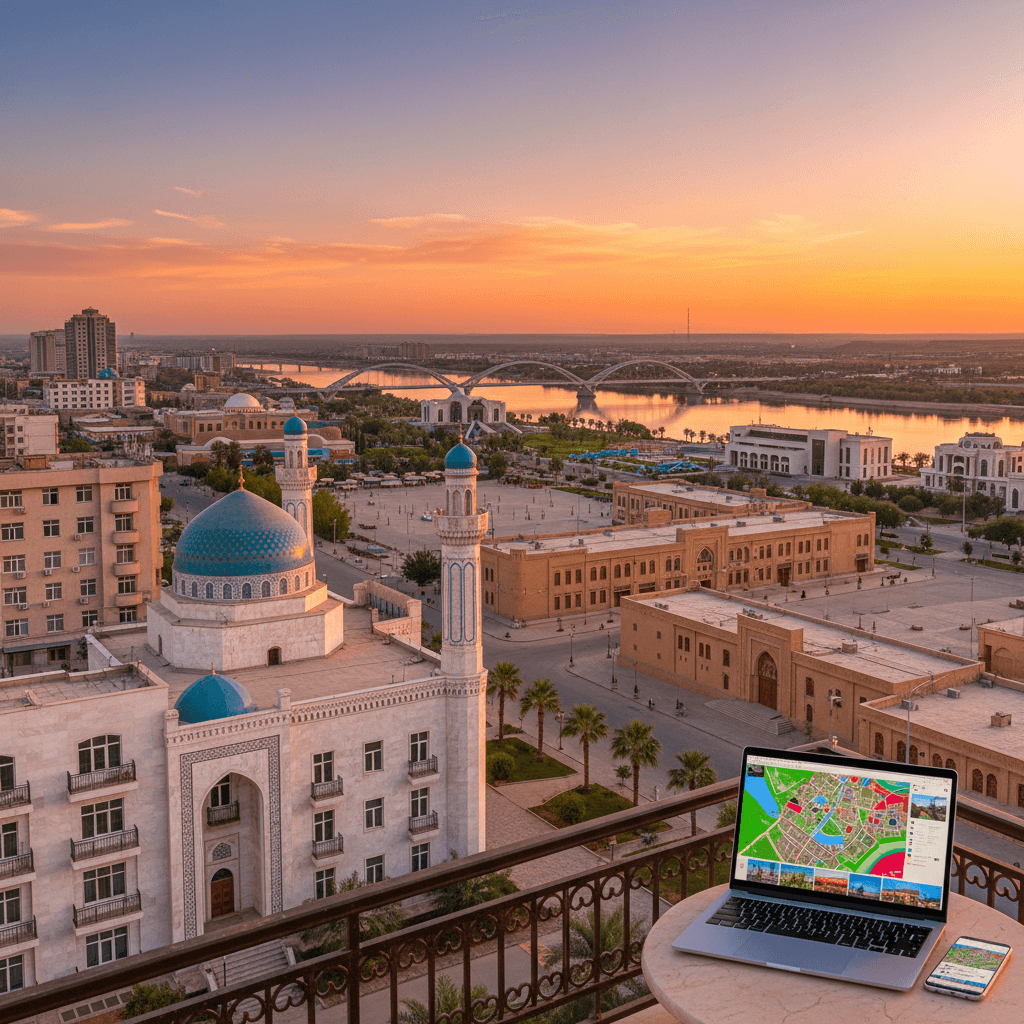
Türkmenabat
🇹🇲 Turkmenistan
The Isolationist’s Frontier
If you're looking for the typical digital nomad circuit of flat whites and fiber-optic speeds, Türkmenabat will be a massive shock to the system. This isn't a place you just "show up" to with a laptop and a dream. Turkmenistan's second-largest city is a fortress of Soviet-era aesthetics and deep-rooted bureaucracy. It sits right on the edge of the Farap border with Uzbekistan, making it a transit point for the few travelers allowed inside, but it feels less like a city and more like a time capsule. The vibe is quiet, conservative, and heavy with the weight of government surveillance.
You won't find a single "digital nomad" here in the traditional sense. In fact, you can't even visit independently. Every moment of your stay is dictated by a Letter of Invitation (LOI) and a mandatory licensed tour guide who stays by your side. It’s a strange, surreal emotional experience; you’re surrounded by friendly, shy locals in the markets, yet you're never truly alone. The city moves at a snail's pace, punctuated by the occasional bustle of the Gök Bazar, where you can find $3 plates of plov and shashlik among stalls of heavy textiles.
The Reality of Remote Work
Working from Türkmenabat is a logistical nightmare that requires serious dedication or a very patient boss. The internet averages a dismal 3 Mbps, and that’s if you can get online at all. Most social media and messaging apps are blocked by the state. Forget about finding a coworking space or a trendy cafe with Wi-Fi; they don't exist here. Most travelers end up begging their guides for a mobile hotspot or huddling in hotel lobbies that offer the only semi-reliable connections in town.
- Connectivity: Expect to use a reliable VPN, which you must download before you cross the border.
- Hardware: Local SIM cards are notoriously difficult for foreigners to buy. You'll likely rely on your guide's data plan.
- Banking: It’s a 100% cash economy for visitors. ATMs won't take your foreign cards, so you have to bring crisp USD bills to exchange for Manat.
Living and Costs
While the cost of living seems low on paper, the mandatory tour structure inflates your daily spend significantly. You aren't paying for a flat; you're paying for a government-sanctioned package. Some estimates put a month here at $2,666, but that includes the heavy fees for guides, permits, and pre-arranged transport. You won't be scrolling through rental apps to find a studio in a trendy neighborhood. Instead, you'll be placed in hotels near the city center or the border zone.
Neighborhoods & Navigation
The city doesn't have "cool" districts or expat enclaves. Everything revolves around the central axis near the Turkmenabat Airport and the road leading to the Farap border. The architecture is a mix of grand, white-marble government buildings and crumbling Soviet blocks. Walking around is possible, but you'll feel the eyes of the authorities on you, and wandering off the beaten path without your guide is a quick way to get questioned.
- Climate: Avoid the summer at all costs. Between June and August, temperatures regularly hit 40°C (104°F). Spring and Fall are the only manageable windows for a visit.
- Language: Turkmen and Russian are the only way to communicate. English proficiency is almost zero outside of your professional guide.
- Transport: There are no ride-hailing apps like Yandex or Uber. Your guide handles all transfers, usually in a private car, though local buses do exist for those with the patience to navigate them.
Ultimately, Türkmenabat is for the completionist or the traveler who wants to see the world's most closed-off societies. It offers a raw, unfiltered look at life in Central Asia, but as a base for a modern career, it’s practically impossible. You come here to disconnect, not to log in.
The Reality of the Turkmenistan Price Tag
Living in Türkmenabat is a paradox. On one hand, local prices for bread, tea, and produce at the markets are incredibly low. On the other hand, the cost of actually staying here as a foreigner is artificially high because of government mandates. You can't just rent an apartment on a whim or find a cheap hostel; you're essentially paying for a full time logistical shadow.
Most travelers find that their daily budget is dictated entirely by their tour operator. Since independent travel is restricted, your "cost of living" is actually a package rate. These packages usually cover your accommodation, a mandatory guide, and transport permits. You'll likely spend upwards of $2,600 per month if you try to stay long term, though most people only pass through for a week given the bureaucratic hurdles.
Monthly Budget Estimates
- Total Estimated Cost: Approximately $2,666 per month. This figure is high because it includes the fees for licensed agencies and guided services required to remain in the country legally.
- Accommodation: There is no open rental market for expats. Expect to pay around $650 for a week of semi independent travel, which includes your lodging and the necessary Letter of Invitation (LOI).
- Dining: If you step away from the hotel dining rooms, street food is a steal. A filling meal of plov or shashlik at a local bazaar will only set you back about $2 to $5.
- Connectivity: This is a hidden cost. Since local SIM cards are a nightmare to get, you'll often rely on your guide's hotspot. Factor in the cost of a high quality VPN like Streisand, which you must download before you cross the border.
Cash is King (And the Only Option)
Forget about your fintech apps, Apple Pay, or even standard Visa cards. Türkmenabat operates almost entirely on a cash basis. ATMs exist, but they rarely work for foreign cards, and when they do, the exchange rates are often unfavorable. Expats recommend bringing crisp, new US Dollar bills to exchange for local Manat.
You'll need to keep a stash of cash for everything from market snacks to tips for your driver. Because there are no ride hailing apps like Yandex or Uber here, you'll be negotiating fares in cash or relying on your pre paid tour transport. It's a manual way of living that requires a lot of forward planning.
The Guided Lifestyle Tier
Since you can't live here "on the cheap" independently, the typical budget tiers look a bit different than in neighboring Uzbekistan or Kazakhstan:
- Budget Tier: Non existent. Without a tour and a guide, you won't get past the border.
- Mid Range Tier: $2,000 to $3,000 per month. This covers a standard guided itinerary with stays in local hotels and meals at a mix of markets and hotel restaurants.
- High End Tier: $4,000+ per month. This gets you private transport, the best available rooms in the city, and more flexible "custom" itineraries through an agency.
While the sticker price for a month in Türkmenabat might look similar to a month in Western Europe, the value proposition is totally different. You aren't paying for luxury infrastructure or high speed fiber internet; you're paying for the privilege of access to one of the most isolated cities in Central Asia.
For Digital Nomads
Living in Türkmenabat as a nomad is an exercise in extreme patience. Since you can't officially book an Airbnb or find a local apartment on your own, you'll be staying in hotels pre-approved by your tour operator. Most remote workers gravitate toward the Central District because it's the only place where you might find a stable, albeit slow, Wi-Fi signal in a hotel lobby. Expect to pay around $2,666 a month for a fully managed stay, which covers your guide, transport, and lodging.
- Internet: Averages 4 Mbps. You'll need to download the Streisand VPN before you land, as most sites are blocked.
- Workspace: Coworking spaces don't exist here. Your best bet is working from your hotel room or a quiet corner of a lobby, though "cafe culture" for laptops hasn't arrived yet.
- Connectivity: Forget eSIMs. Most nomads rely on their guide's hotspot to get anything done.
For Expats
Expats in Türkmenabat are usually here for specific industrial or diplomatic contracts. Most live in the government sanctioned housing near the Farap Road area or central administrative zones. This isn't a city where you go out for a craft beer after work; instead, social life revolves around private dinners and local markets like the Gök Bazar. It's a cash only society, so expats keep plenty of US Dollars and Manat on hand because foreign cards almost always fail at the terminal.
- Housing: Strictly regulated and usually arranged by your employer or agency.
- Language: Russian is your lifeline if you don't speak Turkmen. English is very rare outside of your official guides.
- Safety: The city is very safe from petty crime, but you'll notice a heavy police presence and constant surveillance.
For Families
If you're bringing a family, the Central Neighborhoods near the city parks are the only viable option. These areas provide a bit of green space and are within walking distance of the main markets. However, the lack of international schools and modern healthcare facilities makes Türkmenabat a tough sell for long term family living. Most families here are in transit toward the Uzbekistan border or are part of short term specialized projects.
- Healthcare: Very basic. For anything serious, you'll want to be on a flight to a regional hub or rely on your guide to find a local doctor.
- Transport: No ride hailing apps like Yandex work here. You'll be using local buses or private cars arranged through your tour company.
- Climate: Summers are brutal, often hitting 40°C. Stick to March through May if you want to be outdoors with kids.
For Solo Travelers
Solo travelers usually treat Türkmenabat as a gateway. It's the primary stop before crossing the Farap border into Uzbekistan. You won't find a backpacker scene or hostel common rooms here. Instead, you'll be spending your time wandering the stalls of the local markets for $2 shashlik and $5 plov. It's an authentic, raw experience, but you'll always have a guide nearby, so "solo" is a relative term in Turkmenistan.
- Daily Life: Expect to spend a lot of time in the Bazar area. It's the heart of the city's social energy.
- Budget: Street food is incredibly cheap, but your mandatory tour fees will be the biggest expense, often starting at $600 for a week long stint.
- Logistics: You must have your Letter of Invitation (LOI) and specific border entry points listed before you arrive.
The Digital Reality
If you're planning to log on and knock out a few hours of deep work in Türkmenabat, you're in for a reality check. This isn't your typical nomad hub. The internet here is some of the slowest you'll encounter globally, update to ~3 Mbps. It's not just the speed that'll get you; it's the accessibility. The government maintains a tight grip on the web, meaning your go-to social media platforms, messaging apps, and news sites are likely blocked.
Most travelers find that hotel WiFi is limited to the lobby, and even then, it's prone to frequent outages. You won't find a local cafe culture where people sit with laptops for hours. In fact, pulling out a laptop in a public eatery might draw more curious stares than you're comfortable with. To stay connected, you'll need to rely heavily on your tour guide's mobile hotspot, as getting a local SIM card as a foreigner is an uphill battle involving significant red tape.
Coworking and Workspaces
The short answer is that coworking spaces don't exist in Türkmenabat. There are no shared offices, no "digital nomad" hubs, and no tech incubators open to the public. The infrastructure is built for residents and state business, not for remote workers. If you need to get things done, your best bet is your hotel room, but don't expect ergonomic chairs or high speed ports.
Expats who have passed through recommend a "work offline" strategy. Sync your Google Docs, download your research, and handle your heavy uploads before you cross the border from Uzbekistan. This city is a place to disconnect, whether you want to or not.
Connectivity Essentials
- VPNs: You cannot survive here without a solid VPN. Don't wait until you arrive to set this up, as most VPN provider websites are blocked. Travelers recommend a reliable VPN like NordVPN, but make sure it's installed and tested before you land.
- Mobile Data: Forget about eSIMs or international roaming; they almost always fail here. Your connectivity will likely be tethered to your guide's device.
- Power: Electricity is generally stable, but it's wise to carry a high capacity power bank since you'll be spending a lot of time on the move with your guide.
Practical Logistics for the Remote Worker
- Data Speeds: Expect update to ~3 Mbps on a good day, often dropping to 2G speeds in many areas.
- Physical Workspace: Zero dedicated coworking spots. Work from hotel lobbies or your room.
- Censorship: Extremely high. Expect most Western apps to be inaccessible without a workaround.
The cost of trying to maintain a "normal" remote work schedule here is high, not just in terms of money, but in frustration. Most nomads who visit Türkmenabat treat it as a forced digital detox. If your job requires you to be on Zoom calls or manage large data transfers, you'll find it nearly impossible to meet those demands here. Plan your deadlines accordingly and enjoy the rare chance to be truly off the grid.
The Reality of Local Safety
Türkmenabat feels like a time capsule. It is a quiet, conservative city where the crime rate against foreigners is practically non-existent. You won't find the typical petty theft or street scams common in other regional hubs. Locals are generally shy but incredibly hospitable if you manage to strike up a conversation. However, safety here is defined by a different set of rules. You are under constant, albeit mostly invisible, government surveillance.
The city doesn't have "no-go" zones in the traditional sense, but you should never wander off without your guide. Since your Letter of Invitation (LOI) and visa are tied to a licensed tour operator, being caught alone in a residential area can lead to uncomfortable questioning for both you and your hosts. Stick to the central markets and the areas around the Farap border crossings. The police presence is heavy, so always keep a copy of your passport and your entry permits on you. They won't bother you if you're with your guide, but they expect you to follow the itinerary you submitted to the Ministry of Foreign Affairs.
Healthcare Infrastructure
If you're looking for Western-style clinics or English-speaking doctors, you're out of luck in Türkmenabat. The healthcare system is basic and suffers from a lack of modern equipment and specialized medicine. While there are local hospitals and pharmacies stocking Russian or Turkish pharmaceuticals, they aren't equipped for anything beyond minor ailments or stabilizing a patient for transport.
Most expats and long-term travelers follow a strict protocol for health issues:
- Minor issues: Contact your tour guide immediately. They act as your translator and fixer at local pharmacies.
- Emergency services: There is no 911 equivalent that speaks English. You must call your guide or the emergency number provided by your tour agency.
- Serious illness: Most travelers opt for medical evacuation to Istanbul or Dubai. Do not arrive without high-level travel insurance that covers international medevac.
- Prescriptions: Bring a full supply of any medication you need. Don't count on finding specific brands or even generic equivalents in local shops.
Practical Preparedness
Since the city is a major transit point for those heading to Uzbekistan, the Farap border area is where you'll find the most activity, but it's not a place for medical assistance. If you have a dental emergency or a recurring condition, try to handle it in Ashgabat or across the border in Bukhara before settling into Türkmenabat.
Water safety is another factor to keep in mind. Never drink the tap water; stick to bottled water which is cheap and available at every small corner kiosk. Food hygiene in the local markets is generally okay, but since you're likely on a short, guided stint, your stomach might not be adjusted to the local oils used in plov and shashlik. Keep a basic first-aid kit with rehydration salts and antibiotics just in case.
Emergency Contact Strategy
Because the internet is heavily censored and roaming often fails, you can't rely on your phone's GPS or VOIP apps to call for help. Your lifeline is your local guide's SIM card or a pre-purchased local SIM, though these are notoriously difficult for foreigners to get. Ensure you have the physical address of your accommodation written in Turkmen or Russian, as most taxi drivers near the border won't understand English directions if you get separated from your group.
- Local Emergency: Dial 03 for an ambulance (Russian/Turkmen speakers only).
- Best Strategy: Keep your tour operator's 24/7 emergency line on a piece of paper in your wallet.
- Insurance: Ensure your policy covers "adventure travel" or "high-risk zones" to account for the unique bureaucratic hurdles of Turkmen medical care.
The Ground Reality of Getting Around
Moving through Türkmenabat is a lesson in patience and pre-planning. You won't find the convenience of modern mobility apps here. Since the government requires almost all your movements to be coordinated through a licensed tour operator, your primary mode of transport will likely be a pre-arranged private vehicle. Your guide acts as your driver and navigator, which takes the guesswork out of the city's confusing layout but strips away any sense of spontaneous exploration.
For those short moments where you might step out near your hotel or the central market, don't go looking for Yandex or Uber. They don't exist in Turkmenistan. Local taxis are the heartbeat of the city's transit, but they operate on a system of informal hailing. You stand by the side of the road, and a private car might pull over. However, most expats and travelers are advised to let their guides handle these interactions to avoid price gouging or misunderstandings with local authorities.
Public Transit and Walkability
The city relies on a network of aging public buses that connect the central districts with the outskirts. They are incredibly cheap, usually costing just a few Manat, but they are often crowded and lack any English signage. Without a firm grasp of Turkmen or Russian, you'll find the bus routes nearly impossible to decipher. Most visitors find the system too opaque for daily use.
Walkability is hit or miss. The city center, near the major administrative buildings and the Gök Bazar, is manageable on foot. The sidewalks are wide, though often uneven. Keep in mind that Türkmenabat is a sprawling Soviet-designed city. Distances between "central" points are often longer than they look on a map, and the summer heat, which regularly tops 40°C (104°F), makes walking long distances a health risk between June and August.
Key Transit Hubs
- Türkmenabat International Airport: This is a small, functional hub primarily used for domestic hops to Ashgabat. Don't expect to find a line of official taxis waiting outside; your tour operator must arrange your pickup in advance.
- Farap Border Crossing: Located about 20 minutes drive (18 km) from the city center, this is the vital link to Uzbekistan and the city of Bukhara. It is the most common entry point for travelers on a multi-country Silk Road itinerary.
- The Railway Station: Located in the heart of the city, the station connects Türkmenabat to Ashgabat and Mary. While the trains are slow, they offer a fascinating, low-cost glimpse into local life, provided your visa and permits allow for rail travel.
Practical Logistics for Nomads
If you're planning to stay for more than a few days, you need to account for the total lack of digital infrastructure in the transport sector. You won't find bike-sharing schemes or electric scooters here. Everything is cash-based. Make sure you carry small denominations of Manat for any local transport, as drivers rarely have change for large bills or USD.
Travelers often say the best way to handle "getting around" is to treat your guide as your concierge. Since your Letter of Invitation (LOI) specifically dictates your entry and exit points, like the Farap border, you have very little room for detour. If you need to get to a specific market or a pharmacy, tell your guide the night before. Independent wandering is technically possible in some areas, but constant surveillance means you'll likely be approached by police if you look lost or venture too far from the main drags.
Summary of Costs
- Private Tour Car: Usually included in your daily tour rate, which averages $200 to $300 per day.
- Informal Local Taxi: Roughly $2 to $5 for a cross-town trip, though prices are negotiated on the spot.
- Public Bus: Less than $0.50 per ride, though rarely used by foreigners.
- Airport Transfer: Often bundled into your tour package; independently, it might cost $15 to $25 if arranged through a hotel.
The Linguistic Landscape
Communication in Türkmenabat is a unique challenge that defines your daily experience. You aren't just dealing with a language barrier; you are dealing with a distinct lack of digital tools to bridge that gap. Turkmen is the primary language used in government and daily life, but Russian remains the lingua franca for business and inter ethnic communication. If you speak even a few phrases of Russian, your life here becomes significantly easier.
English proficiency is exceptionally low. Outside of the high end hotels or the young guides assigned to your mandatory tour, you won't find many people who can hold a conversation in English. This isn't a city where you can rely on the person at the market stall to understand "how much." You will need to get comfortable with hand gestures, pointing, and a few key local words.
Essential Tools and Preparation
The biggest hurdle for communication isn't the speaking; it's the tech. Because internet speeds average a sluggish 3 Mbps and most social media or messaging platforms are blocked, you cannot rely on live translation apps. Google Translate is your best friend, but only if you download the offline Turkmen and Russian packs before you even think about crossing the Farap border. Without them, you'll be staring at a loading screen while trying to order dinner.
Most travelers and expats find that their tour guide acts as a human bridge for almost every interaction. Since you can't easily get a local SIM card and eSIMs generally fail here, you will often find yourself tethered to your guide's hotspot or using the spotty Wi-Fi in a hotel lobby. This makes real time communication with anyone outside the country a logistical project rather than a quick text.
Key Phrases for Your Pocket
Locals are generally shy but appreciative when you make an effort. Using a few Turkmen words goes a long way in softening the constant feeling of being under surveillance. Start with these basics:
- Salam: Hello (Universal and easy)
- Rahmat: Thank you (Borrowed from Persian/Uzbek, widely understood)
- Hawa / Ýok: Yes / No
- Nace?: How much? (Vital for the markets)
- Bagyşlaň: Excuse me
Social Nuances and Surveillance
Communication here is filtered through a layer of caution. While people are hospitable, they are often wary of speaking freely with foreigners due to the heavy government presence. You'll notice that conversations in public spaces remain surface level. Avoid discussing politics, the government, or social restrictions. Most social interactions happen in the markets or near the border transit points, but they are usually brief and transactional.
Expats who have spent time in the region recommend sticking to Russian for most practical matters, as the technical vocabulary is more robust. If you are trying to navigate a medical issue or a specific logistics problem, your guide is your only reliable mouthpiece. Don't expect to find expat meetups or digital nomad groups to help you translate the culture; in Türkmenabat, you are largely on your own or at the mercy of your pre arranged itinerary.
Digital Communication Realities
Since most standard messaging apps are blocked, nomads who do pass through often use a reliable VPN like NordVPN to maintain a link to the outside world. Make sure your VPN is installed and tested before you enter Turkmenistan. Even with a VPN, the slow speeds mean video calls are usually out of the question. Stick to text based communication and manage your expectations for response times. Your digital life will effectively slow down to a crawl, mirroring the pace of the city itself.
Surviving the Extremes
Turkmenistan's desert climate doesn't do "mild" very well. Since you are required to be on a guided tour to step foot in Türkmenabat, your schedule is largely at the mercy of your operator, but timing your visit is the difference between an interesting cultural exchange and a grueling endurance test. The city sits in a dry, continental zone where the mercury swings wildly between the seasons.
The annual average temperature hovers around 15-16°C (59-61°F), but that number is a bit deceptive. It masks the reality of a place that feels like a furnace in July and a freezer in January. Most travelers find that the shoulder seasons provide the only comfortable window to explore the local markets or trek toward the Farap border without constant physical discomfort.
The Golden Windows: Spring and Fall
If you have any say in your itinerary, aim for March through May or September through November. These months are the sweet spots. During the spring, the desert landscape around the Amu Darya river sees a brief, modest bloom, and daytime temperatures usually sit in a pleasant 20°C to 25°C range. It is the best time for walking the central districts with your guide without breaking a sweat.
Autumn is equally reliable. By late September, the brutal summer heat breaks, making the dry air much more manageable. This is also harvest season, meaning the local markets are stocked with regional produce. Expect crisp evenings that might require a light jacket, especially as you get into late October. Rain is rare year round, but you might see a few light showers during these periods.
The Summer Burn
Unless you have a high tolerance for dry heat, avoid June, July, and August. Temperatures regularly spike between 30°C and 40°C (86°F to 104°F), and the sun is relentless. Because Türkmenabat lacks a modern "cafe culture" or air conditioned coworking spaces, you will likely be stuck in your hotel lobby or a tour vehicle just to escape the glare. The heat makes the city's slow, bureaucratic pace feel even more draining.
Winter Realities
Winter in Türkmenabat is short but can be biting. From December to February, temperatures typically range from 0°C to 10°C (32°F to 50°F). While it rarely stays below freezing for long, the wind coming off the plains can make it feel much colder. Since most infrastructure isn't built for high efficiency heating, you will want to pack layers. It isn't the worst time to visit if you are just transiting to Uzbekistan, but it lacks the charm of the warmer months.
Seasonality at a Glance
- Best for Exploration: April and October. These months offer the most stable weather for outdoor sightseeing and border crossings.
- Peak Heat: July. Expect 40°C+ days. Not recommended for anyone planning to spend time outside.
- Coldest Month: January. While snow is infrequent, the damp cold and grey skies make for a somber atmosphere.
- Packing Essentials: High SPF sunscreen and a wide brimmed hat for summer; a windproof jacket and thermal base layers for winter.
Regardless of when you go, remember that your access to the outdoors is tied to your guide. In the summer, many guides will suggest starting your day at sunrise and retreating indoors by noon. In the winter, the shorter daylight hours might limit how much of the city you can actually see before your mandatory return to your accommodation.
Getting Your Paperwork in Order
Visiting Türkmenabat isn't something you do on a whim. The government requires a Letter of Invitation (LOI) before you even think about applying for a visa. You won't be able to wander the streets as a solo freelancer because every traveler must be part of a tour or have a licensed guide. When you apply, make sure to specify the Farap border if you plan on crossing into Uzbekistan, as your entry and exit points are strictly monitored and must match your documents.
Money and Connectivity
Forget your credit cards and leave the digital banking apps for your next trip. Türkmenabat is a cash-only economy for foreigners. Local ATMs generally won't accept international cards, so you'll need to bring crisp, clean US Dollars to exchange for the local manat. Most expats recommend carrying more cash than you think you'll need, as there's no safety net if you run out.
The internet situation is, frankly, a challenge. With speeds averaging around 4 Mbps, you won't be joining high def Zoom calls here. Most social media and messaging apps are blocked by the state. If you need to stay connected, download a VPN like Streisand before you land. Don't bother with eSIMs or roaming; they rarely work. Most travelers end up relying on their guide's mobile hotspot to send basic messages home.
Cost of Living Breakdown
While the city is technically affordable, the mandatory tour structure inflates the daily price tag. You can't just rent a cheap studio on the outskirts. Instead, you'll be paying for a package that covers your guide and pre-approved lodging.
- Monthly Estimate: Roughly $2,600, though this is almost entirely tied up in tour fees and guided services.
- Daily Meals: Expect to pay between $2 and $5 for street food like plov or shashlik in the local markets.
- Accommodation: Independent rentals aren't an option. Stays are arranged through operators, often costing upwards of $600 per week for semi-independent setups.
Getting Around the City
There are no ride-hailing apps like Yandex here. You'll see public buses and local taxis near the border and central markets, but most of your transport will be handled by your guide. The city isn't particularly walkable outside the immediate center, and the Turkmenabat Airport handles small domestic hops if you're coming from Ashgabat. If you're heading to the border, your guide will typically drop you at the Farap checkpoint.
Language and Culture
Turkmen is the primary language, but Russian is widely understood and used for business. English is very rare, so don't expect the person at the market to understand you. Download the Turkmen and Russian language packs on Google Translate for offline use. A simple "Salam" (hello) or "Rahmat" (thank you) goes a long way with the locals, who are often shy but incredibly hospitable once the ice is broken.
Health and Safety
Türkmenabat is physically safe with very low violent crime, but you should be aware of the constant government surveillance. It's best to avoid political discussions and stick to the paths approved by your guide. Healthcare is basic at best. There is no 911 equivalent, so if you have an emergency, your first call should be to your tour operator. Always carry comprehensive travel insurance that includes medical evacuation, just in case.
When to Visit
The weather is a game of extremes. Summers from June to August are brutal, with temperatures often hitting 40 degrees Celsius. Most travelers prefer Spring (March to May) or Fall (September to November) when the air is milder and the markets are more comfortable to explore. Winters are chilly but manageable, usually hovering between 0 and 10 degrees Celsius.
Need visa and immigration info for Turkmenistan?
🇹🇲 View Turkmenistan Country GuideWild Card
Expect the unexpected