The Hague
🇳🇱 Netherlands
The Vibe: Polished, Peaceful, and Surprisingly Salty
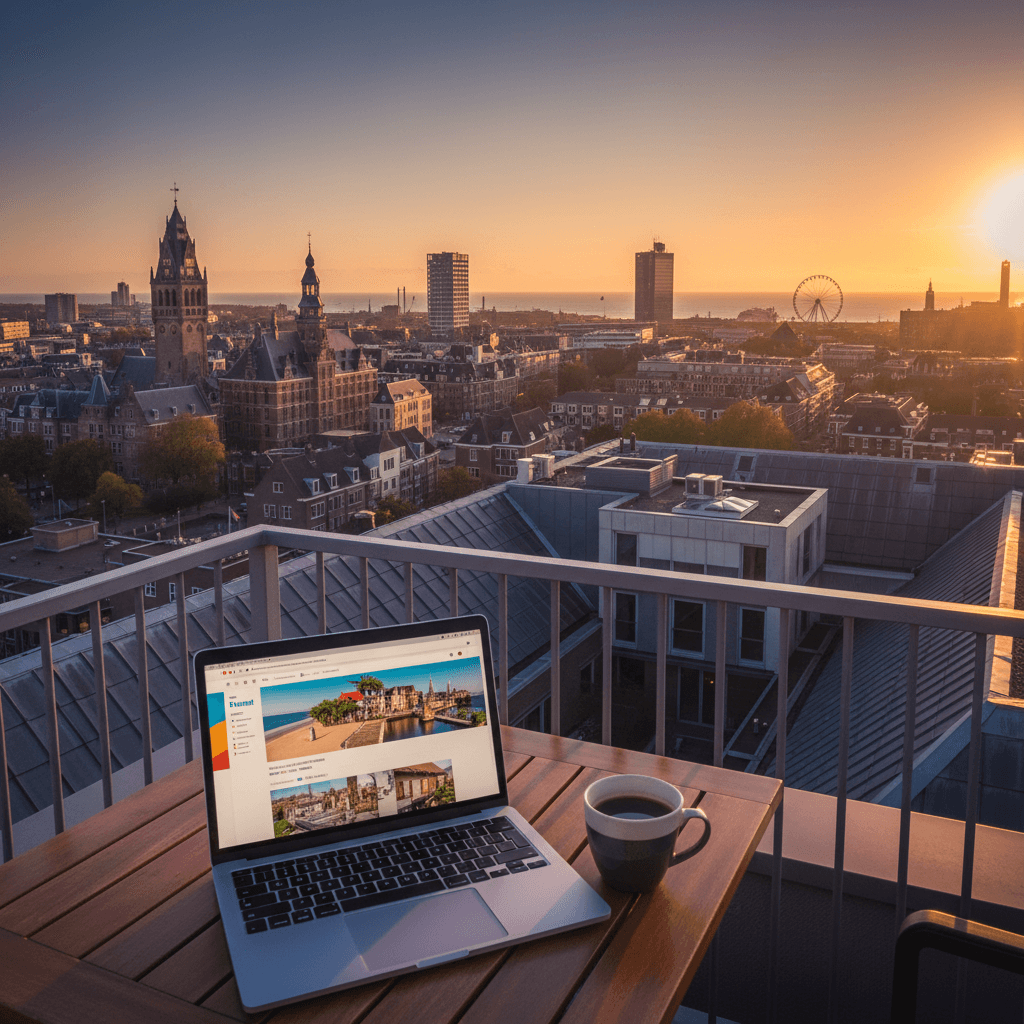
If Amsterdam is the rebellious teenager of the Netherlands, The Hague is the sophisticated older sibling who actually has their life together. It feels more like a collection of leafy boulevards and international embassies than a frantic tourist hub. You'll notice the pace is noticeably slower here. People aren't rushing to catch a canal boat; they're cycling toward the dunes or grabbing a coffee near the Binnenhof. It’s a city that feels safe, stable, and undeniably international.
The real magic of The Hague is the proximity to the North Sea. Most nomads find the split personality of the city refreshing. You can spend your morning working in a sleek, high ceilinged cafe in the Centrum and your afternoon watching the sunset at Scheveningen with your toes in the sand. It’s one of the few places in Europe where you can balance a high stakes professional life with a legitimate beach culture.
Living Costs: The Price of Quality
The Hague isn't a budget destination, but many expats recommend it over Amsterdam because you actually get some breathing room for your Euro. You should plan for a monthly burn rate of around €3,000 to €4,000 if you're flying solo, or upwards of €5,000 for a family lifestyle. Rent is your biggest hurdle, with central studios typically landing between €1,200 and €1,800. If you look toward the outskirts or Kijkduin, you might find more value, but you'll trade away some of that central buzz.
- Single Nomad Budget: €2,000 to €3,000 per month for the basics.
- Mid-range Comfort: €3,000 to €4,000 per month for a central flat and dining out.
- Family Living: €4,000 to €5,000+ per month depending on school and housing needs.
- Daily Extras: A mid-range dinner at the Plein square runs about €25, while a day pass at a local coworking space starts around €25.
Where to Plant Your Flag
Choosing a neighborhood here depends entirely on whether you want the "World Capital" feel or the "Surf Town" feel. Most solo travelers gravitate toward the Centrum. It's walkable, the nightlife around the Binnenhof is lively, and you're never more than a few minutes from the Mauritshuis museum. It can get noisy on weekends, but the convenience is hard to beat.
For a more relaxed, community focused stay, check out Zeeheldenkwartier. It’s leafy, quiet, and filled with independent boutiques. If you're traveling with family or just need to be near the water, Scheveningen is the go to. It feels like a year round holiday spot, though it gets crowded with tourists during the peak summer months. Just keep in mind that the beach is a 15 to 20 minute tram ride from the city center.
Staying Connected and Productive
The internet infrastructure is some of the best in Europe. You’ll find average download speeds around 112 Mbps, and free WiFi is the standard in almost every cafe. While The Hague has a strong cafe working culture, dedicated coworking spaces are a bit more corporate than the "digital nomad hubs" you'd find in Lisbon or Bali. Many locals hop over to Rotterdam to use spaces like CIC for a more startup focused energy.
To get set up, grab a KPN or Vodafone SIM for about €10 to €30 a month. If you prefer to hit the ground running, Holafly or WorldSIM eSIMs work perfectly here. For getting around, skip the Uber and rent a bike for about €20 a month. The city is incredibly bikeable, and the HTM tram system is reliable for those rainy days that inevitably pop up between October and March.
The Social Landscape
The Hague can feel a bit "stuffy" at first glance because of the suit and tie crowd working at the international courts. However, the expat network is massive and welcoming. There are constant meetups for international professionals and nomad families. Social life often revolves around the seafood spots on the Scheveningen boardwalk or the bars at Plein. Don't worry about the language barrier; English proficiency is exceptionally high here. A simple "Hallo" or "Dank je" goes a long way, but you'll rarely find a situation where you can't communicate in English.
The Price of Peace and North Sea Breezes
Living in the Dutch seat of power isn't exactly cheap, but most nomads find it offers a much better value proposition than Amsterdam. You’re trading the chaotic canal crowds for a more polished, international atmosphere where the beach is just a tram ride away. While the city has a reputation for being a bit "stuffy" due to the embassies and courts, that translates to a very high quality of life and infrastructure that actually works.
For a single person living a modest lifestyle, expect to budget between €2,000 and €3,000 per month. If you want a more comfortable setup with frequent dinners out at the Plein or seafood feasts in Scheveningen, you should plan for €3,000 to €4,000. Families typically see their costs start at €4,000 and climb quickly depending on school choices and apartment size.
Monthly Budget Breakdowns
- Budget Lifestyle: €2,000 to €3,000 for singles; €3,000 to €4,000 for families.
- Mid-range Lifestyle: €3,000 to €4,000 for singles; €4,000 to €5,000 for families.
- Comfortable Lifestyle: €4,000+ for singles; €5,000+ for families.
Housing and Neighborhoods
Rent will be your biggest hurdle. The market is tight, so savvy expats often look toward the edges of the city or nearby suburbs to save a few hundred Euros. Most nomads use platforms like Punta.app or local Facebook groups to find leads before they arrive.
Centrum (City Center)
- Rent: €1,200 to €1,800 for a studio or one bedroom.
- The Vibe: Walkable, historic, and right in the middle of the action near the Binnenhof. It's the best spot if you want nightlife, though it can get noisy on weekends.
Scheveningen
- Rent: €900 to €1,400 for smaller apartments further from the shore.
- The Vibe: Relaxed beach living. It's a favorite for expat families who want fresh air, though it gets very touristy during the summer months.
Zeeheldenkwartier
- Rent: Comparable to the center, often €1,300+ for decent space.
- The Vibe: Leafy, quiet, and close to the major museums. It's a great middle ground for those who want a neighborhood feel without the "embassy row" stiffness.
Day-to-Day Expenses
Eating out is where the costs can sneak up on you. A quick street food snack like a herring or some fries will run you €5 to €10, while a mid-range dinner usually lands between €15 and €25 per person. For high-end seafood on the Scheveningen boardwalk, you'll easily spend €40 or more.
Transport is highly efficient. A monthly pass for the HTM trams and buses costs around €80 to €100. However, most locals just rent a bike for about €20 a month. It’s the fastest way to get around, and the city is incredibly bike-friendly. If you're heading to the airport, a train to Schiphol takes about 45 minutes and costs roughly €20.
Connectivity and Coworking
The Hague has some of the best internet in Europe, with average download speeds around 112 Mbps. You'll find free WiFi in almost every café and public library. For a dedicated desk, coworking spaces like StarDock or CIC in nearby Rotterdam offer day passes for €25 and monthly memberships between €250 and €450.
To stay connected on the go, grab an eSIM from Holafly or a local physical SIM from KPN or Vodafone. You can get a solid data plan for €10 to €30 per month. Most transactions are card-based, so having Wise or Revolut on your phone will make your life much easier at the markets and shops.
Centrum: The Nomad and Solo Traveler Hub
If you want to be where the action is, Centrum is your best bet. It's the most walkable part of the city and serves as the primary meeting ground for the local expat community. Most nomads congregate around Plein, a historic square lined with bars and cafes that transform into social hubs after dark. You'll find the highest concentration of laptop friendly spots here, and the 112 Mbps average internet speed means you can take calls from almost any terrace without a hitch.
Living in the center comes with a trade off. Expect to pay between €1,200 and €1,800 for a one bedroom apartment or studio. It can get noisy on weekends, especially near the nightlife strips, but the convenience of having the Binnenhof and Mauritshuis museum at your doorstep is hard to beat. For work, many locals hop on a quick train to nearby Rotterdam to use spaces like StarDock for around €20 a day, though the cafe culture in Centrum is strong enough that you might never need a formal desk.
- Rent: €1,200 to €1,800 for central studios.
- Vibe: High energy, historic, and social.
- Best for: Networking, nightlife, and short term stays.
Scheveningen: The Expat Seaside Escape
For those who prefer salt air over city streets, Scheveningen is the go to choice. It's technically a district of The Hague but feels like a different world. Expats often choose this area for its relaxed, resort style atmosphere. You can spend your mornings jogging on the sand and your evenings eating fresh seafood along the boardwalk. It's less "stuffy" than the city center, though it gets very crowded with tourists during the May to September peak season.
Rentals here are comparable to the city center, usually ranging from €1,200 to €1,600 for smaller places. The main downside is the commute; you'll rely on the HTM tram system to get into the city, which costs about €80 to €100 for a monthly pass. Most residents just grab a bike for €20 a month and enjoy the scenic ride instead.
- Rent: €1,200 to €1,600 for outer area apartments.
- Vibe: Coastal, breezy, and active.
- Best for: Surfers, seafood lovers, and long term expats.
Zeeheldenkwartier: The Family Retreat
Families and those looking for a quieter pace usually gravitate toward Zeeheldenkwartier. It's one of the leafiest neighborhoods in the city, filled with 19th century architecture and green squares. It sits comfortably between the center and the beach, offering a peaceful middle ground. You're close to the Museon-Omniversum, which is a massive hit with kids, and the streets are safe enough that you'll see families biking everywhere at all hours.
The cost of living here reflects its popularity with established professionals. A comfortable family lifestyle in this area typically requires a budget of €4,000 to €5,000 per month. While the nightlife is subdued compared to Centrum, the neighborhood is packed with independent boutiques and organic grocers. It's a "locals" neighborhood where people actually know their neighbors, making it easier to integrate if you're staying for a year or more.
- Monthly Cost: €4,000+ for a comfortable family setup.
- Vibe: Residential, green, and upscale.
- Best for: Families, slow travelers, and quiet seekers.
Practical Neighborhood Tips
- Use Punta.app or local Facebook groups to find rentals, as the market moves fast.
- Stick to the Plein area if you're looking for English speaking social meetups.
- Avoid isolated stretches of the beach at night; while the city is very safe, these areas can be poorly lit.
- Book a tour with The Hague Greeters at least two weeks in advance to get a local's perspective on the side streets of your chosen neighborhood.
Connectivity and Speed
You won't have to worry about the internet in The Hague. With average download speeds exceeding 200 Mbps, it ranks among the best in Europe for reliable connectivity. Whether you are uploading large files or jumping on a video call from a park bench, the infrastructure holds up. Public WiFi is practically a given in most squares and government districts, and the mobile data coverage is flawless across the city.
For your phone, most nomads skip the physical stores and grab a Holafly or WorldSIM eSIM before landing. If you prefer a local physical SIM, head to a KPN or Vodafone shop. You can usually find prepaid plans between €10 and €30 per month that provide more than enough data for a heavy user.
Coworking Spaces
The Hague has a professional, slightly more formal coworking scene than the creative hubs of Amsterdam. It is a city of diplomats and lawyers, so the spaces tend to be quiet and highly functional. While many residents work from the nearby CIC Rotterdam or StarDock (where day passes run about €20), there are plenty of local options within the city limits.
- The Hague Tech: A massive hub near Laan van NOI station that attracts a mix of startups and international freelancers.
- Spaces: They have several locations, including the iconic Rode Olifant building, which feels more like a grand hotel than an office. Monthly memberships here usually range from €250 to €450.
- Tribes: Known for its polished, high end interiors and excellent meeting rooms, perfect if you need to impress a client.
The Café Office Culture
If you aren't ready to commit to a monthly desk fee, the city has a massive café culture that is very welcoming to laptop users. The Zeeheldenkwartier and Centrum neighborhoods are your best bets for find a corner to work in for a few hours. Most places offer free WiFi and won't mind you lingering over a second oat latte.
- Bookstor: Located on the Noordeinde, this is a local favorite. It is a bookstore and café hybrid with cozy nooks and a small garden in the back.
- Hometown Coffee & More: Situated right on the Buitenhof, it has a living room vibe and plenty of power outlets for a long afternoon session.
- Pistache: A bright, airy spot near the Paleistuin where you can get some work done before taking a walk through the royal gardens.
Practical Work Considerations
The Hague is particularly popular with digital nomad families because the coworking spaces often feel more inclusive and less like "party offices." Many nomads find that the city's pace allows for a better deep work state than the more frantic Dutch cities. If you need a change of scenery, the beach at Scheveningen has several seasonal beach clubs with decent WiFi where you can work with a view of the North Sea during the warmer months.
One thing to keep in mind is the library system. The Central Library (Bibliotheek Den Haag) in the city center is a fantastic, free resource. It offers quiet zones, fast internet, and a very productive atmosphere for the cost of a coffee from the downstairs kiosk. It is a great alternative if you are on a budget or just need a change of pace from the café scene.
Keeping Peace of Mind
The Hague is one of those rare cities where the "international city of peace and justice" title isn't just a marketing slogan; it's the actual vibe. Most nomads find it significantly more relaxed than Amsterdam. You won't deal with the aggressive tourist crowds or the chaotic bike traffic found in the capital. It's a place where you can comfortably walk through the Centrum at midnight without constantly looking over your shoulder.
While crime rates are impressively low, common sense still applies. The city is exceptionally safe for solo travelers and families alike, though expats recommend staying aware in more isolated stretches of the Scheveningen or Kijkduin beaches after dark. These areas aren't dangerous, but they get very quiet once the seaside bars close up. If you're cycling, the biggest "threat" you'll face is bike theft. Invest in a heavy grade lock and always secure your frame to a permanent fixture; even in a safe city like this, an unlocked bike is considered fair game.
Healthcare Standards
The Dutch healthcare system is world class, and The Hague is home to several top tier facilities. If you need medical attention, you'll find that almost every doctor, nurse, and pharmacist speaks perfect English. The city is served by major hospitals like HMC Westeinde and HagaZiekenhuis, which handle everything from specialist consultations to emergencies.
- Pharmacies: Look for the "Apotheek" sign. They are widespread throughout neighborhoods like Zeeheldenkwartier and usually open until 5:30 PM or 6:00 PM, with rotating "dienstapotheek" locations handling after hours needs.
- General Practitioners: If you're staying long term, you'll need to register with a local "Huisarts" (GP). For short stays, many clinics offer "passanten" appointments for visitors for a fee, usually around €30 to €50.
- Water and Food Safety: The tap water is some of the cleanest in Europe. You don't need to buy bottled water; just refill your flask from the kitchen sink. Food hygiene standards are strictly enforced, so you can eat at the Scheveningen boardwalk seafood stalls or Plein square cafes without worry.
Emergency Information
In a serious pinch, the number to remember is 112. This is the universal emergency line for police, fire, and ambulance services across the EU. Operators will switch to English the moment they realize you aren't a native speaker. For non-urgent police matters, like reporting a lost wallet or a stolen bike, call 0900-8844.
Most nomads find that their biggest health hurdle is actually the weather rather than illness. The maritime climate means it's often damp and windy. Local expats swear by vitamin D supplements during the grey months from November to February to ward off the winter blues. If you're coming from a sunnier climate, the lack of light can be a bigger adjustment than the healthcare system itself.
Practical Safety Tips
- Public Transport: Trams and buses are safe at all hours. Use the HTM app to track schedules and stay in well lit areas while waiting.
- Beach Safety: If you're swimming at Scheveningen, pay attention to the flags. The North Sea has strong currents, and the "Red Flag" means swimming is strictly prohibited.
- Digital Security: Public WiFi is everywhere, from the central library to the seaside cafes. While it's convenient, use a VPN if you're handling sensitive work data or banking.
Getting Around the City
The Hague is one of those rare cities where you can start your morning at a high stakes international court and end your afternoon with your toes in the North Sea sand. It’s significantly more spread out than Amsterdam, but the infrastructure is so dialled in that you’ll rarely feel the distance. Most nomads find the city’s layout encourages a healthy, active lifestyle, whether you’re commuting by bike or hopping on the iconic yellow and red trams.
Public Transport and the HTM Network
The HTM tram and bus network is the backbone of the city. It’s remarkably reliable and clean. If you’re staying for a month or more, look into a monthly pass, starting from €40 for regio pass depending on zones. It’s a lifesaver if you’re living in Scheveningen but need to hit the coworking spaces in the Centrum daily.
- The Tram: Trams 1 and 9 are the ones you’ll use most; they connect the central train stations directly to the beach.
- Payment: You can tap in and out with your contactless debit card or phone. It’s seamless, so there’s no need to hunt for paper tickets.
- Train Travel: For trips to Rotterdam or Amsterdam, use the Den Haag Centraal or Den Haag HS stations. A train to Schiphol Airport takes about 45 minutes and costs around €20.
The Local Way: Cycling
You haven’t truly lived in The Hague until you’ve fought a headwind while cycling toward the coast. The city is incredibly bikeable with dedicated lanes that are often wider than the car lanes. Expats recommend renting a bike through services like Swapfiets for about €20 a month, which includes repairs. If you prefer walking, the city center is compact and pedestrian friendly, especially around the historic Binnenhof and the Plein square.
Airport Transfers and Arrivals
If you’re flying into Rotterdam The Hague Airport, you’re only 15km away. A combination of a local bus and a train or tram will get you to your desk in about 30 minutes for roughly €5 to €10. For those landing at Schiphol, the direct Intercity trains are your best bet. Uber is available and reliable for late night arrivals, though it’s rarely the fastest way to get around during the afternoon rush.
Exploring on Foot
When the sun comes out, walking is the best way to soak in the leafy boulevards of the Zeeheldenkwartier or the boardwalk at Scheveningen. For a deeper dive into the city’s layout without spending a dime, check out The Hague Greeters. They offer free walking tours led by locals, though you should book at least two weeks ahead to snag a spot. It’s a great way to learn the shortcuts that Google Maps might miss.
Transport Costs at a Glance
- Monthly Public Transport Pass: Starting from €40
- Monthly Bike Rental: €20
- Train to Amsterdam: €13 to €16
- Short Uber Trip: €15 to €25
- Tram Fare (Single Trip): Approx. €4
The Linguistic Landscape
You won't have any trouble getting your point across in The Hague. While Dutch is the official language, the city functions as a massive international hub. Because it hosts the Dutch government and numerous global courts, English is practically a second language here. Most nomads find they can go months without knowing more than a few words of Dutch, though locals always appreciate a little effort.
The proficiency level is staggering. Whether you're ordering a locally caught herring at the Scheveningen boardwalk or discussing a contract at a coworking space, you'll find that people switch to flawless English the moment they realize you aren't a local. It's a very low-friction environment for native English speakers and those using it as a lingua franca.
Essential Dutch Phrases
Even though you can survive on English alone, learning the basics helps you integrate into the community. It's especially useful when reading signs at the grocery store or navigating the HTM tram system. Here are the staples you'll use daily:
- Hallo: Hello (pronounced almost exactly like the English version)
- Dank je: Thank you (informal and widely used)
- Spreekt u Engels?: Do you speak English? (a polite way to start a conversation with older residents)
- Alstublieft: Please / Here you go (used when handing someone money or receiving a coffee)
- Hoi: Hi (very common for casual greetings in cafes)
Digital Communication and Apps
The Hague is a tech-forward city where your phone is your lifeline. Most nomads rely on Google Translate for real-time translation of menus or official documents. The app's camera feature is particularly handy for deciphering Dutch-only mail or apartment rental contracts.
For staying connected, the infrastructure is world-class. You'll find free, reliable WiFi in almost every cafe in the Centrum and Zeeheldenkwartier districts. If you need a local number or data plan, expats recommend these options:
- KPN or Vodafone: Physical SIM cards cost between €10 and €30 per month and offer excellent coverage across the city.
- Holafly or WorldSIM: These are the go-to choices for eSIMs if you want to hit the ground running with unlimited data the moment you land.
- WhatsApp: This is the primary way everyone communicates. From landlord chats to booking a table at a restaurant on the Plein, you'll need it installed.
The Cultural Nuance of Communication
Dutch communication is famously direct. Don't mistake this for rudeness; it's just a cultural preference for efficiency and honesty. If a colleague or a waiter is blunt with you, they're simply being transparent. Expats often say this makes professional life much easier because you always know exactly where you stand.
In social settings, especially in the more "stuffy" international circles near the embassies, the tone can be slightly more formal than in Amsterdam. However, once you head down to the beach at Kijkduin, the vibe shifts to something much more relaxed and conversational. Whether you're in a high-stakes meeting or a seaside bar, clear and honest communication is the gold standard here.
The Sweet Spot: May to September
If you want to experience The Hague at its best, aim for the window between May and September. This is when the city sheds its grey coat and everyone heads outdoors. Temperatures usually hover between 15°C and 22°C, which is perfect for biking through the Zeeheldenkwartier or working from a terrace in the city center. July is the peak of summer, often hitting that 22°C average, though heatwaves can occasionally push things higher.
This period is prime time for the beach lifestyle at Scheveningen. While the North Sea is never exactly tropical, the boardwalk comes alive with pop-up bars and seafood spots. Nomads often find this the best time to balance work and play; you can put in a few hours at a café in the morning and be on the sand by 3:00 PM. Just keep in mind that July and August bring the crowds, making the beach areas feel more touristy and driving up short-term rental prices.
The Grey Season: November to February
Winter in The Hague isn't necessarily brutal, but it is persistent. From November through February, the maritime climate brings plenty of wind and drizzle. Temperatures average between 3°C and 7°C, and January is notorious for having about 19 days of rain. It's the kind of weather that makes the city's "stuffy" reputation feel a bit more real as people retreat indoors.
That said, if you're a fan of museum hopping and cozy café culture, winter has its perks. The crowds at the Mauritshuis thin out, and you won't have to fight for a seat with your laptop at the best coffee spots. It’s also the cheapest time to secure a short-term apartment, provided you don't mind the short daylight hours and the frequent need for a sturdy umbrella.
What to Expect Year-Round
The Hague doesn't really have a dry season. Rain is a constant companion, so locals rarely let a light shower ruin their plans. You'll see parents biking their kids to school in full rain gear without a second thought. If you're moving here for a few months, a high-quality raincoat is a better investment than a fancy umbrella, which the North Sea winds will likely snap in minutes.
- Spring (March to May): Crisp and unpredictable. You'll see the first tulips and enjoy more daylight, but keep a sweater handy.
- Autumn (September to November): The city's leafy boulevards turn gold, but the wind picks up significantly. October starts the transition into the wettest part of the year.
- The "Wind Factor": Since the city sits right on the coast, the breeze is constant. It keeps the air quality high but can make a 10°C day feel much colder.
Strategic Timing for Nomads
Expats and long-term travelers often recommend arriving in late April. You beat the summer price hikes for housing, catch the start of the festival season, and get to enjoy the King's Day celebrations. If you're looking for a quieter, more focused work period, September is a fantastic "shoulder" month. The water is still warm enough for a quick dip, the summer tourists have cleared out, and the city settles into a productive, peaceful rhythm.
Survival Finances
Living in The Hague isn't cheap, but you'll generally get more breathing room than in Amsterdam. Most single nomads find they need between €3,000 and €4,000 a month to live comfortably, while families should budget upwards of €5,000. Rent is your biggest hurdle. A studio in the city center usually runs between €1,200 and €1,800, though you can shave a few hundred Euros off that by looking toward the outskirts or near the beach in Scheveningen.
For daily spending, street food like herring or stroopwafels costs €5 to €10. A mid-range dinner out will set you back €15 to €25, though a seafood feast on the Scheveningen boardwalk easily climbs past €40. Most expats use Wise or Revolut for daily transactions, as cards are accepted almost everywhere, from the high-end boutiques to the smallest cafes.
Where to Plant Your Flag
The neighborhood you pick defines your experience here. If you want to be in the thick of it, Centrum is the way to go. It's walkable, historic, and puts you right next to the nightlife at Plein square. It’s noisier and pricier, but you won't need a car.
For a more relaxed pace, Scheveningen is the go-to for families and surfers. It has a distinct international vibe and great seafood, though it gets packed with tourists during the summer. If you prefer leafy streets and proximity to museums like the Museon-Omniversum, look at Zeeheldenkwartier. It’s quieter and feels more like a local neighborhood, even if the nightlife is a bit thin.
Connectivity and Coworking
The internet here is some of the fastest in Europe, averaging 112 Mbps. You'll find free WiFi in most cafes and libraries. For a dedicated desk, expect to pay €20 for a day pass or between €250 and €450 for a monthly spot. While The Hague has plenty of laptop-friendly cafes, some nomads commute to nearby Rotterdam to use spaces like StarDock or CIC Rotterdam.
- SIM Cards: Grab an eSIM from Holafly for unlimited data, or pick up a physical prepaid card from KPN or Vodafone for €10 to €30.
- Apartment Hunting: Check Punta.app, local Facebook housing groups, or specialized rental platforms to avoid the most common tourist traps.
Getting Around
The Hague is incredibly bikeable, and you can rent a set of wheels for about €20 a month. Just remember the local etiquette: always yield to pedestrians and stay in the designated lanes. For longer distances, the HTM tram and bus network is reliable. A monthly pass costs between €80 and €100.
If you're flying in, the train from Schiphol Airport takes about 45 minutes and costs €20. From the smaller Rotterdam The Hague Airport, it’s a quick €5 to €10 trip by tram or train. For a local touch, book a tour with The Hague Greeters about two weeks in advance. They're locals who show you the city for free, though a small donation is always appreciated.
Weather and Timing
The best time to visit is from May to September, when temperatures hover between 15°C and 22°C. This is the only time you'll really want to be on the beach. From November to February, expect grey skies, frequent rain, and highs of only 3°C to 7°C. There isn't a specific rainy season, but October through March tends to be the dampest stretch. Pack a high-quality raincoat; umbrellas don't stand a chance against the North Sea wind.
Safety and Health
This is one of the safest cities you'll encounter. Tap water is crisp and safe to drink, and the air quality is generally high. There aren't any "no-go" zones, though it's smart to stay in well-lit areas if you're wandering the beach at night. If you have an emergency, dial 112. Most operators and healthcare professionals speak perfect English, so you won't have trouble getting help if you need it.
Need visa and immigration info for Netherlands?
🇳🇱 View Netherlands Country GuideEasy Landing
Settle in, no stress
Monthly Budget Estimates
More cities in Netherlands
Maastricht
🇳🇱 Netherlands
Groningen
🇳🇱 Netherlands
Delft
🇳🇱 Netherlands