Tavira
🇵🇹 Portugal
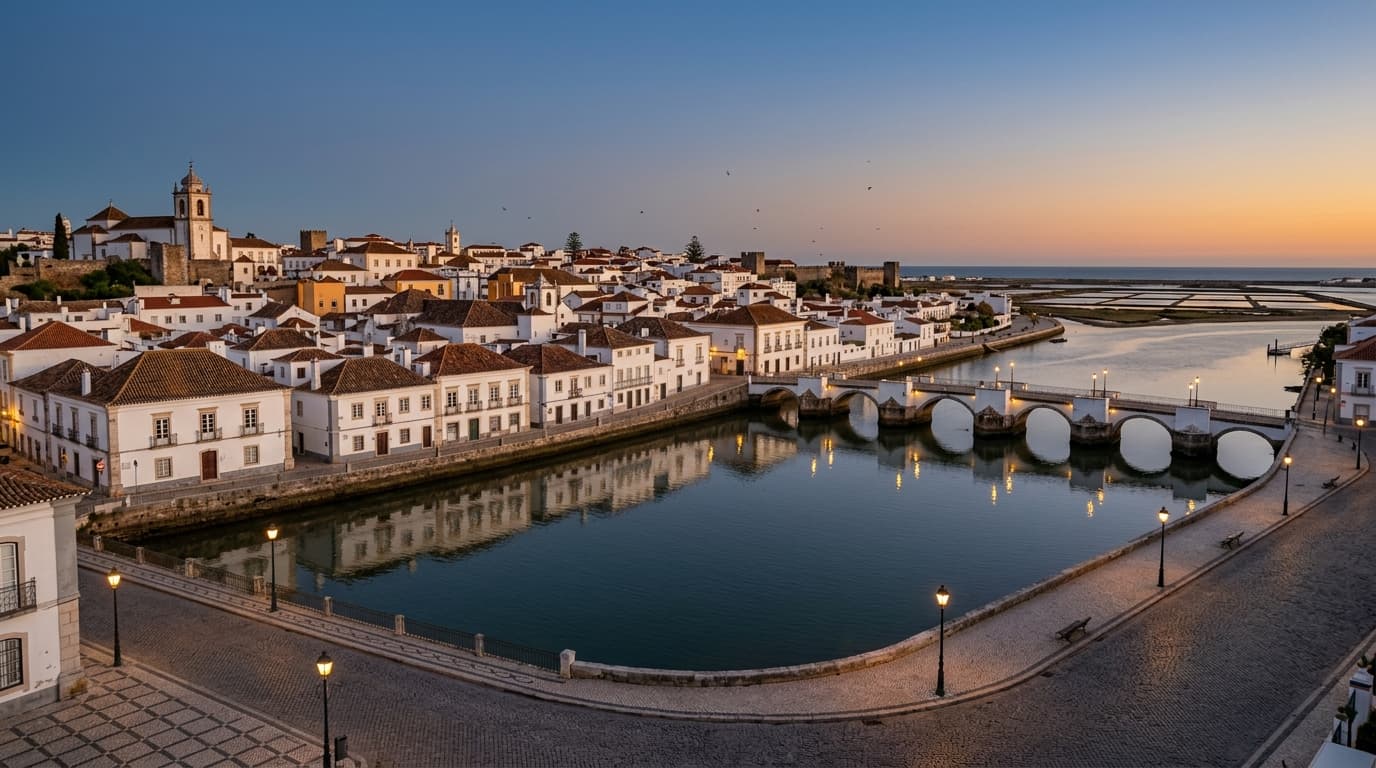
Tavira feels like a town that still belongs to the people who live there. It sits about 30 km east of Faro, has roughly 26,000 residents and moves at a pace that can feel almost stubbornly unhurried, with church bells, clinking cups and the occasional scooter drifting through the old streets.
The historic center is the draw, with the Roman bridge over the Gilão, whitewashed houses, tiled facades and 37 churches packed into a compact, very walkable core. You can cross town on foot, grab a coffee for about €1 to €2, then take the ferry or a boat out toward the island beaches in Ria Formosa Natural Park when the heat starts sitting on your shoulders.
What makes Tavira different from other Algarve bases is that it still feels lived in. There are local markets, retirees on morning walks, Portuguese families doing their shopping and a growing expat crowd, mostly British and northern European, but not enough of a nomad scene to turn the place into a bubble.
That’s the appeal for a lot of slower digital nomads. It’s safe, relatively affordable by Western European standards and easy to settle into if you want long lunches, beach days and a quiet evening instead of a bar crawl. But if you need late-night energy or a deep coworking scene, Tavira can feel thin fast.
- Best for: Solo nomads, couples, retirees and expats who want authenticity, good train links and a low-drama daily routine.
- Not great for: Party people, freelancers who need lots of coworking choices or anyone who gets bored when a town shuts down early.
- Typical mood: Slow mornings, bright sun on the river, salty air off the lagoon and winter evenings that go quiet surprisingly early.
Housing has climbed with demand, so Tavira isn’t the bargain it once was, but it still compares well with Lisbon and Porto. A comfortable couple’s budget often lands around €2,000 a month excluding premium housing and many nomads get by using cafés, guesthouse workspaces and the occasional day pass rather than full-time coworking.
The trade-off is simple. Tavira gives you a livable, real Portuguese base with beaches, safety and easy regional train access, but it won’t entertain you. For plenty of people, that’s the point.
Tavira is cheaper than Lisbon and Porto, but it’s not bargain-basement anymore. A single person can usually get by on about €1,100 to €1,400 a month if they’re sharing or living outside the center, cooking most meals and keeping nights out modest. A more comfortable setup runs closer to €2,000 to €2,600, especially if you want a decent apartment and regular restaurant meals.
The town’s appeal is simple: you can walk most places, hear church bells over the Gilão and skip the usual big-city spending on transport and entertainment. The tradeoff is that the market is small, so good rentals get snapped up fast and winter can feel oddly sleepy, with shutters down and cafés running on shorter hours.
What rent looks like
- Old town, Santa Maria and Santiago: basic 1BR from €600 to €700, renovated places more like €800 to €1,200.
- Near the train station and main avenue: about €700 to €900 for a modern 1BR or compact 2BR.
- Cabanas de Tavira and Santa Luzia: often from around €600, sometimes a bit less than central Tavira.
- Seasonal lets: summer prices can jump 30% to 60%, which gets painful fast.
For food, locals who cook at home often spend about €250 to €350 a month for a couple. Fish, wine and good produce are easy to find, especially at the market, but imported items can sting. A proper local meal at a tasca usually costs €12 to €15, while a nicer dinner in town can land at €15 to €25 a head, before you get tempted by dessert or another glass of vinho verde.
Everyday expenses
- Coffee: about €1 to €2.
- Beer: about €2 to €3.
- Faro Airport to Tavira taxi: roughly €60 to €70.
- Uber from the airport: around €40.
- Regional train from Faro to Tavira: about €3.60 one way.
Workspace costs stay low because Tavira doesn’t really have a full coworking scene. Most nomads work from cafés, hostels or a rented flat, then buy coffees and snacks to justify the WiFi. If you’re doing that most days, budget about €120 to €200 a month for laptop life outside your apartment.
Bottom line, Tavira works best for people who want a calm, walkable base and don’t need constant social churn. If you want late-night bars, lots of desk options and a bigger nomad crowd, you’ll probably get restless here pretty quickly.
Tavira is small enough that your neighborhood choice changes the whole feel of the town. Most people end up deciding between the walkable historic core, the more practical station side or nearby coastal villages that are quieter and a bit more seasonal.
Solo travelers and digital nomads
Central Tavira, especially Santa Maria and Santiago, is the easiest base if you want to walk to cafés, the riverfront and the train station. The old streets are pretty, but they’re not quiet, especially in summer when chairs scrape on cobblestones and you’ll hear late diners spilling out after dinner.
- Rent: Basic 1BR from about €600 to €700, renovated places often €800 to €1,200.
- Best for: No-car living, café hopping and short stays.
- Downside: Parking is a pain and the narrow streets can feel cramped.
Around the train station and main avenue is less picturesque, but it’s a smart pick if you want an elevator, better insulation and easier day trips along the Algarve. It feels more ordinary Portuguese than postcard Tavira, though, so don’t expect charming tiles outside every door.
- Rent: Usually €700 to €900 for a modern 1BR or compact 2BR.
- Best for: Longer stays and people who value convenience over charm.
Expats and longer-stay couples
Tavira works well for slower expats who like routine, safety and a real town rhythm. You’ll still get the smell of grilled fish drifting from lunch spots, the church bells, the occasional scooter buzzing past and plenty of cafés where nobody rushes you out.
- Central Tavira: Best if you want everything on foot and don’t mind paying more.
- Station area: Best if you want newer apartments and easier parking.
- Cabanas de Tavira: Best if you want a beachy feel and lower rents, but it’s quieter and more seasonal.
Families and quiet coastal living
Cabanas de Tavira and Santa Luzia make more sense than the old town for families or anyone who wants calmer streets and a bit more space. Cabanas has lagoon views and easy beach access, while Santa Luzia feels rooted in fishing life, with octopus restaurants, waterfront tables and a less polished, more local rhythm.
- Rent: Often from about €600 for a 1BR, sometimes a touch less than central Tavira.
- Best for: Beach time, quieter evenings and a slower pace.
- Downside: You’ll rely more on buses, taxis or a car and winter can feel sleepy.
Tavira’s internet scene is fine for remote work, but it’s not built for desk-hopping nomads who want 15 coworking options and a packed calendar of events. The town is small, the pace is slow and most people mix apartment WiFi, café sessions and the occasional hotel lobby when they need a change of scene. If you want constant buzz, go elsewhere. If you want quiet mornings, sea air and a place where the espresso machine hums louder than the conversation, Tavira makes sense.
Fiber coverage in town is generally decent, especially in newer apartments near the train station and main avenues, but older whitewashed houses in the historic center can be hit or miss. Always test the connection before you sign a lease, because one flaky router can make a charming old townhouse feel like a trap. Speed is usually good enough for Zoom calls, cloud work and normal uploads, though long summer evenings can bring slower service in busy areas.
There isn’t a true coworking scene here yet. A few spots are cowork-friendly in practice, but most cafes aren’t set up for all-day laptop sessions and staff will notice if you nurse one coffee for five hours. Hostels and coliving houses sometimes offer workspaces, which is the closest thing Tavira has to dedicated coworking. That setup suits people who want company without the noise of a proper office.
Practical places to work
- Central Tavira cafes: Good for a couple of hours, especially early in the day. Expect small tables, tiled floors, clinking cups and the occasional burst of local chatter.
- Near the train station: Better odds of modern buildings and steadier WiFi. It’s a sensible base if you’re commuting to Faro or working around day trips.
- Cabanas de Tavira: Quieter and more residential, with a slower rhythm. Fine if you’re disciplined, less so if you need social energy to stay focused.
For budgeting, most nomads working from cafes and the odd paid workspace spend about €120 to €200 a month ($130 to $216) on coffee, snacks and day passes. That’s manageable, but it does add up if you’re out every day. A local espresso is cheap, usually about €1 to €2, so the real cost is the extra pastry, soda water or second round you’ll end up ordering because nobody wants to look like they’ve claimed a table for free.
Mobile data is a good backup and it’s smart to keep a SIM with plenty of data if you’re staying longer term. Tavira is walkable, safe and calm, but internet reliability still depends on the exact building. In this town, the best setup is often simple: strong apartment WiFi, a decent café nearby and a quiet corner where the only interruptions are church bells and scooters rattling over cobbles.
Tavira feels calm in a way that many Algarve towns don’t. The old center is compact, the streets are easy to read and most people are going about daily life, not trying to entertain visitors. That makes it one of the safer places to base yourself in Portugal, especially if you’re walking home after dinner along the Gilão River or crossing the Roman bridge at night.
Petty theft can still happen, especially around busy summer spots and train connections, but violent crime is rare and most expats say they feel comfortable here. The bigger nuisance is ordinary town life, scooters buzzing past, church bells, late-night chatter outside cafés, the occasional barking dog and winter quiet that can feel almost too still.
What feels safe and what doesn’t
- Central Tavira: Very walkable and generally well lit, though summer crowds around bars and riverfront restaurants can attract opportunistic theft.
- Train station area: Fine by day and practical for transit, but it’s less charming and can feel lonely late at night.
- Cabanas de Tavira and Santa Luzia: Low-key and village-like, with fewer problems than bigger resort areas, but watch your stuff on beach days.
The healthcare setup is solid for a town this size, but it’s not a place to expect instant specialist access. Tavira has local clinics and pharmacies and residents usually use Faro for bigger hospital care or more complex appointments. If you need blood tests, routine prescriptions or a quick GP visit, day-to-day care is manageable. For anything serious, people head west.
Pharmacies are easy to find in the center and pharmacists are often the fastest source of practical advice for minor issues, from stomach bugs to skin infections. Many speak some English. Public waiting rooms can be slow, paperwork-heavy and a bit old-school, so bring your health card details, passport copy and patience.
Healthcare basics
- Public care: Good for residents with access, but appointments can move slowly and English isn’t guaranteed.
- Private care: Faster and more comfortable for nomads, especially for GP visits, dental work and basic diagnostics.
- Faro hospital: The main backup for more serious issues, about 30 minutes away by car.
For remote workers, internet reliability is decent in newer apartments and around the train station, but old town buildings can be patchy. That matters if you’re relying on telehealth or work calls. Most nomads carry a backup mobile data plan through Vodafone, NOS or MEO, because a weak WiFi day can turn into a frustrating one fast.
Bring travel insurance that covers Portugal and private care if you’re not enrolled in the public system. Tavira is safe, livable and easy on the nerves, but it’s still a small town with limited after-hours options. If you want 24-hour clinics, fast specialist access and constant service, you’ll feel the limits pretty quickly.
Tavira is small enough that you can cross the historic center on foot without thinking about it. The cobbled lanes, the Roman bridge, the riverfront and most cafés sit within an easy 10 to 15 minute walk and that’s the main reason slower nomads like it. You hear church bells, scooter engines and the clack of footsteps on stone, not much honking, not much chaos.
For daily life, walking works better than driving. Parking in the old town is tight and the narrow streets get annoying fast in summer, especially if you’re hauling groceries in the heat. A bike can help for flats and nearby beaches, but the hills, cobbles and summer glare make cycling less pleasant than it sounds on paper.
Public transport and day trips
- Train: Tavira’s station is handy for Faro, Olhão and other Algarve towns. Faro to Tavira is about €3.60 one way.
- Bus: Regional buses are cheap but not always frequent, especially outside peak season. Faro Airport to Tavira usually runs about €3.85 to €8 depending on the service.
- Taxi and ride-hailing: A taxi from Faro Airport can land around €60 to €70, while Uber is often closer to €40. The ride takes about 40 minutes.
If you’re staying a while, the train is the easiest way to move around the eastern Algarve without a car. It’s not glamorous, but it’s reliable enough for beach days, market runs and the occasional errand in Faro. Just don’t expect late-night frequencies or slick urban transit. This is still a small town in Portugal, not Lisbon.
Getting around by area
- Central Tavira: Best on foot. You’ll be near restaurants, markets and the river, but street parking is limited.
- Train station and main avenues: Easier if you want elevators, better insulation and quick train access. It feels less pretty, though.
- Cabanas de Tavira: Walkable for village life and beach access, but you’ll rely more on buses, taxis or a car to get into Tavira at night.
- Santa Luzia: Great for seafood and a quieter pace, but it’s more of a local base than a work-and-wander hub.
For nomads, the big trade-off is simple. Tavira is easy to live in if you like slow mornings, short walks and the sound of dishes clinking in café terraces. If you want late-night transit, a packed coworking scene or the kind of city where you can bounce around without planning, it’ll feel limited pretty quickly.
Tavira is easy to get by in if you speak only English, but life runs smoother with a little Portuguese. In cafés, mini-marts and local bakeries, staff usually understand enough English to handle the basics. The gap shows up fast once you’re dealing with rentals, repairs, paperwork or older neighbors who don’t switch languages.
It’s the kind of town where a friendly "bom dia" gets you farther than perfect grammar. People notice effort. That said, Tavira isn’t a tourist bubble, so don’t expect everyone to speak English on demand, especially in Santa Luzia, the smaller inland villages or with tradespeople who work mostly with locals.
What you’ll hear day to day
- Portuguese: The default in shops, appointments and government offices.
- English: Common in restaurants, hotels and with many expats.
- French and German: You’ll hear these too, especially in expat-heavy circles.
For written communication, most practical stuff happens over email, WhatsApp or simple text messages. Portuguese landlords and small business owners often prefer WhatsApp over email and replies can be slow if someone’s busy or it’s lunchtime. Don’t be surprised if a request gets handled with a phone call instead of a polished message.
The accent in the Algarve is generally easy enough for learners, but locals speak quickly and clip their words. On a busy terrace, with scooters buzzing past and plates clinking, it can get muddy fast. If you’re trying to learn, audio apps and local classes help more than grammar books alone.
Useful phrases that actually help
- Obrigado/a: Thank you, change the ending if you’re male or female.
- Fala inglês? Do you speak English?
- Se faz favor: Please.
- Quanto custa? How much does it cost?
- Onde fica...? Where is...?
For longer stays, it pays to learn a few basics before you arrive. Rental contracts, utility setups and health appointments all get easier if you can understand numbers, dates and simple directions. Even a limited Portuguese vocabulary makes Tavira feel less distant and cuts down on awkward hand-waving at the pharmacy or train station.
If you want classes, Faro has more options, but Tavira has local tutors and small-group lessons through community boards and expat networks. That’s usually enough. In a town this size, showing up, speaking slowly and not expecting instant English goes a long way.
Tavira has a gentler climate than most of Portugal and that’s a big part of the appeal. Summers are hot and dry, winters are mild and you’ll get a decent amount of sun even when the town feels half asleep. The tradeoff is simple: July and August can be baking, while January and February can feel quiet enough that the sound of church bells carries across the river.
The sweet spots are spring and fall. March through June is warm without being punishing, with jasmine in the air, café tables spilling onto the pavement and good walking weather through the old town and along the Gilão. September and October are often the best months overall, with warm sea temperatures, softer light and fewer day-trippers than peak summer.
What each season feels like
- Spring: Comfortable for walking and day trips, with temperatures usually sitting around the high teens to mid-20s C. Good for beach days on the island and train travel inland.
- Summer: Hot, bright and busy. Expect 30 C-plus days, long lunches, louder streets and more holiday rentals. Air conditioning matters.
- Fall: The best balance. Warm water, easier housing searches after peak season and a slower, less sticky version of summer.
- Winter: Mild but sleepy. Days are short, some places cut hours and the damp can creep into old stone houses, especially if they’re poorly heated.
If you’re working remotely, spring and fall are the least annoying times to settle in. Winter isn’t bad, but the reduced pace is real and some nomads get bored fast when the evenings turn chilly and half the town seems to close after dinner. Summer can work too, though you’ll be fighting heat, crowds and pricier short-term rentals.
Best months: May, June, September and October. Best beach weather: June through October. Best value: November through March, if you don’t mind quieter streets and the occasional damp apartment.
Pack for sun, not drama, but don’t ignore the winter chill. A light jacket, decent shoes for slick cobbles and something for humid evenings will get more use than you’d think. Tavira’s charm is that it doesn’t try too hard and the weather usually follows suit.
Tavira is easy to live in if you like a slower pace and can handle a town that goes a bit sleepy in winter. The center is compact, walkable and generally safe, with cobbled streets, tiled façades and the usual soundtrack of church bells, scooters and the odd delivery van grinding through narrow lanes. Expats and nomads who want authenticity usually settle in fine. People chasing big nightlife or a packed coworking scene usually don’t.
Money: Tavira is still cheaper than Lisbon, but rents have climbed, especially in the old town and near the river. A basic 1BR in Santa Maria or Santiago can start around €600 to €700 ($652 to $761), while renovated places with views often sit closer to €800 to €1,200 ($869 to $1,304). If you want more space, look near the station or in nearby villages like Cabanas de Tavira and Santa Luzia.
- Single monthly budget: about €1,100 to €1,400 ($1,196 to $1,522) on the tight side, more if you rent alone in the center.
- Couple’s comfortable budget: around €2,000 to €2,600 ($2,174 to $2,826), depending on housing and travel.
- Groceries: roughly €250 to €350 ($272 to $380) for two, if you cook most meals.
- Lunch out: €12 to €15 ($13 to $16) at a tasca, more if you want wine and dessert.
Workspace is the other tradeoff. Tavira doesn’t have a proper branded coworking scene, so most remote workers piece it together with café hopping, hostel lounges and the occasional day pass in a nearby town. Buy a coffee, keep your laptop discreet and don’t expect Lisbon-style desk culture. Good WiFi exists, but not every café wants you planted there all afternoon.
Getting around: You don’t really need a car if you’re staying central. The train station is handy for Faro and other Algarve stops and the town itself is flat enough for daily walking, though summer heat can make even a 10-minute errand feel sticky and annoying. From Faro Airport, a taxi is about €60 to €70 ($65 to $76), while Uber often lands closer to €40 ($43).
- Train Faro to Tavira: about €3.60 ($3.91).
- Bus or regional transfer from Faro Airport: roughly €3.85 to €8 ($4.18 to $8.69).
- Local rides: usually cheap, but limited late at night.
Best base: Central Tavira if you want to walk everywhere, the station area if you care more about practical apartments and rail access. Cabanas works for beach time and quiet, Santa Luzia if you like seafood and a fishing-village feel. Skip the idea if you need noise, bars and a fast social scene. Tavira’s charm is exactly that it doesn’t try too hard.
Frequently asked questions
How much does it cost to live in Tavira as a digital nomad?
How much is rent in Tavira, Portugal?
Is Tavira good for remote work?
Does Tavira have coworking spaces?
Is Tavira safe for solo travelers and digital nomads?
What are the best areas to stay in Tavira?
How is healthcare in Tavira for expats and nomads?
Need visa and immigration info for Portugal?
🇵🇹 View Portugal Country GuideEasy Landing
Settle in, no stress
Monthly Budget Estimates
More cities in Portugal
Albufeira
🇵🇹 Portugal
Sagres
🇵🇹 Portugal
Cascais
🇵🇹 Portugal