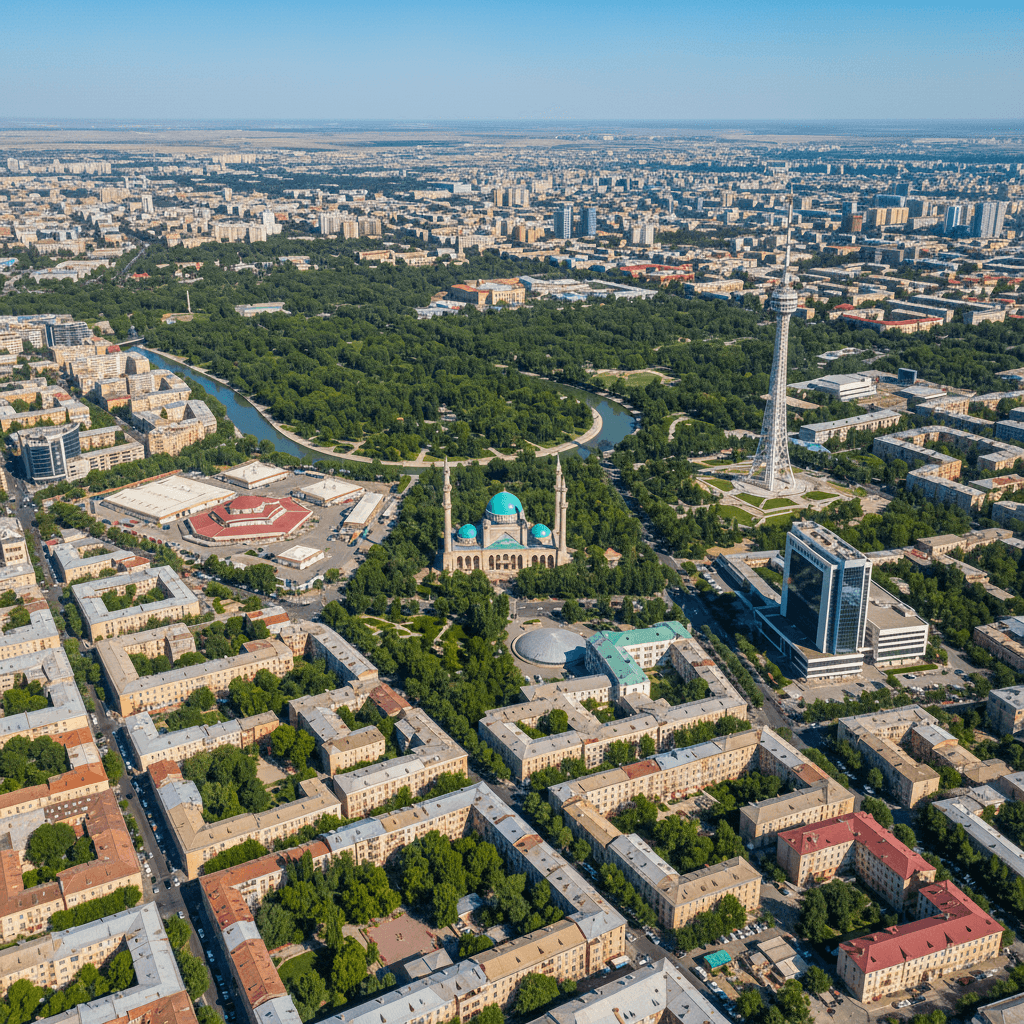
Tashkent
🇺🇿 Uzbekistan
A Soviet-Islamic Hybrid with a Relaxed Pulse
Tashkent doesn't feel like the high octane hubs of Southeast Asia or the polished capitals of Europe. It's a sprawling, wide-avenued mix of brutalist Soviet architecture, ornate metro stations, and the sudden, quiet grace of Islamic heritage sites like the Hazrat Imam Complex. For most nomads, the city serves as a grounded, affordable base. It's the practical heart of Uzbekistan where you can find a reliable 4G connection and a good espresso before heading off to the more famous Silk Road tiles of Samarkand or Bukhara.
The vibe here is surprisingly chilled. While it's a capital city, the pace is dictated by family life and market cycles rather than corporate hustle. You'll spend your mornings in modern cafes and your afternoons dodging stacks of flatbread at Chorsu Bazaar. It's safe, clean, and incredibly cheap, though you have to trade off some excitement for that stability. Long term residents often find the social scene a bit thin, and the constant security checks at metro stations and public buildings can get tedious after a few weeks.
Cost of Living Breakdown
Your dollar goes a long way here, especially if you move away from the high end international hotels. Most solo nomads find they can live comfortably on $1,200 to $2,000 per month, while those on a tighter budget can manage on $800 if they stick to local markets and shared housing.
- Budget ($800 to $1,200): Focuses on shared apartments in Soviet era blocks, eating plov at the bazaar for $2 to $4, and using the metro for almost every trip.
- Mid-range ($1,200 to $2,000): Includes a private one bedroom apartment in the center, regular cafe meals at $5 to $8, and daily Yandex Go rides.
- Comfortable ($2,000+): Allows for upscale housing in new developments, coworking memberships, and frequent dining at international restaurants where meals start at $12.
Where to Plant Your Flag
Each neighborhood offers a distinct version of Tashkent life. Most travelers stick to the center, but digital nomads often drift toward the newer professional districts for better infrastructure.
Central Tashkent
- The Vibe: Historic, walkable, and sensory. You're close to Chorsu Bazaar and the major monuments.
- Rent: 5 to 10 million UZS ($400 to $800 USD) for a decent one bedroom.
- Pros: Incredible street food, great metro access, and you're in the heart of the action.
- Cons: It gets noisy and crowded during the day.
Modern Business Districts
- The Vibe: Polished and quiet. This is where you'll find the glass towers and the startup energy.
- Rent: Often higher than the old center, with a premium for "Euro-renovated" flats.
- Pros: Best internet reliability, close to spots like C-Space and GroundZero.
- Cons: Lacks the traditional Uzbek soul; you could be in any modern city.
Yunusabad or Chilanzar
- The Vibe: Residential and family oriented with plenty of parks and schools.
- Rent: 3 to 6 million UZS ($240 to $480 USD) for simple apartments.
- Pros: Very affordable and safe for families.
- Cons: Strong Soviet aesthetic and fewer spots for remote work.
The Remote Work Reality
Internet in Tashkent is the best in the country, but that's a relative term. While 4G is solid and cheap, home WiFi can be hit or miss. Most nomads head to coworking spaces like HUB Coworking or C-Space to ensure they don't drop out of Zoom calls. A day pass usually runs between 130,000 and 150,000 UZS ($10 to $13). For a more casual setup, the city's growing cafe culture is welcoming to laptops, provided you're buying coffee.
Socially, don't expect a ready made nomad community. There aren't many weekly meetups or digital nomad bars. You'll likely meet people through coworking spaces or by chatting with locals at the markets. English isn't widely spoken once you leave the tourist bubbles, so downloading a Russian or Uzbek pack on Google Translate is a survival requirement. Use Yandex Go for getting around; it's the local version of Uber and prevents the "tourist tax" you'll get from hailing cabs on the street. A cross city ride rarely costs more than $2.
Practical Logistics
The weather is a game of extremes. If you visit in July, be prepared for 36°C (97°F) heat that keeps everyone indoors until sunset. January is the opposite, with biting cold around 7°C (45°F) or lower. Spring and fall are the sweet spots. When you arrive at Islam Karimov International Airport, grab a SIM card from Ucell or Beeline immediately. It costs about $5 for a generous data plan. Just remember that you must register your stay with the authorities within 3 days; most hotels or landlords will handle this for a small fee of $3 to $5.
The Bottom Line on Budgets
Living in Tashkent feels like a throwback to when your dollar actually went the distance. It is one of those rare capital cities where a $1,000 monthly budget doesn't just get you by; it lets you live quite well. While it lacks a massive expat bubble, the low overhead makes it a strategic base for anyone looking to explore the Silk Road without draining their savings.
Most solo nomads find they fall into these spending tiers:
- Budget ($800 to $1,200): You are likely sharing a flat or living in a Soviet era apartment in Chilanzar, eating plenty of street plov, and sticking to the metro.
- Mid-range ($1,200 to $2,000): This covers a modern one bedroom in the city center, daily cafe meals, and leaning on Yandex Go for most trips.
- Comfortable ($2,000+): At this level, you are looking at upscale business district apartments, coworking memberships, and high end dining every night.
Housing and Neighborhoods
Rent is your biggest variable. If you want to be where the action is, look near Chorsu Bazaar or the Hazrat Imam Complex. A central studio here usually costs between 5 million and 10 million UZS ($400 to $800 USD). It is loud and crowded, but you'll have the best markets and metro access right outside your door.
Digital nomads often prefer the more modern districts near Ugam Chatkal or the business hubs. The vibe is professional, the internet is more reliable, and you'll find more western style cafes. Expect to pay a premium for these areas, while residential spots like Yunusabad offer better value for families or long term stays, with outskirts rents dropping as low as 3 million UZS ($240 USD).
Food and Daily Costs
Eating out is where Tashkent truly shines. You can grab a massive plate of plov or shashlik at Chorsu Bazaar for 20,000 to 50,000 UZS ($1.60 to $4 USD). Even mid-range cafes rarely top 100,000 UZS ($8 USD) for a full meal. If you are craving an upscale experience, a fancy dinner will still only set you back about 150,000 UZS ($12 USD).
Transportation is almost negligible in your budget. A single metro ride is only 2,000 UZS ($0.16 USD), and the stations are works of art. For convenience, everyone uses Yandex Go. A typical cross town ride costs between 11,000 and 25,000 UZS ($0.90 to $2 USD). Even an airport run to the center only costs about $3 to $5.
Connectivity and Coworking
Don't rely solely on home WiFi, as it can be hit or miss in older buildings. Most nomads grab a SIM card from Ucell or Beeline at the airport for about $5. For serious work, the city has a growing startup scene centered around spaces like C-Space, GroundZero, and HUB Coworking. A day pass at these spots runs about 130,000 to 150,000 UZS ($10 to $13 USD) and guarantees the high speed fiber you need for video calls.
Practical Logistics
Cash is still king in many markets, so keep plenty of Uzbek Som on hand. While the Single-entry e-visa starts at $20 and is easy to get, remember that registration is mandatory. Most hotels handle this for you, but if you are renting an apartment, you must ensure your host registers you within 3 days of arrival. It usually costs a few dollars but saves you a massive headache at the border when you try to leave.
For Solo Travelers: Old City and Central Tashkent
If you want to step out of your door and feel like you are actually in Central Asia, look for a spot near the Chorsu Bazaar or the Hazrat Imam Complex. This area is the soul of the city. It is walkable, deeply historic, and puts you right next to the best street food in the country. You can grab a massive plate of plov or shashlik for 20,000 to 50,000 UZS ($1.60-$4) and be on your way.
Living here means easy access to the metro, which costs a mere 2,000 UZS ($0.16) per ride and features some of the most ornate stations in the world. Expect to pay between 5 and 10 million UZS ($400-$800) for a decent one bedroom apartment. The trade off is the noise and the crowds; it is a busy market district, so do not expect a quiet afternoon on your balcony.
For Digital Nomads: Modern Business Districts
Most nomads gravitate toward the newer developments and business hubs, particularly areas near Ugam-Chatkal outskirts or the modern center. These neighborhoods are far more professional and quiet, offering the reliable infrastructure you need for deep work. While home internet can be hit or miss in Tashkent, these districts are home to the city's best coworking spaces like C-Space, GroundZero, and HUB Coworking.
- Rent: 7 to 12 million UZS ($560-$960) for modern builds.
- Coworking: Day passes usually run 130,000 to 150,000 UZS ($10-$13).
- Cafes: High concentration of laptop friendly spots with decent WiFi.
You will lose some of that "Silk Road" charm here, but you gain proximity to international cafes and better grocery stores. Use Yandex Go to get around; a cross city ride rarely exceeds 25,000 UZS ($2), making it easy to commute to the historic center when you want a dose of culture.
For Expats and Long Termers: Yunusabad
Yunusabad is a sprawling residential district that offers a more authentic look at local life without the tourist prices of the center. It feels very Soviet in its layout, with wide streets and massive apartment blocks. Expats often choose this area because it is safe, affordable, and has a great local food scene, including the famous Tashkent TV Tower and the nearby Minor Mosque.
Rent here is significantly lower, with studios often going for 3 to 6 million UZS ($240-$480). It is a practical choice if you are staying for several months and want to save money for weekend trips to Samarkand or Bukhara. Just be prepared for a bit of a language barrier; English proficiency is low here, so keeping Google Translate handy is a must.
For Families: Chilanzar
Chilanzar is the go to for families due to its abundance of green space, parks, and schools. It is one of the more established residential zones, offering a slower pace than the central hub. While it lacks a dedicated "expat bubble," the neighborhood is incredibly safe and community oriented. You will find plenty of playgrounds and local markets that are much calmer than the chaotic energy of Chorsu.
- Atmosphere: Quiet, residential, and very safe for children.
- Housing: Larger multi bedroom apartments are easier to find here than in the city center.
- Connectivity: Well connected to the red metro line, making school runs or city trips manageable.
The main downside for families is the lack of "nomad" amenities like high end coworking or trendy brunch spots. However, for those prioritizing stability and a local feel, it is the most logical choice in the city.
The Digital Infrastructure
While Uzbekistan is still modernizing its tech landscape, Tashkent stands out as the country's most reliable hub for remote work. You'll find that 4G coverage is solid across the city, and most modern apartments and cafes offer stable WiFi. That said, home connections can occasionally be spotty, so having a local SIM as a backup is a smart move. Most nomads grab a SIM card from Ucell or Beeline at the airport upon arrival for around $5.
Speeds in the city are generally sufficient for video calls and heavy uploads, though they won't compete with the fiber optics of Seoul or Tallinn. If you're planning on doing deep work, skip the hotel WiFi and head to a dedicated workspace or a modern cafe in the business districts where the infrastructure is more robust.
Top Coworking Spaces
The coworking scene in Tashkent is growing, largely driven by a burgeoning local startup community. These spaces are often the best places to meet English speaking locals and the small but dedicated expat crowd. Expect to pay between 130,000 and 150,000 UZS (roughly $10 to $13) for a day pass.
- C-Space Coworking: Probably the most polished option in the city. It has a professional atmosphere, ergonomic chairs, and very reliable high speed internet. It's a favorite for those who need a quiet, corporate feel to stay productive.
- GroundZero: This spot has multiple locations and leans more toward the creative and entrepreneurial side. It's great for networking and often hosts events for the local tech scene.
- HUB Coworking: A solid, community focused choice. It's a bit more relaxed and is a frequent haunt for digital nomads looking to connect with local developers and founders.
Cafe Culture and Remote Work
If you prefer the hum of a coffee shop, Tashkent has a surprisingly modern cafe culture, particularly in the central districts. Many of the newer spots are laptop friendly, though it's always polite to check for a "no laptop" policy during busy lunch hours. You'll find mid range cafes where a coffee and a snack will run you about 50,000 to 100,000 UZS ($4 to $8).
For a more local experience, you can try working from some of the quieter spots near Chorsu Bazaar, but be prepared for more noise and fewer power outlets. Most nomads find that the cafes in the modern business districts or near the larger parks offer the best balance of comfort and connectivity. Just keep in mind that English proficiency can be low, so having a translation app ready for the menu or WiFi password is a lifesaver.
Practical Connectivity Tips
- Data Plans: Prepaid data is incredibly cheap. For less than $10, you can usually get enough gigabytes to last a month of heavy mobile Hotspotting.
- VPNs: While the internet is relatively open, some nomads prefer using a VPN for security and to access specific home based services.
- Power Outlets: Uzbekistan uses Type C and F plugs (European standard). Power outages are rare in the capital but having a power bank for your phone is never a bad idea when exploring.
- Registration: Don't forget that your accommodation must register you with the authorities. If you're staying in an Airbnb, make sure the host is willing and able to handle this within 3 days of your arrival.
The Safety Reality
Tashkent is remarkably safe, often surprising newcomers with its low crime rates and clean streets. Most nomads find they can walk around central areas comfortably at any hour. The vibe is family-oriented and respectful, so you won't deal with much of the aggressive soliciting or petty scams common in other major hubs. Travelers often say the city feels more secure than many European capitals.
The biggest safety concern isn't crime; it's the traffic. Drivers can be erratic, and pedestrian crossings aren't always respected, so keep your wits about you when crossing major boulevards. You'll also notice a heavy police presence. While this contributes to the low crime rate, the frequent security checks at metro stations and train terminals can be a bit tedious. Expect to have your bags scanned or checked by officers regularly. It's just part of the local routine, so don't let it rattle you.
Healthcare Standards
The healthcare system in Tashkent is the best in Uzbekistan, though it still feels a bit behind Western standards in some public facilities. For anything more than a cold, expats recommend sticking to private clinics where you are more likely to find English-speaking staff and modern equipment. The quality of care is improving rapidly, and pharmacies are well-stocked with most standard medications.
- Emergency Services: Dial 103 for an ambulance or 102 for the police.
- Pharmacies: Widely available and often open 24/7. Most basic meds are sold over the counter, but it helps to have the generic name written in Russian or Uzbek.
- Hospital Quality: Private facilities are adequate for minor surgeries and diagnostics, but for major medical emergencies, many expats still prefer evacuation to Istanbul or Dubai.
Practical Wellness Tips
Tap water in Tashkent is generally considered safe by locals, but most nomads stick to filtered or bottled water to avoid stomach upsets. The continental climate means summers are brutally hot, often hitting 40°C (104°F). Heatstroke is a real risk in July and August, so plan your outdoor activities for the early morning or late evening. In the winter, the air quality can dip due to heating emissions, so those with respiratory issues might want to keep an eye on AQI levels.
One bureaucratic quirk to remember is the mandatory registration. If you're staying in a hotel, they handle this for you. If you're renting an apartment, your landlord must register your stay within 3 days of arrival. Keep these registration slips with you; while police rarely ask for them on the street anymore, you will definitely need them when you exit the country at Islam Karimov International Airport.
Emergency Contacts and Apps
Since English proficiency is low, download Google Translate with the Russian and Uzbek offline packs. For getting home safely, Yandex Go is your best friend. It tracks your ride and allows you to share your location with friends, which adds an extra layer of security. Most nomads find that as long as they follow basic common sense, like avoiding unlit outskirts late at night, Tashkent is an easy, stress-free place to live.
The Yandex Era
In Tashkent, your smartphone is your best friend. Forget waving down random cars on the street; everyone here uses Yandex Go. It works exactly like Uber or Lyft and is incredibly cheap. A quick ride across the center usually costs between 11,000 and 25,000 UZS, which is less than $2 USD. Even the trek from Islam Karimov International Airport to the city center only sets you back about $3 to $5 USD.
The app isn't just for cars. You can use it to order food or even a courier. While traffic can get heavy during rush hour, especially on the main arteries leading to the business districts, the sheer affordability of rides makes it the default choice for most expats and nomads living in the city.
The World's Most Beautiful Commute
You can't talk about getting around Tashkent without mentioning the Metro. It is more than just public transport; it is an underground art gallery. Each station has a unique theme, ranging from space exploration to traditional Islamic patterns. At just 3,000 UZS (about $0.25 USD) per ride, it is one of the cheapest transit systems on the planet.
- Efficiency: Trains run frequently, and it is often faster than a car during the afternoon gridlock.
- Security: Be prepared for bag checks. Security at the station entrances is thorough, which can be a bit tedious if you are in a rush, but it contributes to the city's overall high safety rating.
- Coverage: The lines connect the historic Chorsu Bazaar area with the modern residential blocks in Chilanzar and the business hubs.
Walking and Micromobility
Tashkent is a city of wide Soviet avenues and massive parks. In central neighborhoods like those near the Hazrat Imam Complex, walking is pleasant and easy. The sidewalks are generally broad, though you should always keep a sharp eye on traffic when crossing the street, as drivers can be aggressive.
Electric scooters are starting to appear around the more modern districts and near coworking spots like C-Space. However, the infrastructure for bikes isn't fully developed yet. Most travelers find that a combination of the Metro for long distances and walking for local exploration works best.
Regional Connections
If you are using Tashkent as a base to see the rest of the Silk Road, you will spend a fair amount of time at the Tashkent Northern Railway Station. This is where you catch the Afrosiyob high speed train. It is the gold standard for getting to Samarkand or Bukhara, but tickets sell out weeks in advance, so book early via the official railway website or app.
Practical Transport Tips
- Connectivity: Pick up a Ucell or Beeline SIM card at the airport for about $5 USD. You will need the data to run Yandex, as public Wi-Fi is hit or miss on the street.
- Language: Most drivers don't speak English. The Yandex app handles the destination input, but it's helpful to know "Rahmat" (thank you) for the end of the ride.
- Registration: Keep your paper registration slips from hotels or landlords. While they aren't checked on the metro, you might need them at the airport or when booking train tickets.
The Language Landscape
In Tashkent, your linguistic experience will be a tale of two worlds. Uzbek is the official language and the heart of the city's identity, but Russian remains the lingua franca for business, navigation, and daily commerce. Because of the city's Soviet history, almost everyone you meet is bilingual in these two tongues. However, English hasn't quite caught up yet. Outside of upscale hotels, modern cafes in the center, or tech-focused coworking spots like C-Space, you'll find that English proficiency is quite low.
Most nomads find that while the locals are incredibly welcoming, the language barrier is the biggest hurdle to long term integration. You won't get far with English at Chorsu Bazaar or when talking to a Yandex driver. Expect to rely heavily on translation apps for anything beyond a simple coffee order. Travelers often say that downloading the Russian and Uzbek offline packs on Google Translate is the first thing you should do after landing.
Key Phrases to Know
While you can navigate most of the city using Russian, learning a few Uzbek words goes a long way with the locals. It shows respect for the local culture and often results in better service or a friendlier smile at the market.
- Salom: Hello (Universal and easy)
- Rahmat: Thank you (You'll use this constantly)
- Xush kelibsiz: Welcome
- Qancha?: How much? (Vital for market haggling)
- Yaxshi: Good or Okay
Communication Tools & Apps
To stay connected, skip the roaming charges and head straight to the Ucell or Beeline desks at Islam Karimov Tashkent International Airport. You can get a solid data plan for about $3 to $5. Just remember that you need to register your IMEI number if you stay longer than 30 days, though for most short stays, the initial setup is enough.
For getting around and communicating with services, these apps are non-negotiable:
- Yandex Go: This is the lifeblood of Tashkent. It handles rides and food delivery. Since many drivers won't speak English, the app's built-in chat feature (which has auto-translate) is a lifesaver.
- Telegram: This is the primary way people communicate in Uzbekistan. From business inquiries to expat groups and even ordering water delivery, everything happens on Telegram.
- Google Translate: Use the camera feature to read menus and signs, as many are still in Cyrillic or Uzbek Latin script.
Digital Nomad Connectivity
The "communication" part of being a nomad relies on the internet, and Tashkent is the only place in Uzbekistan where this is truly reliable. While home internet in some neighborhoods can be spotty, the speeds in coworking spaces like GroundZero or HUB Coworking are plenty for Zoom calls and heavy uploads. Expect to pay about 130,000 to 150,000 UZS for a day pass. Mobile 4G is generally stable throughout the city center, though it can dip to 3G inside some of the thicker-walled Soviet era apartment blocks.
Social Etiquette
Communication here is often indirect and polite. When entering a shop or a home, a formal greeting is expected. Expats recommend being patient with the registration process, which is a unique quirk of staying in Uzbekistan. You must be registered at your place of residence within 3 days of arrival. This often requires some back and forth with your landlord or hotel staff, usually via a mix of broken Russian and translation apps. It costs about $3 to $5, but it's a mandatory piece of "communication" with the local government you can't skip.
When to Go
Tashkent experience is defined by a fierce continental climate. You'll find the most success visiting during the shoulder seasons. May and June or September and October offer the sweet spot where the city is lush, the markets are overflowing with local produce, and you can actually walk between metro stations without melting or freezing.
Most nomads find the peak summer months of July and August a bit too intense for deep exploration. Temperatures regularly climb between 30°C and 40°C (86°F to 104°F). While the heat is dry rather than humid, the midday sun in Independence Square or around Chorsu Bazaar can be punishing. If you're here during this time, plan your outdoor activities for early morning and retreat to air-conditioned coworking spaces like C-Space or GroundZero during the afternoon peak.
Winter brings a sharp chill. From December through February, averages hover between -5°C and 10°C (23°F to 50°F). It’s the quietest time for tourism, which means lower prices on accommodation, but the grey Soviet architecture can feel a bit bleak under overcast skies. However, if you enjoy crisp air and fewer crowds at the Hazrat Imam Complex, it's a perfectly functional time to hunker down and get work done.
Seasonal Breakdown
- Spring (March to May): This is arguably the best time to arrive. Navruz, the Persian New Year, falls in late March and brings festivals and plenty of sumalak (a sweet wheat paste) to the streets. The parks are green, and the weather is mild enough for long walks.
- Summer (June to August): It’s hot and bone-dry. You won't see much rain, but you will see a lot of people seeking shade. This is the best time for day trips to Ugam-Chatkal National Park or the Syr Darya River to escape the city heat.
- Autumn (September to early November): Second only to spring, the fall is beautiful. The harvest is in full swing, meaning the fruit stalls at Chorsu Bazaar are at their best. Temperatures are comfortable for sightseeing and outdoor dining.
- Winter (December to February): Expect cold winds and occasional snow. It’s the "worst" time for typical tourism, but the city’s infrastructure handles it well. Just pack a heavy coat if you plan on using the metro frequently.
Practical Weather Tips
Since rainfall is low year-round, you don't really need to worry about a rainy season. Instead, focus on the sun. Even in the cooler months, the UV can be strong. Expats recommend staying hydrated with local green tea, which is served everywhere and helps with the dry climate.
If you're using Tashkent as a base to visit Samarkand or Bukhara, remember those desert cities feel the temperature extremes even more acutely. A pleasant 25°C (77°F) day in Tashkent might be several degrees hotter once you head south on the high-speed Afrosiyob train.
For those planning a long-term stay, your utility bills will fluctuate based on the season. Heating in the older Soviet-style apartments is usually centralized and turned on by the city on a specific date, while modern builds in the business districts allow for more personal control via AC units. Most nomads find that September is the ideal month to land, as it gives you a solid window of perfect weather to find your feet before the winter settles in.
Budgeting and Living Costs
Tashkent is remarkably affordable, even by Central Asian standards. Most nomads find they can live comfortably on $1,000 to $1,200 a month without feeling restricted. If you want a more upscale lifestyle with a modern apartment and daily coworking, budget closer to $2,000.
- Housing: A central one bedroom apartment near Chorsu Bazaar typically runs between $400 and $800. If you head to the outskirts, prices drop significantly to around $240 to $480.
- Food: Street food is a steal; a plate of plov at Chorsu Bazaar costs about $1.60 to $4. Mid range cafes usually bill around $4 to $8 per person, while a high end dinner will start at $12.
- Transport: The metro is incredibly cheap at $0.16 per ride. Yandex Go is the go to for cars, with most city trips costing between $0.90 and $2.
The Neighborhood Breakdown
Choosing where to stay depends on whether you want old world charm or a functional workspace. Central Tashkent, specifically the area around the Hazrat Imam Complex, is the most walkable and culturally dense. It's great for short stays, though it can get noisy and crowded during market hours.
For a more professional setup, expats recommend the modern business districts near the Ugam-Chatkal outskirts. You'll find better internet and quieter streets here, though you'll sacrifice that historic Silk Road atmosphere. Families often head to Yunusabad or Chilanzar; these areas feel more residential and have plenty of parks, though they retain a heavy Soviet aesthetic.
Internet and Productive Spaces
While home internet can be hit or miss, the city's infrastructure is catching up. You'll find reliable 4G across the city, and the cafe culture is surprisingly friendly to laptops. For a dedicated desk, C-Space, GroundZero, and HUB Coworking are the top picks. Expect to pay $10 to $13 for a day pass.
Grab a SIM card at the airport immediately upon arrival. Providers like Ucell and Beeline offer data plans for about $5. Just remember that you need to register your IMEI and your stay with the local authorities within three days of arrival, a task usually handled by your hotel or landlord.
Getting Around and Staying Safe
The Tashkent Metro is more than just transport; it's an underground museum. Each station has a unique design, and at 2,000 UZS a ticket, it's the most efficient way to dodge traffic. For everything else, download Yandex Go. It works just like Uber and prevents the need to haggle with street taxis. A ride from Islam Karimov International Airport to the center should only cost $3 to $5.
Safety is rarely a concern here. Violent crime is extremely low, and the city feels secure even at night. The biggest headache you'll face is the frequent security checks at metro stations and public buildings, which can be tedious but are just a part of daily life.
Local Culture and Language
English isn't widely spoken once you leave the modern cafes or tourist hubs. Uzbek and Russian are the dominant languages. You'll want Google Translate downloaded for offline use. Learning a few words like Rahmat (thank you) and Salom (hello) goes a long way with the locals, who are generally friendly but may seem reserved at first.
The social scene is centered around food and family rather than late night clubs. There isn't a massive nomad community yet, so your best bet for meeting people is at HUB Coworking or through local startup events. For a weekend escape, the Ugam-Chatkal National Park offers alpine hiking and a break from the summer heat.
Weather and Timing
Tashkent experiences extreme continental weather. Summers are punishingly hot, frequently hitting 40°C (104°F) in July. Winters are cold and grey, with temperatures dipping below freezing. The sweet spots are May to June and September to October, when the weather is mild and the markets are overflowing with fresh produce.
Need visa and immigration info for Uzbekistan?
🇺🇿 View Uzbekistan Country GuideHidden Gem
Worth the effort