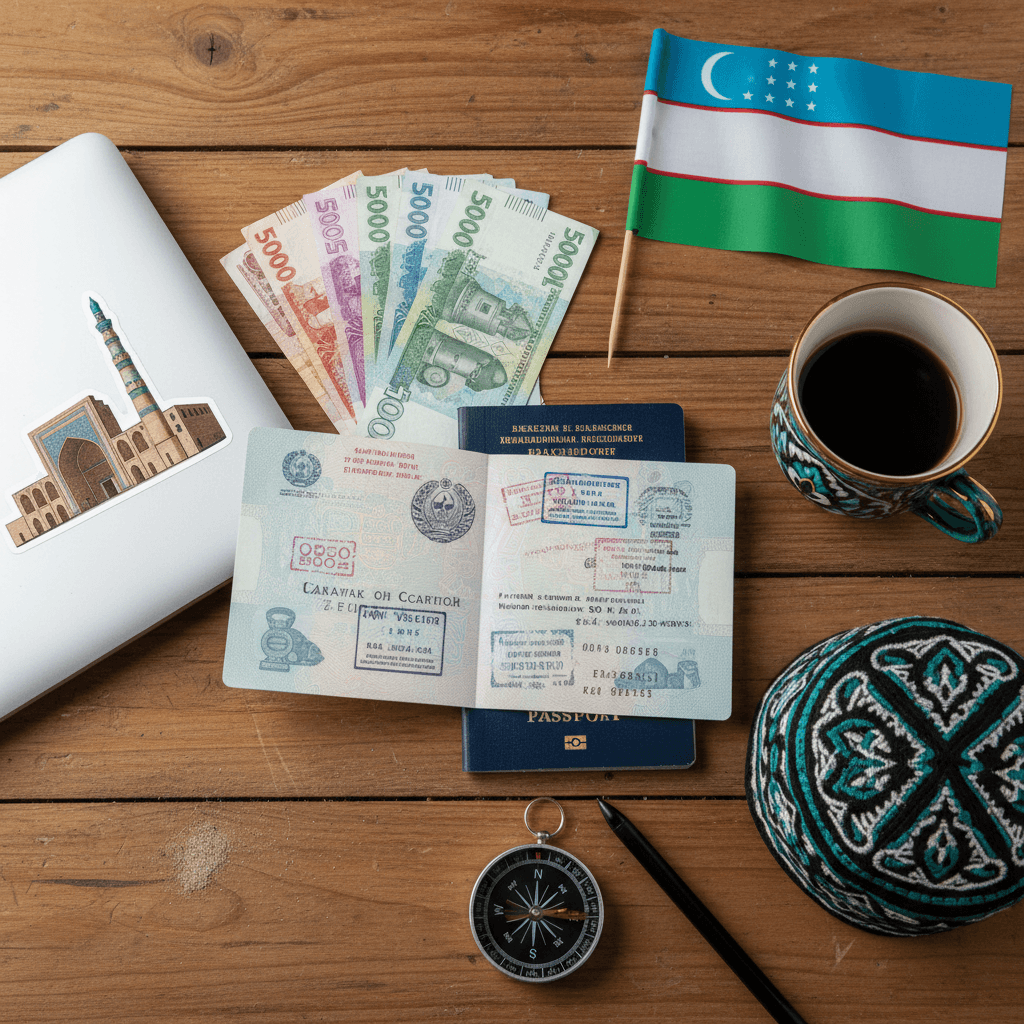
Uzbekistan

Policy Stability
Stamped Nomad ExclusiveHow likely visa and immigration policies are to remain unchanged
Quick Facts
N/A
$2,500/mo
1 months
Yes
$1,200/mo
86 Mbps
8/10
Medium
Medium
Low
UZT (UTC+5)
Entry Methods Available
Best For
The Open Door Policy
Uzbekistan has undergone a massive transformation in its approach to visitors. What used to be a bureaucratic headache is now one of the most accessible regions in Central Asia. For digital nomads, this means less time chasing paperwork and more time exploring the Silk Road. Currently, citizens of about 90 countries can enter visa-free. This includes most EU nations, Canada, Australia, the UAE, and Turkey, who generally get 30 days of entry without any prior application.
If you hold a passport from Azerbaijan, Belarus, Kazakhstan, or Russia, you have the luxury of unlimited stay. Kyrgyzstan citizens get 60 days. For those who fall outside these lists, the e-visa system has simplified the process for 56 countries, including the United States. Indian passport holders can now enter visa-free for up to 30 days, with the e-visa requirement and associated fees waived for short stays. While U.S. citizens currently need an e-visa, a new decree will grant them 30-day visa-free entry starting January 1, 2026.
Choosing Your Entry Path
Most nomads will find the Tourist (T) visa or the E-visa to be the most practical options. The E-visa is particularly popular because it avoids embassy visits and is processed in just 2 working days. You only need a passport scan and a digital photo to apply.
- Single-entry E-visa: Costs $20 for a 30-day stay.
- Double-entry E-visa: Costs $35, perfect if you want to pop over to Kazakhstan or Tajikistan and return.
- Multiple-entry E-visa: Costs $50 for the highest level of flexibility.
- Standard Tourist Visa (T): Costs $40 for 30 days if processed through an embassy.
- Group Tourist Visa (TG): If you are traveling with a crew of 5 or more, the price drops to $25 per person.
Business and Long-term Stays
If you are planning to set up deeper roots or represent a company, the Business (B-2) visa is the way to go. This requires an official invitation from a registered Uzbek entity that has been approved by the Ministry of Foreign Affairs. It is a bit more involved, but it allows for stays up to 1 year. Fees for business visas range from $60 for a month up to $160 for a full year, while multiple-entry options for up to three years can cost $350.
For those who need to stay longer on a tourist budget, extensions are possible. You can handle this online through the Unified Interactive Public Services Portal. Fees for extensions start at $40 for an extra week and can go up to $160 if you are looking to stay for a year, though these are processed on a case-by-case basis and take about 15 working days.
The Fine Print: VOA and Transit
Visa on Arrival (VOA) exists but it is not a "show up and pay" system for everyone. It is specifically reserved for travelers coming from countries without an Uzbek consulate. Even then, you must have a visa confirmation stamp arranged by an inviter in Uzbekistan through the Ministry of Foreign Affairs before you land at Tashkent International Airport.
If you are just passing through, there are two main ways to handle a short stay:
- Transit Visa (TRAN): Costs $40 and allows for a 3-day stay; you must show proof of an onward visa and ticket.
- 5-Day Transit Exemption: Citizens of 48 countries can stay for 5 days visa-free if they are flying with Uzbekistan Airways and have a confirmed ticket to a third country.
Regardless of which path you take, ensure your passport is valid for at least 6 months beyond your arrival date. Uzbekistan is rapidly modernizing its digital infrastructure, so keep your e-visa printout or digital copy handy at all times, as local authorities and hotels will need to verify your registration status during your stay.
Source 1 | Source 2
The Current Reality of the Nomad Visa
If you are looking for a visa specifically labeled "Digital Nomad Visa" in Uzbekistan, you will come up empty-handed. The government hasn't rolled out a bespoke program with that exact name yet. However, that doesn't mean you can't live and work here. Most remote workers piece together their stay using a mix of the standard e-visa system or, for the more committed, a very generous tech-focused residency program.
The good news is that Uzbekistan has opened its borders significantly over the last few years. Citizens from 77 countries, including the US and much of Europe, can enter visa-free for up to 30 days. If you are just testing the waters in Tashkent or Samarkand, this is the easiest way to get your boots on the ground without any paperwork at all.
The IT Visa: A Golden Ticket for Techies
While a general nomad visa is missing, the IT Visa is the closest thing to a "pro" version of the nomad lifestyle. This is a multiple-entry visa designed specifically for IT specialists, investors, and founders. It is remarkably robust, offering a stay of up to 3 years without the need to leave the country to reset your timer.
To qualify for this path, you need to prove you are actually in the industry. The requirements are straightforward but firm:
- Income Requirement: You must show at least $30,000 USD in annual income from IT activities over the last 12 months, verified by bank statements.
- Professional Proof: You will need a recommendation from the IT Park, which usually involves submitting your diploma, a detailed résumé, and a letter from your employer.
- Family Perks: Your spouse and children can tag along under guest visas linked to your status.
The application happens online through the IT Park portal. Once you get their recommendation, the visa is issued through a consulate or local internal affairs office. It takes about 20 business days to process, so don't leave it until the last minute if your current visa is expiring.
The E-Visa Fallback
If you don't work in tech or don't meet the $30k income threshold, the e-visa is your primary tool. It is valid for 90 days from the date it is issued, but it only allows you to stay for a maximum of 30 days per entry. You can apply for single, double, or multiple-entry versions depending on your travel plans.
Getting one is a breeze. You upload a passport scan and a digital photo to the official portal, pay the fee, and usually receive the visa in your inbox within 2 to 3 working days. Many nomads use this for short stints or perform "border runs" to neighboring Kazakhstan or Kyrgyzstan to reset their 30-day clock, though this is an unofficial workaround and comes with the usual risks of frequent re-entry.
The Fine Print: Registration and Taxes
Uzbekistan still holds onto some old-school bureaucracy regarding where you sleep. You must register your residence within 3 days of arrival. If you are staying in a hotel or a registered hostel, they handle this for you automatically. If you rent an apartment through a platform like Airbnb, you must ensure your landlord registers you through the official "E-mehmon" system. Keep these registration slips; you might be asked for them when you exit the country.
On the financial side, staying in the country for more than 183 days typically triggers tax residency. This means you could be liable for a 12% tax on your worldwide income. Most nomads find that foreign-sourced income remains largely untaxed in practice, but if you are planning to stay for the full three years on an IT Visa, it is worth speaking to a local tax consultant to keep everything above board.
Summary of Entry Options
- Visa-Free Entry: Available for 77 nations. Stay up to 30 days with zero paperwork.
- E-Visa: Costs vary by entry type. Valid for 30 days of stay within a 90-day window. Processed in 48-72 hours.
- IT Visa: For specialists earning $30,000+. Valid for 3 years. Includes family benefits and simplified residency.
Source 1 | Source 2
The New Era of Uzbek Entry
Uzbekistan has undergone a massive shift in how it welcomes travelers. What used to be a bureaucratic headache of letters of invitation and long waits at embassies has been replaced by one of the most progressive visa regimes in Central Asia. For digital nomads, this means the Silk Road is more accessible than ever, whether you are planning a quick sprint through Samarkand or a month-long residency in a Tashkent coffee shop.
Visa-Free Entry
A significant number of travelers can now walk straight through immigration with nothing more than a passport. This list has expanded recently to include a wide range of nationalities, making the region a primary hub for remote workers in the East.
- CIS Nations: Citizens from Azerbaijan, Armenia, Belarus, Kazakhstan, and Kyrgyzstan can stay for up to 60 days. Russian and Tajik citizens are granted 30 days.
- Western and Gulf Nations: As of early 2026, U.S. citizens enjoy visa-free entry for up to 30 days. This same 30-day privilege applies to citizens of Bahrain, Qatar, Kuwait, Oman, Saudi Arabia, Jordan, and India.
- Short-Term Transit: Chinese citizens can enter visa-free for 10 days, provided they hold an onward flight ticket.
- Minors: Children under 16 with biometric passports can stay for up to 90 days, provided they are accompanied by an adult with a valid visa or visa-free status.
The E-Visa System
If your country is not on the visa-free list, the e-visa is your primary path. Indian passport holders can now enter Uzbekistan visa-free for up to 30 days, replacing the previous mandatory e-visa process for short visits. The process is entirely digital and avoids the need for physical paperwork or consulate visits. You should apply at least a week before your flight to account for any processing hiccups.
- Application: You will need to upload a digital passport-style photo and a clear scan of your passport's bio page.
- Processing Time: Most visas are issued within 2 working days and sent directly to your email.
- Cost: Fees generally range between $20 and $50 USD depending on your nationality. Payments are made online via credit or debit card during the application.
- Validity: The standard tourist e-visa allows for a stay of up to 30 days.
Extending Your Stay
If 30 days is not enough to soak in the Fergana Valley and the Aral Sea, you can request an extension. Unlike the initial visa, this requires a bit more effort and should be started at least 10 days before your current permit expires.
The process starts on the Unified Portal of Interactive Government Services (my.gov.uz) under the Citizenship section. You will submit your passport copy and a justification for why you need more time. Once the online portion is reviewed, which takes about 15 days, you will pay a state fee and visit a local migration office to receive a physical stamp in your passport. Extensions can range from a few days to a full year, though nomads typically aim for short-term renewals.
Border Runs
Uzbekistan does not have an official "border run" policy, but the practice is common among long-term travelers. If you are on a visa-free 30-day stay, you can technically exit to a neighboring country like Kazakhstan and return to trigger a new 30-day period. However, border officials may scrutinize your travel patterns if you do this repeatedly without a break. There is no hard limit on how many times you can re-enter, but having a clear itinerary or a legitimate reason for staying long-term helps avoid awkward questions.
Overstay Penalties
The government takes expiration dates seriously. If you miss your departure date, you will be hit with tiered fines that must be settled at the airport before you are allowed to board your flight. These fines are calculated based on the Minimum Wage (MW), which is roughly $23 USD.
- Less than 10 days: 5 MW, or approximately $115 USD.
- 10 to 30 days: 10 MW, or approximately $230 USD.
- More than 30 days: 20 MW, or approximately $460 USD.
If you cannot or will not pay these fines, you face immediate expulsion and a re-entry ban lasting between 1 and 3 years. Note that travelers under the age of 18 are exempt from these financial penalties.
Source
The Residence Permit Route
If you are looking to make Uzbekistan a semi-permanent base, the residence permit is the gold standard. These permits are typically issued for 5 years and can be extended up to five times, meaning you could effectively stay for a quarter-century. For those over the age of 60, the government offers a more generous 10-year permit right out of the gate.
Getting one of these permits opens doors that a standard tourist visa cannot. You gain access to the local banking system, public education, and healthcare. To qualify, you generally need to fall into one of a few categories: you are a highly qualified specialist with a local job offer, you have married an Uzbek citizen and stayed married for at least 5 years, or you are investing in the local economy.
Real estate is a popular path for the permit. In Tashkent, purchasing primary market property worth at least $300,000 qualifies you for residency. The application process happens at the Ministry of Internal Affairs. You will need your passport, proof of housing, a clean criminal record from your home country, and a state fee of roughly $27, though additional registration fees can range from $10 to $400 depending on your specific case.
Investment and Golden Visas
Uzbekistan is aggressively courting foreign capital, and their visa tiers reflect that. The standard Investment Visa is a multiple-entry option valid for 3 years. To snag this, you need to put roughly $290,000 into shares of local companies or start a new foreign-invested enterprise. This is handled through the Ministry of Foreign Affairs and is a solid choice for entrepreneurs who want to run a business while living in Central Asia.
Starting in June 2025, the "Golden Visa" program introduces even more streamlined options for high-net-worth individuals. There are two main tiers to keep in mind:
- The 5-Year Permit: Requires a $250,000 non-refundable investment or donation. If you are bringing family, this requirement drops to $150,000.
- The 10-Year Permit: This is reserved for major players willing to invest $3 million into local production enterprises.
These programs have no nationality restrictions and allow you to include your immediate family in the application, making it a viable "Plan B" or a permanent relocation strategy.
Alternative Paths for Nomads and Retirees
You won't find a specific "Digital Nomad Visa" here yet. Most freelancers and remote workers operate on long-term business or work visas, which can be issued for up to 12 months and extended annually. If you are just testing the waters, many nationalities can enter visa-free for 30 days or grab a $20 e-visa, but you must register your address with the authorities within 3 days of arrival.
Retirees have it a bit easier. While there is no dedicated retirement visa, the 10-year residence permit for those over 60 acts as a de facto retirement program. It allows older expats to settle in cities like Samarkand or Tashkent without the constant need for visa runs or employment contracts.
The Long Game: Permanent Residency and Citizenship
For those who fall in love with the Silk Road and never want to leave, the path to citizenship is clear but strict. You can apply after 5 years of continuous residence. You will need to prove a steady income, show proficiency in the Uzbek language, and be prepared to renounce your original citizenship, as Uzbekistan does not currently recognize dual nationality.
The application goes all the way to the President's office via the Ministry of Internal Affairs. Expect the process to take up to 1 year for a final decision. If you have close relatives who are already citizens, this timeline and the requirements can be significantly simplified.
The Geography of Your Wallet
Uzbekistan is currently one of the most compelling value propositions for digital nomads in Central Asia. For the 2025-2026 window, you can maintain a high quality of life for a fraction of what you would spend in Southeast Asia or Eastern Europe. Monthly expenses generally fluctuate between $500 and $1,500, depending on how much you value Western comforts versus local immersion.
Tashkent is the undisputed hub for infrastructure. It is the most expensive city in the country, but it offers the most reliable internet and the highest density of third-wave coffee shops. Samarkand and Bukhara provide a more traditional backdrop and are roughly 5% cheaper than the capital, though you will trade off some modern conveniences for the privilege of living near Silk Road monuments.
Monthly Housing Breakdown
Rent will be your largest expense, and the market varies significantly between neighborhoods. In Tashkent, digital nomads tend to flock to Chilanzar or Yunusabad for a balance of local life and accessibility. In Samarkand, staying near the Registan is popular, while Bukhara's Old Town offers the most character.
Tashkent
- Budget (1BR): $250 to $400. Typically older Soviet-style apartments with basic furnishings.
- Comfortable: $400 to $600. Modern renovations, air conditioning, and better locations.
- Premium: $600+. Luxury high-rises or large apartments in the city center.
Samarkand & Bukhara
- Budget (1BR): $150 to $300. Authentic local housing, often very spacious.
- Comfortable: $300 to $500. Well-maintained apartments or boutique guesthouse long-stays.
- Premium: $600+. Top-tier properties, often with traditional architectural details.
Expect to pay an additional $30 to $50 per month for utilities, including electricity, heating, and water.
Food and Dining
Eating out is often more affordable than cooking complex Western meals at home due to the high cost of imported ingredients. A massive plate of plov and green tea at a local spot will only set you back about $2 to $5.
- Budget: $150 to $250. Focuses on local markets (bazaars), street food, and occasional home cooking.
- Comfortable: $250 to $350. A mix of grocery shopping and dining at mid-range local restaurants where meals cost $5 to $10.
- Premium: $350+. Frequent visits to international restaurants in Tashkent where a steak or sushi dinner can run $15 or more.
Connectivity and Workspace
If you are a serious remote worker, your choice of city matters. Tashkent has a growing coworking scene with spaces like T4K. Outside the capital, you will likely be working from your apartment or a handful of nomad-friendly cafes.
- Budget: $50 to $100. Relying on home Wi-Fi and occasional day passes at $4 to $8.
- Comfortable: $85 to $150. A dedicated hot desk in a professional Tashkent coworking space.
- Premium: $200+. A private office or high-speed dedicated line in a luxury rental.
Transportation and Logistics
Getting around is remarkably cheap. The Tashkent Metro is a work of art and costs about $0.15 per ride. For everything else, Yandex Go is the go-to app for taxis.
- Public Transport: A monthly pass or frequent metro use costs $20 to $40.
- Taxis: Most rides across town are $0.20 to $3. A comfortable monthly budget for heavy taxi users is $40 to $60.
- Intercity: High-speed Afrosiyob trains between cities cost roughly $15 to $20.
Health and Wellness
Public healthcare is available but often falls short of Western expectations. Private clinics in Tashkent are professional and affordable, but insurance is a must for peace of mind.
- Basic Coverage: $50 to $100 for nomad-specific plans like SafetyWing.
- Comprehensive: $150 to $250. Includes routine check-ups and access to the best private facilities.
- Premium: $300+. High-limit international plans with full dental and vision.
Choosing Your Base in the Silk Road
Uzbekistan is quickly transforming from a bucket-list tourist destination into a legitimate frontier for remote work. While the country is vast, the nomad scene is currently concentrated in three specific hubs. Each offers a distinct trade-off between modern infrastructure and ancient atmosphere.
The general rule of thumb here is simple: go to Tashkent for the community and high-speed fiber, or head to the Silk Road cities of Samarkand and Bukhara if you prioritize waking up next to 14th-century madrasahs over having a 24-hour coworking space.
Tashkent: The Modern Hub
Tashkent is the undisputed heavyweight for anyone who needs to get serious work done. It feels less like a desert outpost and more like a sprawling Soviet-era capital undergoing a massive facelift. You will find wide boulevards, a world-class metro system, and a surprising amount of greenery.
- Coworking: This is the only city with a saturated market. Spaces like GroundZero and MY SPACE offer professional environments that rival anything in Eastern Europe.
- Internet: Reliable speeds ranging from 30 to 150 Mbps. Fiber is common in modern apartments.
- Community: The largest nomad and expat population in the country. You will find active Telegram groups and weekly meetups.
- Monthly Cost: Expect to spend between $445 and $700. Rent for a nice one-bedroom averages $300 to $500.
- Vibe: Trendy cafes, craft beer bars, and a nightlife scene that stays open late.
The biggest draws are the convenience and safety. Tashkent is ranked the 21st safest city globally, meaning you can walk home from a late-night coding session without a second thought. The downside? Air quality can dip in the winter, and it lacks the "fairytale" aesthetic of the southern cities.
Samarkand: The Cultural Middle Ground
If you want the iconic blue-tiled domes of the Registan as your backdrop, Samarkand is your spot. It strikes a balance between being a functional city and a living museum. It is significantly more affordable than the capital, though you will have to work a bit harder to find your tribe.
- Coworking: Limited. You will mostly be working from your guesthouse or spots like Cafe Craft, which has solid Wi-Fi and a laptop-friendly atmosphere.
- Internet: Surprisingly decent, often hitting 49 to 71 Mbps in the city center.
- Monthly Cost: Roughly $693 total, with rent significantly cheaper than Tashkent at $250 to $400.
- Pros: Living in a UNESCO World Heritage site with a much slower, more manageable pace of life.
- Cons: The nomad scene is small. You might be the only person with a laptop in the cafe.
Samarkand is perfect for a one-month stint. It is well-connected by the Afrosiyob high-speed train, making it easy to zip back to Tashkent in two hours if you start missing the big-city amenities.
Bukhara: The Quiet Retreat
Bukhara feels like stepping back 500 years. It is much more compact and walkable than Samarkand, with an old city that remains largely intact. This is the choice for the "slowmad" who wants deep immersion and doesn't mind a few technical hurdles.
- Infrastructure: This is the weak point. Internet speeds often hover around 20 Mbps, which is fine for emails but risky for heavy video calls.
- Coworking: Sitora Space is an emerging bright spot, but options are generally thin.
- Monthly Cost: The most budget-friendly of the three. You can find comfortable long-term rentals for $200 to $350.
- Lifestyle: Very quiet. Nightlife is mostly limited to tea houses and a few hotel bars.
Bukhara is ideal if your work is asynchronous or if you are focusing on a creative project like writing. The cost of living is incredibly low, but the lack of a dedicated nomad community means you will be relying on expat Facebook groups or local hospitality for social interaction.
The Verdict
For most nomads, Tashkent is the best starting point. Use it as your base to enjoy the $400 to $700 monthly lifestyle while taking weekend trips to the other cities. If you find the capital too "metropolitan," move your operations to Samarkand for a month to soak in the history without sacrificing your upload speeds.
The Connectivity Landscape
Uzbekistan has undergone a massive digital transformation that might surprise you. Gone are the days of sluggish dial-up speeds; the country has poured serious investment into its fiber-optic backbone. In Tashkent, you can expect fixed broadband speeds to hover around 90 Mbps, while the national average for mobile data is a respectable 53 Mbps. If you manage to snag a 5G connection through Uztelecom, those speeds can skyrocket to over 400 Mbps.
Fiber-to-the-building is now standard in most modern apartment complexes and business centers across major cities. While the infrastructure is rock-solid in the capital, it does thin out as you head into the more remote desert regions. If your work involves heavy video rendering or constant Zoom calls, Tashkent and Samarkand are your best bets for a glitch-free experience.
Top Coworking Spots in Tashkent
The coworking scene in Tashkent is thriving, offering a mix of aesthetic "Instagrammable" spots and hardcore productivity hubs. Most spaces are concentrated in the city center and are surprisingly affordable compared to European or American standards.
- IMPACT.T: This is arguably the flagship of the local nomad scene. It spans four floors and includes a garden and a rooftop terrace. A day pass costs about $7, and it stays open 24/7, making it perfect for those working across multiple time zones.
- C-Space: With three locations across the city (including Labzak and Yunusabad), this is a reliable corporate-style option. It offers 24/7 access, a gym, and even a spa. Day passes are $9, while monthly memberships generally start around $375.
- Hub.module: A great choice for those who need a quiet corner. For just $2 an hour, you get access to a library, a kitchen, and dedicated Zoom rooms. It operates from 9am to 9pm.
- GroundZero Kitob Olami: Located in a central area with 45 dedicated seats, this spot charges $4 an hour. It is known for having some of the most stable high-speed WiFi in the city and is open 24/7.
Cafes and Casual Workspots
Tashkent has a sophisticated coffee culture. You will find plenty of cafes near the local universities where spending four hours on a laptop is perfectly acceptable. Most larger establishments offer reliable WiFi, though it is always smart to have a backup hotspot. One nomad reported guesthouse WiFi being so stable that they handled high-stakes video calls without a single drop. If you prefer the cafe route, look for spots with large communal tables; these are the unofficial hubs for the city's growing freelance community.
Mobile Data and SIM Cards
Staying connected on the move is incredibly cheap. You can pick up a local SIM card with a massive 60GB of monthly data for only 70,000 som, which is roughly $5. The main players are Ucell, Beeline, Uzmobile, and Mobiuz. Ucell currently holds the crown for the fastest overall mobile speeds.
If you prefer the convenience of an eSIM before you land, expect to pay a bit more for the privilege:
- 1 GB (7 days): $4.50 to $5.00
- 3 GB (30 days): $9.00 to $10.00
- 10 GB (30 days): $23.00
- 20 GB (30 days): $33.00
One technical hurdle to keep in mind is that VPN reliability can be hit or miss. If you rely on specific software that requires a VPN, it is worth testing a few different protocols before you arrive. Most nomads find that the open internet is generally accessible, but having a backup plan for secure connections is a smart move.
Getting sick while traveling is never ideal, but Uzbekistan's healthcare system is surprisingly easy to handle if you know where to go. While the country has a massive network of public clinics, most digital nomads and expats stick to the private sector. You will find that private facilities in Tashkent are modern, efficient, and significantly cheaper than what you are likely used to back home.
Public vs. Private Care
The public healthcare system is government-funded and provides the backbone of medical care for locals. While it is technically accessible to foreigners for a small fee, the quality varies wildly outside of the capital. Public hospitals are great for basic primary care or emergencies, but you will often run into a language barrier and older equipment.
Private clinics are the standard choice for the nomad community. These facilities offer shorter wait times, English-speaking doctors, and advanced diagnostic tools. If you are staying in Tashkent, the experience in a top-tier private clinic feels very similar to a high-end European or American outpatient center.
Top International Hospitals
If you need a doctor who speaks fluent English or requires specific expat services like visa medical exams, two names stand out in Tashkent:
- Tashkent International Clinic (TIC): Located at 38 Sarikul Street, this is the go-to for the diplomatic and expat community. They offer family medicine and have a staff that understands Western medical expectations.
- AKFA Medline University Hospital: This is a massive, high-tech facility with a dedicated International Department. They provide coordinators and translators to help foreigners manage their treatment, and they can even arrange airport transfers if you are coming from another province for surgery.
Healthcare Costs
Medical costs in Uzbekistan are a bargain, though private clinics often apply a 25% markup for foreign patients. Even with that "tourist tax," the out-of-pocket expenses are manageable. Keep in mind that many clinics prefer cash or local cards, so keep some UZS on hand.
- GP Consultation: 200,000 to 500,000 UZS (€15 to €35)
- Private Hospital Stay: 1 to 3 million UZS (€70 to €210) per night
- Specialist Consult (e.g., Neurosurgeon): 200,000 UZS (€15)
- EEG Diagnostic: 150,000 UZS (€11)
Insurance Requirements
While you can buy local policies from providers like Uzagrosugurta or Alskom, these are often basic. For most nomads, an international expat policy is a better bet. Providers like IMG Global or Pacific Prime are popular because they cover medical evacuations, which is important if you plan on trekking in remote mountain areas.
If you are moving with a family, expect to pay between €3,800 and €8,500 annually for a comprehensive plan covering two adults and two children. These policies generally allow you to use the best private hospitals without paying upfront.
Pharmacies and Prescriptions
Pharmacies are everywhere in Uzbek cities and are usually marked with a green crescent or the word "Dorixona." You can find most common over-the-counter meds easily. For prescriptions, the country uses a digital e-prescription system. You can register at a state clinic to get a QR code or use your ID to pick up meds, which works for both routine refills and emergency supplies.
Emergency Services
In a serious emergency, dial 103 to reach the ambulance service. The system has seen a massive digital overhaul recently, and response times in urban areas are now down to 10 or 15 minutes. Tashkent has a fleet of nearly 3,000 modern ambulances equipped with digital dispatch tech, making it much more reliable than in years past.
The Cash and Card Reality
Uzbekistan is rapidly modernizing its financial systems, but it remains a cash-heavy society once you step off the main boulevards of Tashkent. The official currency is the Uzbekistani som (UZS). While you can swipe your card at high-end hotels, malls, and trendy cafes in the capital, you will need a thick stack of bills for the bazaars, smaller guesthouses, and almost everywhere in Samarkand or Bukhara.
If you are bringing cash into the country, you must declare it if the amount exceeds $10,000 USD. Most nomads find it easiest to carry a backup of crisp, clean USD bills, as these are the easiest to exchange at banks or official booths if your cards fail you.
Opening a Local Bank Account
Opening a bank account as a non-resident is possible, though it is not as simple as a "walk-in" appointment anymore. Regulations have tightened, and most banks now require you to show you have been in the country for a specific period, often 15 days, before they will process your application. You will need your passport and your temporary registration document, which your hotel or landlord provides.
The most important hurdle is obtaining a PINFL (Personal Identification Number of a Physical Person). This is a unique ID number you get from the Public Service Centers. Once you have that, you can open accounts in UZS or foreign currencies like USD. TBC Uzbekistan is a favorite for nomads because they offer a sleek digital app, while AloqaBank is a reliable physical option for international transfers.
Using Wise and Revolut
Your Wise and Revolut cards will work at most modern Point of Sale (POS) terminals and ATMs across the country. They use the standard Visa and Mastercard networks. Wise is particularly useful because it converts your balance to UZS at the mid-market rate, which is far better than what local banks offer. When a machine asks if you want to be charged in your "home currency" or the "local currency," always choose local currency (UZS) to avoid terrible exchange markups.
Keep in mind that you cannot have a new Wise or Revolut card shipped to an Uzbek address. You need to have your cards active and in your wallet before you arrive. While acceptance is high in Tashkent, these cards often become paperweights in rural villages, so never rely on them as your sole source of funds.
ATM Logistics and Fees
Finding a fee-free ATM in Uzbekistan for foreign cards is nearly impossible. Most local banks charge a service fee between 1% and 2% of the total withdrawal. On top of that, your home bank might tack on its own international ATM fee. Most machines have a per-transaction limit of around 3 million UZS, which sounds like a lot but is only about $235 USD.
- Pro tip: Avoid ATMs at the airport or inside luxury hotels, as they often have lower limits and higher fees.
- Major Banks: Look for Kapitalbank or NBU (National Bank of Uzbekistan) ATMs for the best reliability with foreign cards.
- Currency: Always decline the "Dynamic Currency Conversion" offered by the ATM screen.
Moving Money Internationally
For moving larger sums or paying for a long-term apartment rental, Wise is the gold standard for fees (usually 0.5% to 1%) and transparency. If you need to send money for an immediate cash pickup, Western Union and MoneyGram have branches everywhere, including inside many small-town banks. Local P2P apps like Payme or Click are great once you have a local bank account; they allow you to pay for everything from your phone bill to your groceries by scanning a QR code.
The Crypto Scene
Uzbekistan has a surprisingly clear stance on crypto. It is legal, but it is a "walled garden" system. The National Agency of Perspective Projects (NAPP) regulates the space, and residents are technically required to use licensed local exchanges. Foreign exchanges are often blocked by local ISPs. If you are a casual holder, you will be happy to know that crypto transactions are currently tax-exempt. The government is also testing stablecoins in a regulatory sandbox, with plans to integrate them further into the economy by January 1, 2026.
Bringing the Family Along
Uzbekistan is traditionally a family-centric society, which makes it a surprisingly welcoming landing spot for digital nomads traveling with kids or partners. While the paperwork requires some patience, the infrastructure for expat families is growing rapidly, particularly in the capital.
Dependent Visa Options
If you are heading to Uzbekistan on a primary work or long-term visa, your family can join you through a dependent visa. This applies to your spouse, children, and even dependent parents. You will need to provide original documents like marriage and birth certificates, along with proof that you have the financial means to support everyone. This usually means showing a salary statement or bank records.
- Processing Time: Expect the application to take several weeks.
- Initial Validity: Visas are typically issued for one year and can be extended.
- Requirements for Children: Every child needs their own individual visa regardless of how young they are. If only one parent is traveling, you must have a notarized parental consent letter from the other parent.
International Schools in Tashkent
Tashkent is the only city in the country with a robust selection of international schools. If you want an English-language curriculum, you will likely choose between the IB program at Invento or the British-Uzbek curriculum at The British School of Tashkent. These campuses offer modern facilities that feel very similar to what you would find in Europe or the Middle East.
Education is one of your biggest line items. Annual tuition fees generally range from $8,000 to $12,000 for standard international options. Premium schools can climb significantly higher, with total costs including registration fees and uniforms reaching between $9,000 and $20,000 per year. Registration fees alone are usually between $150 and $500.
Healthcare for Children
The public healthcare system is often outdated, so expat families almost exclusively use private clinics. Tashkent International Clinic is the go-to for most nomads; they have English-speaking staff and handle everything from routine pediatric vaccinations to dental and emergency care. While public emergency services are free for foreigners, the language barrier and equipment standards make private international insurance a necessity for peace of mind.
Childcare and Early Education
For younger children, private kindergartens and preschools are widely available and much more affordable than the primary schools. On average, a full-day private preschool costs between $295 and $322 per month. This is considered a mid-tier price globally, but it offers excellent value for the level of care provided. Many of these facilities include meals and structured learning activities in the monthly rate.
Family-Friendly Cities
Tashkent is the clear winner for families because of its modern infrastructure and massive public parks. The city is full of "green zones" and playgrounds that are safe and well-maintained. It also has the highest concentration of other expat families, which helps with socializing.
- Tashkent: Best for international schools, private clinics, and modern malls.
- Samarkand and Bukhara: Great for weekend trips. These cities are safe and walkable but lack the international schooling and specialized pediatric care found in the capital.
Safety and Security
Safety is one of Uzbekistan’s strongest selling points. Violent crime is extremely low, and the culture is very protective of children. You will notice a heavy police presence in major cities, which contributes to a general sense of security when walking around at night. Recent legislation has also strengthened child protection services and foster support systems across the country. While you should keep an eye on your belongings in crowded spots like the Chorsu Bazaar to avoid petty theft, the overall environment for raising a family is stable and secure.
Staying Safe in the Silk Road Hub
Uzbekistan is a remarkably safe destination for digital nomads, currently holding a Level 1 travel advisory from the U.S. State Department. While the country saw a 27.1% increase in reported incidents recently, the vast majority of these are non-violent. In Tashkent, the crime rate sits at 104.3 per 10,000 people, which sounds high, but violent crime against foreigners is nearly unheard of. You will often see "Tourist Police" in major hubs, and they are generally helpful and approachable if you need assistance.
Most issues involve petty theft in crowded environments. Be particularly vigilant in Tashkent's Chorsu Bazaar or when exploring the Sergeli and Chilanzar districts. Keep your phone and wallet in front pockets or zipped bags, especially when using public transit during rush hour.
Avoiding Common Scams
While locals are famously hospitable, the "tourist tax" is real. Scams usually revolve around transportation and currency. To keep your budget intact, follow these rules:
- Skip the street hail: Use the Yandex Go app for all rides. It locks in the price, so you don't have to haggle with drivers who might try to triple the fare.
- Use official banks: Avoid "black market" money changers who might pass off counterfeit bills. Stick to ATMs located inside bank branches to prevent card skimming.
- Verify guides: Don't hire unlicensed guides who approach you at historic sites; they often demand extra fees halfway through a tour.
- The "Found Money" trick: If someone tries to involve you in a situation where they "found" a roll of cash on the ground, walk away immediately. It is a setup to accuse you of theft.
Cultural Etiquette and Local Norms
Uzbek culture is deeply rooted in hospitality and respect for hierarchy. When you enter someone’s home or a mosque, always remove your shoes. It is polite to use your right hand for everything from shaking hands to passing a plate of plov. Respecting elders is a big deal here; you should always yield your seat on the subway or your spot in a queue to an older person.
Modesty is the standard. While Tashkent is quite modern, you should dress conservatively when visiting religious sites or rural areas. Covering your shoulders and knees is the best way to show respect and avoid unwanted attention. Public displays of affection are generally frowned upon and can make locals feel uncomfortable.
LGBTQ+ Considerations
Uzbekistan remains a very conservative society where homosexuality is illegal. There are no anti-discrimination protections in place, and the topic is a significant social taboo. For LGBTQ+ nomads, discretion is a requirement for a smooth stay. While violent incidents against tourists are rare, public displays of affection or open discussion of your orientation can lead to legal trouble or harassment. Most local community interactions happen privately via apps like Hornet or Telegram, though even these spaces are sometimes targeted by trolls.
Language and Communication
Uzbek and Russian are the primary languages. Outside of high-end cafes and IT hubs in Tashkent, English proficiency is quite low. Navigating a grocery store or a pharmacy can be a challenge without a translation app. Learning a few basic phrases in Uzbek will earn you immense respect, but Google Translate with the offline Russian pack downloaded will be your most used tool for daily life.
Joining the Nomad Community
Tashkent is the heartbeat of the expat scene, with a population of 2.3 million and a growing number of remote workers drawn by the low cost of living. The community is tight-knit and relies heavily on Telegram for everything from finding apartments to organizing weekend trips. Look for the "Digital Nomad Exchange" groups or local expat forums to find your footing.
To integrate well, attend language exchange meetups or work from popular coworking spaces. Locals are usually eager to learn about your home country, and showing a genuine interest in Uzbek history or food is the fastest way to turn a business contact into a friend. Patience is your best asset when dealing with local bureaucracy or service speeds; a smile and a warm greeting go a long way.
The New Frontier: Uzbekistan’s 2026 Special Tax Regime
Uzbekistan has traditionally been a hidden gem for budget travelers, but a massive legislative shift starting January 1, 2026, has officially put it on the map for high-earning digital nomads and investors. The government introduced a "Special Regime for Foreigners" that effectively functions like a golden visa with a tax-free twist. If you have the capital, this is one of the most aggressive plays for nomad talent in Central Asia.
Under this regime, you pay a flat annual fee of USD 50,000. In exchange, you get a five-year residency and a 0% tax rate on all foreign-source income. If you’re pulling in a high six-figure salary from clients in London or New York, the math makes sense almost immediately. You only need to spend 30 days in the country per year to maintain this status, making it a perfect home base for those who spend most of their time hopping between continents.
Standard Residency and Local Income
If the $50k entry fee isn't in your budget, the standard tax rules are still remarkably friendly compared to Western Europe or North America. You become a tax resident by default if you spend 183 days or more in Uzbekistan during any 12-month period. Once you hit that threshold, you’re looking at a flat income tax rate of 12% on your employment earnings.
For those just passing through as non-residents, the tax rate on local income is technically 20%, though recent presidential resolutions have slashed this to 12% for most workers to stay competitive. Dividends and interest are taxed at 5% for residents and 10% for non-residents. Uzbekistan has double taxation treaties with over 50 countries, so you can usually credit taxes paid here against your liability back home.
The World’s Most Crypto-Friendly Tax Code?
Uzbekistan has taken a "if you can't beat them, invite them" approach to digital assets. The current laws offer a total tax exemption on almost all crypto activities, provided you play by their rules. Specifically, you pay 0% tax on capital gains, mining, staking, and even receiving your salary in crypto.
There is a catch: these perks only apply if you use licensed Uzbek virtual-asset service providers (VASPs). If you’re trading on offshore platforms like Binance or Coinbase, the government considers those gains ordinary income, and you could be hit with the standard 12% tax. To keep your 0% status, you’ll need to route your trades through local exchanges and keep your records straight.
Compliance and Paperwork
Even with a 0% tax rate, the government still wants to know what you’re doing. The reporting requirements are straightforward but strict. You must submit an annual Statement of Income (Form DSF-1) by April 1 every year. This form needs to include your wallet addresses and transaction history.
For those on the 2026 Special Regime, the paperwork is even lighter. You’ll file a simplified notification instead of a deep dive into every transaction. However, the penalties for ignoring these filings are sharp. Missing a crypto statement can cost you UZS 2 million plus daily interest, and major non-compliance can lead to massive fines or even asset confiscation.
Key Requirements for the Special Regime
- Annual Fee: USD 50,000 for the main applicant; USD 10,000 per adult family member.
- Presence: Minimum of 30 calendar days per year in Uzbekistan.
- Housing: You must own property or hold a registered long-term rental agreement.
- Banking: You are required to open a local bank deposit or a digital wallet on a licensed local platform.
- Registration: The process is fast, typically completed within one working day after the fee is paid.
The Crypto Checklist
- Capital Gains: 0% when using licensed local platforms.
- Income Tax: 0% on mining and staking through authorized channels.
- VAT: Not applicable on crypto trades until at least January 1, 2028.
- Reporting: Annual income statements are due by April 1.
- Offshore Trading: Be careful; gains from unlicensed foreign exchanges may be taxed at 12%.
Getting Connected
Landing in Tashkent without a data plan is a recipe for a headache. While the airport Wi-Fi exists, it is notoriously fickle. Head straight to the kiosks in the arrivals hall to grab a prepaid tourist SIM. Operators like Ucell and Beeline are the most reliable bets for nomads. You can snag a 30-day plan with 5GB to 35GB of data for anywhere between $2 and $11. If your phone supports it, eSIMs through providers like GIGAGO are a convenient backup, though they usually cost more than local plastic.
Make sure the staff activates the card before you leave the counter. You will need your passport for registration. Once you are set up, you will find 4G coverage is solid in the city centers of Tashkent and Samarkand, but it drops off quickly once you hit the high-speed rail tracks between cities.
Getting Around
Tashkent is a sprawling city, and while the metro is a literal work of art, you will likely rely on ride-hailing apps for daily errands. Yandex Go is the undisputed king here. It works just like Uber; you can link your card or pay the driver in cash. If Yandex feels a bit pricey during rush hour, MyTaxi is a local alternative that often has more drivers available in residential pockets.
- Yandex Go: Best for reliability and card payments.
- MyTaxi: Often cheaper for short hops across town.
- InDrive: Use this for longer inter-city trips where you want to haggle on the price before the car arrives.
Where to Set Up Your Base
Choosing the right neighborhood in Tashkent dictates your entire experience. Yunusabad is the go-to for a modern, business-centric vibe. It houses the C-SPACE coworking hub and plenty of sleek skyscrapers. If you prefer a bit more character, Mirzo Ulugbek strikes a balance between Soviet-era architecture and leafy streets filled with student-friendly cafes. It is a great spot for networking with locals and other expats.
For those who want to be in the thick of the action, the areas around Chorsu or Mirzoian offer proximity to the massive traditional markets. Just be aware that the internet in older buildings can be hit or miss. Always ask your host for a speed test screenshot before booking a long-term stay.
Finding a Home
Airbnb is the most straightforward platform for furnished apartments with kitchens, with prices starting around $20 per night. For a more social atmosphere, check out Anvar’s Guests or Safarov’s on Hostelworld; these spots have carved out a niche for digital nomads and offer decent communal workspaces. If you are planning to stay for a month or more, Flatio is gaining traction for mid-term rentals that do not require a massive security deposit.
Food and Language
When you are too deep into a project to go out for plov, Uzum Tezkor is your best friend. It is the local equivalent of DoorDash and delivers everything from KFC to local delicacies in about 30 minutes. Yandex Eats is also widely available and is particularly good for grocery deliveries.
Language-wise, Russian is still the dominant lingua franca over English. While Google Translate handles the basics, downloading an offline Uzbek-Russian phrasebook like "Uzbek Russian" is a smart move. Learning a few basic Uzbek greetings will go a long way in terms of hospitality; a simple "Assalomu alaykum" opens a lot of doors.
Staying Safe and Avoiding Pitfalls
Uzbekistan is generally very safe, but being a smart traveler still applies. Dial 112 for any emergency services nationwide. Keep an eye on your pockets in crowded bazaars like Chorsu, as pickpockets occasionally target distracted tourists.
One of the biggest mistakes nomads make is relying solely on digital payments. While the infrastructure is growing, cash is still the lifeblood of the local economy. Always carry a stash of Uzbek Som for smaller shops and taxis. Also, remember that you must register your stay. If you are in a hotel or an official Airbnb, they handle this for you, but keep your registration slips; you might be asked for them when you exit the country.
- Police: 102
- Ambulance: 103
- Fire: 101
Latest Nomad News
Stay Updated on Uzbekistan
Get notified about visa changes, policy updates, and new information for digital nomads in Uzbekistan.