Tanah Rata (Cameron Highlands)
🇲🇾 Malaysia
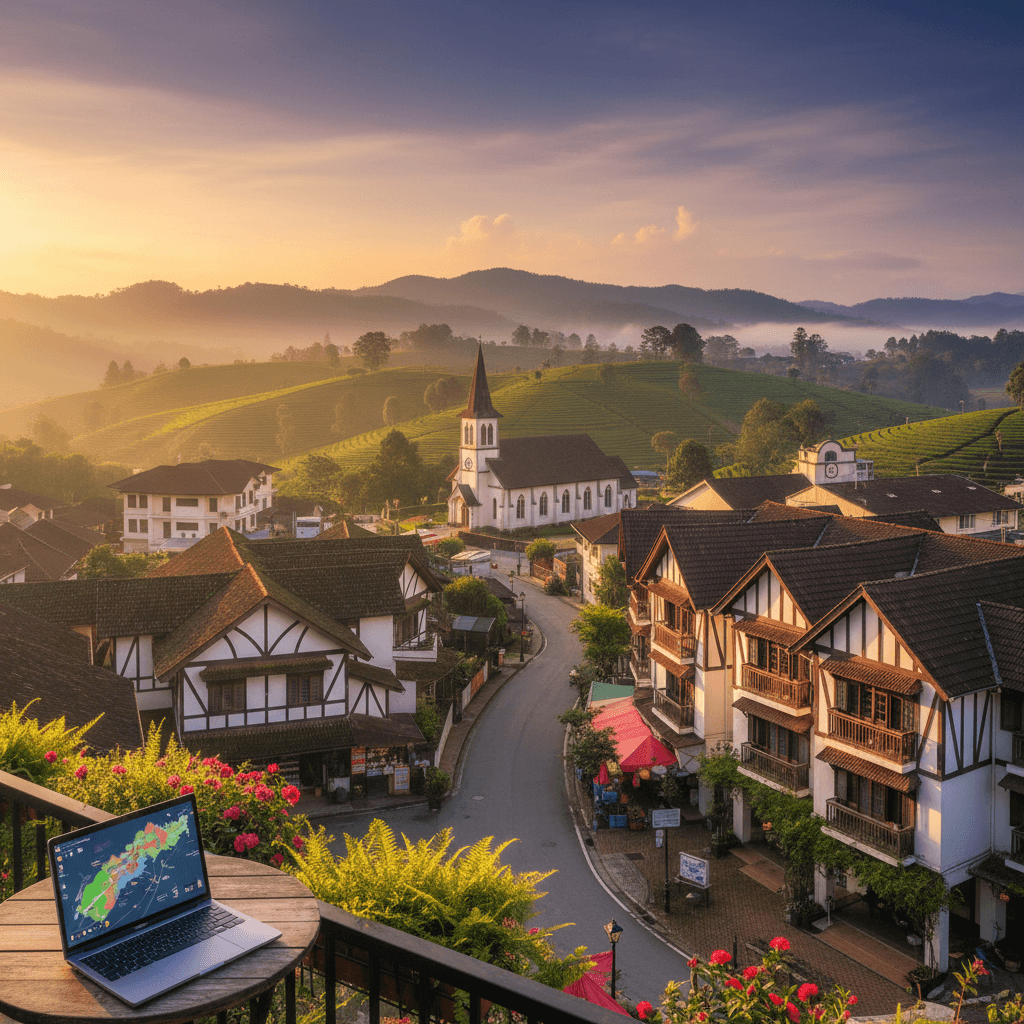
If you've spent any time sweating through your shirt in Kuala Lumpur or Georgetown, arriving in Tanah Rata feels like someone finally handed you the remote to the air conditioner. Sitting at 1,500 meters, this isn't the tropical Malaysia you see on postcards. It's a misty, emerald green highland retreat where the morning air actually has a bite to it and the clouds often sit right on your doorstep.
The vibe here is a strange, charming mashup of British colonial leftovers and modern Malaysian mountain life. You'll see Tudor-style architecture and cream tea sets sitting alongside vibrant Indian curry houses and Chinese hotpot joints. It’s a place where life slows down to a crawl. People don't come here for a high-octane social scene; they come to hike Trail 10 up to Mount Jasar, sip local BOH tea while overlooking rolling plantations, and finally get some deep work done without the distractions of a big city.
The Living Experience
Most nomads gravitate toward the main town center, often called "the Big Road." It's compact and entirely walkable, which is a relief because the local transport situation is famously finicky. While you won't find a sea of Grab drivers waiting at your beck and call, the town is small enough that you can handle most errands on foot.
There is an undeniable "frontier" feel to the development here. You might be looking at a stunning ridge of mossy forest one minute, and a sprawling complex of plastic strawberry greenhouses the next. It’s a working agricultural hub, not just a tourist resort. This gives it a grounded, unpretentious energy that expats appreciate. You aren't living in a bubble; you're living in a community where people actually grow things.
Cost of Living Breakdown
- Housing: A modern studio or 1-bedroom apartment in the center typically runs between $300 and $500 (RM 1,200 to RM 2,000). If you’re willing to live slightly further out on the hillsides, prices drop to around $200 to $350 (RM 800 to RM 1,400).
- Food: Local hawker stalls are incredibly cheap, with meals like nasi lemak or roti canai costing $1.20 to $3 (RM 5 to RM 12). A solid dinner at Singh Chapati Urban Restaurant or Restoran Sri Brinchang will usually set you back $5 to $10 (RM 20 to RM 40).
- Connectivity: A monthly prepaid SIM with 25GB to 30GB of data costs about $10 to $12 (RM 45 to RM 50).
What Makes It Different
Tanah Rata stands out because it forces you to reconnect with the physical world. Most nomad hubs are digital cocoons, but here, the outdoors are the main event. You'll find yourself trading late-night bar crawls for early morning treks through the jungle. The "nightlife" usually consists of a long, steaming steamboat dinner with friends or a quiet beer at a guesthouse.
The community is smaller and more tight-knit than what you'll find in Bali or Chiang Mai. You’ll likely run into the same people at The Hidden Lab or Cameron Fair. It’s the kind of place where the cafe owners remember your name after two days. While the lack of massive coworking spaces might deter some, those who stick around find that the cool weather and the lack of "hustle" culture make it one of the most productive places to hunker down in Southeast Asia.
Expect a monthly budget of $1,500 to $2,200 for a very comfortable mid-range lifestyle. That covers a nice private apartment, eating out frequently, and plenty of weekend trips to the mossy forests or butterfly farms. It's affordable, refreshing, and just disconnected enough to feel like a genuine escape.
The Bottom Line on Costs
You'll find that your ringgit goes a lot further in Tanah Rata than it does in the humidity of Kuala Lumpur or the trendy streets of Penang. It's one of those rare spots where you can live a comfortable, mountain-town life without constantly checking your bank balance. Most nomads find they can live well here on $1,500 to $2,200 a month, which covers a modern apartment, plenty of meals out, and your fair share of strawberry picking trips.
Housing and Neighborhoods
Most of the action for remote workers happens right in the Tanah Rata town center. It's walkable, which is a huge plus since ride-sharing is hit or miss here. If you want to be where the cafes are, look for modern apartments near the "Big Road." If you prefer waking up to mist on the hills, the outskirts offer better value but you'll likely need to negotiate a long term taxi arrangement or rent a scooter.
- Town Center Studio/1BR: Expect to pay between RM 1,200 and RM 2,000 ($300 to $500). These are usually furnished and ready for a digital nomad to move in.
- Hillside 1BR: If you don't mind a 15 minute walk, prices drop to RM 800 to RM 1,400 ($200 to $350).
- Larger 2BR Apartments: Great for families or those who want a dedicated office space, ranging from RM 1,600 to RM 2,600 ($400 to $650) in the center.
For short stays or those testing the waters, Silvan Garden is a popular shout. It's affordable, modern, and specifically caters to people who need a desk and a reliable connection.
Eating and Drinking
Food is where you'll save the most. You can feast on local staples like nasi lemak or roti canai at hawker stalls for about RM 5 to RM 12 ($1.20 to $3). It’s delicious, filling, and keeps your budget intact. Even the mid-range spots where expats tend to hang out won't break the bank.
- Casual Dining: Places like Singh Chapati Urban Restaurant or Restoran Sri Brinchang usually cost RM 20 to RM 40 ($5 to $10) per person.
- High-End Treats: If you're craving a traditional English cream tea or a steak at The Smokehouse Hotel, budget RM 60 to RM 120 ($15 to $30).
- Groceries: If you prefer cooking at home, RM 200 to RM 300 ($50 to $75) a month covers the basics, especially if you buy your produce from the local markets.
Connectivity and Getting Around
While the cool air is free, getting around can be a bit of a localized expense. Grab exists but isn't always reliable, so you'll often find yourself using the local taxi stand. Taxis generally charge RM 25 ($6) per hour for tours or fixed rates for short hops. Local buses are a steal at RM 1.50 ($0.35) if you aren't in a rush.
For your digital life, a local SIM card is a must. Most travelers grab a 15GB tourist plan from Hotlink or Celcom for about RM 35 ($8). If you're staying a full month, a 30GB prepaid plan from Digi costs around RM 50 ($12). Home internet is generally included in serviced apartments, but if you're paying for your own, a basic 30 Mbps line runs about RM 35 to RM 50 ($8 to $12) monthly.
Monthly Budget Tiers
- The Backpacker Budget ($800 to $1,200): You're staying in guesthouses or shared flats, eating primarily at hawker stalls, and hiking the free trails for entertainment.
- The Standard Nomad ($1,500 to $2,200): This gets you a private, modern 1BR apartment, daily cafe visits at places like The Hidden Lab, and regular dinners at mid-range restaurants.
- The High-Life ($2,500 to $3,500): You'll have a spacious 2BR with a view, eat wherever you want, use taxis freely, and likely hire a local cleaner a few times a month.
For Digital Nomads: Tanah Rata Town Center
If you're coming to the highlands to get work done, stay in the heart of Tanah Rata along the Big Road. This is the most practical choice because it's the only area where you can reliably walk to everything. Most nomads set up shop at Silvan Garden, which has carved out a niche as the go-to spot for remote workers. They offer private rooms and a dedicated work area with internet speeds that actually hold up during Zoom calls.
The vibe here is a mix of backpacker energy and mountain village life. You'll spend your afternoons at The Hidden Lab in the Cameron Fair mall, which is arguably the best cafe for laptop work in town. It's one of the few places offering plant-based milk and enough power outlets to keep you going for a four-hour stretch. Expect to pay around $300 to $500 (RM 1,200 to 2,000) for a modern studio apartment in this central strip.
- Connectivity: Best in the region, with 10 to 30 Mbps being the standard.
- Walkability: High; no need for the elusive Grab cars or pricey taxis.
- Social Scene: You'll naturally meet other travelers at spots like Singh Chapati or Highlands Spice.
For Long-Term Expats: Hillside and Suburban Periphery
Expats who plan to stay for several months usually head for the hills. The residential areas just outside the main town center offer a much-needed break from the tourist traffic that clogs the Big Road on weekends. These neighborhoods feel more like a proper retreat, surrounded by jungle greenery rather than plastic strawberry greenhouses. You'll get more space for your money here, with two-bedroom apartments often going for $250 to $400 (RM 1,000 to 1,600).
The trade-off is the lack of transport. Grab is notoriously unreliable in the highlands, so you'll likely end up negotiating monthly rates with a local taxi driver or buying a cheap scooter. It's a quiet life, focused on morning hikes up Trail 10 and cool evenings on a balcony. Most expats here do their grocery shopping at the local markets to keep costs low, spending about $50 to $75 a month on basics.
For Families: Brinchang
Brinchang is the next town over, about a ten-minute drive from Tanah Rata. It has a more local, residential feel that suits families who want a slower pace. It's closer to the Agro-Technology Park and the famous night market, which is a hit with kids. The housing here consists of more traditional apartments and landed homes, providing a bit more "homey" atmosphere than the transit-oriented rentals in Tanah Rata.
While Brinchang has its own set of amenities, it's less walkable for Western standards. You'll find yourself heading into Tanah Rata for the better cafes and international food options. However, for those who want to be near the strawberry farms and the butterfly gardens without the constant hum of the backpacker trail, it's a solid middle ground. Rent for a family-sized 2-bedroom unit averages $400 to $650 (RM 1,600 to 2,600) depending on how modern the building is.
For Solo Travelers: The Guesthouse Hubs
If you're traveling solo and don't need a full apartment, the clusters of guesthouses tucked just behind the main street in Tanah Rata are your best bet. This isn't a neighborhood in the traditional sense, but a micro-community of budget-friendly lodges. You can find private rooms for $15 to $40 a night, which often include communal kitchens and lounge areas where it's easy to find hiking partners.
Staying here puts you within a five-minute walk of the bus terminal, which is vital since that's your gateway to the rest of Malaysia. It's also the easiest place to arrange tours to the BOH Tea Plantation or the Mossy Forest without having to pay for a private taxi from a remote hillside villa. You'll sacrifice a bit of peace for the convenience of having Restoran Sri Brinchang and its $2 roti canai right on your doorstep.
- Budget: Ideal for those keeping monthly spend under $1,200.
- Access: Direct access to the trailheads for the most popular jungle treks.
- Atmosphere: Social, slightly noisy, but very convenient.
Connectivity Realities
You aren't coming to Tanah Rata for lightning fast gigabit fiber. While Malaysia's lowlands are a tech powerhouse, the highlands offer a more modest digital experience. Most guesthouses and apartments provide broadband speeds ranging from 10 to 30 Mbps. It's plenty for Zoom calls and uploading files, but you might feel the lag if you're trying to stream 4K video while running a heavy backup.
The weather actually plays a role here. Heavy afternoon downpours can occasionally cause brief flickers in connectivity. Most long term nomads suggest keeping a local SIM card as a backup. Digi and Celcom generally have the best coverage in the hills, though signal strength can drop off quickly once you head into the tea plantations or deeper hiking trails.
Coworking and Dedicated Workspaces
Tanah Rata hasn't fully embraced the dedicated coworking office model you'll find in Kuala Lumpur. Instead, the scene is built around community hubs. Silvan Garden is the gold standard for remote workers in the area. It's designed specifically for nomads, offering "super fast internet" and dedicated desks within a modern private guesthouse setting. It feels more like a collaborative living space than a corporate office.
For those who prefer a more traditional office vibe, the Cameron Fair shopping complex is your best bet. It's modern, air conditioned (not that you'll need it in this climate), and houses several spots where you can set up for a four hour sprint without being bothered.
The Best Work Friendly Cafes
If you need a change of scenery, the cafe culture in Tanah Rata is surprisingly accommodating. The Hidden Lab in Cameron Fair is the top pick for the nomad crowd. They have reliable WiFi, plenty of power outlets, and a menu featuring plant based milks and vegetarian options that are hard to find elsewhere in town.
- The Hidden Lab: Great for long sessions, quiet atmosphere, and solid coffee.
- Bake an Cafe: Good for a morning session with fresh pastries, though it gets busier during the lunch rush.
- Golfer’s Cafe: A classic spot on the main road. The WiFi is decent, but the street noise can be a bit much for important calls.
- The Smokehouse Hotel: If you want to splurge on a "fancy" work afternoon, their garden is beautiful, though you'll likely be relying on your own hotspot here.
Mobile Data and SIM Cards
Don't rely solely on hotel WiFi. Grabbing a local SIM is cheap and keeps you sane when the power blinks. You can find kiosks for all major providers in the town center or at the bus terminal. Most nomads opt for 30 day prepaid plans because they offer the best value for money.
- Digi Prepaid 30: RM 50 for 30GB of data. This is the most popular choice for reliable highland coverage.
- Celcom Xpax 30: RM 45 to RM 50 for 25GB. Celcom often has better penetration in the older concrete buildings.
- Hotlink (Maxis): RM 35 for a 15GB 15 day tourist pass if you're only staying for a short stint.
Pro tip: If you're planning to work from your apartment, ask the host for a screenshot of a speed test before you book. Some older buildings in the hillside areas are still waiting for fiber upgrades and rely on slower ADSL lines that can struggle with video conferencing.
Staying Safe in the Highlands
Tanah Rata is widely considered one of the safest spots in Malaysia for solo travelers and expats. The vibe is small town and communal, where people generally look out for each other. Most nomads find they can walk around the main strip at night without a second thought, though common sense applies once you venture away from the streetlights of the Big Road.
The real safety concerns here aren't crime related; they're environmental. If you're heading out to tackle Trail 10 or Trail 6, tell someone where you're going. The weather shifts fast in the mountains, and trails can turn into muddy slides after a sudden downpour. Local police and rescue teams deal with lost hikers more often than they deal with theft. Stick to the marked paths and download an offline map like Maps.me, as cell service drops the moment you enter the treeline.
- Emergency Services: Dial 999 for police, ambulance, or fire.
- Police Station: The Ibu Pejabat Polis Daerah (IPD) is located right in Tanah Rata, making the town feel well monitored.
- Scams: They are rare here, though you should always agree on a price with taxi drivers before getting in, since Grab is notoriously unreliable in the hills.
Healthcare Facilities & Pharmacies
For a small mountain town, Tanah Rata is surprisingly well equipped for basic medical needs. The Sultanah Hajjah Kalsom Hospital is the primary public facility. It's located just on the outskirts of town and can handle most non emergency issues and minor injuries. It's affordable, though wait times can be long for non citizens.
Expats usually recommend Klinik Tanah Rata or Klinik Dr. S.S. Gill for day to day ailments, flu shots, or prescriptions. These private clinics are much faster than the hospital. A standard consultation usually costs between RM 40 and RM 80, which is about $9 to $18. Most doctors speak excellent English, so communicating your symptoms won't be a struggle.
If you need medication, there are several well stocked pharmacies along the main road, including Guardian and Watson's. You'll find most international brands for over the counter meds, but if you have a specific, niche prescription, it's better to stock up in Kuala Lumpur before heading up the mountain.
Health Tips for Nomads
The most common health issue travelers face here isn't a tropical disease, it's actually the "Highland sniffles." The temperature drop from the lowlands can be a shock to the system. Pack a decent sweater and stay hydrated. While the tap water in Malaysia is technically treated, most long term residents prefer to boil it or use a filter like a Grayl or LifeStraw bottle to be safe.
Another thing to watch for is motion sickness. The road up from Tapah or Simpang Pulai is a never ending series of switchbacks. If you're prone to nausea, grab some Dramamine at a pharmacy before you board the bus. Once you're in town, the air is some of the freshest in the country, which is a massive perk for anyone trying to escape the smog of larger Southeast Asian hubs.
- Hospital Sultanah Hajjah Kalsom: Open 24 hours for emergencies.
- Pharmacy Hours: Most are open from 9:00 AM to 9:00 PM.
- Insurance: Always ensure your digital nomad insurance covers "adventure activities" if you plan on hiking the more vertical trails.
Getting Around Tanah Rata
Tanah Rata is the most walkable hub in the Cameron Highlands, but don't let the small town center fool you. While you can easily grab a coffee and run errands on foot along the main strip, reaching the iconic tea plantations or the mossy forest requires a bit more strategy. The terrain is hilly, the roads are winding, and the weather can flip from sunny to a downpour in minutes.
Walking and Foot Traffic
If you're staying near the Big Road or Cameron Fair, your daily life is mostly pedestrian. The town center is compact enough that you can walk from one end to the other in about 15 minutes. It’s a pleasant stroll thanks to the cool air, though the sidewalks can be narrow and uneven in spots. Most nomads find that Trail 10, which leads to Mount Jasar, is easily accessible on foot from the west side of town, making it a favorite for a morning "commute" before opening the laptop.
Taxis and Ride-Hailing
This is where things get a bit tricky. Unlike Kuala Lumpur or Penang, Grab is notoriously unreliable here. You might see a car on the app occasionally, but drivers are scarce, and wait times can be frustratingly long. For getting between Tanah Rata and Brinchang, you'll likely rely on the local red-and-white taxis.
- Taxi Rates: Expect to pay a fixed rate of roughly RM 10 to RM 15 for short hops between towns.
- Hourly Hire: If you want to see the BOH Tea Center or the Strawberry Farms without the stress of finding a return ride, you can hire a taxi for about RM 25 per hour. Most drivers require a minimum of 3 hours for this service.
- Taxi Stand: The main hub is located right near the bus terminal in the center of town.
The Local Bus System
There is a public bus that runs a loop between Tanah Rata and Kampung Raja, passing through Brinchang. It’s the cheapest way to get around, costing only RM 1.50 to RM 2.00 depending on your destination. However, the schedule is more of a suggestion than a rule. Buses generally run every hour or two, so it’s best for those on a slow schedule who aren't rushing to a Zoom call.
Scooter and Bike Rentals
Renting a scooter is a popular choice for travelers who want total freedom. It usually costs around RM 50 to RM 80 per day. While it’s great for beating the traffic jams that plague the Highlands on weekends, be careful. The roads are steep, often slippery from rain, and the local bus drivers don't always give much wiggle room on the curves. If you aren't an experienced rider, the hills here might not be the best place to learn.
Intercity Travel
The Tanah Rata Bus Terminal is your gateway to the rest of Malaysia. It’s well organized and serves several major routes daily. You can book tickets at the counters or through apps like Easybook or RedBus.
- Kuala Lumpur: Coaches take about 4 to 5 hours and cost around RM 35 to RM 45.
- Penang (Butterworth/George Town): The journey is roughly 5 hours, with tickets priced at RM 40 to RM 50.
- Ipoh: This is the closest major city, about 2 to 2.5 hours away, costing roughly RM 20 to RM 25.
Expats recommend avoiding travel on Friday afternoons or Sundays if possible. The single road winding up the mountain often turns into a parking lot during peak tourist times, easily doubling your travel time to and from the lowlands.
The Linguistic Landscape
You'll find that Tanah Rata is one of the easiest places in Malaysia to get by using only English. Because of its history as a British colonial hill station and its current status as a primary tourist hub, English is the unofficial second language here. Most shop owners, trekking guides, and restaurant staff speak it fluently enough to handle anything from complex dietary requests to negotiating a long term apartment lease.
That said, the town is a multicultural melting pot. You'll hear Bahasa Malaysia (the national language), Mandarin, Cantonese, and Tamil on every street corner. The local Indian community is particularly prominent in Tanah Rata, which is why you'll find some of the best banana leaf rice and chai in the country served by staff who switch effortlessly between three or four languages.
Essential Phrases for Nomads
While you don't need to be fluent, tossing out a few words of Bahasa Malaysia goes a long way with the locals. It shows you're not just another tourist passing through on a 48 hour tea tour. Here are the basics that expats and long termers use daily:
- Terima Kasih: Thank you. (Response: Sama-sama)
- Apa Khabar?: How are you?
- Berapa?: How much? (Useful at the Brinchang Night Market)
- Pedas: Spicy. (If you can't handle heat, say Tak mau pedas, meaning "I don't want it spicy")
- Kurang Manis: Less sugar. (Vital when ordering tea or coffee, as Malaysian drinks are notoriously sweet)
Staying Connected
Communication isn't just about what you say; it's about your data signal. While Tanah Rata feels remote, the mobile infrastructure is surprisingly solid. Most nomads recommend Maxis (Hotlink) or Celcom for the highlands. They tend to have the most consistent 4G coverage when you're tucked away in a hillside cafe or hiking Trail 10.
Expect to pay around RM 35 to RM 50 for a monthly prepaid plan with plenty of data. You can pick these up at the small mobile shops along the "Big Road" in the center of town. Just bring your passport for registration. WhatsApp is the king of communication here. Whether you're booking a taxi, ordering a cake from a local baker, or messaging a landlord about a studio apartment, everyone uses it. Don't bother calling landlines; just send a text.
Social Etiquette and Nuances
The vibe in Tanah Rata is notably more laid back than Kuala Lumpur. People take their time. When communicating with locals, a polite, soft spoken approach works best. Raising your voice or showing frustration is generally looked down upon and won't get you far.
If you're looking to meet other English speakers or nomads, the community tends to congregate at spots like The Hidden Lab or Singh Chapati. Since the town is small, you'll start recognizing faces within a week. Travelers often say the easiest way to break the ice is to ask about current trail conditions or which strawberry farm isn't a "tourist trap" this month. It's a friendly, open community where a simple "hello" in a cafe often leads to a group dinner or a hiking partner for the next morning.
Dealing with Logistics
For administrative tasks like extending a visa or dealing with a bank, English is the standard. However, if you're venturing into the smaller villages or "kampungs" outside the main town, having a translation app on your phone is a smart move. Google Translate with the offline Malay dictionary downloaded will handle any gaps in communication when you're off the beaten path.
The Cool Escape: Understanding the Highlands Climate
If you're coming from the sweltering humidity of Kuala Lumpur or the sticky coastal heat of Penang, Tanah Rata feels like a different country. Sitting at 1,500 meters above sea level, the town enjoys a temperate highland climate that stays refreshingly cool year round. You can expect daytime temperatures to hover around 22°C to 25°C (72°F to 77°F), while nights frequently drop to a crisp 14°C to 16°C (57°F to 61°F). It’s one of the few places in Malaysia where you’ll actually want a light jacket and a hot cup of tea.
The weather isn't just a comfort factor; it dictates the rhythm of the town. Because it’s a highland rainforest environment, rain is a constant companion. Even during the "dry" months, afternoon showers are common. Most nomads find that the mist rolling over the tea plantations creates a perfect atmosphere for deep work, but you'll need to plan your hiking or farm visits for the clearer morning hours.
Peak Season: When to Go (and When to Avoid)
The best time to visit Tanah Rata for stable weather is between February and April, or from June to August. During these windows, you’ll get the most sunshine and the least amount of rain, making it the ideal time to hit Trail 10 or explore the Mossy Forest without slipping in the mud.
However, the "best time" isn't just about the rain. You need to watch the calendar for Malaysian public holidays and school breaks. Since the Highlands are a favorite weekend getaway for locals, the narrow winding roads into town become absolute gridlock during holidays. A trip that usually takes two hours can easily turn into five. Expats living here recommend arriving on a Monday and leaving on a Thursday to avoid the weekend crowds that drive up accommodation prices and pack out the cafes.
The Monsoon Factor
The heaviest rainfall typically hits between September and December. This is the Northeast Monsoon season. While it rarely rains all day, the downpours are intense and can lead to landslides on the roads leading up the mountain. If you're a digital nomad who enjoys the "cozy" vibe and doesn't mind staying indoors to work while the rain lashes against the window, you can find some great long term rental deals during this period. Just don't expect to do much serious trekking, as the trails become slippery and dangerous.
Seasonal Highlights for Travelers
- Strawberry Season: While strawberries are grown year round in the plastic greenhouses, the peak harvest typically falls between May and August. This is when the fruit is at its sweetest and most affordable.
- Tea Harvests: The tea plantations are lush and green throughout the year, but the views are clearest in the dry months of February and March when the morning mist clears quickly.
- Flower Blooms: If you're into horticulture, the January to February period sees many of the highland flowers in full bloom, coinciding with the lead up to Chinese New Year.
What to Pack
Don't let the tropical Malaysian sun fool you. For Tanah Rata, you'll need a different kit than the rest of the country. Locals and long term travelers suggest focusing on layers. A breathable rain shell is mandatory for the afternoon mist. For the evenings, especially if you're staying in a hillside apartment without central heating (which is most of them), a thick fleece or hoodie is a lifesaver. If you plan on hiking, bring proper boots with good grip; the highland mud is notoriously slick, and your white sneakers won't survive the jungle trails.
Getting Around and Staying Connected
Moving through Tanah Rata is a bit of a throwback. While you might be used to the seamless Grab experience in Kuala Lumpur, ride hailing is hit or miss here. Most travelers rely on the local red and white taxis. Expect to pay a flat rate of RM 25 per hour for sightseeing or fixed prices between towns. The local bus is a steal at RM 1.50, though the schedule is more of a suggestion than a rule.
For your digital setup, don't rely solely on hotel WiFi. Digital nomads usually grab a local SIM immediately. Maxis (Hotlink) and Celcom have the best coverage in the highlands. A 30 day prepaid plan with 30GB of data will run you about RM 50. It is a smart backup for when the clouds roll in and the DSL speeds in older guesthouses start to lag.
Money and Budgeting
Cash is still king for many of the local stalls and the night market. You will find several ATMs along the "Big Road" in the town center, including Maybank and HSBC. Most mid range restaurants like Singh Chapati or Highlands Spice accept cards, but keep small bills for your RM 6 morning nasi lemak or RM 3 roti canai.
If you are planning a longer stay, your biggest expense will be housing. A modern one bedroom apartment in the center goes for $300 to $500 monthly. If you are on a tighter budget, look toward the hillsides where prices drop to around $200. Most expats find that a monthly budget of $1,500 allows for a very comfortable lifestyle, including plenty of dining out and weekend trips.
Health and Safety
Tanah Rata is incredibly safe, even for solo travelers late at night. The biggest "danger" here is actually the weather and the terrain. The trails are beautiful but can get slippery and dangerous after a heavy afternoon downpour. Travelers often recommend starting your hikes early in the morning to avoid being caught in a 3 PM deluge. Always let someone know which trail you're taking, especially on the popular Trail 10 to Mount Jasar.
For medical needs, there is a public hospital in Tanah Rata that handles basic emergencies. For anything specialized, you would likely need to head down to Ipoh. Pharmacies are well stocked with basics, but if you have specific prescriptions, bring a supply with you as mountain stock can be limited.
Work Friendly Spots
Since dedicated coworking spaces are rare, the community tends to congregate at The Hidden Lab in Cameron Fair. It has a modern vibe, reliable power outlets, and decent coffee. Silvan Garden is another favorite for those who need a quiet environment to focus without the cafe noise. Most cafes are fine with you staying for a few hours as long as you keep the lattes and snacks coming.
- Best SIM Provider: Maxis/Hotlink for consistent 4G.
- Main ATM Hub: Maybank on the main road.
- Laundry: Several self service laundromats exist near the bus station, costing about RM 10 per load.
- Grocery Shopping: Small local markets for fresh produce, or the Bataras supermarket for imported goods.
When to Go
Avoid school holidays and long weekends if you can. The single road leading into the highlands turns into a parking lot, and prices for short term rentals can double. Mid week during the shoulder seasons (March to May) is the sweet spot for peace and quiet. You will get the cool 15 to 25 degree Celsius temperatures without the crowds of tourists from the lowlands.
Need visa and immigration info for Malaysia?
🇲🇾 View Malaysia Country GuideHidden Gem
Worth the effort
Monthly Budget Estimates
More cities in Malaysia
Miri
🇲🇾 Malaysia