Canggu (Batu Ferringhi/Penang)
🇲🇾 Malaysia
The Vibe: Heritage Meets Slow Living
If you have spent time in the high energy nomad hubs of Bali or Bangkok, Penang will feel like a deep, cooling exhale. It is a place where the clock seems to tick a little slower, governed more by the timing of the next meal than the urgency of a Zoom call. While many travelers mistakenly look for a "Canggu" experience here, Penang offers something entirely different. It is a gritty, beautiful, and authentic blend of old world Peranakan culture and modern remote work flexibility.
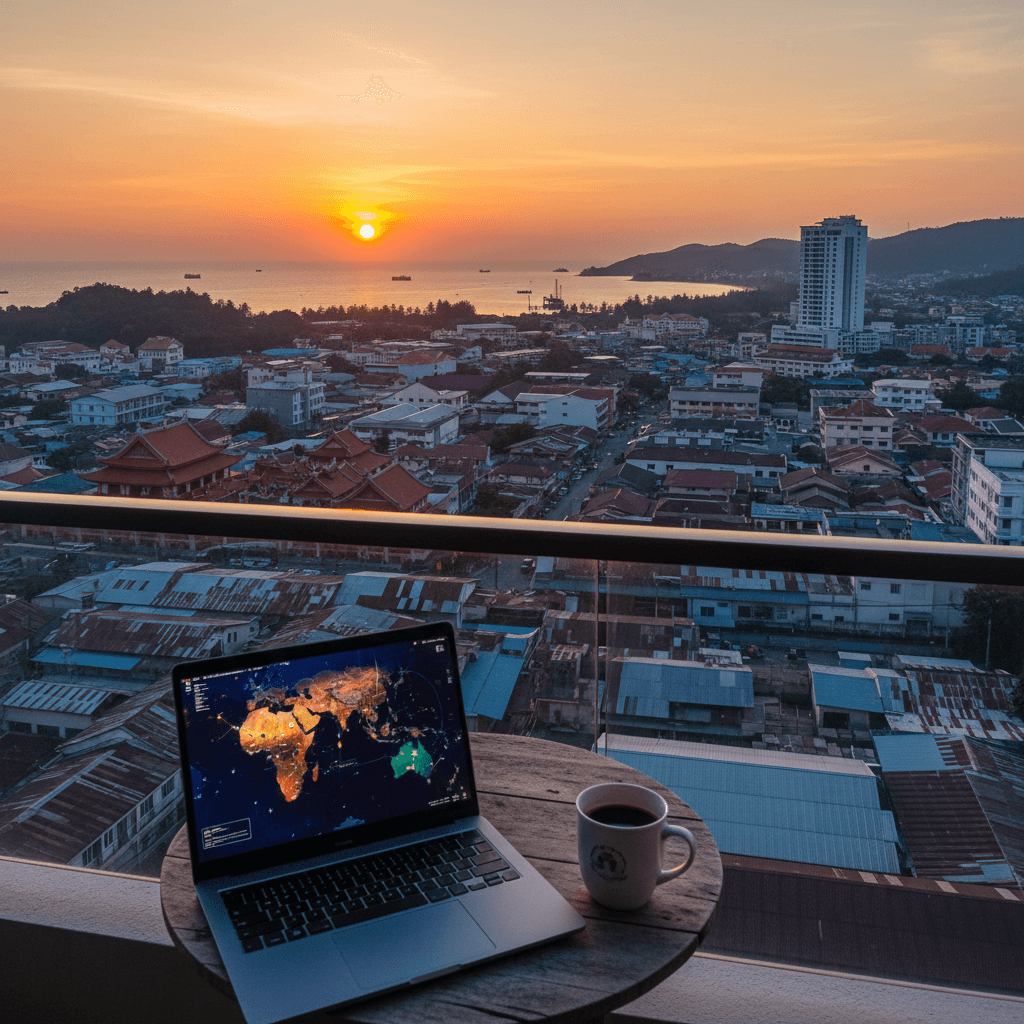
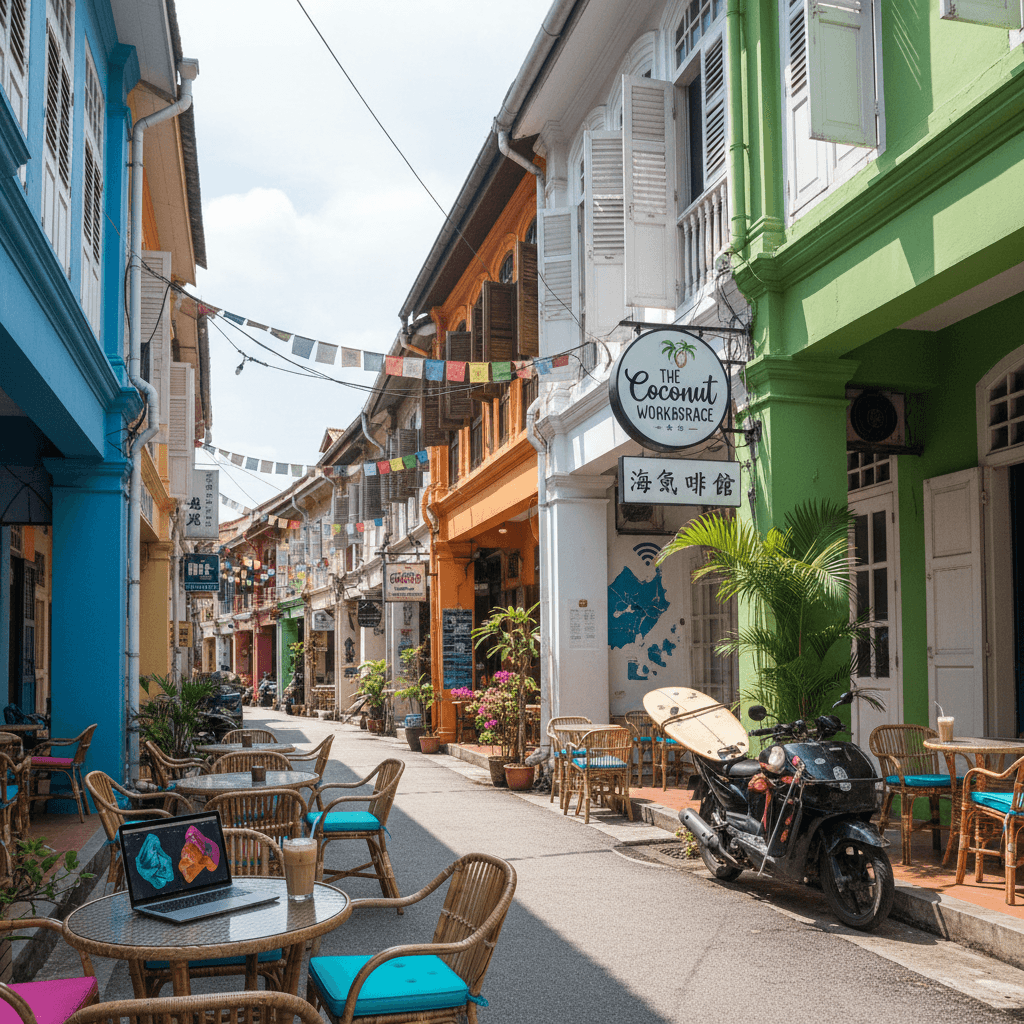
The island has a dual personality. In George Town, you are surrounded by crumbling colonial shutters, world class street art, and the smell of roasting coffee and incense. Move toward the coast, specifically Batu Ferringhi or Tanjung Bungah, and the city noise fades into the sound of the Andaman Sea. It is less of a party island and more of a "get things done then eat the best food of your life" destination. You will find yourself working from a restored shophouse in the morning and watching the sunset with a RM15 bucket of beers on the sand by evening.
What Sets Penang Apart
- The Food Obsession: People don't just eat here; they worship. You will see nomads and locals alike debating which hawker stall has the best Char Kway Teow. It is the great equalizer of the island.
- Language Ease: Unlike many Asian hubs, English is widely spoken with high proficiency. It makes everything from negotiating a lease to explaining a tech problem at a repair shop incredibly seamless.
- The Cost-to-Quality Ratio: You can live a high end lifestyle here for a fraction of what you would pay in Singapore or even parts of Thailand.
- The Community: It is smaller and more tight knit than Bali. You won't find thousands of influencers, but you will find serious entrepreneurs, slow travelers, and expats who have lived here for decades.
Monthly Cost of Living
Penang remains remarkably affordable, especially if you embrace the local food scene. A budget nomad can get by comfortably on RM2,500 to RM3,500 per month, while those looking for a luxury lifestyle with a sea view condo and frequent Western dining should budget RM7,000 to RM9,000.
Neighborhood Breakdown
George Town
- The Draw: Maximum walkability and the heart of the creative scene.
- Rent: RM850 to RM1,800 for a 1BR.
- Work Spot: Common Ground or any of the dozens of aesthetic cafes in the heritage zone.
- The Reality: It can be loud and humid, with more tourists than other areas.
Tanjung Tokong & Tanjung Bungah
- The Draw: The sweet spot for long term nomads. Modern condos, proximity to the city, and easy beach access.
- Rent: RM800 to RM1,500 for a 1BR.
- Work Spot: Often from home or local cafes like Mercato.
- The Reality: You will likely want a scooter or a car to get around efficiently.
Batu Ferringhi
- The Draw: Pure holiday vibes. Perfect if you want to wake up, surf or swim, and live in a swimsuit.
- Rent: RM700 to RM1,400 for a 1BR.
- The Reality: It is a 30 to 45 minute drive to George Town. Internet can be spottier here, and the food options are more tourist oriented and pricier.
Pulau Tikus
- The Draw: An upscale, leafy neighborhood that feels very "local expat."
- Rent: RM750 to RM1,400 for a 1BR.
- The Reality: Great markets and quiet streets, but lacks the direct beach access of the northern coast.
Daily Essentials
- Street Food Meal: RM5 to RM12
- Craft Coffee: RM10 to RM15
- High Speed Home Internet: RM100 to RM150 per month
- Mobile Data (Unlimited): RM35 to RM60 per month
- Grab Ride (Short City Trip): RM6 to RM12
Living in Penang feels like being part of a well kept secret. It lacks the curated, "Instagram-perfect" polish of Canggu, but it replaces it with soul, history, and some of the friendliest people you will meet on the nomad trail. If you value culture and culinary depth over beach clubs and avocado toast, you will likely find it hard to leave.
The Bottom Line on Budgeting
Penang is one of those rare spots where your money stretches remarkably far without forcing you to compromise on quality of life. While Bali has seen prices skyrocket recently, Penang remains anchored in reality. You can live a very comfortable, mid range lifestyle here for about RM 4,000 to RM 6,000 ($880 to $1,320 USD) per month. If you are on a strict budget and stick to hawker centers and local neighborhoods, you can easily get by on RM 3,000 ($660 USD).
Monthly Rent by Neighborhood
Rent will be your biggest variable. Most nomads opt for modern condos with gyms and pools, which are plentiful. Keep in mind that Batu Ferringhi offers great value for beach lovers, but you'll pay the price in commute time if you head to the city often. For comparison, here is what you can expect to pay for a 1 bedroom apartment or studio:
- George Town: RM 850 to RM 1,800. This is the heart of the action. It is walkable and packed with history, though it can get noisy on weekends.
- Tanjung Tokong: RM 800 to RM 1,500. This is the sweet spot for many expats. It is close to the water, has great grocery stores like Village Grocer, and sits right between the city and the beach.
- Batu Ferringhi: RM 700 to RM 1,400. You get more space for your money here. It feels like a permanent vacation, but the internet can be spotty compared to the city.
- Pulau Tikus: RM 750 to RM 1,400. A local favorite that is slightly quieter than George Town but still very central.
Eating and Drinking
Food is why people move to Penang. If you eat like a local, you will struggle to spend more than RM 15 on a massive meal. Hawker stalls are the lifeblood of the island. A plate of Char Koay Teow or Nasi Kandar usually costs between RM 5 and RM 12.
If you prefer air conditioned cafes or western food, expect to pay RM 30 to RM 50 per person. Coffee culture is huge here, especially in George Town. A flat white at a specialty cafe like Wheeler's or Ozo Coffee will set you back about RM 10 to RM 15. Alcohol is the one thing that isn't cheap due to high taxes; a beer at a bar is often RM 15 to RM 25, which is sometimes more than the cost of your dinner.
Utilities and Connectivity
Setting up your home office is straightforward. Most modern condos come with high speed fiber options. If you are paying for your own utilities, here is the breakdown:
- Electricity: RM 150 to RM 400. This depends entirely on how much you blast the air conditioning. It is humid, so most nomads keep it running at night.
- Home Internet: RM 100 to RM 170 for 100 Mbps or higher. Time Internet is generally the gold standard for reliability on the island.
- Mobile Data: RM 30 to RM 60. Local SIM cards from Maxis or Celcom offer huge data packages for very little.
Transport and Lifestyle
You don't need a car in Penang. The Grab app is the local version of Uber and it is incredibly cheap. A 15 minute ride usually costs around RM 10 to RM 15. If you want more freedom, you can rent a scooter for about RM 300 to RM 450 a month.
For coworking, spaces like Common Ground or Settlements offer monthly hot desks for around RM 300 to RM 500. If you like to stay active, a membership at a decent gym will cost roughly RM 150 to RM 250 per month. Overall, Penang offers a high ceiling for luxury but a very low floor for basic survival, making it a perfect hedge against inflation for remote workers.
For the Culture-First Nomad
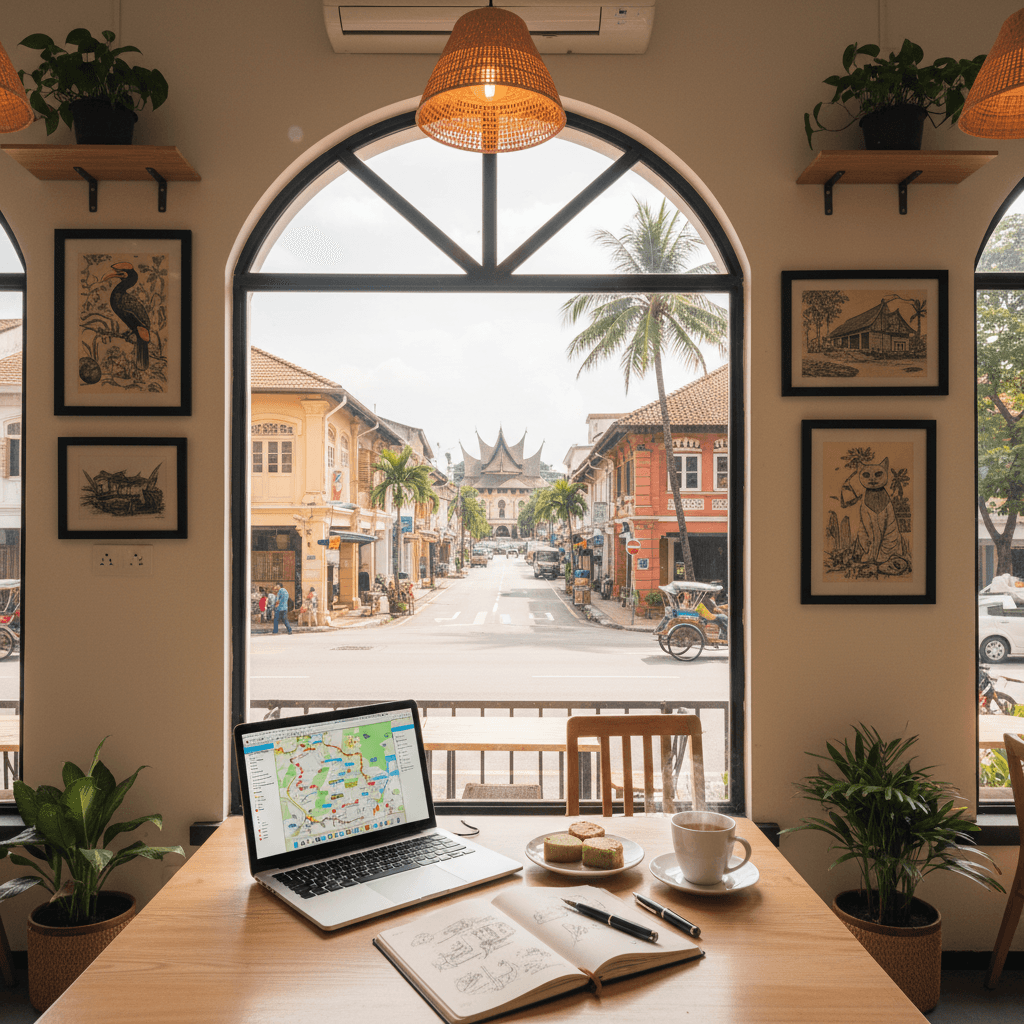
If you want to step out of your door and be in the thick of it, George Town is your home base. It is the heartbeat of Penang, where 19th-century shophouses meet world-class street art. Nomads flock here because it is the most walkable part of the island and houses the best coworking hubs like Common Ground or Settlements. You will spend your afternoons working from cafes like Wheeler's or Bean Sprout, surrounded by the smell of roasting coffee and frying noodles.
- The Vibe: Historic, artistic, and loud in the best way possible.
- Monthly Rent: RM1,200 to RM1,800 for a decent studio or heritage apartment.
- Best for: Solo travelers who want to meet people and foodies who want RM6 char kway teow at their doorstep.
For the Balanced Expat
Tanjung Tokong and Pulau Tikus are where the long-termers usually settle. These areas sit perfectly between the chaos of the city and the breeze of the coast. Pulau Tikus feels like a real neighborhood with its morning wet market and local shops, while Tanjung Tokong offers high-rise living with views of the Andaman Sea. You get the convenience of Village Grocer for your western comforts and Straits Quay for a sunset beer by the marina.
- The Vibe: Polished, convenient, and residential.
- Monthly Rent: RM1,500 to RM2,500 for a modern 2-bedroom condo with a pool and gym.
- Best for: Remote workers who need reliable fiber internet and a bit of peace and quiet.
For Families and Slow Travelers
If you have kids in tow or just want to wake up to the sound of waves, head north to Tanjung Bungah. It is much more relaxed than George Town and is home to the island's best international schools, like Dalat or Tenby. The community here is tight-knit, and you will often find expat families gathering at the Permai Gardens area. It is safer, greener, and much less congested than the city center.
- The Vibe: Suburban, family-oriented, and coastal.
- Monthly Rent: RM1,800 to RM3,000 for spacious family condos or landed houses.
- Best for: Families needing space and nomads who prefer a morning beach walk over a city commute.
For the Beach Lover and Surfer
Batu Ferringhi is the island's primary resort strip. While Penang is not a world-class surf destination, this is where you will find the most water sports and the widest stretches of sand. Life here revolves around the Batu Ferringhi Night Market and beach bars like Bora Bora. Just keep in mind that you are about 30 to 45 minutes away from George Town, so it can feel a bit isolated if you need to run errands in the city frequently.
- The Vibe: Permanent vacation mode with a touristy edge.
- Monthly Rent: RM1,200 to RM2,200 for older but larger apartments with sea views.
- Best for: Those who want to unplug and do not mind the commute for groceries or socializing.
For the Budget-Conscious Professional
Bayan Baru and Gurney Drive offer two different ways to save or spend. Bayan Baru is near the airport and the tech industrial zone, making it very affordable and local, though it lacks the "island charm" of the north. Gurney Drive is more upscale, known for its massive malls like Gurney Plaza and Gurney Paragon. It is great for those who want a "big city" feel with luxury amenities but at a lower price point than similar setups in Kuala Lumpur or Singapore.
- The Vibe: Urban, commercial, and high-energy.
- Monthly Rent: RM1,000 to RM1,600 in Bayan Baru; RM2,000+ for Gurney Drive luxury.
- Best for: Budget nomads working in tech or those who love being steps away from high-end shopping.
Connectivity and Speed
Penang is a bit of a mixed bag when it comes to the web. In George Town and the modern high rises of Gurney Drive, you can easily find fiber connections hitting 100 Mbps to 500 Mbps. However, if you are heading up to Batu Ferringhi, things can get spotty. The beach resorts have decent Wi-Fi, but older apartments in the hills often struggle with infrastructure. Most nomads rely on a Time Internet or Maxis Home Fiber connection if they are staying long term.
For your backup, grab a local SIM card immediately. Maxis (Hotlink) and CelcomDigi are the heavy hitters here. You can get a prepaid plan with 20GB to 40GB of data for around RM35 to RM60. Coverage is solid across the island, though it can dip if you are hiking through the National Park or tucked away in the far corners of Teluk Bahang.
Top Coworking Spaces
While Penang doesn't have the massive "campus style" coworking hubs you see in Bali, it has several professional, air-conditioned sanctuaries that are perfect for deep work. Most are concentrated in George Town or the Bayan Lepas tech zone.
- Common Ground (Mansion 19): Located in a stunning heritage building in George Town, this is the "place to be seen." It's stylish, has great coffee, and hosts regular networking events. Expect to pay about RM50 for a day pass or RM499 for a monthly hot desk.
- Settlements: Situated near the Gurney area, this space is favored by serious professionals and startups. It's quieter than Common Ground and offers a more corporate, focused vibe. Day passes start around RM30.
- @CAT Penang: Located in the Wisma Yeap Chor Ee building near the jetty, this is a government-backed initiative. It's affordable, spacious, and right in the heart of the heritage zone. It's a great spot if you want to be surrounded by local entrepreneurs.
- Scoopoint: A boutique coworking space in George Town that feels more like a creative studio. It's smaller, more intimate, and has a very welcoming community for solo travelers.
Work-Friendly Cafes
If you prefer the hum of a coffee machine over a silent office, George Town is your playground. Just be mindful that some smaller heritage cafes have "no laptop" policies during busy weekend brunch hours.
- Wheeler's: A staple on Love Lane. The Wi-Fi is reliable, there are plenty of power outlets upstairs, and the coffee is excellent. It gets busy, so arrive early.
- Omelette Cafe: Tucked away and relatively quiet, this spot has a cozy atmosphere and decent speeds. It's perfect for a two-hour sprint.
- The Mugshot Cafe: Great for a quick email check while grabbing their famous yogurt. It's a bit too "open air" and loud for long Zoom calls, but the vibe is unbeatable.
- Starbucks (Batu Ferringhi): It sounds basic, but the Starbucks right on the beach in Batu Ferringhi is one of the most beautiful in the world. It's the most reliable place to work with a view if you are staying on the north coast.
Practical Tips for Remote Workers
The humidity in Penang is no joke for your hardware. If you are working from non-AC cafes, your laptop fans will be working overtime. Most expats recommend sticking to air-conditioned spaces between 11:00 AM and 4:00 PM. Also, keep in mind that Malaysia uses the Type G (UK-style) three-pin plug. While many modern coworking spaces have universal outlets, you'll want a sturdy adapter for the older heritage cafes.
If you are planning to take a lot of calls, avoid the hawker centers. They are the heart of Penang's culture, but the clanging of woks and shouting of orders makes them impossible for meetings. Stick to the dedicated coworking spaces or the higher-end hotels in Tanjung Bungah for a professional backdrop.
Safety Overview
Penang is generally one of the safest spots in Southeast Asia for remote workers. Most nomads feel comfortable walking around George Town or Tanjung Bungah late at night. Violent crime is rare, but petty theft like bag snatching or pickpocketing can happen in crowded tourist spots like the Batu Ferringhi night market or Chulia Street. Keep your bag on the side away from the road to avoid opportunistic drive by snatches from motorbikes.
Common scams usually involve "friendly" locals offering unsolicited tours or overpriced taxi rides. Always use Grab for transport to ensure a fixed, fair price. If you are renting a scooter, be extra cautious. Traffic in Penang is erratic; local drivers often treat red lights as suggestions, and the narrow heritage streets of George Town are tricky to navigate on two wheels.
Healthcare Standards
The healthcare in Penang is world class and surprisingly affordable. It is actually a major hub for medical tourism in the region. Most doctors and nurses speak excellent English, having trained in the UK, Australia, or the US. You will find that private hospitals here feel more like luxury hotels than clinics.
For general checkups or minor issues, local clinics like Tejani Clinic in Tanjung Tokong are popular with the expat crowd. They are efficient and usually allow walk ins. If you need more serious care, Gleneagles Hospital and Island Hospital are the top choices. A standard consultation with a specialist usually costs between RM150 and RM300, while a basic GP visit might only set you back RM50 to RM100.
Emergency Services
In a pinch, the emergency number in Malaysia is 999. However, if you are in a private hospital catchment area, it is often faster to call their private ambulance service directly. Gleneagles and Mount Miriam have their own fleets. If you are staying out in Batu Ferringhi, keep in mind that the winding coastal road can get congested, so response times might be slower than in the city center.
Health Tips for Nomads
- Tap Water: Do not drink the tap water. While it is treated, the pipes in older buildings are often corroded. Stick to filtered water or 1.5L bottles which cost about RM2 at 7-Eleven.
- Tropical Ailments: Dengue fever is a real risk, especially during the rainy season. Use mosquito repellent if you are working from outdoor cafes or hiking in Penang National Park.
- Air Quality: Occasionally, Penang experiences "the haze" caused by agricultural burning in neighboring regions. If the Air Pollutant Index (API) climbs above 100, it is best to stay indoors and use an air purifier.
- Pharmacies: Chains like Guardian and Watson’s are everywhere. You can get most medications over the counter without a prescription, though it is always better to bring your own supply of specific brands you trust.
Insurance Requirements
While Malaysia does not strictly require digital nomads to have health insurance for entry on a tourist visa, it is highly recommended. If you are applying for the DE Rantau Nomad Pass, you are required to have a valid medical insurance policy that covers you within Malaysia. Most nomads opt for SafetyWing or Genki because they are flexible and cover the specific needs of remote workers.
The Logistics of Living and Moving in Penang
Getting around Penang is a bit of a mixed bag. While George Town is incredibly walkable, the rest of the island is spread out enough that you will need a plan for getting from your beach condo in Batu Ferringhi to the heritage cafes in the city center. The infrastructure is solid, but traffic during the school run or weekend tourist rushes can turn a 20 minute drive into an hour long ordeal.
Ride Hailing: The Nomad Gold Standard
Most nomads rely almost exclusively on Grab. It is the Southeast Asian equivalent of Uber and works seamlessly across the island. It is reliable, safe, and transparent with pricing, which saves you from haggling with traditional taxi drivers who often refuse to use the meter.
- Short trips (within George Town): Usually cost between RM7 and RM12.
- Longer hauls (George Town to Batu Ferringhi): Expect to pay RM25 to RM40 depending on demand.
- Airport runs: A trip from the airport to the northern beaches usually sits around RM45 to RM60.
Pro tip: Download the airasia MOVE app as well. They often have competitive rates for rides and can be a great backup when Grab prices spike during tropical downpours.
Public Transport: The Rapid Penang Bus
If you are on a budget or just want to see the island at a slower pace, the Rapid Penang bus system is surprisingly decent. The buses are air conditioned and cover most of the island. The 101 bus is the lifeline for nomads living in the north; it runs from the Weld Quay terminal in George Town all the way through Tanjung Tokong and Tanjung Bungah to Batu Ferringhi and the National Park.
- Fares: Usually between RM1.40 and RM5.00. You need exact change if paying cash, or you can buy a Pas Mutiara for RM50 which gives you unlimited rides for 30 days.
- Trackers: Use the LUAS app or Google Maps to see real time bus locations, though take the timing with a grain of salt during peak traffic.
- CAT Shuttle: Look for the Central Area Transit buses in George Town. These are free shuttles that loop through the historic district, hitting most of the major heritage sites.
Two Wheels and Pedals
In the narrow, one way streets of George Town, a bicycle is often faster than a car. The city has a bike sharing program called LinkBike with stations scattered around the heritage zone. It is great for short hops between coworking spaces and hawker centers. For those staying longer, renting a scooter is an option, but be warned that Penang drivers can be aggressive. Expect to pay about RM30 to RM40 per day for a scooter rental, or roughly RM400 to RM600 per month if you negotiate a long term rate.
Walking the Heritage Zone
George Town was built for walking, but the Five Foot Ways (the covered walkways in front of shophouses) are often blocked by parked motorbikes or cafe tables. You will end up walking in the street quite a bit. Wear breathable shoes and carry an umbrella, not just for the rain, but for the intense midday sun. If you are staying in Batu Ferringhi, the main strip is walkable for dinner and night markets, but the lack of consistent sidewalks makes it less pleasant than the city center.
The Iconic Ferry
If you need to head to the mainland (Butterworth) for the train station or specific shopping, the ferry is a rite of passage. The new fleet of fast ferries is efficient and air conditioned. It takes about 10 to 15 minutes to cross the strait. A round trip ticket is just a few ringgit, making it the cheapest scenic cruise you will ever take.
Driving Yourself
Renting a car is only recommended if you live in the southern part of the island or have a family. Parking in George Town is a nightmare, and the local Penang Smart Parking app is mandatory for paying street fees. Most nomads find that between Grab and the occasional bus, owning or renting a car is more of a headache than it is worth.
The Linguistic Landscape
You won't have much trouble getting your point across in Penang. Because of its colonial history and its status as a global trade hub, English is widely spoken, especially in George Town and the tourist stretches of Batu Ferringhi. Most locals are multilingual, often switching between three or four languages in a single conversation. This makes it one of the easiest places in Southeast Asia for English speaking nomads to settle in without a steep learning curve.
While English is the bridge language for business and tourism, the local linguistic flavor is a mix of Malay, Mandarin, and various Chinese dialects like Hokkien and Cantonese. You'll often hear Manglish, which is the local English patois. It’s fast, rhythmic, and peppered with words from other languages. Don't be surprised if people add a "lah" or "meh" to the end of their sentences; it’s just how the local rhythm works.
Key Languages to Know
- Bahasa Malaysia (Malay): The national language. It’s used for official business and signage.
- Penang Hokkien: The heartbeat of the island. Most street food vendors and older locals in George Town use this dialect. It’s distinct from the Hokkien spoken in Singapore or Taiwan.
- English: The primary language for digital nomad life. Menus, road signs, and banking apps are almost always available in English.
- Mandarin and Tamil: Reflecting the island’s significant Chinese and Indian populations.
Practical Communication for Nomads
In the coworking spaces like Common Ground or Settlements, English is the default. If you're heading to the Batu Ferringhi Night Market or a hawker center like Gurney Drive, English will get you by just fine. However, learning a few phrases in Malay or Hokkien goes a long way. It shows respect and often results in a bigger smile from the uncle serving your Char Koay Teow.
When you're dealing with government offices or the DE Rantau nomad visa process, everything is documented in Malay, but English translations are standard. Most expats find that the language barrier is practically non existent when compared to places like Vietnam or Thailand.
Essential Phrases to Get You Started
- Terima Kasih: Thank you (Malay). You'll use this dozens of times a day.
- Sama-sama: You're welcome (Malay).
- Berapa?: How much? (Malay). Useful at the wet markets in Pulau Tikus.
- Kam Sia: Thank you (Hokkien). Using this with a local vendor is a great icebreaker.
- Makan: To eat (Malay). Food is the national obsession here, so you'll hear this constantly.
- Boss: A universal term of endearment. Use it to get the attention of a waiter or shopkeeper, regardless of their actual job title.
Digital Communication and Apps
Connectivity is the lifeblood of the nomad experience here. Most communication with locals, landlords, and businesses happens through WhatsApp. If you’re trying to book a table at a popular spot or asking a landlord about a studio in Tanjung Tokong, don't bother with email. Just send a WhatsApp message.
For getting around, Grab is the essential app. The interface is in English and the chat feature has a built in translator, though you likely won't need it. If you're ordering food delivery, Foodpanda and GrabFood are the standard choices. All these platforms operate seamlessly in English, making the logistics of daily life very straightforward.
One thing most nomads notice is how direct communication can be. People are friendly but often get straight to the point. If a vendor tells you "No have," they aren't being rude; they're just being efficient. Embrace the pace and the local slang, and you'll feel like a local in no time.
The Sweet Spot: December to April
If you want to experience Penang at its absolute best, aim for the window between December and April. This is the dry season, or at least as dry as it gets in the tropics. The humidity is slightly more manageable, and you'll get plenty of sunny days to explore the street art in George Town or catch the sunset at Batu Ferringhi. This is also the peak of the festival season, with Chinese New Year and Thaipusam usually falling in January or February, turning the island into a massive, colorful celebration.
The downside to this perfect weather is the crowd. Prices for short term rentals and boutique hotels in the Heritage Zone tend to spike. If you're planning to stay for a few months, try to lock in your apartment by November to avoid the holiday premium. Most nomads find the trade off worth it because you can actually walk from a cafe to a coworking space without needing a change of clothes from the sweat.
The Monsoon Realities
Penang has two distinct rainy periods. The first hits around April and May, and the second, more intense wave arrives from September to November. September and October are statistically the wettest months on the island. We aren't talking about light drizzles; these are heavy, tropical downpours that can flood streets in minutes.
Living here during the monsoon isn't a dealbreaker, but it changes your workflow. You'll rely more on Grab than walking, and beach days in Batu Ferringhi are replaced by long sessions at Common Ground or Settlements coworking spaces. On the plus side, the island turns a lush, vibrant green, and the temperature drops to a comfortable 25°C to 28°C. Plus, you can find some serious bargains on long term accommodation during these months.
The Dreaded Haze
There is one seasonal factor many travelers overlook: the haze. Usually occurring between July and September, smoke from agricultural burning in neighboring regions can blow over the Malacca Strait. It doesn't happen every year, but when it does, the air quality can drop significantly. Most expats keep an eye on the Air Pollutant Index (API) apps during this time. If you have respiratory issues, this is a season you might want to spend in northern Thailand or Vietnam instead.
Best Time for Your Budget
If you're watching your ringgit, the shoulder months of June, July, and August are fantastic. The weather is a mix of sun and short afternoon showers, but the tourist crowds have thinned out. You'll find it much easier to snag a table at the famous New Lane Hawker Centre or get a long stay discount at a high rise in Tanjung Tokong.
- Peak Season (Dec–Feb): Best weather, highest prices, massive festivals.
- Shoulder Season (Jun–Aug): Good balance of weather and lower costs.
- Rainy Season (Sep–Nov): Wettest months, lowest prices, great for indoor focused work.
Overall, Penang is a year round destination because the food and culture don't stop for the rain. Just pack a high quality umbrella and choose a neighborhood like Pulau Tikus where you're never more than a few minutes away from a dry cafe and a solid Wi-Fi connection.
Getting Around
You don't need a car in Penang, but you'll definitely want the Grab app on your phone. It's the regional equivalent of Uber and it's incredibly cheap. A 15 minute ride usually costs between RM10 and RM20. For a more local experience, the Rapid Penang bus system is reliable and covers the whole island, though traffic in George Town can make schedules a bit unpredictable during rush hour.
If you're staying in the flatter parts of George Town or Tanjung Tokong, many nomads rent scooters for around RM300 to RM500 per month. Just be careful with the tropical rain and the aggressive driving style of local bus drivers. Walking is great in the UNESCO zone, but the humidity will have you ducking into a 7-Eleven for air conditioning every ten minutes.
Staying Connected
Internet in Penang is generally fast, but the stability varies wildly depending on your building's infrastructure. If you're renting an Airbnb or condo, always ask for a speed test. Most digital nomads aim for Time Fibre or Maxis providers, which offer speeds up to 500 Mbps. For mobile data, pick up a SIM card from Celcom or Digi at the airport or any mall; a monthly 50GB plan costs roughly RM35 to RM60.
When your home Wi-Fi fails, head to @CAT in George Town or Settlements in Tanjung Tokong. These are the most popular coworking spaces with reliable backup power and strong communities. If you prefer cafes, Wheeler's and Bean Sprout Cafe are nomad favorites because they won't kick you out for lingering over a laptop for a few hours.
Money and Budgeting
Cash is still king at hawker centers and wet markets. You'll want to keep plenty of RM1, RM5, and RM10 notes on hand for your daily laksa or char kway teow fix. For everything else, Malaysia uses the DuitNow QR payment system. Most nomads link their Wise or Revolut accounts to the GrabPay or Touch 'n Go e-wallets to pay at boutiques and grocery stores without carrying a physical wallet.
Expect to spend about RM4,500 to RM6,500 per month for a comfortable mid-range lifestyle. This covers a modern one-bedroom condo with a pool, eating out twice a day, and plenty of weekend trips. If you're looking to save, sticking to the local hawker stalls can bring your monthly food bill down to under RM900.
Health and Safety
Penang is a major medical tourism hub, so the healthcare here is world class and surprisingly affordable. Gleneagles and Island Hospital are the top choices for expats. A standard GP visit usually costs between RM50 and RM100, and you can often get an appointment the same day. Most pharmacists are highly trained and can provide many medications over the counter that would require a prescription in the US or Europe.
Safety wise, Penang is very secure. Petty theft is rare, but keep an eye on your bag when walking near the street to avoid snatch-and-grab incidents by passing motorbikes. The biggest danger you'll likely face is a stray monkey trying to steal your snacks at the Botanical Gardens or Batu Ferringhi beach.
Visa Basics
Most Western travelers get a 90-day social visit pass on arrival for free. If you want to stay longer, Malaysia recently launched the DE Rantau Nomad Pass. This digital nomad visa allows remote workers to stay for up to 12 months, provided you earn at least $24,000 USD per year (tech professionals) or $60,000 (non-tech). It's a game changer for those who want to make Penang a long-term base without the hassle of frequent border runs.
Local Etiquette
- Dress code: While casual, dress modestly when visiting temples or mosques. Carry a sarong in your bag just in case.
- Right hand rule: Use your right hand for eating and shaking hands, as the left hand is traditionally considered unclean.
- Tipping: It isn't expected at hawker stalls, but a 10% service charge is usually added to your bill at upscale restaurants and cafes.
- Language: Almost everyone speaks English, but learning a few words of Bahasa Melayu like Terima Kasih (thank you) goes a long way in building rapport with locals.
Frequently asked questions
When is the best time to visit Penang for digital nomads?
What months are cheapest for long-term accommodation in Penang?
Is English widely spoken in Penang?
How much does it cost to live in Penang as a digital nomad?
Which neighborhood is best for long-term nomads in Penang?
Is Batu Ferringhi a good place to work remotely from?
How do people usually communicate with landlords and businesses in Penang?
Need visa and immigration info for Malaysia?
🇲🇾 View Malaysia Country GuideEasy Landing
Settle in, no stress