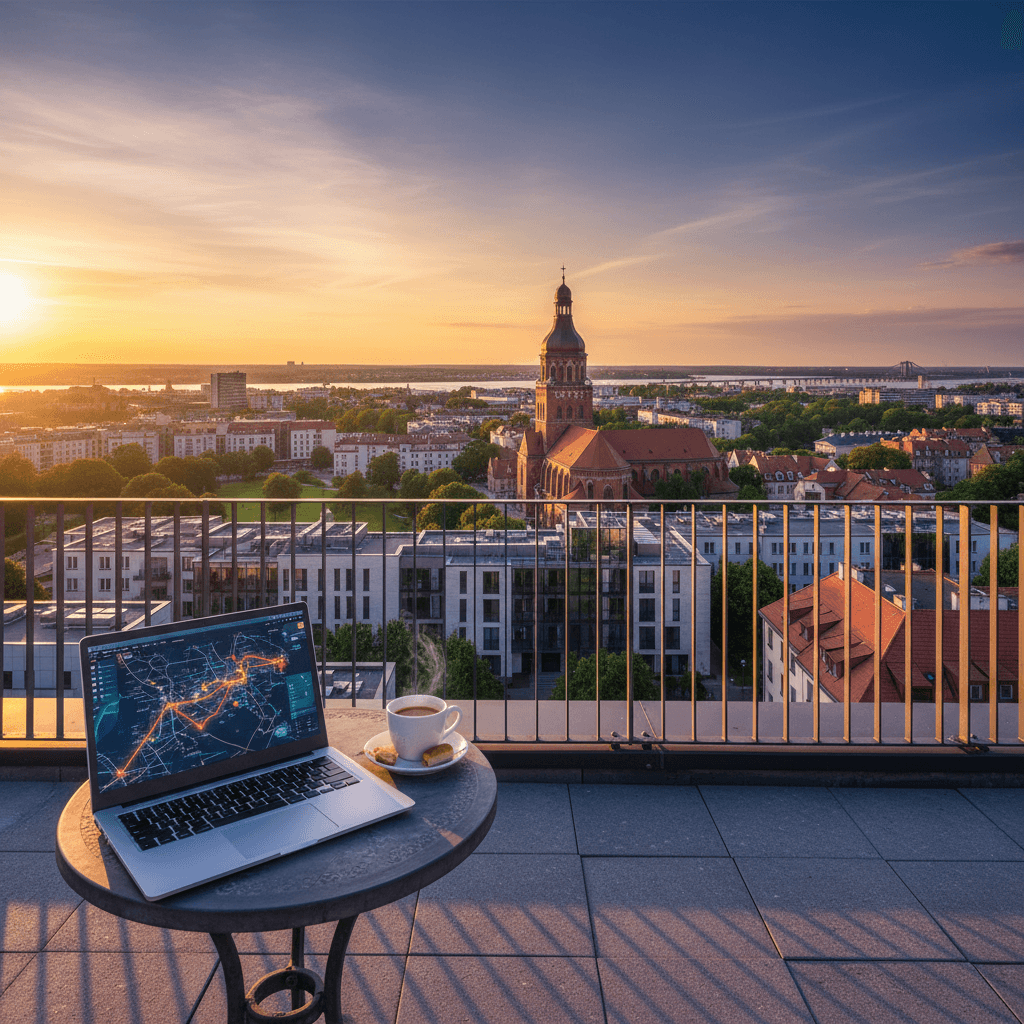
Szczecin
🇵🇱 Poland
Szczecin feels calmer than most Polish cities and a little underrated. It’s green, spread out and close enough to Berlin that some people treat it like a slower, cheaper base with a German-sized side trip attached, though the tradeoff is obvious, there isn’t a huge nomad crowd and the social scene can feel thin.
The city has a family-friendly rhythm, with Gothic facades, modern blocks and more than 500 hectares of parks and green space, so you get a lot of tree shade, damp grass and that faint river smell near the water. Honestly, it’s a place for people who like room to breathe, not for anyone chasing nonstop nightlife.
What it feels like: spacious, low-key, a bit weather-beaten in winter. What it doesn’t feel like: busy, flashy or packed with digital nomad energy.
Why Nomads Stay
- Value: A one-person monthly budget often lands around 3,000 to 4,000 PLN if you keep it modest.
- Internet: Fixed connections are decent and spots like Aloha Coworking make remote work easy enough.
- Safety: The center feels comfortable and most solo travelers don’t report major hassles.
- Location: Berlin is close, so weekend escapes are simple if Szczecin starts feeling too quiet.
Costs are one of the main reasons people stay. A studio or 1BR in the center usually runs about 2,000 to 3,500 PLN, food is still fairly gentle on the wallet and a coffee costs around 12 PLN, which, surprisingly, makes lingering in cafés less painful than in many bigger cities.
Rent isn’t brutal. Nightlife, though, can be. You’ll find Polish staples, a few expat-friendly pubs like Dublin Irish Pub and some characterful places such as Hormon and Rocker Club, but if you want a city that hands you new friends on a platter, Szczecin will test your patience.
Best Fit By Area
- Centrum / Śródmieście: Best for first-timers, walkable, close to cafes, museums and Wały Chrobrego views.
- Dąbie: Quieter and greener, good if you want peace and don’t mind the commute.
- Pogodno: Residential and solid for families or expats who prefer calm streets over late nights.
Winters are the hard part. January bites, the wind cuts along the river and the city can feel grey in a way that seeps into your mood, so many nomads treat Szczecin as a spring to autumn place, then head elsewhere when the cold settles in.
Szczecin is cheap enough that you’ll feel it fast and not in a fake “budget-friendly” way. A one-person monthly spend sits around $1,240 with rent or about $536 without it, which is why a lot of nomads treat the city as a low-stress base, not a place to splash cash. Not fancy. Just easy on your wallet.
Rent is the biggest swing and it depends a lot on how central you want to be. A studio or 1BR in Centrum or Śródmieście usually runs 2,000 to 3,500 PLN, while the same kind of place outside the center drops closer to 1,800 to 2,500 PLN and honestly that difference buys you a quieter street, more tram rides and fewer late-night bar noises under your window.
What you’ll actually spend
- Budget: 3,000 to 4,000 PLN a month, shared housing, tram passes, street food and the occasional beer.
- Mid-range: 5,000 to 7,000 PLN, a one-bedroom outside the center, decent restaurants and some coworking.
- Comfortable: 8,000+ PLN, central apartment, taxis or Bolt and more eating out than cooking.
- Transport: About 95 PLN for a monthly pass, so getting around won’t wreck your budget.
Food stays reasonable if you don’t drift into hotel menus and touristy spots. Street food or McDonald’s lands around 28 to 35 PLN, a mid-range dinner for two is usually 130 to 220 PLN, coffee is about 12 PLN and a proper lunch can smell like grilled meat, onions and frying oil before you even see the stall.
The coworking scene, turns out, isn’t huge, but it’s good enough if you want structure. Aloha Coworking charges roughly 600 PLN for a hot desk and 800 PLN for a dedicated spot, with coffee, meeting rooms and fiber, while fixed internet at home is decent and mobile data plans from Play, Orange or Plus are cheap enough to keep as backup. Weirdly, that makes Szczecin feel more practical than social.
Where the money goes
- Center living: Best for walkability, cafes, museums and views, but you’ll pay more for the convenience.
- Dąbie: Quieter, greener and often cheaper, though you’ll spend more time getting downtown.
- Pogodno or Niebuszewo: Solid for longer stays, family life and calmer streets, with less nightlife.
- Międzyodrze-Wyspa Pucka: More unusual and nature-heavy, but amenities are limited, so don’t expect convenience.
If you want value, Szczecin delivers. If you want endless brunch spots and a packed nomad scene, you’ll get bored and frankly that’s the tradeoff here, low costs, plenty of space, cold winters and a city that makes sense if you’re happy living simply.
Szczecin feels calm, green and a little undercooked, which, honestly, is why some people like it. The city’s best neighborhoods depend on what you want, because the center gives you cafés and views, while the quieter districts give you space, cheaper rent and less noise from tram lines and late-night drunk talk.
Nomads
Centrum / Śródmieście is the easy choice if you want cafés, museums and a walkable base. You can work near Wały Chrobrego, then grab coffee at places like Czekoladowa, hear trams clatter past and still get back to your apartment without a taxi, though rents are higher and the area can feel a bit touristy.
- Best for: solo nomads, short stays, people who want everything close.
- Rent: usually the pricier end of Szczecin.
- Vibe: central, scenic, easy to live in.
Dąbie is the one most nomads end up liking once they get tired of the center. It’s quieter, greener and weirdly easy to relax in, with more fresh air, fewer crowds and a slower pace, though you’ll spend more time getting back into town for dinner or drinks.
- Best for: longer stays, remote work, people who want calm.
- Rent: often better value than Centrum.
- Trade-off: farther from nightlife and central events.
Expats
Pogodno and Niebuszewo work well if you want a regular life instead of a constant “what’s next” feeling. They’re residential, generally safe and less flashy than the center, so you get quieter streets, lower rents and more neighbors who actually live there instead of weekend visitors.
- Best for: couples, long-term renters, office workers.
- Rent: usually cheaper than Centrum.
- Vibe: practical, settled, low-drama.
If you want social life, don’t expect the neighborhood to do the work for you, because Szczecin’s expat scene is small. You’ll probably end up meeting people through Facebook groups, Tandem Meetings or at pubs like Dublin Irish Pub, where the beer smells strong and the conversation usually starts late.
Families
Pogodno is the safest bet for families, with a calm street grid, more space and an unhurried feel that makes school runs less miserable. Niebuszewo also makes sense if you want value, though it feels more ordinary than pretty and that’s fine when you’re hauling groceries, strollers and tired kids home.
- Best for: families, long-term residents, people who hate constant noise.
- Rent: friendlier than central Szczecin.
- Downside: less nightlife, less spontaneous fun.
Solo Travelers
Centrum is still the smartest pick if you’re alone and want to keep things simple. You can walk to bars, museums and the riverfront, then head back before the cold evening wind starts cutting through your jacket, which it absolutely will in winter.
Międzyodrze-Wyspa Pucka is for people who want something odd and outdoorsy, not polished. There’s less convenience, fewer cafés and not much of a social scene, but the island feel and water views make it a better fit than most travelers expect.
Szczecin’s internet is decent, not glamorous. Fixed lines usually land around 60+ Mbps, mobile can feel a bit patchier at about 21 Mbps and that’s fine for calls, docs and normal remote work, though you may notice the occasional wobble on cloudy days or when half the building seems online at once.
The coworking scene, frankly, is small but usable. Aloha Coworking is the name most nomads hear first, with fiber, coffee, meeting rooms, hot desks around 600 PLN a month and dedicated desks closer to 800 PLN. If you just need a laptop-friendly seat and a steady connection, you're covered, if you want a buzzing startup crowd at 9 p.m., you're not.
Most people end up splitting time between a coworking space and a cafe, because that’s how Szczecin works. Czekoladowa is a solid work cafe pick and the city’s center has enough coffee shops with seats, sockets and the low murmur of cups clinking, though you’ll still run into the usual cafe problem, one bad playlist and a nearby grinder that sounds like a drill.
Best setup for working
- Best for focus: Aloha Coworking, especially if you want predictable internet and meeting rooms.
- Best for budget: Cafe days plus a SIM card, because Play, Orange and Plus all sell cheap data packs, around 39 PLN for 10GB+.
- Best for long stays: Centrum or Śródmieście, since you'll be near cafes, transit and most of the decent lunch spots.
Getting connected is easy. Pick up a local SIM at the airport or in town and you'll usually be online before your bag leaves the conveyor belt, which, surprisingly, still matters if you’re planning to Bolt across the city, check maps or work from a park bench by the water.
The real issue here isn’t speed, it’s scene. There aren’t many nomad meetups, the social life can feel thin and winter makes everything worse, with wet cold that sticks to your coat and turns the pavement into a gray, slushy slog, so if you need daily buzz, Szczecin may feel a bit too quiet.
Szczecin feels calm and, honestly, a little understated. The center is safe enough for solo travelers and women, with low overall crime and a relaxed street rhythm, though you should still keep your bag zipped and not leave phones or laptops visible in parked cars, because opportunistic theft happens there more than anything else.
Most days here are uneventful in the best way. You’ll hear tram wheels squeal, gulls over the river and the odd burst of exhaust near major roads, but you won’t be dodging the kind of chaos you get in bigger Polish cities and that makes late walks in Centrum or around Wały Chrobrego feel pretty comfortable.
What to watch for
- Pickpocket risk: Low, especially in normal daytime conditions.
- Car theft: The bigger nuisance, so don’t stash valuables in plain sight.
- Night safety: Fine in the center, just avoid empty side streets when they’re dead quiet.
Healthcare is decent and if you need a doctor, you’re not stuck. Szczecin has solid hospitals such as Zachodnio Pomorskie Medical Centre, pharmacies are easy to find and emergency help comes through 112, so the basics are covered without drama, even if Polish paperwork can still be maddening.
The local system is resilient, and staff are accustomed to keeping things moving even when administrative hurdles arise. It is the kind of place where inconveniences are usually manageable rather than catastrophic, showing that the system has backup plans when things don't go perfectly.
Practical healthcare notes
- Pharmacies: Everywhere in the center and residential districts.
- Language: English is hit or miss, so Google Translate helps.
- Emergency number: 112 for police, fire or ambulance.
If you’re here for a few months, keep a basic pharmacy kit at home, cold season hits hard and the damp air can make you feel stiff, sleepy and weirdly achey. For routine stuff, locals usually handle things without fuss, but for anything complicated, go in early, bring documents and expect a slower pace than Berlin.
Not scary. Just practical. If you stay alert in parking lots, use common sense at night and know where the nearest pharmacy is, Szczecin is a very manageable city to live in and most nomads end up feeling safer here than they expected.
Szczecin is easy to get around and honestly, that’s one of the nicest things about it. The center is walkable, trams and buses are cheap and you’re rarely fighting big-city chaos, just the occasional squeal of brakes, a bus heater blasting in winter and a few people arguing at the stop. Not glamorous. It works.
Most daily trips cost very little. A single ticket is about 3 PLN and a monthly pass runs around 95 PLN, so if you’re staying a while, public transport makes more sense than hailing rides all week. The city also runs bike-share stations across town and weirdly, that’s one of the easiest ways to cover short distances when the weather’s decent.
If you’re staying near Centrum or Śródmieście, you probably won’t need much beyond your own feet, plus the odd tram ride when it’s raining or freezing. The core is compact, the sidewalks are generally good and you can drift from Wały Chrobrego to cafés and museums without much effort, though the wind off the river can cut right through you in colder months.
Best ways to move around
- Trams and buses: Best for everyday use, cheap, frequent enough for city life and the main way locals move around.
- Walking: Great in Centrum, especially for short hops between cafés, shops and the waterfront.
- Bike-share: Handy for quick trips and warmer months and it beats waiting around if the next tram’s delayed.
- Bolt and taxis: Good for late nights or airport runs, though you’ll pay more than you would on public transport.
Bolt is the app most people reach for when they’re tired, late or heading to Szczecin-Goleniów airport, which sits about 30 km out of town. Fares are usually reasonable for Poland, roughly 2 PLN per kilometer and that’s fine for one-off rides, but it adds up fast if you use it like your personal chauffeur.
Practical tips
- Airport: Use Bolt or a taxi, because the transfer is too far for casual improvising with bags.
- Center: Stay on foot when you can, it’s the least annoying option.
- Winter: Expect cold platforms, wet pavement and buses that feel like warm metal boxes after the street.
- Overall: Get a transit pass if you’re here more than a few days, it’s the easiest savings in town.
Compared with Warsaw or Kraków, Szczecin feels slower and less frantic and that carries over to the commute too. There’s less honking, fewer crush-load tram rides and more room to breathe, so getting around here doesn’t wear you down the way it can in bigger Polish cities.
Szczecin is easier if you know a little Polish, but you won’t be stranded if you don’t. In the center, in cafés and around younger people, English is fairly common, though outside those pockets you’ll get more blank stares, shoulder shrugs and the occasional switch to a different Polish town’s pace of speech, which, surprisingly, happens a lot.
The useful stuff is simple. Cześć gets you a hello, Dziękuję covers thanks and Przepraszam is the one you’ll want when you bump into someone on a tram or need to squeeze past a waiter carrying soup.
Poles in Szczecin are usually polite, a bit reserved at first and then perfectly warm once the ice breaks, so don’t expect instant chatty service everywhere. Honestly, that can feel cold on a gray February afternoon, especially when the wind off the water bites your face and the tram doors hiss shut behind you.
How people communicate
- Polish: Main language in daily life, shops, government offices and most neighborhood services.
- English: Decent in central areas, among younger locals and in places that see travelers.
- Body language: Directness is normal, but people usually stay courteous, not loud.
- Best move: Learn a few phrases and use them, because even rough Polish gets you better treatment.
For day-to-day survival, Google Translate is the app most nomads end up opening in pharmacies, apartment viewings and random errands. Turn the screen around, speak slowly and don’t try to improvise legal or medical vocabulary, because that’s where things get messy fast and honestly nobody wants a game of translation telephone.
In coworking spaces like Aloha Coworking, communication is smoother and you’ll hear more English, laptops clicking, coffee cups clinking and the low buzz of people on calls. Outside that bubble, expats often lean on Facebook groups like Expats in Szczecin or local tandem meetups to find people who actually want to talk after work.
Street-level Polish helps a lot. A simple “dzień dobry” at the bakery, a nod to the cashier and a calm “poproszę” when ordering coffee go further than most travelers expect and they make the city feel friendlier right away.
If you’re staying longer, get comfortable with mixed communication. People may answer in broken English, hand gestures or both and that’s fine, because in Szczecin the real trick isn’t perfect language, it’s being patient when the tram is late, the bakery is out of bread or the internet installer gives you a date that somehow sounds optional.
Weather & Best Time to Visit
Szczecin has proper seasons, not the watered-down kind. Winters are cold and gray, with January averaging around 1°C and a bite in the wind that gets under your coat, while July reaches about 23°C and the city suddenly feels much easier to love.
Spring and early autumn are the sweet spot. May through September is the best window for most visitors, because you get mild air, longer evenings and enough sun to make the parks, riverfront and Wały Chrobrego feel alive without the sticky misery you get in bigger Polish cities.
Rain shows up plenty and June can feel damp for days, with wet pavement, heavy clouds and that faint smell of river water mixed with exhaust after a shower. July is warmer but also wetter than you might expect, so pack a light rain jacket even if the forecast looks kind.
Best time to come: May, June, September and early October. The weather is milder, the city’s green spaces look their best and you won’t spend half your trip stomping through slush or squinting at a blown-out winter sky.
Skip if you hate cold: December through February. It’s not dramatic, just annoying, with freezing mornings, dark afternoons and sidewalks that can feel grim when the wind comes off the water.
Summer tradeoff: Pleasant temperatures, more outdoor time and more people around, but also more rain and a bit less of that empty, spacious feeling Szczecin is known for. Honestly, that’s the best version of the city, even if the weather doesn’t always cooperate.
- Pack for wind: A proper jacket matters more than a cute one.
- Bring layers: Mornings can feel cold, then afternoons turn mild fast.
- Carry an umbrella: Streets get slick and puddly after sudden rain.
- Plan outdoor days: Parks, river walks and beer gardens are far better in late spring and early fall.
If you’re working remotely, the weather won’t wreck you, but the darker months can drag. Frankly, Szczecin feels best when you can step outside after work, hear trams clatter past, smell coffee drifting from a café and still have daylight left for a walk by the Oder.
Cold weather is the tax here. The payoff is space, calm and much lower costs than you’d get in Berlin or Warsaw.
Szczecin’s practical side is pretty simple, keep your expectations modest, your coat ready and your card on hand. It’s a low-cost city with decent infrastructure, but the social scene can feel thin and the wind off the water gets properly mean in winter.
Money: a solo nomad can live here cheaply if you don’t insist on central rent and restaurant meals every night. A studio or 1BR in Centrum usually runs about 2,000 to 3,500 PLN, outside the center it drops a bit and a monthly transit pass is only about 95 PLN, which, frankly, makes it easy to skip rideshares most days.
Where to stay
- Centrum / Śródmieście: Best if you want to walk to cafes, museums and Wały Chrobrego, though it costs more and gets touristy fast.
- Dąbie: Quieter, greener and cheaper, with a calmer feel that suits longer stays, but you’ll spend more time getting into the center.
- Pogodno / Niebuszewo: Good for families and expats who want residential streets, safer vibes and less noise, not much nightlife though.
For work, internet’s decent, not dazzling. Fixed connections are usually fine for calls and uploads and spaces like Aloha Coworking are popular because you get fiber, coffee and meeting rooms without the stiff corporate feel, while cafes such as Czekoladowa are workable if you don’t mind background chatter and the clink of cups.
Getting a SIM is easy and airport kiosks or city shops sell Play, Orange and Plus plans for around 39 PLN with enough data for everyday use. Banking’s straightforward too, mBank is the one most nomads mention because the app has English support and that matters when you’re dealing with rent transfers or card blocks at weird hours.
Daily life basics
- Payments: Cards are accepted almost everywhere, so you won’t need much cash.
- Tipping: 10% is the usual courtesy, not a hard rule.
- Language: English works in the center and with younger staff, though a few Polish phrases help.
- Transport: Trams, buses and Bolt are the easiest mix and the city center is walkable.
Food is cheap enough that you can eat out without wincing, but the real win is picking the right places, not the fanciest ones. Taverna Cutty Sark, Hormon and Karczma Polska are solid bets and if you’re here in colder months, the smell of fried dough, coffee and damp coats in a warm bar makes the city feel less lonely, weirdly, than it looks on paper.
For errands, apartments usually show up on Otodom, OLX and Facebook groups and that’s where most expats actually find decent leads. Day trips to Berlin or Wolin National Park are easy enough, so if Szczecin starts feeling quiet, you’ve got an escape hatch without much planning.
Need visa and immigration info for Poland?
🇵🇱 View Poland Country GuideEasy Landing
Settle in, no stress