Swakopmund
🇳🇦 Namibia
The Desert Meets the Atlantic
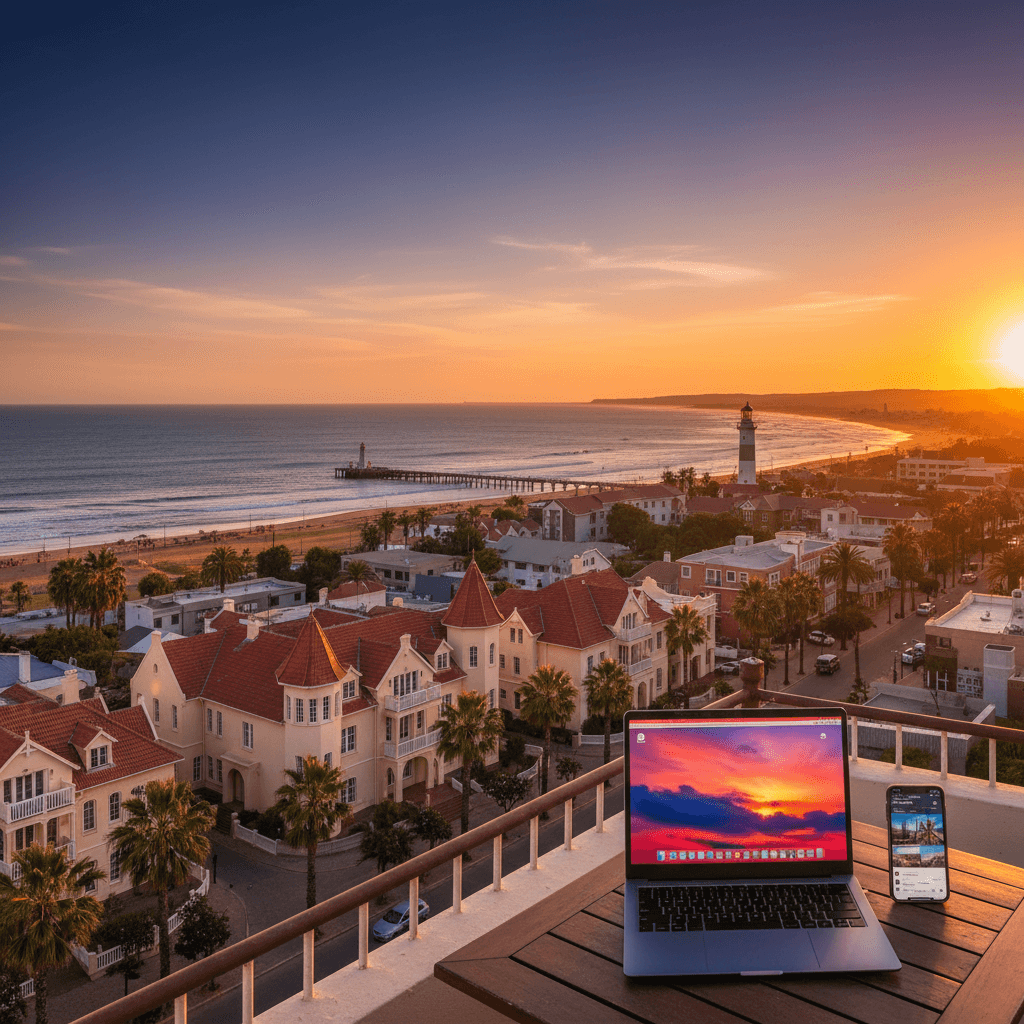
Swakopmund is a bit of a geographical anomaly. Imagine walking down a street lined with half-timbered German colonial buildings, hearing the crash of the cold Atlantic on one side and seeing the massive, orange dunes of the Namib Desert on the other. It feels like a small Baltic seaside town was accidentally dropped into the middle of Southwest Africa. For nomads, the vibe is refreshingly quiet, focused more on outdoor adventure and deep work than the frantic pace of a major metropolis.
The atmosphere here is defined by the mist. Most mornings start with a thick coastal fog that rolls in from the ocean, keeping the air cool and the light soft. It usually burns off by midday, leaving you with a crisp, temperate 21°C average that makes it one of the most comfortable places to live in Africa if you aren't a fan of sweltering heat. It’s a place where you’ll find yourself wearing a light sweater in the morning, surfing in the afternoon, and drinking a local craft beer by a fireplace at night.
Living and Working in the Core
Most of the nomad life happens in the town center. It’s a compact, highly walkable grid where you can get from your apartment to a coworking space or the beach in under ten minutes. While it lacks the "big city" grit, it makes up for it with a sense of safety and ease that's rare to find. You won't find a wild clubbing scene here; instead, the social life revolves around cozy bars, cafe culture, and weekend trips into the dunes.
Connectivity is surprisingly reliable for a town of this size. Most expats gravitate toward Desert & Ocean Coworking near the center. If you prefer the "laptop and latte" approach, the local cafes are welcoming and often provide free Wi-Fi, though serious video calls are best handled at the dedicated hubs where speeds average around 13 to 16 Mbps.
The Cost of the Nomad Life
Swakopmund is generally considered affordable, especially compared to European or North American coastal towns. A solo nomad can live comfortably on about $2,076 per month, though you can definitely scale that down if you opt for backpacker-style living or self-catering apartments.
- Budget Tier (Under $1,500): This involves staying in backpacker hostels or shared self-catering units, eating at local cafes, and relying on free cafe Wi-Fi for work.
- Mid-Range Tier ($1,500 to $2,000): This covers a private one-bedroom apartment, utilities like prepaid electricity (around $90), home internet (about $100), and regular meals out at mid-range restaurants.
- Comfortable Tier ($2,000+): At this level, you’re looking at upscale housing, a dedicated desk at a coworking space, frequent dinners at the better seafood spots, and regular desert tours or car rentals.
Navigation and Practicalities
You don't really need a car if you stay in the center. The town is bike-friendly and extremely walkable. If you need to go further out, like to the Walvis Bay airport 30 minutes away, you can use apps like Bolt or grab a local taxi. English and German are spoken almost everywhere, so you won't struggle to negotiate a lease or order a meal.
For your phone, grab a prepaid SIM from MTC or Paratus as soon as you arrive. Data is relatively cheap and gives you a necessary backup for those times you want to work with a view of the dunes. If you're planning a longer stay, Namibia’s Digital Nomad Visa is a huge draw, allowing you to live and work remotely in the country for up to six months.
The real magic of Swakopmund is the lack of "hustle." It’s a place to catch your breath. You’ll find yourself spending your lunch breaks watching the waves at the pier and your weekends exploring Sossusvlei. It’s a town for the nomad who wants to trade the neon lights for starlit desert skies and a community that actually knows your name at the coffee shop.
The Cost of Living in Swakopmund
Swakopmund is a refreshing break for the wallet compared to European or North American coastal hubs. Most remote workers find they can live a high quality life here for an average of $2,076 per month. It is a place where your money stretches far, especially if you enjoy the simple pleasures of a morning walk on the beach or a sunset over the dunes.
The financial sweet spot usually falls into three tiers depending on your lifestyle choices:
- Budget ($1,500 or less): This works if you’re staying in backpacker hostels or shared self-catering spots and sticking to free Wi-Fi in cafes.
- Mid-range ($1,500 to $2,000): The standard for most nomads. This covers a private one bedroom apartment, utilities, and dining out a few times a week.
- Comfortable ($2,000+): This allows for a premium rental, a dedicated desk at a coworking space, frequent upscale meals, and weekend desert tours.
Housing and Utilities
The rental market is concentrated in the town center, which is where you want to be for walkability. While prices fluctuate based on the season, a decent studio or one bedroom apartment is generally affordable, though vacancies can fill up fast due to the town's small size. Many travelers use platforms like NomadStays to find vetted, Wi-Fi ready units before they arrive.
Keep in mind that the rent price rarely includes everything. You will likely deal with prepaid electricity meters, which usually run around $90 a month. High speed fiber internet is available but can be a significant line item at around $80-120 per month for a reliable home setup. If you're looking for specialized neighborhoods, the town center near The Atrium is the gold standard for convenience, while the outskirts near the dunes offer more peace but less reliable connectivity.
Coworking and Connectivity
If your home Wi-Fi feels sluggish, the local coworking scene is small but mighty. Startup Namibia is a favorite for its modern amenities, 24/7 access, and secure parking. The Atrium also offers a professional environment right in the heart of town. Many nomads skip the formal office and work from cafes that offer free Wi-Fi or "bottomless coffee" deals, which is a common part of the local work culture.
For mobile data, you have three main providers: MTC, Telecom, and Paratus. Most expats recommend picking up a prepaid SIM card immediately. While average speeds hover between 13 and 16 Mbps, it is plenty for video calls as long as you stay within the urban core.
Daily Expenses and Food
Eating out is one of the highlights of living here. You will find a unique blend of German and African flavors that won't break the bank. Local cafes and street food stalls are very budget friendly, while mid range restaurants offer high quality seafood and game meats at reasonable prices. Expect to pay a bit more for imported goods at the grocery store, but local staples remain cheap.
Getting around is perhaps your lowest expense. The town center is incredibly compact and walkable. For longer trips or grocery hauls, ride hailing apps like Bolt are available, and local taxis are easy to flag down. If you want to explore the coast, bike rentals are a popular and affordable way to see the sights without needing a car.
The Digital Nomad Visa
Namibia made waves in 2022 by launching a six month Digital Nomad Visa. It is a straightforward option for remote workers who want to stay longer than a standard tourist entry allows. You will need to prove a monthly income of $2,000 for yourself, plus additional amounts if you are bringing family. This visa has made Swakopmund an even more attractive base for those looking to settle in for a full season of desert adventures.
Digital Nomads and Remote Workers
If you are coming to Swakopmund to get work done, you want to be in the Town Center. This is the heart of the city where the German colonial architecture is most prominent and the walkability is highest. Most nomads gravitate toward the area around The Atrium or Startup Namibia. These spots are the hubs for reliable 13 to 16 Mbps internet, which is plenty for video calls and streaming.
Living here means you can walk to your morning coffee at local cafes that offer bottomless refills and free Wi-Fi. It is the most secure part of town with plenty of well lit streets and secure parking for your rental car. The downside is that high quality studio apartments fill up fast, so you should look for bookings early on platforms like NomadStays.
- Rent: Expect to pay between $500 and $1,000 for a comfortable mid-range setup including utilities.
- Coworking: Startup Namibia is a favorite for its 24/7 access and modern kitchen facilities.
- Vibe: Productive, social, and very central.
Expats and Long Term Residents
Expats who plan to stay for the full six month duration of the Namibia Digital Nomad Visa often look slightly north of the immediate center or along the main thoroughfares. You get a bit more space for your money while staying close to the essential amenities. This area feels more like a community and less like a tourist zone, making it easier to meet other internationals who have settled in the region.
The cost of living for a comfortable expat lifestyle usually sits at $2,000 or more per month. This budget covers a larger apartment, frequent dining at mid range restaurants, and perhaps a dedicated desk at a coworking hub. Since the town is compact, you are never more than a five minute drive or a ten minute bike ride from the ocean.
- Rent: $500-$900 for a quality 1BR; utilities like prepaid electricity add about $50-100.
- Transport: Highly bike friendly; most expats use bicycles or local taxi apps like Bolt.
- Vibe: Residential, quiet, and stable.
Families and Nature Lovers
For those traveling with kids or looking for a retreat style experience, the outskirts near the Beach and Dunes are the best bet. These neighborhoods offer larger houses with yards and immediate access to the sand. It is a playground for adventure seekers who want to spend their afternoons quad biking or sandboarding right from their front door.
The trade off here is connectivity. While the Town Center has rock solid Wi-Fi, the outskirts can be hit or miss. Families often rely on mobile hotspots from providers like MTC or Paratus to supplement home internet. You will likely want a car if you stay out here, as the walk to the grocery stores in the center can be a bit long in the midday sun.
- Rent: Varies widely; larger family homes can be found for $2,200+.
- Activities: Proximity to the National Aquarium and the Swakopmund Jetty.
- Vibe: Adventurous, scenic, and peaceful.
Solo Travelers and Budget Seekers
Solo travelers often stick to the backpacker hostels and self catering lodges scattered around the fringes of the Town Center. This is the most affordable way to experience the city, keeping monthly costs under $1,500. These spots are social goldmines where you can meet people for weekend trips to Sossusvlei or Walvis Bay.
While you might not have a private office, the cafe culture in Swakopmund is welcoming to those working on laptops. You can find plenty of spots with German African fusion food that won't break the bank. English and German are spoken everywhere, so navigating the social scene as a solo traveler is incredibly straightforward.
- Rent: Budget rooms or shared spaces starting around $600 to $800.
- Food: Affordable street food and local cafes keep daily costs low.
- Vibe: Social, energetic, and cost effective.
Connectivity Expectations
Working from the edge of the Namib Desert is surprisingly reliable. Most nomads find that Swakopmund provides a stable digital environment, with average speeds hovering between 13 and 16 Mbps. While you won't find the hyper-fast fiber common in European hubs, it's more than enough for seamless video calls and streaming. The town center is the sweet spot for connectivity, as signal strength can dip once you head out toward the more remote dune outskirts.
Expats usually recommend setting up a fail-safe system. Local Wi-Fi is generally dependable, but power fluctuations or local maintenance can happen. Most travelers pick up a prepaid SIM card from MTC, Telecom, or Paratus as a backup. Mobile data is affordable and coverage across the town core is excellent, allowing you to hotspot if your guest house Wi-Fi gets moody during a sea mist morning.
Top Coworking Spaces
If you need a professional environment beyond your kitchen table, Swakopmund has a few standout spots that cater specifically to the remote crowd. These hubs are where you'll likely meet other nomads or participants from groups like WiFi Tribe, who have slated retreats here for 2026.
- Desert & Ocean Coworking: Located near town center, modern facility with 24/7 access, kitchen, and fiber optic WiFi. It also offers secure parking, so you don't have to worry about your gear.
- Atrium: Another central favorite, Atrium offers a professional atmosphere without the corporate stiffness. It's a popular choice for solo travelers looking for a dedicated desk and a high-speed connection.
- The Nomad Cafe Scene: If you prefer the hum of a coffee shop, the town is full of "bottomless coffee" spots. Many cafes in the center offer free Wi-Fi with your meal, making them perfect for a few hours of deep work before heading to the beach.
Data and SIM Cards
Getting connected is one of the first things you should do upon arrival. You can find kiosks for the major providers at the airport or in the town center shops. Most nomads prefer MTC for its broad coverage, but Paratus is often cited for having competitive data packages for heavy users.
- Prepaid Starter Packs: Usually cost just a few dollars.
- Weekly Data Bundles: Prices vary, but you can typically get several gigabytes for under $15.
- Required Documents: You'll need your passport to register a SIM card due to local regulations.
Practical Work-Life Logistics
The cost of staying connected and productive is manageable on a mid-range budget. While a dedicated coworking membership will add to your monthly overhead, many nomads manage just fine with a mix of home Wi-Fi and cafe hopping. If you're staying in a self-catering apartment, expect to pay around $100 a month for a high-quality home internet setup if it isn't already included in your rent.
Most people find that the Namibia Digital Nomad Visa, which launched in 2022 and allows for a 6 month stay, makes the administrative side of working here much easier. It's designed for those earning at least $2,000 per month, which aligns well with a comfortable lifestyle in Swakopmund that includes a coworking membership and frequent dining out.
One thing to keep in mind is the "small town" factor. Vacancies in the best-connected apartments fill up fast. Travelers often use platforms like NomadStays to find rentals that have verified Wi-Fi speeds, saving you the headache of showing up to a beautiful apartment with a non-existent signal. If you're planning on a long-term stint, booking a place in the town center is your best bet for walking to your coworking space and staying within range of the strongest cell towers.
Peace of Mind in the Desert
Swakopmund is widely considered one of the safest hubs for remote workers in Africa. The town maintains a relaxed, small community feel where the crime rate remains notably low. Most nomads find they can walk through the town center during the day without a second thought, enjoying the crisp Atlantic breeze and German colonial architecture.
While the environment is stable, standard travel common sense still applies. Expats recommend keeping an eye on your belongings in public spaces and ensuring your vehicle is locked if you are parking near the beach or dunes. You won't find the high tension often associated with larger African capitals here; it is a place where you can actually focus on your laptop without looking over your shoulder.
Healthcare Infrastructure
For a town of its size, Swakopmund is well equipped to handle medical needs. The Swakopmund State Hospital provides public services, but most digital nomads and expats opt for private care at facilities like Cottage Medi-Clinic. This private hospital is known for high standards, professional staff, and modern equipment, making it the go-to for anything from a sudden flu to more serious emergencies.
Pharmacies are plentiful in the town center, particularly near the Atrium area. You will find that most pharmacists speak excellent English and German, and they can provide over the counter advice for minor ailments. If you require specialized treatment not available locally, Windhoek is about a 4 hour drive away and hosts the country's primary medical hubs.
Emergency Contacts
- Police: Dial 10111 for immediate assistance.
- Ambulance/Medical: Local private emergency services are often faster; keep the number for Cottage Medi-Clinic or E-Med 24 saved in your phone.
- Sea Rescue: Since many nomads spend time surfing or kayaking, knowing the local sea rescue contacts is a smart move.
Staying Healthy and Prepared
The biggest health "threat" in Swakopmund isn't a tropical disease; it is the sun and the mist. The coastal fog can be deceptive, making it feel cool while the UV rays are still intense. Travelers often say that a high SPF sunscreen and a windbreaker are your two most important health tools. Unlike other parts of the continent, malaria is not a concern in this arid coastal region, so you can skip the pills if you are staying locally.
Before you arrive on the Digital Nomad Visa, ensure your health insurance covers private hospital stays and medical evacuation. Apps like Punta can help you connect with other residents who can recommend specific doctors or dentists. Most nomads find the tap water in town is safe to drink, though many prefer filtered or bottled water for the taste, which can be slightly brackish due to the desalination process.
Safety for Solo Travelers
Solo nomads, particularly women, generally report feeling very comfortable here. The town is highly walkable, and the presence of many cafes and coworking spaces like Startup Namibia means you are rarely truly isolated. If you are heading out to the dunes or remote beach spots for a sunset session, it is best to go with a group or use a reputable tour operator, simply because the desert environment can be unpredictable if your vehicle gets stuck.
For getting home after a few drinks at a local bar, use a local taxi or a ride hailing app like Bolt. While the town is safe, walking long distances alone at night in dimly lit areas is a risk you don't need to take when a taxi ride is quite affordable.
Getting Around Swakopmund
Swakopmund is a rarity in the nomad world because it's one of the few places where you truly don't need a car for your day to day life. The town center is incredibly compact and designed for walking. You can grab a coffee at a cafe, put in four hours at Atrium, and head down to the beach for sunset, all without ever stepping into a vehicle. Most nomads find the flat terrain and cool 21°C average temperatures make walking pleasant rather than a chore.
On Two Wheels
If you're staying a bit further out toward the dunes or the beach outskirts, renting a bicycle is the way to go. The streets are wide and generally quiet, which makes cycling safe and efficient. You'll see plenty of locals and travelers alike using bikes to bridge the gap between the residential outskirts and the central business district. It's also the best way to explore the promenade that runs along the Atlantic coast without breaking a sweat.
Taxis and Ride-Hailing
When you need to go further or you're carrying groceries, the local transport system is straightforward. While you won't find a massive fleet of public buses, the town relies on a network of taxis and ride-hailing services.
- Bolt: This is the go-to app for most expats and nomads. It works just like it does in Europe or South Africa, providing upfront pricing and GPS tracking.
- Local Taxis: These are plentiful and can be hailed on the street. Just be sure to agree on the fare before the wheels start turning, as they aren't always metered.
- Minibuses: These are more common for locals and operate on set routes, but they can be a bit confusing for short-term visitors to navigate.
Regional Connections
Getting in and out of Swakopmund requires a bit more planning. Most international travelers fly into Windhoek and then make the 4-hour drive across the desert. If you don't want to rent a car for the duration of your stay, you can book a seat on a shared shuttle or a private transfer.
- Walvis Bay Airport: Located about 30 minutes away, this is the closest airport for domestic and regional flights. A taxi or shuttle from here to Swakopmund is affordable and quick.
- Shuttles: Several companies run daily services between Swakopmund and the capital. It's a reliable way to travel if you're avoiding the stress of driving on gravel roads yourself.
Practical Transport Tips
Safety is rarely an issue here, even when walking home from a bar in the evening. The crime rate is low, and the streets are well-lit in the center. However, if you're planning on heading into the dunes or taking a day trip to Sossusvlei, you'll definitely need to rent a 4x4 or join a guided tour. The desert terrain surrounding the town is unforgiving and requires a vehicle with high clearance and a driver who knows how to handle sand. For your daily commute between Startup Namibia and your apartment, your own two feet remain your best asset.
One of the biggest draws for nomads landing in Swakopmund is just how easy it is to hit the ground running. You won't find yourself struggling through a massive language barrier or feeling isolated by a wall of local dialect. Because of its history and its status as a hub for international travelers, the town is a linguistic melting pot where you can get by with English almost everywhere.
The Linguistic Mix
English is the official language of Namibia, so you will find it used for all government business, street signs, and menus. Most locals in the service industry, from the baristas at Atrium to the staff at the local pharmacies, speak it fluently. You will never feel stuck when trying to negotiate a lease or ask for a specific tech adapter.
What gives Swakopmund its distinct character, however, is the prevalence of German. Walking past the colonial architecture, you are just as likely to hear German spoken at the next table as you are English. It is a legacy of the town's origins, and many residents are bilingual or even trilingual. Afrikaans is also widely used as a lingua franca among locals, and you will frequently hear Oshiwambo and other indigenous languages throughout the day.
Staying Connected
For remote work, you cannot rely solely on the charm of the town; you need data. Most nomads recommend picking up a local SIM card immediately to supplement cafe Wi-Fi. There are three main providers: MTC, Telecom, and Paratus. MTC is generally the go-to for coverage, especially if you plan on taking weekend trips into the dunes or up the Skeleton Coast.
- MTC: Best for overall coverage and easy-to-top-up prepaid plans.
- Paratus: Often favored by expats for more stable home internet setups.
- Telecom Namibia: A solid alternative for mobile data packages.
While speeds in the town center average around 13-20 Mbps, with improvements ongoing, it is enough for standard Zoom calls and managing your inbox. If you are doing heavy video editing or large file uploads, many travelers suggest heading to Startup Namibia or Atrium, where the infrastructure is built specifically for high-bandwidth tasks.
Communication Etiquette
The vibe here is incredibly relaxed. People are generally polite and appreciate a friendly greeting before you dive into a request. While you can get by entirely in English, learning a few words of Afrikaans or a local greeting goes a long way in building rapport with the community.
- Molo: A common Xhosa greeting used by many.
- Dankie: Afrikaans for "Thank you," which you will hear constantly.
- Google Translate: Keep the app downloaded for offline use, though you will likely only need it for translating specific signs or older German menus.
Practical Tips for New Arrivals
If you are looking for community, the communication happens in the cafes. Spots with "bottomless coffee" policies are the unofficial offices of Swakopmund. Most nomads find that simply sitting at a communal table with a laptop is the fastest way to get invited to a weekend excursion to Walvis Bay or a Sossusvlei dune climb. For more formal networking, the Namibia Digital Nomad Visa, launched in 2022, has created a more defined path for remote workers to connect through local hubs and organized retreats.
Safety and communication go hand in hand here. The crime rate is notably low, but it is still smart to keep a local number active for emergencies. Most nomads use WhatsApp as their primary tool for everything from booking airport shuttles to chatting with landlords. It is the universal communication app in Namibia, so make sure your local SIM is linked to your account as soon as you land.
The Eternal Spring Syndrome
Swakopmund doesn't follow the typical African weather script. Instead of blistering desert heat, you get what locals call a perpetual spring. Thanks to the Benguela Current sweeping up from the Atlantic, the town stays remarkably cool, with temperatures averaging a steady 21°C (70°F) year-round. It is a temperate oasis where the Namib Desert meets the ocean, creating a microclimate that feels more like the coast of Northern Europe than Southern Africa.
Most nomads find the consistency a massive perk for productivity. You won't be sweating through your shirt during a Zoom call or dealing with the seasonal lethargy that hits other parts of Namibia. That said, the "Swakopmund fog" is a real thing. Thick, misty mornings are common as the sea air hits the desert sand. It usually burns off by midday, but you will want a light jacket even in the height of summer.
When to Touch Down
Since the weather doesn't fluctuate wildly, there is no "bad" time to visit, but your experience will change based on the crowd levels and wind patterns.
- December to March: This is the warmest window. While the rest of Namibia is scorching, Swakopmund is the place to be. It gets busy with domestic travelers, so expect the cafes around Atrium and Startup Namibia to be livelier. This is the peak season for skydiving and dune boarding.
- April to August: These months are technically winter, but "winter" here just means crisper mornings and clearer skies. This is arguably the best time for deep work. The town is quieter, and the East Wind occasionally blows in warm air from the desert, pushing the fog out to sea.
- September to November: Expect a bit more wind during this transition. It is a fantastic time for kitesurfing or exploring the outskirts near the dunes, though the Atlantic breeze can feel quite sharp in the evenings.
Seasonal Survival Guide
Expats often joke that you'll experience four seasons in a single afternoon. If you are heading out to work at a cafe like Slowtown Coffee Roasters, dress in layers. You might start the morning in a hoodie, switch to a t-shirt by lunch, and need that hoodie back by 5:00 PM when the ocean breeze kicks in.
Unlike Windhoek, Swakopmund doesn't deal with a heavy rainy season. You might get a few drops here and there, but nothing that will ruin your outdoor plans or mess with the local Wi-Fi stability. Most digital nomads prefer the shoulder seasons of May or September to snag better deals on self-catering apartments before the holiday rushes hit.
Climate by the Numbers
- Average High: 21°C to 25°C (warmest in February)
- Average Low: 10°C to 12°C (coolest in August)
- Humidity: High in the mornings due to fog, dropping significantly by afternoon.
- Rainfall: Negligible; Swakopmund is one of the driest places on earth, receiving less than 20mm of rain annually.
If you hate the heat but want the desert aesthetic, this is your spot. Just remember that the sun is still incredibly strong even when it's cloudy. Travelers often forget the sunscreen because of the cool breeze, only to realize they've been toasted by the time they finish a session at a beachside coworking spot.
Getting Connected and Productive
Internet speeds in Swakopmund hover around 13 to 16 Mbps, which is plenty for video calls and standard remote work. If you need a rock-solid backup, head to Startup Namibia or Atrium in the town center. Startup Namibia is a favorite for its 24/7 access, secure parking, and modern kitchen facilities. Many nomads also set up shop in local cafes like those offering bottomless coffee for a few dollars. It's a great way to meet others without paying for a full office desk.
For mobile data, grab a prepaid SIM card from MTC, Telecom, or Paratus as soon as you arrive. You can top these up at most grocery stores or via local apps. Most expats recommend keeping an MTC SIM as a primary and Paratus as a backup for the best coverage across the dunes and coastal areas.
The Cost of Living
Swakopmund is generally affordable, though your biggest expense will be housing due to the town's popularity with vacationers. A comfortable monthly budget sits around $2,000, but you can get by on less if you're savvy.
- Budget Tier (Under $1,500): Staying in backpacker hostels or shared self-catering units and relying on free cafe Wi-Fi.
- Mid-range Tier ($1,500 to $2,000): A private 1-bedroom apartment, utilities (around $190 including prepaid electricity), and regular meals at local cafes.
- Comfortable Tier ($2,000+): A high-end apartment, a dedicated desk at a coworking space, frequent restaurant dining, and weekend desert tours.
Where to Base Yourself
The town center is the place to be if you don't plan on renting a car. It's compact, walkable, and puts you within minutes of the best coffee shops and coworking hubs. Vacancies fill up fast, so check platforms like NomadStays early to secure a spot with verified Wi-Fi. If you prefer quiet and don't mind a commute, the outskirts near the dunes offer incredible views but often come with spottier connectivity. Most solo travelers and nomads stick to the core area between the Atrium and the beach for the best mix of safety and social life.
Logistics and Getting Around
This is a very walkable town, especially in the central district. For longer trips or grocery hauls, the Bolt app is your best bet for quick rides. You can also rent a bike or a scooter to cruise along the coastline. If you're coming from Windhoek, expect a 4-hour drive or a shuttle. If you're flying into Walvis Bay, the airport is just 30 minutes away by taxi.
Visa and Paperwork
Namibia's Digital Nomad Visa is a game changer. Launched in 2022, it allows remote workers to stay for up to 6 months. You'll need to prove you earn enough to support yourself and have valid health insurance. It's a straightforward process that has made the town a much more viable long-term base than it was a few years ago.
Safety and Health
Travelers often comment on how safe Swakopmund feels compared to larger African hubs. The crime rate is low, and you'll feel comfortable walking the main streets during the day. For medical needs, there are several pharmacies in town and the Swakopmund State Hospital handles emergencies. Most expats use private clinics for routine checkups. English and German are spoken almost everywhere, so you won't struggle to explain a medical issue or ask for directions.
Weather and Packing
The weather is remarkably consistent, averaging a mild 21°C year-round. It's never sweltering like the deep desert, but the Atlantic breeze can be chilly. Pack layers, especially for the misty mornings. You'll want a light jacket even in the summer months. There isn't really a "bad" time to visit, as the temperate climate stays steady regardless of the season.
Need visa and immigration info for Namibia?
🇳🇦 View Namibia Country GuideHidden Gem
Worth the effort