Suwon
🇰🇷 South Korea
The Vibe: History Without the Hectic
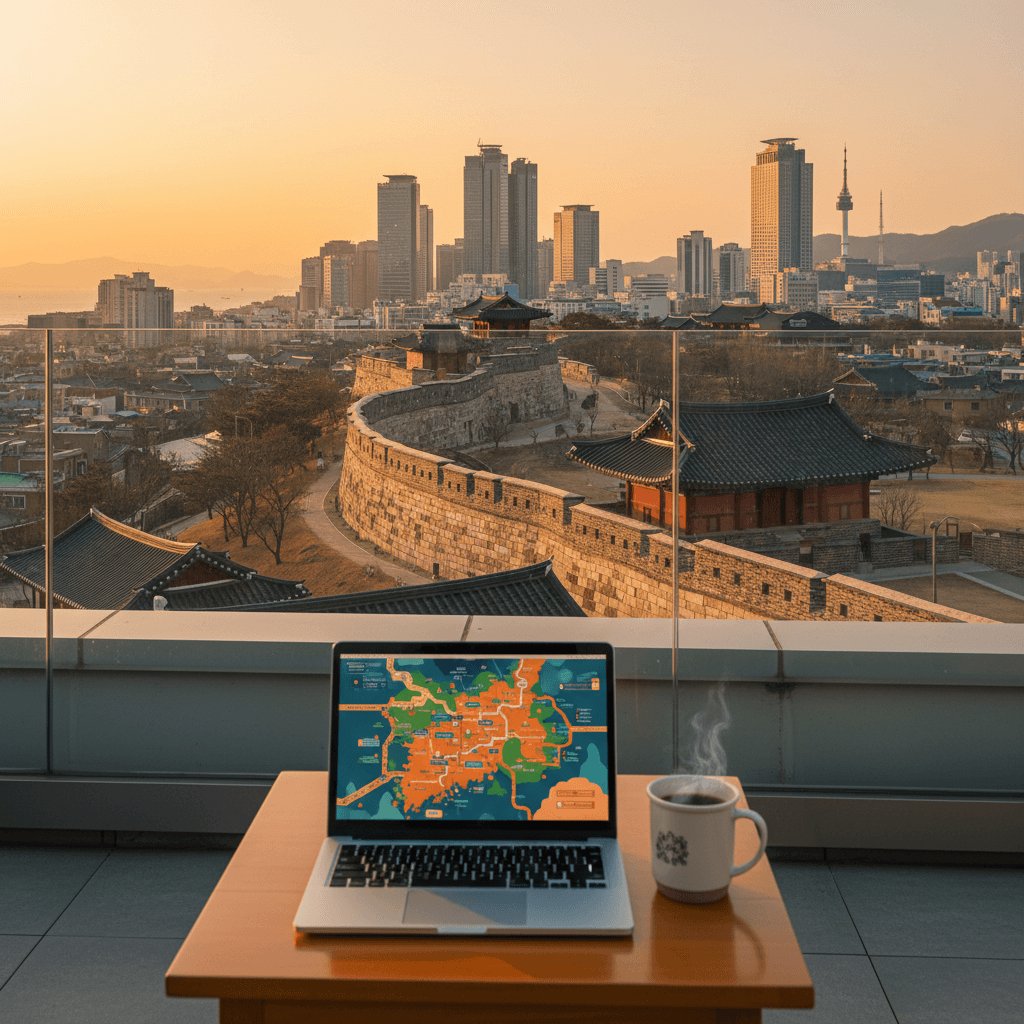
If Seoul is a high-speed train, Suwon is a scenic bike ride. It has the same hyper-efficient DNA as the capital but replaces the neon-soaked chaos with a grounded, suburban soul. Most nomads feel the difference the moment they step off the subway at Suwon Station. There’s more breathing room here, literally and figuratively. You get the 36 Mbps internet speeds and the Kakao T convenience, but you also get the quiet majesty of the Hwaseong Fortress walls snaking through the center of town.
The personality of Suwon is defined by this balance. It’s a place where you can spend your morning on a Zoom call in a sleek Paldal-gu cafe and your afternoon walking the 5.7-kilometer fortress perimeter. It feels lived-in and family-oriented. You aren't just another face in a tourist crowd; you're part of a community that values punctuality and a slower, more respectful pace of life. It’s less about chasing the latest nightlife trend and more about the simple pleasure of a $10 Korean BBQ dinner with friends after a productive day.
Living Costs & Local Budgeting
Living here is a smart financial move if you want the South Korean experience without the Seoul price tag. A single nomad can live comfortably on about $1,100 a month. If you’re traveling with family, expect that to jump to around $2,796. The savings are most obvious in the rent and the street food, where a quick lunch of tteokbokki or kimbap only sets you back $3 to $5.
- Budget Tier (Under $1,500/mo): You'll likely stay in Jangan-gu or Gwonseon-gu. Rent for a studio runs $400 to $600. You'll rely on a T-money card for the $50 monthly transport spend and work from free cafes.
- Mid-Range Tier ($1,500 to $2,500/mo): This gets you into Paldal-gu near the action. Rent hits $600 to $900. You can afford a $100 to $200 coworking desk and regular $15 dinners at local fusion spots.
- Comfortable Tier (Over $2,500/mo): You'll be in high-end complexes in Yeongtong-gu with rent over $900. This budget allows for frequent taxis, upscale dining near Ajou University, and premium gym memberships.
Where to Plant Your Flag
Suwon doesn't have the massive expat bubbles you’ll find in places like Itaewon, which means you’ll get a much more authentic immersion. Each neighborhood has a distinct energy depending on what you need from your workday.
Paldal-gu (The Central Hub)
- Rent: $500 to $800 for a one-bedroom.
- The Draw: This is the heart of the city. It’s walkable, packed with history, and puts you right at the subway hub. It’s the best spot for solo nomads who want to be near the fortress and the best coffee shops.
Jangan-gu (The Student Hangout)
- Rent: $400 to $700.
- The Draw: Located near Ajou University, this area has a younger, more energetic vibe. The cafes are work-friendly, and the rent is some of the cheapest in the city. Just be prepared for some hills.
Yeongtong-gu (The Modern District)
- Rent: $700 to $1,000.
- The Draw: This is the choice for families or those who want modern malls and parks. It feels like a polished commuter suburb with great infrastructure but lacks the historical grit of the center.
The Nomad Reality Check
While the infrastructure is world-class, Suwon has its quirks. English proficiency isn't as high here as it is in Seoul, so downloading Papago or Naver Dictionary is mandatory for survival. You'll also find that while 4G coverage is everywhere, some older buildings have WiFi dead zones where speeds might drop to a frustrating 2 Mbps. Most nomads recommend grabbing a KT or SK Telecom SIM card for about $30 a month to stay tethered.
Socially, the scene is quieter. You won't find a different networking event every night. Instead, you'll find yourself taking the 30-minute train to Seoul for big meetups or joining local Discord and Facebook groups to find fellow expats. It’s a city that rewards those who are comfortable with their own company or happy to build a small, tight-knit circle of friends over noraebang sessions and weekend trips to Everland Resort.
The Bottom Line
Suwon is a breath of fresh air for those who find Seoul a bit too intense for their daily grind. It manages to feel like a proper city without the claustrophobia, and the best part is the price tag. A single nomad can live comfortably here on about $1,456 a month. Compared to the capital, your money stretches further, especially when it comes to rent and the local food scene.
Most nomads find the pace of life here much more sustainable. You get the same world class infrastructure and high speed internet, but with the UNESCO listed Hwaseong Fortress as your backyard. It is a suburban, family oriented vibe where people actually follow the rules and keep things quiet after dark. If you need a Seoul fix, you are only a 30 minute subway ride away from the action.
Monthly Budget Tiers
Your lifestyle in Suwon depends largely on your housing choices and how often you eat out in the university districts. Here is how the monthly spending typically breaks down:
- The Budget Tier (Under $1,500): This is for those sticking to older studio apartments in areas like Jangan-gu. You will be spending $400 to $600 on rent, eating plenty of $3 to $5 street food like tteokbokki or kimbap, and relying entirely on the T-money card for buses.
- The Mid-Range Tier ($1,500 to $2,500): This gets you a modern 1BR in Paldal-gu for $600 to $900. You can afford $15 Korean BBQ dinners regularly and perhaps a dedicated desk at a coworking space for $150.
- The Comfortable Tier (Over $2,500): You are looking at premium high rise complexes near Suwon Station for $900 or more. This budget allows for frequent taxis via Kakao T, upscale fusion dining near Ajou University, and weekend trips to nearby resorts.
Where to Plant Your Flag
Suwon does not have the massive expat bubbles you see in Seoul's Itaewon, so you will be living among locals. Each neighborhood has a distinct personality:
- Paldal-gu: This is the heart of the city and the best spot for solo nomads. It is walkable, packed with history, and puts you right at the subway hub. Expect to pay $500 to $800 for a decent apartment.
- Jangan-gu: Located near Ajou University, this area has a younger energy. The cafes are work friendly, and the rent is some of the cheapest in the city, often between $400 and $700.
- Yeongtong-gu: If you are traveling with family, head west. It is modern, full of malls, and has plenty of parks. It is pricier, with family sized housing ranging from $700 to $1,000.
- Gwonseon-gu: This is the quiet, southern suburban option. It is great for saving money with rents as low as $350, but you will feel a bit isolated from the main transit lines.
Connectivity and Working
South Korea is famous for its internet, and Suwon generally delivers with speeds averaging 36 Mbps. However, travelers often say that WiFi can be patchy in older buildings, sometimes dipping to 2 Mbps. For a stable setup, a home broadband connection costs about $20 a month.
Coworking spaces are still catching on here. Many nomads gravitate toward the cafes near Ajou University or the Suwon Station area. If you need a professional environment, look for local spots or regional offices that offer hot desks for around $100 to $200 a month. For mobile data, pick up a prepaid SIM from KT or SK Telecom for roughly $30 with unlimited data, or use the Airalo app for a quick eSIM setup.
Daily Essentials
Getting around is incredibly efficient. A T-money card is your best friend for the subway and buses, costing about $1 to $2 per ride. If you are in a rush, Kakao T is the local go to for ride hailing, and short trips usually land between $5 and $10.
Healthcare is a major perk. Facilities like Ajou University Hospital have international clinics with English speaking staff. A standard doctor visit might only set you back $50 to $100. For daily life, download Papago for translations and Naver Maps for navigation, as Google Maps is notoriously unreliable in Korea. Keep in mind that while the city is safe, English proficiency is lower than in Seoul, so learning a few basic phrases will go a long way.
Paldal-gu: The Cultural Core for Solo Travelers
If you want to be at the heart of Suwon's history, Paldal-gu is the place to settle. It surrounds the Hwaseong Fortress, meaning your morning coffee comes with views of ancient stone walls and palace gates. It's the most walkable part of the city and feels much more like a traditional Korean neighborhood than the high-rise forests found elsewhere.
- Rent: $500 to $800 for a decent one-bedroom.
- Food: Street food stalls near the fortress sell odeng and hotteok for $3 to $5.
- Vibe: High energy during the day with tourists, but it settles into a quiet, atmospheric charm at night.
Solo travelers usually prefer this area because everything is accessible. You're close to Suwon Station, which is your lifeline to Seoul via Line 1. The commute takes about 30 minutes, making it easy to head into the capital for a night out before retreating to Suwon's slower pace.
Jangan-gu: The Digital Nomad Hub
Located north of the city center near Ajou University, Jangan-gu is where you'll find the younger, more academic crowd. This is the closest Suwon gets to a student-led social scene. It's packed with "study cafes" where you can camp out for hours with a laptop for the price of an iced americano.
- Rent: $400 to $700, offering some of the best value in the city.
- Coworking: Local spots near the university run about $100 to $200 a month for hot desks.
- Connectivity: Internet speeds here average 36 Mbps, though some older cafes might dip lower.
Nomads appreciate the abundance of late-night eateries and the relative ease of finding English-speaking students. While it's a bit hillier than Paldal-gu, the lower rent and better "work-from-cafe" culture make it the practical choice for those staying a few months.
Yeongtong-gu: The Family Standard
For families or professionals who want a polished, modern lifestyle, Yeongtong-gu is the go-to. It feels like a planned suburban dream, filled with large apartment complexes, wide sidewalks, and manicured parks. It's home to major shopping malls and the Samsung Digital City campus, so the infrastructure is top-tier.
- Rent: $700 to $1,000+ for modern family-sized apartments.
- Healthcare: Home to Ajou University Hospital, which has a dedicated international clinic for English speakers.
- Amenities: Easy access to Lotte Mall and high-end grocery stores.
Expats with children often choose this area for the safety and the proximity to international-standard medical care. It's less "authentic" in a traditional sense, but the convenience of having everything from gyms to pediatricians within a two-block radius is hard to beat.
Gwonseon-gu: The Budget Expat Choice
If your primary goal is keeping costs as low as possible, Gwonseon-gu in the south offers a no-frills suburban experience. It's a predominantly residential area where you can find older apartments and studios at a fraction of the cost of central Seoul.
- Rent: $350 to $600 for basic studios.
- Transport: You'll rely heavily on the T-money card for buses, as subway access is more limited here.
- Atmosphere: Very local, very quiet, and very few English signs.
Most expats here recommend using apps like Papago or Naver Dictionary for daily interactions, as English proficiency is lower than in the tourist zones. It's a great spot if you want to disappear into local Korean life and save a significant portion of your $1,456 monthly budget.
Connectivity and Speed
South Korea is famous for its hyper-fast internet, and Suwon generally lives up to that reputation. You'll find 4G and 5G coverage across 99.94% of the city, so staying connected while wandering the Hwaseong Fortress walls isn't an issue. Most local broadband packages start around $20 a month, providing a solid backbone for your home setup.
Average broadband speeds exceed 150 Mbps. While that's plenty for Zoom calls and heavy uploads, nomads have reported occasional dead zones or older buildings where speeds can dip. Before you sign a lease in neighborhoods like Gwonseon-gu, run a quick speed test on the building's Wi-Fi. If you're staying short-term, an eSIM from Airalo or a local prepaid SIM from KT or SK Telecom is a lifesaver. You can pick these up at the airport or local convenience stores for roughly $20 to $30 a month for unlimited data.
Coworking Spaces and Hot Desks
Suwon doesn't have the massive coworking scene you'll find in Seoul's Gangnam district, but it's catching up. Most of the action happens near the major transit hubs and universities. If you need a professional environment with ergonomic chairs and guaranteed quiet, look toward the areas near Ajou University or Suwon Station.
- Major Hubs: While international brands are more common in Seoul, finding a dedicated coworking space like local spots such as Concreate or Joinbiz near the university district offers day passes and hot desks.
- Pricing: Expect to pay between $100 and $200 a month for a dedicated desk. Daily rates usually fall between $10 and $20.
- Amenities: Most spaces include high-speed mesh Wi-Fi, free-flowing coffee, and access to printer stations.
Many nomads find that the lack of dedicated coworking offices is easily solved by the city's massive "study cafe" culture. These are semi-silent spaces designed for students and professionals, often accessible 24/7 via a kiosk at the front door. They're cheaper than traditional offices and provide a focused atmosphere that regular cafes sometimes lack.
The Cafe Work Culture
Working from cafes is a local pastime in Suwon. In Paldal-gu, you'll find dozens of aesthetically pleasing spots overlooking the fortress where you can park your laptop for a few hours. The general rule is that as long as you buy a drink every two or three hours, nobody will mind you working.
The student-heavy streets of Jangan-gu are particularly nomad-friendly. Cafes here are built for laptops, often featuring long communal tables with built-in power strips. Just keep in mind that these spots get packed during midterms and finals. A few things to remember for your cafe crawl:
- Power Outlets: While common, the "prime" seats with plugs fill up fast. Get there before 11:00 AM if you need a charge.
- Public Wi-Fi: Most cafes have open or password-protected networks, but using a VPN is highly recommended for security.
- Quiet Etiquette: Koreans generally keep their voices low in cafes. If you have a long client call, it's better to head to a private booth in a study cafe or your own apartment.
Digital Tools for the Road
To stay productive, you'll need a few specific apps that work better in Korea than their global counterparts. Google Maps is notoriously unreliable for walking directions here. Instead, download KakaoMap or Naver Map to find coworking spots and cafes. For communication, KakaoTalk is the standard; even local business owners will often prefer a Kakao message over an email. If your Korean is rusty, Papago is the gold standard for translating menus or lease agreements, offering much better accuracy for the local dialect than other translation tools.
A Safe Haven for Peace of Mind
Suwon is remarkably safe, even by South Korean standards. Most nomads find they can walk through the city at 3:00 AM without a second thought. Crime rates are exceptionally low, and the suburban, family-oriented vibe of neighborhoods like Yeongtong-gu makes it a low-stress alternative to the more chaotic streets of Seoul. You won't find specific "no-go" zones here; the city is well-lit and monitored by an extensive network of CCTV cameras.
If you ever run into trouble, the emergency numbers are 112 for police and 119 for fire or ambulance services. For non-emergencies, Suwon Station has a dedicated tourist police kiosk where you can find English assistance. While you'll rarely need them, it's good to know they're there. Expats often mention that the biggest "danger" in Suwon is simply the occasional delivery scooter on the sidewalk, so just keep your eyes open when walking near busy intersections.
World-Class Healthcare at Your Doorstep
The healthcare system in Suwon is efficient, modern, and surprisingly affordable. The crown jewel of the city's medical infrastructure is Ajou University Hospital. It features a dedicated international clinic with English-speaking staff who are used to helping foreigners navigate the system. A standard consultation will typically set you back between $50 and $100, and wait times are usually much shorter than what you'd find in North America or Europe.
For minor issues like a cold or a small scrape, look for the ubiquitous Yakkuk (약국) pharmacies. They are marked by a green or red "Pharmacy" sign and are found on almost every street corner. Pharmacists can provide over-the-counter medication for basic ailments, though they might use a translation app to confirm your symptoms if your Korean is rusty.
Practical Health Tips for Nomads
- Air Quality: Like much of the Gyeonggi region, Suwon deals with fine dust (yellow dust) during the spring months. Download the AirVisual app to track AQI levels. On days when the numbers spike above 100, do what the locals do and wear a high-quality KF94 mask.
- Health Insurance: If you're staying long-term on a Digital Nomad visa, you'll eventually be integrated into the National Health Insurance (NHI) system. For shorter stays, ensure your travel insurance covers private hospitals like Ajou or St. Vincent’s.
- Drinking Water: Tap water is technically safe to drink, but most locals and expats prefer using a filtration pitcher or buying large bottles from Coupang or a local Mart.
Costs and Accessibility
Medical costs are transparent and regulated. Here is a quick look at what you might expect to pay out-of-pocket for common services:
- General Doctor Visit: $10 to $30 (with local insurance) or $50 to $80 (without).
- Specialist Consultation: $40 to $100.
- Antibiotics or Basic Prescription: $5 to $15.
- Dental Cleaning: $50 to $70.
Navigating the system is easier if you have Papago installed on your phone. While doctors at major hospitals speak English, the administrative staff and nurses might not. Having a translation app ready makes the check-in process much smoother. Overall, the combination of high-tech facilities and low costs makes Suwon one of the most practical places in Asia to handle any health needs while working remotely.
Navigating the City
Suwon is a breath of fresh air if you find Seoul's relentless pace a bit much. It is incredibly well connected, but the vibe is more suburban and manageable. Most nomads find they can get by perfectly well without a car, thanks to a transit system that is punctual, clean, and remarkably cheap.
The Transit Essentials
The first thing you need to do is grab a T-money card. You can pick these up at any convenience store like CU or GS25 for about $3. You'll use this to tap on and off every bus and subway in the city. Expect to pay around $1 to $2 per ride, and if you're commuting daily, your monthly transport bill will likely sit around $50.
- Subway Line 1: This is your lifeline to Seoul. From Suwon Station, you can be in the heart of the capital in about 30 to 45 minutes. It is efficient, but it gets packed during rush hour.
- Buses: Suwon has an extensive bus network. The digital displays at stops are usually accurate, though they are mostly in Korean. Use apps like Naver Maps or KakaoBus to track arrivals in real time; Google Maps is notoriously unreliable for transit directions in Korea.
- Taxis and Rideshares: Forget Uber here. Download Kakao T. It is the dominant ride-hailing app and allows you to call standard taxis. A short 10 minute trip across town usually costs between $5 and $10.
Getting to and from the Airport
Getting to Incheon International Airport requires a bit of planning. You can take subway Line 1 to Seoul Station then AREX, total ~1.5-2 hours and costs around $5. If you have heavy luggage, the airport limousine buses are a godsend. They cost about $10 to $12 and drop you off at major hubs like Suwon Station or near the Hwaseong Fortress area. If you're feeling flush or arriving late, a Kakao taxi from the airport will run you about $30.
Pedals and Pavements
Suwon is a tale of two cities when it comes to walking. If you're staying in Paldal-gu near the fortress, you'll rarely need a bus. The area is highly walkable, with flat paths and plenty of cafes to duck into. However, newer districts like Jangan-gu can be quite hilly, which makes a summer walk a sweaty endeavor.
For quick trips, the city's bike sharing system is a great alternative. It costs about $1 per hour. You'll also see electric scooters scattered around, though you usually need a local phone number or a Korean driver's license to unlock them through the apps. Most expats recommend sticking to the bikes or the very reliable bus network for short hops.
Nomad Neighborhood Logistics
Where you live dictates how you'll move. Here is a quick breakdown of what to expect in the main hubs:
Paldal-gu (Central)
- Rent: $500 to $800 for a one bedroom.
- Vibe: Very walkable, tourist friendly, and close to the main subway hub.
Jangan-gu (North)
- Rent: $400 to $700.
- Vibe: Student heavy near Ajou University. You will rely more on buses here, but there are tons of cheap eats and cafes.
Yeongtong-gu (East)
- Rent: $700 to $1,000.
- Vibe: Modern and polished. It feels like a proper suburb with wide sidewalks and large shopping malls.
One final tip: keep your Papago app ready. While transport signs often have English subtitles, bus drivers and station staff rarely speak it. Having a translation app to show a destination name in Hangul will save you a lot of stress during your first week.
The English Reality Check
If you're coming from Seoul, the first thing you'll notice in Suwon is that the English safety net gets a lot thinner. In major tourist hubs like the Hwaseong Fortress or the Suwon Station area, you can get by with basic English and some creative gesturing. However, once you step into the residential pockets of Jangan-gu or the local markets, English proficiency drops to about 20% to 30%. Most locals are incredibly patient, but don't expect the barista at a neighborhood cafe to be fluent.
Most nomads find that Suwon is a "learn the basics or struggle" kind of city. You don't need to be a linguist, but knowing how to say Annyeonghaseyo (hello) and Gamsahamnida (thank you) goes a long way in building rapport. If you're staying for more than a week, memorize the Hangul alphabet. It takes a dedicated afternoon to learn and saves you from the constant stress of guessing whether a storefront is a pharmacy or a dry cleaner.
Survival Apps for Your Phone
Forget Google Translate; it often fumbles Korean grammar and honorifics. Expats here swear by Papago. It's the gold standard for voice and text translation in Korea. The camera feature is a lifesaver for deciphering menus at local barbecue spots or reading instructions on your washing machine. For looking up specific words or nuances, Naver Dictionary is the more precise tool that locals actually use.
- Papago: Use this for real time voice conversations and image translation.
- Naver Map: Essential because Google Maps is notoriously unreliable for walking directions in Korea.
- Kakao T: The go-to app for hailing taxis without needing to speak a word of Korean to the driver.
Communication Etiquette
Communication in Suwon is as much about body language as it is about words. A slight bow when greeting someone or receiving change at a convenience store is expected. It's a suburban culture that leans heavily on respect and quiet observation. You'll find that people are generally less bold than in Seoul, so you might need to initiate the "hello" in social settings like Ajou University cafes.
When you're out with new local friends, remember that communication often happens over food and drinks. The "noraebang" (karaoke room) culture is huge here, especially in the Jangan-gu student area. It's one of the few places where the language barrier disappears because everyone is just focused on the music. If you're invited, go. It's the fastest way to integrate into the local social scene.
Staying Connected
To keep these translation apps running, you'll need a solid data plan. Most nomads recommend picking up a KT or SK Telecom SIM card right at the airport or at a G market outlet. You can get unlimited data for around $20 to $30 a month. If you prefer a digital route, Airalo works well for short term stays, though a local SIM is better if you eventually need a Korean phone number for food delivery apps or banking once you have your Alien Registration Card.
While the city boasts fast average speeds exceeding 150 Mbps, travelers often report that public WiFi can be hit or miss in older parts of Paldal-gu. Always have a backup data plan if you're planning to work from a smaller, independent cafe rather than a dedicated coworking space like local providers.
The Four Seasons of Suwon
Suwon is a city that wears the seasons on its sleeve. Because it sits just south of Seoul, you get the full transition of a temperate climate. If you're planning a stint here, your experience will change drastically depending on when you land. Most nomads agree that the sweet spots are late spring and mid autumn, when the weather stays out of the way of your productivity.
Spring, specifically April and May, is arguably the best time to be in town. The temperatures hover in the low 20s (Celsius), and the cherry blossoms around the Hwaseong Fortress walls are spectacular. It's the perfect window for working from a cafe terrace in Paldal-gu without needing the AC or a heavy parka.
Autumn is the silver medalist. From September to November, the humidity of summer breaks and the air gets crisp. The ginkgo trees turn a deep gold, and it's easily the best time for hiking or exploring the local history. Expect highs around 15°C to 20°C during the day, though you'll want a jacket once the sun goes down.
When to Brace Yourself
Summer and winter in Gyeonggi Province aren't for the faint of heart. July and August are the hottest months, with temperatures hitting 30°C or higher. It's not just the heat; the humidity is thick, and this is when the monsoon rains arrive. You'll spend a lot of time hopping between air conditioned coworking spaces and malls like the ones near Suwon Station to stay dry.
Winter is the opposite extreme. January is the coldest month, with lows dropping to -6°C and biting winds that make it feel much colder. While the city looks beautiful under a layer of snow, the dry air and freezing temperatures mean you'll be relying heavily on Korea's excellent floor heating (ondol) in your apartment. If you're coming during this time, pack a serious puffer jacket.
Air Quality and Practicalities
One thing travelers often mention is the fluctuating air quality. Fine dust (PM2.5) levels can spike, particularly in late winter and early spring. It's smart to download the AirVisual or AirGuard K app to track the AQI, which can range from a clean 25 to a hazy 160+. On high dust days, locals and expats alike reach for KF94 masks, which you can find at any CU or GS25 convenience store for about $1.
Seasonal Breakdown
- Spring (March to May): Mild and beautiful. Expect 10°C to 22°C. Best for walking the fortress walls and outdoor festivals.
- Summer (June to August): Hot, humid, and rainy. Highs of 30°C+. Great for indoor cafe hopping but keep an umbrella handy for sudden downpours.
- Autumn (September to November): Cool and clear. Highs of 15°C to 24°C. Ideal for travel and photography.
- Winter (December to February): Very cold and dry. Lows of -6°C. You'll find the lowest accommodation rates, but you'll need to budget more for heating.
If you're looking for the most comfortable stay, aim for a May arrival. You'll beat the summer heat, miss the worst of the spring dust, and get to enjoy the city's parks before they turn into saunas.
The Bottom Line on Costs
Suwon is a breath of fresh air for your bank account, especially if you're coming from Seoul. You can live well here on about $1,456 a month as a solo nomad. If you're traveling with a partner or family, expect that to sit closer to $2,800. It’s the kind of place where your money goes further without sacrificing the high tech infrastructure Korea is famous for.
For housing, a decent studio in a central spot like Paldal-gu will run you between $600 and $900. If you're on a tighter budget, look toward the Jangan-gu suburbs where prices drop to the $400 range. Food is equally affordable. You can grab a quick meal of tteokbokki or kimbap for $3 to $5, while a full Korean BBQ spread with drinks usually lands between $15 and $20.
Choosing Your Neighborhood
Suwon doesn't have the massive expat enclaves you'll find in Seoul, which means you'll get a more authentic local experience. Most nomads gravitate toward these areas:
- Paldal-gu: This is the heart of the city near Hwaseong Fortress. It's the most walkable area and puts you right next to the best cafes and history. It's a bit touristy on weekends, but the convenience is hard to beat.
- Jangan-gu: Located near Ajou University, this area has a younger, more energetic vibe. Rent is cheaper here, usually $400 to $700, and the cafe scene is perfect for getting work done.
- Yeongtong-gu: This is the modern, family friendly side of town. It’s pricier and feels more like a commuter suburb, but it’s packed with parks and large malls near Suwon Station.
Staying Connected
The internet is fast, but it can be slightly inconsistent compared to the capital. While South Korea averages world class speeds, Suwon nomads often see about 36 Mbps, with some older cafes dipping lower. If you need a dedicated workspace, look for local coworking spots near Ajou University; a hot desk usually costs between $100 and $200 a month.
For your phone, grab a prepaid SIM from KT or SK Telecom at the airport or a local shop for about $25 a month. If you're only staying a few weeks, an eSIM via Airalo is the easiest path. Just a heads up: cafe power outlets are a hot commodity here, so show up early if you need to charge.
Getting Around
Public transit is Suwon's superpower. You can hop on Line 1 at Suwon Station and be in central Seoul in about 30 minutes. Within the city, use a T-money card for buses and subways; it'll cost you about $1 to $2 per ride. For longer hauls or late nights, download the Kakao T app. It’s much more reliable than Uber here, and a short cross town trip usually costs under $10.
Health and Language
Safety is almost a non issue. You can walk around most neighborhoods late at night without a second thought. If you do get sick, Ajou University Hospital has an international clinic with English speaking staff. A standard doctor's visit usually costs between $50 and $100.
Language is where things get tricky. English proficiency is lower here than in Seoul. You'll want to download Papago for translations and learn the basics like "Annyeonghaseyo" (hello) and "Gamsahamnida" (thank you). It goes a long way with the locals.
Pro Tips for Nomads
- Banking: You'll need an Alien Registration Card (ARC) for local banking apps like KakaoBank. Until then, stick to your home card or cash.
- Weather: April and May are the sweet spots with cherry blossoms and mild 20°C days. Avoid January if you hate the cold, and August if you can't stand humidity.
- Visa: If you're eyeing the official Digital Nomad Visa, you'll need to prove an annual income of at least ₩85 million (twice GNI per capita).
- Navigation: Google Maps is notoriously bad in Korea. Use Naver Map or Kakao Maps to find your way around.
Need visa and immigration info for South Korea?
🇰🇷 View South Korea Country GuideHidden Gem
Worth the effort