Sucre
🇧🇴 Bolivia
The White City Charm
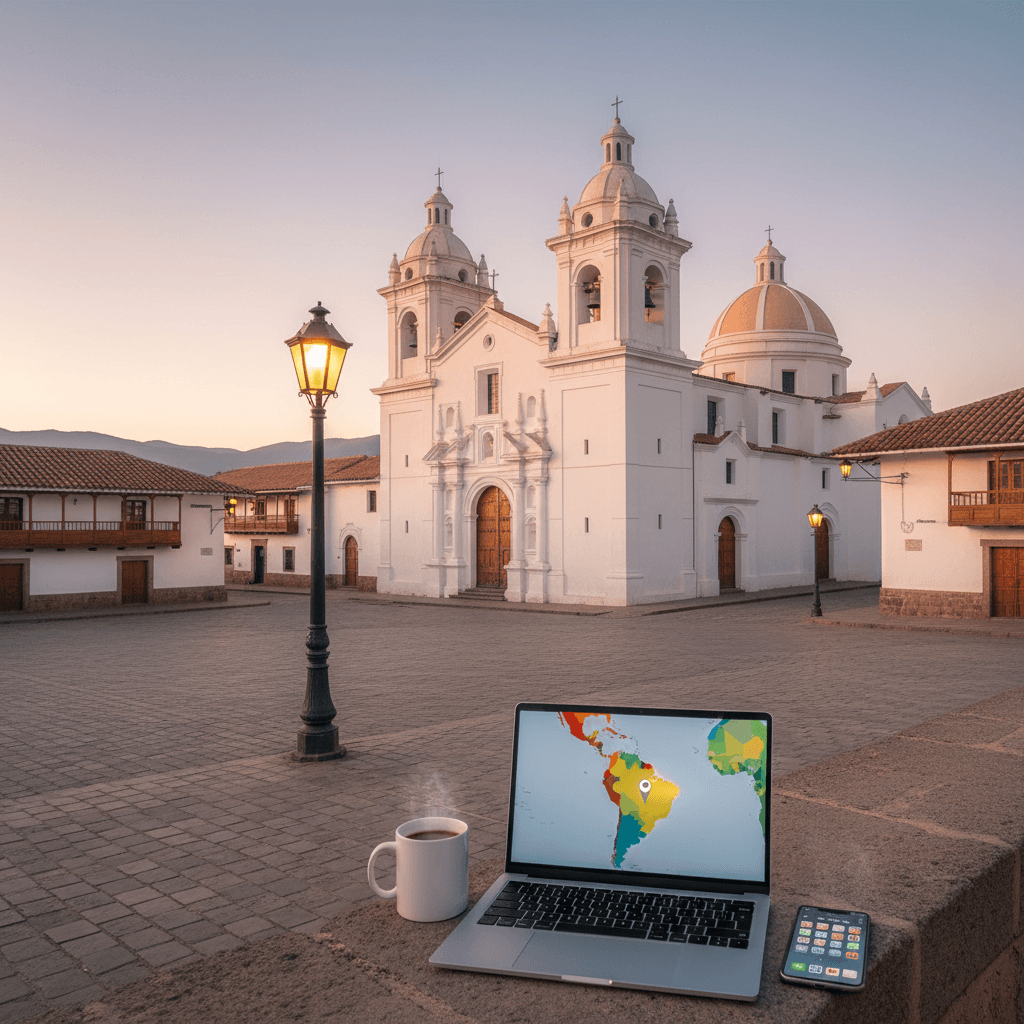
Sucre feels like a deep breath of fresh air compared to the dizzying, chaotic energy of La Paz. Known as the White City because of its meticulously preserved colonial architecture, it sits at a comfortable 2,810 meters. This makes it the sweet spot for nomads who want the Andean experience without the constant altitude sickness or the biting cold of the higher highlands. It is a place that moves slowly, where the morning light hits the whitewashed walls of the city center and everything feels remarkably still.
The vibe here is academic and traditional yet surprisingly youthful. Because it is home to one of the oldest universities in the Americas, you will find a mix of local students, indigenous vendors in traditional dress, and a growing community of slow travelers. Most nomads find themselves staying weeks longer than planned because the cost of living is incredibly low, averaging around $1,200 a month for a comfortable lifestyle. It is the kind of city where you start your day with a $1 fresh fruit smoothie at the market and end it watching the sunset from a rooftop with a view of terracotta tiles stretching to the horizon.
The Daily Rhythm
Life in Sucre revolves around Plaza 25 de Mayo. It is the city's living room, filled with pigeons, shoe shiners, and people just sitting on benches under the trees. You will spend a lot of time here, whether you are heading into Casa de la Libertad to see where Bolivia was born or just grabbing a snack. The city is walkable if you have strong calves, as the streets are steep and paved with slick stones that can be a challenge after a rain shower.
Travelers often say the "Sucre bubble" is real. It is safe, quiet, and predictable in a way that is rare for South American capitals. However, it is not a high tech hub. You won't find flashy glass coworking spaces here. Instead, you will be working from sun-drenched cafe courtyards or juice stalls in Mercado Central. The internet can be temperamental, and English is not widely spoken, which is exactly why so many nomads enroll in the city's famous Spanish schools for a few hours a day.
Neighborhood Breakdown
- City Center: This is where you want to be. It is the heart of the action, close to the best cafes and historical sites. It is safe and vibrant, though it can get a bit noisy during the frequent parades or festivals.
- La Recoleta: Perched on a hill overlooking the city, this area is quieter and more scenic. It is perfect for those who want a view and don't mind a serious uphill hike or a quick taxi ride home.
- Mercado Campesino District: This is the gritty, authentic side of Sucre. It is a massive, sprawling market area where you can buy 14 mangoes for $1. It is chaotic and best visited during the day for supplies rather than as a base for living.
Living Costs & Logistics
Your dollar goes incredibly far here, but you need to be prepared to handle cash. Credit cards are rarely accepted outside of high end hotels or the few "fancy" restaurants. Most expats recommend using Entel or Tigo for mobile data, which will cost you about $10 to $20 a month, though coverage can drop off once you leave the city limits.
- Estimated Monthly Rent: Expect to pay between $300 and $700 for a private apartment in the center.
- Daily Meals: A local lunch (almuerzo completo) at the market is usually $2 to $3, while a nice dinner at a spot like Kultur Berlin might run you $10.
- Transportation: Local buses (micros) are roughly $0.20, and a taxi across town rarely exceeds $2 to $3.
The biggest trade off for the low cost is the lack of nightlife variety. While spots like Imaynalla or O’Finnigans provide some weekend energy with techno or pub vibes, Sucre is not a party city. It is a place for writers, language learners, and those who prefer a glass of wine on a patio over a 4:00 AM club set. It is a city that rewards those who are willing to slow down and match its colonial pace.
The Bottom Line
Sucre is one of the most budget friendly hubs in South America for 2025. While prices in neighboring Chile or Argentina can fluctuate wildly, Sucre remains remarkably stable and affordable. A solo nomad can live comfortably here on $1,200 per month, though savvy travelers who lean into local markets often get by on closer to $800. If you want a more "luxury" lifestyle with a high end apartment and frequent dinners out, you'll still struggle to spend more than $1,800.
Cash is king in the White City. While you can use cards at larger supermarkets or upscale hotels, the soul of the city runs on Bolivianos. You'll want to keep small bills handy for the markets and taxis, as change is often scarce. Most expats use local ATMs or services like Wise for transfers, but always have a backup plan as machines can occasionally run out of cash during festival weekends.
Monthly Budget Breakdown
- Housing (1BR Apartment/Studio): $300 to $700. Prices vary based on how close you are to Plaza 25 de Mayo. Modern builds are rare, so you’re usually paying for colonial charm and high ceilings rather than central heating.
- Groceries & Markets: $150 to $200. If you shop like a local at Mercado Central, your money goes incredibly far. You can grab enough fruit and veg for a week for under $15.
- Dining Out: $150 to $300. This covers a mix of $1 market lunches and $5 cafe meals, with a few nicer dinners at spots like Kultur Berlin.
- Transport: $30 to $50. Taxis across town rarely cost more than a few dollars, and local buses (micros) are roughly $0.50 per ride.
- Utilities & Mobile Data: $40 to $70. A decent prepaid data plan from Entel or Tigo will run you about $10 to $20 a month.
Dining and Food Costs
The Mercado Central is the heart of Sucre's food scene and your best friend for keeping costs down. You can find massive fruit smoothies or "almuerzo completo" (a two course lunch) for about $1. If you head to the chaotic Mercado Campesino on the outskirts, prices drop even further; travelers have reported snagging 14 mangos for $1 during peak season.
Mid range cafes around the main plaza cater more to the nomad crowd. Expect to pay $3 to $5 for a solid coffee and a sandwich. While Sucre doesn't have a massive "fine dining" scene like La Paz, dinner at a nicer establishment or an expat favorite like O’Finnigans will usually land around $10 to $15 per person including a drink.
Accommodation Tiers
Rent is your biggest variable. Since there isn't a massive inventory of "nomad ready" apartments on global platforms, many expats find the best deals through local Facebook groups or by walking around and looking for "Alquiler" signs.
Budget: ~$800/month
- Stay: A private room in a hostel or a shared colonial house further from the center.
- Food: Almost exclusively market stalls and cooking at home.
- Transport: Walking and the occasional micro bus.
Mid-Range: ~$1,200/month
- Stay: A private one bedroom apartment or a nice Airbnb in the City Center.
- Food: Daily cafe visits for coffee, market lunches, and dining out twice a week.
- Transport: Frequent taxis and the occasional weekend trip to nearby hikes.
Comfortable: ~$1,800+/month
- Stay: A premium, historic apartment with views of the city or a house in the quieter La Recoleta hills.
- Food: Eating out for most meals, including the best restaurants in town and imported treats from specialized shops.
- Transport: Private drivers for day trips and no hesitation taking taxis for even short distances.
The Digital Nomad Hub: City Center (Plaza 25 de Mayo)
If you're working remotely, there's really only one place to start. The area immediately surrounding Plaza 25 de Mayo is the heartbeat of Sucre. It's where the white colonial architecture is most pristine and the internet is most reliable. Most nomads gravitate here because you can walk to almost everything you need within fifteen minutes.
While Sucre doesn't have a dedicated coworking space like you'd find in Medellin or Mexico City, the cafe culture in the center fills the gap. You'll find plenty of travelers parked with laptops at spots near the Casa de la Libertad. The Mercado Central is also a short walk away, perfect for a $1 fresh fruit smoothie when you need a break from the screen. Expect to pay between $300 and $700 for a decent apartment in this zone.
- Pros: Best connectivity, walkable, very safe, close to Spanish schools.
- Cons: Hilly streets can be a workout, slightly higher rents, tourist crowds during peak season.
The Long-Term Expat Choice: La Recoleta and the Outer Hills
Expats looking for a quieter lifestyle often head uphill toward La Recoleta. It's a bit of a climb, but the reward is the best view in the city and a much more residential feel. This area is known for its plazas and parks, offering a peaceful retreat from the activity of the lower city. It's the kind of place where you get to know your neighbors and the local shopkeepers.
Living here requires a bit more stamina or a reliance on the local $0.50 bus rides to get back up the hill after grocery shopping. Many expats prefer the cleaner air and the proximity to hiking trails that lead further into the Andes. It's a great spot if you want to immerse yourself in the local pace without the constant hum of city traffic.
- Pros: Stunning views, quiet atmosphere, great for morning hikes.
- Cons: Steep walk to the center, fewer dining options, transport is often necessary for errands.
The Budget Adventurer: Mercado Campesino District
Solo travelers on a shoestring or those who want a raw, unfiltered look at Bolivian life often spend their time around Mercado Campesino. This isn't your typical polished neighborhood; it's a massive, sprawling market district that feels like a city within a city. You can find almost anything here, from 14 mangos for $1 to electronics and textiles.
It's chaotic, loud, and can be overwhelming, but it's where your dollar goes the furthest. Most people don't choose to live right in the thick of the market because of the noise and traffic, but staying on the fringes allows you to keep your monthly budget closer to $800. Just keep your wits about you at night, as the chaos of the market can make it less secure after dark compared to the brightly lit center.
- Pros: Incredible food prices, authentic local experience, easy access to public transport.
- Cons: Very loud, chaotic traffic, not recommended for nighttime walks alone.
For Families: Low-Density Residential Zones
Families visiting Sucre generally find the city center or the lower sections of the hills most manageable. While Sucre doesn't have gated expat communities, the flatter areas near the main parks provide a bit more breathing room for kids. The city is generally safe for families, and the relaxed pace means you aren't constantly dodging the frantic energy found in La Paz.
Most families opt for larger colonial style homes with internal courtyards, which provide a private outdoor space. These are often found just a few blocks away from the main plaza, offering a balance of accessibility and privacy. Being near Mercado Central is a plus for families, as the top floor food court offers cheap, filling meals that are easy on the budget.
- Pros: Safe environment, plenty of parks, colonial houses with private courtyards.
- Cons: Limited international school options, narrow sidewalks can be tough with strollers.
Connectivity Realities
Sucre is a place where you come for the lifestyle first and the bandwidth second. While the city is becoming more digital friendly, the infrastructure still reflects its colonial roots. In the urban center, you can expect decent speeds that handle video calls and standard workflows without much trouble, but don't expect the fiber optic consistency of a major tech hub. Most nomads find that while the WiFi in guesthouses around Plaza 25 de Mayo is functional, it can get shaky during heavy rain or peak evening hours.
Mobile data is your best safety net here. Local providers like Entel and Tigo offer affordable prepaid SIM cards that you can pick up at the airport or in the markets for about $10 to $20 per month depending on your data needs. Entel generally has the widest coverage if you plan on heading into the hills or visiting La Recoleta, though signal strength can still be spotty once you leave the cobblestone streets of the center.
Coworking and Work-Friendly Cafes
If you are looking for a dedicated, high tech coworking space with ergonomic chairs and networking events, you should search current coworking options in Sucre for 2026. Historically, the local community has relied on a "laptop culture" in cafes and markets. It's a trade off; you lose the office amenities but gain a beautiful, relaxed environment for the price of a coffee.
- Mercado Central: It sounds unconventional, but the juice stalls and mezzanine food courts are popular for quick tasks. You can grab a $1 smoothie and use your hotspot while soaking in the local energy.
- Cafe Culture: The streets surrounding the main plaza are dotted with small cafes. Travelers often recommend these spots for afternoon sessions because they are accustomed to people lingering with books or laptops.
- Spanish Schools: Many nomads enroll in immersion classes and use the school common areas to work between lessons. These often have some of the most reliable WiFi in the city.
Practical Tech Tips
Since the infrastructure isn't always seamless, a few preparations will make your remote work life much easier. Most veterans in Sucre suggest carrying a portable power bank, as power outages aren't frequent but do happen. Because card payments are still limited in many local spots, keep enough cash on hand to pay for your cafe "rent" in small bills.
- VPN: Essential for security on public cafe networks and for accessing region locked services from back home.
- Offline Maps: Download Google Maps for the Sucre area. The hilly terrain and winding streets can make signal drops frustrating when you're trying to find a specific cafe.
- Data Tethering: Always have a backup data plan on your phone. If the hostel WiFi goes down during a meeting, a 4G Tigo connection is usually strong enough to save the day.
Ultimately, Sucre is better suited for the "slowmad" who isn't tied to a 24/7 high speed connection. If your work involves massive file uploads or low latency gaming, you might find the city challenging. If you're a writer, developer, or consultant who just needs a decent connection and a beautiful view, the city's affordable $1,200 average monthly cost more than makes up for the lack of a formal office.
Street Smarts and Personal Safety
Sucre is widely considered one of the safest cities in Bolivia. Most nomads and long term travelers find the atmosphere far more relaxed than the frantic energy of La Paz. The city center, particularly the area surrounding Plaza 25 de Mayo, is very safe to walk during the day. You'll see locals and expats alike lingering on park benches well into the evening.
That said, standard South American urban precautions apply. While violent crime is rare, opportunistic petty theft like pickpocketing can happen in crowded areas. The Mercado Campesino is a fantastic place for cheap produce, but it's famously chaotic. Travelers recommend keeping your phone and wallet tucked away here, especially if you're visiting after dark when the area becomes a bit more unpredictable.
- Solo Travelers: Most solo nomads feel comfortable walking the white-washed streets of the center alone. If you're heading back to a guesthouse in the steeper hills of La Recoleta late at night, it's smarter to take a radio taxi for a few dollars rather than trekking up the dark, quiet inclines.
- Emergency Contacts: Keep these numbers saved in your phone. Dial 110 for the police and 118 for an ambulance.
Healthcare and Medical Facilities
If you get sick, you're in good hands for most routine issues. Sucre is a major administrative city with well equipped hospitals. For minor ailments, altitude sickness, or stomach bugs, you'll find plenty of farmacias (pharmacies) clustered around the Mercado Central. Pharmacists here are often very knowledgeable and can provide over the counter remedies for common travel issues.
For more serious concerns, the city's private clinics are the preferred choice for expats. They generally offer a higher standard of care and shorter wait times than public facilities. While medical costs are quite low by Western standards, it's still best to have a solid travel insurance policy that covers medical evacuation, just in case you need specialized treatment in a larger hub like Santa Cruz.
Food and Water Safety
Food safety in Sucre is generally moderate, but your stomach might need a week or two to adjust. The Mercado Central food stalls are a nomad staple for $1 smoothies and local bites, but look for the busiest vendors with high turnover. High heat is your friend; stick to soups and fried dishes if you're worried about bacteria.
Don't drink the tap water. Even locals typically boil their water or buy large 20 liter jugs for the home. Most rentals and hostels provide filtered water, but if not, a reusable bottle with a built in filter will save you a lot of money and plastic waste. Since Sucre sits at a lower altitude than the highlands, you won't struggle as much with oxygen, but staying hydrated is still key to avoiding the persistent headaches that can strike newcomers.
Practical Health Tips
- Sun Protection: The sun at this altitude is much stronger than it feels. Even on cooler days, you'll burn quickly. Wear a hat and high SPF sunscreen if you're spending the afternoon at La Glorieta or hiking the nearby Andes trails.
- Altitude: While Sucre is lower than La Paz, it's still over 2,800 meters (9,000 feet) above sea level. Give yourself 48 hours to acclimate before attempting any strenuous paragliding or mountain treks.
- Language: Most medical staff speak limited English. Having a translation app with an offline Spanish pack downloaded is a lifesaver when trying to explain symptoms at a clinic.
The Walking Reality
Sucre is often called the White City, and you'll see why the moment you step into the center. The grid around Plaza 25 de Mayo is highly walkable and honestly beautiful, but there's a catch: the hills. While the architecture is colonial and charming, the incline can be a workout, especially since you're still at an altitude of roughly 2,800 meters. Most nomads find that they can handle the city center on foot, but you'll want wheels for anything further out.
Cycling is a bit of a mixed bag. While the city isn't as chaotic as La Paz, the steep streets and lack of dedicated bike lanes make it a choice for the brave or the very fit. If you're staying near La Recoleta, prepare for a serious calf burn every time you head home from a coffee shop.
Micros and Micros-Buses
For a small fare in local currency, you can hop on a "micro." These are the colorful, often vintage-looking buses that lurch through the city. They don't have a formal map you can download, but they usually have their destinations painted on the windshield. If you see Mercado Campesino or Central on the glass, you're likely headed somewhere useful. Just flag one down from the curb and shout "¡parada!" when you want to get off. It is recommended to verify current micro bus fares in Sucre for 2025-2026, as these may need updating if inflation has occurred.
Taxis and Radio Taxis
Taxis are the lifeline for expats here, especially when carrying groceries or heading out at night. You won't find Uber or widespread ride-hailing apps in Sucre yet, so you'll rely on hailing cabs or calling a "Radio Taxi" service.
- Short trips: Most rides within the central zone cost between $1.50 and $2.50.
- Night rates: Expect to pay a small premium after dark, but it's rarely more than an extra dollar.
- Safety: Travelers recommend using established Radio Taxi companies rather than unmarked cars, particularly if you're alone.
Getting to and from the Airport
The Alcantarí International Airport is about 20 to 30 minutes away from the city center. You have two main options for making the trek:
- Airport Taxis: These are the most convenient and will set you back about $5 to $10. It's a fixed rate, but it's smart to confirm the price before the driver pulls away.
- Public Shuttles: There are smaller buses that run between the airport and the city for a fraction of the taxi cost, usually around $1.50. They drop off near the center, but they can be cramped if you're hauling a nomad-sized suitcase and a laptop bag.
Regional Travel
If you're planning weekend trips to Potosí or beyond, the Terminal de Buses is your hub. It's a bit of a chaotic environment, much like the Mercado Campesino area. Taxis from the plaza to the bus terminal take about 10 minutes. Most nomads suggest booking "bus cama" (sleeper) seats for longer journeys; the extra $5 or $10 is a small price to pay for a seat that actually reclines when you're traversing bumpy Andean roads.
Keep plenty of small change and Bolivianos on hand for all transport. Drivers rarely have change for large bills, and credit cards are virtually non-existent in the world of Sucre transit. If you're carrying a 100 BOB note, you might as well be carrying a gold bar; break it at a supermarket or a larger cafe before you try to pay for a taxi.
The Language Barrier
Expect a bit of a linguistic hurdle when you first arrive. English proficiency in Sucre is relatively low, even in the central districts around Plaza 25 de Mayo. While you might find a few English speakers at nomad friendly spots like Kultur Berlin or O’Finnigans, the vast majority of your daily interactions at the pharmacy or the Mercado Central will happen entirely in Spanish.
You'll also hear Quechua being spoken frequently, especially by vendors at the Mercado Campesino. While you don't need to learn indigenous languages to get by, knowing a few Spanish basics isn't just helpful, it's a requirement for a smooth stay. Most nomads find that the locals are patient, but they won't be able to switch to English to help you out of a jam.
Spanish Immersion Schools
Sucre is famous among travelers as one of the best and cheapest places in South America to learn Spanish. The city's clear, neutral accent makes it an ideal classroom. Many expats choose to spend their first few weeks here enrolled in intensive 1-on-1 lessons, which often cost significantly less than similar programs in Colombia or Peru.
- Spanish Lessons: Expect to pay around $6 to $10 per hour for private tutoring.
- Immersion: Many schools organize homestays or social mixers to help you practice outside the classroom.
- Language Exchanges: Keep an eye on the bulletin boards at popular cafes in the center for informal "intercambio" meetups.
Digital Tools and Connectivity
Since you can't rely on English, your phone will be your best friend. Download the Spanish pack for Google Translate so you can use it offline while wandering the hilly outskirts where signal might drop. The "Camera Translate" feature is a lifesaver for deciphering handwritten menus at the market food stalls.
For staying connected, don't rely on international roaming. Pick up a local SIM card from Entel or Tigo at the airport or a small "tienda" in the center. A month of data will generally set you back between $10 and $20. While 4G is reliable in the city center, it gets spotty once you head toward La Recoleta or the surrounding Andes trails.
Communication Etiquette
Bolivian culture is polite and somewhat formal. Always start your interactions with a "Buen día" (Good morning) or "Buenas tardes" (Good afternoon) before jumping into a question. When you're shopping at the markets, a little bit of rapport goes a long way. If you're looking for a price, ask "A cuánto?" or "Cuánto cuesta?".
Most transactions are done in cash, and you'll find that small bills are treated like gold. If you try to pay for a $1 smoothie with a large bill, you'll likely be met with a shake of the head. Always ask "Tiene cambio?" (Do you have change?) before you order to avoid an awkward standoff at the register.
Practical Phrases for Nomads
- "La cuenta, por favor": The check, please.
- "Hay Wi-Fi?": Do you have Wi-Fi? (Essential for cafe hopping).
- "Donde puedo comprar una tarjeta SIM?": Where can I buy a SIM card?
- "Solo efectivo?": Cash only? (The answer is almost always yes).
The Sweet Spot: June to August
If you're looking for the absolute best window to settle into Sucre, aim for the dry season between June and August. This is the Bolivian winter, but don't let the name fool you. Because Sucre sits at a lower, more temperate altitude than the oxygen deprived heights of La Paz, the days are crisp, sunny, and perfect for walking the hilly colonial center. Most nomads find the air quality at its peak during these months, making it the ideal time for paragliding over the Andes or hiking up to La Recoleta for those sunset views.
Expect daytime temperatures to be mild and pleasant, though the high altitude sun is deceptively strong. You'll want layers; once the sun drops behind the white washed buildings, the temperature plummeted quickly. It's common for expats to spend their afternoons working from the juice stalls at Mercado Central in t-shirts, only to be reaching for a heavy wool sweater by 7:00 PM.
The Rainy Season: November to March
The landscape turns a brilliant green starting in November, but that beauty comes with a catch. The rainy season runs through March, and while it rarely rains all day, the downpours are intense. Travelers often say the biggest headache during this time isn't the water itself, but the mud. If you're planning on trekking to the crater at Maragua or exploring the dinosaur prints at Cal Orck'o, the trails can become slippery and difficult to navigate.
For digital nomads who prefer an indoor lifestyle, this "low season" has its perks. The city is even quieter than usual, and you won't be fighting for the best window seats at cafes near Plaza 25 de Mayo. Just be aware that inconsistent internet can get even more temperamental during heavy storms, so having a backup data plan with Entel or Tigo is a smart move.
Shoulder Season Perks
The months of April, May, September, and October are the local favorites. The weather is transitioning, the crowds are thin, and the prices for long term rentals remain stable. This is a great time to enroll in a Spanish school for a few weeks of immersion without the mid summer chill or the summer rains. You'll get plenty of clear days to wander Mercado Campesino for $1 bags of fruit without worrying about a sudden deluge ruining your haul.
Key Seasonal Events
- Carnival (February/March): It's a wild, messy, and loud experience. Expect water fights and parades. It's great for culture, but bad for productivity if you have deadlines.
- Independence Day (August 6th): As the constitutional capital, Sucre goes all out. The area around Casa de la Libertad becomes the heart of the country, filled with parades and patriotic energy.
- Encuentros de Charango: Keep an eye out for local music festivals in the dry season, where the city's plazas come alive with traditional Andean strings.
Overall, Sucre is a year round destination if you aren't afraid of a little rain or a chilly evening. Most long term residents suggest arriving in May to catch the tail end of the green scenery before the dry, stable weather of the high season kicks in.
Connectivity and the Digital Grind
Sucre doesn't have a massive, dedicated coworking scene like Medellin or Buenos Aires. You won't find sleek, glass-walled offices here. Instead, the nomad community gravitates toward the cafes around Plaza 25 de Mayo. Mercado Central is surprisingly reliable for a quick morning session at the juice stalls, though the noise level is high. For more focused work, local cafes in the center are your best bet. Internet speeds are generally solid in the city center but drop off quickly as you head toward the hills. Most expats recommend getting an Entel or Tigo SIM card immediately upon arrival. You can pick these up at the airport or in the markets for about $10 to $20 a month for a decent data plan. It's a lifesaver when the cafe WiFi inevitably hiccups.
Money and the Cash Economy
Bolivia remains a cash-heavy society. While you might be able to tap your card at a high end hotel or a fancy restaurant, you'll need physical Bolivianos for almost everything else. ATMs are clustered around the main plaza; use those during daylight hours to be safe. Most nomads find that a monthly budget of $1,200 allows for a very comfortable lifestyle, including a private apartment and frequent meals out. If you're really watching your spending, you can get by on $800 by sticking to the markets. For moving money into the country, Wise is the preferred tool among the expat community for its better exchange rates compared to local bank transfers.
Navigating the Streets
The city center is incredibly walkable, but your calves will feel the burn. Sucre is notoriously hilly. If you're heading further out, like to the chaotic Mercado Campesino, skip the walk and hop on a local bus. A ride will only cost you about $0.50. Taxis are also very affordable, usually ranging from $5 to $10 for a trip to the airport. There aren't any major ride-hailing apps active here yet, so you'll be hailing traditional taxis the old-fashioned way. If you're arriving by air, the 20 minute taxi ride from the airport is the most seamless way to reach your accommodation.
Language and Local Life
Don't expect much English outside of the most tourist-centric spots. Spanish is the primary language, and while you'll hear plenty of Quechua in the markets, a basic grasp of Spanish is what makes or breaks your experience. Many nomads actually choose Sucre specifically for its Spanish schools, which are some of the most affordable in South America. It's a great place to spend your first month in the country getting your language skills up to par. Download an offline version of Google Translate before you land; it's a necessity when you're trying to negotiate prices at the market or explain a dietary restriction.
Health and Safety
Sucre is widely considered one of the safest cities in Bolivia. The center is peaceful and easy to navigate, even for solo travelers. That said, use common sense at night. The area around Mercado Campesino can get rowdy and disorganized after dark, so it's best to finish your shopping there while the sun is up. For healthcare, pharmacies are everywhere, especially near Mercado Central. If you need a doctor, the city hospitals are well-regarded, but always carry travel insurance. As for the food, it's generally safe, but stick to the busiest stalls in the markets to ensure the turnover is high. If a stall is packed with locals, that's your green light.
Timing Your Stay
The best time to be in Sucre is between June and August. The weather is dry and the air is crisp, making it perfect for afternoon hikes up to La Recoleta for the view. The rainy season kicks in around November and lasts through March. During these months, trekking paths can turn into mud slides, so it's not the best time for outdoor enthusiasts. One major perk of Sucre is its lower altitude compared to La Paz; you'll find it much easier to breathe here while you acclimate to the Andes.
Need visa and immigration info for Bolivia?
🇧🇴 View Bolivia Country GuideOff the Radar
Pioneer territory