St. Julian's
🇲🇹 Malta
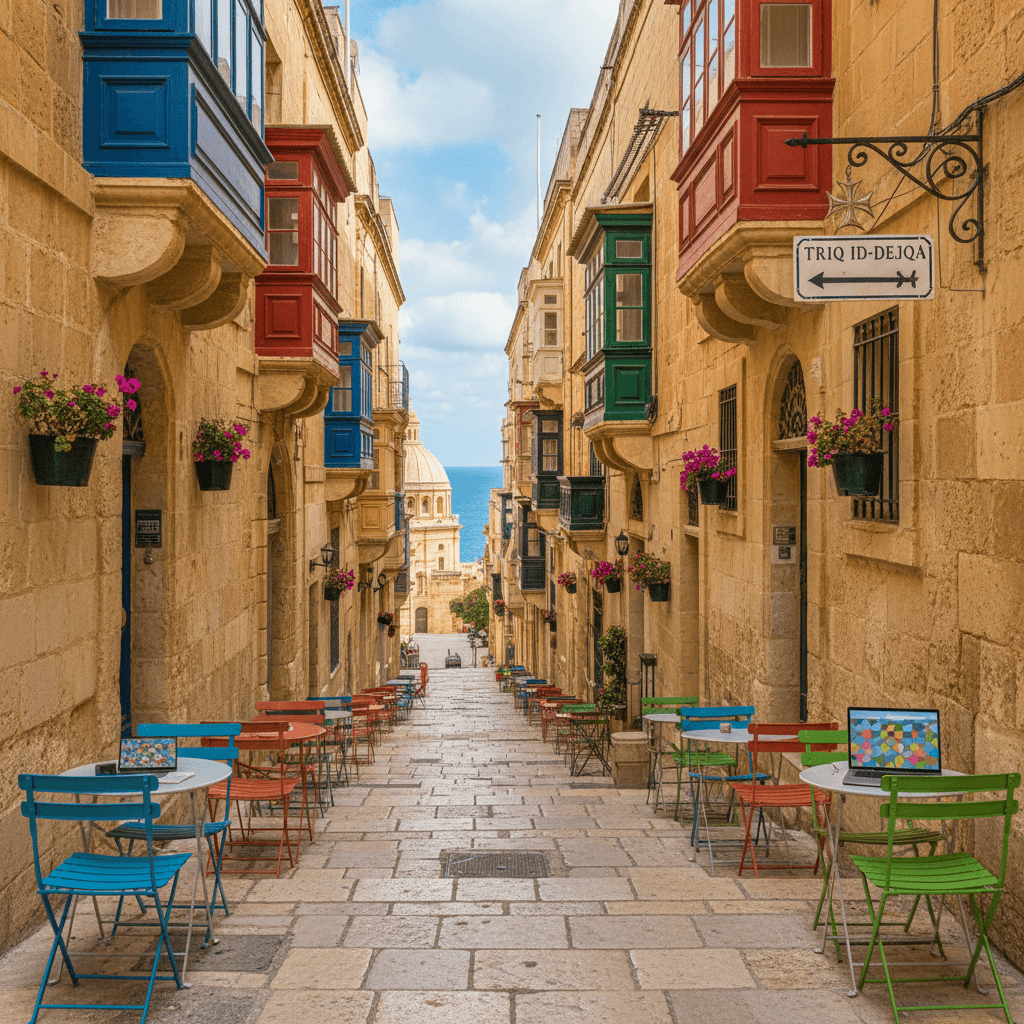
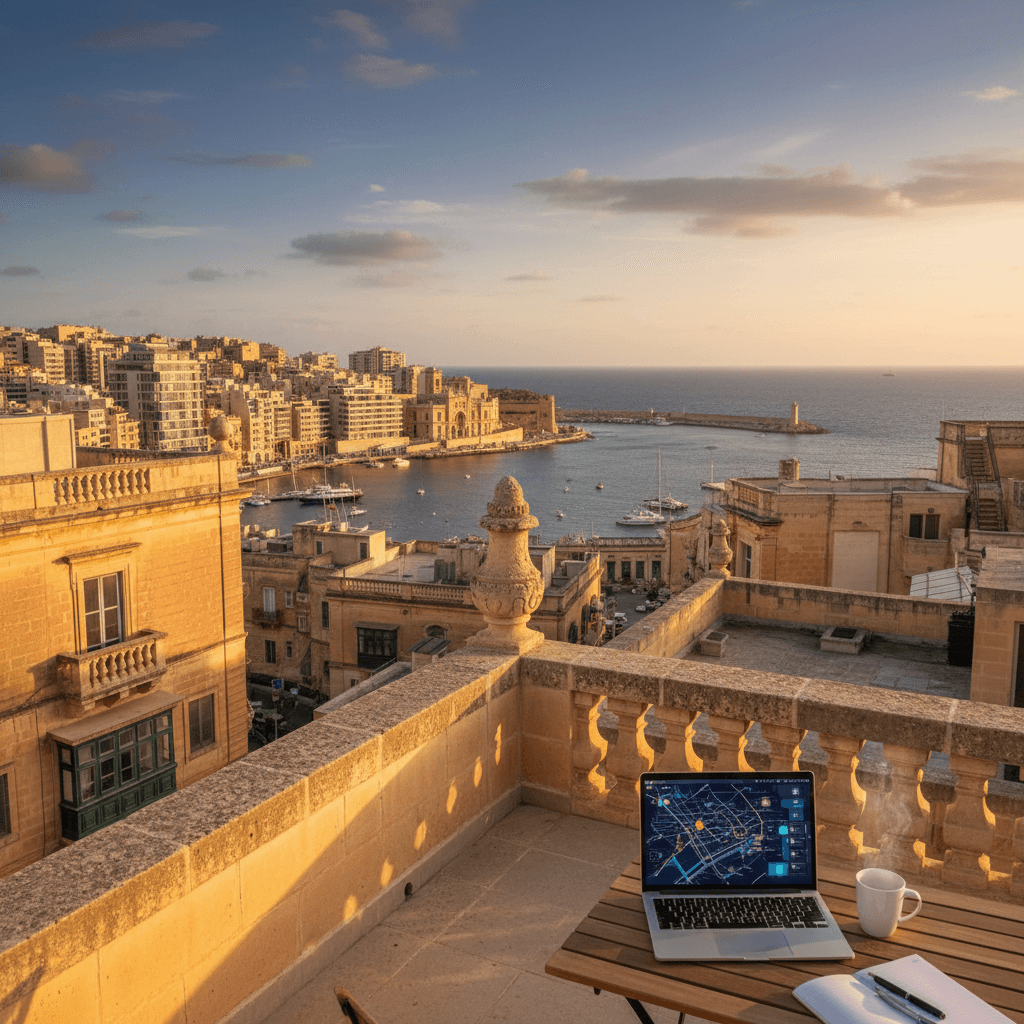
St. Julian's is, honestly, two completely different places depending on where you're standing. By day, Spinola Bay smells like salt water and espresso, fishing boats knock gently against the dock and you can sit at a cafe terrace with your laptop while tourists photograph the colorful luzzus. By night, Paceville thumps. Literally thumps, you can feel the bass through the pavement at 1am on a Tuesday.
That contrast is the whole point of this place and it's also its biggest flaw. Nomads who stay near Paceville often last about three weeks before they're hunting for somewhere quieter, the noise genuinely doesn't stop. Those who land in Spinola Bay or Balluta Bay tend to stick around much longer.
What makes St. Julian's different from other Mediterranean nomad spots is the weird mix of influences. It's British enough that everything runs in English, bureaucracy included, but Italian enough that the food is actually good. There's a massive iGaming industry based here, which means the expat crowd skews young, professional and surprisingly easy to network with over a beer at Juuls or a flat white at a local cafe like Cafe Cuba.
The social scene is, turns out, one of this place's strongest assets. Malta Digital Nomads meetups happen regularly, coworking spaces like Regus Dragonara and BusinessLabs pull in a mix of remote workers and startup types and the sheer density of English-speaking expats means you're never really starting from zero socially.
Still, it's not cheap. A decent one-bedroom in Spinola Bay runs €1,100 to €1,400 a month and that's before you factor in eating out, which adds up fast when mid-range mains are €17 to €25. Budget travelers can survive on shared rooms and Lidl groceries around €1,500 a month, but it'll feel tight.
Summers are brutally hot and overcrowded, peak August brings both 31°C heat and tourist density that makes the bays feel less like a retreat and more like a queue. May and October are the sweet spots, warm enough for the water, calm enough to actually think.
Come for the social energy and the English-speaking ease. Stay in Balluta or Spinola. Avoid Paceville if sleep matters to you.
St. Julian's isn't cheap. That's the honest starting point before you fall in love with the seafront views and start budgeting optimistically.
Rent is, frankly, the biggest line item. A one-bedroom in Spinola Bay or Balluta runs €1,100 to €1,400 a month and anything with a sea view pushes toward the top of that range fast. Paceville apartments are slightly cheaper at €900 to €1,200, though you're paying for that discount in sleep quality. Studios start around €800 to €1,100, which sounds manageable until you factor in the €2,500 to €4,500 upfront deposit most landlords expect before you've even signed anything.
Food costs are more forgiving. A pastizzi from a street kiosk is under €1, a solid lunch at a local cafe runs €7 to €10, the damage at a mid-range sit-down dinner is roughly €17 to €25 per main. Upscale spots will hit €45 or more for two people, though that's a choice, not a necessity.
Buses are, weirdly, free with a Tallinja card (one-time €25 fee), which genuinely helps. Bolt ride-hailing fills the gaps at €1.20 to €1.50 per kilometer, so a quick hop to Sliema won't hurt, but nightly Bolts back from Paceville add up faster than you'd expect.
Here's how the monthly budgets actually shake out:
- Budget (€1,500 to €2,000): Shared room €400 to €600, groceries from Lidl around €200 to €250, minimal dining out, free buses everywhere
- Mid-range (€2,100 to €2,800): One-bedroom €950 to €1,200, groceries plus two weekly restaurant meals around €480 to €550 total, basic coworking at BusinessLabs or SOHO around €150 to €250
- Comfortable (€3,000 and up): Seafront apartment €1,300 or more, frequent upscale meals, premium coworking at Regus Dragonara around €300 to €400, gym membership €30 to €100
Coworking is, turns out, a real cost most nomads underestimate when they first plan their budget. Drop-in days at Regus hit €50, it adds up quickly if you're not on a monthly plan.
Compared to Sliema or Valletta, St. Julian's skews slightly more expensive, you're paying a premium for the energy and convenience. Most nomads find €2,300 to €2,600 a month is the realistic sweet spot for living comfortably without constantly watching the balance.
St. Julian's doesn't have one neighborhood, it has four distinct moods and picking the wrong one will make or break your stay. Here's how they break down by who you actually are.
Digital Nomads
Spinola Bay and Balluta Bay are where most nomads end up and honestly, it makes sense. You get the smell of salt air and fresh pastizzi from the corner bakery without Paceville's 3am bass thumping through your walls. Spinola sits walkable distance from good cafe wifi at Lot 61 Coffee Roasters, mid-range restaurants running €17 to €25 a main and a bay view that doesn't feel like a screensaver.
Balluta Bay is quieter still, turns out it's popular with nomads who want the social access without living above a nightclub. Expect €1,100 to €1,400 for a one-bedroom in either area, which isn't cheap for Malta but it's fair for what you get.
Expats and Professionals
Portomaso is the obvious answer and it's genuinely good if money isn't the sticking point. The marina is clean, the Hilton is right there and the apartment buildings are modern and secure. It feels less Maltese and more Dubai-lite, which some people love and others find soulless. Rents hit €1,500 to €2,500 for a one-bedroom, the premium is real.
Solo Travelers and Young Nomads
Paceville exists for one reason. Nightlife. If you're here to work a full day and then actually go out, it's honestly fine, the social energy is immediate and the cheap bars mean you're meeting people within hours of arriving. But don't expect sleep before 4am, don't expect quiet on a Tuesday and frankly don't walk the back alleys alone late at night. Rents drop to €900 to €1,200 precisely because no one who values sleep wants to live there long-term.
Families
Skip St. Julian's. Not a judgment, just a practical read. The noise, the tourist density in summer, the general party-town energy, none of it suits families with kids. Sliema is a ten-minute walk north and offers a calmer, more residential feel with better schools and quieter streets. Most expat families figure this out fast, usually after one loud weekend in Paceville.
Malta's internet is, honestly, better than you'd expect for a small island. Fiber connections through GO and Melita hit up to 1Gbps and most St. Julian's apartments come with decent broadband already baked into the rent. Mobile data is solid too, with Epic and Melita offering unlimited 5G SIMs for €10 to €30 a month, pick one up at the airport before you've even grabbed your bags.
Café WiFi is a mixed bag. Manouche Craft Bakery & Bistro is a popular spot for morning work sessions, offering good coffee, reliable speeds and a crowd that's clearly there to actually get things done rather than just Instagram their flat white. Don't show up after noon expecting a quiet seat though, it fills fast and the afternoon energy shifts toward social rather than productive.
For dedicated coworking, you've got two realistic options depending on your budget.
- Regus at Dragonara Business Centre: Hot desks from around €50 a day or €300+ monthly. Professional setup, fast internet, meeting rooms available. Suits you if you're on client calls or need a proper address.
- BusinessLabs and SOHO Malta: More affordable at €150 to €250 a month, turns out these attract a younger, more startup-adjacent crowd, which can be useful if you're trying to network into the local iGaming or tech scene.
That iGaming scene is worth mentioning. St. Julian's is practically the European capital of online gaming companies, so the professional networking opportunities here are genuinely unlike anywhere else in the Mediterranean. Casual conversations at local cafes or a Balluta Bay bar can go somewhere real, especially if you're in tech, marketing or compliance.
The coworking costs add up though. Budget €150 to €400 a month depending on the space and factor that in early because it's not a small line item when you're already paying €1,100 or more for a decent apartment. Speeds at coworking spaces are consistently fast, rarely dropping below 100Mbps, which makes video calls and large uploads painless.
One practical note: if you're staying long-term, a Melita home fiber plan runs €25 to €45 monthly and is frankly the smarter move over relying on café or coworking WiFi every single day. Setup takes a few days, plan accordingly.
Malta's crime rate is genuinely low, St. Julian's included. That said, Paceville after 2am is a different story, loud, crowded and the kind of place where someone will bump into you with purpose. Watch your drink, keep your bag in front of you and honestly, just avoid the darker side streets once the clubs empty out. It's not dangerous so much as it's careless-tourist territory and the difference matters.
Police presence in Paceville is, turns out, pretty visible on weekends, which helps. For anything urgent, dial 112, it covers police, ambulance and fire. Most nomads say they've never felt threatened in the bay areas around Spinola or Balluta and solo travelers, including women, generally report feeling comfortable walking those stretches at night.
Healthcare is where Malta genuinely punches above its weight. Mater Dei Hospital in nearby Msida is the main public facility and it's well-equipped, modern and free at the point of care for EU citizens with a valid EHIC card. Non-EU nomads will want travel insurance that covers medical, because private consultations run €50-100 and specialist visits climb fast from there.
For day-to-day stuff, pharmacies are everywhere. Potters Pharmacy on Triq il-Wilga is a reliable local option and most pharmacists speak fluent English, which, surprisingly, makes a real difference when you're trying to describe a weird rash you got after swimming at St. George's Bay. Pharmacies also stock prescription medications that you'd need a doctor's visit for back home in some countries, so it's worth asking before booking an appointment.
- Emergency number: 112 (all services)
- Nearest hospital: Mater Dei, Msida (roughly 10 minutes by Bolt)
- Local pharmacy: Potters Pharmacy, Triq il-Wilga, +356 2136 3244
- EU travelers: EHIC card covers public healthcare
- Non-EU travelers: Private insurance strongly recommended
One thing people don't mention enough: the summer heat is, frankly, punishing and dehydration sneaks up on you fast when you're walking between bays in August. Carry water. The tap water is technically safe but tastes heavily of desalination, so most residents just buy bottled.
St. Julian's is, honestly, one of the easier places in Europe to get around without a car. The island's public bus network covers the whole area and the Personalized Tallinja card for free public bus travel (check current registration fee at publictransport.com.mt). Routes 13, 13A, 14, 16 and 21 connect St. Julian's to Sliema and central Valletta, the TD3 express gets you to the airport in 30 to 45 minutes.
Bolt is the ride-hailing app everyone uses here, it's reliable and runs at roughly €1.20 to €1.50 per kilometer. A quick hop to Sliema costs maybe €4 to €6, a straight shot to the airport runs €17 to €20 if you're skipping the bus. Taxis exist, but they're pricier and, turns out, most long-term residents don't bother with them.
On foot, the bays are genuinely walkable. Spinola Bay to Balluta Bay takes about ten minutes, the waterfront path is flat and pleasant, you'll smell salt and grilling fish most of the day. Things get hilly fast once you move inland though, so if you're carrying groceries uphill in August heat, that gets old quickly.
For two wheels, Whizascoot handles scooter rentals if you want more range. These are worth it for cutting through the narrow streets that buses can't reach efficiently.
A few things to know before you move around:
- Airport bus (TD3): 30 to 45 minutes, free with Tallinja card, runs regularly
- Bolt to airport: €17 to €20, useful late at night when buses thin out
- Whizascoot: Scooter rentals for longer trips around the island
- Walking: Flat along the waterfront, steep everywhere else
Renting a car is, frankly, more trouble than it's worth if you're based in St. Julian's itself. Parking is scarce, streets are narrow and the one-way systems are weirdly aggressive. Save it for day trips to the south or a Gozo ferry run, not daily commuting.
Good news first: you won't have a language problem here. English is an official language in Malta, so St. Julian's runs almost entirely in it, from restaurant menus to landlord contracts to the guy at the pharmacy explaining which antihistamine to grab. Most nomads, turns out, never need to learn a single word of Maltese to get through daily life comfortably.
That said, Maltese is everywhere around you, a strange and honestly fascinating mix of Arabic roots, Italian borrowings and English words that somehow fused into something entirely its own. You'll hear it between locals at the corner shop, see it on street signs, catch it on the TV in a bar. It sounds like nothing else.
A few phrases go a long way socially. Locals genuinely appreciate the effort, it costs you nothing and gets you warmer service almost immediately.
- Bonġu , good morning (use it, people love it)
- Bonswа , good evening
- Grazzi , thank you
- Jekk jogħġbok , please (harder to pronounce, still worth trying)
- Fejn hi l-bajja? , where's the beach? (not always useful, but a crowd-pleaser)
For anything beyond basics, Google Translate handles Maltese well enough, the camera translation feature is particularly useful for menus at smaller local spots that haven't bothered with English versions. Download it offline before you arrive, just in case.
One thing worth knowing: St. Julian's has a heavy expat and tourist layer, so you'll hear Italian, Arabic, German and plenty of other languages daily, especially around Spinola Bay and Paceville. The international energy is real, it's not manufactured. Networking conversations start easily because nearly everyone defaults to English without hesitation.
Phone SIMs from Melita or Epic come with solid English-language customer support, setup takes about ten minutes at the airport kiosk and the staff won't make you feel like you're inconveniencing them. Small thing, but after navigating some countries where that's genuinely painful, it's a relief.
Bottom line: St. Julian's is one of the easiest places in the Mediterranean for English-speaking nomads to land and immediately function. No adjustment period, no language anxiety, just get here and get to work.
Malta runs hot and dry most of the year, which is genuinely great news if you're chasing beach days and outdoor cafe work sessions. The sweet spot is May through October, when temperatures sit between 23°C and 31°C, the sea is warm enough to swim in without flinching and you'll get 10 to 14 hours of sun most days. August peaks at around 31°C, honestly a bit brutal if you're trying to concentrate, but the evenings cool down enough to make Spinola Bay feel almost perfect.
Summers are dry. Genuinely almost zero rain from June through August, so you can plan outdoor work or day trips without checking forecasts obsessively. The trade-off is that August also brings peak tourist crowds to St. George's Bay and Paceville, the kind of noise and foot traffic that makes even a short walk to a cafe feel like an obstacle course.
Winter is mild by European standards, but don't expect sunshine and flip-flops. December sits around 16°C during the day and drops to 11°C at night and November can push 2.5 inches of rain across the month. Not miserable, just grey and damp in a way that catches people off guard.
- May: 23°C high, 15°C low, 3 rain days, sea at 18°C. Crowds are thin, prices are lower, it's the best month most nomads don't book.
- August: 31°C high, 23°C low, almost no rain, sea at 25°C. Peak everything: heat, tourists, noise, prices.
- December: 16°C high, 11°C low, nearly 9 rain days, sea at 16°C. Quiet and cheap, but you'll want layers and patience.
September and October are, turns out, the most underrated window. The heat backs off to something manageable, the summer crowds thin out noticeably and the sea stays warm well into October at around 23°C. Expats who've been here a few years consistently recommend this window over summer.
If you're sensitive to noise and heat, skip July and August entirely, the combination of 31°C afternoons and Paceville thumping until 4am is a lot. Come in May or October instead, you'll get the Mediterranean weather without paying the summer premium in sanity or euros.
Pick up a Melita or Epic SIM card at the airport before you even grab your bags. It'll run you €10 to €30 for unlimited 5G data and you'll want it immediately for Bolt, Google Maps and finding your apartment.
Speaking of apartments, budget two to four weeks to find something decent and have €2,500 to €4,500 ready for the upfront costs. MyRent.mt and MaltaPark are the go-to listing sites, but honestly, the Facebook groups move faster and have more realistic pricing. Landlords expect first month plus deposit, that's non-negotiable, arguing about it won't get you anywhere.
For banking, open a Revolut account before you arrive. BOV and HSBC have local branches if you need a Maltese account, but the fees and queues are, frankly, a headache you don't need in the first week.
The Tallinja card is a one-time €25 purchase and then buses are free. Routes 13, 13A and 14 connect St. Julian's to Sliema and Valletta, the TD3 goes direct to the airport in 30 to 45 minutes. Weirdly, it's one of the best public transit deals in Europe, most nomads don't realize this until they've already spent €60 on Bolt rides.
A few things that'll save you some friction:
- Church dress: Malta takes its festas seriously. Shoulders and knees covered if you're stepping inside any church, no exceptions.
- Festas: Saint feast days mean fireworks at odd hours, sometimes past midnight. Charming the first time, less so at 1am on a Tuesday when you're trying to sleep in Paceville.
- Day trips: Blue Grotto and Ħaġar Qim are reachable by bus or cheap group tour. Gozo is a ferry ride and genuinely worth a long weekend.
- Pharmacies: Potters Pharmacy on Triq il-Wilga is reliable for basics. For anything serious, Mater Dei Hospital in nearby Msida is the main public facility and it's good.
- Emergencies: Dial 112.
English is an official language here, so communication isn't a problem anywhere. Still, locals visibly warm up when you drop a "Bongu" (hello) or "Grazzi" (thanks), it costs nothing and it works.
Need visa and immigration info for Malta?
🇲🇹 View Malta Country GuideEasy Landing
Settle in, no stress