Sopot
🇵🇱 Poland
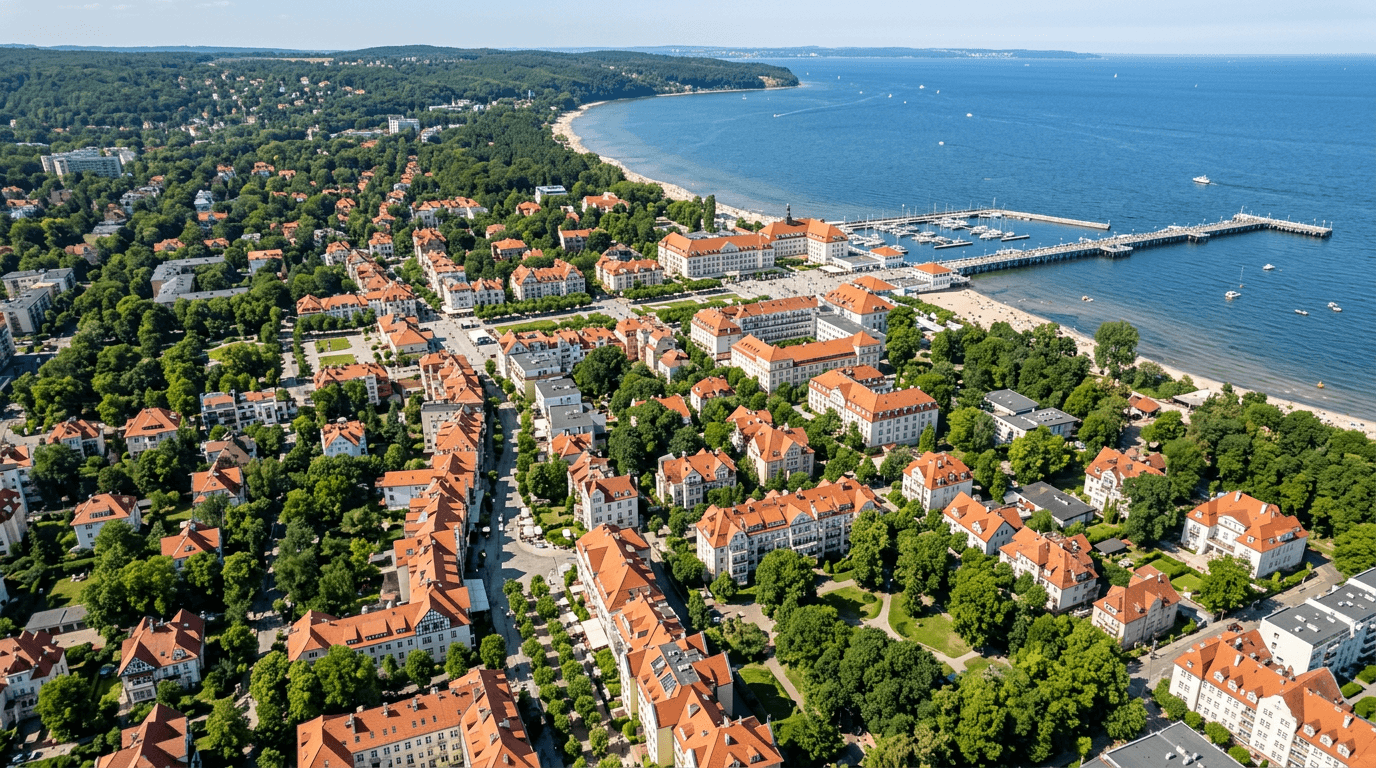
Sopot feels like a seaside town that got expensive because people actually want to live there. It’s compact, polished and easy to read on foot, with the beach, the wooden pier, Monte Cassino and a string of villas all packed into a small strip of coast. You can hear gulls, tram bells from the Tricity edge and late-night music drifting out of bars, then be on a train to Gdańsk or Gdynia in about 15 to 20 minutes.
That mix is why nomads stick around. You get the Baltic air, pine trees and long walks on cold sand, but you’re not cut off from real city life. Sopot’s nightlife is lively without being fully unhinged, though July and August can be noisy, crowded and a bit much if you’re trying to sleep with the windows open.
The downsides are pretty straightforward. Rents are high for Poland, especially anywhere close to the beach and the town can feel oddly quiet in winter, with grey skies, wet pavement and half-empty cafes. The expat and nomad scene is smaller than in Warsaw, Wrocław or Kraków too, so a lot of people here are commuters, not long-haul residents.
Best areas to base yourself
- Dolny Sopot: The beachfront core, right by the pier and Monte Cassino. It’s the most walkable and social part of town, but also the priciest and loudest.
- Karlikowo: Quieter coastal streets near the Gdańsk border, with easy beach access and a calmer feel. Good if you want sea air without sleeping above the bars.
- Górny Sopot: Leafier and more residential, with better chances of finding a saner long-stay price. You’ll climb a hill to get home, though and that gets old fast with groceries.
- Wyścigi: A practical commuter area near Sopot Wyścigi station. It’s less charming, but the train access is excellent and the rents are usually a bit kinder.
For money, Sopot sits near the top end for Poland. A decent one-bedroom in the center often runs about $900 to $1,050 a month, while a room in a shared flat can land around 900 to 1,600 PLN. Groceries for one person usually come in around 900 to 1,400 PLN monthly if you cook and a simple meal out won’t wreck you, with zapiekanka or kebab often at 20 to 35 PLN.
Internet is generally solid and the coast has good fiber plus strong 4G and 5G, so working from home usually isn’t a headache. If you want a desk away from your apartment, there are a few small coworking options in Sopot and more choices in nearby Gdańsk and Gdynia, where day passes usually cost around 60 to 90 PLN. Sopot isn’t cheap, but it does give you something a lot of Polish cities don’t, a smaller, saltier, more walkable base that still feels plugged into the region.
Sopot isn’t cheap and that’s the tradeoff for living by the sea. It sits near the top end of Poland’s cost scale, mainly because rents get shoved up by the resort market, the beach crowd and all the people who’d rather pay extra to wake up near the pier.
For a solo long stay, a realistic monthly budget usually lands between 5,000 and 11,500 PLN, depending on how close you want to be to the water and how often you eat out. Cook at home and skip the bar crawl and you can keep it closer to the lower end. Want a nicer flat, seafood dinners and coworking? The number climbs fast.
Typical monthly costs
- 1BR in the city center: about 3,650 to 4,300 PLN, with the best locations near Monte Cassino and the beach usually at the top of that range.
- 1BR outside the center: roughly 2,900 to 4,400 PLN, especially around Górny Sopot or the edge toward Wyścigi.
- Shared room: around 900 to 1,600 PLN, common with students and younger workers.
- Groceries: about 900 to 1,400 PLN if you cook most meals.
- Utilities: roughly 700 to 1,100 PLN for a 1BR and winter heating can sting.
Eating out doesn’t feel outrageous by Western standards, but Sopot is pricier than much of Poland. A zapiekanka, kebab or simple pierogi plate usually runs 20 to 35 PLN, while a mid-range meal with a drink is more like 50 to 90 PLN. Seafood near the beach gets expensive quickly and the bill can creep past 160 PLN per person once drinks show up.
Transport is manageable because the town is small. A Tricity 72-hour ticket with SKM included is around the mid‑70s PLN range, and a single bus ticket for the airport line is now closer to 6–7 PLN rather than under 5 PLN. Always check the latest ZTM/ZKM price tables, as fares were raised in 2024. Official airport taxis usually land around 90 to 120 PLN.
Best areas for different budgets
- Dolny Sopot: Most expensive, most walkable and best if you want the beach, bars and pier right outside.
- Karlikowo: A better balance, quieter than the center but still close to the coast and decent for longer stays.
- Górny Sopot: Better value and more local, though you’ll be walking uphill after late nights.
- Wyścigi: Practical and usually cheaper, with good SKM access and a more commuter feel.
Coworking in Sopot and nearby Gdańsk usually costs 60 to 90 PLN for a day pass, with monthly memberships starting around 600 to 800 PLN. Internet is solid, with home fiber and 4G or 5G usually good enough for calls, uploads and remote work without much drama.
Sopot is tiny, but the feel changes fast once you move a few blocks inland. The coast is where the noise is, the gulls, scooter buzz and late-night bar chatter; the hill gets quieter, greener and a lot more local. Rents aren’t cheap anywhere, so most people pick based on rhythm, not distance.
Solo travelers
For a short stay, Dolny Sopot is the easiest choice. You can walk to the pier, Monte Cassino and the beach in minutes and you won’t waste time on buses after dinner. The tradeoff is obvious, summer weekends get loud and you’ll hear music, door slams and drunk conversations drifting up from the bars.
If you want cheaper beds and a bit less chaos, look at the border areas near Wyścigi. It’s more practical than pretty, but the SKM train is handy and you’re still close enough to the sand to get there on foot.
Nomads
Górny Sopot is the best bet for work-first stays. It’s calmer, greener and usually a better shot at finding a decent long-stay apartment than the beachfront strip, which gets priced like a resort. You’ll still reach the center quickly, though the walk back uphill after groceries or a late night can sting.
- Best for: Quiet mornings, longer stays and lower noise.
- Watch out for: Fewer cafes right outside your door and a less social feel.
- Typical vibe: Tree-lined streets, older villas and the smell of damp leaves after rain.
Nomads who want train access first and charm second often land in Wyścigi. It’s not glamorous, but it’s useful, especially if you’re bouncing between Sopot, Gdańsk and Gdynia.
Expats
Karlikowo works well for longer stays if you want sea air without living in the middle of the tourist crush. It’s quieter than central Dolny Sopot, still walkable to the beach and good for people who like early runs, dog walks and a more residential pace. The evenings are softer here, with less bar noise and more balcony lights.
- Best for: Couples, remote workers and anyone staying 1 to 3 months.
- Watch out for: Fewer late-night spots and a longer walk to the main action.
- Typical vibe: Spa hotels, apartment blocks and joggers heading toward the coast.
Families
Karlikowo and Górny Sopot are the safest picks for families. Karlikowo gives you easier beach access and a calmer shoreline than the center, while Górny Sopot gives you more breathing room, local shops and a less touristy daily routine. Both are better than sleeping above the nightlife strip, where the summer crowd can be brutal.
If you’re bringing kids, avoid the busiest part of Dolny Sopot unless you really want to be in the middle of the pier-and-bar scene. It’s fun for a few nights, then the foot traffic, delivery scooters and beach crowds start to wear you down.
Sopot’s internet is generally strong and that matters because the town is small enough that most people work from home, a cafe or a rented flat rather than a big office. Fiber is common, mobile 4G and 5G are solid across the Tricity and many apartments can handle smooth video calls without the usual dropouts or mystery buffering.
The catch is that the best connections often come with the most expensive rentals. In older villas or seasonal apartments, Wi-Fi can be perfectly fine one day and oddly flaky the next, especially if the building’s infrastructure is a bit tired. If you’re signing a month-to-month lease, ask for a speed test screenshot before you move in.
Coworking spaces
Sopot itself has a small but workable coworking scene and nearby Gdańsk gives you more choice if you want a proper desk setup. Most nomads end up mixing home work, cafe sessions and occasional coworking days, especially once the beach noise gets loud in summer and the smell of sunscreen and fries starts drifting through open windows.
- Small local coworking spaces exist in Sopot, and many nomads use larger, better‑equipped spaces in Gdańsk and Gdynia for full‑time desks.
- Day passes: Usually 60 to 90 PLN in Sopot and nearby coastal spaces.
- Monthly hot desks: Typically start around 600 to 800 PLN across the wider Tricity.
Don’t expect a huge coworking ecosystem right on Monte Cassino. Sopot is too small for that and many places are built for short-stay visitors, not people settling in with a laptop for 3 months. If you want more desks, meeting rooms and fewer tourists clattering cups in the background, head toward Gdańsk.
Best bets for working online
- Home setup: Best value if the apartment includes reliable fiber and a real desk.
- Cafes near the center: Fine for a few hours, though summer crowds and loud music can get old fast.
- Coworking days: Worth it when you need calls, air conditioning or just want to escape the seagulls and hallway chatter.
If you’re staying for 1 to 3 months, Sopot works well as a seaside base, just don’t romanticize it. The internet is usually good enough for remote work, but the town’s rhythm changes hard with the season and that includes your ability to focus. Winter is quieter, summer is noisy and the shoulder months are the sweet spot.
Sopot feels safe by Polish resort-town standards. The center is compact, well lit and busy enough in season that you’re rarely alone for long, though the same crowds that make it lively also bring pickpockets, drunk shouting and the occasional late-night scuffle around Monte Cassino and the pier. It’s not a place for big-city paranoia, but you should still keep your phone out of your back pocket and skip wandering the beach strips half-distracted at 2 a.m.
The usual annoyances are petty, not dramatic. Summer weekends mean noisy bars, scooters cutting past pedestrians and tram-like commuter traffic spilling in from Gdańsk and Gdynia; winter is quieter, colder and a bit eerily empty after dark. If you’re staying near the beach, bring a coat that handles Baltic wind, because that wet, salty chill gets into your bones fast.
What to watch for
- Nightlife zones: Monte Cassino, the pier area and the bars closest to the beach are where most nuisance incidents happen.
- Beach and park areas: Fine in daylight, but less comfortable late at night, especially when they’re empty.
- Transit: SKM trains are generally fine, but keep bags zipped and don’t leave luggage unattended.
- Winter slicks: Pavements can be icy, especially on the hill in Górny Sopot and side streets near villas.
For healthcare, Sopot is easy because Gdańsk and Gdynia are so close. You’ll find pharmacies, dentists and private clinics in town, but many expats use private care in the wider Tricity for faster appointments and better English. Public care exists, of course, but the paperwork can be slow and the waiting rooms don’t exactly scream efficiency.
For anything beyond a minor issue, private clinics are the less annoying route. Many travelers use Lux Med or Medicover branches in the Tricity, plus local pharmacies for basic meds, bandages and cold remedies. If you need urgent help, call 112 for emergency services. English is fairly common in private facilities, but not guaranteed, so a translation app helps when you’re tired, sick and trying to explain a stomach bug over a fluorescent reception desk.
Practical healthcare basics
- Private visit: Usually faster than public care and often easier if you don’t speak Polish.
- Pharmacies: Easy to find around the center, with pharmacists who can usually point you to over-the-counter basics.
- Emergency number: 112 for ambulance, fire or police.
- Insurance: Get travel or expat coverage before arrival, because out-of-pocket private visits add up quickly.
If you’re staying 1 to 3 months, make sure your policy covers outpatient visits, prescriptions and any beachside mishap, from a bad fall on wet boards to food poisoning after too many seafood dinners. Sopot’s healthcare setup is solid for a small town, but the smart move is still simple, carry insurance, know the nearest private clinic and don’t wait until you’re miserable to look one up.
Sopot is tiny, so most people walk. The beach, Monte Cassino, the pier and most cafes sit close enough that you can cross town in 15 to 20 minutes, though summer crowds slow everything down and the seafront gets loud with music, scooter bells and late-night chatter.
For longer hops, SKM commuter trains are the move. They run fast to Gdańsk and Gdynia, which is why a lot of expats treat Sopot like a seaside base and commute out for work, shopping or airport runs.
Walking and biking
- Walk: Best for daily life. The center is flat near the beach, but Górny Sopot means uphill walks back home, which gets annoying after groceries or a night out.
- Bike: Handy in dry weather, less fun in summer traffic and wind off the Baltic. Paths are decent near the coast, but don’t expect the kind of smooth network you’d find in bigger Dutch-style cycling cities.
- Scooters: Common in season, though the promenade can feel cluttered fast. They’re fine for short rides, just watch for pedestrians and sand on the pavement.
Trains and public transport
The SKM line is what makes Sopot work. Trains to Gdańsk and Gdynia are frequent, cheap enough for regular use and usually faster than sitting in road traffic, which can crawl along the coast in summer.
If you’re staying a month or two, a Tricity ticket makes sense. A 72‑hour pass with SKM trains now costs roughly in the mid‑70s PLN and the buses‑and‑trams‑only version is a bit cheaper; the airport bus fare to Sopot is closer to 6–7 PLN. Check the latest ZTM/ZKM tariff before you arrive, as prices changed in 2024.
- SKM: Best for daily commuting and day trips across the Tricity.
- Buses and trams: Useful for slower cross-town trips, though they’re less practical than trains if you’re based in central Sopot.
- Taxis and ride-hailing: Good after midnight or in winter rain, but they add up fast.
Getting from the airport
Lech Wałęsa Airport is close enough that the transfer doesn’t feel like a punishment. The cheapest option is line 122, while an official taxi usually runs about 90 to 120 PLN, depending on traffic and time of day.
Practical tips
- Stay near SKM: Sopot, Sopot Wyścigi and the fringes of Karlikowo are the easiest spots if you’ll commute often.
- Watch summer weekends: Roads clog, parking gets grim and the town fills with day-trippers.
- Don’t rely on cars: They’re more hassle than they’re worth here unless you’re leaving the Tricity often.
Polish is the default in Sopot and most locals switch to it immediately unless they hear you’re clearly a visitor. In hotels, cafes and restaurants on Monte Cassino, you’ll usually get by with basic English, especially with younger staff, but don’t expect everyone to be fluent. The farther you get from the beach and nightlife strip, the less English you’ll hear.
A few words go a long way here. Simple greetings, thank you and excuse me are enough to soften most interactions and people do notice the effort. The tone in Sopot is generally easygoing, though service can feel brisk in summer when the promenade is packed and everyone’s trying to keep up with the noise, trays and seaside chaos.
Useful phrases to know:
- Hello: Dzień dobry
- Hi: Cześć
- Thank you: Dziękuję
- Please: Proszę
- Excuse me / sorry: Przepraszam
- Do you speak English? Czy mówisz po angielsku?
- I don’t understand: Nie rozumiem
For digital nomads, the bigger issue isn’t language, it’s paperwork. Apartment owners, clinics and some local offices may still prefer Polish emails or phone calls and that’s where a translation app earns its keep. Google Translate is the safest bet and voice mode helps when someone’s speaking fast over tram noise or in a windy stairwell near the beach.
Tricity is more international than many Polish coastal towns, so you’ll hear bits of English, German and Russian in tourist season, especially around the pier, the station and higher-end hotels. Still, Sopot isn’t Warsaw and long-stay expats usually say the same thing: life is smooth if you learn the basics, then a little annoying once you hit landlords, utility contracts or medical admin.
If you’re staying for more than a month, it helps to have:
- Translation app: Google Translate or DeepL for messages and signs
- Local SIM or eSIM: For WhatsApp, maps and voice translation on the go
- Written addresses: In Polish, for taxis, deliveries and appointments
The good news is that Sopot is small enough that language problems usually get solved fast. People are used to visitors and if you stay polite, speak slowly and don’t act entitled, most conversations land just fine.
Sopot has a short beach season and a long shoulder season, so timing matters more here than in bigger Polish cities. July and August are the busiest months, with sunbathers on the sand, music drifting off the pier and a steady hum from Monte Cassino. It’s fun if you like people watching, but the tradeoff is noise, pricier stays and a town that can feel packed wall to wall.
For most nomads and expats, late May, June and September are the sweet spot. The weather is usually warm enough for beach days, cafés still have a pulse and the Baltic wind doesn’t bite as hard. You’ll still get gray, drizzly spells, because this is the coast, but the crowds are lighter and apartments are less painfully priced than in peak summer.
What each season feels like
- Spring: Cool and changeable. March and April can be damp and windy, with bare trees and a slightly sleepy town center. May is better, but sea temperatures stay cold.
- Summer: Warmest and loudest. Expect beach traffic, crowded restaurants and late nights near the pier. It’s the best time for social energy, not for quiet focus.
- Fall: September is often the best month overall, with milder weather and fewer tourists. October gets more raw and rainy and the light starts turning steel gray by late afternoon.
- Winter: December through February is cold, wet and pretty bleak. The sea air cuts through your coat, sidewalks get slick and the town can feel half asleep outside weekend rushes.
If you’re planning a 1 to 3 month stay, aim for June or September. You’ll get decent weather, easier apartment hunting and a better shot at enjoying the beach without the summer crush. If you need the cheapest long-stay deals, winter is your bargaining window, though you’ll pay for it in mood and daylight.
Pack for dampness, not just cold. A good rain jacket matters more than a fancy coat and sea wind can make 12 C feel raw fast. In summer, bring something for humidity and sunscreen, because the sun off the water is stronger than it looks. In winter, expect wet shoes, cold tile floors and that salty smell hanging in the air after rain.
Best overall: June and September.
Best for nightlife and beach energy: July and August.
Best for lower rents: November through March.
Best to avoid if you hate crowds: Mid-July through mid-August.
Sopot is small enough that you can live without a car and that’s the main win. Most people walk, bike or hop on the SKM commuter train when they need Gdańsk or Gdynia, which means you can get a sea breeze in the morning and be in a meeting 20 minutes later.
The flip side is that it isn’t cheap. Beachfront streets get noisy in summer, rents jump fast and some apartments still look polished online while the reality is a tired sofa, thin curtains and a bathroom that smells faintly of damp after a rainy week.
How to get around
- SKM train: The easiest way to move around the Tricity. Sopot to Gdańsk or Gdynia is usually a quick ride and it’s better than sitting in traffic.
- Bus and tram passes: A 72‑hour Tricity ticket for buses and trams only, or with SKM included, now costs more than in previous years (roughly in the 50+ PLN range for buses/trams and mid‑70s PLN with SKM). Always confirm current prices on the official transport websites before buying.
- Airport transfer: Line 122 is cheap at 4.80 PLN, but slow. A licensed airport taxi usually runs 90 PLN to 120 PLN.
- Walking: In central Sopot, you’ll often get there faster on foot than by waiting for transport.
For longer stays, target Górny Sopot, Karlikowo or the Wyścigi area if you want a bit less tourist noise. Dolny Sopot is fun for a week or two, but on a Saturday night the music, scooter engines and bar chatter can go on until late.
Money and daily life
- Groceries: Budget 900 PLN to 1,400 PLN a month if you cook most meals.
- Casual meals: Zapiekanka, kebab or pierogi usually cost 20 PLN to 35 PLN.
- Mid-range dinner: Expect 50 PLN to 90 PLN per person.
- Coworking: Day passes usually run 60 PLN to 90 PLN and monthly hot desks in the Tricity often start around 600 PLN to 800 PLN.
Internet is generally solid and fiber or strong 4G and 5G are easy to find. Still, check the exact apartment setup before you book, because some hosts casually say "fast wifi" when they mean a connection that struggles once someone starts a video call.
For a stay of 1 to 3 months, most nomads end up somewhere between 7,000 PLN and 8,500 PLN if they want a modest one-bedroom and a few nights out. Spend more if you want beach proximity, better furnishings and less friction, because Sopot charges a premium for location and people keep paying it.
Frequently asked questions
How much does it cost to live in Sopot as a digital nomad?
How much is rent for a one-bedroom apartment in Sopot?
Which area of Sopot is best for digital nomads?
Is the internet good in Sopot for remote work?
Are there coworking spaces in Sopot?
Is Sopot safe for solo travelers and remote workers?
How do you get from Sopot to Gdańsk or Gdynia?
Need visa and immigration info for Poland?
🇵🇱 View Poland Country GuideEasy Landing
Settle in, no stress