Sofia
🇧🇬 Bulgaria
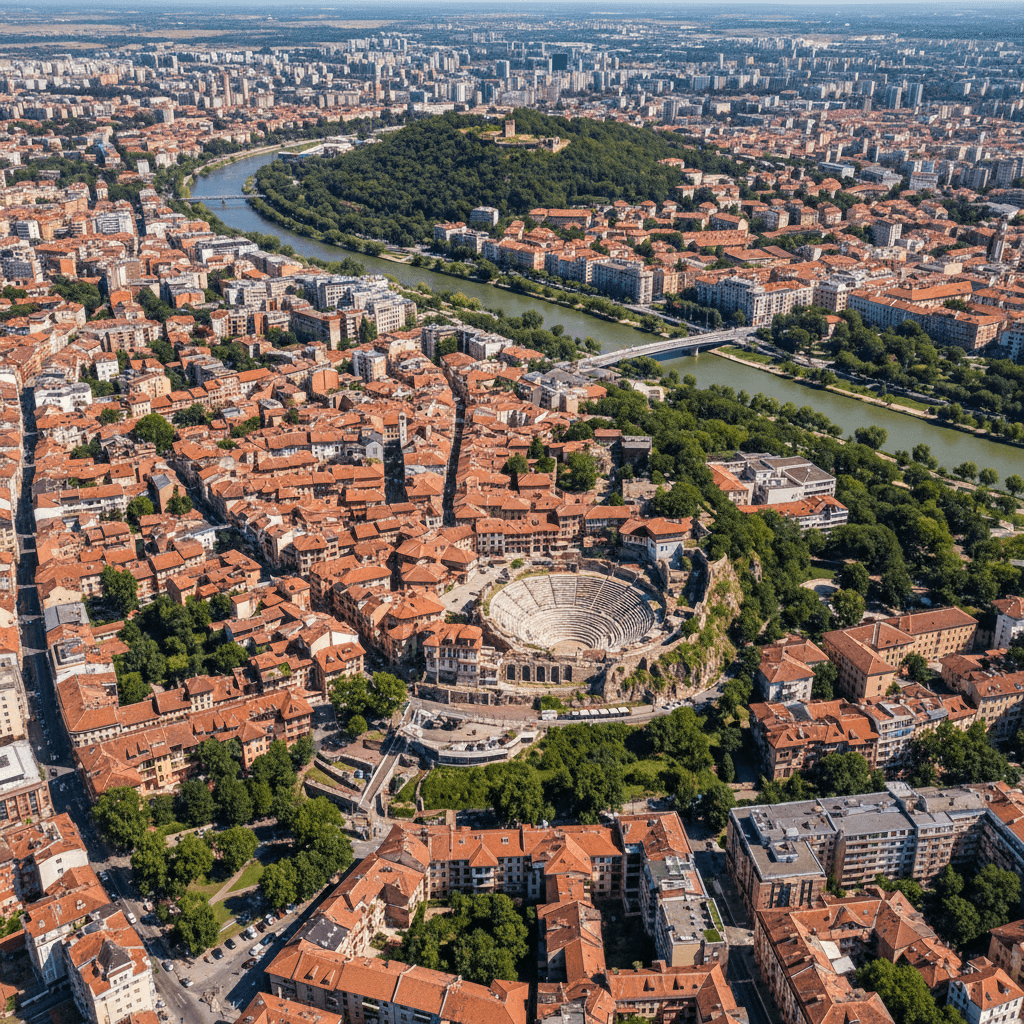
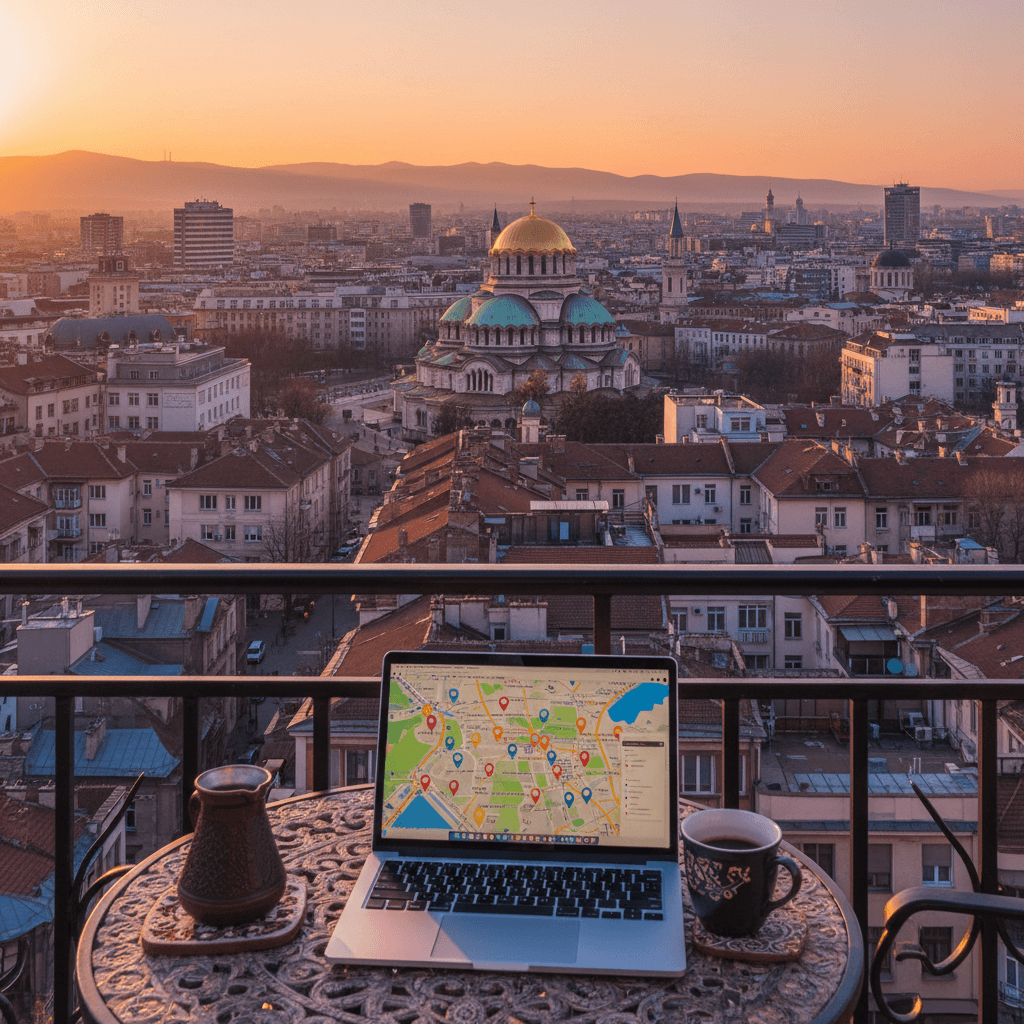
Sofia doesn't try to impress you. That's honestly part of the appeal. You walk past a Roman ruin on your way to a specialty coffee shop, step over a cracked sidewalk and end up at a rooftop bar with Vitosha Mountain filling the horizon and it all somehow works.
The city sits at this strange, fascinating intersection of Ottoman history, Soviet-era concrete and a genuinely modern tech scene that's grown fast over the last decade. It's not polished. The streets smell like diesel and banitsa pastry in roughly equal measure, older trams groan through the center and some blocks look like they haven't been touched since 1987. But that roughness is, turns out, exactly what keeps it affordable and keeps the pretension low.
Most nomads land here for the numbers and stay for the pace. Monthly costs run €800 to €1,200 for a comfortable solo setup, which is genuinely hard to match anywhere else in the EU orbit. Internet is fast, coworking spaces are solid and the tech community is real, not just a few freelancers in cafes.
The vibe is relaxed in a way that takes some adjustment if you're coming from Berlin or Lisbon. Sofia doesn't perform for visitors, it just exists. Locals in their 30s and 40s are warm and often speak decent English; older residents sometimes aren't, that's just the reality. Don't take it personally, it passes quickly.
Winters are genuinely rough. Cold, grey and the smog settles into the valley in a way that makes January feel oppressive. Spring and autumn are, frankly, when the city earns its reputation, mild temperatures, dry air and Vitosha turns green and close enough that you can be on a hiking trail 30 minutes after leaving your apartment.
What makes Sofia different from the usual nomad circuit isn't one big thing. It's the combination: low costs, fast infrastructure, a mountain on the doorstep and a city that hasn't been overrun yet. Plovdiv gets the Instagram attention, Sofia gets the people who actually stay. The expat community here is tight, weirdly unpretentious and easy to find through coworking events and Facebook groups like Foreigners in Sofia.
It rewards patience. Give it two weeks before you judge it.
Sofia is, honestly, one of the most affordable capitals in Europe right now. A single person can live comfortably on €800 to €1,200 a month and that's not a backpacker budget, that's a real apartment, decent food and a coworking membership.
Rent is where you'll feel the biggest variable. City center studios run €450 to €600, neighborhoods like Lozenets and Oborishte push closer to €600 to €900 and if you're willing to be 20 minutes out in Studentski Grad, you can find a decent place for €350 to €550. Prices have crept up post-euro adoption, expats who arrived three years ago will tell you that, though Sofia still undercuts Western Europe by a wide margin.
Food costs stay low if you cook and eat local. Groceries and street food can come in around €200 a month, a banitsa from a street stall costs about €2.50 and a sit-down dinner for two at a mid-range restaurant runs €30 to €50. Upscale dining at places like Cosmos or The Talents will push past €50 a meal, that's the exception not the rule.
Here's a rough monthly breakdown by lifestyle:
- Budget (€800 to €1,000): Studentski Grad apartment, groceries and street food, public transport monthly pass at €25.50, cafes instead of coworking
- Mid-range (€1,200 to €1,400): City center or Oborishte flat, mix of cooking and dining out, coworking at Betahaus or SOHO around €130 to €150 a month
- Comfortable (€1,800 to €2,000): Lozenets apartment, regular restaurants, taxis, premium coworking membership around €200
Transport is weirdly cheap. The metro costs €0.80 a ride, a monthly pass covers buses, trams and trolleybuses for €25.50 flat. Taxis through TaxiMe or Yellow Taxi run €0.50 to €0.82 per kilometer, there's no Uber here.
Internet is a genuine standout. Fixed broadband averages 115 Mbps for €10 to €15 a month, mobile speeds rank fourth globally. That's not marketing copy, that's just the infrastructure.
Sofia isn't free of frustration. Prices are rising, some landlords won't deal with foreigners without a local contact and coworking spaces fill up fast in winter. Still, for what you get, the value's hard to argue with.
Sofia's neighborhoods are, honestly, pretty distinct from each other and picking the wrong one will cost you time and money. Here's where different types of people actually end up happy.
Digital Nomads
Oborishte is the default choice and for good reason. It's walkable to the center, lined with independent cafes that don't mind if you nurse a coffee for three hours and rent sits around €500-800 a month for a decent apartment. The coworking space SOHO is right in the neighborhood, Betahaus is a short walk away on Shipka Street, the whole area just works for a work-from-anywhere setup.
Studentski Grad is worth considering if you're watching your budget closely. Rent drops to €350-550, the nightlife is cheap (€2-3 drinks), it's young and loud, though you're 20-25 minutes from the center and it shows.
Expats
Most expats, turns out, gravitate toward Lozenets. It's quieter than the center, close to South Park and has the kind of modern amenities that make long-term living feel less like an adventure and more like actual life. Rent runs €600-900, which is pricier for Sofia but still reasonable by any Western standard.
Oborishte also pulls a solid expat crowd. It's slightly more affordable than Lozenets, still safe and has an artsy, gallery-and-cafe energy that doesn't get old quickly.
Families
Ivan Vazov is the quieter, more residential pick. Parks nearby, good metro access and a genuinely local feel that Lozenets sometimes lacks. It's not expat-heavy, which some families actually prefer, fewer tourists means lower prices at local restaurants and markets. Rent is competitive, typically landing below Lozenets rates.
Solo Travelers
The City Center, around Vitosha Boulevard, is the obvious answer. Everything's walkable, rent is €450-600 and you'll never be bored. It's noisy, frankly and it can feel touristy in patches, but for short stays it's hard to argue against the convenience.
One honest note across all neighborhoods: sidewalks are often cracked and uneven, winter smog settles in the center badly and older buildings can have heating quirks. Go in with realistic expectations, Sofia rewards that.
Sofia's internet is, honestly, one of the best arguments for basing yourself here. Fixed broadband averages 115 Mbps down for €10-15 a month, mobile speeds rank 4th globally at around 205 Mbps and even mid-range cafes tend to have stable, fast WiFi with outlets nearby. Pick up a SIM from Vivacom, A1 or Yettel at the airport for €5-10 and you're sorted from day one.
The coworking scene is small but solid, turns out it punches well above Sofia's size. Most nomads find three or four spaces worth knowing:
- Betahaus (Shipka St.): Day pass €15, monthly €180; rooftop terrace, decent coffee smell drifting up from the ground floor, genuinely good community vibe.
- SOHO (Oborishte): Day pass €15-20, regular events, walkable from most expat neighborhoods.
- Puzl: Skews heavily toward Sofia's IT crowd, over 1,000 tech professionals use it regularly, so the networking is weirdly useful if you're in that world.
- Networking Premium: Multiple locations, €200 monthly, dog-friendly if that matters to you.
If you don't want to commit to a membership right away, cafes like Coffee Fellows and Stay Awake are laptop-friendly without the side-eye. Expect outlets, decent WiFi and the low hum of other people working. Not glamorous, but functional.
Day passes run €15-20 depending on the space, monthly memberships land between €130-200, which is frankly cheap compared to most European capitals. Budget nomads skip coworking entirely and work from cafes for weeks without anyone caring, the culture here is relaxed about that sort of thing.
One honest caveat: Sofia's coworking scene doesn't have the density of Lisbon or Tbilisi, so if you need a huge variety of spaces or constant programming, you might feel the ceiling pretty quickly. The community exists, it's just tighter. Oborishte is the neighborhood to be in if coworking access and walkability both matter, most of the better spaces and laptop-friendly cafes cluster there or just north of the city center.
For the price of internet alone, Sofia makes a strong case. €10-15 for 115 Mbps. That's hard to argue with.
Sofia's pretty safe, honestly. Violent crime is low and most nomads and expats who've spent time here say they've never felt genuinely threatened walking around the center. That said, pickpockets are a real and consistent problem on Vitosha Boulevard and the metro, so keep your phone in a front pocket and don't flash expensive gear on crowded trams.
At night, Sveta Nedelya Square and Lions Bridge attract a rougher crowd, it's not dramatic, but there's no reason to linger there after dark when Oborishte and Lozenets are a short taxi ride away and feel completely different. Dim side streets anywhere in the city are worth avoiding after midnight, the uneven, potholed pavements are a hazard even in daylight.
Healthcare is where things get more complicated. The public system is, turns out, significantly underfunded and overcrowded and most expats skip it entirely for anything beyond a basic emergency. Private clinics are a different story: well-equipped, English-speaking staff and surprisingly affordable compared to Western Europe. A GP visit at a private clinic typically runs €20-40, which sounds reasonable until you need something more involved and realize you're paying fully out of pocket.
Get international health insurance before you arrive. Most long-term nomads here use SafetyWing for the price point, though it has gaps; expats staying longer often layer it with a local private plan. Don't skip this step.
Pharmacies are everywhere and well-stocked, pharmacists often speak enough English to help with minor issues and you can get many medications over the counter that would require a prescription elsewhere. For emergencies, dial 112, the EU-wide number, which connects to police, ambulance and fire.
- Pickpocket hotspots: Vitosha Boulevard, metro lines, crowded trams
- Areas to avoid at night: Sveta Nedelya Square, Lions Bridge, unlit side streets
- Safer neighborhoods: Oborishte, Lozenets, Ivan Vazov
- Private clinic visit: roughly €20-40
- Emergency number: 112 (EU-wide)
- Recommended insurance: SafetyWing as a baseline, supplement if staying long-term
Overall, Sofia doesn't require paranoia, just basic urban awareness. It's weirdly easy to get comfortable here fast, which is exactly when people get careless.
Sofia's public transport is, honestly, better than the city's reputation suggests. The metro covers the key corridors cleanly and costs €0.80 a ride, with a monthly pass at €25.50 that most nomads just buy on autopilot. Buses, trams and trolleybuses fill the gaps, though they're slower and the stops aren't always obvious if you don't read Cyrillic.
Download the Sofia Public Transport app before you need it, not after you're standing confused at a stop. It tracks routes in real time and saves a lot of guesswork, the network looks messier than it's once you've used it a few times.
The airport metro is genuinely useful. It's €0.80 and drops you in the center in about 25 minutes, skip the taxi queue unless you're traveling with a mountain of luggage.
There's no Uber here. For ride-hailing, TaxiMe and Yellow Taxi are the go-tos, running roughly €0.73 to €1.24 per kilometer daytime. Volt operates as a premium option if you want a cleaner car and a driver who won't pretend the meter's broken. At the airport specifically, stick to the official taxi rank, the guys who approach you inside the terminal charge whatever they feel like charging that day.
The center itself is walkable, which is great in theory. In practice, the sidewalks are uneven and potholed enough that you'll want to watch your feet, especially after dark or after rain. It's not dangerous, just genuinely annoying after the third time you catch your shoe on a broken slab.
For bikes, Cyrcl rentals work through an app and are fine for flat stretches, less fun when the pavement turns unpredictable.
A few things worth knowing before you move around the city:
- Metro hours: Runs from around 5:30am to midnight daily
- Taxis: Always confirm the meter's running before you move, turns out this matters more than you'd think
- Ride apps: TaxiMe and Yellow Taxi both have English interfaces
- Bikes: Use Cyrcl app for rentals; stick to main roads
- Airport: Metro is the obvious call, €0.80 flat
Most nomads don't bother with a car. Parking's a headache, traffic through the center moves slowly and the metro gets you where you actually need to go.
Bulgarian is, honestly, not the easiest language to pick up fast and the Cyrillic alphabet throws most people off in the first hour. Street signs, menus, metro stations , all Cyrillic. You'll adjust quicker than you think, but plan on feeling briefly illiterate when you arrive.
The good news is that English works fine in most situations nomads actually care about. Coworking spaces, tech offices, cafes in Oborishte, hotel front desks, most restaurants on Vitosha Boulevard , staff under 35 generally speak decent to fluent English. The gap shows up with older locals, taxi drivers who aren't on TaxiMe and anyone at a government office. There, you're on your own, bring patience.
Google Translate handles Cyrillic well, the camera translation feature is genuinely useful for menus and signs, it's not perfect but it gets you through most situations without embarrassing yourself. Download it offline before you land.
A few words go a long way. Locals, turns out, respond noticeably warmer when you make even a small effort:
- Dobar den: Good day (standard greeting)
- Blagodarya: Thank you
- Izvinete: Excuse me
- Kolko struva?: How much does it cost?
- Ne razbiram: I don't understand
One thing that trips up almost every newcomer: Bulgarians shake their head side to side to mean yes and nod up and down for no. The opposite of what you're wired for. You'll misread a conversation or two before it clicks, it's mildly maddening at first.
The expat community is large enough that you won't feel isolated. The "Foreigners in Sofia" Facebook group (thousands of members) weirdly becomes your first real resource for everything, not just language questions. People post recommendations, warnings, translation help, apartment leads.
Sofia's tech scene runs almost entirely in English, so if you're working remotely and spending most of your time in Oborishte or at Betahaus or Puzl, you can honestly go days without needing Bulgarian at all. That's convenient, but don't let it stop you from learning the basics. The city's friendlier when you meet it halfway.
Sofia's climate is, honestly, more varied than most people expect. You've got four proper seasons here, not the mild blur you'd get in Lisbon or Barcelona and that shapes when the city feels good to actually be in versus when it's just something to endure.
May, June, September and October are the sweet spot. Temperatures sit between 15 and 24°C, the air smells like linden trees and coffee and the city's outdoor café culture is in full swing without the punishing heat of July and August. Most nomads who've spent real time here agree: September is probably the best single month, warm enough for Vitosha hikes but cool enough that you're not sweating through your laptop sessions.
Summer is a different story. July and August regularly hit 30°C or above, the pavement radiates heat and the city center gets thick with tourists and exhaust fumes. It's not unlivable, but it's not comfortable either and the coworking spaces fill up fast with people escaping apartments that weren't built with air conditioning in mind.
Winter is cold. Really cold. December through February brings temperatures that drop to around -7°C at night, occasional snow that turns to grey slush fast and a smog problem that locals don't talk about enough. The city sits in a valley, so on still winter days the air gets trapped and turns visibly hazy, it's one of the more frustrating things about living here long-term.
Spring is fine but uneven. March and April can be rainy and grey, turns out Sofia averages around nine rainy days per month across much of the year, so pack accordingly and don't assume sunshine just because it's April.
- Best months: May, June, September, October
- Avoid if heat-sensitive: July and August (30°C+, crowded)
- Winter reality check: December through February brings sub-zero nights, smog and icy sidewalks
- Spring: March and April are mild but frequently wet and grey
If you're flexible on timing, aim for late September. The summer crowds are gone, rents sometimes dip slightly and Vitosha turns amber and red, which is weirdly one of the better things about this city.
Sofia runs on a few unspoken rules and knowing them before you land saves real headaches. Nods mean "no" here, head shakes mean "yes," it's genuinely disorienting at first and you will confuse a shopkeeper at least once. Tip around 10% at restaurants, remove your shoes when entering someone's home and don't expect older locals to speak English, they often won't and won't pretend otherwise.
For a SIM, head straight to the airport arrivals hall. Vivacom, A1 and Yettel all have desks there, plans run €5 to €10 for 20 to 50GB and you'll be connected before you've grabbed your bag off the carousel. Mobile speeds are, honestly, absurdly fast, 205 Mbps on average, which puts Sofia in the top five globally.
Banking is straightforward if you don't overcomplicate it. Wise and Revolut both work well for day-to-day spending, local ATMs are everywhere and you won't need a Bulgarian bank account unless you're staying long-term and establishing residency. Cash is still king at markets and smaller spots, so keep some leva on you.
For apartments, skip the traditional real estate sites and go straight to Facebook groups and Flatio. The "Foreigners in Sofia" Facebook group (thousands of members) turns out it's also the most reliable source for short-term rentals and landlord recommendations. Expect to pay €450 to €670 for a studio in the center, less in Studentski Grad, more in Lozenets.
Getting around is cheap, it's almost embarrassingly cheap. A single metro ride costs €0.80, a monthly pass is €25 and the airport metro into the center takes 25 minutes flat. No Uber operates here, use TaxiMe or Yellow Taxi instead, both are metered and legitimate. Avoid unmarked cabs outside the airport, they're, frankly, a scam waiting to happen.
A few things worth knowing before you go:
- Day trips: Plovdiv by train, Vitosha hikes (30 minutes from center) and the Rila Lakes are all doable without a car
- Smog: Winter air quality gets bad, coal heating and traffic stack up in January and February
- Language app: Google Translate's camera function handles Cyrillic menus instantly
- Emergency number: 112 works EU-wide
- Pharmacies: Everywhere, well-stocked and staff often speak basic English
Get international health insurance before you arrive. SafetyWing is the standard choice among nomads here, public hospitals are strained and private clinics, while good, bill you upfront.
Need visa and immigration info for Bulgaria?
🇧🇬 View Bulgaria Country GuideEasy Landing
Settle in, no stress
Monthly Budget Estimates
More cities in Bulgaria
Veliko Tarnovo
🇧🇬 Bulgaria
Burgas
🇧🇬 Bulgaria
Bansko
🇧🇬 Bulgaria