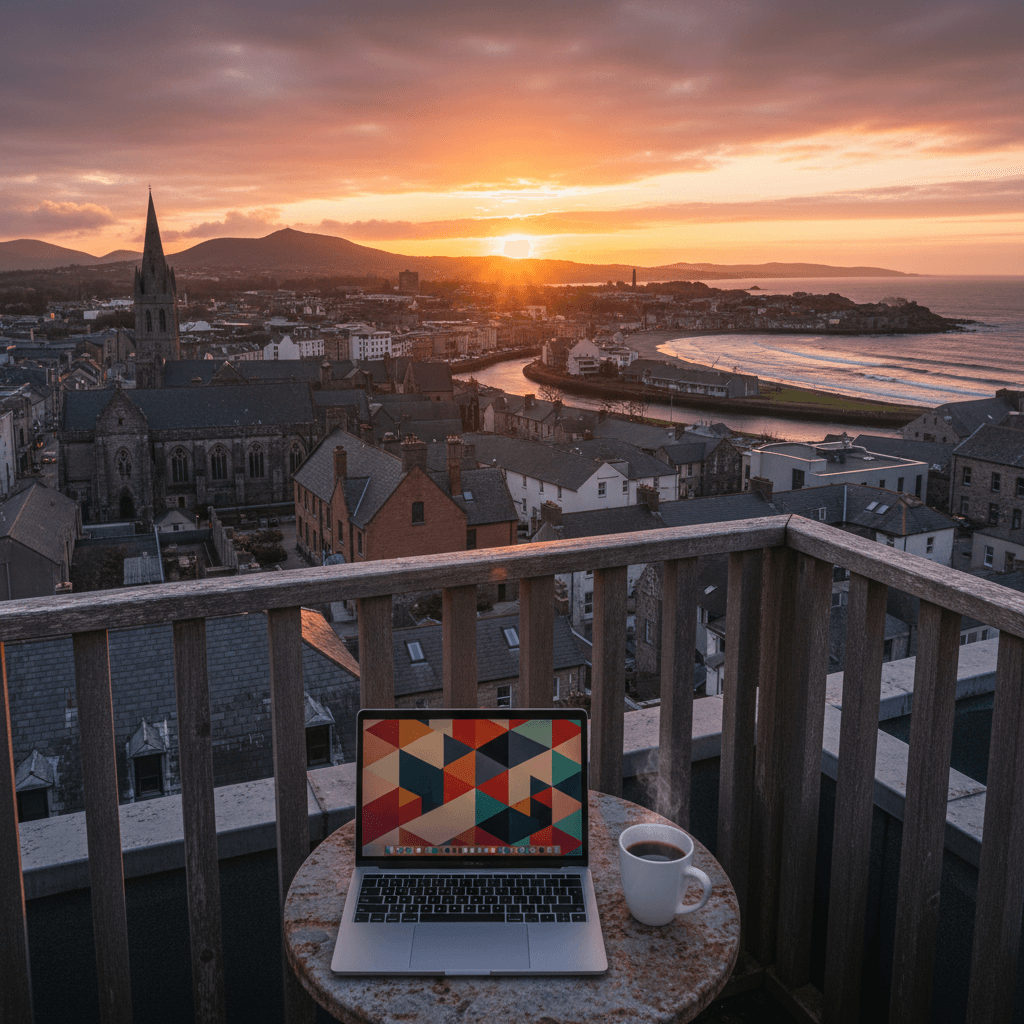
Sligo
🇮🇪 Ireland
Sligo feels like a place that got on with its own life and never bothered to perform for visitors. The town sits on the Atlantic edge of northwest Ireland, with Benbulben looming nearby, beaches a short drive away and Yeats references everywhere, from bookshop shelves to pub chatter. It suits people who want calm, sea air and a slower pace, not neon, noise and a big-city grind.
The vibe is friendly without being fake. Shopkeepers remember faces, taxi drivers talk straight and locals don’t seem impressed by trend-chasing. Rain comes in hard, sideways bursts, the wind smells salty and metallic and the whole town can feel wrapped in grey light for a day or two. That can be grating, but it’s also part of why Sligo works for long stays, because you’re not constantly being sold something.
What nomads usually like:
- Scenery: beaches, mountains and long coastal walks without leaving town behind.
- Value: rent is usually lower than Dublin or Cork, with city-centre studios often around €900 to €1,800.
- Work-life balance: easy to finish work, then head to Strandhill for a walk or a surf.
- Community: it’s small enough that you stop feeling anonymous fast.
What frustrates people:
- Nightlife: there are solid pubs, but not much late-night variety.
- Dining: you’ll find good restaurants, but fewer international options than in larger Irish cities.
- Weather: it changes quickly and wet wind can get under your jacket in seconds.
Most expats end up choosing between Sligo Town and Strandhill. Sligo Town is the practical base, with the train station, shops, pubs and coworking spaces like The Building Block close by. Strandhill is more laid-back, more coastal and better if you’d rather hear waves than traffic, though you’ll pay for that distance in convenience.
For remote work, the internet is decent, fibre is available in many areas and cafes are generally laptop-tolerant during the day. The social scene leans local and low-key, with places like The Strand Bar, Swagman Bar and Shoot the Crows doing most of the heavy lifting. Sligo doesn’t try to dazzle you. It just gives you sea, space and a town that still feels lived in.
Sligo is one of Ireland's easier places to live on a normal salary, though it’s not cheap by global standards. A single person can get by on about €1,654 to €1,871 a month with rent included and a more comfortable setup lands closer to €2,686. Compare that with Dublin and the difference is obvious the first time you open a rental listing.
Rent is the big swing factor. A studio or one-bedroom in the town centre usually runs €900 to €1,800, with outside-the-centre one-beds often at €450 to €900. Three-bed homes in the centre can reach €1,500 to €2,500. Locals often steer newcomers toward Cartron, Ballinode or Farmhill if they want quieter streets and slightly less pressure on the wallet.
What everyday spending looks like
- Cheap lunch or dinner: about €15
- Mid-range meal for two: about €70
- Cappuccino: €3.17
- Pint of beer: €5.50
- McDonald’s combo: €8.55
Groceries are reasonable if you shop sensibly and skip the convenience-store habit. A gallon of milk is around €4.89, bread about €1.28, a dozen eggs roughly €3.07 and chicken fillets about €4.31 per pound. Prices jump fast if you lean on takeaway coffee, pub food and the nice bakery smell drifting out of town centre cafés.
Monthly basics and transport
- Internet: about €43.43 for 60+ Mbps
- Mobile plan: €15 to €20 for 10GB+ data
- Utilities: about €161.02
- Local bus fare: €2
- Taxi start: €4.20
The town centre is walkable, so many nomads don’t bother with a car unless they’re heading out to Strandhill, Rosses Point or farther along the coast. Sligo Mac Diarmada Station connects to Dublin, but local buses can feel patchy once you leave the centre, so plan around schedules rather than assuming they’ll rescue you.
For remote work, the internet is good enough for video calls and file transfers and spaces like The Building Block and An Chroí are the usual answers when you need a proper desk and quiet. In cafés, you’ll hear clattering cups, rain on the windows and the low hum of laptops, which suits the place just fine.
Sligo’s best neighborhoods are close together, but they don’t all feel the same. If you want cafés, walkability and easy nights out, stay in the town centre. If you want sea air, surf and quieter mornings, Strandhill is the sharper pick.
For nomads
City Centre and areas around Harbour Court and Market House make life easiest if you’re working online. You can walk to coffee, the bus station, the train at Sligo Mac Diarmada and places like The Building Block, which has fast WiFi and clean, no-nonsense workspaces. The town has that damp Atlantic smell after rain and you’ll hear pub chatter and the scrape of chairs late into the evening.
- City Centre: Best for coworking, cafés and a car-free routine.
- Harbour Court: Handy for errands, dining and quick access to central services.
- Market House area: Good if you want to stay central without feeling stuck on a main street.
For expats
Ballinode, Cartron and Farmhill are the sensible choices if you’re planning to stay a while. They’re quieter, more residential and usually easier on the budget than the centre, with less of the weekend noise that spills out from pubs. The tradeoff is simple, you’ll probably want a bike, a car or patience, because public transport between neighborhoods can be patchy.
- Ballinode: Practical, settled and close enough to town without being in the middle of it.
- Cartron: Family-friendly and straightforward for day-to-day living.
- Farmhill: A good pick if you want a calmer home base.
For families
Families usually do better in the residential edges than in the centre. Cartron and Farmhill give you more breathing room and you’re less likely to deal with late-night noise, delivery vans or tourists dragging suitcases over wet pavement at 7 a.m. The shopping and medical basics are still close enough to keep life easy.
- Cartron: Quiet streets and a lived-in local feel.
- Farmhill: Roomier and calmer, with a more suburban rhythm.
For solo travelers
Stay in the town centre if you want to meet people fast and keep plans loose. Strandhill works better if you care more about morning walks, surf and long beach days than a busy pub scene. It’s 5 km west of town, so you’re close enough for a taxi, but far enough that the pace drops the minute you arrive.
- Town Centre: Safest bet for first-time visitors and short stays.
- Strandhill: Best for beach access, cafés and a slower pace.
My blunt take, skip the outskirts unless you have a reason to be there. Sligo works best when you’re near the centre or on the coast, because that’s where the cafés, the workspaces and the actual social life are.
Sligo’s internet is good enough for real work, not just checking email. Most flats can get 60-plus Mbps fibre for about €43.43 a month and town-centre cafes usually hold up fine for video calls, though speeds can dip when the place fills with laptop people and steam from the coffee machine. The bigger annoyance is patchy quality outside the centre, so don’t assume a Strandhill rental or a quiet suburb has the same setup without asking first.
For coworking, The Building Block is the name most nomads bring up first. It’s modern, clean and set up for people who actually need to concentrate, with fast wifi and fair pricing. An Chroí in south Sligo is another solid option, especially if you want private offices, training rooms or a podcast studio. Spaces also has multiple locations and can be booked through its app, which is handy if you only need a desk for a day or two.
Best coworking options
- The Building Block: Best for focused work, reliable wifi and a straightforward setup.
- An Chroí: Good for private offices, meetings and longer stays.
- Spaces: Flexible booking through the app, with lounge-style areas and café space.
Cafe working is part of the rhythm here and Sligo does it well enough. You’ll find a decent laptop crowd in town-centre spots, especially on wet afternoons when the Atlantic rain drums on the windows and nobody wants to be outside. Just don’t camp out for hours in a tiny place at lunch rush. Locals notice and honestly, they should.
Mobile data is cheap by Irish standards, with 10GB-plus plans usually sitting around €15 to €20 a month. Vodafone, Three and Eir are the main names to look for and you can sort a SIM in phone shops or supermarkets without much drama. If you’re based in Sligo for a while, a backup data plan is smart, because even good broadband can wobble after a storm rolls in off the coast.
What remote workers should expect
- Internet: Reliable in town, less predictable in some outlying areas.
- Cafes: Good for casual work, not ideal for all-day deep focus.
- Mobile data: Affordable and easy to set up.
For most remote workers, Sligo is easy to work from without the usual urban noise, but it’s not a hyper-connected tech hub. If you need a strong desk setup every day, stick close to the town centre and use coworking as your main base. If you’re fine mixing home, cafes and the occasional office day, it’s a comfortable place to keep moving.
Sligo feels calm and that’s part of the appeal. Most days, you’re more likely to hear gulls over Garavogue River traffic, the rattle of a bus pulling in on O’Connell Street or rain tapping on a window than anything remotely threatening. For solo travelers and remote workers, that usually translates into a pretty low-stress place to live.
Crime is generally low by Irish city standards and locals tend to be watchful in a good way. That said, town centre nightlife can get messy on weekends, especially around the busier pubs and late bars, so use the same common sense you’d use anywhere, keep an eye on your phone, don’t leave a laptop sitting in a café chair and book a taxi home if the streets feel rowdy.
Emergency numbers: 999 and 112 both work in Ireland. If you need help, call first and explain the issue clearly, then follow up with the nearest Garda station or medical service if needed.
Healthcare is straightforward, though not always quick. Ireland has public healthcare through the Health Service Executive and private options too and many expats take out private health insurance because it shortens the wait for routine appointments. Sligo has local hospital facilities, pharmacies across town and doctors who can usually handle everyday issues like infections, minor injuries and prescriptions without drama.
Good to know:
- Primary care: Register for a Public Services Card if you’re staying longer and need access to non-emergency public services.
- Private care: Widely available and often faster than public routes for non-urgent problems.
- Pharmacies: Easy to find in the town centre and around main residential areas.
- Specialist care: More complex treatment often means heading to Galway or Dublin.
For digital nomads, the practical upside is that you’re rarely far from help. The downside is that Irish healthcare bureaucracy can feel slow and same-day specialist access isn’t something to count on. If you’re moving to Sligo, sort insurance early, keep your prescription details handy and know where the nearest pharmacy is before you actually need one.
For basic peace of mind, the town centre, Strandhill and the main residential areas like Ballinode and Cartron are easy places to base yourself. They’re walkable, familiar to locals and not the sort of places where you need to keep looking over your shoulder.
Sligo is small enough to cross on foot and that’s still the easiest way to get a feel for it. The town centre is compact, the pavements are usually fine and you’ll hear the usual mix of seagulls, traffic on Shop Street and rain ticking off shop awnings when the weather turns. Most daily errands, cafés and pubs sit within a 15 to 20 minute walk.
For anyone staying longer, local buses do the basic job, but they’re not a magic solution. A one-way ticket is about €2 and routes connect the town with nearby areas and other Irish cities, though schedules can feel thin once you’re outside peak hours. If you’re living in Strandhill, Ballinode or Cartron, don’t assume everything is on your doorstep, because a short hop by car can save a lot of time.
Getting in and out
- Train: Sligo Mac Diarmada Station links the town with Dublin and it’s the cleanest option if you’d rather not deal with motorway driving.
- Bus: Regular services run to other towns and cities, though delays happen and Sunday timetables can be annoyingly sparse.
- Road: The N4 and N15 make driving straightforward, which is one reason locals still lean on cars for anything beyond the centre.
Taxis are dependable enough, but they’re not cheap. The meter starts around €4.20, then climbs by distance, so short rides are fine and longer late-night trips can sting. Ride-hailing apps exist in theory, but don’t rely on them the way you would in Dublin or London, because traditional taxis are far more common.
Best ways to move like a local
- Walking: Best for the centre, the riverfront and everyday coffee runs.
- Cycling: Handy if you’re fit and don’t mind Atlantic wind in your face.
- Car: The most practical choice for Strandhill, out-of-town housing and weekend trips.
Bike rental options aren’t heavily advertised, so plan ahead if cycling matters to you. The roads around town are manageable, but wind off the coast can be brutal and winter rain makes everything slick and a bit miserable. For airport transfers, most people use a taxi, bus connection or rental car from Ireland West Airport Knock, about 90 km away or Shannon, much farther south.
If you’re working remotely, living near the centre or in Strandhill keeps life simple. You can get to a coworking desk, a supermarket and a decent lunch without thinking too hard about transport, which is really the point here.
English gets you through most everyday life in Sligo and you’ll hear a lot of it in shops, cafes and coworking spaces. Irish is present in road signs and school life, but it’s not something you need for day-to-day errands. Locals tend to switch gears quickly, though the Sligo accent can be thick at first, with clipped vowels and fast, low conversations that can disappear under the sound of rain on pavements and wind off the Atlantic.
Most expats and digital nomads get by fine with standard English, a phone and a little patience. If someone gives you directions, ask them to repeat the street name slowly. People are usually happy to help, but they won’t always think to slow down for you unless you ask.
What you’ll hear
- Everyday English: Used in shops, pubs, transport and offices.
- Irish language: Mostly on signs, school materials and cultural events.
- Sligo accents: Warm and friendly, but can be hard to catch in a noisy bar or café.
Phone signal and internet are good enough for remote work and that matters more than perfect language skills in most cases. In coworking spots like The Building Block and An Chroí, staff are used to visitors, so booking a desk or asking about meeting rooms is straightforward. Cafes are usually relaxed about ordering at the counter, but don’t expect the brisk, transactional feel you’d get in a bigger city. Service is friendly, sometimes slow, especially when the lunch rush hits and the place smells like espresso, toast and wet jackets drying by the door.
Useful phrases and local habits
- "How are ye?" A very common local greeting, not an actual question.
- "Grand": Means fine, okay or no problem.
- "Craic": Means fun, chat or general good times, not the word you may have seen elsewhere.
- Small talk: Weather, surf and football come up a lot.
Email is the safest way to handle anything official, from rentals to utility accounts, because phone calls can be fast and informal. For healthcare, appointments and public services, keep your wording simple and direct. If you’re unsure, ask someone to spell the name of a doctor, landlord or street. That saves a lot of back-and-forth later, especially when a voicemail is muffled by traffic or a barking dog.
Facebook groups are where a lot of local expat chatter happens and they’re often more useful than polished websites. People share electrician recommendations, flat leads and practical advice on where to buy things without getting rinsed. It’s a small town, so word travels quickly, for better and worse.
Sligo gets the full Atlantic treatment, so expect a lot of rain, quick changes and wind that can slap you awake on a grey morning. The upside is that the weather rarely feels static. A sunny spell can appear over Strandhill, then ten minutes later the sky goes slate-colored and you can hear rain rattling off windows in the town centre.
Best time to visit is late spring through early fall. May, June and September usually give you the best balance of milder temperatures, longer daylight and fewer weather tantrums. July and August are the easiest months for beach days, surf sessions and hiking around Benbulben, but they’re also the busiest and least forgiving if you don’t like crowds or higher prices.
Winter isn’t a deal-breaker, but it does feel damp and dark. The wind off the Atlantic bites, pavements stay slick and the sea has that steel-coloured look that’s beautiful for 10 minutes and exhausting after a week. If you’re working remotely, winter can still be fine if you don’t mind wrapping your routine around short days and indoor time.
What each season feels like
- Spring: Cool, changeable and brightening fast. Good for cheaper stays and fewer tourists.
- Summer: Mildest weather, beach season and the best shot at outdoor work breaks in Strandhill.
- Fall: One of the smartest times to come. Fewer crowds, decent daylight and dramatic skies over the coast.
- Winter: Wet, windy and quiet. Fine if you want solitude, but not for sun-chasers.
For digital nomads, shoulder season is the sweet spot. You’ll usually get better rent deals in the city centre, easier booking at places like The Building Block and a calmer rhythm in cafes, where the smell of coffee mixes with wet wool and sea air drifting in from the door. If you need a social scene, summer has the edge; if you want actual room to breathe, go in May or September.
Sligo also works well if you’re flexible day to day. Keep a rain jacket, waterproof shoes and a backup plan for coworking or cafe work, because the weather can turn on you halfway through a walk along the Garavogue or a run out toward the beach. Pack for layers, not outfits. That’s the real local strategy.
Sligo is easy to live in, but not friction-free. The town centre is walkable, the people are warm and you’ll hear plenty of conversations spilling out of pubs and cafés on a wet afternoon, but the weather can turn the place grey and sideways in a minute. Bring a decent rain shell and don’t expect big-city transport frequency or late-night options.
Budget: A single person can usually get by on €1,654 to €1,871 a month, including rent, if they keep things modest. A more comfortable setup runs closer to €2,686 and if you want a bigger flat, regular dining out and more breathing room, costs climb fast.
Rent: A studio or one-bedroom in the city centre often runs €900 to €1,800, while outside the centre you can sometimes find one-bed places around €450 to €900. Sligo isn’t Dublin, but good rentals still go quickly, so don’t dawdle when something decent appears.
Best areas to base yourself
- City Centre: Best for cafés, pubs and coworking, plus you can walk most places in 15 to 20 minutes.
- Strandhill: Quieter and better if you want sea air, surf and a slower pace, though you’ll trade convenience for calm.
- Ballinode, Cartron and Farmhill: Residential, local and usually a bit easier on the wallet.
Internet is solid by small-town Irish standards. Fibre is common, 60+ Mbps plans are widely available and monthly internet runs about €43.43, so remote work is usually fine unless you’re uploading huge files all day. Mobile plans with 10GB or more often sit around €15 to €20 and Vodafone, Three and Eir are the main names people use.
The Building Block in Sligo gets the best word of mouth from nomads. An Chroí in South Sligo is another strong option if you want private offices or meeting rooms and Spaces has bookable work areas with lounges and cafés. Café working is possible too, but don’t expect every espresso bar to be thrilled if you park there for four hours off one cappuccino.
Getting around and staying safe
- Public transport: Local bus fares start around €2 and Sligo Mac Diarmada Station connects to Dublin by rail.
- Taxis: Flag drop is about €4.20, so they’re handy for rainy nights but not cheap for daily use.
- Walkability: Strong in the town centre, weaker once you get into outlying estates or over toward Strandhill.
Sligo is generally safe and feels relaxed after dark, though common sense still applies around the pub strip. For healthcare, you’ve got pharmacies in town and hospital access nearby, with 999 or 112 for emergencies. For airport runs, Knock is the practical choice, while Shannon is a longer haul and better only if your flight lines up.
Frequently asked questions
Is Sligo a good city for digital nomads?
How much does rent cost in Sligo?
Which area of Sligo is best for remote workers?
Where can I cowork in Sligo?
How good is the internet in Sligo for video calls?
Is Sligo walkable without a car?
How safe is Sligo for solo travelers and remote workers?
Need visa and immigration info for Ireland?
🇮🇪 View Ireland Country GuideNomad Haven
Your home away from home
Monthly Budget Estimates
More cities in Ireland
Waterford
🇮🇪 Ireland
Galway
🇮🇪 Ireland
Cork
🇮🇪 Ireland