Sheki
🇦🇿 Azerbaijan
The Spirit of the Silk Road
Sheki doesn't just feel old; it feels preserved in amber. While Baku is all glass skyscrapers and Formula 1 tracks, Sheki is a slow exhale at the foot of the Greater Caucasus Mountains. Most travelers arrive expecting a quick history lesson but end up staying because the air is cooler, the pace is human, and the cobblestone streets actually lead somewhere meaningful. It is one of those rare places where the transition from a 18th-century merchant hub to a modern nomad stop hasn't stripped away its dignity.
The vibe here is defined by "mehelle" culture, small, tight-knit neighborhoods where life happens in walled courtyards and tea houses. You won't find the frantic energy of a digital hub here. Instead, you get a town that smells like woodsmoke in the winter and blooming lime trees in the summer. It is a place for the nomad who is tired of the Bali-Lisbon-Medellin circuit and wants to remember why they started traveling in the first place.
Living History
The architectural soul of the city is the Sheki Khan’s Palace, but the real magic is in the shebeke workshops. You'll see craftsmen fitting thousands of tiny pieces of colored glass into wooden lattices without using a single drop of glue or a single nail. It is a metaphor for the city itself: intricate, sturdy, and held together by tradition rather than modern shortcuts. This isn't a "museum town" that shuts down at 5:00 PM; it is a working community where silk weaving and copper smithing are still legitimate career paths.
Nomads usually gravitate toward the upper part of town, near the Sheki Fort. Staying here means waking up to the sound of the call to prayer echoing against the mountains and the clatter of Ladas on stone roads. It is remarkably quiet, save for the occasional neighbor offering you a bag of pears over a stone wall. The hospitality here isn't a tourist gimmick; it’s a cultural reflex that can sometimes make it hard to get any actual work done because you're constantly being invited for tea.
The Nomad Experience
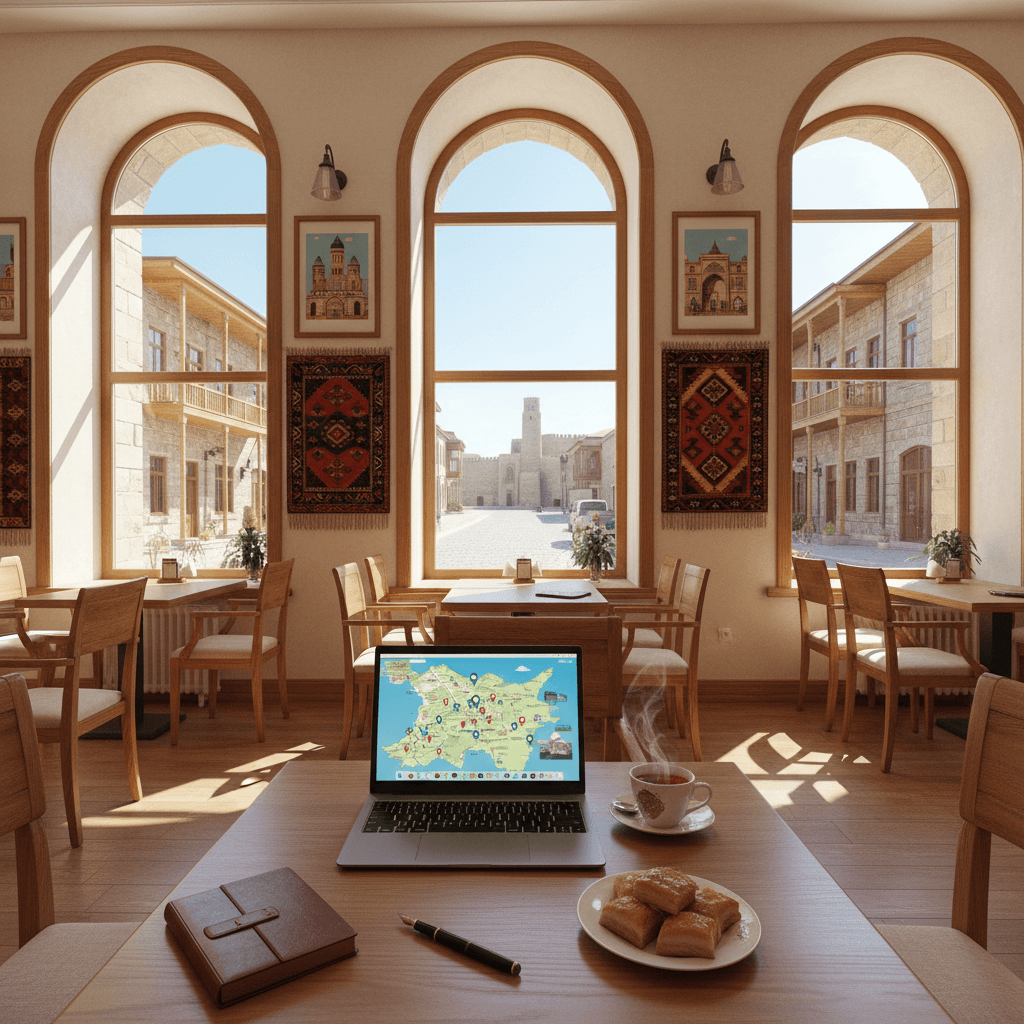
Let’s be realistic: you don't come to Sheki for the lightning-fast fiber optics or the networking mixers. You come here to "deep work" during the day and disappear into the mountains or the local Caravanserai by night. Sitting in the courtyard of a 300-year-old stone inn where Silk Road merchants once parked their camels is a surreal way to answer emails. Most locals and long-term visitors find that the lack of "distraction infrastructure" actually boosts their productivity.
- The Morning Ritual: Starting the day with a pot of local tea and Sheki Halva, a sugary, nutty masterpiece that is nothing like the halva you find in Turkey or the Middle East.
- The Social Scene: It revolves around the Chaykhana (tea house). This is where the town’s pulse is. If you want to know who has the best apartment for rent or where to find the freshest honey, you ask the men playing backgammon over small pear-shaped glasses of tea.
- The Landscape: You are surrounded by the Greater Caucasus. Within twenty minutes of the center, you can be hiking toward the Kish Albanian Church or lost in chestnut forests.
Sheki is affordable, even by Azerbaijani standards. You can find guesthouses near the historic Caravanserai around 50 AZN, or find a guesthouse like Mahmud Hostel for even less. It is a town that rewards the patient traveler. If you approach it with a rush, you’ll miss the point. If you sit still long enough, the city reveals its layers, from its Persian roots to its Russian imperial influence and its fiercely independent Azerbaijani spirit.
The Cost of Living in Sheki
Sheki is one of those rare places where your budget stretches remarkably far without forcing you to sacrifice the quality of your experience. It is significantly more affordable than Baku, making it a favorite for nomads who want to slow down and save some cash while living in a mountain setting. You can comfortably live here on a fraction of what you would spend in Eastern Europe or even Georgia.
Most expats and long term visitors find that $800 to $1,100 per month covers a very comfortable lifestyle, including a private apartment, frequent meals out, and weekend explorations. If you are sticking to a tighter budget, you could easily get by on $600 per month by shopping at the local markets and opting for more modest housing.
Housing and Accommodation
The rental market in Sheki is informal. You won't find many listings on international sites, so most people find their feet by staying in a guesthouse first and then asking around. The historic center near the Khan's Palace is more expensive, while the areas further down the hill offer better value.
- One bedroom apartment (City Center): 400 AZN to 600 AZN ($235 to $350) per month.
- Private room in a traditional guesthouse: 25 AZN to 40 AZN ($15 to $24) per night.
- Historical stay (Sheki Caravanserai): Around 50 AZN ($30) per night.
- Monthly utilities (Electricity, Water, Heating): 60 AZN to 90 AZN ($35 to $53).
Food and Groceries
Eating out is a highlight here, and it is incredibly cheap. A massive plate of Piti, the local signature stew, usually costs about 6 AZN to 8 AZN. If you prefer cooking, the Sheki Bazaar is your best friend. It is packed with fresh mountain honey, local cheeses, and seasonal produce that costs pennies compared to Western supermarket prices.
- Inexpensive meal at a local tavern: 7 AZN to 12 AZN ($4 to $7).
- Three course dinner for two (Mid range): 35 AZN to 50 AZN ($20 to $29).
- Loaf of fresh bread (Tandir): 0.60 AZN ($0.35).
- Domestic beer (0.5L): 2 AZN to 4 AZN ($1.20 to $2.35).
- Litre of milk: 1.80 AZN ($1.05).
Transport and Connectivity
Sheki is very walkable, so you likely won't spend much on getting around. When you do need a lift, the local marshrutkas (minibuses) are the standard way to move. Taxis are also plentiful and cheap, though you should agree on the price before getting in since meters aren't always used.
- Local minibus fare: 0.30 AZN to 0.50 AZN ($0.18 to $0.30).
- Short taxi ride across town: 3 AZN to 5 AZN ($1.75 to $3).
- Monthly mobile data plan (20GB+): 20 AZN to 30 AZN ($12 to $18).
Keep in mind that while the cost of living is low, Sheki is still a cash heavy society. While some larger hotels and nicer restaurants in the tourist areas take cards, you will need a steady supply of Manat for the markets, smaller cafes, and transportation. ATMs are available in the town center, but it is wise to keep a backup stash of cash just in case.
The History Buffs and Digital Nomads
If you're coming to Sheki to work while soaking up the Silk Road atmosphere, you'll want to stay in the Upper Town (Yukhari Bash). This is the historic core and a UNESCO World Heritage area. It's where you'll find the cobblestone streets and the famous Sheki Khan's Palace. Most nomads gravitate here because the environment is inspiring, even if you're just staring at a laptop screen from a courtyard.
- The Vibe: Academic, quiet, and deeply traditional. You'll hear the call to prayer and the sound of craftsmen working on shebeke glass.
- Stay: Look for guesthouses near the Sheki Caravanserai. Staying in the Caravanserai itself costs around 50 AZN per night, though the thick stone walls can sometimes make WiFi a bit spotty.
- Work: There aren't formal coworking spaces yet, so your best bet is setting up in a garden cafe. Mahmud Hostel is a popular base for younger travelers and offers a reliable social connection.
Expats and Long-Term Residents
For those planning to stay a month or more, the neighborhoods slightly south of the historic center offer a more functional lifestyle. This area, often referred to as the New Town or the Lower District, is where the actual commerce happens. You're closer to the larger supermarkets and the central bank branches.
Living here feels less like being in a museum and more like being part of an Azerbaijani community. You'll find more modern apartment builds rather than the ancient stone houses of the heights. It's much easier to find a place with updated plumbing and consistent heating, which matters if you're visiting during the chilly mountain winters.
- The Vibe: Practical and local. This is where you'll find the Sheki Neighborhood Market, perfect for buying local honey and fresh produce at local prices rather than tourist rates.
- Convenience: Most of the marshrutkas (minibuses) congregate here, making it the primary hub for getting around the region.
Solo Travelers and Social Seekers
Solo travelers usually find their home in the small clusters of guesthouses located between the Sheki Fort and the main bazaar. This "middle ground" allows you to walk to the palace in ten minutes but keeps you close to the teahouses where the locals hang out. It's the best spot for meeting people without being stuck in a secluded resort.
The social life in Sheki revolves around tea culture. You won't find a rowdy nightlife scene, but the Chaykhanas (teahouses) near the city park are where the town's heart beats. Solo travelers often find that a single pot of tea leads to an afternoon of conversation with curious locals.
Families and Nature Lovers
If you have kids or just need more green space, look toward the outskirts leading toward the village of Kish. It's only about 5 kilometers from the city center, but it feels like a different world. The air is cooler, and you have direct access to the Winter and Summer Fields, which are perfect for hiking and photography.
- The Vibe: Alpine and serene. You'll see cows wandering the roads and have the Greater Caucasus Mountains right in your backyard.
- Attractions: The Kish Albanian Church is the anchor here, providing a quiet spot for reflection away from the midday tour buses in the city center.
- Pro Tip: Renting a private villa in this area is a great move for families. You'll get more space for your money and usually a garden where you can pick your own fruit.
Connection Reality Check
Sheki isn't Baku. If you're coming here expecting dedicated coworking hubs with ergonomic chairs and community managers, you'll need to adjust your expectations. This is a town where the pace of life matches the slow drip of a samovar. However, Azerbaijan's national push for fiber optic connectivity has reached the mountains, meaning you can actually get work done here if you're intentional about where you set up shop.
Most digital nomads find that the average WiFi speeds in guesthouses hover around 10 to 20 Mbps. It is enough for emails and Slack, but video calls can get choppy during the evening peak hours. If your job depends on heavy uploads, you should definitely have a backup plan.
Best Spots to Work
The local cafe and hotel scene serves as your de facto office. The culture is generally relaxed about people lingering over a tea set for an hour or two.
- Sheki Karvansaray: Working from the courtyard of this 18th century stone inn is an unmatched experience for atmosphere. The thick stone walls can be a death sentence for WiFi signals, so try to sit closer to the main reception area or use your own data. It is cool even in the heat of summer, which saves you from hunting for air conditioning.
- Gagarin Central Park Area: You will find a few modern cafes near the city center that offer more reliable connectivity. Look for spots where younger locals hang out with laptops; these are usually the most "nomad friendly" environments.
- Mahmud Hostel: This is a favorite for the budget crowd. The common areas have a decent signal, and the social vibe makes it easy to meet other remote workers to swap tips on the best local SIM providers.
Mobile Data and SIM Cards
Do not rely on your hotel WiFi alone. Most expats recommend picking up a local SIM card in Baku before heading up to Sheki, but you can also find kiosks in the town center. Azercell is generally considered the gold standard for coverage in the regions. Bakcell is a solid runner up and often slightly cheaper.
- Azercell: Expect to pay around 15 to 25 AZN for a decent monthly data package. Their 4G coverage is surprisingly robust even in the hilly parts of town.
- Nar: Often the cheapest option, but the signal can be spotty once you head toward the Kish village area or deeper into the mountains.
- eSIMs: If your phone supports it, Airalo or similar services work here, but you will pay a premium compared to local rates.
Practical Tips for Remote Workers
Power outages aren't a daily occurrence, but they can happen during heavy mountain storms. It is smart to keep your laptop and power banks topped up. If you need a "deep work" day, the Sheki Palace Hotel usually has the most stable infrastructure in town, and their lobby is quiet enough for a professional call.
The local "tea culture" is your best friend. Ordering a "pürrengi" tea (strong, dark tea) usually buys you a lot of goodwill and a table for the afternoon. Just don't expect many power outlets in traditional tea houses; bring your own battery pack if you plan to work away from your accommodation.
Personal Safety in Sheki
Sheki is one of those rare places where you can truly let your guard down. It feels more like a large village than a city, and the local culture is rooted in a deep sense of hospitality. Most nomads find that walking through the cobblestone streets at night is perfectly safe, even in the dimly lit areas near the historic center. Crime against tourists is almost unheard of here, though you should still use common sense with your belongings in crowded areas like the central market.
The biggest safety concerns aren't people, but rather the terrain and the local wildlife. If you're heading into the Greater Caucasus foothills for a hike, keep in mind that trails aren't always well marked. It's easy to lose your footing on the loose scree or get turned around if the mountain mist rolls in. Also, keep an eye out for shepherd dogs if you're trekking near the summer pastures. These dogs take their jobs seriously, so it's best to give any livestock herds a wide berth.
Traffic in Sheki is generally slower than in Baku, but the narrow, winding roads can be tricky. Drivers don't always yield to pedestrians, even on marked crossings. When you're walking near the Sheki Khan's Palace or the main bazaar, stay alert and don't assume a car is going to stop just because you've stepped off the curb.
Healthcare Facilities
For minor issues like a cold or a scraped knee, you'll find several pharmacies, known locally as Aptek, scattered along the main road. Most are well stocked with European brands, but the pharmacists rarely speak fluent English. It helps to have a translation app ready or the generic name of the medication you need. Most pharmacies are open from 9:00 AM to 8:00 PM, though a few near the city center stay open later.
If you need more serious medical attention, the Sheki Central Region Hospital is the primary facility in town. While the doctors are capable, the equipment and facilities can feel dated compared to international standards. For anything beyond basic emergency stabilization or routine diagnostics, most expats and long term travelers head back to Baku, which is about a four hour drive away. Baku has modern private clinics like Bona Dea International Hospital or Liv Bona Dea, where English speaking staff and Western standards are the norm.
Medical costs in Sheki are very low for out of pocket payers. A basic consultation might only cost you 15 to 30 AZN. However, it's vital to have travel insurance that includes medical evacuation. If a serious accident happens while you're exploring the mountains, you'll want the peace of mind knowing you can be transported to a top tier facility in the capital or even Istanbul.
Emergency Contacts
Azerbaijan uses a unified emergency system, which makes it easy to remember the numbers if you're in a pinch. You can dial these from any local SIM or roaming phone:
- 101: Fire Department
- 102: Police (The police in Sheki are generally helpful to foreigners, though their English is often limited)
- 103: Ambulance and Medical Emergencies
- 112: General Emergency Service (This is your best bet for English speaking operators)
It's a good idea to keep your passport or a high quality digital copy on you at all times. While the local police don't frequently stop tourists for random checks, having your ID handy is a legal requirement in Azerbaijan and will make any interaction with officials much smoother.
Navigating the Cobblestones
Sheki is a town built for walking, but your calves will definitely feel the burn. The historic center is a compact maze of centuries old architecture where the main sights like the Khan Palace and the Caravanserai are clustered together. Most nomads find that once they are in the upper part of town, their own two feet are the best way to get around. The streets are paved with river stones that can be slick after a rain, so leave the fancy footwear in your luggage and stick to shoes with decent grip.
For longer distances or when you are carrying groceries back to your guesthouse, the local marshrutkas (minibuses) are the backbone of local transit. Look for the white or yellow vans with numbers in the window. Route 11 is a lifesaver for many travelers, as it connects the lower part of the city near the bus station to the upper historic district. A single ride costs a mere 0.30 AZN. You pay the driver in cash as you exit, and while there are designated stops, you can often flag them down or ask to hop out anywhere along the main road with a quick shout of saxla (stop).
Taxis and Apps
Taxis are everywhere in Sheki and they are incredibly affordable by international standards. You will see old Soviet Ladas and more modern sedans congregating near the bazaar and the main square. A standard trip within the city limits usually costs between 2 AZN and 4 AZN. It is always smart to agree on the price before you get in, though local drivers are generally honest with visitors.
If you prefer the digital route, Bolt is the primary ride hailing app that works in the region. It takes the guesswork out of pricing and language barriers, though the fleet in Sheki is much smaller than in Baku. During peak hours or bad weather, you might wait 10 to 15 minutes for a car, so plan accordingly if you have a bus to catch. Most Bolt rides across town will stay under the 5 AZN mark.
Getting In and Out
The Sheki Bus Station is the gateway to the rest of Azerbaijan. If you are heading back to Baku, the large comfortable coaches depart several times a day. The journey takes about 6 hours and costs roughly 10 AZN. It is a scenic drive, but be prepared for a mid way stop at a roadside rest area for tea and snacks. For a faster trip, shared taxis congregate outside the station. These cars leave as soon as they are full and can shave an hour off the travel time for about 15 to 20 AZN per seat.
The train station is actually located about 17 kilometers south of the town center in the village of Shaki. The overnight train from Baku is a favorite for nomads who want to save on a night of accommodation. A bed in a Kupe (four person sleeper) costs around 10 to 12 AZN. When the train arrives in the early morning, a swarm of taxis will be waiting to whisk you into the city for about 5 to 7 AZN.
Regional Exploration
To visit the nearby village of Kish to see the ancient Albanian church, you can catch Marshrutka 15 from the local market area. It runs every 20 to 30 minutes and costs 0.50 AZN. If you are feeling adventurous and want to explore the Greater Caucasus foothills at your own pace, renting a car is possible in Baku, but not common within Sheki itself. Most expats recommend hiring a local driver for the day if you want to head into the mountains; it usually costs about 50 to 70 AZN for a full day of bespoke sightseeing.
The Linguistic Landscape
In Sheki, you aren't just dealing with a different language; you are stepping into a specific dialect of Azerbaijani that locals take great pride in. While the national language is Azerbaijani (Azeri), the Sheki version is famous across the country for its distinct, melodic intonation and unique vocabulary. It's often described as sounding more "musical" or "sweet" than the Baku dialect. You'll find that locals are incredibly patient with foreigners trying to learn a few words, and a simple "Salam" (Hello) or "Sag ol" (Thank you) goes a long way in building rapport.
Don't expect English to be the default once you step off the main tourist track. While younger staff at boutique hotels or the Sheki Khan Palace will likely speak basic English, the grandmother selling halva at the bazaar probably won't. This isn't a barrier so much as a reason to slow down. Most nomads find that a mix of pantomime, Google Translate, and a few basic Azeri phrases is enough to get by comfortably.
The Russian Factor
Because of Azerbaijan's Soviet history, Russian remains a powerful lingua franca here, especially among the older generation and those working in trade. If you speak even a little Russian, you'll find it incredibly useful for negotiating taxi fares or discussing the history of the Caravanserai with a local guide. It serves as a reliable bridge when English fails, though the younger generation is increasingly pivoting toward English and Turkish as their secondary languages.
Turkish Influence
If you've spent time in Istanbul or Ankara, you'll have a massive head start. Azerbaijani and Turkish are closely related, and they are largely mutually intelligible. Most Sheki residents grew up watching Turkish television, so they understand Turkish perfectly. If you speak Turkish, feel free to use it; you'll be understood almost everywhere, and it often leads to longer, more personal conversations with shopkeepers who are curious about your travels.
Digital Communication and Connectivity
Staying connected is relatively straightforward, but you should handle your SIM card logistics before you leave Baku if possible. While you can find mobile shops in Sheki's center, the selection and English support are better in the capital. Azercell is generally the top pick for nomads because it offers the most reliable coverage when you're heading out into the mountains or visiting the Kish Albanian Church. Expect to pay around 15 to 25 AZN for a decent data package that will last you a month.
For day to day messaging, WhatsApp is the undisputed king of communication. Whether you're booking a guest house, ordering a taxi, or checking if a local craftsman is in his workshop, you'll likely do it via a WhatsApp message. It's much more common than email for local business. Most cafes and guesthouses provide WiFi, but speeds can be temperamental during mountain storms, so having a local SIM with a hotspot is a smart backup for anyone working remotely.
Quick Reference Phrases
- Salam: Hello (Universal and easy)
- Chox sag ol: Thank you very much
- Bu nechiye dir?: How much is this? (Essential for the bazaar)
- Ingilisje bilirsiniz?: Do you speak English?
- Hesab, zehmet olmasa: The bill, please
When to Pack Your Bags
Sheki sits at the foot of the Greater Caucasus, which means its climate is a bit more temperamental than the dry heat of Baku. You get a distinct four season cycle here. For most digital nomads, the sweet spot falls between May and June or September and October. During these windows, the mountain air is crisp, the humidity is low, and the temperatures hover comfortably between 20°C and 25°C (68°F to 77°F).
Spring brings a heavy dose of green to the surrounding hills. It is the best time for hiking up toward the Kish village or exploring the fortress without breaking a sweat. By late May, the gardens inside the Sheki Khan Palace are in full bloom, making it the most photogenic time to visit. Fall is equally impressive when the beech forests turning gold. It is also harvest season, so the local markets are overflowing with legendary Sheki honey and fresh walnuts.
The Summer Sizzle
July and August can get surprisingly hot, with afternoon peaks often hitting 32°C (90°F). While it is cooler than the coastal lowlands, the sun is intense at this altitude. Most locals retreat to the shady courtyards of the Caravanserai or head higher into the mountains during the midday heat. If you are planning to work from a cafe during the summer, make sure it has air conditioning, as many smaller family run spots rely on open windows and mountain breezes which do not always cut it in August.
Winter in the Mountains
Winter in Sheki is quiet, cold, and occasionally dusted in snow. From December through February, temperatures often dip below freezing at night, staying around 2°C to 5°C (35°F to 41°F) during the day. Many guesthouses use traditional wood burners or gas heaters, so you will want to confirm your accommodation has reliable heating before booking a long stay. It is a peaceful time for writers or those who enjoy a "hygge" vibe, but keep in mind that some mountain trails become impassable after heavy snowfall.
Practical Weather Tips
- Layering is key: Even in the summer, evening temperatures can drop quickly once the sun dips behind the peaks. Always keep a light jacket or hoodie in your daypack.
- Rainy days: May tends to be the wettest month. While it rarely rains all day, afternoon thunderstorms are common. This is the perfect time to hunker down in a tea house with some Sheki halva.
- Footwear: The cobblestone streets in the historic upper town become incredibly slick when wet. Leave the flip flops for Baku and wear shoes with decent grip.
- Heating costs: If you are renting an apartment for a month in the winter, clarify if gas and electricity are included in your rent. Heating a drafty stone house can add a significant chunk to your monthly budget.
Most travelers find that September offers the most reliable weather for a productive stay. The summer crowds have thinned out, the internet connection is less strained by tourists, and the weather is perfect for outdoor "office" sessions in the courtyard of a local cafe.
Getting There and Around
Reaching Sheki usually involves a five hour drive or bus ride from Baku. Most travelers opt for the marshrutka, those white minibuses that depart from Baku International Bus Terminal. It costs about 9 AZN and is a rite of passage for anyone visiting the region. Once you arrive, the town is compact enough to explore on foot, especially around the historic center. If you need to head up the steep hills to the Kish village or the fortress, local taxis are everywhere. A ride within the town rarely exceeds 3 to 5 AZN. Just agree on the price before you hop in, as meters aren't a thing here.
Money and Connectivity
Cash is king in Sheki. While larger hotels and the more touristy restaurants near the Khan’s Palace might take cards, you will need manat for the bazaars, smaller cafes, and guesthouses. There are several ATMs along M.E. Rasulzadeh Street, but they occasionally run out of bills on weekends, so keep a stash of cash on hand. For data, your best bet is picking up a SIM card in Baku before you head north. Azercell has the most reliable coverage in the mountains. In Sheki itself, you can expect decent 4G speeds, though the thick stone walls of the historic caravanserais can be total signal killers.
Language and Local Etiquette
Azerbaijani is the primary language, and while younger people in Baku speak English, that is less common here. Russian is widely understood by the older generation. Learning a few basic phrases in Azerbaijani, like "salam" (hello) and "chox sagol" (thank you very much), goes a long way with the locals. The people here are famously hospitable and might invite you for tea. It is polite to accept. If you are visiting the Kish Albanian Church or other religious sites, dress modestly. Covering your shoulders and knees is the standard expectation for both men and women.
Best Time to Visit
The sweet spots for Sheki are May to June and September to October. During these months, the Caucasus greenery is at its peak and the temperature is perfect for hiking. Summer can get surprisingly humid and hot, with temperatures hitting 30°C (86°F), which makes those cobblestone climbs a bit of a sweat. Winter transforms the town into a quiet, snowy escape, but keep in mind that many smaller guesthouses lack central heating and rely on wood stoves or space heaters. If you visit in winter, check that your accommodation has a solid heating plan.
Health and Safety
Sheki is incredibly safe, even for solo travelers late at night. The biggest "danger" you will face is likely an overzealous host insisting you eat a third helping of Piti. Tap water is generally considered safe for brushing teeth, but most expats and long term travelers stick to bottled water for drinking to avoid any stomach upsets. There is a regional hospital in town for emergencies, but for anything serious, most people head back to the private clinics in Baku. Make sure your travel insurance covers mountain activities if you plan on trekking into the higher altitudes of the Greater Caucasus.
Quick Tips for Success
- Download Bolt: This works well in Sheki and saves you the hassle of haggling over taxi fares.
- Buy Silk Early: If you want high quality silk scarves from the local factory, go in the morning. The best patterns at the Sheki Silk Factory shop sell out fast.
- Tea Culture: Tea is served by the pot, usually with lemon and various jams. It is a social ritual, so don't expect a "quick" cup of coffee.
- Sunday Market: Head to the local bazaar on Sunday mornings. It is the best place to find fresh mountain honey and authentic Sheki Halva at local prices rather than tourist markups.
Need visa and immigration info for Azerbaijan?
🇦🇿 View Azerbaijan Country GuideHidden Gem
Worth the effort