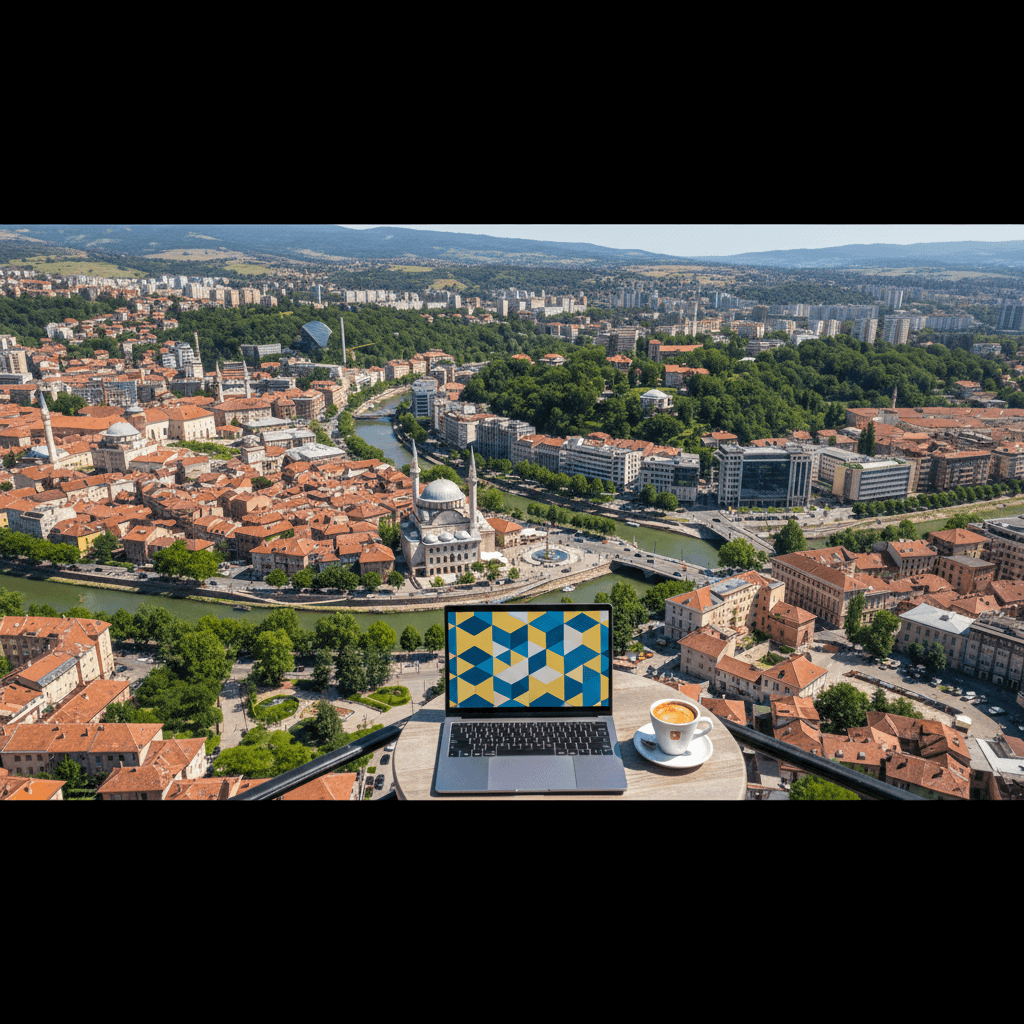
Sarajevo
🇧🇦 Bosnia and Herzegovina
Sarajevo feels like three cities sharing one valley. Ottoman lanes, Austro-Hungarian facades and blunt post-war apartment blocks sit a few minutes apart, so you can hear the call to prayer, church bells and tram brakes all in the same walk. It’s compact, cheap and strangely intimate, which, surprisingly, is a big part of the draw.
The mood is relaxed but never sleepy. Cafes spill onto sidewalks, locals are friendly without being performative and the mountains press in so close you feel boxed in by green ridges and winter fog. The downsides are real, though: the city still carries a post-war weight, the food scene can feel repetitive and internet speeds can be patchy enough to make you mutter at your screen.
Typical monthly spend: Budget nomads can scrape by on $800 to $1,000, mid-range stays usually land around $1,200 to $1,800 and comfortable living sits closer to $2,000 to $3,000. Not cheap by local standards? Actually, yes, it's cheap by most European city standards and that’s why people stay longer than they planned.
Neighborhood choice changes the whole rhythm.
Baščaršija
- Best for: Solo travelers, short stays, cafe hopping
- Feel: Cobblestones, smoke from grills, tourist chatter, busy by day
- Watch for: Crowds, higher prices, fewer quiet work spots
Marijin Dvor
- Best for: Nomads and expats
- Feel: Modern, practical, walkable, close to offices and Sarajevo City Center
- Watch for: Traffic noise, less charm than the old town
Otoka
- Best for: Budget stays
- Feel: More residential, easier on the wallet, near tram lines
- Watch for: Less central, not much atmosphere after dark
Work is doable if you’re flexible. LE Coworking, Coworking by Motiff and NEST71 give you proper desks and cafes like Habitus can be fine for a few hours, though internet is, honestly, inconsistent enough that a backup SIM from BH Telecom or Mobi is smart. You’ll hear keys clacking, cups clinking and the occasional scooter racing past outside, so pick your spot carefully.
What makes Sarajevo different is the feeling of survival sitting right next to daily life. People drink coffee slowly, talk loudly, complain about bureaucracy, then head for ćevapi or a walk up into the hills and that mix of grit and warmth gives the city its own stubborn charm. It isn’t polished. That’s the point.
Sarajevo is cheap enough to feel easy, but not so cheap that you can stop watching your spending. A single nomad usually lands around $956 a month on a bare-bones setup, while a more comfortable life, with a decent flat, coworking and regular meals out, climbs into the $2,000 to $3,000 range. That spread is real.
Rent changes the game fast and honestly, location matters more here than in a lot of European cities because the center is compact and walkable. A one-bedroom or studio in Baščaršija or Marijin Dvor runs about $391, while the outskirts like Otoka drop closer to $276 and utilities plus internet usually add another $127 to $151 on top.
Typical Monthly Budget
- Budget: $800 to $1,000, usually outside the center, cooking at home and skipping coworking.
- Mid-range: $1,200 to $1,800, with a central studio, some restaurant meals and a more relaxed pace.
- Comfortable: $2,000 to $3,000, which gets you a nicer flat, coworking and enough eating out to keep things social.
Food is decent on price, though the options can feel repetitive after a while. Street food or fast food comes in around $8 to $9, a mid-range lunch is about $9 to $10 and a proper dinner for two at a nicer place is roughly $33, with ćevapi, burek, coffee and cigarette smoke hanging in the air all over the old town.
Transport stays affordable, so most people don’t need a car unless they’re living far out or doing frequent day trips. A monthly transit pass is about $34, trams are useful, taxis for an 8 km ride sit around $8.45 and Bolt is the ride-hailing app people actually trust, because some local taxi drivers still try their luck.
Where the money goes
- Rent: Cheapest in Otoka, pricier in Baščaršija and Marijin Dvor.
- Food: Budget-friendly if you stick to bakeries and grills, pricier if you chase imported groceries.
- Work setup: Coworking runs about $231 monthly, so café-hopping can be cheaper, weirdly.
- Getting around: Trams and buses are the smart move, especially if you’re staying central.
Coworking isn’t expensive by Western standards, but it isn’t amazing value either if you only need a desk a few days a week. LE Coworking, Coworking by Motiff and NEST71 are the names that come up most and café WiFi can be solid one day and annoyingly patchy the next, so don’t count on speed without checking first.
Bottom line, Sarajevo can be frugal or comfortable depending on how much convenience you want. Skip the tourist-heavy spending habits, live near the tram line if you can and your money goes a lot further here than it does in most of Europe.
Sarajevo’s neighborhoods are small enough that you can cross personalities fast, then hit a tram and be somewhere totally different in ten minutes. The center feels lived-in, not polished, with mosque calls drifting over tram bells, smoke from grill shops and the occasional scooter buzzing past old stone streets. Rent stays saner than in most European capitals, though the best areas still get noisy and a little dear.
Nomads
Marijin Dvor is the safest bet for remote workers who want cafes, offices and an easy walk into the old town. It’s close to Sarajevo City Center, LE Coworking and plenty of lunch spots and honestly, that convenience beats charm when your WiFi has to work and your laptop battery is already dying.
- Marijin Dvor: Best mix of modern buildings, coworking access and walkability, though traffic noise can be annoying.
- Centar: Handy for trams, malls and errands, but prices climb and the streets stay busy.
- Otoka: Good for lower rent and tram access, weirdly practical if you’d rather spend on food and a desk than on location.
If you’re staying a few months, Otoka and Čengić Vila make sense, because you’ll save on rent and still get into the center without a taxi. The tradeoff is obvious, more commuting, less atmosphere and fewer places where you’ll want to linger with a coffee.
Expats
Grbavica suits expats who want a calmer, more residential feel without losing access to the city. You get parks, apartment blocks, bakeries and that everyday neighborhood rhythm where kids kick balls in courtyards and old men argue over chess outside kiosks.
- Grbavica: Good for longer stays, green space and a more settled pace, though it’s less central.
- Centar: Practical for errands, appointments and public transport, but it’s busy and rental costs rise fast.
Marijin Dvor also works well for expats who need a central base and don’t mind some traffic. The area feels more modern than romantic, still, it’s one of the easiest places to live without needing a car.
Families
Grbavica is the clearest pick for families, because it feels more residential, has better breathing room and doesn’t throw you straight into tourist crowds. You’ll still hear horns and the odd late-night engine, but you won’t be fighting through cobblestones with a stroller every day.
Look at places near parks and tram stops, not just pretty streets, because winter gets cold fast and hauling groceries uphill gets old. Families usually prefer quieter blocks with supermarkets nearby and frankly, that matters more than having a postcard view.
Solo Travelers
Baščaršija is the obvious choice if you want atmosphere, easy walking and instant access to cafes, burek shops, mosques and the old market streets. It’s lively, a little touristy and pricier than it looks at first glance, but the evening light on the stone lanes is hard to beat.
- Baščaršija: Best for first-timers and solo travelers who want to be in the historic core.
- Baščaršija side streets: Quieter than the main square, with fewer tour groups and better sleep.
If you want a solo base with less chaos, stay just outside the core and walk in. That gives you the smell of grilled meat and coffee without the full crush of day trippers and it’s usually easier on your budget too.
Sarajevo’s internet is fine for emails, docs and video calls most of the time, but it can be annoyingly uneven once you move away from central neighborhoods. In Baščaršija and Marijin Dvor, cafes like Habitus are where people actually work, not just linger over coffee and the WiFi there has tested around 40 Mbps, which, surprisingly, feels fast enough only if nobody in the room starts streaming football.
The coworking scene is small but useful. LE Coworking is the best-known option, with hot desks around KM220 and private desks around KM400 a month and it draws the most serious freelancers, founders and remote teams who want a proper office instead of hoping a cafe socket works. Motiff is another solid pick, with dedicated desks around BAM380, while NEST71 and Digital Business Space fill the quieter, more practical end of the market. Not flashy. Just workable.
- Best central area: Marijin Dvor, for modern offices, malls and easier meetings.
- Best old-town base: Baščaršija, if you want character and don’t mind tourist noise.
- Best budget area: Otoka, cheaper rents and tram access, though it’s less convenient at night.
If you’re staying a while, get a local SIM instead of gambling on cafe WiFi, because that saves a lot of low-grade frustration. BH Telecom and Mobi both sell tourist packages, around 20 BAM for 15GB over 10 days and that’s enough for maps, messaging and a decent amount of tethering when your apartment internet decides to act up, which it sometimes will.
Most nomads end up splitting time between a cafe and home, then moving to coworking only when they need quiet, calls or a reliable desk. Honestly, that’s the smartest setup here, because Sarajevo’s charm comes with a few annoyances and internet speed can be one of them, especially in older buildings where the signal crawls through thick walls and the router sits in some forgotten corner.
- Best for casual work: Cafes in Centar and Marijin Dvor, especially if you’re happy with a coffee-and-laptop routine.
- Best for focus: LE Coworking or Motiff, if you’ve got deadlines and don’t want background chatter.
- Best backup: A BH Telecom or Mobi SIM, so you’re not stuck when the WiFi drops.
The short version, internet in Sarajevo isn’t bad enough to ruin remote work, but it isn’t the kind of place where you stop thinking about it. Bring a backup plan. That’s the real trick.
Sarajevo feels safe in the center, honestly, but you still need a bit of street sense. Baščaršija, Marijin Dvor and Centar are fine for normal daytime wandering, though poorly lit side streets, abandoned buildings and the city outskirts can get sketchy after dark.
The bigger hazard is the terrain around town. Unmarked trails can still carry landmine risk, so stick to marked hiking paths, ignore any half-dead shortcut through the woods and don’t go poking around ruined structures, weirdly enough that’s where people get careless.
What to watch for
- Night walking: Use main roads and busy tram corridors, especially if you’re heading back late from a bar or dinner.
- Outskirts: They’re cheaper, but some blocks feel dim, quiet and a little too empty once the shops close.
- Hiking: Stay on marked trails only, because the mountain air is great, the risk isn’t.
- Petty crime: It’s low, though pickpockets can still show up in crowded tourist zones.
Healthcare is decent for basic stuff, basic being the key word. University Clinical Centre and other public facilities can handle common issues, pharmacies are everywhere and a doctor’s visit runs around $29, which is pretty manageable if you’re not dealing with anything serious.
For anything complicated, people often go private, because public care can feel slow and a little old-school, with hard floors, bright lights and that exhausted hospital smell you’ll recognize instantly. Bring your own prescriptions if you can and don’t expect a luxury clinic experience unless you pay for it.
Healthcare basics
- Emergency: Call 112 or 124.
- Pharmacies: Easy to find in central neighborhoods and staff usually know the basics.
- Doctors: English is hit or miss, so a translation app helps.
- Insurance: Get travel or expat cover before you land, because paying out of pocket for surprises gets annoying fast.
For everyday peace of mind, most nomads stay in the center, walk home on lit streets and avoid late-night detours through quiet blocks. The city’s mood is relaxed, there’s tram noise, espresso steam and calls to prayer drifting over traffic, but your own judgment matters more here than flashy security gadgets.
Frankly, Sarajevo’s safety problems are specific, not constant and that makes them easy to manage if you pay attention. Don’t be reckless and you’ll probably be fine.
Sarajevo is small enough to cross on foot and that’s the main reason people settle in fast. The center is compact, the trams are easy to figure out and you’ll hear a mix of tram bells, honking and the call to prayer while walking from Baščaršija to Marijin Dvor. Not fancy. Very workable.
If you stay central, you’ll barely need a car. Most nomads and expats stick to Baščaršija, Marijin Dvor or Centar because the streets are walkable, the cafes are close together and you can grab groceries, coffee and a SIM card without making a production out of it, though traffic can get annoying around rush hour. Honestly, the city feels slow until a tram squeals past and reminds you it still runs on Balkan time.
Best areas for getting around
- Baščaršija: Best if you want everything on foot, but it gets crowded and touristy fast.
- Marijin Dvor: Good for workdays, with offices, malls and solid tram access.
- Centar: Handy for transit and errands, though it’s busier and pricier.
- Otoka: Cheaper, with decent tram connections, but farther from the old center.
Public transit is cheap and decent by regional standards, with trams and buses covering most useful routes for about $1.33 a ride and monthly passes around $34. The system isn’t glamorous, some vehicles are tired and winter rides can feel drafty and grim, but you can actually depend on it more than in a lot of bigger cities.
Taxis are still useful for late nights or airport runs and a normal 8 km trip runs about $8.45. Use Bolt if you can, especially for the airport, because it’s usually easier than flagging a cab and some Sarajevo Taxi drivers will try their luck with inflated prices, which, surprisingly, still happens a lot.
Practical transport notes
- Tram and bus ticket: About $1.33
- Monthly pass: Around $34
- Typical taxi ride, 8 km: About $8.45
- Airport transfer by Bolt: Roughly 15 to 20 minutes to the center
Bikes and scooters exist, but Sarajevo’s hills, narrow streets and chaotic drivers make them more of a mood than a serious daily option. Walk when you can, take the tram when you’re going farther and keep a taxi app ready for rain, luggage or those cold nights when the stone sidewalks feel like ice under your shoes. That's the routine.
Sarajevo’s language scene is pretty easy to live with, even if your Bosnian, Croatian or Serbian is shaky. Locals switch between the three naturally and because they’re mutually intelligible, one phrase usually gets you through, frankly without much drama.
English is decent in touristy spots, cafés and business areas, but don’t expect it everywhere, especially in smaller shops or when you’re dealing with older people. Hvala, molim and kako si? go a long way and honestly, people tend to warm up fast when you make the effort, even if your accent sounds terrible.
The real trick is reading the room. In Baščaršija, you’ll hear prayer calls, coffee spoons clinking against tiny cups and vendors calling out prices, while in Marijin Dvor the pace feels more office-like, with fewer smiles at first and more English at the coworking desk.
What to expect
- Daily language: Bosnian, Croatian, Serbian, spoken interchangeably in most settings.
- English: Moderate in central Sarajevo, patchier in outer neighborhoods and with older locals.
- Best phrase to know: Hvala, it gets used constantly.
- Useful backup: Google Translate works well here, weirdly better than your average quick chat with a taxi driver if you need a menu or address clarified.
In cafés and coworking spaces, communication is usually smooth, especially around LE Coworking, NEST71 or Habitus, where nomads and locals mix all day. Outside that bubble, though, things can get messy, so keep addresses written down, don’t rely on your phone signal alone and expect the occasional shrug if you ask for a weirdly specific English translation.
Learning a few local words changes the tone of conversations fast. Say molim when you’re asking for something, keep your voice calm and don’t come in loud, because Sarajevo has a polite, slightly reserved rhythm that gets missed by people who talk like they’re ordering brunch in London.
Practical communication tips
- Taxis: Have your destination written out, especially for airport rides or late-night trips.
- Restaurants: Menus are often understandable, but meat-heavy dishes and local pastries may need a quick question.
- Shopping: Small markets may prefer cash and short exchanges, so keep it simple.
- Translation: Screenshot addresses and key phrases, because phone battery dies at the worst time.
The tone here is direct, not cold and that matters. If someone seems abrupt, they probably aren’t being rude, they’re just speaking fast, skipping filler and trying to get on with the day.
For most travelers, that’s easy enough to live with. A few local words, a translation app and some patience will get you through almost anything and the city’s mix of church bells, tram squeals and café chatter does the rest.
Sarajevo has proper seasons and they shape the city hard. Winter can be icy and grey, with snow piling up on the hills and that damp cold sneaking through your shoes, while summer gets hot enough that the pavement feels sticky by late afternoon, especially in the valley. Spring and early autumn are the sweet spot, honestly, because you get clearer air, easier walking and a city that feels lively without being crushed by heat or tourists.
Best months: May, June and September. Temperatures usually sit around 13 to 23°C, which is comfortable for wandering Baščaršija, sitting outside in Marijin Dvor or taking a tram across town without melting. The evenings are nicer too, with the smell of grilled meat drifting out of ćevabdžinicas and the call to prayer carrying over the rooftops in a way that feels unmistakably Sarajevo.
When to go
- May to June: Probably the best stretch, green hills, decent weather and fewer headaches from rain than in early spring.
- September: My pick for most nomads, warm days, cooler nights and a slower pace after the summer rush.
- July to August: Fine if you like heat, but Sarajevo can feel stuffy and the afternoon sun bounces off the valley walls.
- January: Cold, snowy and a bit unforgiving, with frozen sidewalks and that sharp winter air that hits your face the second you step out.
Rain shows up year-round and March is usually the wettest month, so pack shoes that can handle puddles and slush. July and August are drier but hotter, which, surprisingly, makes the city feel more exhausting than a rainy week ever does. If you’re planning hikes, aim for late spring or early autumn, because the trails around the mountains are safer, drier and far more pleasant.
Skip deep winter unless you actually want snow and don’t mind shorter days. Summer works, but it’s not subtle, the heat clings to you, trams groan in traffic and the center gets busier around lunch and evening. For most travelers and remote workers, Sarajevo feels best when the weather stays mild and the streets still smell like coffee, rain and fresh bread instead of exhaust and sunscreen.
Sarajevo is cheap enough to relax you, then it catches you with small annoyances, like weak WiFi in the wrong apartment or a bus that arrives whenever it feels like it. Budget singles can scrape by around $800 to $1,000, but if you want a center apartment, coworking and regular dinners out, you’ll land closer to $1,200 to $1,800. Not luxury. Just comfortable.
For housing, Baščaršija feels romantic until the weekend crowds start clattering past your window, while Marijin Dvor is the smarter pick if you want offices, malls and easier workdays without living in the thickest tourist noise. Otoka is where budget-minded nomads usually end up and honestly, that tradeoff makes sense if you’d rather keep rent low than live beside every café in town.
Money, Banking and SIMs
- ATM use: Easy to find, though some machines charge more than you’d expect.
- Cards: Revolut works for a lot of nomads and cash still matters in smaller shops.
- SIM: BH Telecom tourist packs run about 20 BAM for 15GB, usually enough for maps, messages and basic work backup.
Banking here is fairly painless, which, surprisingly, still feels like a win in the Balkans and you can sort most day-to-day spending with a mix of cash and card. Keep some marks on hand for bakeries, taxis and those little errands that always seem to happen between tram stops and lunch.
Getting Around and Day Trips
- Center: Walk it, the city core is compact and hilly enough to make tram rides optional.
- Transit: Trams and buses are cheap, a monthly pass runs about $34.
- Ride-hailing: Bolt is the safer bet for airport runs and taxi haggling gets old fast.
- Trips: Mostar and Jajce are easy bus-day escapes if you want a change of pace.
Use Bolt when you’re tired or landing late, because chasing a random cab in the cold after midnight is a stupid way to start a stay. The city is walkable, but the hills bite in winter, with wet pavement, exhaust and that sharp mountain air that makes your lungs notice every block.
Local Etiquette and Daily Life
Shoes off in homes, modest dress near mosques and a 10 percent tip in restaurants are the usual expectations and people notice when you ignore them. The customs aren’t complicated, just basic respect and if you ask before taking photos around prayer spots or family homes, you’ll avoid awkwardness.
Most nomads love Sarajevo for the price and the easy social life, but the internet can be patchy, the food scene leans heavy on grilled meat and the war-scarred mood still hangs in some streets. That said, the calls to prayer, tram bells, coffee steam and smoky ćevapi smell give the city a personality you won’t fake anywhere else.
Frequently asked questions
How much does it cost to live in Sarajevo as a digital nomad?
How much is rent in Sarajevo for nomads?
Is Sarajevo good for remote work?
Which Sarajevo neighborhood is best for digital nomads?
How reliable is the internet in Sarajevo?
Is Sarajevo safe for solo travelers and remote workers?
Need visa and immigration info for Bosnia and Herzegovina?
🇧🇦 View Bosnia and Herzegovina Country GuideHidden Gem
Worth the effort