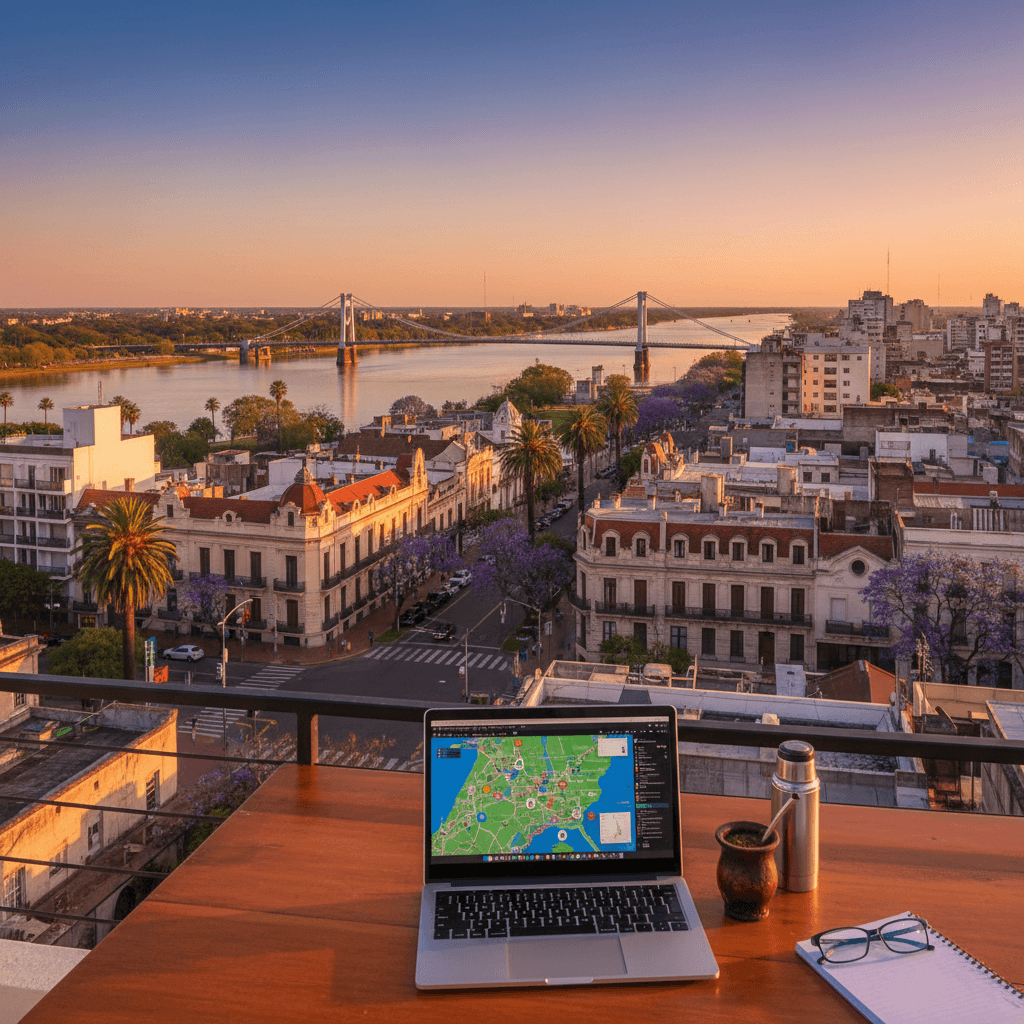
Santa Fe
🇦🇷 Argentina
The River City’s Quiet Confidence
While Buenos Aires grabs the headlines and Rosario takes the credit for the province's nightlife, Santa Fe city sits back and does its own thing. It is a place defined by the water. Situated at the junction of the Salado and Paraná rivers, the city feels like a coastal town dropped into the middle of the Argentine plains. You won't find the frantic energy of the capital here. Instead, you get a mid-sized urban center that moves at a pace dictated by the afternoon heat and the ritual of the siesta.
Nomads who land here usually do so because they want an authentic Argentine experience without the expat bubble. It is a university town at heart, which keeps the energy young and the prices accessible. The vibe is decidedly unpretentious. You will see locals gathered on the Costanera with their mate gourds, watching the sun set over the Setúbal Lagoon, or heading to a local brewery for a liso, the city’s signature small pour of cold lager. It is a city that values conversation and slow afternoons over the hustle of a global tech hub.
A Different Kind of Nomad Life
Living in Santa Fe feels like being part of a well kept secret. It doesn't have the massive digital nomad meetups you will find in Medellín or Lisbon, but that is exactly why people stay. You are forced to integrate. You will find yourself working from cafes where the staff knows your name after three days, and your social life will likely revolve around the local peñas or backyard asados rather than organized networking events.
The city’s personality is split between its historical roots as one of the oldest colonial settlements in the region and its modern identity as a center for science and education. This creates an interesting mix of crumbling 19th-century architecture and sleek, modern university buildings. It is a place where you can spend your morning working from a high tech lab space and your afternoon wandering through the Jesuit ruins of Santa Fe la Vieja just a short drive away.
The Emotional Landscape
There is a specific feeling that hits you when you cross the Puente Colgante, the city’s iconic suspension bridge. It is a sense of openness. Because the city is surrounded by wetlands and river branches, you never feel trapped by the concrete. The air is humid, the greenery is aggressive, and the river is always right there. It provides a mental reset that is hard to find in larger, landlocked cities.
Expect a bit of a culture shock regarding the schedule. Between 1:00 PM and 5:00 PM, the city effectively shuts down. Shops close, streets empty, and the silence is absolute. For a remote worker, this is either a productivity goldmine or a source of frustration. Most expats eventually learn to lean into it, using the quiet hours for deep work before the city roars back to life in the evening for dinner, which rarely starts before 9:00 PM or 10:00 PM.
Why Santa Fe Stands Out
- The Liso Culture: Unlike the rest of Argentina where liter bottles are the norm, Santa Fe is famous for the liso, a 250cc glass of draft beer served at exactly the right temperature. It is a social institution.
- Affordability: Your budget goes significantly further here than in Buenos Aires or Mendoza. You can live a high quality life for a fraction of the cost of more famous South American hubs.
- The Costanera: This waterfront promenade is the city’s living room. It is where everyone goes to exercise, socialize, and breathe.
- Authenticity: You won't find menus in English or "nomad cafes" with overpriced avocado toast. You get the real Argentina, unfiltered and incredibly welcoming.
It is not a city for everyone. If you need a constant stream of English speaking events and a high speed "grind" culture, you might find it too sleepy. But if you are looking for a place where you can actually hear yourself think, eat some of the best river fish in the world, and join a community that truly welcomes outsiders, Santa Fe has a way of growing on you.
The Price of the River Life
Living in Santa Fe feels like a well kept secret compared to the frantic pace of Buenos Aires. It is a mid sized city where your dollars or euros stretch significantly further than they would in the capital. While the Argentine economy is famous for its swings, Santa Fe remains remarkably affordable for anyone earning a foreign currency. You can live a high quality life here for about $800 to $1,200 per month, depending on how much you prioritize modern amenities and dining out.
Most of your budget will go toward housing and imported goods. Locally produced items, especially beef, seasonal produce, and wine, are incredibly cheap. You will find that the cost of a social life here is much lower than in North America or Europe, allowing you to say yes to more weekend trips up the Paraná River or late night dinners at the local parrillas.
Monthly Budget Estimates
- One Bedroom Apartment (City Center): $350 to $500
- Monthly Utilities (Electricity, Water, Gas): $40 to $70
- High Speed Fiber Internet: $25 to $40
- Meal at a Mid Range Restaurant: $10 to $15
- Liter of Milk: $0.90
- Local Beer (0.5L): $2.00
- Monthly Gym Membership: $20 to $35
Housing and Neighborhoods
Rent is the biggest variable in your Santa Fe budget. If you want to be where the action is, look at Barrio Candioti. It is the trendy heart of the city, filled with breweries and cafes. A modern one bedroom apartment here will cost you around $450 per month. It is the most walkable part of town and popular with the younger professional crowd.
For a quieter, more residential vibe, El Centro offers slightly lower prices, though the buildings are often older. You can find spacious flats for $350 if you don't mind a bit of a vintage feel. Keep in mind that many landlords still prefer cash payments in US dollars, though digital transfers are becoming more common for mid term nomad rentals.
Daily Expenses and Lifestyle
Transportation in Santa Fe is a bargain. The city is flat and bike friendly, but the bus system is reliable enough for daily commutes. A single bus ride is less than $1.00. Taxis and ride sharing apps like Uber operate here and are very affordable for cross town trips, usually costing between $3 and $6.
Groceries are where you will see the most savings. Shopping at local ferias for fruits and vegetables instead of the big supermarkets like Coto or Jumbo can shave 20 percent off your food bill. A massive steak from a local butcher will often cost less than a fancy coffee back home. If you enjoy cooking, you can easily get by on $200 a month for high quality groceries.
The Blue Dollar Factor
You cannot talk about the cost of living in Argentina without mentioning the exchange rate. Most nomads use services like Western Union or bring physical cash to exchange at the "blue" rate. This often gives you nearly double the purchasing power compared to using a standard bank ATM. Always check the daily Dólar Blue rate to understand what your actual costs will be. Managing your money this way is a bit more work, but it is the difference between a tight budget and a luxurious stay.
For the Cultural Nomad: Barrio Candioti
If you want to be where the action is, Candioti is your best bet. Split into Candioti Norte and Candioti Sur, this area is the heart of the city's social life. It's packed with restored warehouses that now house craft breweries and specialty coffee shops. Most remote workers gravitate here because the WiFi is generally more reliable and you're within walking distance of the best evening spots.
- Vibe: Trendy, walkable, and social.
- Monthly Rent: $350 to $550 USD for a modern one bedroom apartment.
- Top Spot: The area around the old Belgrano Railway Station, which often hosts markets and cultural events.
For Long-term Expats: El Centro and Sur
The southern part of the city is where history meets daily utility. It's the oldest part of Santa Fe, filled with government buildings and museums, but it also offers a more settled, residential feel. Expats who plan to stay for six months or more often choose this area for its proximity to traditional markets and banking hubs. It's quieter than Candioti once the business day ends, which is great if you prefer a predictable routine.
- Vibe: Historical, professional, and quiet at night.
- Monthly Rent: $300 to $450 USD for a spacious older flat.
- Top Spot: Plaza 25 de Mayo, the central hub for local architecture and people watching.
For Families: Guadalupe
Guadalupe is the go-to for those traveling with kids or anyone who wants a backyard. It's further north from the city center and feels more like a suburb than a metropolitan district. The streets are lined with trees and large family homes. You'll find plenty of green space and a much slower pace of life, though you'll likely want to rent a car or get comfortable with local ride-sharing apps to get into the city core.
- Vibe: Residential, safe, and green.
- Monthly Rent: $600 to $900 USD for a three bedroom house.
- Top Spot: The Basilica of Guadalupe, a landmark that defines the neighborhood's identity.
For Solo Travelers: Costanera and Siete Jefes
If you're in Santa Fe solo, you'll want easy access to the waterfront. The Costanera is the city's pride and joy, running along the Setúbal Lagoon. Living in the Siete Jefes neighborhood gives you a front row seat to the city's best outdoor gym. It's where everyone goes to run, bike, or share mate at sunset. It's safe, active, and makes it incredibly easy to meet locals who are out enjoying the river breeze.
- Vibe: Active, scenic, and breezy.
- Monthly Rent: $400 to $600 USD for a balcony apartment with a river view.
- Top Spot: The Puente Colgante (Suspension Bridge), which is the iconic symbol of the city and looks stunning when lit up at night.
Most travelers find that while Santa Fe doesn't have the massive expat infrastructure of Buenos Aires, the cost of living is significantly lower. You'll get much more space for your money here. Local digital nomads recommend focusing your search on Candioti Sur if you want to be near the coworking scene, as that's where the city's tech energy is concentrated.
Connectivity and Speed
Santa Fe isn't a massive tech hub like Buenos Aires, but it holds its own for remote work. Most modern apartments and hotels come equipped with fiber optic connections. You can usually expect download speeds between 100 Mbps and 200+ Mbps, which is plenty for video calls and heavy uploads. If you're staying in the city center or near the hanging bridge, the infrastructure is quite reliable.
Mobile data is your best backup. Personal and Claro are the two main providers here. Grab a prepaid SIM card at any "kiosco" downtown for about $2 USD. Data packages are cheap; you can get several gigabytes for less than $10 USD. 4G coverage is solid throughout the urban area, though it might dip if you head out toward the islands or the deeper parts of the Colastiné Norte district.
Coworking Spaces
The coworking scene in Santa Fe is small but professional. You won't find the endless options of a capital city, but the spots that exist are high quality and foster a tight-knit community. These spaces cater to local entrepreneurs and freelancers, making them great places to network if you speak a bit of Spanish. They typically offer ergonomic chairs, private meeting rooms, and a steady supply of coffee.
Most of these spaces operate on a 9:00 AM to 7:00 PM schedule, so if you're working for a company in a different time zone, you'll want to check if they offer 24/7 keycard access.
Work-Friendly Cafes
If you prefer the buzz of a coffee shop, Santa Fe has a growing specialty coffee culture. There are several modern cafes in the city center with a quiet atmosphere and plenty of power outlets where the Wi-Fi is stable and the staff won't hover if you stay for a few hours. Expect to pay about $3 USD for a flat white.
For a more traditional vibe, the cafes along the Costanera offer great views of the lagoon, though the Wi-Fi in these older establishments can be hit or miss. It's always smart to have your phone hotspot ready just in case.
Practical Tips for Remote Workers
Power outages aren't frequent, but summer storms in the Littoral region can occasionally knock out the grid for an hour or two. A laptop with a good battery and a charged power bank is a necessity. Most locals take a siesta between 1:00 PM and 4:30 PM, so while cafes and coworking spaces stay open, the rest of the city might go quiet. It’s the perfect time to get deep work done without distractions.
When it comes to paying for your desk or your coffee, cash is still king for small transactions, but most coworking spaces and modern cafes accept Mercado Pago. It’s the ubiquitous payment app in Argentina. If you can set it up with a local ID or find a way to fund an account, it makes life significantly easier. Otherwise, keep some pesos on hand for your daily "medialunas" and lattes.
Staying healthy and safe in Santa Fe requires a bit more local intuition than you might need in Buenos Aires. While it is a smaller provincial capital, it carries the typical urban complexities found in the Litoral region. Most nomads find the city generally welcoming, though you need to keep your wits about you in certain districts.
Staying Safe in the City
Street crime, particularly opportunistic theft like phone snatching, is the primary concern here. Locals generally advise against walking alone late at night outside of the main commercial corridors. If you are moving between neighborhoods after dark, apps like Cabify or Uber are much safer than wandering the sidewalks.
- The "Motochorro" Factor: Be mindful of your phone when standing near the curb. Drivers on motorbikes sometimes snatch devices from distracted pedestrians. Keep your phone in your pocket or bag unless you are inside a cafe.
- Safe Zones: Neighborhoods like Barrio Constituyentes and the areas around Bulevar Gálvez are usually active and well lit. These are the spots where you will feel most comfortable working from a sidewalk table.
- Areas to Avoid: Steer clear of the city’s periphery and the western outskirts, especially after sunset. Stick to the central grid and the Costanera where the crowds are thicker.
Healthcare and Medical Services
You are in good hands if you get sick. Argentina has a dual healthcare system, and Santa Fe boasts some of the best medical facilities in the province. While public hospitals are free and open to everyone, they are often crowded and slow. Most expats and nomads opt for private care for anything non-emergency.
For a standard consultation or specialized tests, Sanatorio Santa Fe and Sanatorio Mayo are the top choices. These facilities are modern and well equipped. You will likely pay out of pocket if you do not have a local "obra social" or prepaga, but the costs are very manageable compared to North American or European prices.
- Doctor Visits: A private consultation with a specialist typically costs between $15 and $30 if you are paying cash.
- Pharmacies: You will find a "Farmacia" on almost every other block. Look for the Farmacity chain for a wide selection of toiletries and over the counter meds. For prescription drugs, you will need a physical note from a local doctor.
- Emergency Number: Dial 107 for public medical emergencies or 911 for police assistance.
Practical Health Tips
The tap water in Santa Fe is generally considered safe to drink, though many long term residents prefer bottled water or filters because of the high mineral content and occasional chlorine taste. If your stomach is sensitive, stick to the bottled stuff for the first week.
The biggest environmental health annoyance is the humidity and the mosquitoes, particularly near the Setúbal Lagoon. During the summer months, dengue fever can be a concern in the region. Buy local repellent brands like Off! (the green bottle is the strongest) and apply it liberally if you are hanging out by the water at dusk.
Most clinics have at least a few English speaking staff members, but do not count on it for the administrative process. Having a translation app ready or a local friend to help with the intake forms will make your visit much smoother. If you need a specific medication, bring your current prescription from home to show the pharmacist, as it helps them find the local equivalent brand.
Navigating Santa Fe is relatively straightforward once you understand the city's layout. It is a compact, flat city built on a grid, which makes it incredibly walkable compared to the sprawling layout of Buenos Aires. Most nomads find that they can handle the majority of their daily errands on foot if they stay in central areas like Barrio Constituyentes or near the Costanera.
Public Buses (Colectivos)
The primary way to get across town is the colectivo system. Unlike the capital, Santa Fe does not have a subway, so these buses are the backbone of local transit. You will need a SUBE card to ride, which is the same magnetic card used throughout Argentina. You can buy and top these up at small kiosks called kioscos marked with the SUBE logo.
- Cost: A single trip usually costs around 1700+ ARS, check current rates, though prices fluctuate frequently due to inflation.
- Apps: Download the Cuándo Pasa app. It is the most reliable way to see real time bus arrivals, as Google Maps data can be hit or miss in the province.
- Peak Hours: Avoid traveling between 5:00 PM and 7:00 PM when students and office workers head home, as buses get incredibly cramped.
Taxis and Remises
When you need to get home late at night or reach the bus terminal with heavy luggage, you will use taxis or remises. A remise is essentially a private car service that looks like a standard sedan but operates out of a central agency. They are often considered slightly safer and more professional than street taxis.
- Booking: While you can hail a yellow and black taxi on the street, it is better to call a remise agency or use an app.
- Uber and Cabify: Uber operates in Santa Fe, but the fleet is smaller than in larger cities. Cabify is often more reliable here and allows you to see the price upfront.
- Night Rates: Expect to pay a 20% premium for rides taken after 10:00 PM.
Cycling and Micro-mobility
Because the terrain is so flat, cycling is a fantastic way to get around. The city has been expanding its Bici Ciudad program, which is a public bike sharing system. You can register with a local ID or sometimes a passport at municipal offices to gain access to the stations located near the University and the port area.
If you are staying for a few months, many expats recommend buying a used bike on Facebook Marketplace for about $100 to $150 USD. Just invest in a heavy duty lock, as bike theft is a common nuisance. The Costanera provides a beautiful, dedicated path for long rides along the lagoon, which is perfect for a sunset workout after finishing your remote work day.
Regional Travel
If you want to visit Rosario or Paraná, the bus terminal (Terminal de Ómnibus Manuel Belgrano) is your hub. The trip to Paraná is unique because it goes through a tunnel under the river; buses run every 15 to 30 minutes. For longer trips to Buenos Aires, the luxury coche cama buses are the way to go. These seats recline almost fully, making the 6 to 7 hour journey much more bearable. Tickets usually cost $25-50 USD depending on service.
While you might be used to the rapid fire, Italian inflected Spanish of Buenos Aires, the pace of speech in Santa Fe matches the city's slower, riverside lifestyle. Locals here, known as Santafesinos, speak the Rioplatense dialect common to the region, but with a softer edge. If you are coming from a background of textbook Spanish, the first thing you will notice is the voseo, which is the use of vos instead of tú for you. It is a point of pride and something you should embrace early on to sound less like a tourist.
The Local Accent and Slang
Expect to hear a lot of aspiration on the letter s, especially at the end of words or before consonants. It often sounds like a soft h breath. This can make listening comprehension a bit tricky for the first few days, but the locals are generally patient. You will also want to get familiar with Lunfardo, the local slang. While it started in the tango bars of the capital, it is used daily here. Words like laburo for work or guita for money are part of the standard vocabulary.
One specific quirk of Santa Fe is the way people refer to their local staples. If you are ordering a small draught beer, don't ask for a cerveza; ask for a liso. It is a specific 250ml serving that is a pillar of the local social scene. Using the right terminology at a riverside bar will instantly earn you a bit of local respect.
English Proficiency
English is not as widely spoken in Santa Fe as it is in the more tourist heavy hubs like Palermo in Buenos Aires. While younger people and university students often have a decent grasp of English, you cannot rely on it for daily errands. In supermarkets, pharmacies, or when dealing with the SUBE card for buses, you will need a baseline of Spanish to get by comfortably. Most nomads find that a translation app is helpful for complex situations, but learning the numbers and basic greetings is mandatory here.
Staying Connected
Connectivity is generally reliable, but having a local SIM card is a must for navigating and using delivery apps like PedidosYa. You have a few main options for mobile providers:
- Personal: Often cited as having the best coverage within the city limits and along the coast.
- Claro: A solid runner up with competitive prepaid packages for data.
- Movistar: Reliable in the city center, though signal can dip as you move toward the islands.
To get a SIM card, look for a kiosco or an official provider store. You will typically need your passport to register the line. Data is relatively affordable, and WhatsApp is the primary way everyone communicates. Whether you are booking a padel court or messaging a landlord, you will do it through WhatsApp. Most businesses don't even check their email; they expect a message or a voice note.
Practical Communication Tips
If you are planning to stay for more than a month, consider joining a language exchange or a local hobby group. Since the nomad community is smaller here than in Rosario, it is much easier to fall into an English speaking bubble if you aren't careful. Locals are genuinely curious about foreigners and are usually happy to practice their English if you make an effort with your Spanish first. Just remember that the afternoon siesta is sacred; don't expect businesses to answer messages or be open between 1:00 PM and 4:30 PM.
The Climate Reality
Santa Fe sits in a humid subtropical zone, which is a fancy way of saying it gets sticky. Because it is tucked between the Salado and Paraná rivers, the humidity is a constant companion. You will feel this most in the summer, from December to February, when temperatures regularly climb above 90°F (32°C). It is not just the heat; the moisture makes the air feel heavy. Most nomads find they need to schedule their deep work for the early morning or late evening to avoid the midday slump.
Winter, running from June to August, is surprisingly mild. You will rarely see the thermometer drop below 45°F (7°C), though the dampness from the river can make the cold feel a bit more piercing than the numbers suggest. You won't see snow here, but you will definitely want a solid jacket for the evenings when the river breeze picks up. Spring and autumn are the sweet spots, offering clear skies and temperatures that hover comfortably in the 70s (21°C to 26°C).
When to Touch Down
If you want the best possible experience, aim for March to May or September to November. These shoulder seasons provide the most reliable weather for exploring the Costanera or working from a sidewalk cafe without melting. The autumn months are particularly beautiful as the city turns golden, and the humidity finally takes a back seat. It is the perfect time for long walks across the Puente Colgante without needing a shower immediately afterward.
Many digital nomads avoid the city in January. This is when the heat peaks and many locals head to the coast or the mountains for their own vacations. While the city is quieter, some smaller shops and family run restaurants might close up for a week or two. If you enjoy a sleepy, slow paced atmosphere and don't mind the heat, you can find some great deals on short term rentals during this window.
Seasonal Checklist
- Spring (September to November): The best time for outdoor social events. Expect highs of 77°F (25°C). Pack light layers and a windbreaker for the riverfront.
- Summer (December to February): Intense sun and high humidity. Highs often hit 95°F (35°C). Ensure your Airbnb or apartment has functioning air conditioning; a ceiling fan won't be enough.
- Autumn (March to May): Very stable weather and pleasant evenings. Highs average 72°F (22°C). This is prime season for the local craft beer scene.
- Winter (June to August): Crisp and cool. Highs around 60°F (16°C). It is the driest time of year, so you won't have to worry much about rain ruining your plans.
Local Events and Timing
Try to time your visit around the local festival calendar if you want to see the city at its most energetic. The Fiesta de la Virgen de Guadalupe, typically late April (post-Easter) brings a massive influx of people and a festive, communal energy to the streets. If you are a fan of traditional culture, the Feast of Santa Fe on November 15th celebrates the city's founding with parades and events. Just keep in mind that during these peak times, booking your accommodation a few weeks in advance is a smart move as the best spots in neighborhoods like Candioti Norte fill up quickly.
Getting your logistics sorted in Santa Fe requires a bit of local know-how, as it doesn't have the same massive expat infrastructure you'll find in Buenos Aires. It is a mid sized city that moves at a slower pace, so you should prepare for a lifestyle that revolves around the river and the afternoon siesta.
Money and Costs
Argentina's economy is famously volatile, so you need to understand the dual exchange rate system. Most nomads use services like Western Union to send themselves money, which usually nets you the Blue Dollar rate. This is significantly better than the official government rate you get at bank ATMs.
- Monthly Budget: A comfortable life here costs between $800 and $1,200 USD for a single person.
- Rent: A nice one bedroom apartment in a central area like Barrio Candioti will run you $350 to $500 USD.
- Dining out: A solid dinner with wine costs about $12 to $18 USD.
- Coffee: A cafe con leche is roughly $2 USD.
Connectivity and Coworking
The internet in Santa Fe is generally reliable but not blazing fast. Most modern apartments offer fiber optic connections reaching 50 to 100 Mbps. If you need a professional environment, head to the Candioti Norte neighborhood. Look for spaces like One Work Coworking or La Cajita Coworking. They provide stable backups if your home Wi-Fi flickers during a summer storm.
Transportation
The city is flat and relatively compact, making it easy to get around. You'll need a SUBE card for the bus system, which you can buy and top up at most small kiosks (kioscos) around town. For late nights, use the Cabify app or a Remis, which is a fixed rate private car service. Avoid hailing random taxis on the street after dark if you aren't familiar with the area.
The Siesta Schedule
This is the biggest hurdle for new arrivals. Between 1:00 PM and 5:00 PM, the city effectively shuts down. Shops close, streets empty, and even some restaurants stop serving. Use this time to work or nap. The city comes back to life in the evening, with locals heading to the Costanera for mate around sunset. Dinner rarely starts before 9:00 PM, and bars don't get busy until well after midnight.
Safety and Health
Santa Fe is generally safe if you stick to the central and northern districts. Like any Argentine city, petty theft can happen. Keep your phone out of sight on the street and don't carry large amounts of cash. For healthcare, the private clinics like Sanatorio Santa Fe are excellent. If you have international travel insurance, you'll likely be seen quickly for a very low out of pocket cost.
Local Flavor
You can't live here without trying a Liso. It is the local way of serving cold, draught lager in a specific 250ml glass. It is a point of pride for Santafesinos. For food, the river fish is the specialty, specifically Boga or Surubí. You will find the best seafood spots along the road to Colastiné or in the fish markets near the port.
Need visa and immigration info for Argentina?
🇦🇷 View Argentina Country GuideHidden Gem
Worth the effort