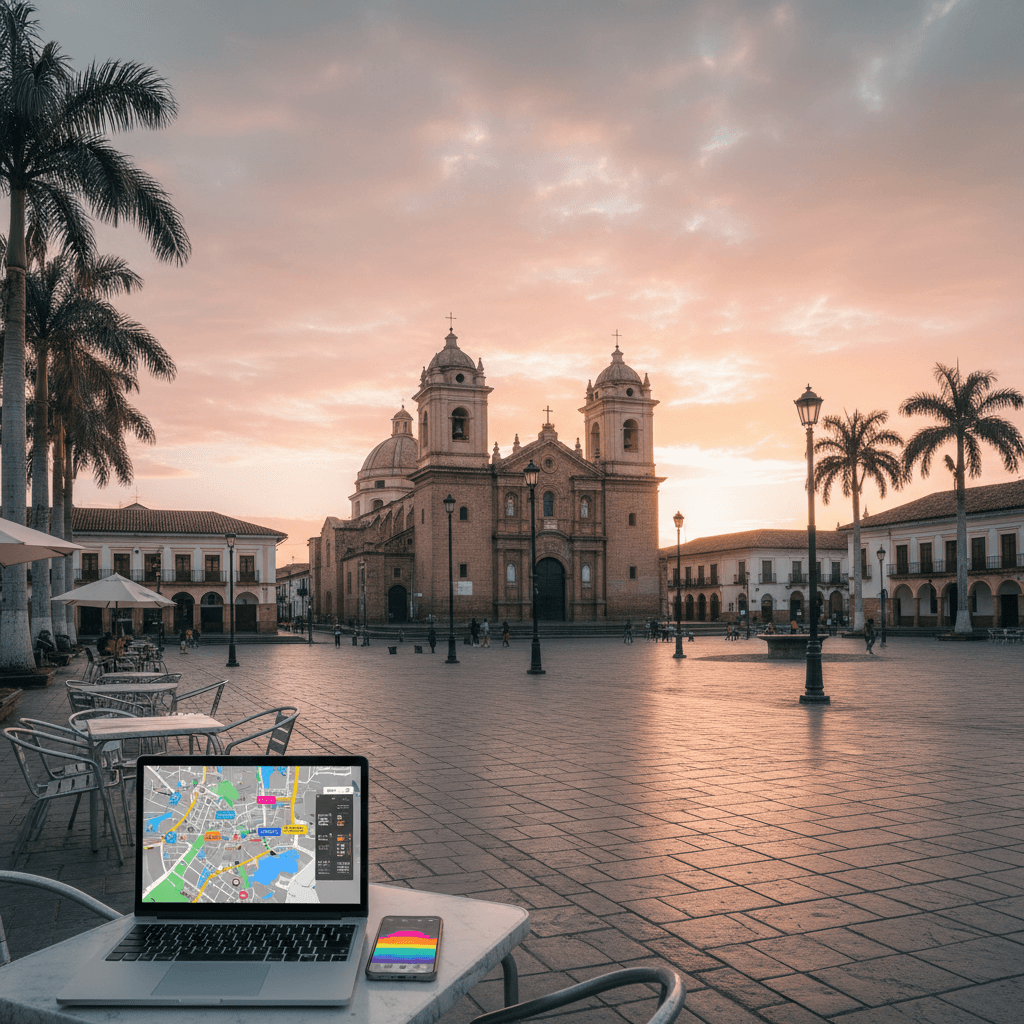
Santa Cruz de la Sierra
🇧🇴 Bolivia
The Tropical Heartbeat of Bolivia
Santa Cruz de la Sierra doesn't feel like the rest of Bolivia. While La Paz is defined by its dizzying altitudes and thin mountain air, Santa Cruz is a sprawling, sun-drenched lowland metropolis where the humidity hugs you the moment you step off the plane. It is a city that moves to a tropical rhythm, blending a gritty commercial energy with a surprisingly relaxed, "cambas" lifestyle. For nomads, the draw isn't a polished infrastructure, it's the raw, welcoming authenticity of a city that isn't yet trying too hard to impress tourists.
The vibe here is distinctly green and social. You'll see locals sipping fresh achachairú juice under the shade of massive trees in Parque El Arenal, while just blocks away, the skyline of the Equipetrol district signals the city's status as the country's economic engine. It’s a place where high-end SUVs share the road with fruit vendors, and where a high-stakes business meeting might end with a slow afternoon at a sidewalk cafe. It's less about "hustle culture" and more about finding a balance between getting the work done and enjoying the heat.
The Nomad Experience
Living here requires a bit of patience and a sense of adventure. Most nomads find the community is still in its "early adopter" phase. You won't find the massive digital nomad hubs of Medellín or Mexico City, but you will find a tight-knit group of expats and locals via the Remote Workers in Santa Cruz community. This isn't a city where you can easily survive on English alone; having at least a basic grasp of Spanish is the difference between feeling like a stranger and actually belonging.
The work-life reality involves managing expectations. Internet speeds generally 25-50 Mbps, which is plenty for emails and Zoom calls but might frustrate heavy-duty developers or video editors. However, the rise of solar-powered spaces like Central43 shows a city leaning into more sustainable, modern work environments. It’s a destination for the nomad who is tired of the "Instagrammable" circuit and wants a base that feels real, affordable, and slightly off the beaten path.
Cost of Living Breakdown
- Budget Lifestyle: Roughly $600 per month. This covers a basic room in a shared house and eating primarily at local markets or street stalls.
- Mid-Range Nomad: Expect to spend between $1,100 and $1,600. This gets you a private 1-bedroom apartment in a good area like Distrito 11, frequent meals at mid-range cafes, and a coworking membership.
- Premium Living: For $2,500+, you can live in the city's most upscale high-rises, dine at top-tier restaurants, and travel frequently by private car.
Key Neighborhoods to Call Home
La Paz Avenue & Central Hubs
- Rent: Around $1,100 for a modern 1-bedroom.
- The Vibe: This is the commercial soul of the city. It’s busy, loud, and packed with the best coworking spaces, restaurants, and cafes. It's the most convenient spot for those who want everything within a short walk or a quick Uber ride.
Santa Cruz Center (Distrito 11)
- Rent: $540 to $1,080 depending on the age of the building.
- The Vibe: This area is perfect for those who want to be near the history. You're close to the Catedral de Santa Cruz and the Museo de Arte Sacro. It’s walkable and charming, though it gets quite crowded during the peak season from December to February.
Practical Realities
Getting around is relatively simple if you stick to the center. The city is pedestrian-friendly in the historic rings, but once you move further out, the sprawl becomes apparent. Most expats recommend using Uber for safety and convenience, as local buses can be a confusing maze for newcomers. A typical ride across town usually costs about 10 BOB (roughly $1.45).
Weather is a major factor in the daily experience. With temperatures often hitting 29°C (84°F) and humidity levels reaching 87%, you’ll quickly learn to plan your outdoor activities for the early morning or late evening. The rainy season runs from November to March, often bringing heavy tropical downpours that can turn streets into temporary streams. Most nomads prefer the dry season from April to October, which also coincides with the best time for weekend trips to nearby coffee plantations in Buena Vista.
The Price of Tropical Living
Santa Cruz de la Sierra is a rare find for those who want a modern South American city without the price tag of Medellín or Buenos Aires. You can comfortably navigate the city on a mid-range budget of $1,100 to $1,600 per month. This covers a private apartment in a safe district, daily cafe visits, and plenty of weekend trips. If you are living like a local, you could scrape by on $600, while high-end expats spending on luxury condos and fine dining usually top out around $4,900.
Housing and Neighborhoods
Rent is your biggest variable here. Most nomads gravitate toward Distrito 11 (the city center) or the areas around La Paz Avenue. While the center is walkable and full of character, La Paz Avenue serves as the commercial heart with better access to modern amenities.
- La Paz Avenue: Expect to pay around $1,100 (8,000 BOB) for a modern one-bedroom apartment. This area is a favorite for its proximity to coworking spots and international food.
- Santa Cruz Center (Distrito 11): Prices are more flexible here, ranging from $540 to $1,080. It is ideal if you want to be near the Catedral and Parque El Arenal, though it gets crowded during the peak season from December to February.
- City Average: Across the board, a decent studio or one-bedroom in a safe, urban area sits at roughly $760 per month.
Food and Dining
Eating out is one of the highlights of the Cruceño lifestyle. You can grab fresh tropical juices or street snacks for under $3. If you are working from a cafe, a mid-range meal usually costs between $5 and $10. For a high-end experience influenced by world-class spots like Gustu, you will spend $20 or more per person.
Most expats recommend visiting the local markets for achachairú, a local fruit that is a must-try during your stay. Grocery shopping is affordable, but imported goods will quickly inflate your bill. Stick to local produce to keep your costs down.
Transport and Connectivity
Getting around is cheap, provided you don't mind the heat. Public buses, known as micros, cost about $0.50 per ride. For more comfort, Uber is the go-to app for nomads. A typical cross-town trip costs around $1.45 (10 BOB). If you are coming from the airport, the 135 bus is a budget-friendly way to reach the city, while a taxi will run you about $12 (80 BOB).
For work, you will likely need a dedicated space because home internet speeds can be inconsistent, ranging from 20 to 50 Mbps. Central43 is the most popular coworking hub, known for its solar power and ergonomic setups. A monthly membership there is roughly $275 (255 EUR). It is a steep price compared to rent, but the reliable connection and community are worth it for most professionals.
Day-to-Day Essentials
- Mobile Data: Grab a local SIM card immediately. Urban coverage is strong and data packages are inexpensive.
- Fitness: Gym memberships in modern districts usually cost $40 to $70 per month.
- Coffee: A latte at a nomad-friendly cafe like those near La Paz Avenue will cost about $3.
- Banking: Cash is still king in many smaller shops, but cards are widely accepted in Distrito 11 and upscale malls.
While Bolivia does not currently have a specific nomad visa, the 30-day tourist entry is standard for most visitors. Many travelers find the low cost of living allows them to splurge on regional travel, like the two-hour trip to Buena Vista for coffee tours, which is best experienced between April and July.
For Digital Nomads: La Paz Avenue
If your daily routine revolves around stable WiFi and a solid caffeine fix, La Paz Avenue is your primary hub. It's the most modern pocket of the city, where the commercial energy feels a bit more familiar to those used to international hubs. You'll find a high concentration of cafes and restaurants within walking distance, making it the easiest place to live without a car.
The standout feature here is Central43, a solar powered coworking space that offers ergonomic setups for about $275 a month. Most nomads find this area the most reliable for maintaining a professional schedule, even if the neighborhood gets busy during business hours. Expect to pay around $1,100 for a modern one bedroom apartment here.
- Rent: Around $1,100 per month for a 1BR.
- Coworking: Central43 (approx. $275/month).
- Vibe: Fast paced, commercial, and convenient.
For Solo Travelers: Distrito 11 (The City Center)
Solo travelers looking for the soul of Santa Cruz usually head straight for Distrito 11. This is the historic heart where you can walk to the Catedral de Santa Cruz and the Museo de Arte Sacro. It's the most walkable part of an otherwise sprawling city, perfect for those who want to spend their afternoons wandering through Parque El Arenal or grabbing a fresh achachairú juice from a street vendor for a few bolivianos.
The social scene is strongest here. You'll likely run into other travelers at the Museo de Historia de Santa Cruz or during informal meetups organized by the Remote Workers in Santa Cruz group. While the internet can be spotty in older buildings, the proximity to culture and cheap eats makes up for it. Just be aware that tourist crowds peak between December and February.
- Rent: Between $540 and $1,080 depending on the building age.
- Transport: Highly walkable; Uber rides across the district usually cost under $2.
- Top Spot: Parque El Arenal for people watching and local snacks.
For Expats: The Northern Suburbs and Gated Communities
Expats moving to Santa Cruz for the long haul often trade the central chaos for the quieter, more upscale residential areas in the northern part of the city. These neighborhoods offer a higher standard of living with modern apartments that often include 24 hour security and shared pool areas. It's a tropical climate, so having a pool isn't just a luxury; it's a sanity saver when the humidity hits 87 percent.
While you'll need the Uber app to get around, the peace and quiet are worth the commute. Prices here are more variable, but a comfortable lifestyle with premium dining and a high end apartment usually totals between $2,400 and $4,900 a month. Most expats recommend these areas for the better air quality and proximity to international schools and private clinics.
- Living Cost: Comfortable solo lifestyle starts at $2,427.
- Dining: Upscale spots with high-end Bolivian cuisine.
- Safety: High, especially in buildings with dedicated security staff.
For Families: Near the Parks and Inner Rings
Families tend to gravitate toward the residential pockets between the first and second "rings" of the city. These areas provide a balance between the amenities of the center and the space required for children. Access to green space is a priority, and being near Parque El Arenal or the various botanical gardens allows for weekend escapes without leaving the city limits.
The pace of life here is naturally slower, matching the local "Camba" lifestyle. Families often appreciate the affordability of local help and the abundance of fresh, tropical fruits in the neighborhood markets. While English isn't widely spoken, the community is welcoming, and children usually pick up Spanish quickly through local interaction. Rent for larger family sized units in these districts typically averages around $760.
- Rent: Average $760 for family sized accommodations.
- Pros: Slower pace, family friendly parks, and lower noise levels.
- Healthcare: Good access to local pharmacies and private hospitals.
Connectivity Realities
Santa Cruz de la Sierra is a tropical paradox. While the city feels like a modern commercial engine, the digital infrastructure hasn't quite caught up to its skyline. You'll find internet speeds averaging 25-50 Mbps. In the city center and upscale districts like La Paz Avenue, the connection is generally stable enough for video calls, but once you head into the rural outskirts, the signal drops off significantly.
Most nomads rely on a mix of local SIM cards and fiber connections in their apartments. Mobile data is surprisingly strong in urban areas, so keeping a local SIM as a hotspot backup is a smart move. Expect to use Type A or C power sockets, which are standard across the city. If you're planning on heavy uploads or gaming, you'll need to be selective about where you sign a lease, as "high speed" can be a relative term here.
Coworking Spaces
The coworking scene is still in its early stages, but the quality of the top spots is high. The community is tight knit, often organizing through the Remote Workers in Santa Cruz group, which is the best place to find out about pop up events or new workspace openings.
- Central43: This is the gold standard for the city. It's a solar powered facility that takes ergonomics seriously. It's located in a convenient area and Central43 (pricing around $250-300/month, check current rates). The vibe is professional and quiet, making it the go to for anyone with a serious 9 to 5 schedule.
- Distrito 11: While more of a general neighborhood hub, many solo travelers find small shared offices and creative spaces tucked away here. It's walkable and close to the Catedral de Santa Cruz, making it easy to transition from work to sightseeing.
Cafe Culture and Remote Work
If you prefer the "laptop and a latte" lifestyle, Santa Cruz is slowly embracing the cafe office. The humidity can be intense, reaching 87% during the rainy season from November to March, so finding a spot with reliable air conditioning is non negotiable. Most nomads look for cafes in the La Paz Avenue area, which serves as the city's central hub for expats and digital professionals.
Expect to pay between $5 and $10 for a solid lunch and coffee at mid range cafes. While English isn't widely spoken, the staff in these nomad friendly spots are usually patient. You'll want Google Translate pinned to your home screen for more complex requests. For a change of pace, some travelers take a two hour trip to Buena Vista to work from places like the Vainilla Coffee Company, especially during the harvest season between April and July.
Practical Tech Tips
- SIM Cards: Pick up a local card immediately upon arrival. Urban coverage is reliable, and it’s the most cost effective way to stay connected when the cafe WiFi gets spotty.
- Ride Hailing: Download Uber. It is the most reliable way to get around the sprawling city and is generally safer than flagging down random taxis, especially at night.
- Power Stability: While the city is modern, occasional fluctuations happen. A good surge protector is a small investment that can save your laptop.
- Offline Maps: Because of the variable internet speeds, download the Santa Cruz region on Google Maps for offline use. It's a lifesaver when you're navigating the Distrito 11 backstreets.
The digital nomad community here is still small, but that’s part of the appeal. You won't be fighting for a seat at the coworking space, and the locals are genuinely curious and welcoming toward remote workers. Just keep your expectations for lightning fast fiber in check and enjoy the slower, tropical pace of life.
Navigating Daily Life Safely
Santa Cruz de la Sierra is generally considered one of the safer major cities in Bolivia, but it requires a different approach than you might take in Europe or North America. Most nomads feel comfortable walking around the center and Distrito 11 during the day, though it's smart to keep your phone tucked away. Once the sun goes down, the vibe shifts. Expats recommend sticking to well lit main avenues or taking an Uber rather than walking through unlit side streets.
Petty theft is the most common concern. Pickpockets sometimes operate in crowded markets or near Parque El Arenal, so keep your bags in front of you. While violent crime against foreigners is rare, "express kidnappings" or taxi scams have happened in the past. To avoid this, travelers suggest using ride hailing apps like Uber instead of hailing random cars off the street, as the app provides a digital trail and set pricing.
If you run into trouble, the local police can be reached by dialing 110. For daily peace of mind, many nomads use SafetyWing or similar travel insurance to cover both theft and medical emergencies. It's a small price to pay for the ability to carry your laptop to Central43 without constant worry.
Healthcare Standards and Facilities
If you get sick, you'll find that healthcare in Santa Cruz is some of the best in the country, though it still feels limited compared to global hubs. Private clinics in the city are modern and well equipped for routine issues or minor emergencies. However, for anything serious or specialized, many expats prefer to fly to neighboring countries or back home.
Pharmacies are everywhere and very easy to spot. You can get most basic medications over the counter without a hassle. If you need a doctor, look for private facilities in the more affluent northern neighborhoods where you're more likely to find English speaking staff. In public hospitals, Spanish is the only language spoken, and wait times can be grueling.
Environmental Health and Water
The tropical climate brings its own set of health considerations. The humidity often sits around 87%, which can be draining if you aren't used to the heat. Air quality is generally moderate, but it can dip during the "burning season" when agricultural fires in the surrounding region cloud the sky with smoke. If you have asthma or respiratory issues, keep an eye on local air quality sensors during the late dry season.
When it comes to what you eat and drink, follow the standard traveler rules:
- Water: Never drink the tap water. Stick to bottled or filtered water, even for brushing your teeth if you have a sensitive stomach.
- Street Food: The tropical fruits and achachairú juices are Highlights of the city, but choose vendors that look busy and clean.
- Produce: If you're buying fruit at the local markets to eat at your apartment, wash it with filtered water or peel it yourself.
Emergency Contacts and Essentials
Keep a list of these numbers saved in your phone. English proficiency is low among emergency dispatchers, so having a translation app ready or a Spanish speaking friend on speed dial is a lifesaver.
- Police: 110
- Ambulance: 160
- Fire Department: 119
- Standard Uber Fare: Usually around 10 BOB ($1.45) for short city hops, which is the safest way to get home at night.
Most long term residents say that as long as you stay aware of your surroundings and don't flash expensive jewelry or tech in public, Santa Cruz feels like a welcoming, laid back home base. It’s all about using common sense and trusting your gut when a situation feels off.
Getting Around the Rings
Santa Cruz is famously designed in a series of concentric circles known as rings, or anillos. While the layout looks organized on a map, the reality on the ground is a bit more chaotic. The city is sprawling, and unless you are staying strictly within the first or second rings, you are going to need more than just a pair of comfortable walking shoes to get from your apartment to a coworking space like Central43.
Most nomads find the city center, specifically Distrito 11, to be quite walkable. It is where you will find the Catedral de Santa Cruz and most of the colonial charm. However, the tropical heat is a major factor. With temperatures often hitting 29°C (84°F) and humidity levels reaching 87%, a ten minute walk can leave you drenched. If you are heading out for a meeting or a workday, you will likely opt for a vehicle.
Ride-Hailing and Taxis
For most expats and travelers, Uber is the go-to app. It is reliable, transparent with pricing, and saves you from having to negotiate fares in Spanish. A typical short trip across town usually costs around 10 BOB ($1.45). It is the safest and most efficient way to navigate the city, especially at night when you should avoid walking in poorly lit areas.
Traditional taxis are everywhere, but they don't use meters. You will need to agree on a price before you get in. If you are comfortable with your Spanish and know the general rates, they are a fine backup. Expect to pay slightly more than an Uber if you look like a tourist. Most locals recommend sticking to the apps whenever possible to ensure a fixed price.
Public Microbuses
The local buses, known as micros, are the backbone of the city for residents. They are incredibly cheap, costing about $0.50 per ride. However, they aren't for the faint of heart. There are no official maps or schedules, and the routes are usually just written on the windshield.
If you are feeling adventurous, you can hop on one to get a feel for the local rhythm, but they are often crowded and lack air conditioning. For digital nomads carrying expensive laptops or gear, the micros are generally less popular than ride-hailing services due to the lack of space and security concerns in crowded environments.
Airport Transfers
Getting into the city from Viru Viru International Airport is straightforward. You have two main options:
- Taxi: A private taxi to the city center or La Paz Avenue will cost you roughly 80 BOB ($12). It is the fastest way to get to your accommodation after a long flight.
- Bus 135: This is a budget-friendly shuttle that runs between the airport and the city. It is reliable and very low-cost, though it won't drop you right at your doorstep like a taxi will.
Cycling and Scooters
While the city center has moderate bikeability, Santa Cruz isn't exactly a cycling paradise. The infrastructure for bikes is limited, and the traffic can be aggressive. You won't find the ubiquitous electric scooter rentals that have taken over other major South American hubs. If you want to bike, it’s best to stick to the parks, like Parque El Arenal, rather than using a bicycle as your primary mode of commuting through the busy rings.
Practical Transit Tips
- Download the apps: Have Uber downloaded and linked to a card before you arrive to avoid the hassle of carrying small change for every trip.
- Google Translate: Since English proficiency is low among drivers, have your destination ready on your screen.
- Cash is King: If you do take a micro or a traditional taxi, make sure you have small denominations of Bolivianos. Drivers rarely have change for large bills.
- The Heat Factor: Plan your movement for early morning or late afternoon. The midday sun is brutal, and waiting for a bus on a street corner at 2:00 PM is a recipe for heatstroke.
The Language Barrier is Real
If you're planning to set up shop in Santa Cruz, your first priority should be brushing up on your Spanish. While the city is a modern commercial powerhouse, English proficiency remains quite low across the board. Outside of high end hotels or specific expat circles like those found near La Paz Avenue, you won't find many locals who speak fluent English. Most nomads find that a basic grasp of the language isn't just helpful; it's a requirement for daily survival.
The local dialect, known as Camba Spanish, is distinct from the highland accents of La Paz or Sucre. Cruceños tend to speak faster and drop the "s" at the end of words. It sounds more like Caribbean Spanish than Andean Spanish. You'll hear the word "pues" tacked onto the end of almost every sentence, and locals are generally incredibly patient with learners. They appreciate the effort, so don't be shy about practicing your "hola" and "buen día" at the local markets.
Digital Tools and Translation
Since English isn't widely spoken, you'll need a digital safety net. Expats recommend downloading Google Translate and the Spanish offline dictionary before you arrive. The Camera Translate feature is a lifesaver when you're staring at a menu full of local tropical fruits like achachairú or trying to decipher signs at Parque El Arenal.
For navigating the city, Uber is the preferred app for nomads because it eliminates the need to negotiate fares in Spanish. If you take a traditional taxi, you'll need to agree on a price before you get in, which can be tricky if your numbers aren't solid. Most short trips in the center should cost around 10 BOB, which is roughly $1.45.
Communication Essentials for Nomads
- Spanish Proficiency: Low to moderate in tourist areas; very low in local neighborhoods. Aim for at least an A2 level of Spanish for a comfortable stay.
- Useful Phrases: Master "¿Cuánto cuesta?" (How much?), "¿Dónde está el baño?" (Where is the bathroom?), and "La cuenta, por favor" (The check, please).
- Local SIM Cards: Grab a local SIM immediately. Urban coverage is strong, but rural areas are hit or miss. It's often easier to show the shop clerk your phone and say "recarga" (recharge) than to try and explain a data plan.
- Coworking Language: In spaces like Central43 (as of recent listings), you'll find more English speakers. This is often where the Remote Workers in Santa Cruz group meets, making it the easiest place to find community if your Spanish is still a work in progress.
Social Nuances and Etiquette
Communication here is warm and physical. When you meet someone, a single kiss on the right cheek is the standard greeting, even in semi professional settings. Men usually stick to a firm handshake. It's considered polite to greet everyone when you enter a room or a small shop; a simple "buenas" goes a long way in building rapport.
If you're heading out on a day trip, like the coffee route to Buena Vista, expect even less English. These tours, often running from April to July, are fantastic for immersion but require you to be comfortable with a bit of gesturing and miming if your vocabulary fails you. Most travelers say the locals are so welcoming that the language gap rarely feels like a barrier to making friends, even if the conversation is mostly through translation apps and smiles.
The Tropical Lowland Reality
Unlike the high altitude chill of La Paz, Santa Cruz de la Sierra is unapologetically tropical. You'll step off the plane into a wall of humidity that defines the pace of life here. It's warm year round, with temperatures consistently sitting between 25°C and 32°C (77°F to 90°F). While the heat is a constant, the humidity is the real kicker; it often hovers around 87%, making an 84°F day feel more like 97°F. If you aren't a fan of sweating through your shirt by noon, you'll want to ensure your apartment in Distrito 11 has reliable air conditioning.
The city operates on a distinct seasonal split. The rainy season hits from November through March, peaking in December and February. During these months, the sky can dump massive amounts of water in short bursts, which often leads to localized flooding and slows down the already relaxed city infrastructure. If you're planning a stint here, most nomads suggest avoiding the height of summer unless you truly enjoy a steam room environment.
The Sweet Spot: April to October
For the best experience, aim for the dry season between April and October. This is when the city really shines. The air is slightly crisper, the rain is minimal, and the "Surazos" (cool winds from the south) occasionally sweep through to provide a much needed break from the heat. This window is perfect for exploring the walkable center or taking the bus 135 out to the parks without worrying about a sudden downpour.
This period also aligns with some of the best regional activities. If you head out on a day trip to Buena Vista to visit the Vainilla Coffee Company, you'll want to time your visit between April and July for the harvest tours. It's also the best time to enjoy the local fruit culture; you'll find markets overflowing with achachairú. Grabbing an achachairú juice or ice cream near Parque El Arenal is a rite of passage for newcomers during these drier, sunnier months.
What to Pack and When to Pivot
Because the weather is so consistent, your packing list doesn't need much variety. Think breathable linens and light cottons. However, don't let the "tropical" label fool you into leaving your sweater at home. When those southern winds hit during the winter months of June and July, temperatures can drop unexpectedly, and the humidity makes the cold feel much sharper than the thermometer suggests.
- High Season (Dec to Feb): Expect heavy rain and high humidity. This is when tourist crowds are at their peak despite the weather, so rent prices in areas like La Paz Avenue might stay firm.
- Shoulder Season (Mar and Nov): A gamble on rain, but you'll find fewer crowds and potentially better deals on mid-range apartments.
- Dry Season (Apr to Oct): The gold standard for digital nomads. Clear skies and manageable heat make it the prime time for outdoor meetups with the Remote Workers in Santa Cruz group.
If you're sensitive to air quality, keep an eye on the local sensors. While generally moderate, the burning season in surrounding agricultural areas can occasionally cause haze in the city during the late dry season. Most expats recommend staying in modern builds with good filtration if you're visiting in September or October. Overall, if you can handle the moisture, Santa Cruz offers a lush, green environment that feels worlds away from the harsh Andean Altiplano.
Connectivity and Workspace
Internet in Santa Cruz is a bit of a mixed bag. While the city is Bolivia's commercial engine, you'll find speeds are typically 20-50 Mbps. Most remote workers rely on Central43, a standout coworking space that uses solar power and offers ergonomic setups for about $275 a month. If you prefer working from cafes, head to the La Paz Avenue area, though you should always have a local SIM card as a backup. Grab a chip from a local provider like Tigo or Viva as soon as you arrive; urban data coverage is surprisingly stable for video calls.
Money and Budgeting
Your dollars go a long way here, but the economy is still very cash-heavy. While upscale restaurants in Distrito 11 accept cards, you'll need pesos bolivianos (BOB) for street snacks, taxis, and local markets. A comfortable lifestyle for a solo nomad usually lands between $1,100 and $1,600 per month. This covers a nice one-bedroom apartment, frequent meals out, and coworking fees. If you're on a tighter budget, you can get by on $600 by living like a local and sticking to the incredible fruit markets for your groceries.
- Studio Apartment (City Center): $540 to $1,080 per month
- Mid-range Meal: $5 to $10
- Uber Ride: Roughly $1.50 for short trips
- Achachairú Juice: Less than $1 at local stalls
Getting Around the Rings
The city is laid out in concentric rings, and while the center is walkable, the rest of the city is sprawling. Skip the public buses if you're in a hurry; they can be confusing for newcomers. Most expats stick to Uber, which is the most reliable way to get around safely without haggling over prices. If you're coming from Viru Viru International Airport, a taxi to the center costs about 80 BOB ($12). For a cheaper alternative, look for the 135 bus, which handles the airport run for a fraction of the price.
Health and Safety
Santa Cruz is generally safe, but it pays to be street smart. Stick to well-lit areas at night and keep an eye on your belongings in crowded spots like Parque El Arenal. The tropical heat is no joke, with temperatures often hitting 84°F and high humidity, so staying hydrated is your biggest daily challenge. Pharmacies are everywhere and well-stocked, but for anything serious, you'll want to head to a private clinic in the city. Most travelers use SafetyWing or similar insurance to cover any unexpected medical visits.
Language and Culture
Don't expect much English outside of high-end hotels and the small nomad community. You'll need at least basic Spanish to get through a day at the market or to give directions to a driver. Download an offline version of Google Translate before you land. The "Camba" culture here is incredibly warm and laid-back compared to the highlands of La Paz. People appreciate a polite "Hola" and a patient attitude. If you're looking to meet people, join the Remote Workers in Santa Cruz group or spend your afternoons at the Museo de Historia Nacional.
Visas and Logistics
Bolivia doesn't currently offer a specific digital nomad visa. Most visitors enter on a 30-day tourist visa, which can often be extended. Check the specific requirements for your nationality before flying, as some travelers need to pay a fee or show proof of vaccination. If you need a break from the city heat, expats recommend a two-hour trip to Buena Vista. Between April and July, you can tour the Vainilla Coffee Company and see the local harvest in action.
Need visa and immigration info for Bolivia?
🇧🇴 View Bolivia Country GuideHidden Gem
Worth the effort