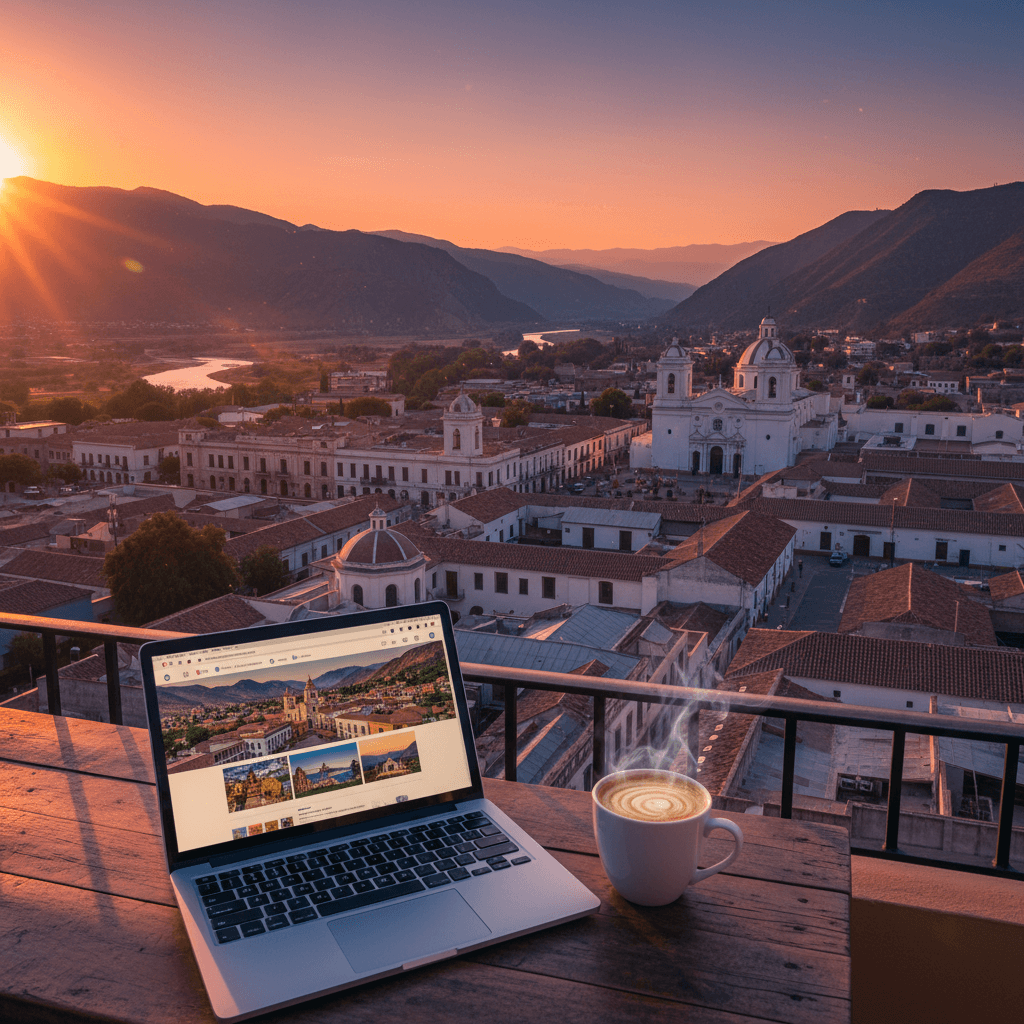
San Salvador de Jujuy
🇦🇷 Argentina
The Gateway to the High Andean Peaks
San Salvador de Jujuy, or simply Jujuy to the locals, feels world's away from the European elegance of Buenos Aires. This is Argentina's indigenous heart, a city where the air gets thinner and the colors get brighter. It sits at the foot of the Andes, acting as the final urban outpost before you climb into the dramatic, multi colored canyons of the north. For nomads, it is less about high rise luxury and more about a raw, authentic connection to South American earth.
The vibe here is unhurried and gritty in a way that feels honest. You aren't coming here for a polished tech scene; you're coming because you want to spend your lunch breaks looking at emerald mountains and your weekends exploring the Quebrada de Humahuaca. It's a place where traditional folklore music (peñas) carries more weight than the latest techno tracks, and the smell of roasting corn and empanadas fills the streets. It is the perfect base for those who find inspiration in high altitude landscapes and ancient traditions.
What Sets Jujuy Apart
Most travelers treat Jujuy as a quick pit stop on the way to Tilcara or Purmamarca, but staying here gives you a functional city experience with a back door to the wilderness. Unlike the tourist heavy villages further north, the capital feels like a real place where people live and work. You get the benefit of stable infrastructure and surprisingly reliable internet for a city tucked into the mountains. It is a strategic choice for the remote worker who wants to save money while having easy access to some of the most stunning hiking trails in the Southern Hemisphere.
- The Andean Soul: The local culture is heavily influenced by Quechua and Aymara traditions. You'll see it in the hand woven textiles at the markets and taste it in the local locro stews.
- Affordability: Your dollar stretches significantly further here than in Patagonia or the capital. A monthly budget of around $500-$900 depending on exchange rate and lifestyle [3] covers a very comfortable lifestyle for most.
- The Pace: Siestas are still a thing here. Between 1:00 PM and 5:00 PM, the city slows to a crawl, forcing you to step away from your laptop and actually breathe.
The Emotional Landscape
Living in Jujuy feels like being on the edge of a great discovery. There is a specific kind of quiet that settles over the city in the evenings, punctuated by the distant sound of a charango or the wind coming off the peaks. It can feel a bit isolating if you don't speak a word of Spanish, as English isn't widely spoken outside of hospitality. However, there is a warmth to the people that bridges the gap. You'll find yourself invited into conversations at local cafes or guided toward the best viewpoint by a stranger who is proud of their province.
The climate is generally mild, with average temperatures hovering around 23°C (73°F). The light here is different; it's crisp and sharp, making the surrounding hills look like they've been painted with a saturated brush. It's a place that demands you look up from your screen. If you're the type of nomad who needs a constant rotation of networking events and craft beer bars, Jujuy might feel too quiet. But if you want a base that feels deeply rooted in history and nature, this city delivers a sense of place that few other destinations can match.
Quick Look: The Cost of Basecamp
- Estimated Monthly Spend: $500-$900 depending on exchange rate and lifestyle [3]
- Direct Flight from Buenos Aires: 2 hours
- Drive to Tilcara: 1.5 hours
Expats who settle here often recommend using Booking.com for your initial stay while you scout the local neighborhoods. While the city is small, the convenience of being near the central plazas makes a huge difference in your daily routine. You'll likely use Aerolineas Argentinas or low cost carriers like FlyBondi to get in and out, but once you're on the ground, the rugged beauty of the north is yours to explore.
The Bottom Line
Living in San Salvador de Jujuy is a lesson in high-altitude value. While it lacks the cosmopolitan polish of Buenos Aires, your dollar stretches significantly further here. Most digital nomads find they can live comfortably on a modest budget. This covers a private apartment, eating out frequently, and weekend trips into the Quebrada.
The city operates on a dual economy. You'll see prices listed in Argentine Pesos, but the "Blue Dollar" exchange rate is what really dictates your purchasing power. If you're bringing USD and exchanging it locally, you'll find that everyday costs like coffee or a taxi ride feel incredibly cheap. It's a place where you can maintain a high quality of life without the financial stress of a major capital city.
Monthly Budget Breakdown
- Estimated Total: Approximately $600 to $1,500 depending on lifestyle.
- Housing: Expect to pay between $135-$300 USD equivalent based on current rates for a furnished one-bedroom in a decent area like Los Perales.
- Groceries: A monthly shop runs about $250 if you stick to local markets and seasonal produce.
- Dining Out: A solid meal with a glass of wine usually costs between $10 and $15.
- Transport: Local bus fares and short taxi hops are negligible, usually under $2 per trip.
Housing and Neighborhoods
Rentals in Jujuy don't always make it onto the big international platforms. While Booking.com is your best bet for the first week, you'll want to check local Facebook groups or Mercado Libre for longer stays. Most expats and remote workers gravitate toward Los Perales. It's across the river from the city center and offers a quieter, more residential feel with better views of the surrounding hills.
The Centro area is more convenient if you want to be walking distance from everything, but it can be noisy during the day. Prices here are slightly lower, but the apartments tend to be older. If you're looking for something more modern, stick to the newer developments in the northern outskirts of the city.
Connectivity and Workspace
Internet reliability has improved dramatically in recent years. You can expect average speeds of around 89 mbps in most urban rentals. Fiber optic is becoming the standard in newer buildings, though it's always smart to ask for a speed test before signing a monthly lease. If the power dips, which happens occasionally in the north, having a local SIM card with a data plan is a life saver.
The coworking scene is still catching up to the nomad trend. You won't find a big-name brand like WeWork here. Instead, nomads often set up shop in cafes around the Plaza Belgrano. The connection is usually stable enough for Zoom calls, provided you aren't trying to upload massive video files during the lunch rush.
Daily Expenses
Eating locally is the best way to keep your budget down. Regional specialties like humitas and tamales are incredibly affordable and filling. If you're shopping for groceries, look for "Ferias" or open-air markets rather than the larger supermarkets; the produce is fresher and the prices aren't inflated for convenience.
- Coffee at a cafe: $2.50
- Local beer (0.5L): $3.00
- Gym membership: $25.00 per month
- Quick lunch (Empanadas): $5.00
For getting out of town, the 1.5 hour drive to Tilcara or the Seven-Coloured Hills is easy on the wallet. Local buses (colectivos) run frequently and cost very little, making it possible to treat the entire Quebrada region as your backyard without needing a rental car every weekend.
For Digital Nomads: San Martin and the City Center
If you need to be within walking distance of a reliable signal and a decent caffeine fix, the area around Plaza Belgrano is your best bet. This is the heart of the city where the colonial architecture meets the modern hustle. You'll find the highest concentration of cafes and various spots along Calle Belgrano that cater to those needing to get some work done.
Most nomads aim for apartments within a five block radius of the main square. You are looking at roughly $450 to $650 for a furnished one bedroom apartment if you book through short term platforms. The internet speeds in this pocket hit that 89 mbps mark consistently, which is vital since dedicated coworking spaces are still a bit of a rarity in Jujuy compared to Buenos Aires.
- Rent: $450 to $650 per month
- Vibe: Fast paced, walkable, and close to government offices
- Top Spot: The cafes near the Cathedral for afternoon deep work
For Expats and Long Term Residents: Los Perales
Across the Rio Grande from the city center lies Los Perales. This is the neighborhood where people move when they want to trade exhaust fumes for garden space. It is the most affluent residential district in the city and feels more like a quiet suburb than an urban center. Expats often prefer this area because it is safer, quieter, and the air feels a bit fresher being slightly elevated.
The houses here are larger, often featuring small pools or parrilla (BBQ) areas. You will need a car or a reliance on the local taxi radiollamada apps to get into the center, as it is not a primary walking district. Expect to pay a premium for the peace and quiet, with houses or modern apartments starting around $700 and going up significantly based on amenities.
- Rent: $700 to $1,200 per month
- Vibe: Upscale, residential, and very green
- Connectivity: Reliable fiber optic is standard in most newer builds here
For Families: Bajo La Viña
Bajo La Viña is a solid middle ground for families who want a yard for the kids but don't want the price tag of Los Perales. It is a traditional neighborhood with a strong community feel. You will find local butchers, small grocery stores, and plazas where kids actually play outside after school. It is well connected to the main highways, making those weekend trips to the Quebrada de Humahuaca much easier to start.
Schools in this area are highly regarded, and the streets are generally wider and less congested than the downtown core. A three bedroom house here can often be found for around $600 to $800, offering much better value for money than the city center. It's the kind of place where neighbors still know each other's names.
- Rent: $600 to $800 for a family home
- Vibe: Family oriented, safe, and traditional
- Proximity: 10 minute drive to the city center
For Solo Travelers and Budget Seekers: Ciudad de Nieva
Perched on a hill overlooking the rest of the city, Ciudad de Nieva is arguably the coolest neighborhood in Jujuy. It has a bit of a bohemian soul with a growing number of boutique hotels and small breweries. Solo travelers like it because it feels more intimate than the center but still has plenty of life in the evenings. The Plaza Hipolito Yrigoyen is a local favorite for sunset views.
The prices here are slightly lower than Los Perales but higher than the outskirts. You can find studio apartments or rooms in shared houses for $350 to $500. It is a very safe area to walk around at night, and the local dining scene is arguably the best in the city, focusing on regional flavors like llama empanadas and tamales without the tourist traps found further north in Tilcara.
- Rent: $350 to $550 per month
- Vibe: Artistic, elevated, and social
- Food Scene: Excellent craft beer spots and regional bistros
The Connectivity Landscape
You'll find that San Salvador de Jujuy is a reliable base for remote work, especially compared to the more rugged towns further north in the Quebrada de Humahuaca. The city averages speeds around 50-100 mbps; verify with speed test, which is plenty for video calls and heavy uploads. Fiber optic (fibra óptica) has become the standard in the central district and modern residential pockets, so you won't be stuck on a sluggish DSL line if you choose your neighborhood wisely.
Most nomads stick to the city center or the Los Perales neighborhood to ensure the best stability. While the internet is generally solid, Argentina's power grid can occasionally flicker during summer storms. It's a smart move to keep a local SIM card with a data plan as a backup. Personal and Claro have the best coverage in the city, though Movistar is a decent third option.
Coworking Spaces and Work-Friendly Cafes
Dedicated coworking spaces are rare; nomads use cafes around Plaza Belgrano where you can get through a work session without distractions. If you prefer a more social atmosphere, the local cafe scene is surprisingly accommodating. You'll see locals lingering over a café chico for hours, so you won't feel rushed. Just check for "Wi-Fi" signs before you sit down to ensure you can stay connected while you work.
Mobile Data and E-SIMs
Getting connected the moment you land is easy. Most expats recommend grabbing an E-SIM through apps like Airalo or Holafly for immediate data. However, if you're staying for more than a week, a local physical SIM is much cheaper. You can pick up a chip (SIM card) at any kiosco (small convenience store) or official provider store for just a couple of dollars.
To register a local SIM, you'll usually need your passport. Once it's active, you can top up your balance using the Mercado Pago app or at a Pago Fácil terminal. Data packages are very affordable, often costing less than $5 USD for several gigabytes of high-speed data. This is particularly useful if you plan on taking day trips to Purmamarca or Tilcara, where Wi-Fi can be hit or miss but 4G signals often hold up well.
Digital Nomad Practicalities
When booking your accommodation, always ask for a screenshot of a speed test. Many Airbnb hosts in Jujuy are used to this request and will happily oblige. If you're looking at hotels, the Hotel Termas de Reyes is a popular choice for a "workation" vibe, though it's a bit outside the city. For a more central stay with proven Wi-Fi, look for apartments in the Barrio Centro area.
Keep in mind that Argentina uses Type I power outlets (the three-pin slanted version), so you might need an adapter if your gear is from North America or Europe. Most modern coworking spaces will have universal strips, but your apartment likely won't. Grab a sturdy surge protector if you're bringing high-end equipment, as voltage fluctuations can happen during peak summer months.
Staying Safe in the City
San Salvador de Jujuy, or "San Salvador" as locals call it, feels significantly more laid back than the chaotic streets of Buenos Aires. It is generally a safe city for nomads, but you should stay sharp in certain areas. Most travelers stick to the Centro and Los Perales neighborhoods. Los Perales is the upscale, residential side of town across the Rio Grande, where you will find quieter streets and a higher police presence.
Pickpocketing and bag snatching are the most common issues, particularly around the Terminal de Omnibus and the crowded market stalls near Calle Dorrego. Keep your phone tucked away when walking near the main bus station. If you are out after dark, stick to the well lit areas around Plaza Belgrano. Most expats recommend using apps like Cabify or calling a "remis" (a fixed rate radio taxi) instead of hailing random cars off the street late at night.
If you plan on hiking the nearby hills or heading up to the Quebrada de Humahuaca, the biggest safety risk is actually the altitude. San Salvador sits at about 1,260 meters, but nearby spots jump to over 3,000 meters quickly. Altitude sickness, or "puna," can hit hard. Locals swear by coca tea or chewing coca leaves to manage the headaches and nausea. It is a legal, cultural staple here, and you will see it everywhere from street markets to cafes.
Healthcare Infrastructure
The healthcare system in Jujuy is a mix of public hospitals and private "sanatorios." For anything serious, you will want to head to a private facility. Sanatorio Nuestra Señora del Rosario is one of the most reputable private options in the city center. It is better equipped for emergencies and usually has a faster turnaround than public clinics.
Public hospitals like Hospital Pablo Soria provide free care, even to foreigners, but they are often crowded and wait times can be grueling. For minor ailments, local pharmacies (farmacias) are incredibly helpful. Look for the Farmacity chain for a wide selection, or smaller local spots where pharmacists can often recommend over the counter treatments for stomach bugs or altitude issues without a doctor's note.
Medical Logistics for Nomads
While some doctors in the private sector speak a bit of English, you should have a translation app ready or bring a Spanish speaking friend. It is not like Palermo in Buenos Aires; English proficiency is much lower here. Most private consultations will cost you between $20 and $40 USD out of pocket if you don't have local insurance, which is quite affordable for most digital nomads.
- Emergency Number: Dial 107 for public ambulance services (SAME).
- Travel Insurance: Make sure your policy covers "high altitude activities" if you plan on trekking in the surrounding mountains.
- Water Safety: Tap water in the city is generally considered safe to drink, but many nomads stick to bottled water (agua mineral) for the first week to avoid any minor stomach adjustments.
- Pharmacies: Many operate on a "turno" system, meaning at least one pharmacy in each neighborhood stays open 24 hours on a rotating schedule.
Overall, your biggest concerns here are petty theft and the thin mountain air. Buy a local SIM card so you always have GPS, keep your laptop bag close in coffee shops, and take your time acclimating to the elevation before heading further north into the Andes.
Getting Into the City
Most people arrive at Gobernador Horacio Guzmán International Airport, which is about 30 minutes south of the city center. You'll find frequent direct flights from Buenos Aires via Aerolineas Argentinas, FlyBondi, and JetSmart. While it's an international airport, most traffic is domestic, so it's a smooth, small-scale experience. Once you land, your best bet is a remise, a fixed-rate taxi you book at a kiosk inside the terminal. It's more predictable than the street cabs and much faster than trying to figure out the local bus routes with luggage.
If you're coming from other parts of Northern Argentina or Bolivia, you'll likely pull into the Terminal de Ómnibus General Manuel Belgrano. It's located slightly outside the main downtown area. Don't bother walking from there if you have bags; just grab one of the yellow taxis waiting outside the main entrance. The fare to most central rentals or hotels shouldn't break the bank, usually costing just a few dollars.
Navigating the Streets
Downtown Jujuy is built on a standard grid, which makes it fairly easy to walk. That said, the city isn't flat. You'll definitely feel the elevation and the occasional steep incline, especially if you're staying in neighborhoods like Los Perales. Walking is great for the immediate center around Plaza Belgrano, but for anything further, you'll want to use the local transport system.
The city uses the SUBE card for all public buses, just like Buenos Aires. You can buy and top these up at most kiosks (small convenience stores) marked with the SUBE logo. The buses are frequent but can get crowded during the siesta hours when everyone is heading home or returning to work. If you're heading toward the Quebrada de Humahuaca or Tilcara for a day trip, the 1.5 hour drive is easy on paved roads, but many nomads prefer the local "collectivos" (shared vans) that run these routes regularly.
Driving and Taxis
Renting a car is a smart move if you plan on using San Salvador as a base for exploring the mountains. Having your own wheels lets you hit the Seven-Coloured Hills on your own schedule. Just be aware that parking in the city center is a headache. Look for "Estacionamiento" signs for paid lots, which usually charge by the hour or the half-day. Street parking is often regulated by attendants who will give you a small paper slip to pay.
- Yellow Taxis: These are metered and can be hailed on the street. They're reliable for quick hops across town.
- Remises: These look like regular cars and don't have roof signs. You call them from an agency or a "base." They're great for pre-booked trips to the airport or longer excursions where you want a set price upfront.
- Ride-Hailing: While apps like Uber have a presence in Argentina, their availability in Jujuy is hit or miss. Local taxis remain the dominant and often faster choice.
Pro Tips for Commuting
Keep in mind that the city shuts down significantly between 1:00 PM and 5:00 PM for the traditional siesta. Traffic spikes right before and after this window. If you need to get across town quickly, try to avoid these "rush hours" when the streets become a bottleneck of local commuters. For digital nomads, the 89 mbps internet speeds mean you can easily work from a cafe while waiting for the midday traffic to settle down.
If you're planning to head into the higher altitudes of the province, remember that your car's engine will lose power and you might feel a bit sluggish too. Take it slow on the winding roads leading out of the city. Most expats recommend keeping a physical map or offline Google Maps downloaded, as cell signal can drop the moment you leave the city limits and head into the Andean foothills.
The Local Dialect and Communication Style
In San Salvador de Jujuy, you'll find a linguistic rhythm that feels distinct from the fast, Italian influenced cadence of Buenos Aires. Locals here speak Spanish with a softer, more melodic Andean lilt. While the standard Argentine voseo (using vos instead of tu) is still the norm, the vocabulary is heavily seasoned with Quechua influences. You'll frequently hear words like pachamama (mother earth) or puna (high plateau) in daily conversation, reflecting the deep indigenous roots of the province.
Communication tends to be warm but more reserved than in the capital. People appreciate a polite buen día or buenas tardes before diving into a request. It is a place where small talk serves as a social glue, so don't be surprised if a simple transaction at a kiosk turns into a five minute chat about the weather or your travel plans. Most nomads find that a little effort in Spanish goes a very long way here, as English proficiency is significantly lower than in larger hubs like Mendoza or Cordoba.
English Proficiency and Staying Connected
Outside of high end hotels or major tour agencies specializing in the Quebrada de Humahuaca, English is rarely spoken. You should expect most interactions at local markets, pharmacies, and bus stations to happen entirely in Spanish. If your skills are rusty, downloading an offline translation app is a smart move before you head out. Expats recommend learning at least the basics of food, directions, and numbers to make daily life smoother.
For staying connected, the city is reliable. You can find reliable fiber optic speeds, often over 100 mbps in urban areas, which is plenty for video calls and remote work. While fiber optic is becoming more common in urban apartments, it is still hit or miss in the older buildings of the Centro or Los Perales neighborhoods. Always ask for a speed test screenshot before signing a short term lease if you rely on a stable connection.
Mobile Data and Essential Apps
Getting a local SIM card is your best bet for consistent data. The three main providers are Personal, Movistar, and Claro. Personal generally has the strongest coverage in the mountainous regions surrounding the city. You can pick up a chip at any kiosco (small convenience store) or official branch, though you'll need your passport to register it officially. Many travelers now opt for an E-SIM to avoid the hassle of physical cards, which works well within the city limits.
To navigate the city and stay in the loop, you will want a few specific apps on your phone:
- WhatsApp: This is the lifeblood of communication in Jujuy. Whether you are booking a table at a restaurant, messaging a landlord, or asking a shop if they have stock, everyone uses WhatsApp.
- Cabify or Uber: While traditional taxis and remises (private car services) are everywhere, these apps provide more transparent pricing, though availability can be thin during late night hours.
- Google Maps: Generally accurate for walking directions, though local bus routes are better verified by asking a local at the stop.
- PedidosYa: The go to app for food delivery and grocery runs if you don't feel like heading out.
Social Nuances
Understanding the local non-verbal cues is just as important as the language. A single kiss on the right cheek is the standard greeting among friends and new acquaintances alike. Physical space is often tighter in conversation than in North America or Northern Europe. If someone stands close to you while talking, it's a sign of friendliness, not an intrusion. Patience is also a form of communication here; things move at a slower pace in the North, and getting frustrated by a slow queue is considered quite rude.
The High-Altitude Rhythm
San Salvador de Jujuy, or "San Salvador" as locals usually call it, sits at a lower elevation than the high Andean plateaus further north, giving it a much milder climate than you might expect. Daily highs average around 20-22°C (68-72°F) in warmer months, which makes it a comfortable base for people who want to explore the mountains without freezing every time they step outside. It doesn't have the extreme humidity of the coast or the brutal winter chill of Patagonia.
The city operates on a subtropical highland climate with an average annual temperature around 15°C (59°F). This means you get distinct wet and dry seasons. From November through March, the region sees the most rainfall. While the rain can turn the surrounding hills a brilliant, deep green, it can also make mountain roads a bit unpredictable. If you're planning on driving up to the Quebrada de Humahuaca or the Salinas Grandes, keep an eye on the forecast during these months.
The Sweet Spot for Visiting
Most digital nomads and long term travelers find that the best time to settle in is between April and June or September and November. During these shoulder seasons, the air is crisp, the skies are usually a clear, deep blue, and the temperatures are perfect for hiking without the summer afternoon downpours. It's the ideal window for those who want to work from a cafe in the morning and hit the trails by 2:00 PM.
July and August are the driest months, but they coincide with winter. While the days are sunny and pleasant, the temperature can drop significantly once the sun goes down. If you're visiting during this time, make sure your accommodation has decent heating, as older buildings in the city center can get quite drafty at night.
Seasonal Highlights and Events
- Carnival (February/March): This is the biggest event in the province. While the wildest celebrations happen a bit further north in Tilcara and Humahuaca, San Salvador becomes a logistical hub. Prices for everything from short-term rentals to bus tickets spike, so book your stay at least two months in advance if you're arriving during this window.
- Semana de Jujuy (April): The city celebrates its founding on April 19th. You'll find parades, local food festivals, and cultural events around the Plaza Belgrano. It's a great time to see the city at its most patriotic and lively.
- Pachamama Month (August): Throughout August, locals perform rituals to honor Mother Earth. It's a deeply cultural time where you can experience authentic Andean traditions that you won't find in Buenos Aires or Mendoza.
What to Pack
Because of the altitude shifts and the desert-adjacent climate, the "onion method" is the way to go here. Even on a warm day, you'll want a solid windbreaker or a fleece the moment you head into the higher altitudes of the Quebrada. The sun is also incredibly strong at this elevation, so high-SPF sunscreen and a good hat aren't optional; they're survival gear. Most expats recommend bringing a sturdy pair of walking shoes or trail runners as your daily footwear, since the city's sidewalks and the nearby mountain paths are equally rugged.
Getting Connected
Internet speeds average 50-100 mbps; always verify with speed test. This handles video calls and heavy uploads without much drama. Most modern apartments in the center have fiber optics now, but it's always smart to ask for a speed test screenshot before you commit to a long term rental.
For mobile data, don't bother hunting for a physical SIM card shop at the airport. Grab an E-SIM before you land to stay connected immediately. Once you're settled, Personal and Claro are the most reliable carriers in the northern provinces. If you plan on heading deep into the Quebrada de Humahuaca for the weekend, expect your signal to drop out frequently between towns.
Money and Costs
Living here won't break the bank. Most digital nomads live comfortably on $600-$1,000 per month. This covers a nice apartment, plenty of meals out, and weekend trips into the mountains. It is significantly cheaper than Buenos Aires, though you'll have fewer luxury options.
Cash is still king in many local shops and markets. While larger restaurants and hotels take cards, you'll want pesos for the smaller peñas and street food stalls. Use Western Union to send yourself money; it's the standard way for expats to get a better exchange rate than what you'll find at a traditional ATM. For booking your stay, Booking.com remains the most popular platform for local guesthouses and hotels.
Transportation
Getting into the city usually involves a flight from Buenos Aires. You have three main choices: Aerolineas Argentinas, or the low cost carriers FlyBondi and JetSmart. Keep an eye on your luggage weight with the budget airlines, as they are strict about every extra kilo.
Within the city, you can rely on the local bus system or taxis, which are quite affordable. If you're looking to explore the surrounding area, the drive to Tilcara takes about 1.5 hours. Many nomads choose to rent a car for a few days to see the Seven Coloured Hills on their own schedule, as the bus schedules to the smaller villages can be a bit erratic.
Weather and Timing
The climate is generally mild with an average temperature of 23°C (73°F). It's a year round destination, but remember that the sun at this altitude is incredibly strong. Even on a cool day, you'll burn quickly. If you're heading higher into the mountains, the temperature drops fast once the sun goes down, so layers are your best friend.
Daily Essentials
- Grocery Shopping: Look for the local markets for fresh produce. The quality of vegetables in Jujuy is some of the best in the country because of the nearby agricultural valleys.
- Health: There are several private clinics in the city center that provide good care for routine issues. For anything major, most people head to the larger hospitals in the city.
- Work Spaces: While dedicated coworking spaces are still popping up, many nomads work from cafes in the downtown area. Look for spots near the Plaza Belgrano for the most reliable Wi-Fi and power outlets.
Need visa and immigration info for Argentina?
🇦🇷 View Argentina Country GuideHidden Gem
Worth the effort