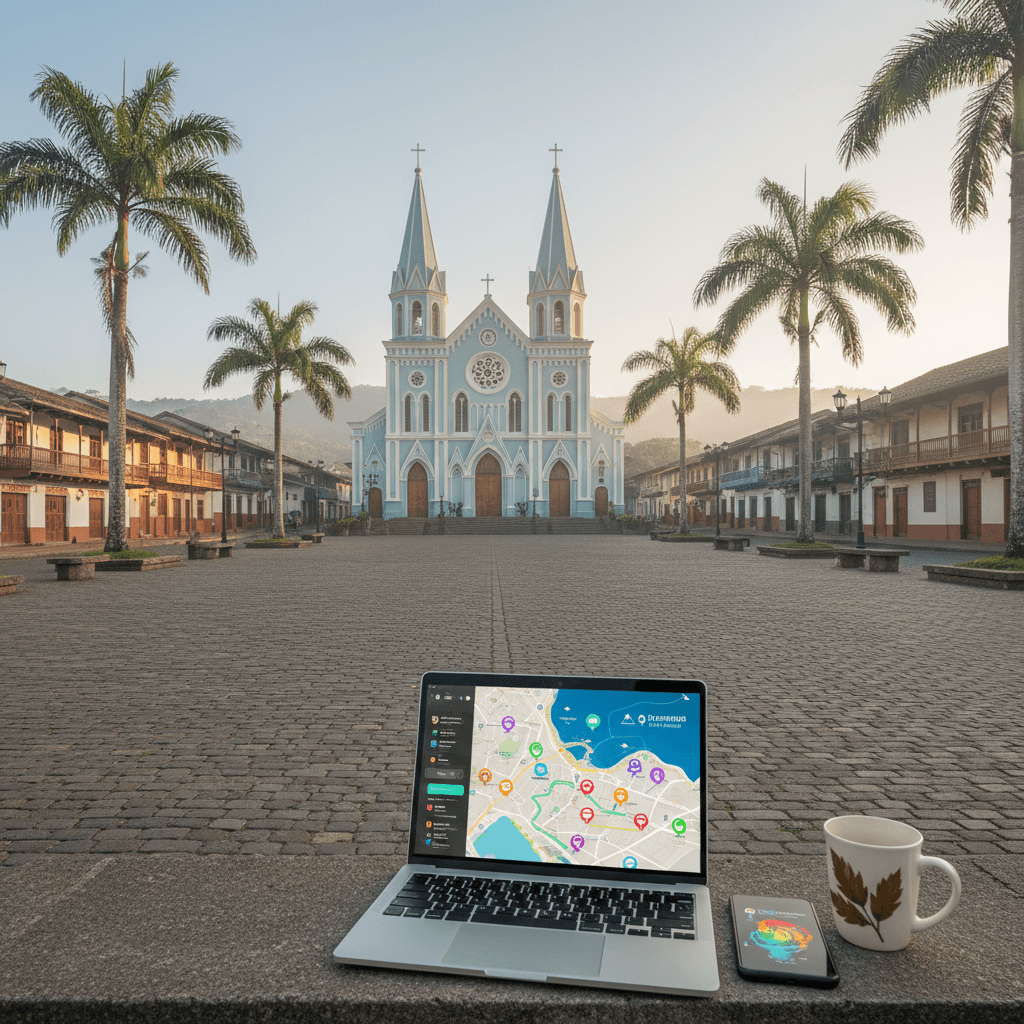
San Ramón
🇨🇷 Costa Rica
San Ramón is often called the "City of Poets and Presidents," but for the modern nomad, it is the city of deep breaths and authentic connections. Located an hour west of San José in the Alajuela province, this mountain town sits at an elevation of approximately 1,060 meters. This height is the secret to its appeal; you can ditch the air conditioning and the humidity of the coast for a crisp, eternal springtime climate that averages a comfortable 70°F to 75°F during the day.
The vibe here is noticeably different from the high-energy surf camps of Santa Teresa or the polished expat enclaves of Escazú. It feels like a real Costa Rican community where people actually live, work, and raise families. You won't find crowds of tourists in neon tanks; instead, you'll find locals greeting each other by name in the central park. It is a slow-burn destination that rewards those who stay for a month rather than a weekend.
The Daily Rhythm
Life in San Ramón revolves around the Parroquia de San Ramón Nonato, the massive gothic-style church that anchors the town center. Most nomads start their mornings at the Feria del Agriculturista, the local farmers market held on Fridays and Saturdays. It is one of the largest in the region, where you can stock your kitchen with fresh produce for around $25 to $35 a week. The social scene is understated, centered around local sodas and a growing number of third-wave coffee shops where the beans are grown just a few miles away.
Expats and long-term travelers often describe the city as a "bridge" location. It offers the infrastructure of a mid-sized city, including high-speed fiber optic internet and private healthcare, while maintaining a rural soul. You are close enough to the Pacific coast to drive to the beach in 90 minutes, yet you return to the cool mountain air at night. It is a place for deep work and quiet evenings, making it a favorite for writers, developers, and those who have outgrown the party-heavy nomad hubs.
The Neighborhood Breakdown
- Centro: Best for those who want to be car-free. You are walking distance to the bus terminal, supermarkets, and gyms. It can be noisy during the day, but the convenience is unmatched.
- Magallanes: A few minutes uphill from the center, this area offers incredible views of the Gulf of Nicoya. It has a higher concentration of expats and modern villas.
- San Juan: A quieter, more residential feel that is popular with university students and faculty from the local UCR campus. It offers a nice balance of local life and affordable rentals.
- Piedades Norte: Further out and higher up, this is for nomads who want total immersion in nature. You will likely need a 4x4 vehicle to navigate the terrain here during the rainy season.
What to Expect
You should prepare for the "San Ramón mist," locally known as pelo de gato. In the afternoons, clouds often roll through the streets, giving the town a moody, Pacific Northwest feel. This weather keeps the landscape incredibly green and the coffee plantations lush. While the nightlife is quiet, the sense of safety and community is high. Most nomads find that people here are genuinely curious and helpful, provided you make an effort to speak even basic Spanish.
Cost-wise, San Ramón is a breath of fresh air compared to the coast. A high-end meal for two at a nice spot like Sentidos or Aroma y Café usually runs around $30 to $45, while a hearty lunch at a local soda will only set you back about $6 or $7. It is a place where your budget stretches further, allowing for a higher quality of life without the "gringo tax" often found in Guanacaste.
The Price of Pura Vida in the Central Valley
San Ramón is where you go when you're tired of paying the beach tax. While nomads in Tamarindo or Santa Teresa often see their budgets evaporate on $15 cocktails and air conditioning bills, life in the "City of Poets" is significantly more grounded. You're trading the ocean view for rolling green hills and a cost of living that actually lets you build your savings.
Most expats find that a monthly budget of $1,500 to $2,200 provides a very comfortable lifestyle here. This covers a modern apartment, frequent meals out, and high speed internet. If you're living like a local, shopping at the farmers market, and keeping your imported cravings in check, you can easily shave $400 off that total.
Housing and Neighborhoods
The rental market in San Ramón isn't as saturated with Airbnb's as the coast, which keeps prices stable. You'll find the best deals by walking the streets and looking for "Se Alquila" signs, but Facebook Marketplace is the primary digital tool for nomads.
- Lowland Central (Centro): This is for those who want to be steps away from the church and the central market. You can find basic one bedroom apartments for $450 to $600. It gets noisy, but you won't need a car.
- Magallanes: A favorite for expats who want a view. It's slightly higher in elevation and more suburban. Expect to pay $700 to $950 for a small house with a yard.
- Piedades Norte/Sur: These areas offer more privacy and lush surroundings. Modern, "American style" homes here generally range from $850 to $1,200 per month.
Connectivity and Workspace
Since San Ramón isn't a primary tourist hub, dedicated coworking spaces are sparse. Most nomads work from home or camp out in local spots like Café del Patio. High speed fiber optic internet is widely available in the town center and established neighborhoods. A 100 Mbps home connection usually costs around $50 to $65 per month through providers like Liberty or Kolbi.
If you need a backup, a prepaid SIM card with 5GB of data costs about $10. Reliability is high, though the occasional afternoon thunderstorm in the rainy season can cause brief power blips. A small UPS for your router is a smart $60 investment.
Food and Daily Expenses
The "Feria" or farmers market on Fridays and Saturdays is where the magic happens. You can fill your kitchen with fresh tropical fruit, vegetables, and local cheeses for about $35 a week. If you shop at the Auto Mercado in nearby Alajuela for imported peanut butter or specific cheeses, your bill will double quickly.
- Casado at a local Soda: A massive plate of rice, beans, protein, and salad costs $5 to $7.
- Dinner for two: A nice meal at a place like Aroma Tico with drinks will run you about $35 to $45.
- Craft Beer: Expect to pay $5 to $7 at a specialty pub, while a local Imperial at a corner bar is closer to $2.50.
- Gym Membership: Local spots like Gym Fitness Center cost roughly $30 to $45 per month.
Transportation
The city is walkable, but the surrounding hills are steep. Local taxis and Uber are active here. A cross town trip rarely exceeds $4. If you're planning to explore the nearby cloud forests or head to the coast on weekends, a car is helpful but expensive. Renting a basic 4x4 can cost $600 to $900 a month depending on insurance. Most nomads stick to the excellent bus system, which connects you to San José for less than $5.
For Digital Nomads: San Rafael and Downtown
If you need to be within walking distance of a decent caffeine fix and a stable signal, the central grid of San Ramón is your best bet. While it lacks the flashy coworking hubs of San José, it makes up for it with a genuine local vibe and lower overhead. Most nomads gravitate toward the San Rafael district, which sits just north of the city center. It is slightly quieter than the main plaza but close enough that you can walk to Aroma y Café for a morning work session.
- Rent: Expect to pay $550 to $850 for a modern one bedroom apartment.
- Connectivity: Fiber optic is increasingly common here; look for Liberty or Telecable providers.
- Vibe: Urban but small town; you will be living alongside Tico professionals rather than a tourist crowd.
The downtown area is perfect if you don't want to deal with the hassle of owning a car. You can handle your grocery shopping at the Feria del Agricultor on Fridays and Saturdays, where you can stock up on produce for about $25 a week. The noise level is higher here due to bus traffic, so bring noise canceling headphones if you have afternoon Zoom calls.
For Expats and Long Termers: Magallanes and Piedades Sur
Expats who have traded the hustle for a view usually head into the hills. Magallanes is the gold standard for those looking for a community of fellow foreigners. It sits at a slightly higher elevation, meaning you get those famous Central Valley views and a breeze that cuts the humidity. It is about a 10 minute drive from the city center, so you'll definitely want a 4x4 or a reliable SUV.
- Rent: Larger homes or villas go for $900 to $1,400 depending on the view.
- Atmosphere: Quiet, residential, and very green.
- Social Life: This is where you'll find the local expat meetups and community potlucks.
If Magallanes feels a bit too "established" for you, Piedades Sur offers a more rugged, rural experience. It is further out, about 20 to 25 minutes from the center, but the privacy is unmatched. You are surrounded by coffee plantations and cloud forests. Just be aware that power outages can happen during the heart of the rainy season, so a backup battery for your router is a smart move.
For Families: Los Angeles and San Juan
Families usually look for safety and proximity to schools, which makes Los Angeles a top choice. This neighborhood is home to many of the city's upper middle class residents. The streets are wider, and there is a sense of security that appeals to parents. You are also close to the University of Costa Rica (UCR) campus, which gives the area a bit of an academic, safe energy.
- Monthly Costs: A three bedroom family home typically rents for $1,100 to $1,600.
- Amenities: Easy access to private clinics and bilingual schools.
- Parks: Plenty of green space for kids to run around without the congestion of the city core.
San Juan is another solid alternative. It is a bit more traditional and feels like a classic Costa Rican suburb. It's very walkable, and neighbors tend to look out for one another. It is common to see kids playing soccer in the street here, which gives it a nostalgic, community focused feel that many expat families find refreshing.
For Solo Travelers: El Tremedal
Solo travelers often prefer El Tremedal, located near the iconic church of the same name. It is a lively area with plenty of sodas (small local restaurants) where you can grab a $6 casado and chat with the locals. It is one of the more affordable pockets of the city, making it ideal if you are on a budget or just starting your Costa Rican journey.
- Rent: Small studios or rooms in shared houses can be found for $350 to $500.
- Safety: Generally safe, though like any city, stay alert after dark.
- Food: Close to La Trattoria for when you need a break from rice and beans.
Living here puts you right in the thick of things. You won't feel isolated, as the streets are always active. Most solo residents find that they don't need a car at all, relying instead on the excellent local bus system that connects San Ramón to Palmares and Naranjo for just a few dollars.
Connectivity and Speed
San Ramon sits in a sweet spot for remote workers who want reliable infrastructure without the chaos of San Jose. Most apartments and houses in the city center or neighborhoods like Magallanes come equipped with fiber optic internet. You can usually expect speeds ranging from 50 Mbps to 200 Mbps depending on the provider. Telecable and ICE (Kolbi) are the primary players here. If you are renting an Airbnb, always ask for a screenshot of a speed test before booking, as some older homes on the outskirts might still rely on copper wires or spotty DSL.
Mobile data is your best backup plan. Liberty and Kolbi have the strongest coverage around town. You can pick up a prepaid SIM card at the local malls for about $2 and load it with data for roughly $15 a month. 4G coverage is consistent throughout the downtown grid, though it can drop off quickly once you head up into the cloud forest ridges of Los Angeles or Piedades Norte.
Coworking Spaces and Work-Friendly Cafes
You won't find the massive, sleek coworking franchises that dominate Tamarindo or Escazu here. San Ramon is more low-key. Most nomads work from home or frequent local spots that offer a "laptop friendly" vibe. If you are considering visiting the local public library for a desk, be sure to verify their current hours and public access availability beforehand.
For a more social atmosphere, Cafe Delicias is a staple. Located just a short walk from the central park, it has reliable Wi-Fi and plenty of power outlets. It gets busy during the lunch rush, so try to snag a table early. Another solid option is Aroma y Cafe, where the atmosphere is calm enough for deep work and the coffee is some of the best in the Central Valley. Expect to pay about $3 to $4 for a high-quality latte.
The Digital Nomad Setup
If you are planning to stay for a few months, setting up a home office is the way to go. Most expats recommend buying a UPS (Uninterruptible Power Supply) for your router. While the grid in San Ramon is generally stable, the frequent afternoon thunderstorms during the rainy season can cause quick power blips that will drop your Zoom call. You can find these at electronics stores like Gollo or Monge for about $60 to $80.
The city's altitude means it stays cool, so you won't be dealing with the hardware-melting heat of the coast. This saves you a fortune on electricity since you rarely need air conditioning. A typical monthly electric bill for a remote worker in a two-bedroom house averages around $45 to $60, even with multiple monitors and laptops running all day.
Practical Tips for Remote Workers
- Noise Control: San Ramon is a working Tico town. If you have important meetings, avoid houses directly on the main bus routes or near the church bells, which ring frequently.
- Data Caps: Most home fiber plans are unlimited, but always double-check with your landlord. Some older "pueblo" connections might have soft caps that throttle your speed after heavy usage.
- Community: Join the local expat Facebook groups. People often share updates on which cafes currently have the fastest pings or if there is a temporary outage in a specific neighborhood.
Cost Comparison for Remote Work Needs
- High-speed Fiber (100 Mbps): $40 to $55 per month
- Prepaid Mobile Data (10GB): $12 to $18
- Coffee and a snack at a cafe: $7 to $10
- Mid-range UPS/Battery Backup: $70
Navigating the digital life here requires a bit more self-sufficiency than in the big tourist hubs. You won't have a community manager handing you a login at a front desk. However, the trade-off is a much lower cost of living and a genuine connection to the local community that you just won't find in the beach towns.
Staying Safe in the City of Poets
San Ramon is widely considered one of the safer hubs in the Central Valley, largely because it lacks the grit of San Jose and the transient, party heavy crowds of the coastal towns. It feels like a genuine Tico community where people actually know their neighbors. Most nomads feel comfortable walking around the central district during the day, though like anywhere in Latin America, petty theft is the primary concern. You won't find much violent crime here, but leaving a laptop visible in a car or a phone on a cafe table is asking for trouble.
Expats living in neighborhoods like Magallanes or San Juan often mention that "opportunistic theft" is the main thing to watch for. If you are renting a standalone house, make sure it has the standard Costa Rican security features like perimeter fencing or window bars. It’s not a sign of a dangerous area; it’s just the local standard for home security. If you’re out past dark, stick to the well lit areas near the Parroquia de San Ramon Nonato or take an official red taxi. They are cheap, plentiful, and much safer than wandering through unlit side streets at 11:00 PM.
- Emergency Number: Dial 911 for police, fire, or ambulance services.
- Red Taxis: Always ensure the meter, known as the maria, is running. A cross town trip rarely exceeds $3 to $5.
- Walking: Sidewalks can be uneven and narrow. Watch your step rather than your phone screen to avoid a twisted ankle.
Healthcare and Medical Facilities
One of the biggest draws for long term nomads in San Ramon is the quality of healthcare. For a town of its size, the medical infrastructure is impressive. The Hospital Carlos Luis Valverde Vega is the main public facility. While it’s great for emergencies, the wait times for non urgent issues can be grueling. Most digital nomads and expats opt for private care for routine visits, which is surprisingly affordable compared to US or European prices.
For day to day needs, you’ll find plenty of private clinics and specialized practices near the town center. A consultation with a private general practitioner usually costs between $50 and $80. Many of these doctors speak English, having trained abroad or in San Jose. If you have a complex medical condition, you’re only about an hour away from the top tier private hospitals in San Jose, like CIMA or Clinica Biblica, which offer world class technology.
Pharmacies and Water Safety
Pharmacies, or farmacias, are on almost every corner and act as the first line of defense for minor ailments. Pharmacists in Costa Rica have more authority than those in the US; they can often diagnose minor issues and prescribe medications on the spot. Look for the Fischel chain for a reliable, well stocked experience. If you need a specific brand of medication from home, bring the original bottle to help them find the local equivalent.
Regarding the water, San Ramon’s tap water is generally safe to drink. The city’s high altitude and mountain springs mean the quality is much better than what you’ll find in some beach provinces. Most expats drink it straight from the tap without issue, though if you have a sensitive stomach, a simple Brita filter or a 5 gallon water jug (garrafon) from the grocery store for about $3 will give you peace of mind.
- Private Clinic Visit: Expect to pay $60 for a standard checkup.
- Dental Cleaning: Local dentists charge around $50 to $70 for high quality work.
- Health Insurance: Most nomads use SafetyWing or World Nomads, but local private insurance through INS is an option for those staying longer than six months.
The Layout of the Land
San Ramón is built on a classic Spanish grid system, which makes it fairly easy to find your bearings after a day or two. Most of the action happens around the Parroquia de San Ramón Nonato, the massive church that serves as the city's north star. Because the terrain is part of the Central Valley highlands, expect some inclines. You can walk most of the downtown core, but you will definitely feel the elevation in your calves by day three.
If you are staying in the popular expat hills like Magallanes or Santiago, don't count on walking into town for your morning coffee. These neighborhoods sit several kilometers outside the center. While the views are incredible, the roads are winding and often lack sidewalks, making a vehicle or a reliable taxi contact a necessity for daily life.
Public Buses and the Terminal
The Empresarios Unidos terminal is the heartbeat of regional travel. For about $4 to $6, you can catch a direct bus to San José, which takes roughly 90 minutes depending on the chaos of the General Cañas Highway. It is a reliable way to get to the capital for specialized medical care or big city shopping without dealing with the stress of driving.
Local buses, known as "colectivos," serve the surrounding districts like San Juan and Piedades Norte. These usually cost less than $1 per ride. They are great for a cheap local experience, but they don't always run on a strict schedule. If you are trying to get to a specific meeting or a coworking session, give yourself a 20 minute buffer.
Taxis and Ridesharing
Uber does operate in San Ramón, but the fleet is much smaller than what you will find in San José or Alajuela. You might wait 10 to 15 minutes for a driver to accept a request, especially during the rainy season afternoons. It is generally cheaper than official taxis, with most cross-town trips costing between $3 and $5.
The official red taxis are everywhere. You will find them lined up near the central park and the main supermarkets. They use meters, locally called "la maría," and you should always make sure the driver turns it on before you pull away. A typical ride from the town center to a rental in Los Angeles will run you about $6 to $8.
Driving and Car Rentals
Many long term nomads eventually decide to buy or rent a car. Having your own wheels opens up the cloud forests and the nearby Alberto Manuel Brenes Biological Reserve. If you are renting, a 4x4 isn't strictly necessary for the paved city streets, but it is highly recommended if your Airbnb is tucked away on a dirt ridge in the mountains.
- Daily Rental Rates: Expect to pay $50 to $80 per day for a mid sized SUV with basic insurance.
- Gasoline: Prices are regulated by the government, so it costs the same at every station. Expect to pay roughly $5 per gallon.
- Parking: Most downtown parking is managed by street meters or private lots called "parqueos." Private lots usually charge about $1.50 per hour and are much safer for leaving your laptop bag out of sight.
Navigation Tips
Costa Rica is famous for its lack of formal addresses. While San Ramón has street numbers, locals rarely use them. You will likely receive directions based on landmarks, such as "200 meters south of the old fig tree." Download Waze immediately; it is significantly more accurate than Google Maps in this part of the country for navigating around potholes and sudden road closures.
If you are planning to head toward the coast or the airport, try to avoid the roads between 4:00 PM and 6:30 PM. The commute traffic can turn a quick trip into a sluggish crawl. Most expats find that running errands on Tuesday or Wednesday mornings is the best way to avoid the crowds at the banks and the post office.
The Language Landscape
In San Ramon, you are stepping away from the English speaking bubbles of the coast. While you will find English speakers among the professional class and the expat community living in the surrounding hills, day to day life happens in Spanish. Local shopkeepers, taxi drivers, and vendors at the Friday morning feria usually speak little to no English. This makes the city an ideal spot for nomads who actually want to use their Spanish rather than just reading it on a menu.
The local dialect is clear and relatively slow compared to Caribbean Spanish. You will notice the famous Costa Rican "r" which sounds more like an English "r" than a rolled Spanish one. People here are incredibly patient with learners. If you get stuck, a polite smile and a "con gusto" will go a long way. You will also hear the term "Pura Vida" used as a greeting, a goodbye, and a way to say everything is okay. It is not just a slogan for tourists here; it is the default setting for social interaction.
Staying Connected
Reliable internet is the lifeline for any nomad in the Central Valley. Most rentals in neighborhoods like Tremedal or San Vicente come with fiber optic connections these days. You can expect speeds ranging from 50 Mbps to 200 Mbps depending on your package. If you are staying further out in the mountains of Magallanes, double check the connection type before signing a lease, as heavy rain and wind can sometimes interfere with older copper lines or satellite setups.
For mobile data, the three main players are Liberty, Kolbi, and Claro. Most expats recommend Kolbi for San Ramon because it generally has the best coverage in rural areas and mountainous terrain. You can pick up a prepaid SIM card at the mall or various pulperias for about $2. To register it, you just need your passport. A 5GB data plan usually costs around $10 to $15 and can be topped up easily through the bank apps or at any checkout counter in town.
Coworking and Study Spots
San Ramon does not have the massive, flashy coworking hubs you find in San Jose or Santa Teresa. Instead, the scene is more intimate. Many nomads work from local cafes that have embraced the remote work culture. Aroma y Cafe is a favorite for its reliable Wi-Fi and quiet corners. You can get a high quality coffee and a light lunch for under $12 while you knock out a few hours of deep work.
The presence of the University of Costa Rica (UCR) campus means the city is full of students. This creates a scholarly vibe with plenty of quiet spaces and libraries. If you need a formal office setup, some nomads look for shared office rentals in the city center, which can run between $150 and $300 per month for a dedicated desk. Most people find that a solid home setup combined with cafe hopping provides plenty of variety.
Essential Communication Tips
- WhatsApp is King: From booking a dentist appointment to ordering a pizza or messaging your landlord, everything happens on WhatsApp. Do not expect businesses to check their email regularly.
- The Address System: San Ramon uses the traditional Costa Rican way of giving directions. Instead of "123 Main Street," an address might be "200 meters north of the Parish Church, next to the old fig tree." It takes a week or two to get used to, but Google Maps has most major landmarks pinned correctly now.
- Formal vs. Informal: Ticos in San Ramon tend to be polite and somewhat formal. Using "Usted" instead of "Tu" is the standard, even among friends. It shows a level of respect that locals deeply appreciate.
- Phone Plans: If you are staying longer than a month, look into "Prepago" plans that offer unlimited social media and WhatsApp data. These are extremely cost effective and ensure you are never disconnected while navigating the city.
Communication here is as much about the social connection as it is about the information. Taking five minutes to chat about the weather or your family with the person selling you fruit is considered normal, not a waste of time. Embracing this slower pace will make your transition into the San Ramon community much smoother.
The City of Eternal Mist
San Ramon sits at a unique crossroads in the Central Valley. Because of its elevation, approximately 3,470 feet above sea level, you can forget about the sweltering humidity of the Guanacaste coast. Locals call it the City of Poets, but nomads usually call it the City of Eternal Mist. You'll experience a temperate, highland climate that stays between 65°F and 80°F most of the year. It's the kind of place where you actually need a light hoodie after the sun goes down.
The weather here follows the standard Costa Rican cycle, but with a mountain twist. You have the dry season from December to April and the green season from May to November. In San Ramon, the green season isn't just about rain; it's about the clouds rolling through the streets. It creates a cozy, focused atmosphere that's perfect for knocking out deep work, though the dampness can be a bit much if your rental doesn't have good ventilation.
Dry Season: The Peak Window
If you're looking for blue skies and the best outdoor conditions, aim for January through March. This is when the trade winds, or vientos alisios, kick up. These winds keep the air fresh and help clear out the afternoon fog. It's the most popular time for expats to settle in, so expect short term rental prices in neighborhoods like Magallanes or Tremedal to spike by about 20% to 30%.
- Average Highs: 78°F to 82°F
- Average Lows: 62°F to 66°F
- Best for: Weekend trips to the nearby Alberto Manuel Brenes Biological Reserve or hiking the surrounding coffee plantations.
The Green Season Reality
Don't let the term rainy season scare you off. From May to August, mornings are usually bright and sunny. The rain typically holds off until 2:00 PM or 3:00 PM, falling in heavy, predictable bursts. It's actually a great rhythm for remote work. You get your errands and outdoor exercise done early, then settle into a cafe like Cafe del Patio when the downpour starts. September and October are the wettest months, where it can sometimes drizzle for three days straight. If you struggle with seasonal blues, these two months might be a challenge here.
When to Visit for the Best Value
For the best balance of weather and budget, try the shoulder months of May or November. You'll catch the transition between seasons, meaning lower prices on long term stays but enough sunshine to enjoy the scenery. During these months, you can often find a solid two bedroom apartment for $600 to $800, whereas the same spot might go for $1,200 in the middle of February.
Keep an eye on the local festival calendar too. If you visit in late August, you'll hit the Fiestas Patronales. It's a massive celebration for San Ramon Nonato where people from all the surrounding districts bring their patron saint statues to the central cathedral. The weather is usually hit or miss during the festival, but the street food and parades make the occasional rain shower easy to ignore.
Packing Essentials for the Highlands
San Ramon requires a different wardrobe than the beach. Most nomads find they spend more time in jeans and sneakers than flip flops. You'll want a high quality waterproof shell for the afternoon storms and a sweater for the evenings. If you're planning to work from local spots, bring a dry bag for your laptop. The rain comes fast, and getting caught in a San Ramon downpour without protection is a quick way to fry your gear.
San Ramón is often called the City of Poets, and it lives up to that reputation with a slower, more intellectual pace than the beach towns. To thrive here, you have to embrace the local rhythm rather than expecting a tourist infrastructure tailored to foreigners. It is a place where knowing a bit of Spanish goes a long way, especially when you are dealing with local utilities or getting a repair done.
Money and Costs
Living in San Ramón is significantly cheaper than in places like Tamarindo or Santa Teresa. You are looking at a local economy rather than a tourist one. Most expats find they can live comfortably on a budget that would barely cover rent in the United States. Cash is still king for small purchases at the farmers market or local sodas, though most established businesses accept cards.
- Monthly Rent (1-bedroom): $450 to $700 depending on proximity to the town center.
- Local Meal (Casado): $5 to $8 at a soda.
- Monthly Utilities: $60 to $90, including water and electricity.
- Private Health Insurance: $80 to $150 per month through INS or similar providers.
Connectivity and Remote Work
Internet reliability is generally high in the Central Valley, but the mountain terrain can cause issues during heavy rainstorms. Fiber optic is becoming the standard in the city center. If you are staying further out in areas like Magallanes or Piedades Sur, always ask for a speed test before signing a lease. Power outages happen occasionally during the rainy season, so a battery backup for your router is a smart investment.
While San Ramón lacks the massive coworking hubs found in San José, local spots like Café del Patio provide a great atmosphere for a few hours of work. For a more dedicated setup, many nomads use the WorkSpace facilities in nearby Palmares or Alajuela if they need professional meeting rooms. Most find that a high quality home office setup is the best way to go here.
Getting Around
The city is very walkable, but the surrounding hills are steep. If you live in the center, you can get by on foot and with the occasional taxi. Red taxis are the official ones, and they use meters called marias. Uber is available and often cheaper, though it operates in a bit of a legal gray area like it does in the rest of the country. For exploring the nearby cloud forests or heading to the coast, having your own 4x4 is highly recommended.
Safety and Health
San Ramón is generally safer than San José, but you should still use common sense. Don't leave valuables in your car, especially near popular hiking spots. Petty theft is the most common issue. For healthcare, the Hospital Carlos Luis Valverde Vega is the main public facility, but many expats prefer private clinics like Clinica San Ramón for faster service and English speaking doctors. The local tap water is generally safe to drink, which is a big plus compared to some coastal regions.
The Digital Nomad Visa
Costa Rica has made it much easier for remote workers to stay long term. The digital nomad visa allows you to stay for one year, with the option to extend for another. You need to prove a monthly income of at least $3,000. The best part is you won't pay local income tax on your foreign earnings, and you can drive using your home country's license for the duration of the visa.
Local Logistics
The Feria del Agricultor (farmers market) happens every Friday and Saturday. This is where you should buy all your produce to save money and get the freshest food. For shipping packages, don't expect home delivery. Most people use Correos de Costa Rica or private services like JetBox which give you a Miami address that forwards to a local pickup point in San Ramón.
Need visa and immigration info for Costa Rica?
🇨🇷 View Costa Rica Country GuideHidden Gem
Worth the effort