San Rafael
🇦🇷 Argentina
The Slow Living Capital of Cuyo
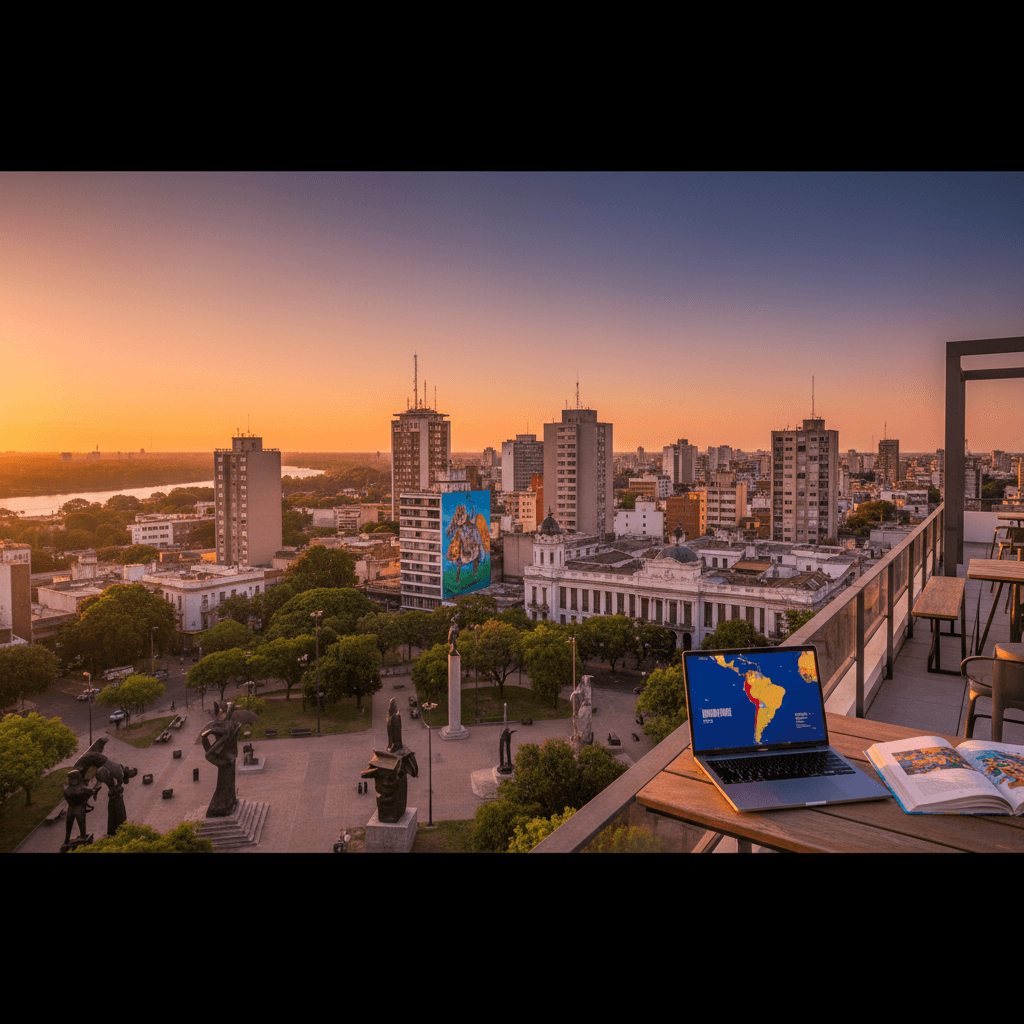
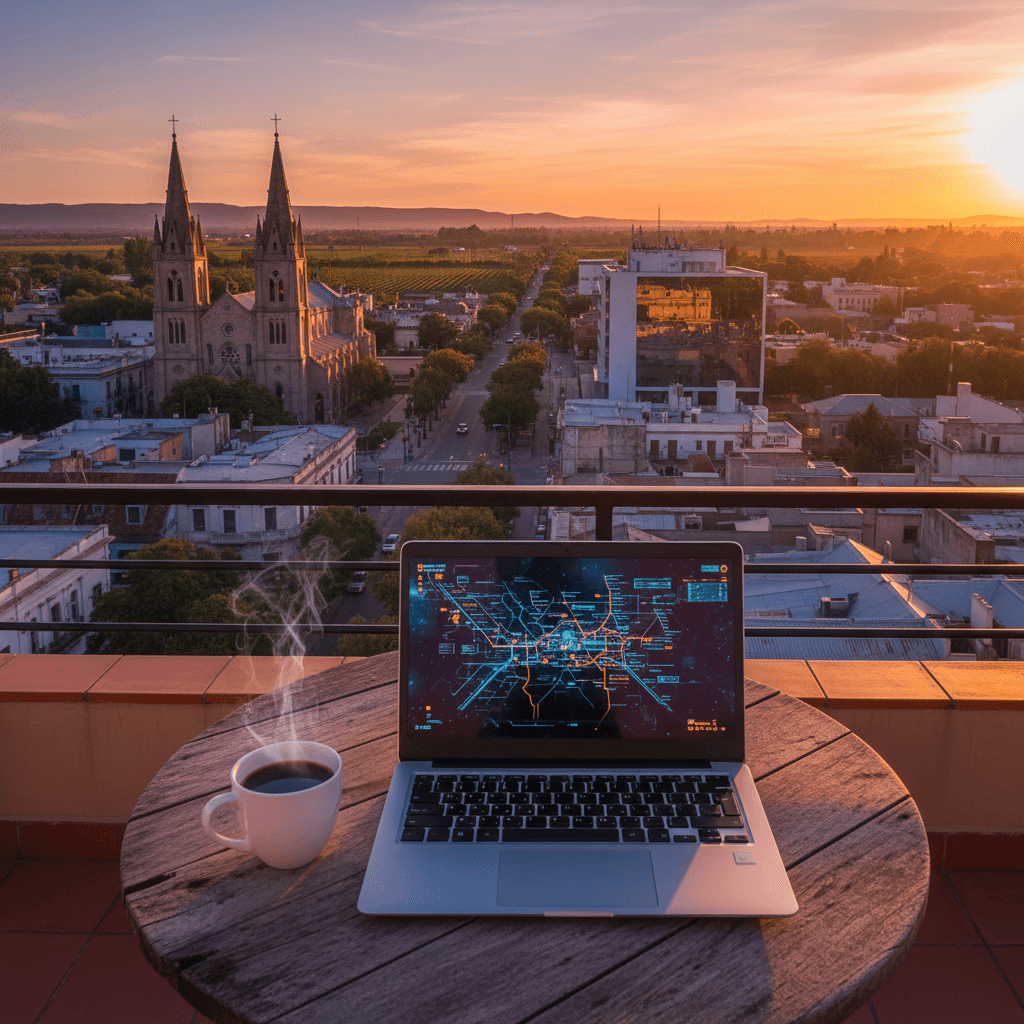
If Buenos Aires is a high speed chase and Mendoza is a sophisticated wine gala, San Rafael is the long, sun drenched afternoon that follows. It is a place where the irrigation ditches (acequias) gurgle alongside the sidewalks and the scent of roasting meat drifts through the air every Sunday. For nomads, the draw isn't a high octane networking scene; it is the chance to actually breathe. You are coming here for the $10 vineyard bike tours, the jagged red walls of the Atuel Canyon, and a pace of life that respects the siesta like a religion.
The city feels remarkably grounded. Locals are quick to strike up a conversation, often curious about what brought a remote worker to their corner of the Mendoza Province. You'll find a community that values the outdoors over the digital grind. It is common to see people heading out for a quick rafting session in Valle Grande or a trek through the Andes foothills before settling into a late dinner. It is an unpretentious, ruggedly beautiful base for those who prefer Malbec and mountains over neon lights and nightclubs.
Cost of Living & Budgeting
San Rafael is significantly more affordable than Argentina's major hubs. You can maintain a high quality of life here on a fraction of a US or European budget. Most nomads find that $1,500 to $2,000 per month covers a comfortable lifestyle, including a private apartment and frequent meals out. If you are on a tighter budget, $800 to $1,200 is doable if you opt for shared housing and stick to local parrillas and street food.
- Housing: A central one bedroom apartment typically runs between $300 and $500. If you look toward the outskirts or near the wineries, prices can drop to $200, though you will likely need a car or bike.
- Dining: A casual asado or street food meal costs about $5 to $10. A mid range dinner with wine is roughly $20, while a high end lunch at a vineyard like Bodega Bianchi might reach $50.
- Workspace: Expect to pay around $10 for a day pass or $100 for a monthly membership at local coworking spots.
The Neighborhood Scene
Choosing where to stay depends entirely on your tolerance for isolation versus your need for a walkable morning coffee.
City Center (Near Av. Mitre)
This is the heart of the action. It is walkable, packed with shops, and home to the best cafes for working. Most solo nomads land here because it is easy to meet people and you don't need a car for daily errands. The downside is the lack of "big city" nightlife; things get very quiet after dark.
Valle Grande & Atuel Canyon Outskirts
This area is for the nature purists. You'll be surrounded by stunning canyon views and have immediate access to trekking and rafting. It is peaceful and scenic, but you are isolated. You will definitely need your own transport, and the internet can be hit or miss compared to the center.
The Vineyard Zones
Located on the fringes of town, these areas offer the quintessential Mendoza experience. You can live among the vines and spend your weekends biking between estates. It is ideal for families or couples seeking a quiet, scenic retreat, though it lacks the convenience of the central shops.
Connectivity and Remote Work
The digital nomad scene is emerging rather than established, so don't expect a massive community of techies. However, the infrastructure is catching up. Urban areas offer speeds between 50 and 100 Mbps, and dedicated spaces like Leónidas Cowork provide reliable 300 Mbps connections and a place to meet other professionals. Campus Olegario is another solid option with a strong community focus.
Since home WiFi in older buildings can be temperamental, travelers recommend testing the connection before signing a long term lease. For backup, grab a local SIM from Personal or Claro. A monthly unlimited data plan usually costs between $10 and $20. If you want to hit the ground running, an eSIM from Holafly is the easiest way to bridge the gap while you get settled.
Getting Around
The city center is highly walkable, and the grid system makes it hard to get lost. For longer trips, taxis are plentiful and cheap, usually costing $3 to $5 for a ride across town. While public buses exist, they are often unreliable and confusing for newcomers. Most nomads prefer renting a bike for $10 a day to explore the vineyards or using ride hailing apps like Uber, which are beginning to gain traction in the region.
Health and Safety
San Rafael is generally very safe. Violent crime is rare, and the biggest concern for most is petty theft in crowded tourist spots. Stick to well lit areas at night and keep an eye on your gear when you are out in the canyons. For healthcare, local clinics handle routine issues well, but for anything serious, most expats head to Mendoza city or Buenos Aires. Make sure you have travel insurance that covers adventure sports if you plan on rafting or rappelling.
The Cost of Living in San Rafael
If you're coming from Buenos Aires or even the city of Mendoza, San Rafael feels like a financial breath of fresh air. It's one of those rare spots where you can live a high-quality lifestyle surrounded by vineyards and mountains without burning through your savings. While Argentina's economy is famous for its fluctuations, San Rafael remains consistently more affordable than the country's major urban hubs.
Most nomads find they can live comfortably here on a mid-range budget of $1,500 to $2,000 per month. This covers a nice private apartment, frequent meals out at local parrillas, and plenty of weekend trips to the Atuel Canyon. If you're on a tighter budget, you can get by on $800 to $1,200 by sticking to shared housing and making the most of the incredible street food and local markets.
Monthly Budget Breakdown
- Housing: A modern studio or one-bedroom apartment in the city center typically runs between $300 and $500. If you don't mind a short commute from the outskirts, prices drop to $200 or $400. Many local landlords are becoming more nomad-friendly and may offer discounts for stays longer than a month.
- Food and Drink: You can grab a quick asado or street food for $5 to $10. A nice mid-range dinner with wine costs about $15 to $25, while a splurge at a high-end winery like Bodega Bianchi might set you back $30 to $50.
- Connectivity: A desk at a coworking space like Leónidas Cowork or Campus Olegario costs roughly $100 to $200 per month. For your phone, a local SIM card from Movistar or Personal with plenty of data usually costs between $10 and $20.
- Transportation: Getting around the center is cheap. Taxis and local buses usually cost between $1 and $5 per trip. If you're planning on exploring the vineyards, expect to pay around $10 for a full-day bike rental.
Where to Plant Your Flag
The city doesn't have the distinct, sprawling barrios you'll find in larger capitals, but where you stay will dictate your daily expenses and lifestyle.
City Center (Near Avenida Mitre)
- Best for: Solo nomads who want everything within walking distance.
- Pros: Most walkable area, reliable access to cafes, and close to coworking spots.
- Cons: Can feel a bit basic; nightlife is quiet compared to Mendoza.
- Rent: $300 to $500 per month.
Valle Grande and Atuel Canyon Outskirts
- Best for: Nature lovers and those who want to wake up to mountain views.
- Pros: Immediate access to rafting, trekking, and stunning landscapes.
- Cons: You'll definitely need a car; grocery options and high-speed internet are harder to find.
- Rent: $400 to $600 for larger, scenic properties.
Vineyard Zones
- Best for: Anyone looking for the classic Mendoza experience.
- Pros: Beautiful surroundings and a very relaxed pace of life.
- Cons: Highly seasonal; it gets crowded during the harvest and summer tourist peaks.
- Rent: $350 to $550.
Expats often recommend bringing some USD cash to take advantage of local exchange rates, though digital banking through apps like Wise or Revolut is becoming more common. Just keep in mind that while the city is safe and affordable, the infrastructure is still catching up. You're paying less because the scene is emerging, not because it's lacking, but you'll want to test the WiFi in your apartment before signing a long-term lease.
Nomads and Remote Workers
If you're coming to San Rafael to work, you'll want to stick to the City Center, particularly the blocks surrounding Avenida Mitre. This is the most walkable part of town, filled with the "acequias" (irrigation ditches) that give the city its unique character. Living here puts you within a ten minute walk of Leónidas Cowork and Campus Olegario, the two main hubs where you can find reliable 100 to 300 Mbps fiber optic internet.
Most nomads find the center ideal because it's where the cafes are. You can grab a table at a local spot, pay about $3 to $5 for a coffee and a pastry, and work for a few hours without being bothered. Rent for a decent one bedroom apartment in this area usually lands between $300 and $500 per month. It isn't a high energy nightlife district, but it's the only place where you won't feel isolated without a car.
Expats and Long-Term Residents
For those planning to stay six months or longer, the Vineyard Zones on the outskirts of the city are the big draw. Areas near the older wineries provide a much more traditional Argentine lifestyle. You'll find larger homes here, often with enough space for a private "parrilla" to host your own asados. Expats recommend this area if you value peace and quiet over being near the shops.
The trade off is the need for wheels. Public buses are notoriously spotty, so you'll likely need to budget for a car or rely on taxis, which cost roughly $3 to $5 for a cross-town trip. Life here follows the siesta strictly; expect everything to shut down between 2 pm and 5 pm. It's a slow, scenic existence where your morning view is likely a row of Malbec vines and the distant Andes.
Adventure Seekers and Solo Travelers
If your primary goal is rafting, trekking, or rock climbing, look toward Valle Grande or the outskirts of the Atuel Canyon. This isn't a traditional neighborhood but rather a rugged corridor of cabins and lodges. It's perfect for a week or two of immersion in nature, though it's less practical for full time remote work due to patchy WiFi in the deeper parts of the canyon.
Solo travelers often prefer the hostels in the city center for social connections, then head to the canyon for day trips. Renting a bike for about $10 a day is the best way to explore the transition between the urban center and the wilder outskirts. You'll get the stunning landscapes and adventure access without the total isolation of living in the canyon full time.
Families
Families generally gravitate toward the quieter residential pockets just west of the main plaza. These streets are lined with trees and feel very safe, with a low crime rate that allows for evening walks. The cost of living is a major perk for larger groups; a comfortable lifestyle with a private house and frequent meals out can be maintained on a budget of $2,500 per month.
While the city is small, it has the basic healthcare and pharmacies needed for routine family life. For anything specialized, locals usually make the three hour trip to Mendoza city. Families often enjoy the weekend culture here, which revolves around long lunches at wineries where kids can run around while the adults linger over a bottle of local red.
- City Center: Best for walkability and coworking access. Expect to pay $300+ for rent.
- Vineyard Zones: Best for scenic views and quiet living. Requires a vehicle.
- Valle Grande: Best for short term adventure stays and nature access.
Connectivity in the Land of Malbec
San Rafael isn't Buenos Aires, and that's exactly why people come here. While you won't find fiber optic cables on every street corner, the city has quietly leveled up its infrastructure. You can generally expect urban speeds between 50 and 100 Mbps, which is plenty for Zoom calls and managing your inbox. If you're planning to move into an older building or a vineyard estate, though, make sure to ask for a speed test before you sign anything. Thick adobe walls and older wiring are notorious for killing a signal.
For those times when the home router fails or you just need a change of scenery, the cafe culture here is surprisingly work friendly. Many local spots around Avenida Mitre are used to people lingering over a cafe con leche with a laptop. If you're venturing out to Valle Grande or the Atuel Canyon, don't count on much more than a patchy LTE signal. It's better to treat those nature days as a forced digital detox.
Top Coworking Spaces
The nomad scene is still in its early stages, but dedicated hubs are beginning to emerge to provide the stability that local cafes sometimes lack. These spots are your best bet for reliable connectivity and a professional environment.
Mobile Data and SIM Cards
Don't rely solely on public WiFi. Local providers like Movistar, Claro, and Personal offer decent coverage throughout the city center. You can pick up a physical SIM at most shops (look for the "Kiosko" signs), but many nomads now prefer the convenience of an eSIM. Holafly is a popular choice if you want to hit the ground running with data, though it's usually pricier than local rates.
A local plan with generous data will typically set you back between $10 and $20 per month. Having a backup hotspot is a smart move if you're staying in the vineyard zones, as the signal can fluctuate when the afternoon wind picks up. Dual SIM setups are the standard for most travelers here, keeping a local number for data and a home number for 2FA codes.
Practical Workflow Tips
The biggest hurdle for your productivity won't be the internet speed; it'll be the siesta. Between 2:00 PM and 5:00 PM, the city effectively shuts down. Shops close and the streets go quiet. While coworking spaces stay open, many cafes will dim the lights or close their doors entirely. Plan your high energy work for the mornings and use the afternoon lull to head to a winery or take a nap, just like the locals do.
If you're coming from a fast paced capital, the "mañana" attitude can be frustrating when you're trying to fix a technical issue. Patience is your best tool here. Most nomads find that once they sync their schedule with the local rhythm, the balance between work and vineyard life becomes the city's biggest draw.
Safety in San Rafael
San Rafael feels like a throwback to a time when people actually knew their neighbors. It lacks the frantic energy of Buenos Aires, and that slower pace translates to a much safer environment for nomads. Most travelers find the city center and the tourist hub of Valle Grande perfectly safe to walk around, even after the sun goes down. The locals are generally protective of their reputation for hospitality, so you'll likely feel more like a guest than a target.
Street crime is low, but isolation is your biggest risk factor here. If you're staying in a remote vineyard or a cabin out by the Atuel Canyon, you'll want a reliable way to get around. Walking alone on unlit rural roads at night isn't great, mostly because of the lack of visibility and the distance from help. Stick to the well lit areas around Avenida Mitre if you're out late. Many nomads recommend using local taxis or emerging rideshare apps for $3 to $5 a trip rather than wandering into unfamiliar outskirts in the dark.
Common sense goes a long way. Don't leave your laptop unattended at a cafe table while you use the restroom, even if the vibe feels incredibly relaxed. While there aren't specific "no go" zones, the city's ditches (acequias) that line the streets can be a tripping hazard if you've had one too many glasses of Malbec. Watch your step, keep your phone in your pocket while walking, and you'll likely have a trouble free stay.
Healthcare and Emergency Services
For routine issues, San Rafael is well equipped. You'll find pharmacies on almost every major corner in the center, and they're great for handling minor ailments or grabbing over the counter basics. If you need a doctor for a non emergency, local clinics provide adequate care that won't break the bank. Most expats suggest having a decent international insurance policy, but for simple consultations, paying out of pocket is often very affordable.
If something serious happens, the local hospitals can stabilize you, but they aren't the high tech facilities you'd find in the capital. For major surgeries or specialized care, patients are typically transported to Mendoza City or Buenos Aires. It's a three hour drive to Mendoza, so keep that in mind if you have a chronic condition that requires frequent specialist visits.
- Ambulance: Dial 107
- Police: Dial 101
- Pharmacies: Widely available in the city center; look for "Farmacia" signs.
- Major Care: Expect a transfer to Mendoza City for complex procedures.
Practical Wellbeing
The biggest "health" challenge you'll face is the sun and the altitude. The Andean sun is intense, especially during the summer months from December to February. Hydration is key, particularly if you're out rafting in the canyon or biking through vineyards all day. If you're heading into the mountains for a day trip, remember that the air is thinner and the weather can flip from hot to chilly in an hour.
Tap water in the city is generally considered safe for brushing teeth, but many nomads prefer bottled or filtered water for drinking to avoid any stomach upsets while adjusting to the local minerals. If you're staying long term, look for 20 liter water delivery services which are common and cheap. Overall, the lifestyle here is incredibly healthy, with plenty of fresh produce and an outdoor culture that keeps you moving.
Getting Around the City
San Rafael isn't your typical urban sprawl. It's a compact, laid-back hub where the streets are lined with carolinos (poplar trees) and irrigation ditches known as acequias. While the city center is manageable on foot, you'll quickly realize that the best parts of this region require a bit more horsepower or a sturdy pair of pedals.
Walking and Biking
The City Center, specifically around Avenida Mitre and Avenida Hipólito Yrigoyen, is highly walkable. You can easily bounce between cafes, banks, and shops without needing a vehicle. Most nomads find the pace here refreshing; it's the kind of place where people actually stop to talk to their neighbors.
For exploring the outskirts or the famous vineyards, bikes are the gold standard. You can rent a bike for about $10 a day. It's the most popular way to hop between wineries like Bodega Bianchi or Bodega Suter. Just be mindful of the sun; the Mendoza heat is no joke, even when you're coasting through a scenic vineyard.
Public Transport and Taxis
Public buses exist, but they aren't the most reliable way to get around if you're on a schedule. They're cheap, usually costing between $1 and $3, but the routes can be confusing and the frequency is sporadic. Most expats recommend skipping the bus for daily errands and sticking to the center or using private transport.
Taxis and remises (private car services) are the local go-to. They are plentiful, easy to hail in the center, and relatively affordable at $3 to $5 for a typical cross-town trip. While Uber has begun emerging in the wider Mendoza province, it isn't always a sure bet in San Rafael yet. It's smarter to keep a local taxi dispatch number in your phone or use local taxi apps if available.
Car Rentals and Longer Trips
If you plan on spending time in Valle Grande or exploring the Atuel Canyon, you're going to want a car. These spots are about 20 to 40 kilometers from the city center, and the drive itself is half the fun. Expect to pay around $40 to $60 a day for a basic rental. Having your own wheels gives you the freedom to reach the San Rafael Glacier or find secluded spots along the river that tour buses simply blow past.
Arrival and Departure
Getting into San Rafael usually involves one of two routes:
- San Rafael Airport (AFA): A small airport with limited domestic flights, usually connecting from Buenos Aires. It's just a 15 minute taxi ride to the center.
- Mendoza Airport (MDZ): Many nomads fly into the larger Mendoza airport and take a 3 hour bus south for about $20. It's a scenic ride and often much cheaper than flying directly into San Rafael.
- Long-distance Bus: Argentina has an incredible bus network. You can catch a "Cama" (sleeper) bus from Buenos Aires, which takes about 12 to 14 hours but is surprisingly comfortable.
Practical Transit Tips
- The Siesta: Remember that between 2:00 PM and 5:00 PM, the city slows down significantly. Shops close and fewer taxis are on the prowl. Plan your movements for the morning or late evening.
- Navigation: Download offline maps on Google Maps. While signal is fine in the city, it drops off quickly once you enter the canyons or the more remote vineyard zones.
- Connectivity: If you're heading out for a day trip, let someone know your route. The isolation is beautiful until you have a flat tire without cell service.
The Rioplatense Rhythm
In San Rafael, language is more than just communication; it's the gateway to the slow, intentional lifestyle of the Mendoza province. While the local dialect is Spanish, you'll specifically encounter the Rioplatense variety. This means the "ll" and "y" sounds carry a distinct "sh" sound, and people use "vos" instead of "tú." It sounds melodic and rhythmic, perfectly matching the relaxed pace of the city.
English proficiency is quite low here compared to Buenos Aires or even the city of Mendoza. While staff at high end wineries like Bodega Bianchi or adventure outfits in Valle Grande might speak enough to get by, your local grocer or taxi driver likely won't. Most nomads find that a basic grasp of Spanish isn't just helpful; it's the difference between feeling like a tourist and feeling like a local. If you're coming with zero Spanish, download DeepL or Google Translate for offline use before you head into the canyons where signal drops.
Digital Communication and Connectivity
Staying connected requires a bit of strategy. While the city center is catching up, San Rafael isn't a tech hub. You'll find decent speeds in dedicated spaces, but older residential buildings often have patchy infrastructure. Expats recommend testing the WiFi speed in any long term rental before signing a contract.
- Mobile Data: Pick up a local SIM from Personal, Movistar, or Claro. Personal tends to have the most reliable coverage in the Mendoza region. You can expect to pay between $15-40 USD for 3-10GB plans depending on provider and duration.
- eSIMs: If you want to hit the ground running, Holafly is a popular choice for nomads, though it's pricier than a local SIM. It's a great backup for when your apartment WiFi decides to take a siesta.
- Coworking Culture: For guaranteed high speed internet, head to Leónidas Cowork or Campus Olegario. These spots are the heartbeat of the small but growing nomad scene. Day passes run about $10, while monthly memberships hover around $100.
The Social Code
Communication in San Rafael is deeply personal. Don't be surprised if a quick question at a cafe turns into a ten minute conversation. Locals are incredibly friendly and appreciate any effort you make to speak their language. Travelers often say that a simple "Hola" and a smile go much further here than they do in bigger cities.
The "siesta" is a real thing you need to communicate around. Between 2:00 PM and 5:00 PM, the city effectively shuts down. Don't try to run errands or call local businesses during this window. Use this time to work from a cafe or take a nap yourself; it's the local way. Also, be prepared for the cheek kiss. It's the standard greeting for everyone from new acquaintances to close friends. If you're invited to an asado, it's the ultimate sign of acceptance into the social circle.
Essential Phrasebook
- ¿WiFi contraseña?: WiFi password? (The first thing you'll ask at any cafe).
- ¿Cuánto cuesta?: How much does it cost? (Essential for the local markets).
- Una copa de Malbec, por favor: A glass of Malbec, please. (You'll use this often).
- Todo bien: Everything's good. (The standard response to "how are you").
- ¿Hay señal?: Is there a signal? (Crucial for when you're exploring Atuel Canyon).
San Rafael is a place where people look you in the eye and take their time. If you approach the language barrier with patience and a sense of humor, you'll find the community opens up in ways that more "efficient" cities never do.
The Sweet Spot: Seasons in San Rafael
San Rafael enjoys a mild Mediterranean climate that makes it a year round destination, but your experience will shift dramatically depending on when you land. Most nomads find the shoulder seasons of March to May and September to November to be the absolute sweet spots. During these months, temperatures hover comfortably between 15°C and 25°C (59°F to 77°F), perfect for those long afternoon bike rides through the vineyards without breaking a sweat.
The fall harvest season in March and April is particularly special. The air is crisp, the vineyards turn a deep gold, and the local wineries are in full swing. It's the best time to experience the agricultural heart of the region while avoiding the intense heat of the high summer.
Summer: Adventure and Heat
If you're coming for the adrenaline, December through February is your window. This is the peak of summer, with highs often reaching 30°C to 35°C (86°F to 95°F). It gets hot, and the sun in the Mendoza province is notoriously strong. You'll want to mimic the locals and embrace the siesta between 2:00 PM and 5:00 PM when the streets go quiet and everyone retreats to the shade.
This is also the rainy season, though "rainy" in this semi arid region usually means short, intense thunderstorms rather than days of grey drizzle. These months are prime for rafting in the Atuel Canyon or trekking near Valle Grande, as the water levels are ideal for water sports. Just be prepared for higher prices and more domestic tourists clogging up the main adventure hubs.
Winter: The Quiet Season
Winter in San Rafael, running from June to August, is peaceful and dry. While it's the coolest time of year, it's rarely brutal. Daytime highs usually sit around 18°C (64°F), though nights can dip down to 2°C (35°F). You won't find much snow in the city itself, but the Andes in the distance will be capped in white, providing a stunning backdrop for your morning coffee.
Expats recommend this season for deep focus work. With fewer tourists around, the city center is quiet, and coworking spaces like Leónidas Cowork feel more like private offices. It's the cheapest time to snag a long term rental, though you'll want to ensure your apartment has decent heating, as older buildings can get drafty.
Monthly Climate Breakdown
- January to March: Highs of 30-35°C. High humidity and occasional heavy rain. Best for rafting and swimming.
- April to June: Highs of 20-25°C. Very low rainfall. The most pleasant weather for vineyard tours and hiking.
- July to September: Highs of 18-22°C. Cold nights. Ideal for those who prefer a quiet, crisp atmosphere and lower costs.
- October to December: Highs of 25-30°C. Spring blossoms and rising temperatures. Great for outdoor festivals.
When to Avoid San Rafael
Most travelers suggest skipping July if you aren't a fan of the cold, as it's the gloomiest month. Conversely, January can be a struggle for nomads who need to stay productive; the combination of high heat and the summer holiday buzz can make it hard to find a quiet corner. If you're sensitive to heat and crowds, aim for the spring or autumn months to get the best of the Mendoza lifestyle without the extremes.
Logistics and Connectivity
San Rafael isn't a high speed tech hub, but it's perfectly functional for remote work if you're prepared. Most urban rentals average 50 to 100 Mbps, though you can find up to 300 Mbps at dedicated workspaces. Older buildings often have spotty wiring, so always ask for a speed test before signing a lease. For a reliable desk, head to Leónidas Cowork or Campus Olegario; both offer stable fiber and a chance to meet the local nomad community for about $10 a day or $100 a month.
Pick up a SIM card from Personal or Claro for the best regional coverage. It'll cost you roughly $10 to $20 a month for a solid data plan. If you're coming from abroad and want to hit the ground running, an eSIM from Holafly works well, though local physical SIMs are cheaper for long stays. Keep in mind that signals drop fast once you head into the Atuel Canyon or deeper into the Andes.
Cost of Living
Your budget goes a lot further here than in Buenos Aires. While inflation makes prices fluid, San Rafael remains one of the more affordable corners of Mendoza province. Most nomads find they can live comfortably on $1,500 to $2,000 a month, while budget travelers can scrape by on $800 to $1,200 if they stick to shared housing and local parrillas.
- Studio Apartment (City Center): $300 to $500 per month.
- Mid-range Dinner: $15 to $25 per person.
- Winery Lunch: $30 to $50 for a full tasting menu.
- Taxi/Ride-hail: $3 to $5 for most cross-town trips.
Where to Base Yourself
The city is compact, but your choice of neighborhood changes the experience significantly. Most people stick to the City Center near Avenida Mitre. It's the most walkable area, packed with cafes and shops, and it's where you'll find the best internet. The vibe is quiet, especially during the afternoon siesta when everything shuts down from 2:00 PM to 5:00 PM.
If you prefer views over convenience, look toward the Valle Grande outskirts. It's stunning, but you'll be isolated. You'll definitely need a car or a reliable driver since public buses are infrequent and unpredictable. For a middle ground, the Vineyard Zones offer a scenic, rural feel where you can bike to wineries, though these areas get crowded with tourists during the summer peak.
Getting Around
The city center is easy to navigate on foot, and the streets are lined with iconic irrigation ditches that keep the trees lush. For anything further out, taxis are the standard. While Uber is starting to appear in the region, don't rely on it exclusively yet. Renting a bike for about $10 a day is the best way to explore the nearby Malbec trails.
To get here, most travelers fly into Mendoza (MDZ) and take a three hour bus ride for about $20. There is a local airport, San Rafael (AFA), but flights are limited and often more expensive. Once you're in town, you can find various local agencies to book excursions to the canyon. Note that Caverna de las Brujas is located near Malargüe (approximately 150+ km from San Rafael) and requires a full day trip or separate excursion.
Health and Safety
San Rafael is generally very safe, even for solo travelers. Violent crime is rare, though you should still use common sense and avoid poorly lit outskirts at night. The locals are exceptionally friendly and often invite newcomers to an asado if you make an effort to chat.
For medical needs, there are several pharmacies and basic hospitals in town that handle routine issues well. If you have a major medical emergency, you'll likely be transported to Mendoza city for specialized care. Always carry some cash in Argentine Pesos; while cards are accepted at larger spots, many local shops and clinics prefer cash. Wise or Revolut are great for managing your FX, but you'll still need to visit an ATM or a Western Union regularly.
Weather and Timing
The best time to visit is during the shoulder seasons. March to May offers the harvest season colors and pleasant temperatures around 20°C (68°F). September to November is equally beautiful as the vineyards wake up. Summers (December to February) can get hot, often hitting 35°C (95°F), while July is the coldest month, with lows dipping near freezing. If you hate the rain, avoid January, which is the wettest month of the year.
Need visa and immigration info for Argentina?
🇦🇷 View Argentina Country GuideEasy Landing
Settle in, no stress
Monthly Budget Estimates
More cities in Argentina
San Martín de los Andes
🇦🇷 Argentina
Villa La Angostura
🇦🇷 Argentina
La Plata
🇦🇷 Argentina