San Pedro (Ambergris Caye)
🇧🇿 Belize
The Island Pulse
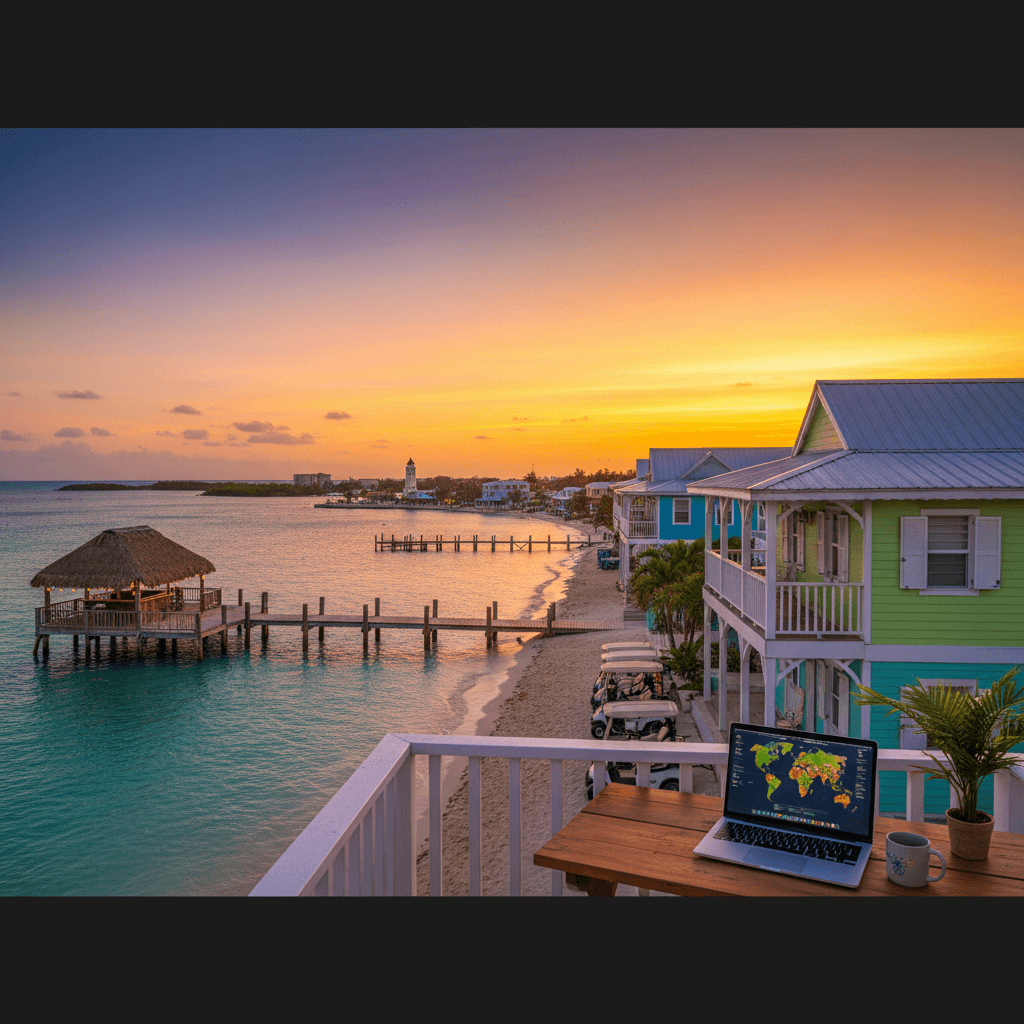
San Pedro is where Belize's "Go Slow" mantra meets the infrastructure of a modern hub. As the primary heartbeat of Ambergris Caye, it manages to feel like a small town while offering the creature comforts of a mini-city. You'll spend your days dodging golf carts on cobblestone streets and your nights under thatched roofs with a Belikin beer in hand. It's less "tropical isolation" and more "connected Caribbean living."
What sets San Pedro apart from other nomad haunts is the immediate, visceral proximity to the Belize Barrier Reef. The water isn't just a backdrop; it's the center of life. Most nomads find the transition seamless because English is the official language, meaning you can negotiate a lease or order a coffee without a translation app. It lacks the gritty edge of Belize City and the sleepy quiet of Caye Caulker, hitting a sweet spot for those who need reliable fiber optic internet but want to be five minutes from a world class dive site.
The Local Vibe
Life here moves to the hum of electric golf carts. There’s a distinct social gravity that pulls everyone toward the beach bars in the late afternoon. Expats recommend leanring the "San Pedro wave" early on, as it's a tight knit community where you'll see the same faces at the grocery store and the sandbar. While it’s the most expensive spot in the country, the trade-off is a high density of networking opportunities and a social scene that never really sleeps.
- The Pros: Blazing fast fiber optic speeds, a massive English speaking expat community, and effortless access to the Hol Chan Marine Reserve.
- The Cons: It can feel overcrowded during peak tourist months, prices are significantly higher than the mainland, and the constant golf cart traffic can be noisy in the town center.
Where to Plant Your Roots
The island is effectively split into three distinct zones, each offering a different version of the Belizean dream.
San Pedro Town (Central)
- Best For: Nomads who want to be in the thick of the action.
- The Experience: This is the most walkable area. You’re steps away from Estel’s Dine by the Sea and the main water taxi terminals. It's loud, colorful, and convenient.
- Rent: Expect to pay between $800 and $1,500 for a decent one bedroom apartment.
The North Side (Near Secret Beach)
- Best For: Comfort seekers and those with a higher budget.
- The Experience: Home to luxury resorts and the famous Secret Beach. It’s quieter and more scenic but requires a golf cart for almost everything. Developers are currently pushing hard here, so expect more modern amenities.
- Rent: High end beachfront spots often run between $1,500 and $2,500.
The South (Lower Caye)
- Best For: Long termers seeking peace.
- The Experience: This area is more residential and relaxed. It’s where you’ll find established expats who prefer chirping birds over late night reggae. It’s still close enough to town for a quick supply run.
- Rent: You can find more affordable long term deals here, often starting around $1,000 for a comfortable house.
Connectivity and Workspace
The internet situation has done a complete 180 in recent years. Fiber optic is now standard in the town center, making San Pedro the most reliable remote work destination in the country. While dedicated coworking spaces are still evolving, the cafe culture is incredibly welcoming to laptops.
- Pelican Internet Cafe: The old school reliable choice for printing and no frills desk space.
- Sanbar Beachfront Hostel: A favorite for younger nomads who want pizza, strong WiFi, and a view of the docks.
- Estel’s Dine by the Sea: Perfect for a "beach office" morning, though it gets busy during the breakfast rush.
- Data: Grab a Digicell SIM card at the airport or in town; 4G coverage is solid across most of the island.
The Cost of Living
You aren't coming to San Pedro to "geo-arbitrage" on a shoestring budget. It is a premium destination. Travelers often say that while rent is comparable to mid-sized US cities, the cost of imported goods and fuel will surprise you.
- Street Food: You can grab fry jacks or tacos for $2.50 to $5 USD.
- Mid-range Dining: A dinner with drinks at a beach spot usually lands between $20 and $30 USD.
- Transport: A golf cart rental is the biggest sting, often costing $50 to $80 USD per day for short terms, though monthly rates are negotiable.
- Total Monthly Budget: A single nomad can live reasonably on $2,500, but $4,000 is the sweet spot for a comfortable lifestyle with plenty of reef trips and golf cart freedom.
San Pedro is the most expensive destination in Belize, but it's also where you'll find the best infrastructure. Living here feels like a trade-off; you're paying a premium for reliable fiber optic internet and the convenience of an English-speaking community, but your money won't stretch nearly as far as it would in San Ignacio or even Caye Caulker. Most nomads find they need at least $2,500 USD a month to live comfortably without constantly checking their bank balance.
Monthly Budget Tiers
- The Budget Nomad ($1,500 to $2,500 USD): You'll likely be staying in a studio or a shared apartment a few blocks back from the water. You're eating mostly meat pies and stew chicken from street vendors, walking everywhere, and limiting your reef trips to once a month.
- The Mid-Range Lifestyle ($2,500 to $4,000 USD): This is the sweet spot for most expats. You can afford a nice one-bedroom near the town center, a long-term golf cart rental, and dinners at mid-range spots like Sanbar or Estel’s Dine by the Sea.
- The High-End Experience ($4,000+ USD): This covers beachfront condos in luxury developments like Mahogany Bay. You're eating fresh lobster regularly, taking private boat charters, and enjoying the island's upscale resort amenities.
Housing and Utilities
Rent is your biggest hurdle. Expect to pay between $800 and $1,500 USD for a decent one-bedroom in the town center. If you want to wake up to the sound of the waves on the North Island, those prices easily jump to $2,000 USD or more. Many long-termers use local agencies like Vida Realty or check boards at the Drift Inn to find deals that aren't inflated by Airbnb fees.
Electricity is notoriously pricey in Belize. If you run your air conditioning 24/7 to combat the humidity, your monthly bill can easily hit $200 USD. Most nomads learn to use floor fans during the day and only kick on the AC for sleeping. On the plus side, fiber optic internet is now standard in the town center, and you'll pay roughly $50 to $80 USD for a reliable connection.
Food and Dining
Eating like a local is the only way to keep costs down. A plate of rice and beans with stew chicken from a street stand costs about $5 to $10 BZD ($2.50 to $5 USD). However, as soon as you sit down at a restaurant with a view, you're looking at $20 to $30 USD for a meal and a couple of Belikin beers.
Groceries are a mixed bag. Local produce like bananas, citrus, and seafood is affordable. Anything imported, which includes most snacks, dairy, and spirits, comes with a heavy "island tax." Expats recommend shopping at the local markets in San Pedro Town rather than the smaller convenience stores near the resorts.
Transportation
San Pedro is the land of the golf cart. While they are fun, they aren't cheap. A daily rental can cost $100 USD during peak season, though you can negotiate monthly rates if you're staying a while. If you live in the central hub, you can skip the cart entirely and rely on your own two feet. For longer trips to Secret Beach, a taxi or a shared boat is usually more cost-effective than maintaining a rental.
Coworking and Connectivity
You don't necessarily need a dedicated office here since the cafe culture is so welcoming to remote workers. Places like Pelican Internet Cafe or the beachfront tables at SunBreeze Suites are popular spots to post up for a few hours. If you prefer a structured environment, expect to pay $10 to $20 USD for a day pass at local hubs. For mobile data, a SIM card from Digicell is easy to top up and provides a solid backup for those rare power outages.
The Social Nomad: San Pedro Town (Central)
If you want to be where the action is, San Pedro Town is your base. This is the island’s heartbeat, where the streets are narrow and the energy is high. Most nomads gravitate here because it’s the only part of the island that’s truly walkable. You can grab a morning coffee at Estel’s Dine by the Sea, work for a few hours at Pelican Internet Cafe, and meet friends for a sunset drink without ever needing a golf cart.
The infrastructure is the most reliable in this pocket. You’ll find the best concentration of fiber optic internet and the easiest access to grocery stores and banks. While it can get noisy with the hum of golf carts and tourist crowds near the water taxi terminals, the convenience is hard to beat. You’re looking at monthly rents between $800 and $1,500 for a decent one bedroom apartment in the thick of it.
- Best for: Networking, solo travelers, and those who want to skip the golf cart rental.
- Top Spot: Sanbar Beachfront Hostel for reliable WiFi and meeting other remote workers over pizza.
- The Trade-off: It’s louder and more crowded than the outskirts.
The Long-Term Expat: The South End
Just a short ride south of the town center, the vibe shifts from "vacation mode" to "living mode." This area is a favorite for expats who have moved to Ambergris Caye permanently. It’s significantly quieter and feels more like a residential neighborhood than a tourist hub. You’ll find a mix of modest local homes and mid-range condos tucked away from the main strip.
Living here usually requires a golf cart or a bike, as it’s a bit too far to walk into town for every meal. However, the proximity to the reef is excellent, and the beaches are less hectic. Rents here can be more affordable if you look for long-term leases, often falling into the $1,000 to $1,800 range for more space than you’d get in the center.
- Best for: Peace and quiet, long-term stays, and a sense of community.
- Top Spot: Local beachfront hangouts where you can escape the "spring break" energy of the town center.
- The Trade-off: You’ll absolutely need your own transport to get to the better grocery stores.
Families and Comfort Seekers: North Island
The North Island, particularly the areas near Mahogany Bay Village or the resorts leading toward Secret Beach, is where you go for a "resort-style" life. This area is much more spread out and upscale. Families often choose this side of the bridge because the properties are newer, the pools are larger, and the environment feels more secure and manicured.
Expect to pay a premium for the comfort. Modern villas and beachfront condos here often start at $2,000 a month and go up quickly. If you have kids, the water parks and calmer beaches on the leeward side, like Secret Beach, are a major draw for weekend trips. Just keep in mind that the "toll bridge" and the distance from town mean you’ll be spending more on golf cart fuel and rental fees, which can run $100 per day for short-term visitors.
- Best for: Families, luxury seekers, and anyone who wants a high-end "vacation" feel.
- Top Spot: SunBreeze Suites for poolside working sessions with a view.
- The Trade-off: It’s the most expensive part of the island and can feel a bit isolated from the local culture.
Budget Travelers and Backpackers: Lagoon Side
If the beachfront prices make you wince, look toward the lagoon side of San Pedro Town. While you won’t have the sunrise over the reef, you’re often just a five minute walk from the ocean. This area is much more "local" and offers some of the best budget food options, with street food stalls selling rice and beans or tacos for $2.50 to $5 USD.
The accommodation here is simpler, often consisting of older apartments or guest houses. It’s a great spot for those who want to be near the town’s amenities without paying the "beachfront tax." You can often find small studios here for $700 to $900 if you’re willing to hunt around and talk to locals rather than booking online.
- Best for: Budget-conscious nomads and those who prefer a gritty, authentic atmosphere.
- Top Spot: Local "hole-in-the-wall" eateries that serve the best ceviche on the island.
- The Trade-off: Fewer views and potentially less consistent internet compared to the major resorts.
Connectivity on the Caye
San Pedro has moved past the days of spotty satellite connections. With fiber optic now live across most of the island, it's easily the most reliable spot in Belize for remote work. You can expect speeds that handle Zoom calls and heavy uploads without much drama, though things can still get a bit sluggish during heavy tropical storms.
Most nomads rely on DigiCell or Smart for mobile data. You can grab a SIM card right at the water taxi terminal or the local airstrip. It's a good idea to have a backup hotspot for those rare island-wide power blips, but generally, the infrastructure here is solid enough for a full-time 9-to-5.
Coworking and Quiet Spaces
San Pedro doesn't have the massive, sleek coworking franchises you'll find in Tulum or Medellin. Instead, the scene is more intimate and integrated into the local business landscape. Prices usually hover between $10 and $20 USD for a day pass, which is a fair trade for air conditioning and a guaranteed desk.
- Pelican Internet Cafe: This is the island's reliable, no-frills staple. It's great if you need to print documents or just want a quiet, distraction-free corner. They offer hourly and daily rates that won't break the bank.
- Sanbar Beachfront Hostel: A favorite for the younger nomad crowd. The WiFi is snappy, the pizza is excellent, and you can transition straight from your spreadsheets to a cold Belikin beer at the bar.
- SunBreeze Suites: If you prefer a more "resort-office" vibe, their poolside and balcony areas are welcoming to laptop users. It's a more upscale environment compared to the hostels in town.
The Laptop-Friendly Cafe Scene
Working from a cafe is the default for most expats here. The island culture is laid-back, so as long as you're ordering food or coffee, most places won't mind you occupying a table for a few hours. Just keep an eye out for "no laptop" signs during peak lunch rushes at the smaller joints.
- Estel’s Dine by the Sea: Famous for their breakfast, this spot has picnic tables right in the sand. It’s perfect for clearing your inbox while watching the turquoise water, though the morning crowd can be loud.
- Rum+Bean: Situated a bit further south near Mahogany Bay, this spot is quieter and specifically geared toward people who need to get things done. The iced lattes are a lifesaver on humid afternoons.
Practical Tips for Working Remotely
If you're planning to stay long-term, look into the Work Where You Vacation program. It's Belize's version of a digital nomad visa, allowing you to stay for up to 6 months provided you can show an annual income of $75,000 USD or more. It simplifies the paperwork significantly compared to doing monthly visa extensions at the immigration office.
Power surges can happen, so travelers often recommend bringing a small surge protector for your expensive gear. Also, keep in mind that many beachfront cafes use open-air designs. While the breeze is nice, the salt air can be tough on electronics over time; make sure you have a high-quality, weather-sealed laptop sleeve for your commutes on the golf cart.
Personal Safety and Local Vibes
San Pedro is generally the safest spot in Belize for remote workers, largely because the island's economy relies so heavily on tourism. You can walk through the main town center during the day without a second thought. The vibe is laid back, and the presence of the Tourist Police provides an extra layer of security that you won't always find on the mainland.
That said, island life requires some common sense. While violent crime against expats is rare, petty theft happens, especially if you leave valuables unattended on your golf cart or at a beach bar. Most nomads suggest keeping your laptop in a bag rather than out in the open when moving between cafes. Stick to well lit main roads if you're out late, and avoid isolated stretches of beach after dark. If you're staying in the quieter South End, keep your doors locked at night just as you would back home.
Healthcare Infrastructure
For day to day health needs, San Pedro is well equipped with several private clinics and well stocked pharmacies. You can find most over the counter medications and basic prescriptions at local pharmacies in town. For minor ailments, infections, or traveler's stomach, these local clinics are efficient and affordable.
- Ambergris Hope Hospital: This is the primary go to for most expats and visitors. It offers 24/7 emergency services and has diagnostic equipment like X-rays and ultrasounds.
- Dr. Otto Rodriguez San Pedro Polyclinic II: A public facility that handles emergencies and general consultations. It's often busy, so private clinics are usually faster for non emergencies.
- Dental Care: There are a few quality dentists on the island, like Belize Dental Care, where procedures cost a fraction of what you'd pay in the US or Canada.
Emergency Procedures
If you face a serious medical emergency, you need to know the island's limitations. While the local clinics are great for stabilizing patients, major surgeries or specialized care usually require a medevac or a quick flight to Belize City. Most expats carry international health insurance that specifically includes medical evacuation coverage for this reason.
- Emergency Number: Dial 911 for police or medical emergencies.
- Hyperbaric Chamber: Since San Pedro is a diving mecca, there is a world class hyperbaric chamber located near the airstrip for decompression sickness.
- Transport: In a crisis, Tropic Air or Maya Island Air can facilitate rapid transport to the mainland, which takes about 15 to 20 minutes.
Staying Healthy on the Island
The biggest health risks for nomads in San Pedro aren't tropical diseases, but rather dehydration and sun exposure. The Caribbean sun is intense, especially when you're out on a boat near the reef. Locals recommend drinking bottled or filtered water; while the tap water in San Pedro is better than in many other parts of the country, most long termers stick to the five gallon purified water jugs delivered to their apartments for about $3 to $5 USD.
Mosquitoes and "no-see-ums" can be a nuisance, particularly during the rainy season from June to November. Keeping some DEET or a natural repellent handy is a must if you're working from an outdoor patio or heading to Secret Beach for the afternoon.
The Island Commute
In San Pedro, the humble golf cart is king. While most towns rely on cars or buses, Ambergris Caye runs almost entirely on four wheels and a battery. You will see locals, expats, and tourists alike buzzing through the sandy streets of town in these carts. If you are staying in the central San Pedro Town area, you can easily get by on foot, but for anything further out, a rental is the standard move.
Rental prices for golf carts often range from $50 to $85 USD per day during peak season. If you are planning to stay for a month or more, skip the daily rates and negotiate a long term lease with local providers like Carts Belize or Moncho's. This can bring your daily cost down significantly. Just remember that parking in the town center is tight, and the local traffic wardens are strict about where you leave your ride.
Arriving on the Caye
Getting to the island from the mainland is a choice between a scenic flight or a salty boat ride. Most nomads flying into Philip Goldson International (BZE) take a puddle jumper flight via Tropic Air or Maya Island Air. It is a 15 to 20 minute flight that lands you right at the San Pedro Airstrip in the heart of town. It is pricier than the boat, but the views of the reef from the air are unbeatable.
For those on a budget, the water taxi is the way to go. You will need to take a taxi from the international airport to the ferry terminal in Belize City, which usually costs about $25 USD. From there, the San Pedro Belize Express or Ocean Ferry will get you to the island in about 90 minutes. A one way ticket is roughly $31 USD (62 BZD). It is smart to book these online in advance during the dry season between December and April when the boats often hit capacity.
Taxis and Boats
If you don't want the responsibility of driving a cart, land taxis are readily available. They don't use meters, so always agree on the price before you hop in. A trip within the town limits usually runs between $5 and $10 USD. For longer hauls to the north or south ends of the island, expect to pay more.
Since the island is split by a river channel, water taxis also operate as a public transit system for reaching the northern resorts and Secret Beach. Coastal Express runs scheduled boat trips up and down the eastern coast. It is a great way to avoid the bumpy, unpaved roads on the north side of the island while enjoying the Caribbean breeze.
The Walkability Factor
The town center is surprisingly dense and very walkable. If you secure a rental near Front Street or Middle Street, you will be within a 10 minute walk of the best coworking spots like Pelican Internet Cafe and social hubs like Estel’s Dine by the Sea. Many long term expats prefer the quieter south end for living but keep a sturdy cruiser bike for their daily errands. Bicycles are a popular, eco friendly alternative to golf carts and can be rented for about $10 to $15 USD per day if your accommodation doesn't provide them for free.
Practical Transport Tips
- Fueling Up: There are only a few gas stations on the island, mostly located on the southern edge of town. If you rent a gas powered cart, don't let the tank get too low before heading to the far north.
- The Bridge: To get to the northern part of the island, you have to cross the Sir Barry Bowen Bridge. There is a small toll for carts, so keep some $1 BZD coins or small bills handy.
- Secret Beach: Despite the name, it is no secret and it is a long haul. It takes about 45 minutes by golf cart from town, and the road gets very rugged. Make sure your cart is in good condition before making the trek.
- Arrival Logistics: If you take the water taxi, porters will offer to carry your bags to a taxi. A tip of $2 to $5 BZD is standard and appreciated.
The English Advantage
One of the biggest draws for nomads landing in San Pedro is the lack of a language barrier. Unlike almost everywhere else in Central America, English is the official language. You'll find that everything from lease agreements at Mahogany Bay to the chalkboard menus at Estel’s Dine by the Sea is written in English. This makes the administrative side of nomad life, like setting up a Digicell SIM card or talking through a golf cart rental agreement, incredibly straightforward.
While English is the standard for business and government, San Pedro is a multilingual hub. You'll hear a rhythmic blend of Spanish, Kriol, and even Garifuna as you walk down Barrier Reef Drive. Most locals are bilingual, often switching between English and Spanish mid sentence. If you speak Spanish, you'll find plenty of opportunities to use it, but you'll never feel stranded without it.
Belizean Kriol 101
You'll quickly notice that the local "lingua franca" is Belizean Kriol. It's an English based contact language that sounds melodic and fast paced. While you don't need to learn it to get by, picking up a few phrases goes a long way in building rapport with the islanders. It shows you're more than just a tourist passing through for a week of diving.
- "Mahnin": Used for good morning, but often as a general greeting.
- "Wah gwaan?": The standard way to ask what's up or how things are going.
- "Guddum": A shortened version of good morning or good day.
- "Right ya": Used when you want to tell a taxi or boat captain to stop exactly where you are.
- "Cho!": An exclamation used to show surprise, annoyance, or emphasis.
Communication Norms and Etiquette
The vibe in San Pedro is famously "go slow," and the communication style reflects that. People generally appreciate a polite greeting before you dive into a business question. A simple "Good morning" or "How's the day going?" before asking for the Wi-Fi password at Sanbar makes a difference. Expats often remark that the island has a small town feel where word travels fast, so being friendly and respectful is your best social currency.
For day to day logistics, WhatsApp is the king of communication. Whether you're booking a table at a seafood spot, checking availability for a Hol Chan snorkeling tour, or messaging your landlord about a leaky faucet, expect to do it through the app. Most local businesses list their WhatsApp number on their Facebook pages or storefronts. If you're trying to reach a business and they aren't answering the phone, a quick text is usually the way to get a response.
Digital Communication and Translation
Since English is the primary language, you won't need translation apps like Google Translate for basic survival. However, it can still be handy if you're venturing into more traditional Spanish speaking neighborhoods or if you're trying to decipher specific Kriol slang. For the most part, your biggest communication challenge won't be the language itself, but rather getting used to the relaxed Caribbean pace of replies. Don't expect "instant" in San Pedro; things happen when they happen, and that's part of the island's charm.
Timing Your Arrival
San Pedro lives by the rhythm of the Caribbean Sea, and your experience here will change drastically depending on when you touch down at the airstrip. Most digital nomads aim for the sweet spot between December and April. This is the dry season, where you can expect consistent sunshine and temperatures hovering between 75 and 85°F. It is the most comfortable time to work from a beachfront deck at Estel’s Dine by the Sea without breaking a sweat or worrying about a sudden downpour shorting out your laptop.
The trade-off for this perfect weather is the crowd. This is peak tourism season, meaning golf cart rentals can spike over $100 per day and the popular bars in the town center get loud. If you prefer a quieter vibe and don't mind a little humidity, the shoulder months of May and November offer a solid middle ground with lower rents and fewer travelers clogging the docks at Hol Chan Marine Reserve.
Navigating the Rainy Season
From June through November, the island shifts into the rainy season. While the term might sound intimidating, it rarely means constant rain. You will mostly deal with short, intense tropical bursts followed by steam and sun. Temperatures climb into the 80 to 90°F range, and the humidity becomes a factor you will definitely feel if your apartment doesn't have a strong AC unit.
Expats generally consider September and October the most challenging months. This is the height of hurricane season. While direct hits are not a daily occurrence, the potential for stormy weather and choppy seas can disrupt water taxi schedules to Belize City and Caye Caulker. Many local business owners take their own vacations during this window, so some of your favorite beach spots might temporarily close for renovations.
Seasonal Highlights for Nomads
- December to February: The most social time on the island. Expect plenty of expat meetups, holiday boat parades, and the best conditions for kitesurfing on the reef side.
- March and April: Peak "spring break" energy. The town is at its liveliest, but you will need to book your long-term housing months in advance to secure decent rates.
- June to August: Lobster Season kicks off in July. If you are a fan of seafood, this is arguably the best time to be in San Pedro. You can find fresh lobster specials at almost every mid-range restaurant for $15 to 25 USD.
- September and October: The quietest months. It is the best time to negotiate a monthly rate on a beachfront condo, but be prepared for high humidity and the occasional tropical storm.
The Sargassum Factor
One thing travelers often overlook is sargassum, the brown seaweed that can wash up on the eastern shores of Ambergris Caye. While it is hard to predict exactly when it will arrive, it is most common during the warmer months from late spring through summer. If you are sensitive to the smell or want clear water right off your pier, look for accommodations on the western side near Secret Beach or check in with local expat Facebook groups to see which beaches are currently being cleared by the town crews.
For most remote workers, the January to March window remains the gold standard. You get the most reliable weather for outdoor "office" days at Sanbar or SunBreeze Suites, and the social scene is at its peak for networking with other nomads who have fled the northern winter.
Connectivity and Workspace
San Pedro has seen a massive upgrade in infrastructure recently. Fiber optic internet is now the standard in the town center, making it the most reliable spot in Belize for video calls and heavy uploads. Most nomads gravitate toward Sanbar Beachfront Hostel for its reliable WiFi and pizza, or Pelican Internet Cafe if they need a quiet desk and printing services. For a more scenic setup, Estel’s Dine by the Sea has picnic tables right on the sand where you can work with a view of the reef.
Buying a local SIM card is straightforward. Grab a Digicell or Smart card at the airport or a local kiosk. Data packages are affordable, and having a mobile hotspot is a smart backup for those rare island power flickers. Most cafes are laptop-friendly as long as you keep the coffee or Belikin beers flowing.
Money and Budgeting
Living on Ambergris Caye isn't cheap compared to the mainland, but it's manageable with some strategy. Expect a monthly budget of $2,500 to $4,000 for a comfortable mid-range lifestyle. Rent for a decent one-bedroom in town usually sits between $800 and $1,500, while beachfront spots can easily double that.
- Daily Meals: Street food like fry jacks or tacos costs $2.50 to $5 USD. A mid-range dinner with drinks will run you about $25 USD.
- Cash vs. Card: ATMs are everywhere in San Pedro and accept international cards. While most restaurants take credit cards, you will want US or Belize Dollars for water taxis, street vendors, and tipping tour guides.
- Tipping: A small tip of 2 BZD for ferry porters is standard practice.
Getting Around the Island
The island's main "highway" is the Caribbean Sea, and the primary vehicle is the golf cart. In San Pedro Town, you can walk almost everywhere, but for exploring Secret Beach or the northern resorts, you will need wheels. Golf cart rentals are pricey, often starting at $100 USD per day, so many long-term expats negotiate monthly rates or stick to bicycles.
To get here from Belize City, the San Pedro Belize Express or Ocean Ferry takes about 90 minutes and costs roughly $31 USD one way. If you are short on time, a 15-minute puddle jumper flight from the international airport is a spectacular way to arrive, though it costs significantly more.
Safety and Health
San Pedro is generally safe, even for solo travelers. The main thing to watch out for is petty theft, so don't leave your bag unattended on a golf cart or at the beach. Stick to well-lit areas in town at night and avoid isolated stretches of beach after dark. The Tourist Police have a visible presence and are usually very helpful.
For healthcare, there are several clinics and well-stocked pharmacies in town that can handle minor infections or injuries. If anything serious happens, you will likely be stabilized and flown to Belize City. Most expats recommend having travel insurance that covers medical evacuation just in case.
Visas and Paperwork
Belize makes it easy to stay long-term. The Work Where You Vacation program is their version of a digital nomad visa, allowing stays of up to six months if you can prove an annual income of $75,000. If you don't meet that threshold, you can simply enter on a tourist visa and renew it monthly at the local immigration office for a small fee. It is a painless process that many nomads use to stay for a year or more.
Weather Windows
Timing your stay is everything. The dry season from December to April is the sweet spot, with temperatures hovering around 80°F and very little rain. This is also peak tourist season, so prices go up. The rainy season runs from June to November. It gets humid, and while mornings are often sunny, afternoon downpours are common. September and October are the quietest months but carry the highest risk of tropical storms.
Need visa and immigration info for Belize?
🇧🇿 View Belize Country GuideEasy Landing
Settle in, no stress