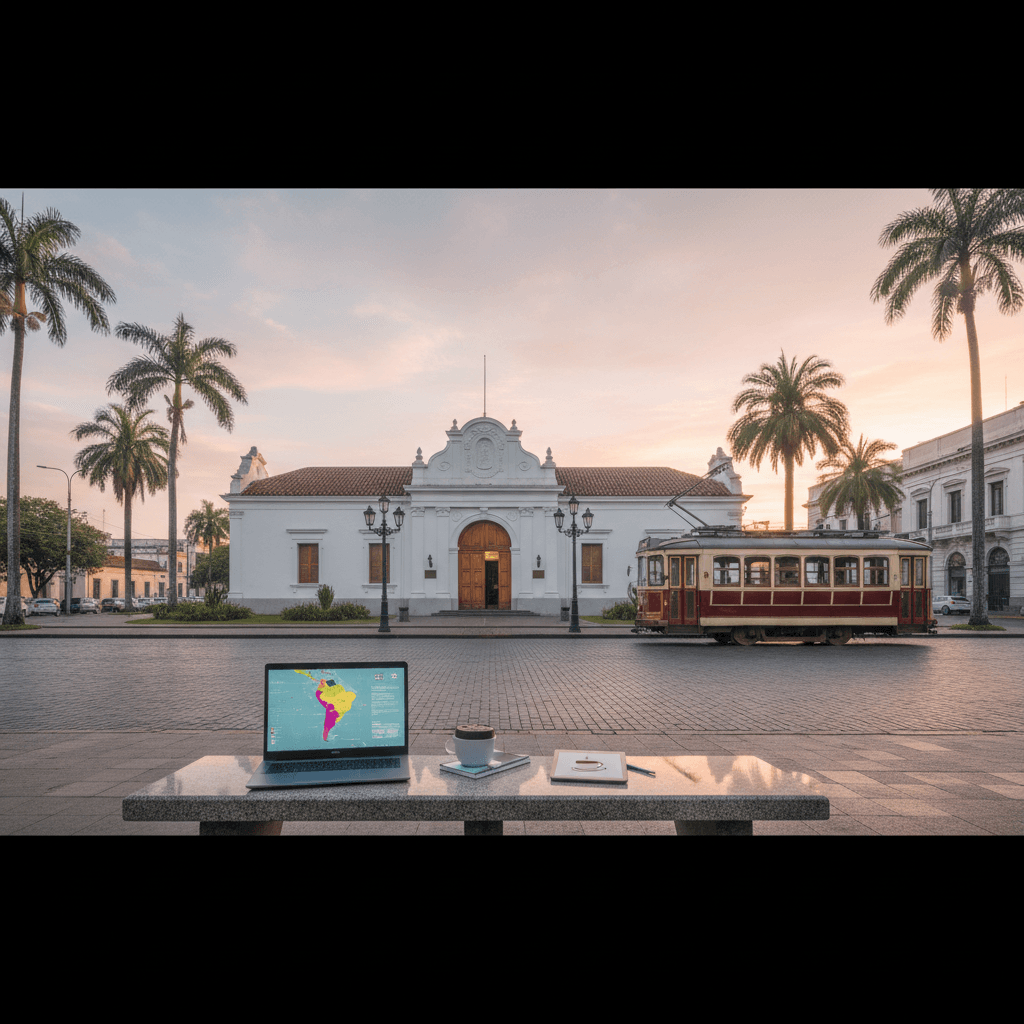
San Miguel de Tucumán
🇦🇷 Argentina
The Garden of the Republic
San Miguel de Tucuman, or simply Tucuman to those who live here, feels like Argentina's best kept secret. While the crowds flock to the European streets of Buenos Aires or the vineyards of Mendoza, Tucuman offers a gritty, authentic slice of northern life that hasn't been polished for tourists. It is known as the Garden of the Republic because of its lush, subtropical greenery and the dramatic mountains that frame the western edge of the city. You get the chaos of a provincial capital mixed with the scent of orange blossoms and the humidity of the jungle.
The vibe here is significantly more traditional and slower than the capital. People actually take their siesta seriously. Between 1:00 PM and 5:00 PM, the streets go quiet and shops shutter their doors. For a nomad, this can be frustrating at first, but you eventually learn to lean into it. It is the perfect time to catch up on deep work before the city roars back to life in the late evening. When the sun goes down, the heat breaks, and the locals pour into the plazas to drink beer and eat what are arguably the best empanadas in the country.
A Different Kind of Northern Energy
If Salta is the refined, colonial older sister, Tucuman is the rebellious, energetic younger brother. It is a university town at its heart, home to the National University of Tucuman, which injects a constant stream of youth, activism, and nightlife into the city center. You will see students everywhere, from the cafes around Plaza Independencia to the bars in Barrio Norte. This keeps the prices low and the energy high, making it much easier to integrate into the local social scene than in more tourist heavy hubs.
The emotional experience of being here is one of constant discovery. It is not always "pretty" in the conventional sense. There is graffiti, the traffic is loud, and the sidewalks can be uneven. But then you turn a corner and see a massive, crumbling colonial mansion next to a sleek new coffee shop, or you catch a glimpse of the Aconquija mountains towering over the skyline. It feels alive and unpretentious. Most nomads find that the locals, known as Tucumanos, are incredibly proud of their history as the birthplace of Argentine independence and will go out of their way to show you their city.
The Nomad Reality
Living here requires a bit more "boots on the ground" effort than in Palermo Soho. You won't find a coworking space on every block, but the cost of living is one of the biggest draws. You can live a high quality life here for a fraction of what you would spend in the US or Europe. Travelers often say that Tucuman is where they finally stopped feeling like a tourist and started feeling like a neighbor.
- Daily Pace: Slow mornings, quiet afternoons, and very late nights. Dinner rarely starts before 9:00 PM or 10:00 PM.
- The Landscape: High density urban center surrounded by subtropical forests and cloud forests just 20 minutes away.
- Social Vibe: Unfiltered and welcoming. It is easy to make friends if you speak even a little Spanish and show an interest in the local culture.
- Connectivity: Reliable fiber optic internet is now standard in most modern apartments in the center and Barrio Norte.
Expect to spend your weekends escaping the city heat in the nearby hills of Yerba Buena or the alpine meadows of Tafi del Valle. Tucuman serves as the perfect base camp for exploring the Argentine North without the "Disney" feel of more established trail circuits. It is a place for the nomad who wants to see Argentina as it actually is, not just as it appears on an Instagram feed.
San Miguel de Tucumán offers a financial breather for anyone who has been burning through pesos in Buenos Aires or Patagonia. While it is the largest city in the north, it maintains a price point that aligns more with its neighbors like Salta rather than the capital. You can expect your budget to stretch significantly further here, especially if you get comfortable using the blue dollar market to your advantage.
Most digital nomads find that a monthly budget of $800 to $1,100 USD allows for a high quality of life, including a private apartment in a safe area and frequent meals out. If you are living like a local and cooking at home, you could easily drop that figure to $650 USD without feeling like you are sacrificing much.
Monthly Housing and Utilities
- One-bedroom apartment in Barrio Norte: $350 to $500 USD
- One-bedroom apartment in Yerba Buena: $450 to $650 USD
- Monthly Utilities (Electric, Gas, Water): $40 to $60 USD
- High-speed Fiber Internet: $20 to $30 USD
Housing will be your biggest variable. Barrio Norte is the most popular choice for short term stays because everything is walkable. If you prefer more green space and a suburban feel, Yerba Buena is the upscale choice, though you will likely need to factor in the cost of Ubers or a rental car to get around efficiently.
Food and Dining
Tucumán is famous for its empanadas, and luckily, they are some of the cheapest high quality meals you can find in the country. A dozen empanadas from a local spot will usually set you back about $6 to $8 USD. Dining at a mid range parrillada for a full steak dinner with wine typically costs around $15 to $20 USD per person.
- Daily Grocery Budget: $10 to $15 USD
- Cappuccino at a local cafe: $2.00 to $3.00 USD
- Pint of Craft Beer: $3.50 to $5.00 USD
- Quick Lunch Special (Menú del Día): $5.00 to $7.00 USD
Local markets are significantly cheaper than the major supermarket chains like Vea or Carrefour. Expats recommend hitting the municipal markets for fresh produce and meat to keep your grocery bill on the lower end of the spectrum.
Transportation and Workspace
Public transport is extremely affordable, though most nomads stick to ride sharing apps for convenience and safety at night. Uber and Cabify both operate in the city and are very cheap by international standards. A ten minute cross town trip rarely exceeds $3 or $4 USD.
- Coworking Space Hot Desk (Monthly): $70 to $110 USD
- Gym Membership: $25 to $40 USD
- Short Uber/Cabify Ride: $2.50 to $5.00 USD
- Local Bus Fare (Red Bus card): $0.40 to $0.60 USD
For those who need a dedicated office environment, spaces like Link Coworking or local hubs in the city center provide stable Wi-Fi and air conditioning for a fraction of what you would pay in North America or Europe. If you prefer the cafe culture, Tucumán has a growing number of laptop friendly spots where a few dollars spent on coffee buys you a solid afternoon of work time.
Keep in mind that inflation in Argentina is a moving target. While these prices are accurate for the current climate, it is always wise to keep your funds in a stable currency and only exchange what you need for a week or two at a time. This strategy ensures you benefit from the local exchange rates rather than losing value to the fluctuating peso.
The Social Nomad: Barrio Norte
If you want to be where the action is, Barrio Norte is your home base. It is the most polished part of the city, sitting just north of the central Plaza Independencia. You will find the highest concentration of cafes with reliable fiber optic internet here, which is why it is the default choice for anyone working remotely. The streets are lined with orange trees and high rise apartments that offer more modern amenities than you will find elsewhere in town.
Most nomads gravitate toward the area around Plaza Urquiza. It is the social heart of the neighborhood, surrounded by bars and spots like Teatriz or Porter where people grab a beer after a day of calls. While it is the most expensive area in Tucuman, it is still a bargain compared to Buenos Aires or Mendoza. You can expect to pay between $450 and $650 for a nice one bedroom apartment on a short term lease.
- Rent: $450 to $650 per month
- Atmosphere: High energy, walkable, and very safe for nighttime strolls
- Top Work Spot: Stamina Coworking or the various cafes along Calle Santa Fe
The Long-Term Expat: Yerba Buena
For those who plan to stay for six months or more, Yerba Buena is the prestigious choice. It is technically a separate municipality but functions as a leafy suburb just west of the city center. Expats choose this area because it feels less like a concrete jungle and more like a garden city. You are much closer to the base of the San Javier mountains, meaning the air is slightly cooler and the views are significantly better.
Living here requires a different lifestyle, as you will likely want a car or a bike to get around. The main artery, Avenida Aconquija, is packed with shopping malls, gyms, and high end steakhouses. It is a bit more spread out, but the quality of life is arguably the highest in the province. You can find spacious houses with small pools for around $700 to $900, which is a steal for the level of luxury provided.
- Rent: $600 to $900 for houses or large flats
- Atmosphere: Suburban, upscale, and quiet with easy access to hiking trails
- Local Favorite: Solar del Cerro shopping center for dining and errands
Families and Quiet Seekers: Barrio Sur
Barrio Sur is the understated sibling to Barrio Norte. It is located on the opposite side of the main plaza and offers a much more traditional, residential feel. Families often prefer this area because it is quieter and has more proximity to Parque 9 de Julio, the largest green space in the city. The architecture here is a mix of older colonial style houses and newer, mid range apartment buildings.
The pace of life is slower here, and you will find more "mom and pop" grocery stores rather than trendy brunch spots. It is also more affordable than the northern district. You can easily find a comfortable two bedroom apartment for $350 to $500. It is a great middle ground for people who want the convenience of the city center without the constant noise of the nightlife scene.
- Rent: $350 to $500 per month
- Atmosphere: Traditional, family oriented, and calm
- Proximity: Walking distance to the Casa Historica and major museums
The Solo Traveler: Centro
If you are only in town for a few weeks and want to be at the literal center of everything, stay in the downtown core near Plaza Independencia. This isn't the quietest place to live, but it is the most convenient for solo travelers who don't want to deal with commutes. You are steps away from the main bus lines that take you to the mountains of Tafi del Valle on the weekends.
The housing here is a mix of older hotels and studio apartments. It can get loud during the day due to traffic and street protests, which are common in Argentine provincial capitals, but it's the best spot for soaking up the local grit and history. Prices are very competitive, often dipping below $300 for modest studios if you negotiate in person.
- Rent: $250 to $400 for studios or small apartments
- Atmosphere: Busy, historic, and very central
- Best for: Short stays and people using public transit
Connectivity and Speed
While it isnt Buenos Aires, San Miguel de Tucuman holds its own when it comes to keeping you online. Most central apartments and modern rentals come equipped with fiber optic connections, usually through providers like Personal or Claro. You can generally expect speeds between 50 Mbps and 100 Mbps in the city center and the upscale Yerba Buena neighborhood.
Mobile data is your best safety net here. 4G coverage is solid throughout the urban area, though it can get spotty if you head into the nearby Yungas mountains for a weekend hike. Local nomads recommend grabbing a Prepaid SIM from a Claro store; it is cheap and the app makes it easy to top up your data on the fly. Just keep in mind that power outages occasionally happen during the peak of the humid summer, so having a charged power bank and a hot spot ready is a smart move.
Top Coworking Spots
The coworking scene in Tucuman provides professional and social spaces for those needing a dedicated desk. Blackbox Coworking is a prominent option in the city, providing the standard perks like ergonomic chairs and a stable environment for video calls. For those looking for a community-focused vibe, Stamina Coworking and La Cúpula are excellent choices for networking with local entrepreneurs and freelancers.
Prices for a hot desk usually hover around $10 to $15 USD per day, while monthly memberships can be found for roughly $80 to $120 USD, depending on the current exchange rate and the plan you choose.
- Blackbox Coworking: Best for high speed reliability and a professional work environment.
- Stamina Coworking: Great for a quiet atmosphere and meeting local professionals.
- La Cúpula: A solid alternative for those seeking a central and inspiring workspace.
Work Friendly Cafes
If you prefer the hum of a coffee shop over a formal office, you will find plenty of options, especially in the Barrio Norte area. This neighborhood is safer, greener, and packed with students and professionals on laptops. Gourmet Coffee is a favorite for its reliable Wi-Fi and plenty of power outlets. The staff is usually relaxed about you staying for a few hours as long as you keep the caffeine flowing.
Another reliable pick is Havanna. While it is a chain, the branch near Plaza Independencia offers a consistent connection and the best alfajores in the country. It can get loud during the afternoon merienda rush, so bring your noise cancelling headphones. Most cafes will expect you to order something every 90 minutes or so, which is a fair trade for the office space.
Digital Nomad Essentials
- Average Fiber Speed: 50 to 100 Mbps in central areas.
- Monthly Coworking Cost: Approximately $90 USD.
- Local SIM Card: Around $5 USD for a generous data starter pack.
- Best Work Neighborhood: Barrio Norte or Yerba Buena for the best infrastructure.
Most travelers find that the pace of life here is slower, which means cafes might not open as early as they do in the States or Europe. Most work friendly spots start buzzing around 9:00 AM, take a noticeable dip during the afternoon siesta hours, and then roar back to life after 5:00 PM. Adjusting your schedule to the local rhythm will make your stay much smoother.
Staying Street Smart
San Miguel de Tucuman has a gritty, authentic energy that differs from the polished streets of Mendoza or Palermo. Most nomads feel perfectly fine during the day, especially around Plaza Independencia or the upscale Barrio Norte. However, you need to keep your wits about you more than you might in smaller mountain towns. Petty theft like phone snatching is the most common issue, so avoid walking with your iPhone out while looking for directions. If you need to check a map, step into a cafe or a shop first.
Stick to well lit areas after dark. While the area around Calle Santa Fe and Calle 25 de Mayo stays active late with diners, some of the peripheral neighborhoods can get quiet and sketchy quickly. Locals generally recommend taking a Cabify or a remis (a private car service) if you are traveling more than a few blocks at night. It is cheap, usually costing between $2 and $5 USD for most cross city trips, and it is much safer than wandering into an unfamiliar street.
- Keep your bag in front: When walking through crowded markets or the main bus terminal, wear your backpack on your chest.
- Avoid the outskirts: Neighborhoods like La Bombilla or the areas far south of the center are best avoided entirely by visitors.
- Limit your jewelry: Looking flashy marks you as a target. Dress down and blend in with the local student population.
Healthcare and Medical Services
The good news for travelers is that the medical care in Tucuman is surprisingly high quality. As a major university hub, the city produces excellent doctors. If you have an emergency, public hospitals like Hospital Padilla provide care for free, even to foreigners. That said, the wait times are legendary and the facilities are basic. For anything non life threatening, you should head straight to a private clinic.
Expats and long term nomads usually prefer Sanatorio 9 de Julio or Centro Medico Modelo. These private facilities are modern, efficient, and very affordable if you are paying out of pocket with USD. A standard consultation with a specialist will typically set you back between $20 and $40 USD. Most doctors in these private centers speak at least a little English, though having a translation app or a basic grasp of Spanish medical terms will make your life much easier.
Pharmacies and Insurance
You can find a Farmacia on almost every corner in the city center. Many are open 24 hours, often labeled as Farmacia de Turno. You can get most basic medications over the counter, but for anything specific like antibiotics or high strength painkillers, you will need a local prescription. If you are bringing maintenance meds from home, make sure you have the generic name handy, as brand names often differ in Argentina.
Most nomads here use SafetyWing or World Nomads, but some who stay longer than six months opt for a local prepaga (private insurance) like OSDE or Swiss Medical. These plans give you access to the best hospitals in the country without any paperwork hurdles at the front desk. For a person in their 30s, a basic private plan can cost around $80 to $120 USD per month depending on the exchange rate of the day.
Emergency Contacts
- Police: 911
- Ambulance (Public): 107
- Fire Department: 100
- Tourist Police: While there isn't a dedicated tourist branch like in Buenos Aires, the main station near the Plaza is generally helpful with filing reports for insurance claims.
The Pulse of the City: Walking and Taxis
San Miguel de Tucumán is surprisingly compact, especially if you're staying near the Barrio Norte or Yerba Buena areas. Most nomads find that the city center is best explored on foot. The grid system is straightforward, and walking allows you to soak in the colonial architecture that defines the historic core. Just keep an eye on the pavement, as sidewalks can be uneven in certain spots.
When you need to cover more ground or head home after a late dinner, taxis and remises are the gold standard. Unlike Buenos Aires, where apps dominate every interaction, Tucumán still relies heavily on street hails and local radio taxi dispatchers. Look for the white and yellow cars. A typical cross-town trip usually costs between $3 and $5 USD, depending on the current exchange rate and traffic. It's always smart to carry small bills in pesos, as drivers rarely have change for large denominations.
The Bus System (Colectivos)
The local bus system, known as colectivos, is extensive and serves as the backbone of local transit. It connects the central business district with the lush, residential outskirts of Yerba Buena. To ride, you'll need a Tarjeta SUBE, Tarjeta Ciudadana (during transition), or Independencia card for interurban lines, which you can buy and top up at small kiosks (kioscos) scattered throughout the city. Look for the signs in the windows that say "Carga de Tarjeta."
- Fare Cost: A single ride generally fluctuates around $0.70 to $0.90 USD.
- Peak Hours: Avoid the 12:00 PM to 2:00 PM window if possible. This is when schools let out and workers head home for the traditional siesta, making buses incredibly crowded.
- Navigation: Download the Tu Bondi app. It provides real-time tracking for many lines and is much more reliable than Google Maps for local routes.
Ride-Hailing and Apps
While Uber has a presence in Tucumán, its availability can be hit or miss compared to the capital. Many expats recommend Cabify as a more consistent alternative for the northern provinces. It tends to have better vehicle standards and more transparent pricing. If you're heading out to the hills of San Javier for a weekend hike, booking a Cabify in advance is your safest bet to ensure you aren't stranded.
The Yerba Buena Connection
Many nomads choose to live in Yerba Buena for the greenery and modern amenities, but they often commute into the city for coworking spaces like Blackbox Coworking. The Line 102 and Line 118 buses are the primary links between these two hubs. The trip takes about 20 to 30 minutes depending on the time of day. If you're staying in Yerba Buena long-term, some residents find it worthwhile to rent a bike, though the main avenues lack dedicated cycling lanes, so you'll need to be assertive in traffic.
The Siesta Factor
You have to plan your movement around the siesta. Between 1:00 PM and 5:00 PM, the city essentially goes into hibernation. Shop shutters come down, and the frequency of buses often drops. You won't find many taxis cruising side streets during these hours. If you have an appointment or a meeting, make sure you're already where you need to be by noon, or be prepared to wait a bit longer for your ride.
Intercity Travel
If you're looking to explore the Calchaquí Valleys or head north to Salta, the Terminal de Ómnibus is your gateway. It's located on the eastern edge of the city center. Long-distance buses in Argentina are famously comfortable, featuring "Cama" or "Semi-Cama" seats that recline nearly flat. A ticket to Salta usually runs about $15 to $25 USD and takes roughly four hours. It's a reliable way to see the landscape without the stress of driving on mountain roads yourself.
The Tucumano Twist
If you have spent time in Buenos Aires, your first conversation in San Miguel de Tucuman will be a bit of a shock. The local dialect, often called Tucumano, drops the final "s" on almost every word and swaps certain sounds for a softer, almost musical rhythm. While the standard Rioplatense "sh" sound for double Ls is still present, the pace is faster and the slang is much thicker than what you will hear in the capital.
The most iconic local word you will hear is pucho for a cigarette, or ura, which is a versatile, albeit slightly vulgar, term used for emphasis in almost any situation. Locals are incredibly proud of their distinct identity and will likely be thrilled if you try to pick up a few regionalisms. Do not expect much English outside of high end hotels or university circles. You will need a functional level of Spanish to handle daily life, especially when dealing with smaller shops or taxi drivers.
Digital Communication and Connectivity
The city is a major regional hub, so the infrastructure is generally reliable. Most nomads find that fiber optic internet is becoming the standard in the Barrio Norte and Yerba Buena districts. You can expect download speeds ranging from 50 Mbps to 100 Mbps in modern apartments and dedicated workspaces like Blackbox Coworking.
WhatsApp is the undisputed king of communication here. You will use it for everything from ordering a milanesa completa at a local rotisserie to booking a haircut or messaging your landlord. If a business has a phone number listed, do not bother calling; just send a voice note or a text. It is the fastest way to get a response in a city that still values a mid afternoon siesta.
- Personal Flow and Movistar are the most reliable mobile providers.
- A prepaid SIM card with 10GB of data usually costs around $8 to $12 USD depending on the current exchange rate.
- Public Wi-Fi is common in cafes around Plaza Independencia, but it is rarely secure or fast enough for video calls.
Social Nuances and the Siesta
One thing that catches newcomers off guard is the daily schedule. Between 1:00 PM and 5:00 PM, the city effectively goes quiet. Shops close, streets empty, and even digital communication slows down. This is the sacred siesta. Do not expect quick replies to emails or messages during these hours. Use this time to get your deep work done, as the city roars back to life around 6:00 PM and stays active well past midnight.
When meeting locals, the greeting is almost always a single kiss on the right cheek, regardless of gender. It is a warm, tactile culture. If you are invited to a peña to hear folklore music, be prepared for a long night of shouting over guitars and wine. People are generally patient with Spanish learners, but they will appreciate it more if you dive into the local slang rather than sticking to textbook Castilian.
Essential Language Apps and Tools
While Google Translate is the standard, DeepL handles the nuances of Argentine Spanish much better. For learning the specific regional flavor, the Spanish Dictionary app is great for looking up localized slang that might not show up in a standard dictionary. Most expats recommend downloading the Cabify app for getting around, as it removes the need to negotiate prices or explain directions in broken Spanish to a driver who might not know your specific destination.
If you are struggling with the accent, try listening to local radio stations like LV12 for an hour a day. It is the fastest way to tune your ear to the clipped consonants and the specific "Tucumano" cadence before you hit the streets for your morning coffee.
Understanding the Subtropical Rhythm
San Miguel de Tucuman sits in a unique geographic pocket. Because it is tucked against the Aconquija mountains, it deals with a humid subtropical climate that feels very different from the dry air you will find in nearby Salta or the windy plains of the south. You have to time your visit carefully to avoid the oppressive humidity that settles over the city during the peak of summer.
Most nomads agree that the sweet spot for a stay is between May and September. During these months, the intense heat breaks, and you are left with crisp, sunny days and cool nights. It is the perfect weather for working from a sidewalk cafe in Barrio Norte without breaking a sweat. You can expect daytime highs around 18°C to 22°C (64°F to 72°F), though temperatures can dip toward 6°C (43°F) once the sun goes down, so bring a solid jacket.
The Summer Sizzle
If you arrive between December and February, prepare for a challenge. This is the rainy season, and the heat is relentless. Temperatures frequently climb above 35°C (95°F), and the humidity makes it feel significantly hotter. Sudden, violent thunderstorms are common in the late afternoons, which can occasionally knock out power or local Wi-Fi for short bursts.
Local life slows down significantly during these months. Many residents head to the hills of Yerba Buena or further up to Tafi del Valle to escape the furnace of the city center. If you are sensitive to heat, this is not the time to be here. However, if you do brave the summer, you will find the city much quieter and accommodation prices slightly more negotiable.
Seasonal Breakdown for Travelers
- Autumn (March to May): This is a favorite transition period. The rains start to taper off in April, and the landscape stays incredibly green. It is the best time for hiking the nearby yungas (cloud forests) before the winter dry spell kicks in.
- Winter (June to August): This is the high season for domestic tourism, especially around July 9th, which is Argentina’s Independence Day. Since the declaration was signed right here in Tucuman, the city fills up with visitors. Expect clear blue skies and very little rain.
- Spring (September to November): The city turns purple as the Jacaranda trees bloom. It is beautiful, but the heat starts ratcheting up quickly by late October. It is a great window for digital nomads who want to enjoy outdoor dining before the humidity becomes unbearable.
Packing Essentials by Season
Your packing list depends entirely on whether you plan to stay in the city or head into the mountains. Even in the dead of summer, a trip to the high altitude valleys requires a fleece. For a standard stay in the city, focus on these basics:
- Winter: Layers are your best friend. A light down jacket or a wool coat is necessary for evenings. Most apartments in Tucuman do not have central heating, so you will want warm loungewear for working indoors.
- Summer: Breathable, natural fabrics like linen and cotton are non-negotiable. You will also want a high quality umbrella and waterproof shoes for those sudden tropical downpours.
- Year-round: A sturdy pair of walking shoes or hiking boots. The terrain in the province is too good to ignore, and you will likely end up on a trail at some point.
The Best Time for Your Budget
If you are looking to save, aim for the shoulder seasons of April or October. You avoid the peak prices of the July winter holidays and the January summer break. During these windows, you can often find mid-range Airbnbs for $400 to $600 USD per month, whereas prices might spike by 20% to 30% during the July festivities when the city is at its most patriotic and crowded.
Getting Around the City
San Miguel de Tucuman is surprisingly walkable if you stay central, but you'll eventually need wheels. The local bus system, known as colectivos, requires a Ciudadana card. You can pick these up and reload them at most "kioscos" in the city center. Just look for the red and yellow stickers in the windows.
For late night trips or getting to the Yerba Buena district, stick to Uber or Cabify. While traditional taxis are everywhere, the apps give you a fixed price, which saves you from the "tourist tax" occasionally applied to outsiders. Most rides within the city limits will cost you between $3 and $6 USD depending on the time of day.
Money and Costs
The financial situation in Argentina is always a bit of a moving target. You'll get a significantly better rate by using the "Blue Dollar" market rather than pulling money from an ATM. Many nomads use Western Union to send money to themselves; there are several branches around Plaza Independencia where you can pick up pesos at the unofficial rate.
Cash is still king for small purchases. While larger supermarkets like Vea or Carrefour accept international credit cards, that small empanada shop on the corner definitely won't. Always keep a stack of small bills on you for tips and quick snacks.
- Monthly Budget: Expect to spend $900 to $1,300 USD for a comfortable mid-range lifestyle.
- Dinner for two: A solid meal with wine at a spot like El Portal usually runs about $25 USD.
- Coffee: A flat white or a "café con leche" at a specialty shop like there is No Place costs around $2.50 USD.
Connectivity and Coworking
Internet speeds in the city center are generally reliable, with most modern apartments offering fiber optic connections. However, if you're heading up into the hills of San Javier for a weekend, don't expect to take any Zoom calls. The signal drops off fast once you leave the urban sprawl.
For a dedicated workspace, La Maquinita is a solid option, offering daily passes for about $12 USD if you just need a desk for a few hours. This is a reliable choice for those who need a professional environment and stable power during the humid summer months when the grid gets stressed.
Safety and Local Etiquette
Tucumanos are incredibly proud of their history as the cradle of Argentine independence. People are generally warm, but the city has a gritty edge compared to Mendoza or Salta. Keep your phone tucked away while walking on the street, especially in the areas south of the main plaza after dark. Stick to well lit streets in Barrio Norte and you'll be fine.
The "siesta" is taken very seriously here. Between 1:00 PM and 5:00 PM, the city almost entirely shuts down. Shops close, streets empty out, and nothing happens. Don't try to run errands during this window. Use it to nap or work, then head out at 9:00 PM when the city suddenly wakes back up for dinner.
Language and Communication
English proficiency is lower here than in Buenos Aires. You'll want to have a translation app ready, but even basic Spanish will get you a lot of respect. Locals use a lot of regional slang, often dropping the "s" at the end of words. If you hear someone called a "pingo", just know it's a very versatile local term that can mean anything from a "cool guy" to something much more colorful depending on the tone.
- SIM Cards: Grab a Personal or Claro chip from any official store. You'll need your passport to register it.
- Water: The tap water is technically drinkable, but most expats stick to bottled water (agua mineral) to avoid any stomach issues during their first few weeks.
- Emergency Number: Dial 911 for general emergencies or 107 for an ambulance.
Need visa and immigration info for Argentina?
🇦🇷 View Argentina Country GuideEasy Landing
Settle in, no stress