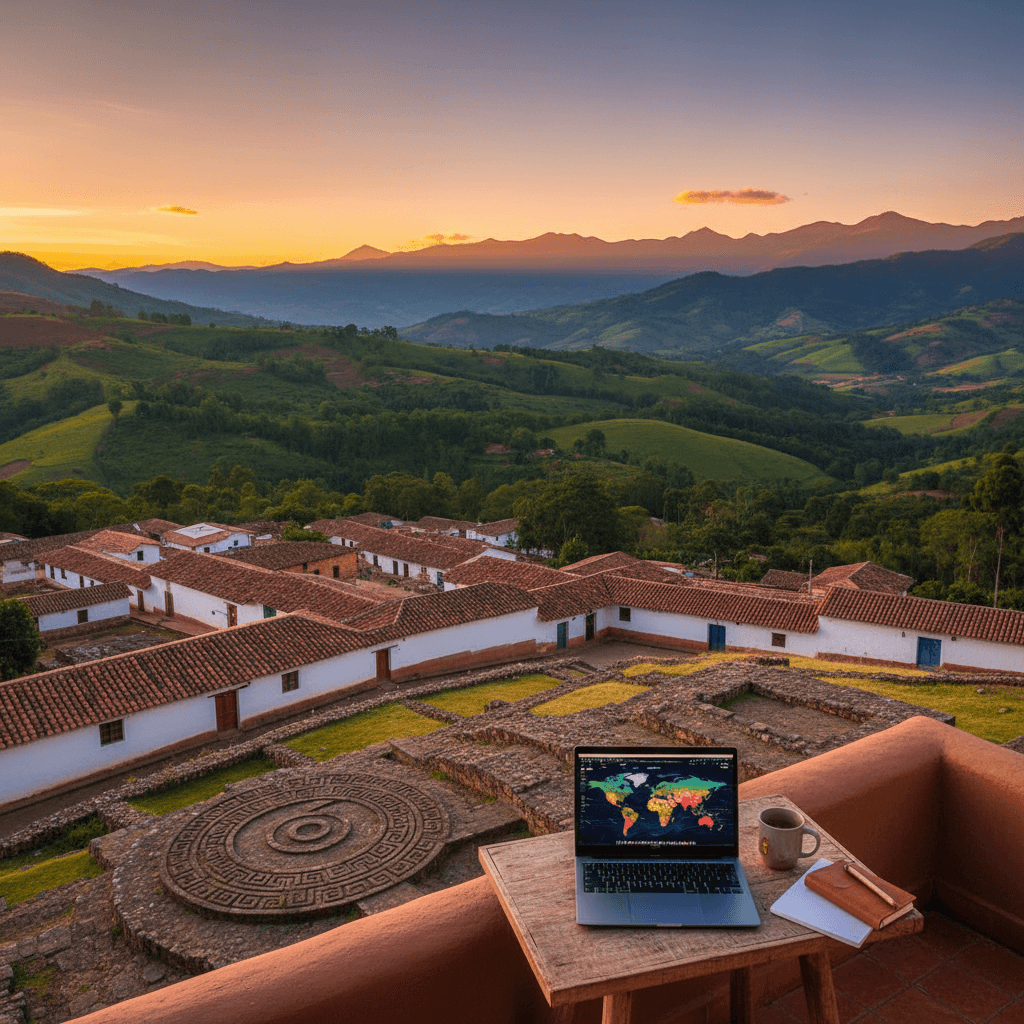
Samaipata
🇧🇴 Bolivia
The Slow Living Capital of Bolivia
If you're looking for a high-speed digital hub with glass skyscrapers and fiber-optic cables on every corner, Samaipata isn't it. This is where you go when the chaos of Santa Cruz or the thin air of La Paz finally wears you down. Sitting at a comfortable 1,650 meters, it's a mist-covered village that feels more like a sleepy European hamlet dropped into the lush Bolivian tropics. It's a place where the morning fog clings to the red-tiled roofs and the local pace of life is dictated by when the market opens and when the sun sets over the Andes.
The vibe is a curious, lovely blend. You'll see traditional Bolivian grandmothers in bowler hats selling fresh yuca next to Dutch expats who settled here decades ago to open boutique wineries or organic farms. Most nomads find that Samaipata forces a "slow-mad" lifestyle. You might come for three days and find yourself still there three weeks later, nursing a coffee at Cafe 1900 and realizing you haven't checked your email in six hours. It’s quiet, photogenic, and deeply restorative.
The Daily Rhythm
Life revolves around the central plaza. By day, it's a hub for people-watching and grabbing a cheap bag of empanadas or yuca sticks from the Mercado Municipal Casta Hurtado. By night, the social scene shifts to La Boheme, the town's unofficial living room. It's the kind of bar where the owner might introduce you to everyone else in the room within ten minutes of you sitting down. It’s easy to make friends here; the community is small enough that you’ll start recognizing faces by your second afternoon.
Expats and travelers often say the magic of Samaipata is in its surroundings. You're minutes away from the pre-Inca ruins of El Fuerte and the dramatic waterfalls of Las Cuevas. However, it’s not all sunshine and rainbows. The infrastructure is basic. You’ll deal with territorial dogs on hiking trails, occasional power flickers, and a 2.5-hour drive from Santa Cruz that involves dodging massive potholes and unmarked speed bumps. It’s a trade-off: you get raw, untouched beauty in exchange for some modern comforts.
Cost of Living Breakdown
Samaipata is remarkably affordable, even by Bolivian standards. While the national average for nomads sits around $1,600 a month, you can live comfortably here for much less if you lean into the local lifestyle. Cash is king; ATMs are rare in the village, so most people stock up on Bolivianos in Santa Cruz before heading up the mountain.
- Budget Tier: Around $800 to $1,200 per month. This covers a bed at a spot like Los Aventureros for about $7 a night, eating market meals, and walking everywhere.
- Mid-Range Tier: Roughly $1,200 to $1,600 per month. This gets you a private room at Hostel Serena for $20 to $30 a night and regular dinners at La Chakana.
- Comfort Tier: $1,600+ per month. This allows for stays in the scenic treehouses at Jaguar Azul ($30 to $50 a night) and frequent private transport for excursions.
The Neighborhood Feel
The village is compact enough that "neighborhoods" are really just about how far you want to walk from the plaza.
- Central Plaza: This is the heart of the action. It's best for solo nomads who want to be steps away from the best WiFi at the cafes and the evening social scene at the bars. It can get a bit noisy on weekends when Santa Cruz locals visit, but it’s the most convenient spot.
- The Outskirts: If you head toward the road to El Fuerte or the hills near Finca la Víspera, the vibe becomes purely pastoral. This area is favored by expats and families who want silence and mountain views. You’ll trade convenience for scenery, likely needing a bike or a sturdy pair of boots for the 20 to 30 minute trek into town.
Ultimately, Samaipata is a sanctuary for the weary remote worker. It’s the place to go when you want to trade your noise-canceling headphones for the sound of wind through the trees and the clinking of wine glasses with new friends from across the globe.
The Bottom Line on Budgets
Living in Samaipata is remarkably affordable, even by Bolivian standards. While the national average for digital nomads hovers around $1,600 per month, you can live comfortably here for much less. Most nomads find that a budget of $1,200 to $1,400 covers a high quality of life, including private accommodation and plenty of meals out. If you're on a shoestring, it's possible to get by on $800 a month by sticking to hostel dorms and market cooking.
Cash is king in this part of the world. While you can use cards in Santa Cruz, Samaipata remains a cash-heavy economy. ATMs are notoriously unreliable or non-existent in the village, so savvy travelers recommend withdrawing plenty of Bolivianos (Bs) before leaving the city. It's the only way to pay for your empanadas at the market or your shared taxi back to civilization.
Accommodation Costs
Your biggest expense will be your bed, but the price-to-view ratio is incredible. You won't find sleek, modern apartment blocks here; instead, you'll choose between cozy hostels, rustic guesthouses, or unique eco-stays.
- Budget: A bed at a social spot like Los Aventureros costs roughly 50 Bs (about $7) per night and usually includes breakfast.
- Mid-Range: Comfortable guesthouses like Hostel Serena run between $20 and $30 per night. These are favorites for remote workers who need a bit more quiet.
- Comfortable: For a more immersive experience, the treehouses at Jaguar Azul range from $30 to $50 per night. They're basic in terms of amenities, but the scenic views are unmatched.
Eating and Drinking
The local market, Mercado Municipal Casta Hurtado, is your best friend for keeping costs down. Fresh produce, eggs, and local cheese are incredibly cheap. If you're eating out, the price depends entirely on whether you're eating like a local or a tourist.
- Market Meals: Street food like yuca sticks or empanadas cost next to nothing. A full bag of fresh vegetables and fruit for the week will rarely set you back more than $10 to $15.
- Cafe Culture: A coffee and a snack at Cafe 1900 or a falafel plate at La Chakana are moderately priced. Expect to spend $5 to $10 for a solid lunch and a drink.
- The "Tourist Trap" Warning: Expats often warn against the upscale "foreign" restaurants serving pasta or pizza. They're frequently overpriced, sometimes costing $15+ per meal, and rarely live up to the quality of the simpler local fare.
Transport and Activity Fees
Samaipata is a hiker's paradise, which means your transportation budget can be zero if you have sturdy boots. Everything in the village is walkable, and many of the best viewpoints are just a short trek away.
- Getting There: A shared taxi (trufi) from Santa Cruz takes about two and a half hours and is very affordable, though the roads are rough and bumpy.
- Local Sites: Entry to the El Fuerte ruins is 20 Bs. While private taxis will try to charge a premium to take you there, many nomads prefer the 8km hike to save money and soak in the scenery.
- Daily Rentals: You can rent bikes or scooters to reach the local vineyards or the Las Cuevas waterfalls. It's a small expense that beats paying for overpriced private drivers.
Connectivity Costs
There are no dedicated coworking spaces in town, so your "office" cost is usually just the price of a coffee. Most nomads set up shop at Cafe 1900 or the tables around the main plaza. You'll want a local SIM card with a data plan from Entel or Tigo, which you should definitely buy in Santa Cruz before heading up the mountain. Mobile data is cheap, but speeds are modest, so don't expect to be uploading 4K video files without a lot of patience.
Solo Travelers and Social Nomads: Central Plaza
If you want to be where the action is, park yourself as close to the main square as possible. This is the village's heartbeat. It's the only place where you'll find a reliable social scene, mostly centered around La Boheme. It's the kind of bar where the owner makes a point of introducing newcomers to each other over a cold Paceña. Most nomads find this area the most practical because everything is within a five minute walk, from the morning empanadas at the market to the afternoon caffeine fix at Cafe 1900.
Living here means you're steps away from the Mercado Municipal Casta Hurtado, where you can grab fresh produce for pennies. While there aren't formal coworking spaces, the plaza has free WiFi that works well enough for sending emails or Slack messages while people watching. Just be prepared for the weekend shift. The town gets much busier when visitors arrive from Santa Cruz, so the central area can lose its sleepy charm on Saturday nights.
- Vibe: Social, walkable, and central.
- Monthly Rent: Budget around $200 to $400 for a basic room or a long term hostel arrangement like Los Aventureros.
- Best for: People who don't want to rely on taxis and enjoy being near the cafes.
Expats and Nature Lovers: The Outskirts
Expats who've settled here long term usually migrate toward the hills. Areas along the road to El Fuerte or near Finca la Víspera offer the sweeping, green vistas that make Samaipata famous. It's significantly quieter than the center, allowing for a true "slow life" experience. You'll find more unique housing here, including the famous treehouses at Jaguar Azul, though those are better for short stints than permanent living.
The trade off for the views is the logistics. The roads are rough and often unpaved, meaning you'll either become a dedicated hiker or spend a lot of time negotiating with local taxi drivers. Travelers often warn about territorial dogs on these perimeter paths, so carrying a walking stick is a common local pro tip. If you're looking for a house with a garden to grow your own vegetables, this is your territory.
- Vibe: Serene, rustic, and scenic.
- Monthly Rent: Expect to pay $500 to $900 for a more comfortable, private house with land.
- Best for: Remote workers who prioritize peace over proximity to bars.
Families: Near the Recreation Hubs
While Samaipata doesn't have traditional residential suburbs, families tend to gravitate toward the northern edge of town near the animal rescue center or the paths leading to the Mirador. These spots offer a bit more breathing room and easier access to outdoor activities that keep kids entertained. It's a safe environment where children can actually run around without the traffic concerns of Santa Cruz.
The community feel is strongest here. You'll likely get to know your neighbors quickly. Expats recommend sticking close to established hostels like Hostel Serena for your first few weeks while you scout for longer rentals. The owner, Bert, is a local fixture and often knows who has a spare house coming onto the market before it's ever listed online.
- Vibe: Safe, community oriented, and active.
- Daily Costs: A family can eat well on $30 to $50 a day if shopping at the local markets for staples like eggs, bread, and seasonal fruit.
- Best for: Those seeking a wholesome, outdoor lifestyle with a tight knit community.
Digital Nomads: The "Work From Anywhere" Reality
Samaipata isn't a high tech hub, so your "neighborhood" choice depends entirely on your data needs. If your job requires heavy video calls, you'll want to stay near the plaza or check the specific WiFi speeds at La Chakana before signing a lease. Mobile data through Entel is generally the most reliable backup, but coverage can drop off quickly once you head into the deeper valley sections.
- Top Work Spot: Cafe 1900 for the morning shift; La Boheme for the evening "laptop and beer" crowd.
- Connectivity: Expect speeds to be moderate. It's perfect for writers or developers, but frustrating for heavy data users.
- Pro Tip: Buy your SIM card in Santa Cruz before heading up the mountain, as options in the village are limited.
Digital Connectivity in the Cloud Forest
Working from Samaipata requires a mindset shift. If your job involves heavy video editing or constant high-stakes Zoom calls, you might find the infrastructure here challenging. Most nomads treat this village as a place for deep work, writing, or light administrative tasks rather than a high speed tech hub. The internet is generally functional but can be temperamental, especially when the weather turns or during peak evening hours.
You won't find fiber optic speeds in every guesthouse. Most rentals and hostels rely on ADSL or basic satellite connections. While it's enough to check emails and handle basic messaging, it's wise to have a backup plan. The village doesn't have a formal fiber infrastructure yet, so speeds are often capped at moderate levels that might frustrate those used to urban Santa Cruz or La Paz.
Coworking and Work-Friendly Cafes
There are currently no dedicated coworking spaces in Samaipata. The community is too small and the vibe is too relaxed for a sterile office environment. Instead, the local "office" is usually a corner table at a cafe near the main plaza. Most business owners are happy to let you linger for a few hours if you're ordering coffee and food.
- Cafe 1900: This is the unofficial headquarters for remote workers. It's located right on the plaza, has a reliable (by local standards) WiFi connection, and serves some of the best coffee in town. The atmosphere is quiet enough during the day to get a few hours of focused work done.
- La Boheme: While it's more of a bar and social hub in the evenings, it's a great spot for late-afternoon tasks. It's the best place to meet other nomads and expats once the laptops are closed. The owner often introduces newcomers to the local crowd.
- La Chakana: A solid alternative if you need a meal while you work. Their falafel is a favorite among the international crowd, and the seating is comfortable enough for a medium-length session.
Mobile Data and SIM Cards
Because WiFi can be hit or miss, a local SIM card is mandatory for anyone staying longer than a weekend. Don't wait until you get to Samaipata to buy one; the selection is limited and registration can be a headache in a rural setting. Pick up your SIM in Santa Cruz before you make the 2.5 hour trip up the mountain.
- Entel: Generally considered the gold standard for rural Bolivia. It has the widest coverage and usually offers the most stable 4G signal in the village.
- Tigo: A decent backup, but coverage can drop off quickly once you head toward the outskirts or toward the El Fuerte ruins.
- Pricing: Mobile data is very affordable. You can usually get a few gigabytes for just a few dollars, making it easy to use your phone as a hotspot when the cafe WiFi fails.
Practical Work Strategies
If you're planning a stay at more remote spots like Jaguar Azul or the higher hostels on the outskirts, don't assume they have WiFi at all. Many of these scenic "treehouse" style accommodations prioritize the view over the router. Always ask for a recent speed test before booking if you have a deadline looming.
Most successful nomads here follow a "hybrid" schedule. They do their heavy lifting and downloads in the mornings at a plaza cafe and save their offline tasks for the afternoons at their guesthouse. If you absolutely need a stable connection for an important meeting, your best bet is Hostel Serena, which is well-regarded by the expat community for being better equipped than the budget backpacker spots.
Keep in mind that power outages can happen, though they aren't a daily occurrence. Keeping your devices charged and having a high capacity power bank will save you when the village grid takes a nap. Ultimately, Samaipata is a place to disconnect from the grind, so try to front-load your work so you can spend your weekends hiking to Las Cuevas or the Amboro cloud forest instead of staring at a loading screen.
Safety in Samaipata
Samaipata is one of the most peaceful corners of Bolivia. You'll notice the change in pace immediately; it's the kind of place where the biggest risk is usually a twisted ankle on a cobblestone street rather than petty crime. Most nomads feel perfectly comfortable walking back to their guesthouse from La Boheme after a few late night drinks. The community is tight knit, and the "village vibe" means locals generally look out for one another and visitors alike.
The real safety concerns are more environmental than social. If you’re heading out on the popular Mirador hike or wandering the outskirts near the El Fuerte road, you'll likely encounter territorial farm dogs. They aren't usually aggressive without provocation, but they can be intimidating. Experienced hikers in the area recommend carrying a sturdy walking stick or picking up a few stones to keep in your pocket; simply the motion of bending down to pick up a rock is usually enough to send a barking dog scurrying back to its property.
If you're making the trip from Santa Cruz, be prepared for a white knuckle ride. The 120km journey takes about 2.5 hours and involves winding mountain roads with unmarked speed bumps and occasional debris. If you're sensitive to motion sickness, take precautions before hopping into a shared trufi. Once you arrive, the town itself is highly walkable, though you should keep an eye out for uneven pavement and the occasional loose tile.
- Emergency Contacts: Local police are centered near the main plaza, though their English is extremely limited.
- Solo Travel: Highly recommended for solo nomads; the plaza serves as a natural meeting point where it's easy to strike up a conversation.
- Weekend Crowds: Be cautious at Las Cuevas waterfalls on Saturdays and Sundays. The crowds can get thick, making it easier to misplace personal items in the chaos.
Healthcare & Wellbeing
For minor ailments, you'll find several pharmacies stocked with the basics around the town center. Local food safety is generally high, especially if you're buying fresh produce from Mercado Municipal Casta Hurtado. The air quality is a massive upgrade from the smog of Santa Cruz or La Paz, and the moderate altitude of 1,650m is much easier on the lungs than the Altiplano.
However, medical infrastructure in the village is basic. There are local clinics for stitches or a stomach bug, but for anything requiring specialist equipment, imaging, or surgery, you'll need to head back to Santa Cruz. It is a 2.5 hour drive to reach high quality hospital care, so ensure your travel insurance covers medical evacuation if you have pre-existing conditions.
- Water Safety: Stick to bottled or filtered water. While some expats use local filters, most nomads find it safer to buy large jugs (bidones) to avoid parasites.
- Pharmacies: Located near the plaza; look for signs saying "Farmacia." Most pharmacists can recommend over the counter fixes for common travel issues.
- Health Insurance: Ensure your policy covers "adventure activities" if you plan on trekking through Parque Amboro or exploring the deeper jungle areas.
Practical Tips for Staying Healthy
The sun at this altitude is deceptively strong. Even on cool, breezy days, you'll burn quickly. Stock up on high SPF sunscreen in Santa Cruz before you arrive, as the selection in Samaipata is limited and often more expensive. If you're visiting the animal rescue center or hiking near the waterfalls, bug spray is a must to ward off the persistent midges and mosquitoes that thrive in the lush greenery.
Nomads who stay long term often praise the mental health benefits of the town. The lack of "hustle" and the forced disconnection due to spotty internet often acts as a natural digital detox. If you find yourself feeling isolated, head to Cafe 1900 or the plaza benches; the social health of the town relies on these face to face interactions rather than apps.
The Pulse of the Village
Samaipata is a rare destination where your primary mode of transport is your own two feet. The village is compact, centered around the main plaza, and most nomads find they rarely need a vehicle for daily life. Walking here isn't just a way to get from point A to point B; it's the social fabric of the town. You'll likely spend your afternoons strolling between Cafe 1900 for a caffeine fix and the Mercado Municipal Casta Hurtado to grab fresh produce.
The streets are narrow and the pace is slow. While the central grid is easy to manage, keep in mind that the terrain gets hilly quickly as you move toward the outskirts. If you're staying further out near the Jaguar Azul treehouses or Hostel Serena, the walks are scenic but can be demanding after a long day.
Getting Here from Santa Cruz
Your journey to Samaipata almost certainly begins in Santa Cruz at the Viru Viru airport. From there, you'll need to navigate the 120km trip into the mountains. Most travelers opt for trufis (shared taxis) or micros that depart from the city. The drive takes roughly 2.5 to 3 hours, depending on traffic and the state of the roads.
Expect a bit of a bumpy ride. The road is paved but notorious for unmarked speed bumps and patches of dirt as you climb into the higher elevations. If you prefer more control, a private taxi is an option, though it's significantly more expensive than the shared local transport. There are no ride-hailing apps like Uber operating in this rural stretch, so you'll be negotiating prices the old fashioned way.
Exploring the Outskirts
When you want to venture beyond the village limits to see the El Fuerte ruins or the Las Cuevas waterfalls, you have a few choices:
- Hiking: Many nomads choose to hike the 8km trek to El Fuerte. It's a steep climb but the vistas are worth the effort. Just a heads up: travelers often report territorial dogs on the trails, especially near the Mirador. It's common practice to carry a walking stick or a few small stones to keep them at a distance.
- Bikes and Scooters: For trips to the 1750 Vineyard or Finca la Víspera, you can rent bicycles or scooters in town. This is often the most efficient way to see the surrounding valley without relying on the local taxi drivers.
- Private Taxis: You can find drivers around the main plaza willing to take you to the major sights. Be aware that prices for tourists can be steep. A trip to El Fuerte is frequently cited as overpriced, so always agree on the fare before you get in the car.
Practical Transit Tips
Public transport within the village itself is non-existent because the town is simply too small to require it. You won't find local buses or a metro system here. If you're planning a day trip to Parque Amboro or a condor-spotting excursion, your best bet is to coordinate with other nomads at La Boheme to split the cost of a private driver.
Since the village operates almost entirely on cash, make sure you have enough Bolivianos (Bs) for your transport needs before leaving Santa Cruz. ATMs in Samaipata are notoriously unreliable or non-existent, and you won't find many drivers or rental shops accepting card payments. If you're heading out on the weekend, keep in mind that the roads to popular spots like the waterfalls get crowded with locals from the city, which can turn a short drive into a bit of a crawl.
The Linguistic Landscape
In Samaipata, Spanish is the undisputed king of communication. While the village attracts a fair number of European expats and backpackers, the local dialect is what you will hear at the Mercado Municipal Casta Hurtado and around the central plaza. The Bolivian Spanish here is generally clearer and slower than what you might find in neighboring Chile or Argentina, making it a decent place to practice if you have a foundation in the language.
Don't expect much English once you step off the main tourist trail. While owners of popular spots like Hostel Serena or the staff at Cafe 1900 can likely converse with you, the average street vendor or taxi driver won't. Most nomads find that a basic grasp of Spanish isn't just helpful, it is a requirement for a smooth stay. You will want to be comfortable with numbers for haggling over yuca sticks and basic phrases for asking directions to the La Cuevas waterfalls.
Communication Tools and Connectivity
Since English proficiency is low to moderate, you should have Google Translate downloaded for offline use before you arrive. The signal can be spotty once you leave the village center for hikes toward El Fuerte or the Mirador, so don't rely on a live connection. If you are struggling with a specific phrase, locals are generally patient and welcoming, often using hand gestures to fill the gaps.
For staying connected, your best bet is to pick up a SIM card in Santa Cruz before making the 2.5 hour journey up the mountain. Entel is widely considered to have the most reliable coverage in rural areas, though Tigo is a solid secondary option. Expect 4G in town, but be prepared for speeds to drop significantly or disappear entirely when you are out exploring the rolling green countryside.
Social Etiquette and Basic Phrases
Samaipata operates on a "slow down and say hello" philosophy. It is customary to greet people as you pass them on the sidewalk or enter a small shop. A simple "Buen día" (good morning) or "Buenas tardes" (good afternoon) goes a long way in establishing a rapport with the community. If you are heading to La Boheme in the evening, you will find a more international crowd where English and even French or German might be heard, but starting in Spanish is always the more respectful move.
Keep these specific terms in your back pocket for daily life:
- ¿Cuánto cuesta?: How much does it cost? Use this at the market for fresh produce.
- La cuenta, por favor: The bill, please.
- Sencillo: Small change. ATMs are scarce and many vendors can't break large bills, so you will be asked for "sencillo" constantly.
- Trufis: Shared taxis or minivans. You will need this word to find your way back to Santa Cruz.
The Expat and Nomad Mix
Because the village has a long history of atraer (attracting) foreign residents, especially from Germany and the Netherlands, you might find a surprising amount of multilingualism in specific pockets. Places like La Chakana or the Finca la Víspera often serve as informal hubs where you can find someone to translate in a pinch. However, for your day to day life, from buying eggs to negotiating a ride to the Amboro park, your Spanish skills will be your most valuable asset.
The Seasonal Rhythm
Samaipata sits at a comfortable altitude of 1,650 meters, which keeps it much cooler and fresher than the sweltering lowlands of Santa Cruz. You'll find a temperate, subtropical climate here that stays relatively mild year-round, though the vibe of the village shifts significantly between the wet and dry seasons. Most nomads prefer visiting during the dry months from May to September, when the skies are clear and the hiking trails are firm.
During this peak window, daytime temperatures usually hover in the low 70s°F (21-23°C). It is perfect for trekking out to El Fuerte or the Mirador, but don't let the afternoon sun fool you. Once the sun dips behind the mountains, the temperature drops fast. You will definitely want a solid fleece or a down jacket for evening drinks at La Boheme, as night temperatures can fall into the high 40s°F (8-10°C).
The Rainy Season Reality
The rains typically arrive in November and last through March. This is when the "Bolivian Switzerland" earns its nickname, as the rolling hills turn an electric, lush green. While it is beautiful, it presents some logistical hurdles for remote workers. The 2.5-hour drive from Santa Cruz can become unpredictable due to mud and rough road conditions, and local power outages are more frequent during heavy storms.
If you visit during this time, keep your schedule flexible. You might get a week of sunshine followed by three days of mist and drizzle. The waterfalls at Las Cuevas are spectacular when they're full, but the trails often turn into slippery clay slides. If you're planning to spot condors or hike deep into Parque Amboro, the mud can make certain routes nearly impassable without a high-clearance 4x4.
When to Beat the Crowds
Samaipata is a favorite weekend escape for "Cruceños" (residents of Santa Cruz). Regardless of the month, the village transforms from a sleepy sanctuary into a lively hub every Friday through Sunday. If you value peace and quiet for your deep-work sessions, try to arrive on a Monday. You'll have the plaza cafes like Cafe 1900 almost entirely to yourself.
- High Season (June to August): The best weather for outdoor activities. Expect crisp air, sunny days, and the most social activity in the plaza.
- Shoulder Season (April and October): These are the "sweet spot" months. The landscape is still green from the rains, but the trails are drying out and prices for long-term stays are often more negotiable.
- Avoid: Major Bolivian holidays and long weekends if you don't like crowds. The waterfalls and local sights get packed, and the "overpriced taxi" phenomenon becomes much more common.
Practical Packing for the Climate
Since the weather fluctuates between warm afternoons and chilly nights, layering is your best friend. Even in the height of summer, a sudden mountain breeze can make a t-shirt feel insufficient. Expats living here long-term suggest bringing a reliable pair of waterproof hiking boots, especially if you're staying on the outskirts near Jaguar Azul or Finca la Víspera where the paths are unpaved. If you're planning to work from the plaza or outdoor cafes, a light windbreaker will save you from the evening chill that settles in around 6:00 PM.
Connectivity and Workspace
If your job requires high-speed fiber or frequent video calls, Samaipata will test your patience. The village lacks dedicated coworking spaces, so most nomads set up shop at Cafe 1900 or grab a table at the central plaza. While mobile data is generally reliable in Santa Cruz, it gets spotty in these rural hills. Your best bet is to pick up an Entel SIM card before leaving the city, as they tend to have the widest coverage in the department.
Most travelers find the WiFi at Hostel Serena or La Boheme sufficient for emails and basic tasks, but don't expect to upload large files without a struggle. It is a place designed for deep work or creative projects that don't require a constant tether to the cloud. If the internet cuts out, do what the locals do: head to the plaza for a coffee and wait it out.
Budgeting for the Village Life
Samaipata is remarkably affordable, even by Bolivian standards. While the national average for a comfortable nomad lifestyle sits around $1,600 a month, you can live well here for significantly less. Most of your budget will go toward housing and excursions rather than daily necessities.
- Budget Tier: Around $800 to $1,200 per month. This covers a bed at a spot like Los Aventureros for about 50 Bs ($7) a night and eating mostly from the Mercado Municipal Casta Hurtado.
- Mid-Range Tier: Expect to spend $1,200 to $1,600. This allows for a private room at a scenic guesthouse like Hostel Serena for $20 to $30 a night and regular dinners at La Chakana.
- Comfortable Tier: $1,600+ per month. This gets you into the unique treehouses at Jaguar Azul, which run $30 to $50 a night, and plenty of private taxis for day trips.
Navigation and Safety
The village is small enough that you'll rarely need a vehicle. Walking is the default mode of transport, whether you're heading to the market or trekking 20 minutes up to the Mirador for a sunset view. For longer trips, like the 8km journey to the El Fuerte ruins, private taxis are available but often overpriced. Many expats suggest hiking it instead or sharing a ride with other travelers to split the cost.
Safety is rarely an issue here, though the local dogs can be territorial on the hiking trails near the outskirts. It is a common local tip to carry a walking stick or a few small stones to discourage them if they get too close. For medical needs, there are basic pharmacies in town, but for anything serious, you'll need to make the 2.5 hour drive back to Santa Cruz where the major hospitals are located.
Money and Language
Cash is king in Samaipata. ATMs are scarce and frequently run out of bills or reject international cards, so bring plenty of Bolivianos (Bs) from Santa Cruz. While some higher-end lodges might accept cards, the market, smaller cafes, and taxis definitely won't.
Spanish is the primary language, and English proficiency is quite low outside of the main tourist hostels. You don't need to be fluent, but knowing how to ask "¿Cuánto cuesta?" (How much does it cost?) and basic food vocabulary will make your life much easier. Download an offline version of Google Translate before you arrive, as you won't always have a signal when you're trying to negotiate a fare or buy produce at the market.
Social Life and Integration
The social scene revolves almost entirely around the main plaza and La Boheme. It is the kind of town where you'll see the same faces every day, making it easy to build a community quickly. If you're looking to meet people, grab a beer or a glass of local wine at the bar in the evening; the owners are known for introducing newcomers to the regulars. For a quieter vibe, Finca la Víspera is a popular spot for expats to gather among the organic gardens.
Need visa and immigration info for Bolivia?
🇧🇴 View Bolivia Country GuideWild Card
Expect the unexpected