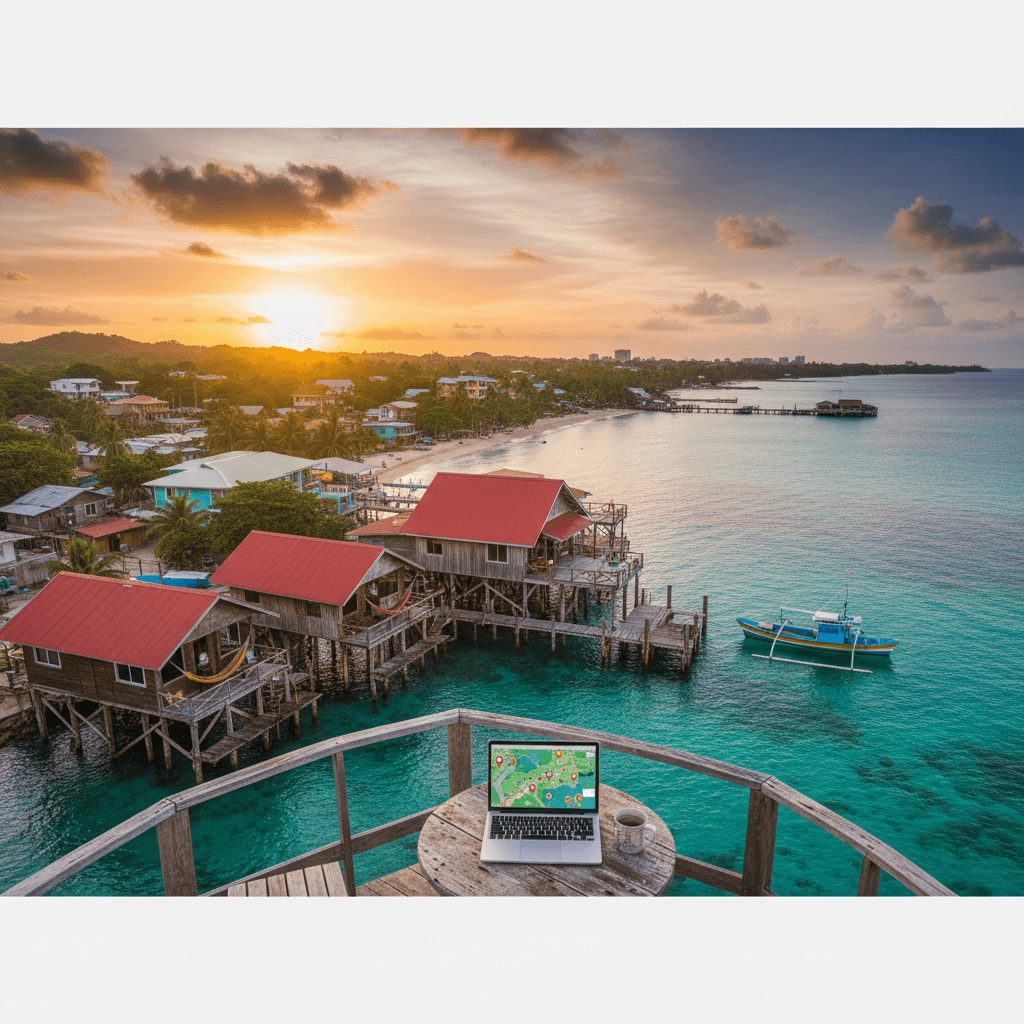
Roatán
🇭🇳 Honduras
The Island Rhythm
Roatán isn't your typical Caribbean resort trap. It’s a slow-paced, human-scale island where the clock matters less than the tide. While much of the world feels over-regulated, life here feels remarkably free. You’ll find a unique blend of British colonial history and Latin American warmth, resulting in an English-speaking environment that makes it incredibly easy for nomads to land and start working immediately.
The island’s soul is tied to the Mesoamerican Barrier Reef. Whether you’re a pro diver or just someone who likes a morning snorkel, the proximity to world-class marine life defines the daily routine. It’s common to see expats finishing a morning deep-dive before hopping onto a Zoom call. The vibe is similar to Bocas del Toro in Panama, but with a more established expat community and a slightly more polished infrastructure.
What to Budget
Living in paradise is affordable, but the tourism-driven economy means prices can fluctuate based on how close you are to the water. Most single nomads find they fall into one of three buckets:
- The Budget Tier ($1,200 to $1,800): This requires some hustle. You’ll likely be house-sharing or finding a local apartment for around $400. You’ll eat plenty of $3 to $5 street food and keep your transport costs low by using the local buses.
- The Mid-Range Tier ($2,000 to $3,000): This is the sweet spot for most. It covers a nice 1-bedroom in West End or West Bay for $800 to $1,500, frequent meals out at $15 a plate, and a dedicated desk at a coworking space.
- The Comfortable Tier ($3,500+): For those who want upscale villas, private transport, and high-end dining at $30+ per meal. Rent in premium areas usually starts at $2,000.
The Neighborhood Breakdown
Where you park your laptop matters. The island is 48 miles long, and each pocket has a distinct personality.
West End
- Best For: Solo travelers and social butterflies.
- The Vibe: Walkable, lively, and packed with dive shops. This is the heart of the island's nightlife.
- Pros: Most affordable housing and the easiest place to meet people.
- Cons: It gets noisy on weekends and the beaches are smaller than its neighbors.
West Bay
- Best For: Families and nomads who want "vacation vibes" while they work.
- The Vibe: Stunning white sand and high-end resorts. It feels like a postcard.
- Pros: Very safe, English is everywhere, and the beaches are world-class.
- Cons: Rent is steep, often $1,000+ for a basic spot, and it gets crowded with cruise ship passengers.
Sandy Bay & French Harbour
- Best For: Long-termers and those seeking quiet.
- The Vibe: A more authentic, local feel away from the tourist glare.
- Pros: Cheaper rent, usually between $600 and $1,000, and a tight-knit expat community.
- Cons: You’ll likely need a scooter or car to get around, as infrastructure is thinner here.
Connectivity and Logistics
The "island internet" stereotype doesn't really apply here anymore. WiFi is reliable enough for video calls, and the cell service is strong across the main hubs. You can expect to pay between $100 and $200 a month for coworking access in West End or West Bay. If you prefer a cafe, the island has a healthy coffee culture with plenty of laptop-friendly spots.
Getting around is simple. Local buses are cheap, costing only $1 to $2 per ride. Taxis are everywhere, though a trip from the airport to West Bay will set you back $20 to $40. If you want true freedom, scooter rentals are the way to go, usually costing $10 to $20 per day.
Safety and Health
Roatán is a relationship-based community. It’s generally much safer than the mainland because everyone knows everyone. There are modern clinics in West Bay and French Harbour that handle routine issues and emergencies perfectly well. For anything highly specialized, you’d head to the mainland, but for the day-to-day, the local facilities are up to international standards.
The best time to visit is between January and April when the weather is dry and the highs sit comfortably around 84°F. If you come during the rainy season from May to October, expect short, intense afternoon showers, though the tropical warmth never really leaves.
The Price of Paradise
Living on Roatan means balancing the tourist economy with local reality. While it is more expensive than mainland Honduras, it remains a bargain compared to the Cayman Islands or the US Virgin Islands. You can get by on a lean budget if you live like a local, but most nomads find that $2,000 to $3,000 per month is the sweet spot for a comfortable, mid-range lifestyle that includes air conditioning and frequent meals out.
The island operates on a tiered system. If you are staying long-term, you will likely pay in USD for rent but use Lempiras for groceries and street food. Keep in mind that electricity is notoriously expensive here, so your utility bill can swing your monthly total by $100 or $200 depending on how much you rely on the AC.
Monthly Budget Tiers
- Budget ($1,200 to $1,800): This requires a bit of hustle. You will likely be house-sharing or finding a studio in Sandy Bay for around $400 to $600. You will eat plenty of $5 baleadas from street stalls and stick to public buses.
- Mid-Range ($2,000 to $3,000): The standard nomad experience. This covers a nice 1-bedroom in West End or West Bay for $800 to $1,500, regular dinners at beachside spots, a coworking membership, and plenty of diving.
- Comfortable ($3,500+): This buys you a high-end villa or a modern condo in a gated community, frequent upscale dining at resort restaurants, and a private vehicle or frequent taxi use.
Housing and Neighborhoods
Finding a place is the biggest hurdle. The market is dominated by short-term vacation rentals, so finding a monthly "nomad-friendly" rate takes some digging on local Facebook groups or boots-on-the-ground networking.
West End
- Best For: Solo travelers and social nomads.
- The Vibe: This is the heart of the island's dive culture. It is walkable, social, and packed with bars.
- Rent: Expect to pay $800 to $1,200 for a decent 1-bedroom.
- Pros: No car needed; easy access to nightlife and dive shops.
- Cons: Weekend noise can be a dealbreaker for light sleepers.
West Bay
- Best For: Families and those after the "perfect" beach.
- The Vibe: Upscale and touristy. It has the best white sand on the island but feels more like a resort zone than a town.
- Rent: Prices start at $1,000 and climb quickly.
- Pros: Extremely safe, stunning scenery, and high-end amenities.
- Cons: Can feel crowded when cruise ships are in port.
Sandy Bay and French Harbour
- Best For: Long-termers and retirees.
- The Vibe: Quieter, more residential, and much more "local."
- Rent: You can find houses for $600 to $1,000.
- Pros: Better value for money and a break from the tourist crowds.
- Cons: You will almost certainly need a scooter or car to get around.
Food and Connectivity
Eating out is a highlight, especially if you love seafood. A casual lunch at a local "comedor" will run you $7 to $10, while a nice dinner with drinks in West End usually hits $20 to $30. For groceries, Eldon's is the go-to supermarket; it stocks many US brands, but you will pay a premium for imported peanut butter or cheese.
Remote work is surprisingly viable. While power outages happen, most dedicated coworking spaces in West End and West Bay have backups. Expect to pay $100 to $200 a month for a desk. If you prefer cafes, the island's English-speaking culture makes it easy to camp out with a laptop for a few hours. For backup, grab a local SIM card from Tigo or Claro at the airport. Data plans are cheap and the LTE coverage is strong enough to hotspot through a Zoom call if the cafe WiFi flutters.
Getting Around
If you stay in West End, your transport cost is zero. For everything else, the "colectivo" buses are your best friend, costing only $1 or $2 per ride. Taxis are everywhere but they don't use meters, so always negotiate the price before you get in. A ride from the RTB airport to West Bay usually costs between $20 and $40. Many nomads eventually rent a scooter for about $15 a day to explore the island's 48-mile length at their own pace.
For Digital Nomads and Solo Travelers
If you are landing in Roatan with a laptop and a need for social connection, West End is your base camp. It is the island's pulse, where dive shops, cafes, and bars line a single, walkable sandy road. Most nomads prefer this area because you do not need a car to get around. You can grab a morning coffee, put in four hours of work, and be underwater at the reef by 1:00 PM.
The housing here is more varied than elsewhere. While studios are notoriously hard to find on short notice, you can often snag a basic one bedroom for around $800 if you book a few months out. For those on a tighter budget, house-sharing is common among the dive instructor community, sometimes bringing costs down to $400. The nightlife is concentrated here, so expect some noise on Friday and Saturday nights. If you need a quiet environment to take calls, look for rentals tucked slightly back into the hillside rather than directly on the main strip.
For a more polished remote work experience, West Bay is just a short water taxi ride away. It is home to the island's most famous white sand beaches and higher end resorts. It is pricier, with rents starting at $1,000 to $1,500, but the infrastructure is modern and the surroundings are postcard perfect. You will find plenty of English speaking expats and high speed internet that comfortably supports video conferencing. While there is no single massive coworking hub, many of the beachfront cafes are used to the laptop crowd, provided you keep the coffee and snacks flowing.
For Expats and Long-Term Residents
Once the initial vacation high wears off, many long termers migrate toward Sandy Bay. It sits between the airport and the West End, offering a much more authentic, local feel. The reef is still accessible, but the crowds are non-existent. Rent here is significantly more affordable, often ranging from $600 to $1,000 for comfortable houses. You will likely need a scooter or a car to get around, as it is less walkable than the tourist hubs.
The community in Sandy Bay is tight knit. It is the kind of place where people know their neighbors and gather for sunset drinks at local docks. It is ideal if you want to escape the "resort bubble" and actually integrate into island life. You will find a mix of international expats and locals, creating a balanced social scene that does not revolve entirely around the next cruise ship arrival.
For Families and Retirees
French Harbour and the surrounding gated communities are the go to for those seeking stability, safety, and convenience. This area feels less like a tropical outpost and more like a functional town. It hosts the island’s best grocery stores, modern medical clinics, and banks. For families, the proximity to these services outweighs the need to be right on a swimming beach.
Rentals and home purchases here lean toward the "Comfortable" tier of our budget, often exceeding $2,000 per month for multi bedroom homes with ocean views. Areas like Pristine Bay offer a manicured lifestyle with golf courses and high security. While you lose the bohemian charm of the West End, you gain peace of mind and reliable utilities. It is a popular choice for retirees who want the Caribbean climate without sacrificing the comforts of a modern suburban home.
- West End: Best for social butterflies and budget conscious solo travelers. Walkable and dive centric.
- West Bay: Best for high earning nomads and beach lovers. Premium prices for premium views.
- Sandy Bay: Best for long term expats. Quiet, affordable, and requires a vehicle.
- French Harbour: Best for families and retirees. Excellent infrastructure and amenities.
Regardless of where you land, remember that Roatan operates on "island time." Relationships matter more than apps here. To find the best housing deals, most seasoned expats recommend booking a week in a hotel and hitting the ground to talk to locals, check community boards, and join local Facebook groups. The best spots rarely make it to the big booking platforms.
Connectivity on the Island
For a long time, Roatán was a place you went specifically to disconnect. That's changed. The island has evolved into a legitimate hotspot for remote workers, fueled by a growing community of divers and entrepreneurs who need to stay online while living the Caribbean dream. You'll find that WiFi speeds are surprisingly reliable, often outperforming what you might find on other Central American islands. Most modern rentals and hotels in West Bay and West End offer stable connections that easily handle Zoom calls and heavy uploads.
Cellular service is equally robust. The two main players are Tigo and Claro. You can pick up a SIM card at the airport or at various shops in Coxen Hole. Data plans are affordable and coverage is strong across the western side of the island, though it can get spotty if you head deep into the more remote, mountainous interior. Most nomads use their phone as a backup hotspot without any major issues.
Coworking and Shared Spaces
While Roatán doesn't have a massive corporate coworking scene, the infrastructure is catching up to the demand. You can expect to pay between $100 and $200 per month for dedicated desk space or professional memberships. These spots are concentrated in the tourist hubs where the fiber optic lines are most consistent.
- West End: This is the social heart of the nomad scene. The vibe is casual, and you'll find several dive shops and small cafes that welcome laptop users during the day. It is the best place to find a balance between work and a quick midday swim.
- West Bay: A bit more upscale and resort focused. If you are staying in this area, you'll likely be working from your rental or a high end hotel lounge. The internet here is generally the fastest on the island because of the concentration of luxury properties.
- Sandy Bay: A quieter alternative for those who want to avoid the cruise ship crowds. This area is popular with long term expats and offers a more focused environment for deep work.
The Cafe Office Culture
Roatán has a thriving cafe culture that caters to the English speaking expat community. Many nomads skip the formal office and set up shop at local eateries. Since the island has a deep British colonial history, English is spoken almost everywhere, making it easy to ask for the WiFi password or negotiate a table for a few hours. Just remember to keep the coffee or snacks flowing if you plan to stay for an afternoon.
While the infrastructure is solid, it is still an island. Power outages can happen, especially during the rainy season between May and October. Most professional establishments and higher end rentals have backup generators, but it is always smart to keep your devices charged and have a local SIM with a data plan ready as a fallback. Most nomads find that the trade off, working with a view of the world's second largest barrier reef, is well worth the occasional minor hiccup.
Practical Tech Tips
- VPNs: Use a VPN if you are accessing banking or sensitive work portals from public cafe networks.
- Power Surges: If you are staying in a budget rental, bring a small surge protector. The local grid can be temperamental during storms.
- Hardware: There are limited options for specialized tech repair on the island. Bring any specific adapters, cables, or backup batteries you might need.
A Relationship Based Safety Culture
Roatán feels significantly different from mainland Honduras. While the mainland often makes headlines for security concerns, the island operates on a community driven, relationship based system. It is a small island where reputations matter, and the local vibe is generally relaxed and welcoming. Most nomads find that as long as they stick to well traveled expat and tourist hubs, the safety levels are comparable to other popular Caribbean destinations.
That said, common sense is your best tool here. Stick to the main strips of West End and West Bay if you are out after dark. Petty theft can happen, especially on the beach or in unsecured rentals, so keep your electronics out of sight when you aren't using them. The local Tourist Police are visible in the high traffic areas and are generally helpful if you need directions or assistance. In an emergency, you can dial 911 just like in the US or Canada.
Healthcare Infrastructure
For a small island, Roatán is surprisingly well equipped for routine medical needs. You won't find massive metropolitan hospitals, but the clinics here offer international standard care for most common issues. Expats and nomads typically head to French Harbour or West Bay for medical services.
If you have a specialized or chronic condition that requires advanced surgery or niche specialists, you might need to take the short flight to the mainland (San Pedro Sula or Tegucigalpa) or even back to the US. However, for the "digital nomad flu," minor infections, or diving related issues, the island has you covered. There are also several hyperbaric chambers on the island, which is a massive relief for the heavy diving community here.
Pharmacies and Everyday Health
Pharmacies are easy to find and well stocked. You'll see them in the main commercial areas and main commercial areas. Many medications that require a prescription in North America are available over the counter here, but it is always better to bring a supply of your specific brands if they are vital to your health. Prices for basic consultations and meds are very reasonable, often costing a fraction of what you would pay in the States.
- Standard Emergency Number: Dial 911 for police or medical emergencies.
- Water Safety: Do not drink the tap water. Stick to bottled or filtered water, which is delivered in 5 gallon jugs to most long term rentals.
- Health Insurance: Most nomads use international providers like SafetyWing or Genki, but check that your policy specifically covers "Adventure Sports" if you plan on diving.
- Sun and Bugs: The tropical sun is intense. Also, "no-see-ums" (sand flies) on the beaches can be brutal; locals recommend coconut oil or DEET based repellents to keep them at bay.
Key Medical Locations
French Harbour: This is the island's commercial heart and where you will find the most robust medical services. It is about a 20 to 30 minute drive from the West End.
West End/West Bay Clinics: Smaller facilities exist here for quick checkups, stitches, or traveler's stomach issues. They are convenient but have limited hours compared to the main hospitals.
Overall, Roatán offers a safe environment for those who respect the local culture and stay aware of their surroundings. The peace of mind coming from the English speaking medical staff and the tight knit expat community makes it one of the easier Caribbean islands to settle into without constant worry about your well being.
Making Your Way Around the Island
Roatan is roughly 48 miles long, but most of your daily life will likely center around the western tip. Because the island is narrow and hilly, your transportation choices usually depend on whether you are staying within the walkable hubs or exploring the quieter, more remote eastern reaches.
Walking and Local Vibes
If you base yourself in West End or West Bay, your feet are your best asset. West End is particularly pedestrian friendly; it is a single paved road lined with dive shops, cafes, and bars where everyone knows everyone. You can easily spend your entire week here without ever touching a steering wheel. Between these two main hubs, many nomads take the water taxi. It is a scenic 10 minute ride that costs about $5 per person, letting you skip the dusty main road entirely.
Public Transit and Taxis
For longer distances, the local "colectivos" or public buses are the way to go. These are usually small vans that run the main spine of the island. They are incredibly cheap, typically costing between $1 and $2 per ride. You just flag them down on the side of the road. They are reliable during daylight hours, though they get crowded and don't strictly follow a printed schedule.
Traditional taxis are everywhere, but they don't use meters. You need to negotiate the fare before you get in. Expect to pay about $20 to $40 for a ride from the RTB airport to the West Bay area. If you are just moving between nearby neighborhoods, a shared taxi ride might only cost a few dollars, but private hires for tourists will always command a premium.
Scooters and Car Rentals
If you want the freedom to visit Sandy Bay or head up to French Harbour for a major grocery run, renting your own wheels is a smart move. Many expats prefer scooters for their agility on the island's winding roads. You can usually find rentals near the dive shops for $10 to $20 per day. Just be mindful of the potholes and the occasional stray dog or iguana crossing the road.
For those planning to stay long term or live in quieter areas like Camp Bay, a car becomes a necessity. While there aren't any major ride hailing apps like Uber or Lyft on the island yet, local rental agencies are plenty. Most nomads find that a monthly transport budget of $100 to $200 covers their needs, depending on how often they feel the urge to explore beyond their home base.
Practical Travel Tips
- Navigation: Google Maps works well enough for the main roads, but many smaller residential tracks aren't mapped accurately. Ask locals for landmarks instead of street numbers.
- Safety: Stick to the main tourist and expat zones at night. While the island is generally safe and community oriented, poorly lit stretches of road are best avoided on foot after dark.
- Traffic: Things move slowly here. Between the narrow roads and the occasional delivery truck blocking the way, leave yourself extra time if you have a flight to catch.
- Island Time: Don't expect the buses to run like a Swiss watch. Embrace the slower pace and use the wait time to chat with a neighbor.
The Linguistic Landscape
One of the biggest draws for nomads eyeing Roatan is the ease of communication. Unlike mainland Honduras where Spanish is the absolute rule, Roatan has a unique history as a former British colony. This means English isn't just a language for tourists; it's the native tongue for many multi generational islanders, particularly the Afro Caribbean Garifuna and Bay Islands communities.
You'll find a bilingual environment where English and Spanish coexist comfortably. In major hubs like West End and West Bay, you can get through your entire day, from ordering a baleada to negotiating a dive certification, without knowing a word of Spanish. However, the island's recent growth has brought many mainlanders to Roatan, making Spanish the primary language for many service workers and local businesses in French Harbour or Coxen Hole.
The Local Dialect
While standard English is widely understood, you'll often hear "Island English" or "Island Talk" among locals. It's a rhythmic, melodic Creole that might take your ears a few days to tune into. It's fast and incorporates unique Caribbean phrasing, but don't worry about the barrier. Most locals will naturally pivot to standard English when they realize you're a visitor or an expat.
Essential Spanish for Nomads
Even though you can survive on English alone, learning the basics earns you a lot of respect and can help when you're haggling at a local market or chatting with a taxi driver. Most nomads find that a few key phrases go a long way:
- Hola, ¿cómo estás? (Hello, how are you?)
- ¿Cuánto cuesta? (How much does it cost?)
- La cuenta, por favor. (The check, please.)
- Gracias. (Thank you.)
- ¿Dónde está...? (Where is...?)
If you're planning to stay long term or want to look for housing in less touristy areas like Sandy Bay, having Google Translate downloaded for offline use is a smart move. It's especially handy for translating menus or utility bills if you decide to rent a local apartment.
Staying Connected
Communication isn't just about what you say; it's about your data. For remote work, the infrastructure is surprisingly solid. Most cafes and short term rentals in the West End offer reliable WiFi, but for a backup, you'll want a local SIM card. The two main players are Tigo and Claro. You can pick these up at the airport or at various "pulperias" (small convenience stores) across the island.
Expats generally recommend Tigo for better overall coverage on the island. Data plans are affordable, often costing around $10 to $20 for a generous monthly allowance. Most locals and businesses use WhatsApp as their primary mode of communication. Whether you're booking a table at a restaurant or messaging a dive shop, having a WhatsApp account is non negotiable for life on the island.
Social Etiquette
Communication on Roatan is deeply relationship based. It's a small island where everyone eventually knows everyone. A simple "Good morning" or "Good afternoon" to people you pass on the street or in the grocery store is expected. It's a slow paced, friendly culture where taking a minute to chat before getting down to business is the norm. Rushing through an interaction is often seen as rude, so take a breath and enjoy the conversation.
The Tropical Rhythm
Roatán doesn't follow a standard corporate calendar. Life here is dictated by the Caribbean Sea and the sun. Because the island sits on the Mesoamerican Barrier Reef, your schedule will likely revolve around water clarity and tide charts rather than a traditional clock. It is a humid, tropical environment where the air is thick and warm, perfect for those who want to swap a commute for a morning dive.
The Golden Window: January to April
If you are looking for that postcard version of the island, aim to arrive between January and April. This is the dry season, characterized by cooling trade winds and consistent sunshine. Temperatures hover comfortably between 82°F and 86°F. For digital nomads, this is the peak social season. You will find the cafes in West End full of remote workers and the dive boats heading out every morning in glassy water conditions.
The downside to this window is the crowd. West Bay becomes a magnet for cruise ship passengers and vacationers, which can drive up the short term rental prices. If you are planning a stay during these months, expats recommend booking your housing at least three months in advance to avoid being priced out of the mid range $1,500 apartments.
The Green Season: May to October
While often labeled the rainy season, May through October is more about humidity and brief, intense bursts of water than constant gloom. The thermometer climbs slightly, reaching highs of 88°F. You will notice the island turns a deep, electric green, and the dust of the dry season disappears. Most nomads find this time of year manageable because the rain typically arrives in the late afternoon, providing a natural excuse to hunker down and finish a work sprint.
There is a distinct advantage to visiting during the green season: leverage. With fewer tourists on the island, you can often negotiate better monthly rates on villas or long term apartment rentals in Sandy Bay or French Harbour. Just be prepared for the "Caribbean sweat" factor; if your rental doesn't have a good breeze or AC, the humidity can be taxing during July and August.
The Transition: November and December
Late November and December are transition months. You might get a week of perfect beach weather followed by three days of "northers," which are cold fronts that bring wind and choppy seas. Temperatures stay mild, usually around 82°F to 85°F. It is a festive time on the island with a surge in expat social events, but the weather can be unpredictable for those specifically coming for world class snorkeling or diving.
Seasonal Breakdown
- High Season (Jan to April): Best weather, highest prices, most social activity. Expect $1,000 to $1,800 for decent monthly rentals.
- Shoulder Season (May to Sept): Hotter and more humid. Great for budget conscious travelers and those who prefer a quieter island vibe.
- Rainy Peak (Oct to Dec): Frequent showers and potential storms. Best for writers or those with heavy indoor workloads who don't mind the sound of rain on a tin roof.
Regardless of when you land, the island stays warm. You won't need anything heavier than a light hoodie for an air conditioned cafe or a breezy boat ride. Most long term residents suggest arriving in late April. You catch the tail end of the perfect weather but stay long enough to watch the crowds thin out and the local prices stabilize.
The Nomad Budget
Living in Roatan ranges from a scrappy $1,200 a month to a luxury $3,500 plus lifestyle. Most digital nomads find the sweet spot around $2,500. This covers a comfortable apartment in a popular area, frequent dining out, and a dedicated workspace.
- Budget ($1,200 to $1,800): This requires some hustle. You'll likely need to house share or find a local rental in Sandy Bay for around $400. You'll stick to $3 to $5 street food and use the local buses.
- Mid-range ($2,000 to $3,000): The standard nomad experience. Expect to pay $800 to $1,500 for a nice one bedroom in West End or West Bay, eat at beachside spots for $15, and budget $100 to $200 for coworking.
- Comfortable ($3,500+): High end condos in exclusive gated communities or West Bay resorts. You're looking at $2,000 for rent and frequently hitting upscale restaurants where meals start at $30.
Where to Plant Your Flag
The island is 48 miles long, but most nomads congregate on the western tip. Each neighborhood has a distinct energy that dictates your daily workflow and social life.
West End is the heartbeat for solo travelers and divers. It's walkable, social, and has the most affordable housing of the tourist hubs. It gets noisy on weekends, but the proximity to dive shops and bars makes it the easiest place to meet people. Expect a mix of gravel roads and seaside charm.
West Bay is where you'll find the postcard beaches and higher price tags. It's safer and more polished, making it a favorite for families or those with a bigger housing budget. Rent here usually starts at $1,000 for anything decent. It can get crowded when cruise ships are in port, but the snorkeling is world class right off the shore.
Sandy Bay and French Harbour offer a quieter, more residential feel. These areas are popular with long term expats and retirees who want to escape the tourist bustle. Rents are more reasonable, ranging from $600 to $1,000, but you'll likely want a scooter or car to get around.
Internet and Connectivity
Reliable remote work is entirely doable here. Most cafes and rentals offer stable WiFi, and the island is increasingly becoming a hotspot for the laptop crowd. You'll find coworking spaces in West Bay and West End for roughly $150 a month if you need a professional environment.
For mobile data, grab a SIM card from Tigo or Claro. You can find these at the airport or small shops in town. The coverage is surprisingly strong across the main hubs. For banking, ATMs are accessible, and many nomads use Wise or PayPal to manage their finances without issues.
Getting Around
If you're staying in West End or West Bay, your feet are your best asset. For longer trips, the local buses are a steal at $1 to $2 per ride. Taxis are everywhere, though you should expect to pay $20 to $40 for a ride from Juan Manuel Galvez International Airport (RTB) to the west side.
Many expats recommend renting a scooter or bike for about $10 to $20 a day to explore the island's hidden corners. There aren't any ride hailing apps, so keep a few taxi numbers in your phone or stick to the main road to flag down a colectivo.
Health and Language
Roatan is unique because English is widely spoken alongside Spanish, thanks to its British colonial history. You won't struggle to navigate daily life, though learning basic Spanish phrases like "Cuanto cuesta?" will help you integrate and show respect to the locals.
Healthcare is modern enough for routine issues. There are clinics in West Bay and French Harbour that meet international standards. For anything highly specialized, you might need to head to the mainland, but for the average nomad, the island facilities are more than adequate. Pharmacies are easy to find and well stocked.
When to Go
The best weather hits between January and April. It's dry, breezy, and perfect for diving. The rainy season runs from May to October. While it's the "worst" time to visit, it usually just means short afternoon showers and higher humidity, which some nomads prefer for the lower prices and thinner crowds.
Need visa and immigration info for Honduras?
🇭🇳 View Honduras Country GuideHidden Gem
Worth the effort