Rijeka
🇭🇷 Croatia
The Industrial Soul Meets the Adriatic
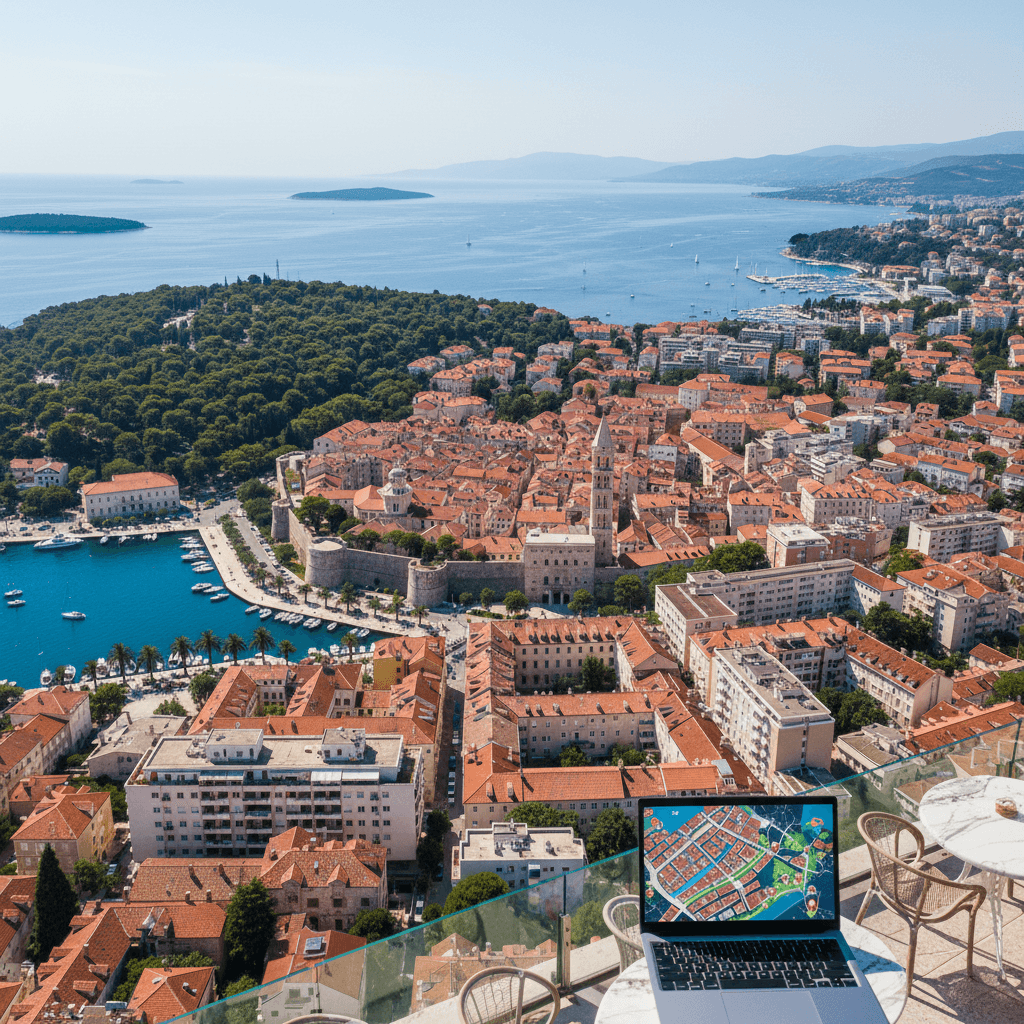
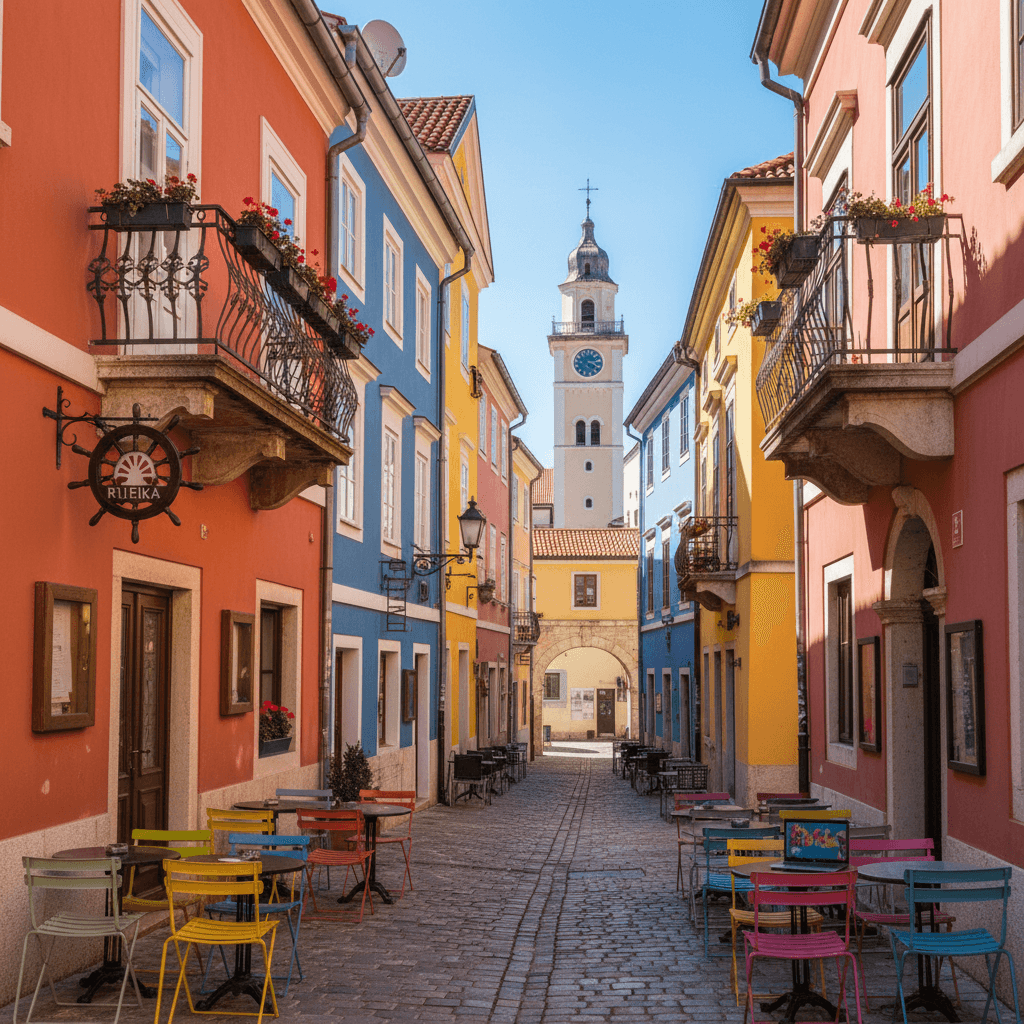
If you're looking for the polished, postcard perfection of Dubrovnik or the frantic energy of Split, you might be surprised by Rijeka. This is Croatia's third largest city, and it wears its gritty, industrial past like a badge of honor. It’s a place where Habsburg grandiosity crashes into socialist architecture and shipping containers, creating an atmosphere that feels more authentic and lived-in than the tourist hubs further south. Most nomads find that Rijeka doesn't try to impress you; it just invites you to pull up a chair and join the rhythm.
The vibe here is decidedly "work hard, chill harder." Locals take their coffee culture seriously, and you'll see the Korzo, the city's main promenade, packed with people at all hours. There is a refreshing lack of tourist traps, meaning you can walk into almost any bar or bistro without fear of being overcharged. It's the kind of city where you can spend your morning deep in a project at a cafe and your afternoon watching a football match at HNK Orijent 1919 or catching a performance at the Ivan Zajc National Theatre.
The Nomad Experience
Rijeka is emerging as a favorite for those who want the Mediterranean lifestyle without the crowds. By 2025, the city has streamlined its residence permit process, making it one of the easiest entry points for the Croatian Digital Nomad Visa. You won't find a massive electronic music scene here, but you will find a creative, underground energy. It’s a city of sailors, students, and artists, which makes for a welcoming, low-pressure social life.
Expats often mention the "sunny tempo" of the city. While the internet is fast and the coworking spaces are professional, there’s a constant temptation to slack off. When the sun hits the Kvarner Bay, the lure of a €12 seafood lunch and a glass of local wine by the water is strong. It’s a place that rewards those who can manage their own schedule while embracing a slower pace of life.
Cost of Living Breakdown
Living here is significantly more affordable than in Western Europe or the more famous Croatian coastal towns. Your budget will go further, especially when it comes to dining out and local entertainment.
- Budget Range (€1,500 to €2,000 per month): Best for those staying in social hostels or shared apartments. You'll be eating plenty of street food for €5 to €8 per meal and using the €50 monthly bus pass to get around.
- Mid-Range (€2,000 to €3,000 per month): This covers a private studio or 1BR apartment in the city center, which typically runs between €600 and €900. You can eat at mid-range bistros for €15 and maintain a dedicated desk at a coworking space.
- Comfortable (€3,000+ per month): Aim for an upscale apartment with sea views for €1,000 or more. This allows for frequent fine dining, private taxis via Bolt, and weekend trips to the nearby islands or Opatija.
Where to Plant Your Flag
Rijeka is compact and highly walkable, but each pocket has a distinct personality. Most nomads gravitate toward the center for the convenience, but the edges of the city offer a more relaxed, residential feel.
- City Center (Korzo): The heart of the action. You're steps away from the best cafes, the central market, and the harbor. It’s perfect for solo travelers who want to be where the people are.
- Kvarner Bay Edges: Areas further along the coast offer better access to beaches and a quieter atmosphere. It’s ideal if you prefer a morning swim over a morning commute, though you might find the pace almost too slow for high-pressure work weeks.
- Trsat: Perched on a hill overlooking the city, this neighborhood is home to a historic castle and offers some of the best views in the region. It’s a bit of a climb, but the cooler air and quiet streets are worth it.
To qualify for the official digital nomad visa in 2026, you'll need to show a monthly income of at least €3,622.50 or have savings totaling €43,470. While the paperwork can be handled online, many nomads recommend applying in person at the local police station in Rijeka for faster processing times.
The Budget Breakdown
Living in Rijeka feels like a well kept secret for your wallet. While cities like Dubrovnik and Split have seen prices skyrocket due to mass tourism, Rijeka remains grounded. Most nomads find they can live a high quality life here for significantly less than in Western Europe or North America. You're looking at a monthly spend of €2,000 to €3,000 for a comfortable mid range lifestyle that includes a private apartment and plenty of dinners out.
If you're on a tighter budget, you can get by on €1,500 to €2,000. This usually involves staying in social hostels or shared apartments and sticking to local street food. On the flip side, if you want a luxury experience with a high end apartment and frequent upscale dining, expect to budget €3,000 or more per month.
Housing and Rent
Finding a place to stay is generally straightforward, though the market is tighter in the city center. Expats recommend starting in a hostel or short term rental for the first week while you scout local listings for better long term deals. Prices vary depending on how close you are to the Korzo or the sea.
- City Center (Korzo area): This is the place to be if you want to be steps away from cafes and the main social scene. A one bedroom apartment here typically runs between €700 and €900.
- Kvarner Bay Edges: For those who prefer waking up to sea views and a quieter pace, the outskirts offer better value. You can find studios or small apartments starting around €600.
- Utilities: Don't forget to factor in electricity, water, and heating, which usually add another €100 to €150 to your monthly overhead.
Food and Dining
The food culture here is a major draw. It's heavily Mediterranean, focusing on fresh seafood and local wine. You won't find many tourist traps, so the prices you see on the menu are what the locals actually pay. Most nomads find the value for money in local konobas (taverns) to be excellent.
- Street Food: Quick bites like burek or slices of pizza will cost you between €5 and €8.
- Mid-range Meals: A sit down lunch or dinner at a local bistro usually lands between €10 and €15.
- Fine Dining: If you're heading to a nicer spot for fresh catch and wine, expect to pay €20 to €30 per person.
- Groceries: Cooking at home is affordable if you shop at local markets like the Central Market (Glavna tržnica). A weekly grocery run for one person typically costs about €50 to €70.
Transport and Extras
Rijeka is incredibly walkable, especially in the downtown core. You likely won't need a car unless you plan on frequent trips to the mountains or Istria. For daily commuting, the public bus system is reliable and cheap. A single ride is about €1 to €2, while a monthly pass costs roughly €50.
For your workspace, KIWI Creative Space is the local favorite for nomads, with daily rates around €10 to €15 and monthly memberships for about €100. If you prefer working from cafes, a coffee will only set you back about €2, and most places are happy to let you linger with your laptop as long as you're polite.
The Digital Nomad Visa
If you're planning to stay long term under the official Digital Nomad Visa, there are specific financial requirements you need to meet. For 2026, the government requires proof of a monthly income of at least €3,622.50. If you'd rather show savings, you'll need a minimum of €43,470 in the bank for a 12-month stay. Applying in person in Rijeka is often faster than going through a consulate abroad, so many travelers arrive on a tourist visa first to get the ball rolling.
For Solo Nomads: The Korzo and City Center
If you want to be where the action is, the area surrounding the Korzo is your best bet. This is Rijeka's heartbeat, a long pedestrian promenade lined with cafes, shops, and historical buildings. Most solo nomads choose this neighborhood because it eliminates the need for a car and puts you within walking distance of the city's best social hubs.
Living here means you're steps away from KIWI – Creative Space, the city's go-to coworking spot for artists and digital professionals. You'll find the vibe is more about "beach wine" than the corporate grind. The social scene is centered around affordable bars and the Ivan Rajc theatre, making it easy to meet people without spending a fortune. Expect to pay between €600 and €900 for a decent one bedroom apartment in this zone.
- Daily Life: Walkable access to markets, €5 to €8 street food, and endless coffee spots.
- Internet: Reliable speeds averaging 75-100 Mbps fixed and over 100 Mbps mobile, with solid 5G coverage for those using Jetpac eSIMs.
- The Vibe: Energetic but relaxed, though it can get a bit crowded during the summer months when travelers spill over from nearby Opatija.
For Long-Term Expats: The Kvarner Bay Edges
Expats looking for a more permanent, "local" feel often drift toward the edges of the city along the Kvarner Bay coastline. These neighborhoods offer a slower pace of life and immediate access to the Adriatic. It's the ideal spot if you've already secured your digital nomad permit and want to settle into a routine that involves morning swims and sunset walks.
The housing here feels more like a home and less like a transit hub. While you're further from the central coworking spaces, the peace and scenery are worth the trade off. You'll still find local konobas (traditional taverns) where a mid range meal costs about €10 to €15. It's a quieter existence, focusing on the Mediterranean lifestyle that Rijeka is famous for.
- Rent: Slightly more variable, but €700+ is common for sea view studios.
- Transportation: You'll likely use the local bus system, which is affordable at €50 for a monthly pass.
- Pros: Less tourist traffic and a genuine sense of community among neighbors.
For Budget Travelers and New Arrivals: Port and Downtown Hostels
If you've just landed and need to find your footing, the hostel heavy zones near the ports and the main bus terminal are practical. These areas are gritty, industrial, and unpretentious. They serve as the perfect launchpad for solo travelers or families who need a cheap base while scouting for long term rentals.
The social atmosphere here is high. You'll meet plenty of people passing through on their way to Zadar or Split. While it can be noisy due to the proximity to the shipping docks and transit hubs, the prices are the lowest in the city. Budget travelers can get by on €1,500 to €2,000 per month by utilizing shared stays and local grocery stores.
- Social: High turnover of travelers makes it easy to find weekend trip partners.
- Convenience: Proximity to the Rijeka Airport shuttle and ferry terminals.
- Cost: Hostel stays can start around €500 per month for longer term arrangements.
For Families: Residential Pockets
Rijeka is remarkably safe, with no specific areas that locals or expats suggest avoiding. Families tend to prefer the quieter residential hillsides just above the city center. These neighborhoods offer more space and are close to parks and football stadiums like HNK Orijent 1919, where the atmosphere is welcoming and local.
The city's low tourism profile compared to Dubrovnik or Split means families don't have to compete with massive crowds for space in restaurants or public squares. Public healthcare is accessible and of good quality, and the high level of English proficiency among doctors and pharmacists makes it easy to manage a household. A comfortable family budget typically starts at €3,000 per month to cover a larger apartment and occasional upscale dining at €25 per person.
- Safety: Very high, with a relaxed, low crime environment.
- Activities: Easy access to beaches and day trips to the nearby islands via ferry.
- Shopping: Local supermarkets and the central market provide fresh, affordable Mediterranean ingredients.
Connectivity and Speed
You won't have to worry about dropping off a Zoom call while watching the cargo ships drift into the harbor. Rijeka boasts surprisingly reliable infrastructure for a city that isn't as tech-heavy as Zagreb. Fixed broadband speeds typically average 75-100 Mbps, while the mobile network is faster, often exceeding 100 Mbps on 5G. Most apartments in the city center come equipped with high speed fiber, but it's always smart to ask your host for a speed test screenshot before you commit to a long term stay.
For mobile data, you've got solid options. Local providers like Hrvatski Telekom and A1 offer prepaid SIMs that you can pick up at any Tisak newsstand. If you prefer to hit the ground running, many nomads use the Jetpac eSIM. The JetFlex plan works well for short stays, while the JetPro unlimited plan is the go-to if you plan on tethering your laptop for beachside work sessions.
Coworking Spaces
The coworking scene in Rijeka is intimate rather than corporate. You won't find massive, sterile office blocks here. Instead, the community gravitates toward spaces that feel more like creative hubs.
- KIWI – Creative Space: This is the undisputed heart of the nomad community in Rijeka. It's an arts and graphics focused space that hosts frequent exhibitions and events. It's perfect if you want to meet locals and other travelers rather than just staring at a screen. Expect to pay around €10 to €15 for a day pass or roughly €100 for a monthly membership.
- RiHub: Near city center, multipurpose space with free coworking zone upon registration. It's a great backup if KIWI is full or if you need a slightly more professional atmosphere for a day of heavy meetings.
The "Laptop Friendly" Cafe Culture
Rijeka is built on coffee. The local culture revolves around sitting for hours over a single espresso, so you won't get the side-eye for opening a laptop, provided the place isn't slammed. The Korzo is lined with cafes, but the side streets offer a quieter vibe for deep work.
Most nomads recommend heading to the cafes near the Ivan Zajc National Theatre or the quieter spots in the Trsat neighborhood if you want a view. Just keep in mind that the "fjaka" mindset (the art of doing nothing) is contagious here. You might find your 9:00 AM start sliding into a 11:00 AM seaside brunch.
Digital Nomad Logistics
If you're planning to stay for the long haul, Rijeka has become a strategic choice for the Croatian Digital Nomad Permit. By 2025, the city has simplified its local processing to attract more remote workers. To qualify, you'll need to show a monthly income of at least €3,622.50 or have €43,470 in savings.
- Application Tip: Expats suggest applying for your permit in person at the local police station (MUP) in Rijeka. It's often faster than the online system or applying in larger hubs like Split.
- Digital Tools: Download the Bolt and Uber apps for quick transport between the center and the Kvarner Bay edges. For banking, Wise and Revolut are widely accepted and make splitting dinner bills with new friends much easier.
Overall, Rijeka offers a functional balance. You'll have the bandwidth to handle a heavy workload, but the city's low key atmosphere ensures you actually log off when the sun starts to set over the Adriatic.
A Safe Haven in Kvarner Bay
Rijeka is easily one of the safest cities you'll encounter on the Adriatic coast. Unlike the high-pressure tourist zones of the south, this is a working port city with a grounded, honest atmosphere. Most nomads feel comfortable walking through the City Center or along the Korzo at any hour of the night. There aren't any specific "no-go" zones or neighborhoods to avoid; even the areas near the port and train station are generally just quiet rather than dangerous.
The local vibe is remarkably relaxed. Expats often remark that the biggest "risk" in Rijeka is the temptation to trade your afternoon deep-work session for a long glass of wine by the sea. Petty crime like pickpocketing is rare here compared to European capitals, though you should still use common sense in crowded spots during the Rijeka Carnival or peak summer months when the city fills up with visitors heading to Opatija.
Navigating the Healthcare System
If you're moving here on the digital nomad permit, you'll need to prove you have private health insurance as part of your application. Once you're on the ground, you'll find that healthcare in Rijeka is high quality and very accessible. The city is home to the Clinical Hospital Center Rijeka (KBC Rijeka), which serves as the primary medical hub for the Kvarner region. Most doctors and specialists in the city speak excellent English, so explaining your symptoms won't be a struggle.
For minor issues, pharmacies (known locally as Ljekarna) are your first stop. They are well-stocked and the pharmacists are highly trained, often able to provide advice that saves you a trip to the doctor. If you have an emergency, the universal EU number is 112. For non-life-threatening medical needs, there are several private clinics where an out-of-pocket consultation usually costs between €40 and €70, depending on the specialty.
Emergency and Practical Contacts
- General Emergency: 112
- Police: 192
- Ambulance: 194
- Fire Department: 193
- Roadside Assistance (HAK): 1987
Insurance Requirements for Nomads
To secure your residency permit in 2025, you must show proof of health insurance that covers the duration of your stay. Many nomads opt for international providers like SafetyWing or World Nomads, but you can also look into local Croatian health insurance (HZZO) once you have your OIB (personal identification number). Just remember that the visa income requirement currently sits at €3,622.50 per month, and having your paperwork and insurance sorted before you visit the police station for your permit will make the process much smoother.
Overall, Rijeka offers a secure environment where you can focus on your projects without the constant vigilance required in larger metros. It’s a city that looks out for its own, and as a nomad, you’ll likely find yourself welcomed into that circle quickly.
The Walkability Factor
Rijeka is a city built on a human scale. Most nomads find they can handle 90% of their daily life on foot, especially if they're staying near the Korzo. This main pedestrian artery is where the city's pulse lives; it's lined with cafes and shops that keep the area lively from morning until late at night. If you’re living in the center, you’ll rarely need wheels to get to your morning espresso or a coworking session at KIWI.
The city's layout is relatively compact, though it does get hilly as you move away from the water. Expats recommend sturdy walking shoes if you're staying in the upper neighborhoods. For those times when your legs need a break, the public bus system is the backbone of local transit. It's reliable and covers the urban sprawl well, with single rides costing between €1 and €2. If you're staying for a month or more, grab a monthly pass for around €50 to save some cash.
Apps and Ride-Hailing
While Rijeka isn't as tech-cluttered as London or Berlin, ride-hailing is well-established. Uber and Bolt both operate here, and they're the go-to choice for getting home after a late night at the bars or when you're hauling groceries up a steep incline. A typical cross-town trip usually lands in the €5 to €10 range. Local taxis are also available, but nomads generally stick to the apps for transparent pricing.
For those who prefer two wheels, Nextbike is the primary provider for bike and scooter rentals. It’s a great way to zip along the waterfront or reach the nearby beaches without waiting for a bus. The coastal paths are relatively flat, making it a scenic and sweat-free way to commute during the warmer months.
Getting to and From the Airport
Rijeka Airport (RJK) is actually located on the island of Krk, connected to the mainland by a bridge. Don't let the island location worry you; it's a straightforward 30-minute trip to the city center. You have three main options for the transit:
- Airport Shuttle Bus: The most budget-friendly choice at roughly €10 to €15. It usually syncs up with flight arrivals.
- Taxis and Transfers: Expect to pay between €20 and €40 depending on your haggling skills or the app rate.
- Car Rentals: Available at the terminal, though most nomads find a car is more of a burden than a benefit within the city limits.
A pro tip for those arriving on a digital nomad visa: many travelers suggest handling your in-person permit applications at the administrative offices here rather than in the larger hubs like Split. The pace is slower, and the staff is often more accessible, which can shave days off your processing time.
Regional Connections
One of Rijeka's biggest selling points is its role as a transit hub. The main bus station, Žabica, is right in the heart of the city. From here, you can grab a coach to Zagreb, Pula, or even Trieste in Italy for a weekend getaway. If you're looking for sea air, the ferry terminal is just a short walk away. Jadrolinija ferries connect you to the nearby islands of the Kvarner Bay, making beach hopping an easy Saturday plan. Most nomads find that between the buses, the ferries, and their own two feet, they never actually feel the need to own a vehicle while living here.
One of the biggest anxieties for nomads moving to a new hub is the language barrier. In Rijeka, you can breathe easy. While Croatian is the official tongue, the city's history as a port and its proximity to Italy and Slovenia have created a population that's remarkably multilingual. You'll find that English proficiency is high, especially among the younger generation, digital workers, and anyone in the service industry.
The Daily Grind in English
In the city center around Korzo, you won't need to fumble with a translation app just to order a coffee or a glass of local wine. Most baristas and servers speak English fluently and are used to international visitors. At KIWI Creative Space, the local coworking hub, the community communicates almost exclusively in English or a mix of English and Croatian, making it easy to network without feeling like an outsider.
Government interactions can be a bit more formal, but the digital nomad permit process in Rijeka has been streamlined for 2025. When you head to the local police station (MUP) to handle your residency, you'll often find staff who can guide you through the paperwork in English. If you hit a snag, the growing expat community is usually quick to help with translations on local forums.
Navigating with Local Lingo
While you can survive on English alone, learning a few Croatian phrases goes a long way with the locals. It shows respect for the culture and usually earns you a warmer smile at the neighborhood pekara (bakery). Start with these basics:
- Bok: Hello / Goodbye (informal)
- Hvala: Thank you
- Molim: Please / You're welcome
- Dobar dan: Good day
- Koliko košta?: How much does it cost?
- Pivo, molim: A beer, please
Digital Tools and Connectivity
For those moments when you venture into the less touristy neighborhoods or smaller villages in the Kvarner Bay, technology fills the gaps. Most nomads rely on Google Translate for menus or signs. For data, skip the expensive roaming and pick up a local SIM from Hrvatski Telekom or A1. If you prefer a digital-first approach, Jetpac eSIMs are a favorite for immediate connectivity upon arrival, offering 5G speeds that make using translation apps seamless.
Social Etiquette and Communication Style
Communication in Rijeka is generally direct but relaxed. People value their "fjaka" (the art of doing nothing) and long coffee breaks. Don't be surprised if a business meeting turns into a two hour chat about the sea or local football. If you're looking to meet people, HNK Rijeka matches or events at the Ivan Rajc theatre are great places to strike up a conversation. Most locals are proud of their city and are happy to practice their English while giving you tips on the best spots to avoid the crowds.
If you're planning to stay long term, consider enrolling in a basic Croatian course. While not a requirement for the €3,622.50 monthly income visa, it bridges the gap between being a visitor and being a neighbor. Even if you struggle with the complex grammar, the effort is always appreciated in the bars and markets of this gritty, beautiful port city.
The Sweet Spot: May to October
If you're looking for that perfect balance between deep work sessions and Adriatic dips, aim for the window between May and October. This is when Rijeka really shines. Unlike the southern heavyweights like Dubrovnik, Rijeka doesn't feel like it's bursting at the seams during peak summer. You'll get plenty of sunny days with average highs hitting 30°C (86°F) in July, but the atmosphere remains surprisingly local and low-key.
Most nomads find June and September to be the goldilocks months. The sea is warm enough for a swim after closing your laptop, but the humidity hasn't quite peaked. It's the best time to take the ferry to nearby islands or walk the coastal paths in Opatija without breaking an aggressive sweat. You'll find the cafe culture on the Korzo is at its peak during these months, with locals lingering over morning espressos for hours.
The Rainy Season Reality
Rijeka has a bit of a reputation in Croatia for its rainfall, which typically picks up between November and March. While it doesn't get bone-chillingly cold, with January highs hovering around 10°C (50°F), the grey skies can be a bit of a productivity killer if you're prone to seasonal blues. Expats often joke that this is the "real" Rijeka, where the grit of the port city comes out and everyone retreats to cozy bars and the Ivan Rajc theatre.
If you're planning a winter stay, make sure your apartment has reliable heating. While the Mediterranean climate is mild, the dampness can seep into older buildings in the city center. On the plus side, winter is when you'll find the most affordable long-term rentals, often dipping toward the €600 mark for a solid one-bedroom flat.
Timing Your Move
For those eyeing the 2025 digital nomad permit, timing your arrival for late spring is a smart tactical move. The application process for the residence permit has been simplified, and applying in-person at the local station in Rijeka is often faster than going through the larger hubs. You'll need to show proof of €3,622.50 in monthly income or €43,470 in savings, so having your paperwork ready before the summer rush hits the administrative offices is a pro tip from those who've made the move.
Seasonal Highlights for Nomads:
- May to June: Perfect hiking weather in the surrounding hills and manageable crowds.
- July to August: Peak beach season; expect higher energy around the port and slightly higher short-term rental prices.
- September: The "local's favorite" with warm water and the start of the cultural season.
- February: The Rijeka Carnival. It's one of the biggest in Europe and a great time to socialize if you don't mind the chill.
Travelers often say that Rijeka's weather dictates the social pace. When it's sunny, the city moves to the beach or the terraces. When the rain hits, the focus shifts to the burgeoning coworking scene at KIWI or the underground bar circuit. Either way, the city's relaxed tempo means you'll rarely feel the "grind" culture that dominates larger European tech hubs.
Connectivity and Workspace
You won't have to hunt for a signal here. Rijeka's internet is reliable, with mobile speeds over 100 Mbps and fixed lines around 75-100 Mbps. Most cafes along the Korzo are nomad-friendly, though the local etiquette is to buy a coffee every hour or two if you're taking up a table with your laptop.
For a dedicated desk, KIWI – Creative Space is the go-to hub. It's more than just a room with monitors; it’s an artsy, community-focused spot that hosts exhibitions and events. Expect to pay about €10 to €15 for a day pass or roughly €100 for a monthly membership. If you need a backup, local providers like Hrvatski Telekom or A1 offer solid 5G coverage, but many nomads find Jetpac eSIMs easier for short-term data needs without the paperwork.
Budgeting for the Kvarner Lifestyle
Rijeka is significantly kinder to your wallet than Split or Dubrovnik. While prices fluctuate, a solo nomad can live comfortably on €2,000 to €3,000 per month. If you're on a tighter budget, €1,500 is doable if you stick to shared housing and eat at local bakeries or street food stalls where a meal runs €5 to €8.
Mid-range living looks like this:
- Rent (1BR/Studio): €600 to €900 depending on proximity to the center.
- Dining Out: €10 to €15 for a solid Mediterranean meal.
- Monthly Transport: €50 for a bus pass, though most things are walkable.
- Beer or Wine: €3 to €5 at most local bars.
The Digital Nomad Permit
Croatia has streamlined its residency process, and Rijeka is known for being particularly efficient if you apply in person. To qualify for the digital nomad visa in 2026, you'll need to prove a monthly income of at least €3,622.50 or show savings of €43,470. It’s a straightforward process, and the local police station (MUP) handles these applications with high English proficiency.
Getting Around
The city center is incredibly compact. You can walk from the main bus station to the waterfront in minutes. For longer trips, the local orange buses are affordable at €1 to €2 per ride. Uber and Bolt both operate here, which is handy for getting to the Rijeka Airport (RJK). A taxi or ride-share to the airport usually costs between €10 and €20.
If you want to explore the coast, the ferry system is your best friend. You can hop over to nearby islands for a day trip or take a quick bus to the beaches in Opatija. For daily commutes, many expats use Nextbike for quick rentals through an app.
Health and Safety
Rijeka is remarkably safe. There aren't really any "no-go" zones or dangerous neighborhoods to worry about, even at night. The vibe is laid back and the locals are generally protective of their peaceful reputation. If you do run into trouble, the universal emergency number is 112. Healthcare is high quality, and most doctors in the city speak excellent English. Just make sure you have travel insurance that covers international private clinics for faster service.
Social Life and Language
English is spoken widely, especially by anyone under 50. You'll have no trouble ordering food or asking for directions, but learning "Hvala" (thanks) goes a long way with the older generation. To meet people, skip the non-existent mega-clubs and head to the Ivan Rajc theatre or catch an HNK Orijent 1919 football match. The social scene revolves around "pomalo," a local philosophy of taking things slow. Most nomads find that the best networking happens over a long afternoon glass of wine by the sea rather than at formal mixers.
Need visa and immigration info for Croatia?
🇭🇷 View Croatia Country GuideEasy Landing
Settle in, no stress
Monthly Budget Estimates
More cities in Croatia
Osijek
🇭🇷 Croatia
Zagreb
🇭🇷 Croatia
Zadar
🇭🇷 Croatia