Rach Gia
🇻🇳 Vietnam
The Gateway to the Deep Delta
If you're looking for the high-octane energy of Saigon or the digital nomad bubbles of Da Nang, you won't find them in Rach Gia. This is a city that exists for itself, not for tourists. As the capital of Kien Giang Province, it serves as the primary jumping-off point for the ferries to Phu Quoc, but those who linger discover a side of Vietnam that feels refreshingly unscripted. It's a place where locals will genuinely wave at you from their motorbikes, not because they want to sell you a tour, but because they're surprised and happy to see you.
The vibe here is distinctly maritime and surprisingly polished in parts. Unlike the muddy, river-focused towns deeper in the Mekong, Rach Gia faces the Gulf of Thailand. You get wide, tree-lined boulevards and a massive reclaimed waterfront district that feels more like a Mediterranean suburb than a Southeast Asian port. It’s quiet, breezy, and incredibly affordable, making it a perfect "deep work" retreat for nomads who are tired of the expat trail and want to save some serious cash.
Cost of Living
Your dollar goes incredibly far here. Since there isn't an established expat market, you'll be paying local prices for almost everything. Most travelers find that a $600 to $900 monthly budget provides a very comfortable lifestyle, while those on a true shoestring can easily get by on $450.
- Housing: A decent studio or one-bedroom in the city center typically runs between $150 and $300. You'll likely be staying in a local guesthouse or a modern apartment block rather than a serviced condo.
- Dining: A bowl of local noodles or a Banh Mi on the street costs about $2.20 (55,000 VND). A massive seafood feast for two at a mid-range spot like Ngoc Nhan will set you back around $24 (600,000 VND).
- Coffee & Beer: A solid cappuccino at a hipster cafe is roughly $1.90, while a domestic beer is a steal at $1.20.
- Connectivity: A high-speed internet plan (60+ Mbps) is about $9.65 a month, and a 10GB data SIM card from Viettel is only $6.20.
- Transport: A litre of gasoline: ~30,000 VND ($1.20).
The Neighborhood Layout
Rach Gia is compact, but where you stay changes your experience. Most of the action is concentrated around the water.
Lac Hong Boulevard & City Center
This is the heart of the city and the most walkable area. It's packed with the best cafes and shops. If you want to be within walking distance of your morning caffeine fix at Atelier Cafe 68, stay here.
Ton Duc Thang Street
If you don't mind a bit of noise, this is the nightlife strip. It's the place for massive seafood restaurants, karaoke bars, and the few clubs in town. It’s lively, but it can get loud on weekends.
The Waterfront (Cong Vien Bai Duong)
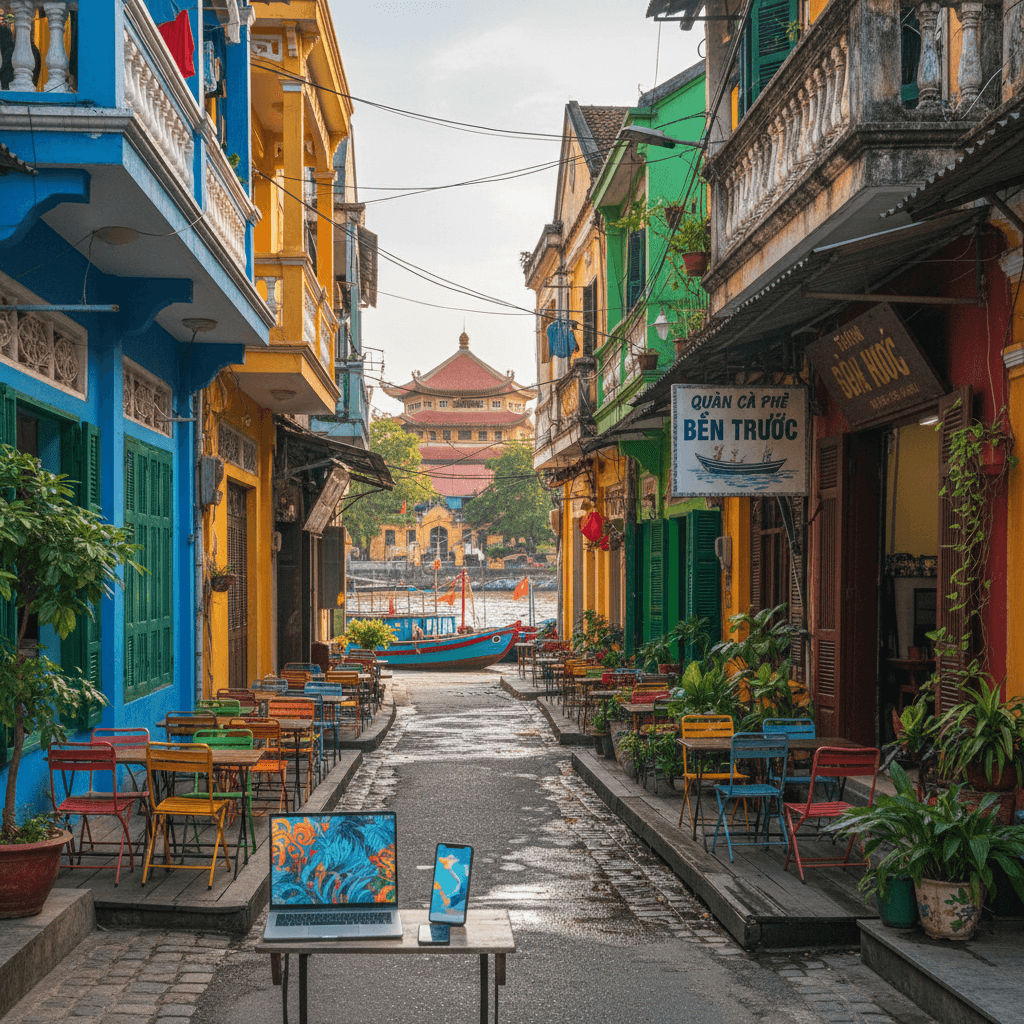
Expats and long-termers head here for the sunset. It’s a massive park area perfect for evening runs or just watching the fishing boats come in. It’s peaceful and offers the best "resort" feel in the city.
Work, Safety, and Survival
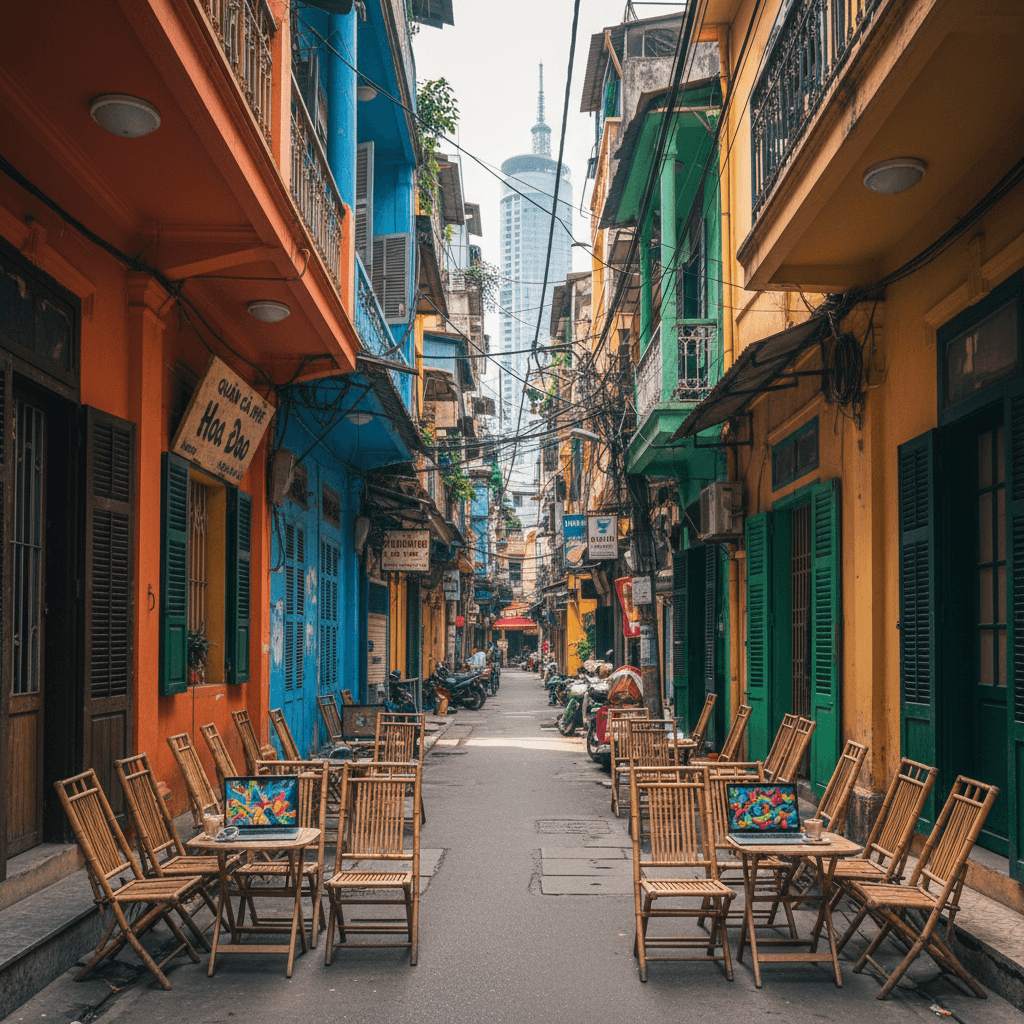
Expect to be a pioneer. There are no dedicated coworking spaces in Rach Gia, so your "office" will be your apartment or one of the many spacious cafes. Boulevard Cafe is a favorite for its outdoor seating and reliable WiFi, while Cafe Seaview offers a great breeze and decent food while you type. Most cafes are used to people lingering, so you won't feel pressured to leave.
Safety is a non-issue; crime is rare and the city feels very secure even at night. However, the language barrier is real. English proficiency is low, so you'll want to have Google Translate downloaded and ready. For healthcare, local clinics handle the basics, but for anything serious, you'll likely need to head to Can Tho or take a short flight back to Ho Chi Minh City.
Getting around is easy with the Grab app, though bikes are the local way of life. You can rent a scooter for about $3 to $5 a day to explore the surrounding coastline. It’s a slow-paced, honest city that rewards those who don't need a pre-packaged nomad community to feel at home.
The Lowdown on Local Costs
Living in Rach Gia feels like uncovering a pricing secret that the rest of Vietnam hasn't found yet. It is significantly cheaper than Saigon or even Can Tho, mostly because it remains a gateway city for the islands rather than a primary expat hub. You can live quite well here for $800 to $1,200 a month without really trying to save. If you're on a strict budget and stick to local street food and basic rooms, you could even get by on $500.
The biggest challenge for nomads is the lack of a formal rental market for Westerners. You won't find many luxury serviced apartments listed online. Most travelers end up negotiating monthly rates at local guesthouses or finding small studios through local connections. You should expect to pay between $150 and $300 for a decent 1-bedroom in the city center. If you head further out, prices can drop as low as $100, though you'll definitely need a scooter to get around.
Daily Expenses and Dining
Food is where your budget goes the furthest. The city is a seafood powerhouse, and you can eat like royalty for very little. A typical street food meal, like a bowl of noodles or a Banh Mi, will set you back about 55,000 VND ($2.20). Even at a mid-range spot like Ngoc Nhan Seafood, a full three course dinner for two people usually rounds out to about 600,000 VND ($24).
- Cappuccino or specialty coffee: 47,700 VND ($1.90)
- Domestic beer (0.5L): 30,000 VND ($1.20)
- Litre of gasoline: 23,000 VND ($0.92)
- Monthly 4G data plan (10GB+): 155,000 VND ($6.20)
Connectivity and Utilities
While the city feels traditional, the internet is surprisingly modern. A high speed home connection of 60 Mbps or more costs roughly 241,600 VND ($9.65) per month. If you are renting a house rather than staying in a hotel, keep an eye on your electricity usage. Air conditioning in the Mekong heat can drive your basic utilities up to around 2,100,000 VND ($84) a month for a standard apartment.
Getting Around Town
Rach Gia is fairly compact, especially around the Lac Hong Boulevard area. Many expats find they can walk to most cafes and markets if they pick their accommodation wisely. When you need wheels, Grab is available, though it's not as instantaneous as it is in the big cities. Taxis are reliable and cheap, with a starting meter of 17,000 VND ($0.68) and a similar rate for every kilometer after that. Most long term visitors eventually rent a scooter for about $2 to $5 a day to explore the coastal roads at their own pace.
Budget Tiers at a Glance
- The Backpacker Budget ($400 to $600): You'll be staying in budget guesthouses, eating almost exclusively at street stalls, and using local buses or walking to get around.
- The Nomad Standard ($800 to $1,200): This covers a comfortable hotel or modest apartment, a mix of local eateries and air conditioned restaurants, and enough left over for weekend trips to Phu Quoc.
- The High Life ($1,500 to $2,500): You will be staying in the best hotels in town, dining out at places like King BBQ Buffet frequently, and perhaps hiring a private driver or taking frequent flights to other regions.
For Digital Nomads: City Center & Lac Hong Boulevard
If you're trying to get work done while soaking in the local atmosphere, the City Center around Lac Hong Boulevard is your best bet. It's the most walkable part of town, packed with tree-lined streets and a high density of cafes. Since there aren't any formal coworking spaces in Rach Gia, you'll be relying on "cafe hopping" for your office setup.
Digital nomads usually gravitate toward Boulevard Cafe for its hipster aesthetic and reliable seating, or Atelier Cafe 68. Most of these spots offer decent WiFi, often hitting speeds around 60 Mbps. Living here puts you within walking distance of the best infrastructure the city has to offer, and you can expect to pay between $150 and $300 for a decent studio or hotel room on a monthly basis.
- Best for: Reliable WiFi access, walkability, and being close to the "action."
- Top Work Spots: Boulevard Cafe, Atelier Cafe 68, and Eden.
- Vibe: Active but relaxed, with a strong local coffee culture.
For Solo Travelers: The Waterfront & Ferry Port
Solo travelers looking for convenience and views should stick to the Waterfront area near Cong Vien Bai Duong park or the Ferry Port. The port area is practical if you're planning frequent trips to Phu Quoc Island, which is only a 2.5 hour ferry ride away. It's more industrial and less "charming" than the center, but it's where you'll find the highest concentration of budget-friendly guesthouses and hotels.
In the evenings, the waterfront becomes the social heart of the city. It's the best place to grab $1.20 domestic beers and watch the sunset. You'll find plenty of street food vendors selling fresh seafood like grilled oysters and shrimp. It's safe, easy to navigate, and the locals are incredibly welcoming to solo foreigners, even if they don't speak much English.
- Best for: Island hopping, cheap accommodation, and sunset views.
- Local Eats: Street seafood stalls and Rach Gia sticky rice for breakfast.
- Vibe: Scenic, breezy, and great for people watching.
For Social Seekers and Night Owls: Ton Duc Thang Street
If you don't mind a bit of noise and want to be where the nightlife happens, look toward Ton Duc Thang Street in the northern part of the city. This is Rach Gia's entertainment hub. It's lined with karaoke bars, which are a massive part of local culture, and clubs where DJs play late into the night. It's not the place for a quiet night's sleep, but it's where you'll meet the younger local crowd.
Expats often recommend this area if you want to be near the Night Market, which kicks off around 6 PM. You can find everything from cheap clothing to $2.20 bowls of noodles. While it's a bit louder than the residential pockets, it's the most energetic part of town after dark.
- Best for: Karaoke, clubs, and proximity to the Night Market.
- Key Spots: King BBQ Buffet and the various DJ clubs along the strip.
- Vibe: Loud, energetic, and unapologetically local.
For Families and Long-Term Expats: Residential Outskirts
For those staying longer or traveling with family, the areas just outside the immediate city center offer more space and lower prices. You can find larger houses or apartments for $100 to $200 a month. It's quieter and feels more like a traditional Vietnamese neighborhood, though you'll definitely need to rent a scooter for around $2 to $5 a day to get around.
Families usually appreciate the safety of these neighborhoods. While international schools and high-end hospitals aren't available here, the low cost of living allows for a very comfortable lifestyle. A 3-course meal for two at a mid-range restaurant like Ngoc Nhan Seafood will only set you back about $24, making it easy to live well on a modest budget.
- Best for: Peace and quiet, lower rent, and authentic local living.
- Transportation: Grab or scooter rentals are a must.
- Vibe: Suburban, friendly, and very affordable.
The Connectivity Reality
If you're coming from a tech hub like Da Nang or Saigon, Rach Gia will feel like stepping back in time. You won't find sleek, glass-walled coworking spaces with standing desks and nitro cold brew here. Instead, your "office" will likely be a low plastic stool or a wooden chair in a breezy waterfront cafe. It's a trade-off: you lose the ergonomic setup, but you gain a view of the Gulf of Thailand and a total lack of "hustle culture" distractions.
The good news is that the backbone of the internet is surprisingly solid. Fiber optic connections are standard in most modern hotels and newer cafes, with speeds often hitting 60 Mbps or higher. It's plenty for Zoom calls and uploading large files, though the reliability can occasionally flicker during the heavy tropical downpours of the monsoon season. Expect to pay around 241,620 VND ($9.65) per month if you're setting up your own line in a long-term rental.
Best Spots to Get Work Done
Since dedicated coworking hubs don't exist yet, the local cafe scene carries the load. Most nomads gravitate toward the newer developments around Lac Hong Boulevard where the Wi-Fi is snappier and the seating is more laptop-friendly.
- Boulevard Cafe: This is the closest you'll get to a "digital nomad" vibe. It's got a hipster aesthetic, plenty of outdoor seating if you don't mind the humidity, and reliable power outlets.
- Atelier Cafe 68: A quieter, more refined option. It’s a great spot for deep focus sessions when you need to escape the noise of the street traffic.
- Cafe Seaview: Best for administrative tasks or light emails. The riverside location is stunning, and they have a full food menu, so you can camp out through lunch.
- Eden: A hybrid Korean restaurant and coffee shop that offers a more air-conditioned, polished environment for those particularly sweltering afternoons.
Mobile Data and Backup Plans
Never rely solely on cafe Wi-Fi in the Mekong Delta. Power outages are rare but can happen, and a solid 4G backup is a lifesaver. Vietnam has some of the cheapest mobile data on the planet, and coverage in Rach Gia is excellent across the board.
You can pick up a SIM card for roughly 154,838 VND ($6.20) that comes loaded with 10GB or more of data. Stick with Viettel if you plan on exploring the rural outskirts of Kien Giang, as they have the most consistent coverage. Vinaphone and Mobifone are also reliable within the city limits. You can top up your balance at almost any "Tap Hoa" (small convenience store) or via the Grab app.
Practical Tips for Working Remotely
English proficiency is quite low in Rach Gia, so don't expect the cafe staff to understand "What is the Wi-Fi password?" in English. Look for small signs on the wall or the bottom of your receipt labeled "Mat khau Wi-Fi". If you're struggling, a simple "Cho em xin pass Wi-Fi" usually does the trick.
Most cafes are open-air or have large open doors to the street. If you have sensitive client calls, the ambient noise of motorbikes and street vendors can be a challenge. It's worth investing in a high-quality pair of noise-canceling headphones and a microphone that filters out background noise. For the most stable environment, many long-term travelers prefer working from their hotel or guesthouse during the day and hitting the cafes for casual evening sessions.
A Safe, Quiet Pace of Life
Rach Gia is one of those places where you can finally let your guard down. Unlike the frenetic energy of Ho Chi Minh City, where you have to keep a firm grip on your phone near busy roads, this coastal town feels remarkably secure. Most nomads find that the biggest "threat" here is simply the curiosity of locals who aren't used to seeing many foreigners. Crime against tourists is nearly unheard of, and the community is tightly knit.
While the city is generally safe at all hours, you should still use common sense. Stick to well lit areas like Lac Hong Boulevard if you are out late, and keep an eye on your belongings at the Night Market where crowds can get thick. If you are heading to the nightlife spots on Ton Duc Thang Street, just be aware that the local brand of fun often involves heavy beer consumption and loud karaoke, so things can get a bit rowdy, though rarely dangerous.
Navigating Local Healthcare
The healthcare situation is where Rach Gia shows its status as a developing provincial city. You will find plenty of local clinics and pharmacies scattered around the center, but they aren't equipped for complex issues. Most pharmacists speak very little English, so it is smart to have a translation app ready or a photo of the specific medication you need.
For anything beyond a minor infection or a basic checkup, expats and long term travelers usually head elsewhere. If you face a serious medical emergency, you'll likely need to be transported to Can Tho or Ho Chi Minh City, where international standard hospitals like FV Hospital or Vinmec are located. Local facilities just don't have the specialized equipment or the English speaking staff required for complicated cases.
Emergency Contacts and Essentials
It is a good idea to keep these local emergency numbers saved in your phone, though you should expect the dispatchers to speak Vietnamese. If you are staying at a hotel, it is often faster to ask the front desk to call for help on your behalf.
- Police: 113
- Fire Department: 114
- Ambulance: 115
For daily health needs, look for pharmacies with the Pharmacity or Long Chau branding if you can find them, as these larger chains tend to be more organized. Always carry a physical business card for your hotel or apartment; if you do end up in a local clinic, it makes it much easier for staff to help you coordinate your return or contact your insurance provider.
Practical Tips for Staying Well
The heat in the Mekong Delta can be brutal, especially during the dry season. Dehydration and heat exhaustion are more common "medical issues" for nomads than actual illness. Drink bottled water only, which you can pick up for about 10,000 VND at any convenience store. While the street food is delicious and generally safe, start slow with the local seafood stalls along the waterfront to let your stomach adjust to the local spice levels and preparation styles.
Navigating the Streets
Rach Gia is one of those rare Vietnamese cities where you can actually enjoy a stroll without feeling like you are constantly dodging a sea of motorbikes. The city center, particularly around Lac Hong Boulevard, is surprisingly walkable. The streets are wide and lined with trees, making it easy to hop between cafes or head down to the waterfront for the evening breeze. Most nomads find that if they stay central, their feet are their best mode of transport for daily errands.
When you need to cover more ground, Grab is your best friend. While the fleet isn't as massive as what you'll find in Ho Chi Minh City, you can usually snag a car or a motorbike taxi within a few minutes. It's the most transparent way to get around since the price is locked in before you hop on. If Grab is quiet, traditional taxis are everywhere. Expect a starting fare of around 17,000 VND, with each kilometer adding another 16,750 VND to the meter. It's affordable enough that even a cross-town trip won't dent your budget.
Two Wheels and Open Roads
If you're planning to stay for more than a week, renting a scooter is the move. It gives you the freedom to explore the coastal roads or head out to the further reaches of the Ton Duc Thang nightlife strip without worrying about catching a ride back. Most small hotels and guesthouses can arrange a rental for you. You should expect to pay between $2 and $5 USD per day depending on the bike's condition and how well you can negotiate. Just keep an eye on the gas prices, which hover around 23,031 VND per liter.
Regional Connections and Island Hopping
Rach Gia serves as a major transit hub, which is why most travelers end up here in the first place. The city is the primary gateway to Phu Quoc Island. The ferry port is a hive of activity, with high speed boats making the trip in about 2.5 hours. It's a convenient escape if you need a weekend of better infrastructure and beach vibes before returning to the quiet life in town.
For longer distances, you have a few specific options:
- Rach Gia Airport: Located about 10km from the center, this small airport handles limited domestic flights. A taxi from the terminal to your accommodation should cost you roughly 150,000 to 200,000 VND.
- Long Distance Buses: The local bus stations connect you to the rest of the Mekong Delta. You'll find frequent, cheap departures to Can Tho or Ha Tien if you're looking to explore more of the region.
- Private Transfers: For a more comfortable trip to Ho Chi Minh City, many expats recommend booking a seat on a "limousine" van. These are shared vans with plush leather seats and USB chargers, offering a much better work environment than a standard bus.
Practical Tips for Commuting
Traffic here is much more relaxed than in the big metros, but the rules of the road are still "fluid." If you're driving a scooter, follow the local flow and keep your eyes on the vehicle directly in front of you. Since English proficiency is quite low among taxi and bus drivers, it's a smart move to have your destination written down in Vietnamese or pinned on Google Maps to show them. Most locals are incredibly patient and will help you figure out where you're going, even if there's a bit of a language barrier during the transaction.
Preparation is Key
In Rach Gia, your biggest hurdle won't be the heat or the traffic; it's the language gap. Unlike the English friendly bubbles of District 1 in Saigon or the beaches of Da Nang, this is a city where Vietnamese remains the undisputed king. You'll find that English proficiency is quite low here. Outside of high end hotel receptionists or the occasional younger student at a trendy cafe like Atelier Cafe 68, you shouldn't expect much more than a friendly smile and a shrug when speaking English.
Most nomads find that a translation app is their most valuable tool. Download the Vietnamese language pack for Google Translate or DeepL so you can use them offline. The camera feature is a lifesaver when you're staring at a menu of local specialties like Rach Gia Sticky Rice or trying to decipher signs at the Night Market. Locals are incredibly patient and will usually wait while you type out your request, but don't expect a fluid conversation.
The Local Dialect and Vibe
The Vietnamese spoken here has that distinct, melodic Southern lilt common in the Mekong Delta. It's softer than the Northern accent and often drops certain consonants, which can be confusing if you've been practicing with apps based on Hanoi speech. Travelers often say the lack of English is actually part of the charm. Because the city isn't a tourist trap, the interactions feel genuine. When a local greets you on the street, they're usually doing it out of curiosity and hospitality rather than trying to sell you a tour.
If you're staying for more than a few days, learning basic greetings and numbers will go a long way. Being able to say "Cam on" (thank you) or "Tinh tien" (the bill, please) changes the dynamic of your interaction immediately. Since you'll likely be eating at spots like Lau Chay Hoa Sen or seafood stalls along the waterfront, knowing your numbers for prices is a massive help.
Practical Communication Tools
Digital nomads in Rach Gia rely heavily on visuals. When you're at a street food stall, pointing is perfectly acceptable and expected. For more complex needs, like arranging a scooter rental or explaining a specific dietary restriction, having a few pre written phrases on your phone is smart. Expats recommend saving screenshots of "no fish sauce" (khong nuoc mam) or "no sugar" (khong duong) if you have specific preferences.
- Messaging: Zalo is the primary communication app in Vietnam. If you're dealing with a landlord or a local business, they'll likely ask for your Zalo rather than WhatsApp or an email address.
- Data: Don't rely on being able to ask for directions. Grab a Viettel or Vinaphone SIM card at the airport or a local shop for around 150,000-200,000 VND including data. Having 4G access makes navigating with maps much less stressful.
- Ride Hailing: While Grab is available, the drivers will almost certainly call you to confirm your location. If you don't speak Vietnamese, it's best to stay exactly where the pin is dropped and look for their license plate number.
Social Nuances
Communication here is as much about body language as it is about words. A polite nod and a smile go further than a loud English sentence. If you're heading to the nightlife hub on Ton Duc Thang Street, you'll find that the universal language of karaoke and beer (usually around 30,000 VND) bridges most gaps. Even if you can't understand the lyrics, joining in the "Mot, Hai, Ba, Yo!" (1, 2, 3, Cheers!) chant is the quickest way to make local friends.
Overall, you'll need to be comfortable with a bit of ambiguity. You might not always get exactly what you thought or ordered, and you might have to use some creative charades to buy laundry detergent, but that's the trade off for living in a place that hasn't been sterilized for Western tourism.
The Tropical Rhythm: Wet vs. Dry
Rach Gia follows the classic Mekong Delta climate, split into two distinct seasons. If you're planning a stint here, the dry season from December to April is your best bet for consistent productivity. During these months, the humidity is manageable and the skies are usually a deep, clear blue. It's the ideal time for those sunset walks along Cong Vien Bai Duong or working from an outdoor table at Boulevard Cafe without worrying about a sudden downpour ruining your laptop.
The rainy season kicks in around May and lasts through November. While the term "monsoon" sounds intimidating, it usually manifests as intense, short lived afternoon bursts rather than constant gray skies. Locals are used to it; they'll pull over, throw on a colorful poncho, and be back on their motorbikes ten minutes later. For nomads, this is "deep work" season. The rain cools the city down significantly, making those long sessions at Atelier Cafe 68 much more comfortable.
Peak Season and the Tet Factor
The absolute peak for travel is January and February. The weather is at its most pleasant, hovering around 26 to 28 degrees Celsius, but there's a catch: Tet, the Vietnamese Lunar New Year. If your visit coincides with Tet, expect the city to transform. Many local eateries and shops will close for a week, and prices for the few available hotels can spike. However, the city is decorated with yellow apricot blossoms and the atmosphere is electric. If you want to see Rach Gia at its most festive, this is it, just be sure to book your ferry to Phu Quoc or your room near Lac Hong Boulevard well in advance.
The "Shoulder" Sweet Spot
Savvy travelers often aim for the transition months of November or late April. In November, the heavy rains begin to taper off, the landscape is incredibly lush and green, and the dust of the dry season hasn't settled in yet. Prices remain low because the holiday crowds haven't arrived. Since Rach Gia isn't a major tourist hub like Da Nang, you won't see massive price swings, but you'll have an easier time snagging the best "sea view" seats at the waterfront cafes.
What to Pack for the Delta
Rach Gia is casual and humid. You'll want breathable fabrics like linen or moisture wicking tech gear. Even in the "cool" months, temperatures rarely dip below 22 degrees Celsius at night. Here is a quick checklist of what to keep in your day bag:
- A high quality poncho: Don't bother with umbrellas; the wind near the coast will flip them inside out. Grab a heavy duty poncho like the locals use.
- Sun protection: The sun in Kien Giang province is fierce. Even on overcast days, you'll want sunscreen if you're spending time at the Ferry Port.
- Light layers: While it's hot outside, some modern cafes and the King BBQ Buffet might crank the AC. A light hoodie is useful for long indoor work sessions.
- Sturdy sandals: With the mix of waterfront walks and occasional puddles, waterproof footwear is more practical than leather sneakers.
The Best Time for Island Hopping
Many nomads use Rach Gia as a jumping off point for the islands. If your goal is to take the 2.5 hour ferry to Phu Quoc or explore the Nam Du archipelago, stick strictly to the dry season. From June to August, the seas in the Gulf of Thailand can get choppy. Ferries are frequently cancelled due to high winds, which can throw a wrench in your travel plans if you have a flight to catch.
Getting Around the Streets
Rach Gia is surprisingly walkable for a Vietnamese city, thanks to its tree-lined streets and manageable layout. Most of your daily life will likely center around the city center or the waterfront. If you need to cover more ground, Grab operates here, though you might wait a few minutes longer for a car than you would in Saigon. For quick trips, hop on a motorbike taxi or flag down a traditional cab; fares start around 17,000 VND ($0.68) with a similar rate per kilometer.
If you are planning to stay for a few weeks, renting a scooter is the way to go. Most hotels can arrange one for roughly $5 a day. Just keep in mind that traffic is more relaxed here, but the rules of the road are still very much a local suggestion. For those arriving or leaving, the airport is about 10km from town, and the ferry terminal is the main gateway if you are heading to Phu Quoc.
Connectivity and Remote Work
Don't expect to find a WeWork or any dedicated coworking hubs here. Rach Gia is still catching up on that front. However, the cafe culture is strong, and most shops have reliable WiFi. You can expect speeds around 60 Mbps in better establishments, which is plenty for video calls and uploads. Boulevard Cafe is a favorite for its hipster vibe and plenty of outdoor seating, while Atelier Cafe 68 offers a quieter atmosphere for deep work.
For a backup plan, grab a local SIM card from Viettel or Vinaphone. You can get 10GB of data for about 155,000 VND ($6.20). Mobile 4G coverage is excellent throughout the city, so you can always tether if the cafe WiFi gets spotty during a tropical rainstorm.
Cost of Living Breakdown
This is one of the most affordable corners of the Mekong Delta. While there isn't a massive inventory of western style apartments, you can find a solid one bedroom in the city center for $150 to $300 a month. If you are willing to live a bit further out, that price can drop to $100. Your monthly utilities, including water and electricity for a standard apartment, will usually hover around 2,100,000 VND ($84).
- Street food meal: 55,000 VND ($2.20)
- Mid-range dinner for two: 600,000 VND ($24)
- Domestic beer: 30,000 VND ($1.20)
- Monthly Internet: 242,000 VND ($9.65)
- Cappuccino: 48,000 VND ($1.90)
A budget of $800 to $1,200 a month allows for a very comfortable mid-range lifestyle, including frequent restaurant meals and a nice hotel or serviced apartment.
Safety and Health
Rach Gia is remarkably safe. Violent crime is rare, and the locals are generally more curious about you than anything else. Standard travel common sense applies: don't flash large amounts of cash and keep an eye on your phone near busy roads. The main nightlife area on Ton Duc Thang Street can get rowdy with karaoke and clubs, so just be mindful if you are walking home late at night.
The healthcare situation is basic. There are plenty of pharmacies for minor ailments, but English speakers are hard to find behind the counter. For anything serious, most expats and long term travelers head to Can Tho or Ho Chi Minh City, as international standard hospitals don't exist in Rach Gia yet. In an emergency, dial 115 for an ambulance or 113 for police.
Language and Social Life
Language is your biggest hurdle here. English proficiency is quite low compared to the tourist hubs. You will want a translation app on your phone for everything from ordering food to negotiating rent. It's a great place to practice your Vietnamese, as people are patient and happy to chat.
Socializing happens organically. Since there are no formal nomad meetups, head to Cong Vien Bai Duong park at sunset or the Night Market after 6 PM. These are the spots where the city comes alive. For a more modern vibe, try Eden, a Korean restaurant and coffee shop where you might bump into the few other foreigners living in the area.
Need visa and immigration info for Vietnam?
🇻🇳 View Vietnam Country GuideEasy Landing
Settle in, no stress