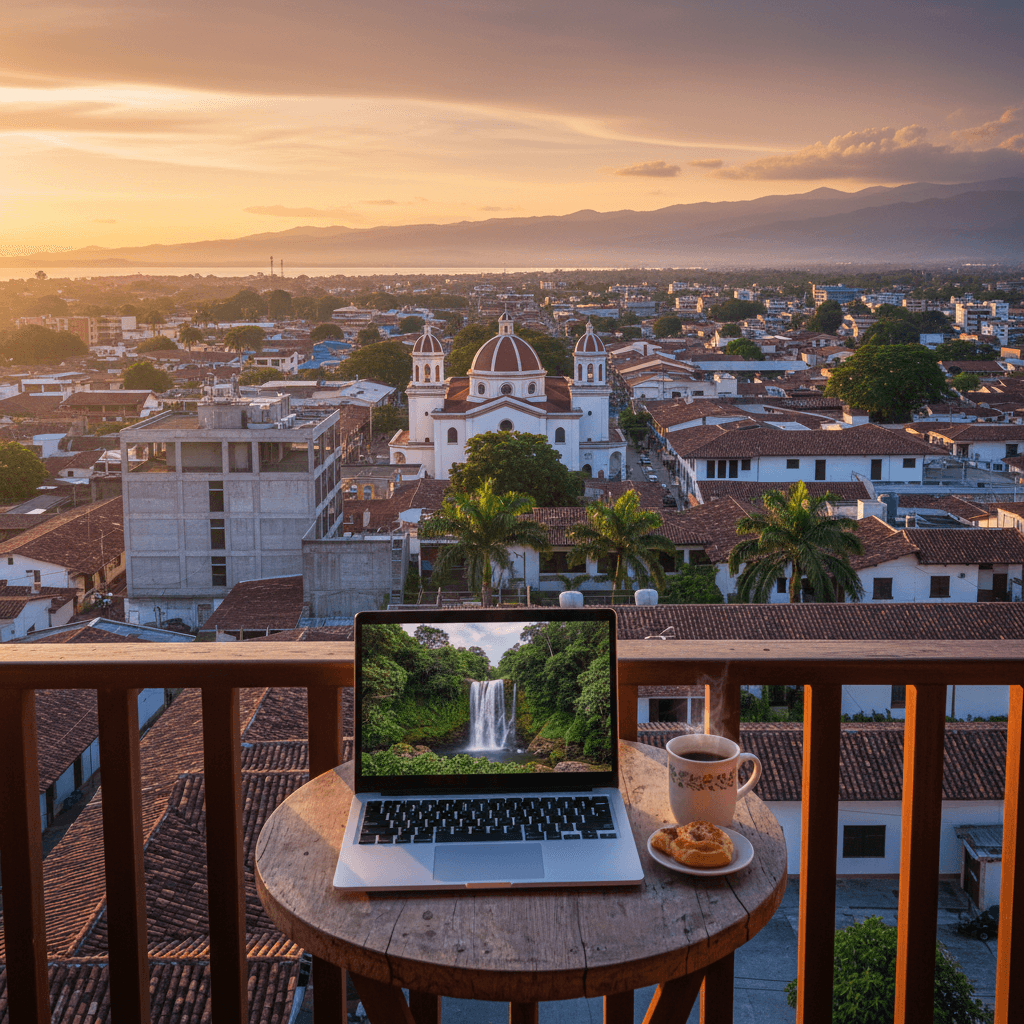
Quesada
🇨🇷 Costa Rica
The Authentic Heart of the Northern Highlands
If you're looking for the typical Costa Rican nomad circuit of sunset surf sessions and $12 green juices, Quesada isn't for you. This is a gritty, hardworking agricultural hub where the "Pura Vida" lifestyle isn't a marketing slogan, it's the reality of cattle ranching and coffee harvesting. Located in the fertile Alajuela province, Quesada serves as the gateway to the northern lowlands, offering a refreshing, cooler climate and a drastically lower cost of living than the tourist-heavy coasts.
The vibe here is deeply local. You'll see more farmers in rubber boots than expats with laptops. It’s a place for the "slow nomad" who wants to disappear into a real community rather than an international bubble. The emotional experience is one of groundedness; there’s a quiet satisfaction in waking up to the mist rolling off the mountains and heading to the central market where the produce is actually affordable.
What to Expect on the Ground
- A Slower Social Pace: Don’t expect organized nomad meetups. Your social life will revolve around practicing your Spanish at the local Soda La Estrella or chatting with neighbors in the central park.
- Proximity to Adventure: While Quesada is a quiet base, you're only a 45-minute drive from the thermal springs and volcano views of La Fortuna. You get the perks of the Arenal region without the "tourist tax" on your rent.
- Agricultural Roots: The town is surrounded by rolling green hills and dairy farms. It feels more like the Swiss Alps than the Caribbean, with temperatures hovering between 18°C and 28°C.
The Cost of Living Reality
Living here is a budget-friendly alternative to the skyrocketing prices of Santa Teresa or Nosara. Expats generally find that their dollar stretches 20% to 40% further in these highlands. Most single nomads can live comfortably on $1,800 to $2,500 a month, though a frugal traveler could easily get by on $1,200.
Downtown Quesada
- Rent: $400 to $600 for a decent apartment near the market.
- Food: Local "casados" (rice, beans, and protein) for $5; groceries are significantly cheaper at the weekly farmers' markets.
- The Vibe: Walkable, loud, and functional. It’s the best spot for those without a car who need proximity to the bus terminal.
The Outskirts and Zarcero
- Rent: $300 to $500 for small farmhouses or rural casitas.
- Food: Mostly home-cooked; dining options are sparse but authentic.
- The Vibe: Total isolation and stunning scenery. You’ll definitely need a vehicle, and you should double-check the signal strength before signing a lease.
Connectivity and Logistics
Infrastructure is the trade-off for the low cost of living. You won't find sleek coworking spaces with ergonomic chairs here. Most remote workers rely on their home internet or set up shop in local cafes, though speeds usually max out around 30 Mbps. It’s wise to have a Kolbi or Claro SIM card as a backup for the occasional rainy-season power flicker.
Safety is a major plus in this region. While petty theft exists everywhere, Quesada feels much safer than the urban sprawl of San José. People look out for one another here. If you’re willing to trade the beach for the mountains and the expat bars for a local "fútbol" match, Quesada offers a version of Costa Rica that most travelers never stay long enough to see.
If you are coming from the high-octane nomad hubs of Santa Teresa or Nosara, Quesada will feel like a different country. This is the heart of Costa Rica's agricultural engine, where the air is cooler and the prices are significantly lower. While coastal hotspots have seen costs skyrocket, Quesada remains a place where your budget stretches much further, provided you are willing to trade beach clubs for mountain views and coffee farms.
Monthly Budget Breakdown
Living here is roughly 20% to 40% cheaper than in San Jose or the Gold Coast. For a single nomad, a comfortable life usually lands between $1,800 and $2,500 per month. If you are living like a local, you could easily get by on $1,200, but most remote workers want a few more comforts.
- Housing: A decent one bedroom apartment in the city center will run you between $400 and $600. If you look toward the outskirts or nearby Zarcero, you can find small houses for $300 to $500, though you will likely need a car.
- Food and Dining: Local sodas (small family run eateries) like Soda La Estrella are your best friend here. A hearty casado, which includes rice, beans, salad, and a protein, costs about $5. If you prefer cooking at home, the weekly farmers market is a goldmine for cheap, high quality produce. Expect to spend about $300 to $400 a month on groceries.
- Utilities and Connectivity: Basic utilities for a small apartment average around $60 to $80. Internet is the wildcard; while the national average is high, rural Quesada often hovers around 10 to 30 Mbps. You should budget $20 for a local SIM card from Kolbi or Claro to use as a hotspot backup.
Transportation Costs
Quesada is a walkable city if you stay near the central park, but the surrounding hills are steep. Most expats find they don't need a car for daily life but want one for weekend trips to La Fortuna or the cloud forests.
- Public Transit: Local buses are incredibly cheap, usually costing $1 to $2 for trips around town. A bus to San Jose takes about three hours and costs under $10.
- Ride Hailing: Uber and DiDi operate here but can be spotty during off peak hours. Many locals use the inDriver app to negotiate fares, which usually range from $3 to $7 for short hops.
- Car Rentals: If you want your own wheels, daily rentals start at $40, but gas is pricey at around $5 per gallon.
Lifestyle and Extras
Since there are no dedicated coworking spaces in Quesada, you won't be paying a monthly desk fee. Instead, you will likely spend $3 to $5 a day on coffee and snacks at local cafes. Gym memberships are affordable, usually around $30 to $50 a month for basic facilities. For weekend fun, a trip to the hot springs near Arenal will set you back $20 to $40 for a day pass, though there are free riverside spots if you know where to look.
One thing to keep in mind is the $3,000 monthly income requirement for the digital nomad visa. While you can live in Quesada for much less, the government wants to see that stable floor of earnings to grant you a long term stay. Most nomads find the trade off worth it because the low cost of living here allows them to save significantly more than they would in the coastal tourist traps.
For the Budget-Conscious Nomad
If you're coming to Quesada to stretch your remote-work salary while staying connected to the rest of the country, Downtown (El Centro) is your best bet. It's the heartbeat of the region, centered around the central park and the bustling municipal market. You won't find dedicated coworking spaces here yet, but the local "sodas" (small eateries) and bakeries like Musmanni offer a spot to camp out for an hour with a coffee.
- Rent: Expect to pay between $400 and $600 for a decent one-bedroom apartment.
- Connectivity: Most rentals offer standard cable internet, though speeds rarely exceed 30 Mbps. Have a Kolbi or Claro SIM card ready for hotspotting during afternoon rainstorms.
- The Vibe: It's loud, local, and authentic. You'll be steps away from the bus terminal, making it easy to catch a $5 ride to San Jose or a quick $2 shuttle toward the adventure hubs.
For Long-Term Expats and Farm Seekers
Those looking to settle in for six months or more often gravitate toward the Outskirts and Zarcero Highlands. This area is famous for its rolling green hills and cooler temperatures that rarely require air conditioning. Expats here usually trade walkability for breathtaking views of cattle farms and coffee plantations. It's the kind of place where you buy your eggs from the neighbor and your produce from the weekly feria (farmers market).
- Rent: Larger homes or rustic "quintas" can go for $300 to $500, though you'll likely need a vehicle to get into town.
- The Vibe: Quiet and isolated. It's perfect if your priority is peace and "Pura Vida" rather than a social happy hour.
- Insider Tip: Check Encuentra24 or local Facebook groups like "Expats in San Carlos" to find rentals that never make it to Airbnb.
For Families and Nature Lovers
While technically a short drive east of the city proper, the La Fortuna Fringe is where families usually land. It acts as the gateway to the Arenal Volcano and offers a much higher standard of infrastructure. You'll find better private schools and more reliable high-speed fiber optic internet compared to the rural center of Quesada. It's the sweet spot for those who want the amenities of a tourist town without living directly in the "souvenir shop" zone.
- Rent: Prices jump here, with family-sized homes ranging from $800 to $1,200.
- Activities: You're 30 minutes away from world-class hot springs like Tabacon and endless hiking trails.
- Healthcare: Families feel secure knowing Hospital San Carlos is the primary medical hub in Quesada, offering solid emergency services for the region.
For Solo Travelers and Explorers
If you're just passing through for a few weeks to soak up the northern highlands, stay near the Terminal de Autobuses. Solo travelers often use this as a base because it's the most walkable part of the city. You can grab a $4 casado (a traditional plate with rice, beans, and protein) at Soda La Estrella and be back at your desk in minutes. While the nightlife is limited to a few low-key local bars, the social scene revolves around the morning markets and public squares where locals are generally happy to chat with anyone practicing their Spanish.
- Daily Costs: You can easily live on $35 to $50 a day including modest lodging and local meals.
- Safety: It's generally safer than the big city, but keep your phone tucked away in the crowded market areas to avoid opportunistic petty theft.
Connectivity Realities
Quesada isn't your typical tech hub. While the national average for internet speeds in Costa Rica has climbed toward 90-100 Mbps, this rural agricultural center often lags behind. In the heart of town, you'll find stable connections, but once you head toward the coffee farms on the outskirts, speeds drop significantly. Most guesthouses and local rentals offer 10 to 30 Mbps, which handles basic Zoom calls but might struggle with heavy video editing or large file uploads.
Fiber optic infrastructure is slowly creeping into the northern Alajuela province, but it hasn't reached every corner of Quesada yet. Rainy season downpours from May to November frequently cause brief power flickers or signal drops. Experienced nomads here swear by having a backup plan. A local SIM card or an eSIM is mandatory if you have a deadline to meet.
Coworking Options
If you're looking for a sleek, glass-walled coworking space with ergonomic chairs and bottomless cold brew, you won't find it in Quesada. There are currently no dedicated coworking spaces in the city limits. The nearest professional setups, like WeWork Escazú Village, are a three hour drive away in the San José area. Most remote workers in Quesada embrace the "work from home" lifestyle or migrate to La Fortuna, about 45 minutes away, where tourism infrastructure is more developed.
For a change of scenery, you'll have to get creative with local cafes and "sodas." These aren't offices, so don't expect silent zones or abundant power outlets. A few spots where you can usually squeeze in an hour of work include:
- Soda La Estrella: A local favorite for a cheap casado and a quick email check, though it gets loud during the lunch rush.
- Downtown Pastry Shops: Several small bakeries near the central park have small tables and basic WiFi, perfect for light tasks while people-watching.
- Hotel La Central: The larger hotels in the area often have the most reliable WiFi in their lobbies and are usually happy to let you work for the price of a few coffees.
Mobile Data and SIM Cards
Since you can't rely on public WiFi, your mobile hotspot will be your best friend. The coverage in Quesada is surprisingly decent for the major carriers. You can pick up a SIM card at various kiosks downtown for about $10 to $20 depending on the data package.
- Kölbi: This is the state-owned provider and generally has the best coverage in rural areas and mountainous terrain.
- Claro: Often has better deals on data-heavy plans and works well within the city center.
- Airalo: If your phone supports eSIM, this is the easiest way to get connected the second you land at SJO, though it's pricier than buying a local physical SIM.
Practical Tips for Productivity
Digital nomads in this region recommend staying as close to the City Market or the central park as possible if you don't have a car. This is where the infrastructure is most concentrated. If you're renting an Airbnb, always ask the host for a screenshot of a speed test before booking. Many hosts will claim they have "high speed" internet when it's actually a shared 5 Mbps connection that stalls when the neighbors are streaming Netflix.
The local culture is social and noisy. If you have important meetings, invest in a pair of high quality noise-canceling headphones. Between the tropical rain on tin roofs and the morning roosters, Quesada is a place where "quiet" is a relative term. Most travelers find that the trade off, $400 to $600 monthly rent for a decent apartment, makes the extra effort for connectivity worth it.
Staying Safe in the Highlands
Quesada is a breath of fresh air for those tired of the high alert levels often felt in San José. Because it's a working agricultural hub rather than a tourist playground, the vibe is grounded and community focused. Most nomads find the city much safer than the capital, though the standard rules of rural travel apply here. You aren't likely to face violent crime, but petty theft, particularly "grab and go" incidents from parked cars or unattended bags in public parks, is the most common headache.
Expats recommend being particularly mindful in Downtown Quesada near the central market and bus terminals after dark. While the area is perfectly fine during the day, it gets quiet at night, and solo travelers should stick to well lit streets or use a quick taxi. If you're staying in the more residential outskirts or near Zarcero, the risk drops significantly. Locals look out for one another, and as long as you aren't flashing expensive camera gear or stacks of cash, you'll blend right in.
- Emergency Services: Dial 911 for police, fire, or ambulance. The operators usually speak some English, but knowing basic Spanish phrases for your location will speed things up.
- Personal Safety: Avoid walking alone on unlit rural roads at night. Use Uber or inDriver for door to door transport if you've been out late.
- Digital Security: Since you'll likely be working from local cafes or public spots, use a VPN. The local networks aren't always encrypted.
Healthcare and Medical Facilities
One of the biggest perks of basing yourself in Quesada is the access to high quality medical care. Unlike remote beach towns where a broken bone might require a four hour trek, Quesada is home to Hospital San Carlos. It's a major regional facility that handles everything from routine checkups to serious emergencies. For digital nomads, this provides a massive safety net that the coastal "wellness" hubs simply can't match.
For minor issues, you'll find a Farmacia on almost every major corner downtown. Pharmacists in Costa Rica have more prescribing power than those in the US or Europe; they can often diagnose simple ailments and provide antibiotics or specialized creams without a doctor's note. Prices for generics are very affordable, usually costing between $5 and $15 for common prescriptions.
Private vs. Public Care
While the public system (the Caja) is excellent, it's often crowded. Most expats and nomads with international insurance prefer private clinics for faster service. You can expect to pay around $60 to $100 for a private consultation with a specialist. If you have a complex medical condition, the top tier international hospitals like CIMA or Clínica Bíblica are about a three hour drive away in Escazú, but for 95% of your needs, Quesada's local infrastructure is more than enough.
- Hospital San Carlos: Located in the heart of the city, this is your go to for 24/7 emergency care.
- Pharmacies: Look for Fischel for reliable service and English speaking staff.
- Insurance: Ensure your policy covers "medical evacuation" if you plan on doing extreme hiking or volcano tours in nearby La Fortuna.
- Water Safety: The tap water in Quesada is generally considered safe to drink, though many nomads stick to filtered water for the first week to let their systems adjust.
Getting Around Ciudad Quesada
Navigating Ciudad Quesada is a refreshing break from the traffic choked streets of San José, but it requires a bit of local savvy. The city center is compact and largely walkable, though the steep hills of the surrounding Alajuela province will test your calves. Most nomads find that while they can manage chores on foot in the central district, a set of wheels becomes a necessity once you venture toward the outskirts or the hot springs of La Fortuna.
Public Buses and Regional Travel
The central bus terminal is the city's heartbeat. It is remarkably efficient for a rural hub, connecting you to the rest of the country for just a few dollars. If you are heading to San José, buses run frequently and cost between $5 and $10 for the three to four hour journey. For a quick weekend escape to the volcano, the local bus to La Fortuna is a steal at roughly $2.
- San José Route: Terminal 7-10 is your primary connection point in the capital.
- Local Routes: Buses to neighboring towns like Zarcero or Venecia leave throughout the day, usually costing less than $1.50 per trip.
- Payment: Keep small denominations of Colones on hand, as drivers rarely have change for large bills.
Ride-Hailing and Taxis
Official red taxis are everywhere in the city center. They use meters, known locally as the "maría," and are generally reliable for short hops. While Uber and DiDi are the gold standard in San José, they are spotty here. You might find a driver during peak daylight hours, but don't count on them for a late night airport run. Many locals and long term expats have turned to inDriver, an app that lets you negotiate the fare with the driver before they pick you up. It is often the most reliable way to secure a ride when Uber shows "no cars available."
Driving and Car Rentals
If you plan on staying for more than a month, renting a car or even buying a used 4x4 is the best way to unlock the region. The roads around Quesada are paved but wind through mountainous terrain that can get slick during the rainy season from May to November. Gasoline prices hover around $5 per gallon, so factor that into your weekly budget. For short term needs, local shops offer scooter rentals for about $10 a day, which is perfect for exploring the nearby coffee plantations without the hassle of parking a full sized SUV.
Airport Transfers
Getting from Juan Santamaría International Airport (SJO) to Quesada is a straightforward choice between budget and comfort. Most travelers recommend the official airport bus for $10 if you are arriving during the day. It is a scenic, albeit bumpy, three hour ride. If you have heavy luggage or are arriving after dark, a private shuttle is the way to go. Expect to pay between $50 and $80 for a door to door service. It is a steep jump in price, but it saves you the headache of navigating the bus terminal with all your tech gear in tow.
Walking and Micromobility
Within the grid of the downtown area, walking is your best bet. You can hit the central park, the municipal market, and several banks within a 15 minute radius. Just keep an eye on the sidewalks; they can be uneven and narrow. Unlike coastal nomad hubs, you won't see many electric scooters or dedicated bike lanes here. If you choose to cycle, stay alert for heavy rain in the afternoons and stick to the quieter residential side streets to avoid the main truck routes that feed the agricultural industry.
The Language Gap
In the surf camps of Santa Teresa or the tech hubs of San José, you can get by for years without knowing a lick of Spanish. Quesada is a different beast entirely. This is a hardworking agricultural center where life revolves around the central plaza and the local cattle market, not international tourism. Because it hasn't been "nomadified" like the coast, English proficiency remains quite low among the general population.
You'll find that younger staff at the larger banks or pharmacies might speak basic English, but your landlord, the bus driver, and the lady serving your $5 casado at the local soda almost certainly won't. If you're planning to stay here for more than a week, you'll need to brush up on your Spanish. Most expats recommend downloading the offline version of Google Translate immediately, as cell service can drop when you're heading into the lush hills outside of town.
Mastering the Local Lingo
Costa Ricans are famous for their politeness, and in a rural spot like Quesada, "Tico" slang is the social glue. You'll hear Pura Vida dozens of times a day. It's not just a slogan; it's a greeting, a goodbye, and a way of saying "it's all good" when your bus is twenty minutes late. Locals also use Tuanis to mean "cool" or "nice," and you'll often hear people referred to as Mae, which is the local equivalent of "dude" or "man."
Expats who've settled in the Alajuela province suggest starting every interaction with a formal greeting. A simple "Buenos días" or "Buenas tardes" goes a long way here. Jumping straight into a question without a greeting is considered a bit brusque in this part of the country. If you're looking for work friendly spots, asking "¿Tienen WiFi y enchufes?" (Do you have WiFi and outlets?) is a phrase you'll use often, given the lack of dedicated coworking spaces.
Staying Connected
Communication isn't just about what you say, it's about how you stay online. Since you won't find many English speakers to point you in the right direction, a reliable data plan is your best friend. Most nomads in Quesada head straight to the Kölbi or Claro kiosks near the central park. You can pick up a prepaid SIM card for about $10 to $20 that should cover your data needs for a few weeks.
WhatsApp is the undisputed king of communication in Costa Rica. Whether you're trying to negotiate rent on Encuentra24, booking a taxi, or asking a local restaurant about their daily special, it's all done via WhatsApp. Don't bother calling landlines; just send a voice note or a text. If you're struggling with the language barrier, DeepL is a favorite app among the expat community for more nuanced translations than Google provides.
Communication Essentials
- Primary Language: Spanish (High immersion required)
- English Proficiency: Low to Moderate (Higher in medical or banking sectors)
- Key Apps: WhatsApp (Essential), Google Translate, Waze (for navigation), Airalo (for eSIM backups)
- Local Nuance: Use "Usted" (the formal you) until someone invites you to use "Tú" or "Vos." It shows respect to the elders who run many of the local businesses.
- Data Costs: Expect to pay around $20 for a solid 20GB monthly prepaid plan.
While the language barrier can feel intimidating at first, the locals in Quesada are generally patient and appreciative of any effort you make. They aren't used to the "gringo bubbles" found in the coastal towns, so a little bit of Spanish and a lot of Pura Vida attitude will open doors that remain closed to the average tourist.
A Refreshing Departure from the Coast
Quesada is a tropical highland escape that feels worlds away from the humid, salt-sprayed air of the Pacific. Situated in the northern Alajuela province, the city sits at an elevation that keeps the temperature significantly cooler than the beach hubs. You can expect daily highs between 18°C and 28°C (64°F to 82°F), which means you can actually walk to the local market without breaking a sweat. It is the kind of place where you might actually need a light sweater in the evenings, a rarity for most of Costa Rica.
The local climate follows the traditional two-season cycle, but with a mountain twist. Because Quesada is the gateway to the northern plains and sits near the base of the central volcanic range, it catches a bit more moisture than the Guanacaste region. This keeps the surrounding coffee farms and cattle ranches lush and green even when the rest of the country is turning brown.
The High Season: December to April
If you want the quintessential Pura Vida experience with blue skies and reliable sunshine, aim for the window between December and April. This is the dry season, known locally as verano. It is the best time for nomads who want to use Quesada as a home base for weekend trips to the hot springs in La Fortuna or hiking around the Arenal Volcano.
Expats recommend this period because the internet connection is at its most stable. During the heavy rains of the off-season, power flickers and satellite outages are more common in this rural stretch. In the dry season, you can set up your laptop on a porch or at a local soda like Soda La Estrella without worrying about a sudden downpour soaking your gear.
The Green Season: May to November
The rainy season, or invierno, kicks off in May and stretches through November. While some travelers shy away from the rain, budget-conscious nomads often prefer it. Rents on platforms like Encuentra24 or local Facebook groups can drop, and the landscape becomes incredibly vibrant.
- May to August: Usually features sunny mornings followed by a few hours of heavy rain in the mid-afternoon. It is a great rhythm for deep-work sessions during the downpours.
- September and October: These are the wettest months. If you aren't a fan of grey skies and damp shoes, you might find this time of year frustrating. October in particular sees the heaviest rainfall, which can occasionally make the winding mountain roads to San Jose a bit treacherous.
- November: The rain begins to taper off, and the "cool" winds start to pick up, signaling the transition back to summer.
When to Visit for the Best Experience
For most remote workers, the sweet spot is January through March. The weather is nearly perfect, and the local festivals are in full swing. If you are looking to save money and don't mind a bit of mud, June and July offer a nice balance; the rains aren't yet at their peak, and the tourist crowds in nearby La Fortuna are thinner.
Avoid October and November if you are reliant on high-speed stability or if you suffer from seasonal blues. The relentless rain in the highlands can feel isolating when you are in a rural town that lacks the social infrastructure of a place like Nosara or Santa Teresa. However, if you love the sound of rain on a tin roof while you sip locally grown coffee, you might find the green season to be your most productive time of year.
Connectivity and Workspace
Quesada is a traditional agricultural hub, so don't expect the high speed fiber optic networks found in Nosara or Escazú. Most rentals and local cafes offer speeds between 10 and 30 Mbps. While this is fine for emails and basic video calls, the heavy afternoon rains during the green season can cause occasional flickers in service. Expats usually recommend keeping a Kolbi or Claro SIM card as a backup; you can grab a prepaid 20GB starter pack for about $10 to $20 at the shops near the central park. Since there are no dedicated coworking spaces in town, most nomads set up at local sodas or quieter spots like Cafe Itabo. If you absolutely need a professional office environment, you'll have to make the trek to WeWork Escazú Village in San José, which costs roughly $200 a month for a hot desk.
Cost of Living and Budgeting
One of the biggest draws here is the price tag. Living in Quesada is often 20% to 40% cheaper than the coastal tourist traps. You can find a decent one bedroom apartment near the town center for $400 to $600, while more rustic options on the outskirts can drop as low as $300. Your daily food budget will go far if you stick to local spots. A hearty casado (a traditional plate with meat, beans, and rice) at a place like Soda La Estrella typically runs between $3 and $5. If you're planning to stay long term on the digital nomad visa, keep in mind the government requires proof of a $3,000 monthly income, though you can live very comfortably here on $1,800 to $2,500.
Getting Around the Region
The downtown area is compact and easy to navigate on foot, but you'll want wheels for anything else. Uber and DiDi exist but can be spotty, so many locals use the inDriver app to negotiate fares. For longer trips, the public bus system is reliable and incredibly cheap. A ride to San José takes about 3 hours and costs under $10, while a quick trip to the hot springs in La Fortuna is only about $2. If you're arriving from the international airport (SJO), a private shuttle will set you back $50 to $80, but the public bus is a fraction of that price if you don't mind the extra stops.
Health and Safety Essentials
Quesada is generally much safer than the capital, though petty theft can happen if you leave valuables in a car or unattended on a cafe table. For medical needs, Hospital San Carlos is right in town and handles emergencies well. Pharmacies, or farmacias, are on almost every corner and can provide most medications over the counter without a hassle. For specialized care, most expats head to the private hospitals in Escazú. A quick tip for your stomach: while tap water is technically drinkable in many parts of Costa Rica, many long term travelers in rural areas prefer bottled or filtered water to avoid any transition issues.
Language and Social Life
Unlike the beach towns where English is everywhere, Quesada runs on Spanish. You'll need at least some basic phrases to get by at the weekly farmers market or when talking to a landlord. Proficiency is low here, so keep Google Translate downloaded for offline use. Socially, the vibe is family oriented and quiet. You won't find a rowdy nightlife scene or organized nomad meetups. Instead, join the "Expats in Quesada" Facebook groups to find community. Most people find their social rhythm by chatting with locals at the market or taking weekend trips to the Tabacón hot springs or Rio Celeste, which is about a two hour drive away.
Seasonal Planning
The weather is a major factor in your daily productivity. The dry season runs from December to April and offers the most reliable sun for exploring. However, the rainy season from May to November brings lush green landscapes and cooler temperatures, usually hovering between 18 and 28 degrees Celsius. October and November see the heaviest rainfall, so if you rely on a stable power grid for meetings, these are the months to be most cautious with your setup.
Need visa and immigration info for Costa Rica?
🇨🇷 View Costa Rica Country GuideOff the Radar
Pioneer territory