Putrajaya
🇲🇾 Malaysia
A Master-Planned Oasis
If you've spent time in the chaotic, humid sprawl of Bangkok or the neon-soaked streets of Kuala Lumpur, arriving in Putrajaya feels like stepping into a high-budget sci-fi movie set. It's Malaysia's administrative soul, a city built from scratch on former oil palm plantations. Everything here is intentional. You'll find wide, multi-lane boulevards that are strangely empty, grand bridges inspired by Persian and European architecture, and massive government complexes that look like modern palaces.
The vibe is undeniably quiet. For some, it's a peaceful sanctuary where you can actually hear the birds chirp; for others, it feels a bit like The Truman Show. It lacks the gritty, organic "mess" that defines most Southeast Asian hubs. You won't find tangled power lines or crowded sidewalk noodle stalls here. Instead, you get manicured gardens, a massive man-made lake that regulates the temperature, and a sense of order that's rare in the region.
The Digital Nomad Perspective
Nomads usually choose Putrajaya for one of two reasons: deep focus or family life. Because the city is less "distracting" than KL, it's a fantastic place to grind on a big project. You're only 10 to 15 minutes away from Cyberjaya, the country's tech hub, which means you have easy access to some of the best coworking infrastructure in Malaysia without living in a concrete jungle.
The emotional experience is one of space. You aren't cramped. Apartments are massive compared to what you'd get for the same price in Singapore or Europe. Most expats find that their stress levels drop significantly here, provided they have a car or are comfortable using Grab. It's a city designed for driving, not walking, so the "vibe" often happens indoors at the massive IOI City Mall or at the lakeside cafes in Precinct 8.
Living Costs & Neighborhoods
Putrajaya is remarkably affordable for the quality of life it offers. You can live a very comfortable life here for around $700 to $1,000 USD per month, which is a steal considering the infrastructure.
Precinct 8 & 9: The Social Heart
- The Vibe: This is where the life is. It's the most established part of the city with the best lake views and a decent mix of locals and expats.
- Housing: Expect to pay between $240 and $280 for a 1BR, or up to $500 for a large 3BR family home.
- Pros: Most walkable area, close to the water, plenty of food options at the Ayer@8 complex.
Precinct 11 & 14: The Budget Choice
- The Vibe: Purely residential and very green. It feels like a quiet suburb in Australia or the US.
- Housing: Very cheap. You can find townhouses for $170 to $210.
- Pros: Extremely quiet, lots of parks, great for those who want a "home" feel rather than a condo.
Cyberjaya: The Tech Alternative
- The Vibe: Just outside the city limits, this is where the younger, tech-savvy crowd hangs out. It's more modern and has a "university town" energy.
- Housing: Modern high-rise studios go for $250 to $320.
- Pros: Best coworking spaces like WORQ, more international food, better networking.
Daily Life and Culture
The culture here is conservative but welcoming. Since it's a government town, things move at a slower pace. You'll see families cycling across the Seri Wawasan Bridge at sunset or joggers circling the lake in the early morning. While the nightlife is almost non-existent, the food scene is surprisingly diverse if you know where to look. A solid meal at a local hawker stall will only set you back about RM 8 to RM 12 ($2 to $3 USD).
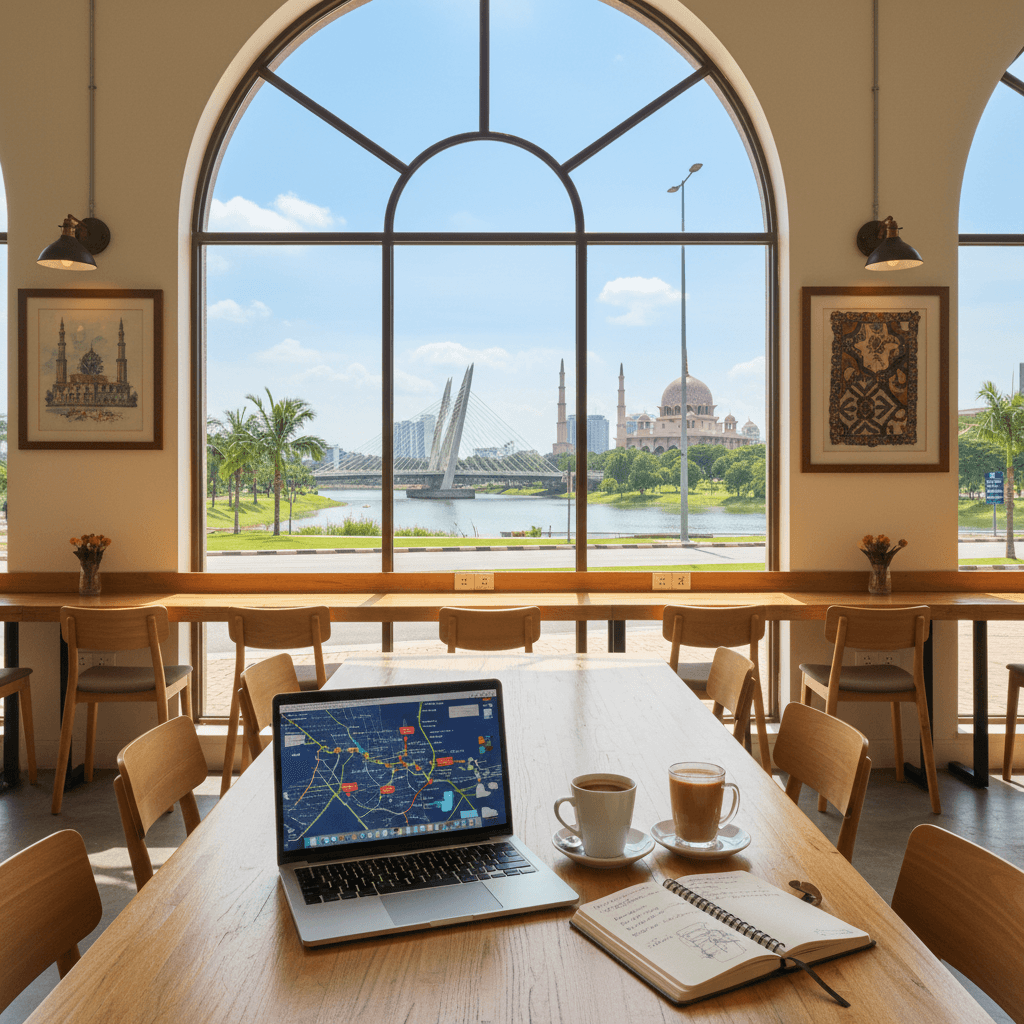
The real magic happens at dusk. When the sun goes down, the city's monuments and bridges light up in a spectacular display of neon and LEDs. Sitting by the lake with a $3 cappuccino from a place like Palms Cafe while the pink Putra Mosque glows in the distance is the quintessential Putrajaya experience. It's not the place for a wild party, but for a productive, high-quality, and low-stress lifestyle, it's hard to beat.
Putrajaya is arguably one of the most budget-friendly administrative hubs in the world. It ranks in the top 14% of least expensive cities globally, which is a massive draw if you want a high quality of life without the Kuala Lumpur price tag. Most solo nomads find they can live comfortably here on roughly $584 USD (RM 2,500 to RM 2,800) per month.
Housing Breakdown
Rent will be your biggest variable, but even the upscale precincts are affordable compared to Western standards. Most apartments come with great amenities like pools and gyms, though you should check if utilities are included. On average, basic utilities like electricity and water for a single person run about $28 USD monthly.
Precinct 8 and 9 (The Lakefront)
This is the heart of the city and popular with families who want to be near Alamanda Mall.
- Studio or 1BR: $242 to $280
- 3-Bedroom Apartment: $437 to $500
Precinct 11 and 14 (Suburban Budget)
If you don't mind a quieter, more residential vibe with landed homes and townhouses, look here.
- Studio or 1BR: $172 to $210
- 3-Bedroom Apartment: $305 to $380
Precinct 15 (The Diplomatic Enclave)
The most "international" part of town, offering a bit more prestige and security.
- Studio or 1BR: $280 to $350
- 3-Bedroom Apartment: $500 to $650
Dining and Groceries
Eating out is a national pastime in Malaysia, and Putrajaya keeps it cheap. You can grab a solid meal at a local hawker stall for RM 8 to RM 12. If you prefer a sit-down lunch at an inexpensive restaurant, expect to pay around $3.60 USD. A mid-range dinner for two usually hits the $19 USD mark, while a fancy three-course date night at a place like the Marriott or Le Meridien will cost between $24 and $36.
For those who prefer cooking, monthly groceries generally range from $72 to $120. Your morning caffeine fix at a local cafe will set you back about $2.90 for a cappuccino.
Transport and Connectivity
Putrajaya is spread out, so you'll likely rely on Grab (the local version of Uber) or the transit system. A local transport ticket is only $0.90, and a monthly pass is a steal at $11.80. If you're taking a taxi or Grab for a typical 8km trip, expect to pay around $6.60.
Digital nomads usually find the internet costs very reasonable. A high-speed fiber connection (50 Mbps or higher) costs about $22 USD per month. If you prefer working from a dedicated office, a gym membership style coworking pass usually goes for about $40 USD a month.
Monthly Budget Tiers
The Budget Tier ($400 to $500): You're likely renting a studio in Precinct 11, eating mostly at local food courts, and using the bus or a bike to get around. You might hit a coworking space once or twice a week.
The Mid-Range Tier ($700 to $1,000): This is the sweet spot for most expats. You'll have a nice one-bedroom near the lake, eat a mix of local and Western food, and use ride-hailing apps frequently. This budget easily covers a full-time coworking membership.
The Comfortable Tier ($1,200 to $1,500+): At this level, you're living in a premium condo in Precinct 15 or nearby Cyberjaya. You're dining at top-tier restaurants, perhaps renting a car, and enjoying all the weekend trips to KL or the coast that you want.
For Digital Nomads: Cyberjaya
Technically a stone's throw outside the official Putrajaya borders, Cyberjaya is where most nomads actually end up. It's the Silicon Valley of Malaysia, and the vibe is much more "start-up" than "government office." You'll find high-rise condos like TheArc or Tamarind Suites that are specifically designed for people who work from their laptops.
- The Draw: This is where the best coworking infrastructure lives. Spaces like WORQ and Common Ground provide reliable backup if your home fiber optic line ever flickers.
- Vibe: Younger, more international, and slightly more active at night than Putrajaya proper.
- Rent: Expect to pay between $250 and $320 for a modern studio.
For Families: Precinct 8 & 9
If you're moving with kids, these areas are the gold standard. They sit right along the Putrajaya Lake, offering plenty of room to breathe. Most families aim for developments like Dwiputra Residences because the units are massive and the pools actually get used. It's the most "lived-in" part of the city, meaning you aren't just surrounded by cold administrative buildings.
- The Draw: You're close to Alamanda Mall for groceries and Putrajaya Lake for evening walks. It's also the most convenient spot for those looking at international schools.
- Vibe: Established, safe, and suburban. It feels like a high-end gated community but on a city-wide scale.
- Rent: A spacious 3-bedroom apartment usually runs between $437 and $500.
For Budget-Conscious Expats: Precinct 11 & 14
These precincts are further out from the center, which translates to much lower rent prices. You'll find more "landed" homes here, like townhouses with small yards, rather than just high-rise apartments. It's a great choice if you want a quiet life and don't mind a 10-minute drive to get to a decent coffee shop.
- The Draw: It's incredibly quiet. If you're a writer or someone who needs total silence to function, this is your spot.
- Vibe: Very local and residential. You'll need a car or a heavy reliance on the Grab app to get anything done.
- Rent: You can find 1-bedroom setups for as low as $172, while larger houses go for around $350.
For Upscale Professionals: Precinct 15 (Diplomatic Enclave)
This is the "fancy" part of town. As the name suggests, it's home to various embassies and high-ranking officials. The streets are wider, the security is tighter, and the landscaping is even more manicured than the rest of the city. It's peaceful, but it can feel a bit isolated if you're looking for a social spark.
- The Draw: Ultimate privacy and prestige. The amenities are premium, and the area is kept in pristine condition.
- Vibe: Quiet, exclusive, and a bit formal. It's the kind of place where you know your neighbors are important, but you rarely see them.
- Rent: This is the priciest area in Putrajaya, with 3-bedroom homes often hitting $650 or more.
Most expats find that while Putrajaya is beautiful, it's a "car-first" city. No matter which neighborhood you choose, you'll likely spend $11.80 on a monthly transport pass or rely on Grab rides, which usually cost about $6 for a cross-town trip. If you want to be within walking distance of a flat white and a coworking desk, stick to Cyberjaya. If you want morning jogs by the water and a community feel, Precinct 8 is the winner.
If you are coming from a city where you have to hunt for a stable signal, Putrajaya will feel like a breath of fresh air. As Malaysia's administrative heart, the digital infrastructure here is top tier. You aren't just getting "okay" internet; you are getting fiber optic speeds that usually clock in between 50 and 100 Mbps for a standard home setup. Most nomads find that a basic monthly plan costing around RM 100 ($24) is more than enough to handle back to back Zoom calls without a hitch.
Coworking Spaces: Where to Get Things Done
While Putrajaya itself is quiet, the neighboring tech hub of Cyberjaya is where the real coworking energy lives. It is only about a 10 minute drive away and serves as the Silicon Valley of Malaysia. Most expats here split their time between working from their spacious apartments and heading to these dedicated hubs for a social fix.
- WORQ: This is the heavy hitter in the region. It is MDH certified by the government, meaning it is built specifically to support tech startups. You get 24/7 access, which is a lifesaver if you are working for clients in European or US time zones. Monthly memberships usually start around RM 400 ($95).
- HQ Putrajaya: Located right in the mix, this spot is perfect if you need a professional, corporate vibe. It has business grade WiFi and a sleek app for booking meeting rooms on the fly. It is less "startup casual" and more "executive professional."
- Common Ground: Known for its aesthetic interiors and networking events, this is where you go if you want to meet other entrepreneurs. They host regular social mixers that help break the isolation of the quiet Putrajaya lifestyle.
The Cafe Office Scene
If you prefer the hum of a coffee machine over a dedicated desk, Putrajaya has a few solid options. Palms Cafe near IOI City Mall is a favorite for its reliable connection and comfortable seating. Courtyard @ Putrajaya also gets high marks from the remote work crowd for its atmosphere. Just keep in mind that while cafe WiFi is generally good, it won't beat the stability of a coworking space for heavy data tasks.
Staying Connected on the Move
Don't rely solely on public WiFi. Grab a local prepaid SIM as soon as you land. You will need your passport for registration, but the process is instant. The big players are Maxis (Hotlink), Celcom, and Digi. You can snag a solid data plan for RM 30 to RM 50 ($7 to $12) per month. Coverage is seamless across the entire city, including the parks and lakeside areas, so you can easily tether your laptop for a work session with a view of the Putra Mosque.
Practical Tips for Digital Nomads
- Power Plugs: Malaysia uses the Type G British three pin plug. Most modern coworking spaces have universal outlets, but your apartment likely won't.
- Digital Banking: Once you set up a local bank account, activate your online banking immediately. Malaysia is rapidly moving toward QR payments (DuitNow), and having this on your phone makes life significantly easier.
- Grab App: Download Grab before you arrive. It is the go to app for ride hailing and food delivery, and the data usage is negligible.
Staying Safe in Putrajaya
You'll find Putrajaya to be one of the safest spots in Malaysia. Since it serves as the administrative capital, security is tight and the streets are incredibly well lit at night. Most expats feel perfectly comfortable walking through residential precincts or along the lakeside paths after sunset. Violent crime is extremely rare here, and even petty theft like bag snatching, which can be an issue in parts of Kuala Lumpur, is much less common in this planned city.
The primary safety concerns are actually quite mundane. Traffic can be tricky for newcomers because the roads are wide and drivers often speed on the long boulevards. If you're walking, stick to the designated crossings. During the monsoon season, keep an eye on weather alerts. Tropical downpours can lead to localized flash flooding or slippery conditions on the manicured park trails.
- Emergency Number: Dial 999 for police, ambulance, or fire services.
- Police Station: Ibu Pejabat Polis Daerah Putrajaya is located in Precinct 9.
- App to Download: MyJPJ for traffic and road info, and Grab for safe, tracked transport if you're out late.
Healthcare Facilities and Standards
The quality of medical care in Putrajaya is world class. You have access to both massive public facilities and high end private clinics. Most doctors and staff speak excellent English, so you won't struggle to explain your symptoms. If you're a digital nomad or expat, you'll likely find the private sector more efficient for routine visits as wait times are significantly shorter than at the public hospitals.
Hospital Putrajaya in Precinct 7 is the main government facility. It's modern and well equipped but can be very busy. For a more "concierge" experience, many expats head to Putrajaya Hospital's Private Wing or make the short 15 minute drive to Cyberjaya Hospital. These facilities offer specialist consultations, advanced imaging, and comfortable private rooms that feel more like hotels than wards.
Pharmacies and Routine Care
For minor ailments, you'll find pharmacies like Guardian, Watson's, and Caring Pharmacy in almost every major shopping area, especially in Alamanda Mall and IOI City Mall. Pharmacists here are highly trained and can provide over the counter consultations for basic issues. If you need a General Practitioner, look for "Klinik" signs in Precinct 8 or 15. A standard consultation usually costs between RM 50 and RM 100.
- Specialist Visit: Expect to pay RM 150 to RM 300 for an initial consultation at a private hospital.
- Prescriptions: Most international brands are available, but it's smart to bring your generic drug names as brand names might vary.
- Dental Care: Clinics like Klinik Pergigian Putrajaya offer everything from cleanings to cosmetic work at a fraction of Western prices.
Health Insurance for Nomads
While out of pocket costs for basic care are manageable, a serious emergency can get expensive at private hospitals. Most nomads in the area use SafetyWing or World Nomads for flexible coverage. If you're on a long term social visit pass or a digital nomad visa like the DE Rantau, check if your specific plan requires you to use certain hospital networks in the Klang Valley. Local insurers like AIA or Prudential also offer comprehensive plans if you're staying for a year or more.
Environmental Health
The air quality in Putrajaya is generally better than in downtown KL due to the abundance of green space. However, Malaysia does experience "the haze" occasionally between June and September due to regional agricultural burning. During these times, it's wise to check the Air Pollutant Index (API) and stay indoors if the numbers climb above 100. Also, remember that Putrajaya is a tropical environment; dengue fever is a minor but present risk, so use repellent if you're spending time in the parks at dawn or dusk.
Getting Around the Administrative Capital
Putrajaya was designed with grand boulevards and sweeping bridges, which makes it a dream for drivers but a bit of a challenge for those used to dense, walkable urban centers. The city is spread out, so you'll need to be strategic about how you move between the different precincts.
Public Transport: The ERL and Buses
The backbone of Putrajaya's connection to the rest of Malaysia is the Putrajaya Sentral transport hub. This is where you'll find the KLIA Transit (ERL), which is the fastest way to get to the airport or downtown Kuala Lumpur. A trip to KL Sentral takes about 20 minutes, while getting to the airport takes roughly 15 minutes. It's efficient, clean, and reliable, though it's pricier than standard commuter trains.
For getting around within the city limits, the Nadi Putra bus service covers most precincts. While the fares are incredibly cheap, usually around RM 1.00 to RM 1.50 per trip, the frequency can be frustrating. You might find yourself waiting 20 to 30 minutes for a bus, which isn't ideal if you're rushing to a meeting at a coworking space. Most expats use the Moovit app to track schedules, but even then, it's best to leave with plenty of buffer time.
Ride-Hailing and Taxis
Most nomads and expats living here rely heavily on Grab. It's the dominant ride-hailing app in Malaysia and works seamlessly in Putrajaya. Since the city is less congested than Kuala Lumpur, drivers usually arrive within five minutes. A short trip between precincts typically costs between RM 7 and RM 15 ($1.65 to $3.50). During peak hours or heavy rain, prices can double, but it remains the most convenient way to get to spots like IOI City Mall or the Diplomatic Enclave.
If you're heading to Cyberjaya for a networking event, a Grab will cost you about RM 10 to RM 20 depending on the time of day. It's a quick 10 to 15 minute drive across the bridge.
Walking and Cycling
Putrajaya is one of the few places in Malaysia where cycling is actually a viable and pleasant activity. The city features over 100 kilometers of dedicated cycling and jogging tracks, many of which loop around the scenic Putrajaya Lake. If you live in Precinct 8 or 9, you can easily bike to local cafes or parks. However, the midday heat is intense. Most people save their walking or cycling for before 8:00 AM or after 6:00 PM when the temperature drops and the sunset hits the pink dome of the Putra Mosque.
Car Rentals and Ownership
If you plan on staying for more than a few months, many expats recommend renting or buying a cheap second hand car. Parking is abundant and often free or very low cost compared to KL. You can find car sharing services like SOCAR or GoCar available at Putrajaya Sentral and near major apartment complexes. These are great for grocery runs or weekend trips to the nearby wetlands. Expect to pay around RM 12 to RM 18 per hour for a basic hatchback.
Transport Cost Summary
- ERL Train to KL Sentral: RM 14.00 ($3.30)
- Monthly Bus Pass: RM 50.00 ($11.80)
- Average Grab ride (5km): RM 10.00 ($2.35)
- Daily Car Rental (Basic): RM 100.00 to RM 150.00 ($24 to $35)
- Petrol (RON95) per liter: RM 2.05 ($0.48)
Overall, while the city is built for cars, the combination of Grab for daily errands and the ERL for trips to the city center makes it manageable for nomads who prefer not to drive. Just don't expect to walk from your apartment to a distant precinct without breaking a serious sweat.
The Linguistic Landscape
You'll find that getting around Putrajaya is incredibly straightforward if you speak English. As the administrative heart of Malaysia, the city is populated by civil servants, diplomats, and tech professionals who use English as a working language. While Bahasa Melayu is the official tongue, English is the unofficial second language and is spoken fluently by almost everyone you'll encounter in professional or service settings.
Most signage in public areas, government buildings, and shopping centers like Alamanda or IOI City Mall is bilingual. You won't struggle to read menus, transit signs, or official documents. That said, learning a few phrases in Malay goes a long way with the locals. A simple "Terima kasih" (thank you) or "Sama-sama" (you're welcome) usually earns a warm smile and better service at the local hawker stalls in Precinct 9.
Staying Connected
Malaysia has some of the best mobile connectivity in Southeast Asia, and Putrajaya is no exception. You can pick up a prepaid SIM card at the airport or any major mall for about RM 10 to RM 15. You'll need your passport for registration, which takes about five minutes at the counter.
Nomads usually choose between the "Big Three" providers:
- Maxis (Hotlink): Known for the best overall coverage and speeds, though slightly more expensive. Expect to pay around RM 40 to RM 60 per month for a solid data plan.
- CelcomDigi: Following their merger, they offer massive coverage. Their 5G plans are particularly popular for those tethering their laptops in parks.
- U Mobile: Often the cheapest option, though the signal can be a bit spotty inside some of the thicker concrete government buildings.
For home internet, most apartments in Precinct 8 or Cyberjaya come pre-wired for high-speed fiber. Providers like Time or Unifi offer speeds up to 1 Gbps. A standard 100 Mbps plan typically costs around RM 89 to RM 129 per month. Most expats find the reliability high enough for Zoom calls and heavy uploads without needing a backup hotspot.
Essential Apps for Your Phone
Life in Putrajaya runs on a handful of apps. If you don't have these downloaded, you'll find daily tasks much more difficult. Since the city isn't very walkable, these are your lifelines.
- Grab: This is non-negotiable. It is the primary app for ride-hailing, food delivery, and even paying at local shops via GrabPay. A ride from Putrajaya to Kuala Lumpur usually costs RM 40 to RM 60 depending on the time of day.
- WhatsApp: This is the primary way everyone communicates. From your landlord to the local dry cleaners, almost all business is conducted via WhatsApp messages rather than phone calls or emails.
- Touch 'n Go (eWallet): Essential for paying for the MRT, highway tolls if you rent a car, and parking. You can also use it to pay at almost every street food vendor in Precinct 15.
- Foodpanda: The main competitor to GrabFood, often featuring different local restaurants and better deals on groceries.
- Shopee or Lazada: For any gear or household items you need. Delivery to Putrajaya is usually fast, often arriving within 2 to 3 days.
Social Nuances
Communication here is generally polite and indirect. Malaysians value "saving face," so being overly aggressive or loud when a problem arises usually backfires. A calm, friendly approach works best. In Putrajaya specifically, the vibe is more formal than in Penang or KL because of the high concentration of government offices. Dress a bit more conservatively when visiting official buildings; keep your shoulders and knees covered to avoid being turned away at the door.
What to Expect from the Putrajaya Climate
Putrajaya follows the typical tropical script of Peninsular Malaysia. It is hot, humid, and rainy year round. You can expect daily highs to hover around 32°C to 34°C (90°F to 93°F), while nights rarely dip below 23°C (73°F). Because the city is built around a massive man made lake, the humidity can feel particularly thick, often sitting at 80% or higher.
Rain is a near daily occurrence, but it usually comes in short, intense bursts during the late afternoon. These storms are actually a relief for most nomads; they clear the air and drop the temperature significantly for the evening. If you are planning a day of outdoor photography at the Putra Mosque or a jog through the Botanical Gardens, aim for 7:00 AM to 9:00 AM to beat both the downpours and the punishing midday sun.
The Best Months to Visit
The sweet spot for visiting Putrajaya is between June and August. This period is technically the drier season for the west coast of Malaysia. While you will still see some rain, the days are generally clearer, making it the best time for the hot air balloon festivals or boat trips on the lake.
Another great window is January and February. The weather is relatively stable, and you get the added bonus of witnessing the Lunar New Year celebrations. Just be aware that these months are peak travel times, so while Putrajaya itself rarely feels crowded, transport to nearby Kuala Lumpur might be pricier.
Navigating the Monsoon Seasons
Malaysia deals with two monsoon transitions, and they affect Putrajaya differently than the islands.
- Northeast Monsoon (November to March): This is the wettest time of year. Expect longer periods of rain and overcast skies. It is a great time for hunkering down in coworking spaces like WORQ or HQ Putrajaya to get deep work done.
- Southwest Monsoon (May to September): Generally drier, though this is also the time when "the haze" can occasionally drift over from Sumatra. If the haze hits, air quality can drop, and residents usually stick to indoor malls like IOI City Mall.
Seasonal Events and Local Vibe
Timing your stay around local holidays can drastically change your experience. During Ramadan, the city takes on a quieter, more spiritual pace during the day, followed by incredible food markets in the evenings. The Putrajaya Precinct 3 area usually hosts a massive bazaar where you can grab local treats for under RM 15.
If you enjoy a party atmosphere, National Day (August 31st) is a major event here. Putrajaya often hosts the national parade, bringing in crowds from all over the country. It is the one time of year this quiet administrative capital feels truly packed. For a more relaxed visit, expats recommend avoiding the local school holiday weeks in March, June, and December, when the parks and lakeside cafes get flooded with local families.
What to Pack
Since the weather is consistent, your packing list is straightforward. Lightweight, breathable fabrics like linen or moisture wicking gym gear are your best friends. Most nomads recommend carrying a small, sturdy umbrella at all times, not just for the rain, but as a sun shield. Keep in mind that Putrajaya is a government hub and quite conservative. While shorts are fine for exercise, you will want long pants or skirts and modest tops when visiting government offices or the famous pink Putra Mosque.
Getting Around
You'll quickly realize that Putrajaya was built with cars in mind. The wide boulevards and sprawling layout make walking between precincts nearly impossible in the midday heat. Most expats and nomads rely heavily on Grab, the local equivalent of Uber, which is incredibly cheap and reliable here. A ten minute ride usually costs between RM 10 and RM 20.
For those staying longer, the Putrajaya Sentral hub connects you to the rest of the region. The KLIA Transit train gets you to the airport or downtown Kuala Lumpur in about 20 minutes. While there are local Nadi Putra buses, they aren't always on time, so most people stick to the Putrajaya Line for a direct, air conditioned link to the capital's city center.
Visa Essentials
Malaysia is one of the most nomad friendly countries in Southeast Asia right now. The DE Rantau Nomad Pass is the gold standard if you're working remotely. It allows digital nomads to stay for up to 12 months, and it's renewable for another year. You'll need to show an annual income of at least $24,000 USD for tech and digital professions, or $60,000 USD for non-IT roles, and work in a field like content creation or software development.
If you're just scouting the city, many nationalities get a 90 day visa free entry on arrival. Just make sure your passport has at least six months of validity. If you decide to stay long term and don't qualify for the nomad visa, the MM2H (Malaysia My Second Home) program is an option, though it requires a much higher financial commitment.
Connectivity and SIM Cards
Don't bother waiting until you get to a mall. Grab a SIM card at the airport or any 7-Eleven. Maxis (Hotlink) and Celcom have the best coverage in Putrajaya. You can get a prepaid plan with unlimited data for around RM 35 to RM 50 per month. Fiber internet in apartments is excellent, usually hitting speeds of 100 Mbps or higher, which is more than enough for Zoom calls or heavy uploads.
Health and Safety
Putrajaya is arguably one of the safest places in Malaysia. It's a government city, so police presence is high and crime rates are very low. You'll feel comfortable walking around the lakeside at night. For healthcare, Hospital Putrajaya is the main public facility, but most expats head to Cyberjaya Hospital or private clinics in Precinct 15 for faster service. A standard consultation at a private GP usually costs around RM 50 to RM 80.
Banking and Payments
Cash is still used at smaller hawker stalls, but the city is rapidly going cashless. Locals use Touch 'n Go eWallet for almost everything, from paying for parking to buying street food. It's worth downloading the app and linking your card immediately. If you need a local bank account, Maybank and CIMB are the easiest for expats to work with, though you'll typically need your visa paperwork and a rental agreement to open one.
Local Etiquette
Since this is the administrative heart of a Muslim majority country, the vibe is more conservative than the bars of Bukit Bintang. Dress modestly when visiting government buildings or mosques, covering your shoulders and knees. Alcohol is available at some restaurants in IOI City Mall or in neighboring Cyberjaya, but it's not a big part of the local social scene. Most people socialize over tea and coffee at "mamak" stalls late into the night instead.
Daily Costs at a Glance
- Monthly Gym Membership: RM 150 to RM 200
- Local Coffee (Kopi): RM 3 to RM 5
- Coworking Day Pass: RM 30 to RM 50
- Liter of Milk: RM 7
- Movie Ticket: RM 20
Need visa and immigration info for Malaysia?
🇲🇾 View Malaysia Country GuideEasy Landing
Settle in, no stress
Monthly Budget Estimates
More cities in Malaysia
Miri
🇲🇾 Malaysia