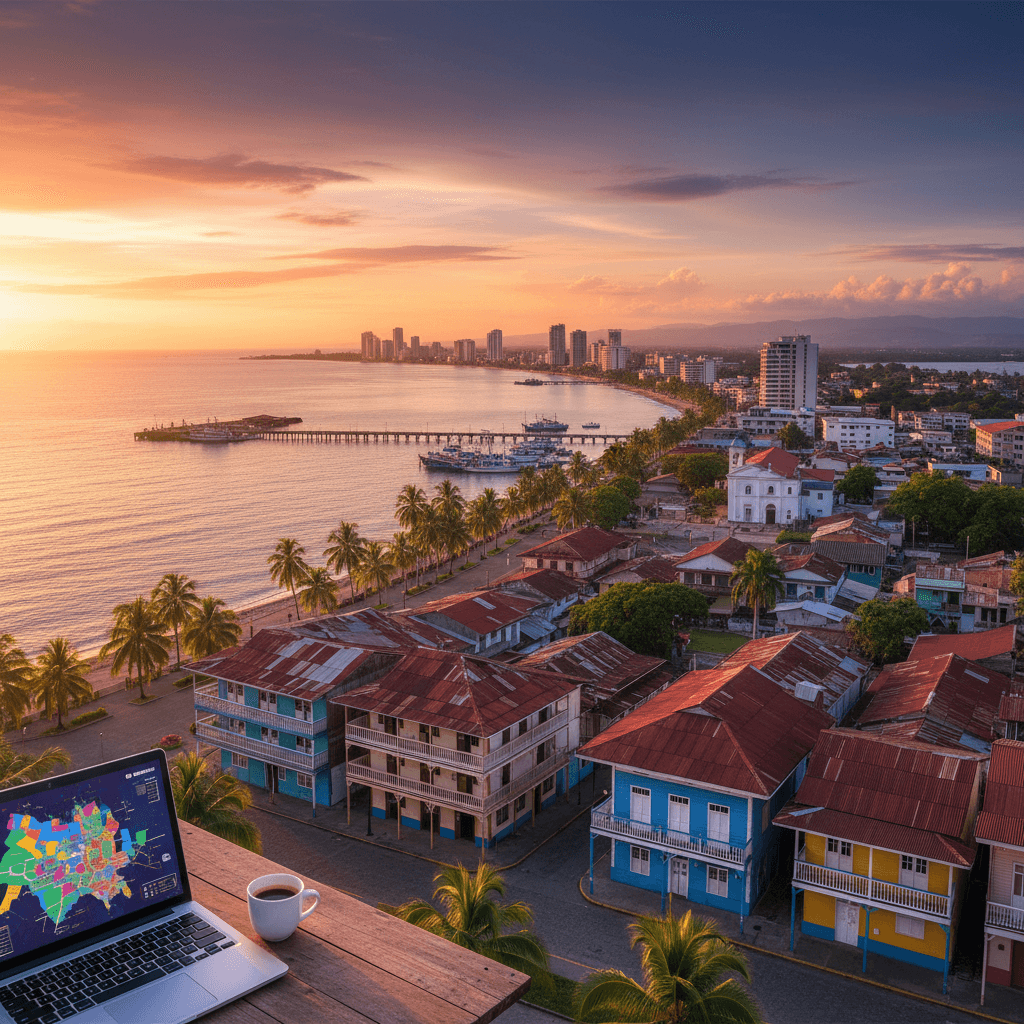
Puntarenas
🇨🇷 Costa Rica
The Port City Soul
Puntarenas isn't your typical manicured resort town. It’s a gritty, salt of the earth port city that stretches out into the Gulf of Nicoya on a narrow spit of land. While most nomads flock to the polished surf camps of Santa Teresa, choosing Puntarenas means you're looking for something raw and authentic. It’s the kind of place where you’ll find rusted hulls of fishing boats docked near high end cruise ships, and where the humidity is as thick as the scent of fried snapper along the Paseo de Los Turistas.
The vibe here is defined by Pura Vida in its most literal sense. Life moves at a crawl, dictated by the heat and the tides. You’ll see locals, or Ticos, lounging in plastic chairs under the shade of almond trees, watching the world go by. For a digital nomad, this translates to a stress free environment where nobody cares if you're wearing a suit or board shorts. It’s a place to decompress, though you’ll need a bit of patience for the slower service and the occasional power constraint if you venture into the more remote eco compounds.
Living Costs & Lifestyle Tiers
Puntarenas remains one of the more affordable coastal stretches in Costa Rica, especially when compared to the price hikes in Guanacaste. You can live well here without draining your savings, provided you eat like a local and avoid the heavy tourist traps near the pier. Most nomads find that $1,500 to $2,500 per month covers a comfortable life, depending on how much AC you crave.
- Budget ($1,500/mo): You’re looking at a basic studio apartment, eating $5 to $8 meals at local sodas, and using the public bus system to get around.
- Mid-range ($2,500/mo): This gets you a modern one bedroom apartment, frequent dinners at beachfront spots for $15, and a dedicated desk at a coworking space.
- Comfortable ($4,000+/mo): You’ll be staying in high end eco bungalows like Lost Pools, dining at upscale seafood restaurants where meals top $20, and likely renting a car for weekend trips.
Where to Plant Your Laptop
The city doesn't have the defined nomad "bubbles" you find elsewhere, but a few areas stand out for different reasons. Most people gravitate toward the central action or head for total seclusion on the outskirts.
Paseo de Los Turistas
- Rent: $400 to $800 for central apartments.
- The Vibe: Walkable, loud, and social. You have the beach on one side and a string of bars and restaurants on the other. It’s perfect if you want to be in the heart of the nightlife, but it can get noisy when the weekend crowds arrive from San José.
Lost Pools & Outskirts
- Rent: $800 to $1,200 for eco stays.
- The Vibe: This is for the nomad who wants to wake up to monkey calls rather than car horns. It’s an eco compound lifestyle with natural pools and solid WiFi, though you’ll be further from the grocery stores and may face some power usage limits.
Connectivity and Logistics
Internet is surprisingly reliable in the main hubs and beach cafes. You won't have trouble with Zoom calls or large uploads in the central areas. For mobile data, expats recommend grabbing a Kolbi or Claro SIM card at the airport or a local pharmacy; $20 usually gets you plenty of data for a month. If you need a formal office environment, you might find yourself taking the ferry across to the coworking spaces in Santa Teresa, which cost about $15 to $20 for a day pass.
Getting around is simple. The Paseo de Los Turistas is highly walkable, and for longer distances, Taxis are available; use the meter (maria) or agree on price upfront. If you're heading in from the airport in San José, skip the $5 bus and book a shared shuttle like Interbus or similar services for $30-$50. It’s a 2 to 3 hour trip that saves you the headache of navigating the local bus terminals with luggage.
The Emotional Draw
The real magic of Puntarenas happens at sunset. When the sky turns a bruised purple over the gulf and the heat finally breaks, the whole city moves to the water. It’s a social, communal experience that makes you feel like part of the fabric of the town rather than just a visitor. It’s less about "networking" and more about genuine connection over a cold Imperial beer and a plate of ceviche. If you can handle the humidity and the unpolished edges, Puntarenas offers a slice of the real Costa Rica that most tourists miss.
The Pura Vida Price Tag
Living in Puntarenas gives you a coastal lifestyle without the inflated price tags of Guanacaste. While it's a major port city, it remains one of the more affordable entry points for nomads wanting Pacific views. You can live comfortably here on a budget that would barely cover a studio in Santa Teresa, provided you're happy with a more local, less "polished" environment.
Most digital nomads find that a monthly budget of $1,500 to $2,500 covers the basics and then some. If you're looking for luxury eco-bungalows with private pools, you'll want to budget closer to $4,000. Prices are generally stable year-round, though you might find better long-term rental deals if you arrive during the rainy season in October or November.
Monthly Budget Breakdowns
Depending on your comfort level, here is what you should expect to spend in a typical month:
The Budget Nomad
- Total: $1,500
- Housing: Basic studio or apartment for $400 to $600.
- Food: Sticking to local "sodas" (small family-run restaurants) and street food for $5 to $8 per meal.
- Transport: Using the local bus system at $1 to $3 per ride.
The Mid-Range Professional
- Total: $2,500
- Housing: A modern 1BR near Paseo de Los Turistas for $800 to $1,200.
- Food: A mix of home cooking and mid-range dining at $15 per plate.
- Workspace: Occasional day passes at beachside coworking spots for $15 to $20.
The High-End Expat
- Total: $4,000+
- Housing: Secluded eco-compounds like Lost Pools Bungalows or upscale beachfront rentals for $2,000+.
- Food: Regular dinners at high-end seafood spots where meals exceed $25.
- Transport: Frequent Uber rides and private shuttles for weekend trips.
Everyday Expenses
Your daily costs will revolve around the Paseo de Los Turistas, the city's main social artery. While the "Churchill" (a local shaved ice treat) is a cheap staple, imported goods at the grocery store will quickly bloat your budget. Stick to local brands and seasonal fruit to keep costs down.
- Coffee: $3 to $5 at a specialty cafe.
- Beer: $2 to $4 for a local Imperial or Pilsen.
- SIM Card: $10 to $20 for a month of data with Kolbi or Claro.
- Bike Rental: $5 to $10 per day for cruising the boardwalk.
- Coworking: Monthly memberships in the wider province average $150 to $250.
Housing and Neighborhoods
Finding a place often happens through local Facebook groups like "Digital Nomads Costa Rica" or by walking the streets and looking for "Se Alquila" signs. Paseo de Los Turistas is the most convenient area for solo travelers because it's walkable and close to the nightlife, but it can be noisy when the weekend crowds arrive. For those who need deep focus, the outskirts offer quiet eco-compounds, though you'll need to be mindful of power usage and potential isolation.
Utilities are usually included in short-term rentals, but if you're signing a long-term lease, keep an eye on the AC usage. Electricity is expensive in Costa Rica, and running the unit all day to beat the 90°F heat can easily add $100 to your monthly bill. Most expats recommend looking for places with high ceilings and good natural cross-breezes to save on costs.
Best for Solo Travelers and Social Nomads: Paseo de los Turistas
If you want to be in the heart of the action, the central beachfront area along Paseo de los Turistas is where you'll land. This is the city's pulse, a long boulevard lined with kiosks, bars, and seafood spots. It is the most walkable part of town, meaning you can ditch the car and rely on your own two feet to get from your morning coffee to your sunset Imperial beer.
Living here puts you steps away from the beach and the main ferry terminal, making weekend trips to the Nicoya Peninsula incredibly easy. Most solo travelers prefer this area because it is easy to meet people at beachfront spots like Capitán Moreno or while walking the pier. The vibe is lively, though it can get noisy on weekends when the music from local bars kicks up a notch.
- Monthly Rent: $400 to $800 for a studio or one-bedroom apartment.
- Daily Food: $5 to $15 depending on whether you're hitting a street stall or a sit-down restaurant.
- Vibe: High energy, coastal, and very social.
Best for Seclusion-Seeking Nomads: Remote Eco Areas
For those who find the city center too loud or touristy, the remote eco-lodges in the surrounding province provide a completely different experience. This is where you go for the eco-compound lifestyle, catering specifically to remote workers who need reliable WiFi but want to wake up to the sound of howler monkeys instead of traffic.
It is a rugged, offbeat choice. You get access to natural swimming pools and private jungle treks right outside your door. The trade-off is that you are further from modern amenities. You'll need to be mindful of power usage in some of these remote stays, and a bike or scooter rental is a must for grocery runs. Most nomads here spend their mornings on Zoom and their afternoons kayaking or chasing waterfalls.
- Monthly Rent: $1,500+ for remote eco-lodges or bungalows in the province.
- Coworking: Most work happens from private decks; day passes at nearby beach spaces run about $15 to $20.
- Vibe: Quiet, green, and focused on deep work and nature.
Best for Expats and Long-Term Residents: El Roble and Miramar
Expats looking for a more traditional neighborhood feel often head slightly inland or further down the coast toward El Roble. These areas feel less like a vacation spot and more like a community. You'll find better access to local clinics, larger supermarkets, and long-term housing options that aren't listed on the major booking sites.
While Puntarenas doesn't have a massive, centralized expat hub like Tamarindo, you'll find a steady community of foreigners who appreciate the lower cost of living and the authentic Tico lifestyle. Many residents here use local Facebook groups like Digital Nomads Costa Rica to organize meetups or find reliable handymen. It is a great home base if you want to live comfortably on a mid-range budget while staying within a 2-hour drive of San José's private hospitals.
- Monthly Budget: $2,500 covers a comfortable house, mid-range dining, and a scooter.
- Connectivity: Reliable fiber optic is becoming the standard; Kolbi and Claro SIM cards provide great backup data for about $20.
- Vibe: Residential, practical, and authentic.
Best for Wellness and Families: Santa Teresa (Puntarenas Province)
While technically a drive or ferry ride away, many families and wellness-focused nomads choose the southern tip of the Puntarenas province, specifically Santa Teresa. It is the go-to for those who want a more polished nomad infrastructure. You'll find actual coworking spaces with ergonomic chairs and high-speed internet that can handle heavy uploads without a hiccup.
Families appreciate the private schools and the surf-centric lifestyle that keeps kids active. It is significantly more expensive than the Puntarenas city center, but the trade-off is a massive community of like-minded expats and a heavy focus on yoga, organic food, and outdoor education. Travelers often say the hillside villas here offer the best privacy in the region.
- Monthly Rent: $1,200 to $4,000+ depending on proximity to the surf breaks.
- Coworking Membership: Roughly $150 to $250 per month.
- Vibe: Upscale, health-conscious, and family-friendly.
Connectivity and Speed
Puntarenas offers a surprisingly stable digital experience for a port city. While it doesn't have the high tech infrastructure of San José, the central areas around Paseo de Los Turistas provide reliable WiFi that handles Zoom calls and large uploads without much fuss. Most nomads find that fiber optic internet is becoming the standard in mid range rentals and beachfront hotels.
If you're heading to more secluded spots on the outskirts, you'll need to be more strategic. These off grid stays often rely on solar power, meaning you might have to limit heavy data usage during evening hours or rainy spells. Travelers often say the trade off for nature immersion is worth the occasional bandwidth dip, but keep a backup plan ready.
Coworking Spaces and Laptop Friendly Cafés
You won't find a massive variety of dedicated coworking offices directly in the Puntarenas city center. Most remote workers here embrace the "work from anywhere" vibe, setting up in beachfront cafés where the ocean breeze replaces air conditioning. The café culture is thriving, and as long as you're ordering a few cups of local coffee, most owners are happy to let you linger for a few hours.
For a structured office environment, many nomads take the ferry or a quick trip over to Santa Teresa. It's in the same province and serves as the region's coworking hub. Popular spots there include:
- Selina Santa Teresa: The gold standard for nomads in the area, offering hot desks and dedicated cabins. Expect to pay about $15-$25 for day passes at Selina Santa Teresa.
- Skyloft: A quieter alternative with ergonomic seating and high speed backups.
- Local Beach Cafés: Along the Paseo de Los Turistas, you'll find plenty of spots with "WiFi" signs. Just check the signal strength before you commit to a meal.
Mobile Data and SIM Cards
Don't rely solely on hotel WiFi. Grabbing a local SIM card is the first thing you should do after landing. The coverage in Puntarenas is excellent, especially with the main providers. You can pick these up at the airport or any local pharmacy in town.
- Kölbi: The state owned provider. It has the most extensive coverage if you plan on exploring rural waterfalls or hidden beaches.
- Claro or Liberty: These often have better prepaid packages for heavy data users. You can get an unlimited data plan for roughly $10 to $20 per month.
- Apps: Keep WhatsApp installed; it's how every business, taxi driver, and landlord in Costa Rica communicates.
Power and Reliability
Power outages can happen, particularly during the peak of the rainy season in October and November. Most central businesses have surge protectors, but it's smart to carry your own if you're working on a high end laptop. If you're staying in an eco lodge, ask specifically about their "power budget" before you book, as some remote stays limit outlet use to daylight hours to conserve battery banks. Expats recommend carrying a portable power bank and a local SIM with a hotspot as a fail safe for those rare times the grid goes quiet.
Staying Safe in the Port City
Puntarenas has a different energy than the polished resort towns of Guanacaste. It is a working port city, which means it feels more authentic but requires a bit more street smarts. Most nomads feel perfectly secure sticking to the Paseo de Los Turistas, where the constant flow of foot traffic and open-air restaurants creates a self-policing environment. It is the kind of place where you can comfortably walk to grab a ceviche at sunset without much worry.
That said, travelers often recommend avoiding the unlit outskirts and quieter residential backstreets once the sun goes down. The port areas can feel a bit edgy late at night, so if you are heading back to a more remote spot like the Lost Pools compound, it is smarter to use a ride-hailing app like Uber rather than walking. Local consensus is simple: keep your valuables out of sight and stay where the lights are bright.
Healthcare and Medical Services
You are never far from quality care here, which is a major relief for long-term stays. For minor issues, stomach bugs, or surf scrapes, the city is packed with farmacias (pharmacies) where pharmacists can often prescribe basic medications on the spot. If you need a doctor, local clinics in the city center handle routine visits efficiently and affordably.
For anything serious, you will likely head toward San José. It is a 1 to 2 hour drive, but it houses some of the best private hospitals in Central America, such as CIMA or Clínica Bíblica. Most expats carry private insurance to access these facilities, though the public Caja system is available for emergencies. Always keep 911 programmed into your phone; the response is generally reliable in the central province.
Practical Safety Tips for Nomads
- Water Safety: While the tap water is generally safe to drink in Puntarenas, many nomads stick to filtered water in more rural eco-lodges to avoid "traveler's tummy."
- Ocean Currents: If you are heading to nearby beaches for a swim, ask locals about riptides. The Pacific side can be powerful, and lifeguards are not always present.
- Digital Security: Use a VPN when working from the public cafés along the Paseo. While the WiFi is decent, public networks in high-traffic tourist zones are always a risk.
- Emergency Fund: Keep about $200 to $300 in local Colones stashed away. While cards are widely accepted, having cash is helpful if you need a quick taxi or a local clinic visit in a pinch.
Insurance and Connectivity
Expats and digital nomads usually opt for international plans like SafetyWing or World Nomads. These are especially useful if you plan on doing adventurous day trips like kayaking or trekking near waterfalls. If you need to call for medical help, a local SIM card from Kolbi or Claro is better than relying on roaming. You can pick one up for about $10 to $20 at the airport or any local pharmacy, ensuring you have a data connection for maps and emergency services at all times.
Getting Around the Port City
Puntarenas is a narrow spit of land reaching into the Gulf of Nicoya, which makes its layout incredibly straightforward. Most of the action happens along the Paseo de los Turistas, a long coastal boulevard where you can easily hop between cafes, bars, and the beach on foot. While the town itself is walkable, you will want a strategy for exploring the wider province, especially if you are heading toward the surf hubs of Santa Teresa or the eco-retreats near the Lost Pools.
Public Buses and Shuttles
For budget-conscious nomads, the public bus system is the backbone of local travel. You can catch a ride for anywhere between $1 and $5 depending on the distance. They are reliable but slow, often stopping frequently to pick up locals along the main routes. If you are coming from San Jose, skip the public bus and book a shuttle like Interbus. It costs about $50 and takes 2 to 3 hours, but it drops you directly at your lodging and saves you the headache of hauling luggage through crowded stations.
Ride-Hailing and Taxis
Uber operates in Puntarenas and is generally the preferred choice for digital nomads who want a transparent price. It is safer and often cheaper than hailing a random taxi on the street. Expect to pay a few dollars for short hops around the central district. If you do take a traditional red taxi, make sure they use the meter, known locally as the maria, or agree on a price before you get in the car.
Bikes and Scooters
Since the terrain is flat, many expats and long-term travelers rent bicycles or scooters. It is the best way to feel the breeze and avoid the midday humidity.
- Bike Rentals: Expect to pay $5 to $10 per day. Many hostels and beachfront rentals include these for free or at a discount.
- Scooters: These are great for reaching the outskirts of town where the more secluded eco-compounds are located.
- Walking: Stick to the Paseo de los Turistas and well-lit central areas. Most nomads find the town very walkable during the day, though it is better to take a car if you are moving between neighborhoods late at night.
Regional Travel and Ferries
One of the unique perks of staying in Puntarenas is the ferry terminal. If you want a weekend change of pace, you can take the ferry across the gulf to Paquera or Naranjo. This is your gateway to the southern Nicoya Peninsula. The ride is affordable and provides some of the best views of the coastline. Just keep in mind that if you are bringing a rental car, you should book your ferry spot in advance during the dry season from December to April, as lines get long with tourists heading to the beaches.
Practical Transport Tips
Travelers often mention that while the central port area is easy to navigate, reaching the more remote "Lost Pools" area requires a bit more planning. Roads can be bumpy, especially during the peak of the rainy season in October and November. If you plan on exploring the rugged interior or chasing waterfalls, a 4x4 vehicle is a smart investment, though most nomads stick to shuttles and private drivers to avoid the stress of local traffic. Always keep a few small colones notes on hand for bus fares, as drivers rarely have change for large bills.
The Local Lingo
Spanish is the heartbeat of Puntarenas. While you'll find a moderate level of English proficiency around the Paseo de Los Turistas and the surf hubs in the wider province, don't expect everyone to be bilingual. Locals appreciate it when you make an effort, even if it's just a clumsy greeting. Most nomads find that a basic grasp of Spanish opens doors to better prices at the local markets and smoother interactions with bus drivers.
For those times when your vocabulary fails, Google Translate is your best friend. Make sure to download the Spanish pack for offline use, as cell service can get spotty if you head out on a boat or trek into the nearby jungle. If you're staying at an eco-compound like Lost Pools Bungalows, the staff usually speaks enough English to help with logistics, but knowing a few phrases will make your stay much richer.
Mastering Pura Vida
You can't live here without understanding Pura Vida. It literally means "pure life," but in Puntarenas, it's used for hello, goodbye, everything's fine, or even "don't worry about the delay." It reflects the relaxed, coastal pace of the Ticos. If a meeting starts ten minutes late or the ferry is behind schedule, just say Pura Vida and roll with it. Stressing out won't speed things up, and it'll mark you as a tourist immediately.
Social etiquette is straightforward but important. Always greet people with a Buenos días or Buenas tardes before asking a question. It's considered polite to acknowledge someone's presence before jumping straight into business. When you're out at a beach bar or a local soda, a simple Gracias goes a long way.
Staying Connected
Communication isn't just about what you say; it's about your data plan. To stay in the loop, grab a local SIM card as soon as you land. Kolbi and Claro are the most reliable providers in this region. You can pick these up at the airport or most pharmacies in town for about $10 to $20. This will give you enough data to navigate the streets and use WhatsApp, which is the primary way everyone from landlords to tour guides communicates here.
Essential Phrases to Know
- Pura Vida: The all-purpose greeting and philosophy. Use it for "hello," "it's all good," or "everything is great."
- ¿Cuánto cuesta?: "How much does it cost?" Use this at the street food stalls along the beach.
- La cuenta, por favor: "The bill, please." Useful at the seafood spots on the boulevard.
- Con gusto: "With pleasure." You'll hear this instead of "you're welcome" more often than not.
- Tico / Tica: A term for a Costa Rican local.
- Soda: Not a drink, but a small, family-run restaurant serving traditional food.
While the language barrier exists, the community is generally patient. Expats recommend joining local Facebook groups like Digital Nomads Costa Rica to find language exchange partners or just to ask for help with specific translations. Whether you're bargaining for a boat ride or trying to find the best ceviche, a smile and a bit of Spanish will get you exactly where you need to go.
The Pura Vida Forecast
Living in Puntarenas means leaning into a tropical rhythm where the sun dictates your work schedule. You can expect temperatures to hover between 75°F and 90°F (24°C to 32°C) throughout the year. It's consistently warm, but the humidity and rainfall shift dramatically depending on the month. If you're planning your stay, you'll need to decide if you prefer endless beach days or the dramatic, lush greenery that comes with the clouds.
The Dry Season: December to April
This is the peak window for nomads who want guaranteed sunshine and reliable outdoor adventuring. During these months, the Pacific coast stays bright and dry, making it the best time for surfing, kayaking near the Paseo de Los Turistas, or taking boat trips to nearby islands. Most travelers find this the most comfortable time to work from beachfront cafés because the breeze keeps things cool and you don't have to worry about sudden power outages from tropical storms.
- Vibe: High energy, clear blue skies, and active social scenes.
- Pros: Perfect for photography and weekend trips to Lost Pools; the best surfing conditions.
- Cons: Prices for short term rentals usually spike, and popular spots get crowded with tourists.
The Green Season: May to November
Locals call the rainy season the "Green Season" for a reason. The landscape transforms into a deep, vivid emerald, and the dust of the dry season disappears. While it doesn't rain all day every day, you should expect sunny mornings followed by heavy downpours in the late afternoon. It's a great time for deep focus work; there's nothing quite like the sound of rain on a tin roof while you're grinding through a project.
October and November are usually the wettest months. Travelers often say the rain can be intense enough to wash out unpaved roads or cause temporary internet flickers in more remote eco-stays. If you're staying in a central spot like the Paseo de Los Turistas, the infrastructure handles it better, but you'll still want a waterproof bag for your laptop.
- Vibe: Relaxed, quiet, and moody.
- Pros: Lower rent prices, fewer crowds, and the waterfalls are at their most impressive.
- Cons: High humidity can be tough on electronics; October is often too wet for many outdoor activities.
When to Visit: The Sweet Spot
If you want the best of both worlds, aim for May or June. The heavy rains haven't fully kicked in yet, the landscape is starting to bloom, and the peak season crowds have headed home. You'll likely find better deals on monthly stays at places like Lost Pools Bungalows or local Airbnbs. For surfers, the swell starts picking up during these months, offering great waves without the December price tag.
What to Pack
Puntarenas is casual. You'll spend most of your time in shorts and flip flops. However, if you're visiting during the rainy season, a high quality rain shell and a dry bag for your gear are non negotiable. Expats recommend bringing a surge protector for your laptop, especially if you're staying in off grid or older rentals, as tropical storms can sometimes cause power fluctuations.
Practicalities of the Port Life
Living in Puntarenas requires a shift in mindset. Unlike the polished, high-end resorts of Guanacaste, this is an authentic port city where the pace is governed by the tides and the heat. Most nomads settle in along the Paseo de Los Turistas, a long beachfront boulevard where you can walk to your morning coffee, your afternoon surf, and your evening Imperial beer without ever needing a car. If you want more seclusion, the Lost Pools area on the outskirts provides an eco-compound vibe with natural pools, though you will need to manage your power usage carefully there.
The local philosophy is Pura Vida, which translates to a relaxed approach to time. Don't expect Swiss punctuality for bus schedules or meeting times. Instead, embrace the slower rhythm. It is a safe town for the most part, but like any port city, it has an edge. Stick to the tourist zones and well-lit areas after dark. If you need serious medical care, you are about a two-hour drive from the top-tier private hospitals in San José, though local clinics can handle the basics.
Cost of Living Breakdown
Puntarenas remains one of the more affordable coastal stretches for remote workers. You can live well here for significantly less than in the trendy hubs like Nosara or Santa Teresa.
- Budget ($1,500/month): This covers a basic studio apartment, eating mostly at local "Sodas" (small family-run restaurants), and using the public bus system.
- Mid-range ($2,500/month): Provides a comfortable one-bedroom apartment near the beach, regular dining at mid-range spots, and a membership at a nearby coworking space.
- Comfortable ($4,000+/month): Allows for high-end eco-bungalows, frequent upscale seafood dinners, and private transport or car rentals.
Connectivity and Remote Work
WiFi is surprisingly stable in the city center and beachfront cafés. You will find enough bandwidth for Zoom calls and heavy uploads in most rentals. For a dedicated office environment, many nomads take a short trip to the coworking spaces in nearby Santa Teresa, where day passes go for about $15 to $20. If you are staying at an eco-lodge, always ask about their backup power situation, as tropical storms can occasionally knock out the grid.
For mobile data, don't rely on your home roaming plan. Pick up a local SIM card from Kolbi or Claro at a pharmacy or the airport. You can get unlimited data for roughly $10 to $20 a month. For banking, most expats use Banco de Costa Rica for local needs, but Wise or Revolut are the standards for receiving international payments and avoiding high conversion fees at ATMs.
Getting Around
The city is highly walkable, especially along the Paseo de Los Turistas. For longer trips, local taxis with meter (maria) or agreed price are the standard for getting around the urban areas. If you are on a budget, the public buses are incredibly cheap, costing between $1 and $5 for most regional routes, though they are slow. To get here from San José, skip the bus and book an Interbus shuttle for about $50; it is faster, safer, and drops you right at your door.
Weather and Timing
The climate is tropical and humid, with temperatures hovering between 75°F and 90°F all year. The dry season runs from December to April and is the best time for sun and consistent surf. The rainy season kicks in around May and peaks in October and November. During these months, expect heavy afternoon downpours that can turn streets into small rivers, though the landscape becomes incredibly lush and green.
Local Culture and Language
While English is common in the restaurants and hotels along the beach, having basic Spanish will change your experience entirely. Locals appreciate the effort. Use "Pura Vida" as a greeting, a goodbye, or a way to say everything is fine. A simple "Buenos días" goes a long way when walking into a shop. Most nomads find that the community is smaller here than in the big nomad hubs, so you will likely meet people through Facebook groups like "Digital Nomads Costa Rica" or by hanging out at the local surf breaks.
Need visa and immigration info for Costa Rica?
🇨🇷 View Costa Rica Country GuideEasy Landing
Settle in, no stress