Pula
🇭🇷 Croatia
The Industrial-Roman Paradox
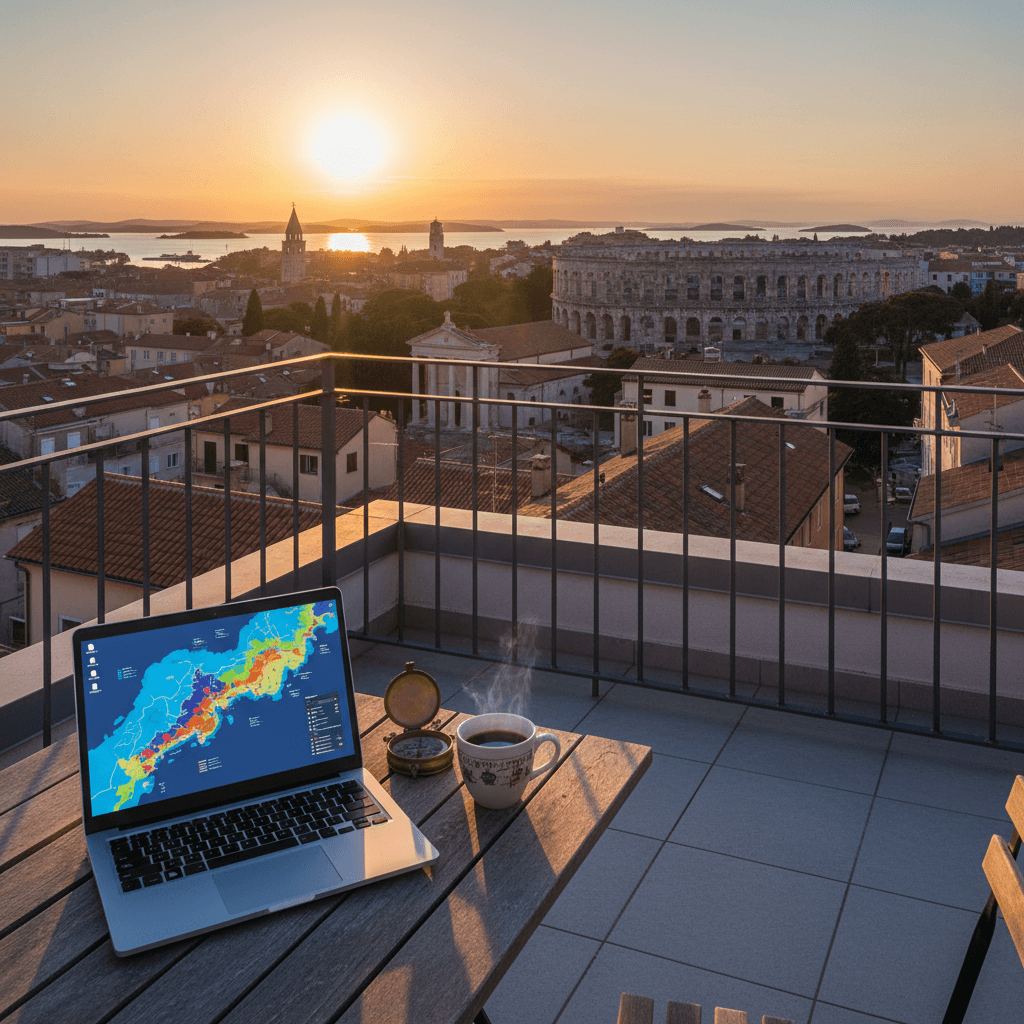
Pula doesn't try to be a polished postcard like Dubrovnik or a glitzy hub like Split. It is a working port city where world-class Roman ruins sit right next to massive cranes and shipyards. This grit gives it an authentic, salt-of-the-earth personality that most nomads find refreshing. You might be answering emails in the shadow of the Pula Arena, the world's sixth-largest Roman amphitheater, only to walk two blocks and find a local dive bar where the prices haven't been inflated for tourists.
The city is known as the "City of Tolerance," and that energy is palpable. There is a slow, steady pace here that favors the long-term traveler over the weekend warrior. While the summer months bring a surge of energy with the Pula Film Festival in July and gladiator reenactments in the Arena, the shoulder seasons are when the city really shines. You get the Istrian gourmet culture, the truffles, and the world-class olive oils without the elbow-to-elbow crowds of the Old Town.
Life on the Istrian Peninsula
Living here feels sustainable. Most nomads spend their mornings at Klub Kotač, a community-driven space located in the Rojc Cultural Center. It is less of a sterile corporate office and more of a creative hub where you’ll find artists, musicians, and tech workers mingling. If you need deep focus, the regional IDA agency provides quieter rooms for Zoom calls and heavy lifting.
When the laptops close, the lifestyle is inherently active. You’ll see expats cycling the Lungomare coastal trails or heading to Šijana Woods for a sunset run. The emotional experience of Pula is one of balance; it’s a place where you can actually hear yourself think, a rare commodity in the increasingly crowded European nomad circuit.
The Neighborhood Breakdown
Choosing where to plant your flag depends on how much you value a sea view versus a short walk to your morning espresso. Most short-termers stick to the Old Town for the history, but long-stayers often look further out for better value.
- Old Town: This is the heart of the action. It is entirely pedestrian-friendly and puts you steps away from the best bars and the Vinski Grad Wine City festivities in July. Expect to pay a premium here, around €2,000 to €3,000 per month for a comfortable mid-range lifestyle. The downside? Some views are blocked by the industrial port, and it gets quiet in the winter.
- Verudela: Located a bit further from the center, this is the playground for sporty nomads. It’s packed with tennis and squash courts and offers the best beach access. It’s a favorite for families and those who prefer a morning swim over a city stroll.
- Stoja: If you're on a budget, Stoja is the practical choice. It has a more industrial, local feel but keeps your monthly costs closer to the €1,200 to €1,800 range. It’s quiet, authentic, and easy on the wallet.
The Nomad Reality Check
Pula isn't perfect, and that's part of its charm. The infrastructure for nomads is still growing. While internet speeds are surprisingly fast even in nearby eco-villages like Banki, there is currently only one main dedicated coworking space. You have to be comfortable with a bit of DIY living. You’ll likely find yourself using njuskalo.hr to hunt for apartments or joining the Expats in Istria Facebook group to find out where the Friday night meetups are happening.
Winter can be a challenge as many Old Town businesses shutter for the season, but the trade-off is having the ancient streets and the Adriatic coast almost entirely to yourself. It is a city that rewards those who stay long enough to learn the local rhythms, find the best seafood stalls in the markets, and appreciate the strange beauty of a Roman temple framed by industrial shipping containers.
The Price of an Istrian Lifestyle
Pula remains one of the more affordable entries into the Mediterranean lifestyle, especially when compared to the skyrocketing costs in Dubrovnik or the more polished streets of Rovinj. While prices have crept up as Croatia fully integrated into the Eurozone, nomads generally find that their money goes further here than in Western Europe or North America. You can expect a high quality of life without the constant financial pressure of a major capital.
The city operates on a seasonal sliding scale. During the peak summer months of July and August, short term rentals and dining prices in the Old Town can spike significantly. Most long term residents recommend securing a lease that starts in the autumn to lock in better rates and avoid the tourist premium.
Monthly Budget Tiers
- The Budget Nomad (€1,200 to €1,800): This tier works if you are comfortable in a shared apartment or a modest studio in Stoja, cooking most meals with fresh finds from the local markets, and using the bus or a bicycle to get around.
- The Mid-Range Professional (€2,000 to €3,000): This is the sweet spot for most. It covers a private one bedroom apartment in a central area, daily cafe visits, several dinners out per week featuring Istrian truffles or seafood, and a dedicated desk at a coworking space.
- The Premium Experience (€3,500+): For those wanting sea views in Verudela, frequent upscale dining in the Old Town, and a rental car for weekend trips to central Istria or the Italian border.
Housing and Accommodation
Finding a place to stay usually involves a mix of local sites like Njuskalo.hr and international platforms. If you are staying for several months, it is often better to book a few nights in a hotel and negotiate a monthly rate in person. Port views in the city center are iconic, but keep in mind that Pula is a working port city; some views include industrial cranes alongside the Roman ruins.
- Old Town Studio: Expect to pay between €600 and €900 per month depending on the season and how modern the renovation is.
- Stoja or Veruda 1BR: These residential areas are often more practical for long stays, with prices ranging from €500 to €800.
- Utilities: Internet, electricity, and water usually add another €100 to €150 to your monthly bill.
Food and Dining
Eating in Pula is a highlight, thanks to the heavy Italian influence on Istrian cuisine. The local market is a budget lifesaver, offering world class olive oils and seasonal produce for much less than you would pay in a supermarket. Street food and quick bites like burek or pizza slices are easy on the wallet, while a mid range meal at a local konoba will usually run you €15 to €25 per person.
- Coffee at a cafe: €2.00 to €3.50
- Local beer (0.5L): €3.50 to €5.00
- Mid-range dinner for two: €45 to €60
- Weekly groceries for one: €50 to €70
Work and Connectivity
While Pula is still growing its dedicated nomad infrastructure, the costs for workspace are manageable. Klub Kotač, located within the Rojc community center, is the primary hub for the remote work crowd. You can typically snag a spot for €10 to €20 per day, though monthly memberships offer much better value if you are staying for the full thirty days. For those who need absolute silence for calls, the IDA (Istrian Development Agency) offers professional rooms that can be booked by the hour or day.
Transportation is another area where you can save. The city is highly walkable, and the local bus network is reliable and cheap. Many nomads choose to rent a bicycle for around €10 to €15 per day for coastal rides, though monthly rentals can be negotiated with local shops for a fraction of that daily rate.
The Solo Nomad: Old Town (Grad)
If you want to step out of your apartment and immediately see a 2,000 year old Roman Arena, the Old Town is your base. It is the heartbeat of Pula, where the narrow stone streets are entirely pedestrian friendly. Most nomads choose this area for its proximity to social hubs like Klub Kotač, the city's primary coworking spot located within the Rojc community center.
Living here means you are minutes away from the morning markets where you can grab fresh truffles and local seafood. However, keep in mind that the port can sometimes block those postcard sea views you might be expecting. While it is the most convenient spot for a short to medium stay, be prepared for a ghost town vibe in the dead of winter when many seasonal cafes shutter their doors.
- Vibe: Historic, social, and walkable.
- Best for: Short term stays and those without a car.
- Monthly Budget: Expect to spend €1,200 to €1,800 depending on how often you eat out near the Arena.
The Long-Term Expat: Stoja
For those planning to stay six months or longer, Stoja offers a more grounded, local experience. It is located near the industrial port, which gives it a grittier feel than the polished Old Town, but the trade off is significantly more affordable rent. You will find larger apartment layouts here that are actually designed for living rather than just a quick tourist turnaround.
Stoja is quieter and more practical. It is close enough to the center to reach by a quick bike ride or a cheap local bus, but far enough away to escape the summer cruise ship crowds. It is a favorite for those who want a "real" neighborhood feel without the premium price tag of the waterfront.
- Vibe: Industrial, quiet, and residential.
- Best for: Budget conscious travelers and long term residents.
- Monthly Budget: A comfortable lifestyle here usually sits around €1,500 to €2,200.
Active Families and Sporty Nomads: Verudela
If your workday isn't complete without a sunset run or a tennis match, head south to Verudela. This peninsula is the greenest part of the city and sits right on the Adriatic. It feels more like a resort than an urban center, featuring squash courts, professional tennis facilities, and easy access to the Lungomare coastal trails.
Families often prefer Verudela because it is safer, cleaner, and has more open space for kids to run around. You won't find the same level of coworking infrastructure here, so most residents rely on high speed home fiber or commute ten minutes into the center. It is the best choice if you prioritize the beach over ancient ruins.
- Vibe: Active, coastal, and upscale.
- Best for: Families and outdoor enthusiasts.
- Monthly Budget: Plan for €3,000+ for a modern apartment with sea views and regular dining.
The Rural Alternative: Central Istria
Some nomads are skipping the coast entirely for the "Istrian Tuscany" experience. Villages like Pazin, Gračišće, and Tinjan are only a 30 to 45 minute drive from Pula but offer a completely different world. You get hyper local culture, ancient stone houses, and surprisingly fast internet even in remote eco villages like Banki Istrian Green Village.
This is the ultimate choice for deep work. You will absolutely need a car to get around, as public transport between these villages and Pula is sparse. It is the perfect setup for someone who wants to spend their weekdays in total silence and their weekends exploring Pula’s wine festivals or Rovinj’s cobblestone streets.
- Vibe: Rural, peaceful, and authentic.
- Best for: Deep work, nature lovers, and those with a rental car.
- Monthly Budget: Highly variable, but a mid range stay usually costs between €2,000 and €2,800 including transport.
Connectivity and Speeds
You won't have to worry about dropping off a Zoom call while working from the Istrian coast. Pula and the surrounding peninsula boast surprisingly robust infrastructure. Most apartments and cafes offer fiber-optic or high-speed VDSL connections that handle video conferencing and large uploads without a hiccup. Even if you decide to base yourself slightly inland in an eco-village like Banki, the rural internet remains remarkably stable.
For mobile data, skip the international roaming and grab a local SIM. Hrvatski Telekom and A1 are the two main players. You can pick these up at any Tisak newsstand or the airport for around €10 to €15, often bundled with massive weekly data packages. 5G coverage is reliable across the city center and extends out toward the Verudela peninsula.
Coworking Spaces
Pula is still finding its footing as a dedicated nomad hub, so the "traditional" coworking scene is intimate rather than sprawling. For coworking, the Istrian Development Agency (IDA) offers professional rooms for hourly or daily rates. It’s a bit more formal, but it’s the go-to for nomads who need a quiet backdrop for high-stakes presentations or a sterile environment for deep work.
While additional coworking spaces have been in the pipeline for a while, the local community still largely revolves around professional agency spaces and the city's vibrant cafe culture.
Laptop-Friendly Cafes
Since dedicated desks are limited, many nomads in Pula adopt a "cafe-hopping" strategy. The city’s coffee culture is strong, and most owners don't mind you staying for a few hours if you’re ordering regularly. The Old Town is packed with spots where you can catch a breeze and a reliable WiFi signal simultaneously.
- Shipyard Pub: A favorite for its industrial vibe and plenty of table space. It gets lively in the evenings, but it's a solid morning work spot.
- Cvajner: Located right on the Forum, this spot offers views of the Temple of Augustus. It’s better for light admin work rather than intense coding, mostly because the view is so distracting.
- Beach Bars: If you have a hotspot, the bars along Lungomare provide the ultimate office view. Just be wary of the midday sun and screen glare.
Practical Tips for Remote Workers
If you're planning to stay during the winter months, be aware that Pula’s pace slows down significantly. Some of the more tourist-oriented cafes in the Old Town shutter until April, meaning your favorite summer workspace might not be available. Most long-termers recommend finding an apartment with a dedicated desk setup, as the "working from a cafe" lifestyle is much easier to maintain from May through October.
Networking happens organically here. Instead of formal "pitch nights," you’ll meet other remote workers over a glass of Malvazija at a wine festival or through local community events. The Expats in Istria Facebook group is also an active resource for troubleshooting tech issues or finding the best local electronics repair shops if your hardware takes a dive.
Personal Safety and Local Vibes
Pula is an incredibly safe home base, even by high Croatian standards. It earned the nickname City of Tolerance for a reason; the local culture is welcoming, laid-back, and generally uninterested in the frantic pace of larger capital cities. You can walk through the Old Town at 2:00 AM without a second thought, and solo travelers frequently report feeling comfortable navigating the city alone at any hour.
While violent crime is almost non-existent, use the same common sense you would in any European tourist hub. During the peak summer months, especially around the Pula Arena or the Pula Film Festival in July, keep an eye on your belongings in crowded areas. Pickpocketing isn't a major issue, but it's the only real "threat" you might encounter during the high season. Once the summer crowds thin out, the city returns to a quiet, neighborhood feel where everyone seems to know everyone else.
If you're staying in Stoja or near the industrial port areas, the vibe is a bit more rugged, but it's still perfectly safe. Most nomads find that the biggest "danger" in Pula is simply the uneven Roman cobblestones or the slippery limestone streets after a light rain. Wear shoes with decent grip if you're exploring the historic center.
Healthcare Infrastructure
The healthcare system in Pula is modern and follows EU standards. For most routine issues, your first stop will be a ljekarna (pharmacy). You'll find these marked by glowing green crosses throughout the city center. Pharmacists here are highly trained, usually speak excellent English, and can provide over-the-counter solutions for minor ailments or direct you to a specialist if needed.
For more serious matters, the Pula General Hospital (Opća bolnica Pula) is the primary facility. It has seen significant upgrades recently and provides high-quality care. If you're a digital nomad on the official Croatian Nomad Permit, you'll likely be required to have private health insurance, but you'll still have access to these public facilities. Expats recommend keeping a digital copy of your policy and passport on your phone, as it speeds up the intake process at private clinics.
- Emergency Services: Dial 112 for all emergencies (police, fire, or ambulance). The operators usually speak English.
- Dental Care: Pula is a popular spot for dental tourism. You'll find several high-end private dental clinics that offer English-speaking staff and lower prices than Western Europe or the US.
- Walk-in Clinics: For non-emergencies that still need a doctor's eye, look for a Dom Zdravlja (Health Center). These are community hubs where you can find general practitioners.
Health Insurance for Nomads
If you're visiting from the EU, your EHIC card covers necessary medical treatments in public hospitals. For those from outside the EU, like Americans or Australians, you'll need a comprehensive travel or international health insurance policy. Most nomads in the Istrian peninsula opt for providers like SafetyWing or PassportCard because they meet the specific requirements for the digital nomad visa and are accepted by local private clinics.
Public healthcare can sometimes involve long wait times for non-urgent specialist appointments. If you're staying long-term and have a specific health concern, many expats suggest using private clinics in Verudela or nearby Rovinj for faster service. Prices for a private GP consultation typically range from €40 to €70, which is quite reasonable for the quality of care provided.
Staying Healthy and Active
Living in Pula makes it easy to maintain a healthy lifestyle. The air quality is excellent, and the local diet is heavy on fresh seafood, olive oil, and Istrian truffles. Most locals stay active by utilizing the Lungomare coastal path for morning runs or evening walks. If you need more structure, the Verudela area is the city's unofficial sports hub, featuring high-quality tennis and squash courts that are popular with the expat community.
Navigating the City on Foot
Pula is a dream for those who prefer to rely on their own two feet. The historic center is largely pedestrianized, allowing you to wander from the Roman Arena to the Temple of Augustus without dodging traffic. Most nomads find that if they live in the Old Town, they rarely need any other form of transport for their daily routine. It is a compact city where your morning coffee, the local market, and your workspace are usually within a 10 to 15 minute stroll.
While the center is walkable, keep in mind that the terrain can be uneven. Those ancient Roman stones are charming but can be slippery when wet. If you are staying further out in neighborhoods like Stoja or Verudela, you will likely want to supplement your walking with a bike or the occasional bus ride.
Public Transit and Ride-Hailing
For longer distances, the local bus network is efficient and easy on the wallet. The yellow Pulapromet buses connect the city center to the outskirts and popular beach spots like Verudela. Tickets are affordable, and you can buy them directly from the driver or at local newsstands (Tisak kiosks) for a slightly better rate. It is the most reliable way to get to the southern beaches if you aren't keen on a long trek in the summer heat.
If you prefer door-to-door service, Uber and Cammeo are the primary ride-hailing options. While they are convenient for a quick trip to the airport or a late night home, availability is not as high as it is in Zagreb or Split. During the peak summer months, expect slightly longer wait times and higher surge pricing. Most locals and long-term expats recommend keeping a local taxi number saved just in case the apps are quiet.
Two-Wheeled Exploration
Cycling is arguably the best way to experience Pula's coastline. The Lungomare trail is a favorite for nomads who want to squeeze in a workout before opening their laptops. You can rent mountain bikes or e-bikes from various local outfits to explore the Šijana Woods or the rugged trails around Pazin.
- Daily Bike Rentals: Expect to pay around €15 to €25 depending on the bike quality.
- E-scooters: These have become increasingly popular for zipping between the port and the residential hills, though they are less ideal for the cobbled streets of the Old Town.
- Bike Infrastructure: While dedicated lanes are still being developed in the city center, the coastal paths are well-maintained and offer some of the best views in Istria.
Regional Travel and Day Trips
Pula serves as the gateway to the rest of the Istrian Peninsula, but you will need a strategy to get out of the city. Pula Airport (PUY) is just a 15 to 20 minute drive from the center. You can hop on the airport shuttle bus for a few euros or grab a taxi for roughly €20 to €30.
To truly see the region, many nomads recommend renting a car for a weekend. While buses run to Rovinj and Poreč, having your own wheels is the only way to reach the hilltop villages of Central Istria or the Plitvice Lakes. For those staying a month or more, look into local car rental agencies rather than the big international brands at the airport to find better long-term rates. If you are heading further afield, the main bus station (Autobusni kolodvor) is the hub for coaches traveling to Trieste, Venice, or Zagreb.
Transport Summary
- Walkability: High in the Old Town and center.
- Bus Ticket: Approximately €1.50 to €2.00 per journey.
- Airport Transfer: €5 for the shuttle or €25 for a private taxi.
- Car Rental: Essential for exploring rural Istria and hidden gourmet spots.
The Istrian Linguistic Blend
In Pula, you'll find a linguistic landscape that reflects its position as a crossroads of Mediterranean history. While the official language is Croatian, Pula is officially bilingual. Because of its deep history with Italy, you'll see street signs in both Croatian and Italian, and many locals speak Italian fluently as a second language. This gives the city a distinct flavor compared to Zagreb or Split, making it feel a bit more like a bridge between Central Europe and the Adriatic.
For digital nomads and expats, the language barrier is remarkably low. English is spoken widely, especially among people under 50 and anyone working in the tourism, tech, or hospitality sectors. You can easily order your truffle pasta or negotiate a bike rental in English without any friction. However, learning a few basic Croatian phrases will instantly change how locals perceive you, turning you from a temporary visitor into a respected neighbor.
Key Phrases for Your Daily Routine
While you can get by with English, mastering these basics will help you navigate the Green Market or the Old Town cafes with more confidence:
- Dobar dan (DOH-bahr dahn): Good day. Use this when entering shops or cafes.
- Hvala (HVAH-lah): Thank you. Simple and much appreciated.
- Molim (MOH-leem): Please, or "You're welcome."
- Bok (Bohk): A versatile "Hi" or "Bye" used informally.
- Pivo, molim (PEE-voh, MOH-leem): A beer, please. Essential for post-work drinks at the Arena.
- Račun, molim (RAH-choon, MOH-leem): The bill, please.
Communication for Nomads
When it comes to staying connected, Pula is surprisingly high-tech. Most nomads find the local infrastructure more than capable of handling heavy Zoom schedules or large file uploads. If you're staying for more than a week, don't rely on roaming. Pick up a local SIM card from providers like Hrvatski Telekom or A1. You can find these at "Tisak" newsstands or dedicated mobile shops in the city center. Expect to pay around €10 to €15 for a weekly unlimited data package, which is a steal for the speeds you get.
If you're heading to the Klub Kotač coworking space or the IDA regional agency for deep work, you'll find the community there speaks excellent English. If you need to handle administrative tasks, like applying for the Digital Nomad Permit, the police station (MUP) usually has staff who can communicate in English, though bringing a local friend or a translator can speed up the more complex paperwork.
Social Etiquette and Networking
Communication in Istria is generally direct but polite. People value their "pomalo" time, a local philosophy of taking things slow and enjoying the moment. Don't be surprised if a business meeting or a networking chat at Rojc takes longer than planned because of a coffee break. It's part of the culture. To meet people, join the Expats in Istria Facebook group or look for "Vinski Grad" events in July, where the language of wine tends to bridge any remaining gaps.
If you're planning a day trip to smaller villages like Gračišće or Tinjan, English proficiency might drop slightly among the older generation, but the hospitality remains high. A smile and a "Dobar dan" go a long way in the rural interior. In Pula itself, the "City of Tolerance" moniker holds true; the locals are used to international residents and are generally patient and helpful when you're struggling with the notoriously difficult Croatian grammar.
The Sweet Spot: May to September
If you want the full Istrian experience, aim for the window between late May and late September. This is when Pula truly wakes up. The Adriatic reaches a comfortable swimming temperature, and the city's calendar fills with events like the Pula Film Festival in July and the Visualia Festival. Nomads who enjoy a social atmosphere prefer this time because the Old Town bars are buzzing and the outdoor terraces are packed with people drinking local Malvazija wine.
The peak of summer, specifically July and August, brings the heat and the crowds. Temperatures often hover around 28°C to 30°C (82°F to 86°F), though it can feel hotter in the stone streets of the city center. While the energy is high, this is also when accommodation prices spike and the Old Town can feel a bit overwhelmed by cruise ship day-trippers. If you’re working on a deadline, you might find the noise levels a distraction during these months.
The Shoulder Season Advantage
Many long-term nomads swear by June and September. You get the warm Mediterranean sun without the punishing humidity or the peak-season price tags. The water is still warm enough for a post-work dip at Verudela or a sunset bike ride along the Lungomare trails. During these months, the city feels more like a community and less like a tourist destination. You'll have better luck finding a quiet corner at Klub Kotač or a table at a local konoba without a reservation.
Winter Reality Check
Pula in the winter is a different beast entirely. From November through March, the city slows down significantly. Temperatures average around 5°C to 10°C (41°F to 50°F). While it rarely snows, the Bura wind can be biting and fierce, making outdoor activities a challenge. Many shops, restaurants, and seasonal rentals in the Old Town shut their doors for the season, which can lead to a bit of "ghost town" vibe for those staying in the center.
However, winter is the best time for deep work. With fewer distractions and lower rental costs, it’s a productive period for those who don't mind the chill. Just be aware that you'll need to be more proactive about your social life, as the spontaneous meetups common in summer disappear. Expats living here year-round usually shift their focus to indoor community hubs like the Rojc Center during these months.
Packing and Seasonal Essentials
- Spring/Autumn: Bring layers. It might be 20°C in the sun, but the temperature drops quickly once you’re in the shade of the Roman ruins or when the sun sets.
- Summer: Light linens and high-quality sun protection are mandatory. If you plan on exploring the rocky beaches of Stoja, pack a pair of sturdy water shoes to protect against sea urchins and sharp stones.
- Winter: A windproof jacket is more important than a heavy parka. The humidity and wind are what will get to you, rather than the raw temperature.
Key Dates to Remember
- Pula Film Festival (July): The Arena becomes a massive open-air cinema. It's an incredible experience, but book your housing months in advance.
- Vinski Grad / Wine City (July): A major social highlight for the nomad community, featuring the best of Istrian gourmet culture.
- Truffle Season (September to November): If you’re a foodie, this is the prime time to head into central Istria for foraging events and specialized menus.
Making the Move: Cost of Living
Pula is significantly more affordable than the tourist heavyweights of Dubrovnik or Split. Most nomads find they can live comfortably here on a monthly budget of €2,000 to €3,000. This covers a private apartment, frequent cafe visits, and plenty of Istrian truffles. If you are watching your wallet, a budget of €1,200 to €1,800 is doable if you share housing in the Old Town and stick to local markets and street food.
Housing prices fluctuate based on the season. To find the best deals, skip the international portals and check njuskalo.hr, though you will likely need a browser translator. For short term stays, NomadStays and Airbnb are the standard, but booking for the winter months often yields heavy discounts as the summer crowds vanish.
- Coffee in a cafe: €2 to €4
- Mid range dinner for two: €40 to €60
- Monthly bus pass: €40
- Local SIM card (Hrvatski Telekom or A1): €10 to €20
The Neighborhood Breakdown
Where you plant your flag depends on whether you want Roman ruins at your doorstep or the sea breeze in your window. The Old Town is the heartbeat of the city. It is entirely pedestrian friendly and puts you within walking distance of the Arena and the best bars. The downside is the summer noise and the fact that many businesses shutter during the deep winter.
Verudela is the go to for active types. It is further from the center but sits right by the beach with easy access to tennis and squash courts. If you want something more industrial and budget friendly, Stoja offers a quieter, residential feel near the port. For those who prefer total seclusion, towns like Pazin or Gračišće in Central Istria offer fast internet in a rural setting, though you will definitely need a car to get into Pula from there.
Workspace and Connectivity
Internet reliability is a major plus in Istria. Even in rural eco villages like Banki Istrian Green Village, you will find speeds fast enough for seamless Zoom calls. Within Pula itself, the coworking scene is small but tight knit. Klub Kotač, located inside the Rojc community center, is the primary hub for nomads. It is more of a cultural club than a corporate office, which makes it great for meeting locals.
For deep work sessions, the IDA (Istrian Development Agency) offers professional rooms. If you prefer the cafe office vibe, the waterfront cafes near the Adriatic offer free WiFi and a productive morning atmosphere. Just keep in mind that Pula is still developing its nomad infrastructure, so your "office" might often be a sturdy kitchen table or a quiet corner in a bistro.
Getting Around
If you stay in the Old Town, your primary mode of transport will be your own two feet. The city is highly walkable, and the local bus network is reliable for reaching the outskirts. For exploring the wider Istrian peninsula, a car is a necessity. You can pick up rentals at Pula Airport (PUY), which is about a 20 minute drive from the city center.
Cycling is a lifestyle here rather than just a way to get around. Many nomads rent bikes to ride the Lungomare trails or the Šijana Woods. Apps like Uber and Cammeo operate in the city, but they are less ubiquitous than in Zagreb, so don't rely on them for last minute airport runs during the off season.
Safety and Health
Pula is remarkably safe. You can walk through the Old Town at 2:00 AM without a second thought. Standard common sense applies during the peak of summer when pickpockets might target crowded tourist spots around the Arena, but violent crime is almost non existent. For healthcare, the Pula General Hospital provides EU standard care. Pharmacies are easy to spot by their glowing green crosses and are well stocked with English speaking staff.
Social Life and Integration
Breaking the ice in Pula happens at festivals and community hubs. The Rojc center is the place to go for dance, music, and meeting the creative crowd. During the summer, the Pula Film Festival in July and the Vinski Grad (Wine City) event are the social peaks of the year. For digital networking, the "Expats in Istria" Facebook group is the most active resource for finding meetups or getting advice on local bureaucracy. Locals are generally polyglots, often speaking excellent English and Italian, which makes the transition much smoother than in other Mediterranean hubs.
Need visa and immigration info for Croatia?
🇭🇷 View Croatia Country GuideEasy Landing
Settle in, no stress
Monthly Budget Estimates
More cities in Croatia
Osijek
🇭🇷 Croatia
Zagreb
🇭🇷 Croatia
Zadar
🇭🇷 Croatia