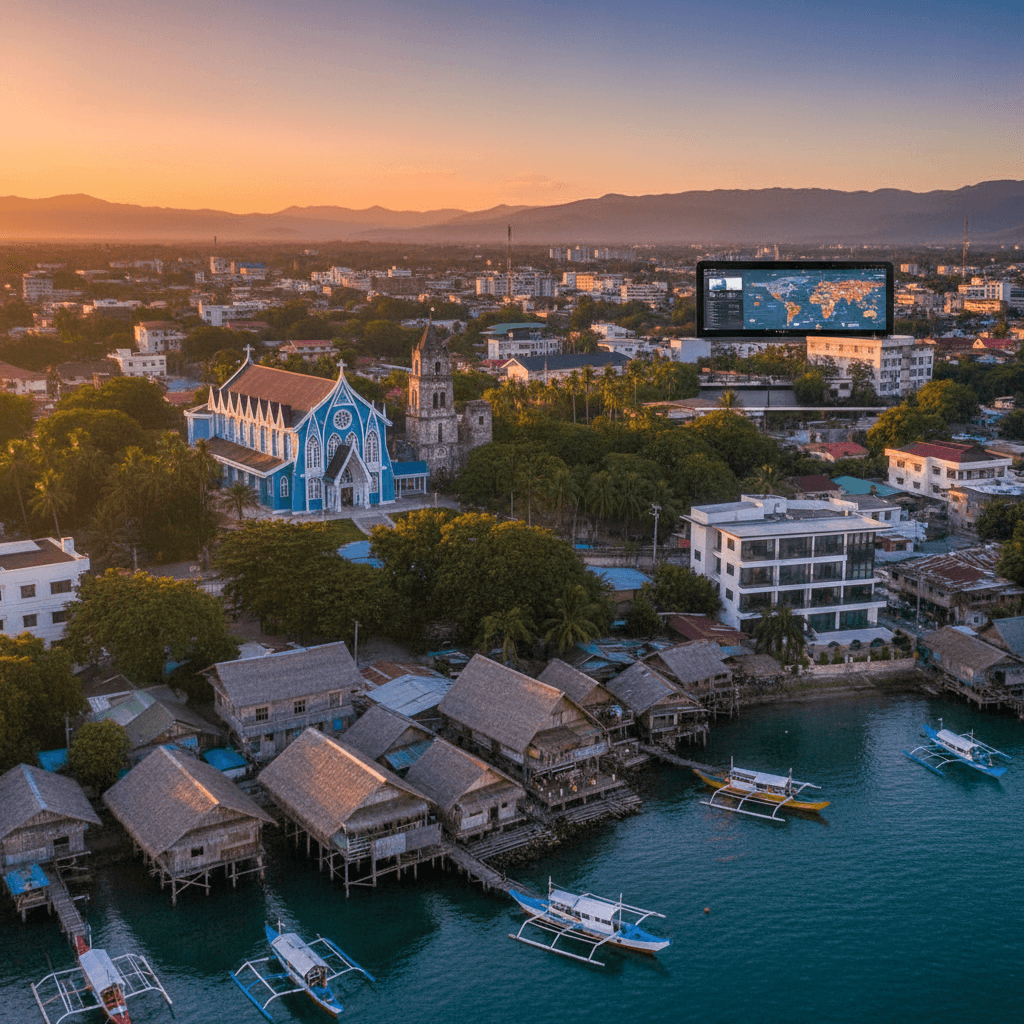
Puerto Princesa
🇵🇭 Philippines
The Gateway with a Soul
Puerto Princesa is often unfairly labeled as just a pitstop on the way to El Nido, but for the digital nomad who values sanity over hype, it's the real sweet spot of Palawan. It feels like a provincial capital that hasn't quite realized it's a city yet. You get the infrastructure of a regional hub, like the SM Mall and a functional airport, but the pace remains stubbornly relaxed. It’s a place where you can spend your morning on a Zoom call and your afternoon watching monitor lizards in a mangrove forest.
The vibe here is focused on nature and balance. Unlike the frantic energy of Manila or the overpriced tourist bubble of Coron, Puerto Princesa is approachable and grounded. Locals are exceptionally welcoming, and there's a genuine sense of community at the Baywalk Park, where you'll find expats doing sunset yoga and nomads grabbing a post-work beer. It’s the kind of place where the tricycle driver remembers your name after two days, and the "urban" noise is more likely to be a rooster than a siren.
The Reality of Island Life
Living here requires a specific mindset. You have to embrace the "brownout" culture. Power outages are a fact of life, and while the city proper has the most stable grid in Palawan, seasoned nomads always keep a charged power bank and a Smart Pocket WiFi device handy. It’s a small price to pay for the cost of living. When your monthly electricity bill can drop as low as $1.68 and a P10 tricycle ride takes you anywhere in the center, the occasional flickering light becomes a quirky part of the charm rather than a dealbreaker.
Most nomads find the work-life integration here superior to the more famous beach towns. Because the internet is actually functional in the city center, you aren't constantly stressed about connectivity. You can hunker down at VR’s Cafe on Burgos Street or Heideland for a few hours of deep work, then head out to Honda Bay for some island hopping at Starfish Island without feeling like you're falling behind on your deadlines.
A Tropical Work Base
What makes Puerto Princesa different is its accessibility. You can live in a modern subdivision like Futura Homes or West Palms for $200 to $400 a month and still be minutes away from a massive cave system or a white sand beach. It doesn't feel like a transient backpacker trail; it feels like a home. Travelers often say they came for the Underground River but stayed for the ease of life.
The emotional experience of being here is one of relief. There’s a lack of pretension that’s refreshing. You aren't competing with "influencers" for the best photo spot. Instead, you're sharing a P50 plate of street food with a local or joining a weekend meetup at a hostel to plan a trek. It’s a city that invites you to slow down, breathe the clean air, and actually enjoy the "nomad" part of your lifestyle without the usual metropolitan burnout.
- The "Love" List: Low costs, walkable city center, fastest internet in Palawan, and easy access to world class nature.
- The "Hate" List: Frequent brownouts, limited dedicated coworking spaces, and inconsistent WiFi once you leave the main urban core.
- The Sweet Spot: Living near Burgos Street for the best cafe access while keeping your weekends free for Sabang adventures.
The Price of Paradise
Puerto Princesa is one of those rare spots where your bank account can actually take a breather. It is significantly more affordable than Manila or Cebu, and your dollar goes much further here than in the tourist-heavy north of Palawan. Most nomads find they can maintain a high quality of life without the constant financial stress of larger hubs.
Depending on your lifestyle, you can expect to spend between $500 and $1,500 per month. If you are living like a local, eating street food, and staying in a simple studio, you can easily stick to the lower end of that range. If you want air conditioning running all day, western meals, and a modern condo, you'll land in the mid-range bracket.
Monthly Budget Tiers
- Budget Nomad ($500 to $800): You'll be staying in local guesthouses or long-term hostel dorms, eating at "carinderias" (local eateries), and using public tricycles to get around.
- Mid-Range ($800 to $1,500): This covers a private, furnished apartment in a subdivision, daily cafe visits for work, and frequent weekend trips to places like Honda Bay.
- Comfortable ($1,500+): At this level, you are living in the best available housing, dining at upscale restaurants every night, and likely renting your own scooter or car for total independence.
Housing and Rent
The rental market is quite friendly to expats, especially if you look slightly outside the immediate city center. Many long-termers recommend the Futura Homes or West Palms subdivisions. These areas offer quiet, secure environments with furnished houses or apartments usually priced between PHP 10,000 and PHP 20,000 ($200 to $400) per month.
If you prefer to be within walking distance of the action, look for rentals near the SM Mall or Burgos Street. Being in the city proper means you are closer to the fastest internet connections and the best cafes, though you might deal with a bit more noise. Expect to pay similar prices for a decent studio, though short-term stays will always carry a premium.
Food and Dining
Eating out is a major highlight here because it's both cheap and high quality. You can grab a quick street food snack or a local meal for PHP 50 to PHP 100 ($1 to $2). It is one of the few places where you can eat until you're full for the price of a coffee back home.
When you need a "work-from-cafe" day, mid-range spots like VR’s Cafe or Heideland usually charge between PHP 200 and PHP 400 ($4 to $8) for a solid meal and a drink. If you are craving a fancy dinner at an upscale restaurant, you will rarely spend more than PHP 500 ($10) per person unless you are ordering top-shelf alcohol.
Utilities and Connectivity
One of the biggest surprises for expats is the low cost of basic utilities. Some travelers have reported monthly electricity bills as low as PHP 200 to PHP 500 for minimal usage, assuming you aren't blasting the AC 24/7. Water is similarly negligible in your monthly budget.
Since the city is prone to occasional brownouts, you'll want to budget for a Smart Pocket WiFi device. These cost about $20 upfront, and you can reload them with LTE data as needed. It's a non-negotiable expense for anyone working online, serving as a vital backup when the local grid decides to take a nap.
Transportation
Getting around is incredibly cheap. The iconic tricycle is the primary mode of transport, and a standard ride within the city center usually costs just PHP 10 ($0.20). The city is surprisingly walkable, especially if you stay near the airport or the Baywalk Park area, which can save you even more on daily transit. If you want more freedom, you can rent a scooter for roughly PHP 500 ($9) per day, though you can usually negotiate a much better rate for weekly or monthly rentals.
For Nomads: The City Proper
If you're in Puerto Princesa to work, the City Proper is your only realistic home base. This area, centered around Burgos Street and the SM City Puerto Princesa mall, provides the most stable infrastructure in Palawan. You can walk to almost everything, from the public market to the airport, which is a rare convenience for a tropical hub. Most nomads find that staying here minimizes the stress of the city's frequent brownouts since many hotels and cafes have backup generators.
The connectivity here is the fastest on the island, though you should still grab a Smart Pocket WiFi at the mall for about $20 as a backup. For a workspace, VR’s Cafe on Burgos Street is the go-to neighborhood spot where you'll see other laptops open. If you need a more corporate vibe with reliable AC, head to The Coffee Bean & Tea Leaf or Seattle’s Best inside the SM mall. You'll pay around $4 to $8 for a mid-range meal in these spots, keeping your daily overhead low.
For Expats: Futura Homes and West Palms
Expats looking for a sense of community and a break from the urban noise usually gravitate toward established subdivisions like Futura Homes or West Palms. These gated communities offer a more "suburban" feel with paved roads and 24/7 security. You won't find the same walkability as the city center, so you'll likely need to budget for a scooter rental or get comfortable with the P10 tricycle rides into town.
Rent in these areas is incredibly affordable for those staying mid-to-long term. You can often find a furnished 1-bedroom house or studio for PHP 10,000 to 20,000 per month, which is roughly $200 to $400. It's a quieter lifestyle where your biggest monthly expense might be a surprisingly low electricity bill; some residents report basic utilities as low as $2 if they aren't blasting the AC all day. For groceries and social life, Heideland Bar and Cafe is a popular expat haunt nearby for a solid meal and a cold beer.
For Solo Travelers: Baywalk Park and the Airport Perimeter
Solo travelers should stick to the area surrounding Baywalk Park and the airport. This is the heart of the city's social scene and the easiest place to book last-minute tours to the Underground River or Honda Bay. The Baywalk comes alive at night with open-air food stalls and locals jogging or doing yoga. It's safe, well-lit, and makes it easy to meet other travelers without needing to navigate complex transport.
Living here means you're never more than a ten-minute walk from a P50 street food meal or a backpacker hostel. While the city center can feel a bit gritty compared to the pristine beaches of El Nido, solo travelers appreciate the accessibility. You can walk straight out of the airport and be at your accommodation in minutes, avoiding the "tourist tax" often charged for long van transfers in other parts of the Philippines.
For Families: The Northern Suburbs
Families generally prefer the outskirts of the city proper where there's more green space and less traffic. Staying near the San Jose area provides a balance between local life and modern convenience. You're close enough to the Robinsons Palawan mall for western groceries and pharmacies but far enough away from the dense tricycle traffic of the main pier.
Housing here tends to be larger, often featuring small yards or gardens that are hard to find in the City Proper. While the internet can be slightly more temperamental the further you get from the center, the trade-off is a much higher quality of life for kids. Most families find that a comfortable lifestyle here, including a spacious rental and regular dining out, still sits well under $1,500 a month.
Connectivity Realities
Puerto Princesa serves as the digital lifeline of Palawan. While remote islands like El Nido often struggle with spotty signals, the city proper offers the most stable fiber and LTE connections in the province. Most nomads find the speeds sufficient for video calls and heavy uploads, but there is a local catch you have to prepare for: brownouts. Power outages are a part of life here, and they can strike without much warning.
To stay online, expats recommend a two-pronged strategy. First, pick up a Smart Pocket WiFi device for around $20 at the SM Mall or local markets. Second, keep a high-capacity power bank charged at all times. By combining a local SIM with a portable router, you can usually bridge the gap during short outages. If the power stays out longer, the larger cafes and hotels in the city center often have backup generators to keep the WiFi humming.
Top Places to Work
You won't find the massive, dedicated coworking hubs common in Manila or Cebu here. Instead, the nomad scene revolves around work-friendly cafes and hotel lobbies. These spots are generally welcoming to laptop users, provided you're ordering food or coffee.
- VR’s Cafe Palawan: Located on Burgos Street, this is a local favorite for its reliable atmosphere and power outlets. It is often cited as the go-to spot for meeting other remote workers.
- Heideland Bar, Cafe and Kitchen: Found on Abad Santos Street, this spot offers a more varied menu and a steady connection. It is a solid choice if you need a full meal while clearing your inbox.
- SM Puerto Princesa: The mall is a reliable backup. Chains like The Coffee Bean & Tea Leaf and Seattle’s Best offer one hour of free WiFi, though it is best to bring your own router if you plan to stay longer.
Digital Nomad Strategy
For the best experience, stick to the City Proper or neighborhoods near Burgos Street and Baywalk Park. These areas have the highest density of fiber-connected establishments. If you venture into the more residential Futura Homes or West Palms subdivisions, you will enjoy lower rent and more peace, but you will definitely need to verify the internet setup with your landlord before signing a lease.
Most travelers say that while the infrastructure isn't world-class, the trade-off is worth it. You can spend your morning finishing a project at a cafe for the price of a $4 latte and your afternoon taking a P10 tricycle ride to the bay for yoga or a sunset run. Just remember to reload your LTE data at any local convenience store and keep your gadgets topped up. If you manage your expectations around the occasional power dip, Puerto Princesa is an incredibly affordable and functional tropical base.
Personal Safety and Atmosphere
Puerto Princesa is widely considered one of the safest urban hubs in the Philippines. The city maintains a relaxed, small town feel despite being the gateway to Palawan. Locals are known for their hospitality and warmth toward foreigners, making it a comfortable base for solo travelers and digital nomads alike. You won't find the aggressive street hawking common in Manila or Cebu; instead, the vibe is respectful and laid back.
While there are no specific "no-go" zones in the city proper, standard common sense applies. Keep an eye on your belongings in crowded areas like the Old Public Market or during late night walks along the Baywalk Park. Petty theft is rare but not non-existent. Most nomads feel perfectly fine walking between the SM Mall and their nearby rentals after dark, as the central streets are generally well lit and active.
Healthcare Facilities
The healthcare infrastructure in Puerto Princesa is the most developed on the island, though it remains modest compared to international standards. For minor ailments, the city is packed with Mercury Drug and Watsons pharmacies where you can find most over the counter medications and basic first aid. Many of these are located inside the SM City Puerto Princesa mall or along Rizal Avenue.
If you need a doctor, the city center has several private clinics and hospitals. While quality varies, these facilities are capable of handling routine checkups, infections, and basic emergencies. For anything specialized or life threatening, expats often recommend heading back to Manila. It is highly recommended to have travel insurance that covers medical evacuation, just in case. Most clinics and hospitals expect cash payment upfront, so keep your receipts for reimbursement later.
Environmental and Practical Health Tips
The biggest health risks here aren't crime related but environmental. The tropical sun is intense, especially if you are out on a boat at Honda Bay. Heat exhaustion is a real threat for those not used to the humidity. Drink plenty of bottled water; while the city's water system is better than most, most nomads stick to purified water which costs about P30 to P50 for a large five gallon jug delivered to your door.
Mosquito borne illnesses like Dengue occur periodically, particularly during the rainy season. Use repellent if you are heading to the more forested areas or staying in open air accommodations. If you are planning to explore the Underground River or trek through the jungle, a basic travel kit with antiseptic and rehydration salts is a smart move.
Emergency Information
In the event of an emergency, don't expect a lightning fast response from traditional emergency services. It is often faster to hail a tricycle and head directly to the nearest hospital. Tricycles are everywhere and a ride within the city usually costs just P10 to P20.
- Local Police: Reach out to the station near the City Hall for assistance with reports or lost items.
- Major Hospitals: Palawan Adventist Hospital and Ospital ng Palawan are the primary facilities in the city.
- Connectivity Backups: Because power outages or "brownouts" are common, keep your phone and a Smart Pocket WiFi device charged. This ensures you can always access maps or contact help even when the grid goes down.
Overall, the biggest "danger" you’ll likely face is a spotty internet connection during a deadline. As long as you respect the local environment and stay hydrated, Puerto Princesa is a very low stress place to live and work.
The Tricycle is King
In Puerto Princesa, the tricycle is the undisputed backbone of local transit. These motorized sidecars are everywhere, and they're the most practical way to zip between your apartment, the SM Mall, or a cafe. For a standard trip within the city proper, expect to pay around PHP 10 per person. If you're heading further out or have heavy luggage, you might need to negotiate a "special" trip price, which usually lands between PHP 50 and PHP 150 depending on the distance.
Unlike Manila or Cebu, you won't find Grab or other major ride-hailing apps operating here yet. You'll rely on flagging down drivers the old-fashioned way. Most travelers find the system surprisingly efficient once they get the hang of the routes. If you're staying in the city center near Burgos Street or the airport, you'll actually find that many essentials are within a 10 to 15 minute walk, making transport costs negligible for the day-to-day grind.
Two Wheels for Total Freedom
If you're planning to stay for more than a week, renting a scooter is the move. It gives you the freedom to explore the outskirts without haggling over tricycle fares every time you want to see the coast. Daily rentals typically hover around PHP 500, but you can often negotiate a monthly rate of PHP 6,000 to PHP 8,000 if you're sticking around. Just keep an eye on your fuel; while gas is affordable, you'll want to top up before heading into more rural areas where stations are sparse.
The roads in the city proper are well-paved, but traffic can get a bit hectic during the morning and afternoon school runs. Expats recommend wearing a helmet not just for safety, but because local traffic enforcers are strict about it. Parking is generally easy to find near the major malls and markets like the Old Public Market or the New Market in San Jose.
Navigating the Neighborhoods
Where you choose to live dictates how you'll get around. If you're based in the City Proper near the Baywalk, you'll likely walk to most of your work sessions at VR’s Cafe or Heideland. However, if you opt for the quieter, more residential vibes of Futura Homes or West Palms, you'll definitely need a dedicated set of wheels. These subdivisions are great for focus, but they're far enough from the hub that relying solely on tricycles can become a chore.
- Walking: Best for the City Proper, Baywalk Park, and the area around SM Puerto Princesa.
- Tricycles: PHP 10 for short shared hops; PHP 50+ for private "special" trips.
- Scooter Rentals: Approximately PHP 500 per day or PHP 7,000 per month.
- Jeepneys: Used for longer routes to the outskirts like Santa Lourdes for about PHP 15 to PHP 30.
Arrival and Departure
One of the best things about Puerto Princesa is the airport's location. It’s practically in the middle of the city. If you’re traveling light and staying in a central hostel or hotel, you can actually walk from the terminal to your accommodation. Most nomads just grab a tricycle outside the gates for a quick 5-minute ride. For those heading straight to El Nido after a few days in the city, shared vans leave frequently from the San Jose Terminal. A seat usually costs around PHP 650-800, and the journey takes about 5 to 6 hours on winding roads.
The Linguistic Landscape
You'll find that communication in Puerto Princesa is incredibly straightforward. English is widely spoken throughout the city, particularly in the city center and tourist hubs like the SM Mall or the Baywalk Park area. Most locals are bilingual, switching effortlessly between Tagalog, the local Cuyonon dialect, and English. This makes it one of the easiest tropical bases for nomads to settle into without a massive language barrier.
In the service industry, from the tricycle drivers charging P10 per ride to the baristas at local cafes, English is the standard for business. You won't need to learn the local dialect to sign a lease at Futura Homes or West Palms, though learning a few Tagalog basics goes a long way in building rapport with the community.
Essential Local Phrases
While you can get by entirely in English, using a bit of Tagalog shows respect for the culture. It's the quickest way to turn a standard transaction into a friendly conversation. Here are the staples you'll actually use on the ground:
- Salamat: Thank you. (Use "Salamat po" to be extra polite to elders).
- Magkano?: How much? (Useful at the local markets near the airport).
- Para po: I'm getting off here. (Say this to your tricycle driver when you reach your destination).
- Ingat: Take care. (A common way to say goodbye).
- Masarap: Delicious. (Say this after finishing a P50 plate of street food).
Digital Communication and Connectivity
Staying connected is where things get a bit more technical. While the city proper has the fastest internet in Palawan, the infrastructure is still prone to the occasional "brownout." Most nomads recommend a multi-layered approach to stay online during work hours. Don't rely solely on your accommodation's WiFi, especially if you have video calls scheduled.
Expats generally suggest picking up a Smart Pocket WiFi device for about $20 at the mall. It’s a lifesaver because it allows you to combine signals and provides a backup when a cafe's router goes down. For your phone, a local SIM card with LTE reloads is cheap and effective for using Google Translate or looking up directions while wandering through the city center.
Social Etiquette and Communication Styles
The vibe in Puerto Princesa is noticeably slower and warmer than Manila. People here value "Pakikisama," which roughly translates to keeping things harmonious. If you encounter an issue, like a slow internet connection or a delayed meal, a patient and smiling approach works much better than being pushy. Travelers often note that the locals are exceptionally welcoming, and a "hello" or a nod of the head is the standard greeting when passing people in the more residential neighborhoods.
If you're looking to meet other English speakers or fellow nomads, head to the hostels or work-friendly spots like Heideland Bar, Cafe and Kitchen. These are the informal hubs where the digital scene gathers. Because the community is still growing, people are usually very open to chatting about the best spots for a weekend trip to Honda Bay or sharing tips on which cafes have the most reliable power outlets during a storm.
The Sweet Spot: Dry Season (November to May)
If you're planning your stint in Puerto Princesa, timing is everything. Most nomads and expats aim for the window between November and May. This is the tropical dry season, where you'll get the most stable weather for island hopping in Honda Bay or heading out to the Underground River. The skies are generally clear, and the humidity, while always present, feels a bit more manageable when there's a sea breeze.
The peak of the heat hits in April and May. During these months, temperatures regularly climb to 33°C or 34°C (around 92°F). It's the kind of heat that makes air conditioning a non-negotiable requirement for your workspace. If you're staying in the City Proper, you'll find yourself retreating to the SM Mall or cafes like VR’s Cafe Palawan during the mid-afternoon sun to stay productive without melting.
- Best for Sun: February to April (lowest rainfall)
- Best for Cool Air: December and January (slightly lower humidity)
- Highest Temperatures: April and May
The Wet Season: June to October
The rains usually arrive in June and stick around through October. This doesn't mean it rains all day, every day; usually, you'll see heavy afternoon downpours followed by humid, clear evenings. However, for a digital nomad, this season brings a specific challenge: the dreaded brownouts. Power outages become more frequent during stormy weather, and while the city is better equipped than El Nido, you'll definitely want a solid power bank and a Smart Pocket WiFi device as a backup for when the hotel fiber goes dark.
The upside to visiting during the rainy months is the drop in prices. You can often negotiate better long term rates at places like West Palms or Futura Homes. The city is also much quieter, meaning you won't have to fight for a seat at the best work friendly spots like Heideland Bar or Seattle’s Best Coffee.
Planning for the "Brownouts"
Regardless of the month, Puerto Princesa has a bit of an unstable relationship with its power grid. Travelers often mention that even on a sunny day in March, the power might flicker out for an hour. Most seasoned expats keep their laptop batteries topped off at all times. If you're here during the wetter months of August or September, this happens more often. Always have a data plan ready on your phone so you can hotspot immediately and keep your Zoom calls running.
What to Pack
Since the temperature rarely drops below 24°C (75°F), even at night, your wardrobe should be almost entirely lightweight linen or cotton. If you're visiting during the transition months like November, a light rain jacket is smart for those sudden tropical bursts. For those planning to work from the Baywalk Park area in the evenings, a bit of mosquito repellent is a must once the sun goes down, especially during the more humid months.
- Daily Essentials: High SPF sunscreen, insulated water bottle, and a universal power adapter.
- Tech Gear: A high capacity power bank (20,000mAh+) and a portable LTE router.
- Footwear: Breathable sneakers for the city and sturdy sandals for boat tours.
Most nomads find that January offers the perfect balance. The holiday crowds have thinned out, the weather is dry enough for weekend trips to the beach, and the temperatures are comfortable enough to walk between your apartment and the local markets without needing a shower the moment you arrive.
Connectivity and Power Management
Puerto Princesa is the most reliable base for remote work in Palawan, but it still requires a bit of strategy. While the city center has the fastest fiber internet on the island, you'll need to prepare for intermittent power outages, locally known as brownouts. Most seasoned nomads carry a high capacity power bank and a Smart Pocket WiFi device as a backup. You can pick these up for about $20 at the SM Mall or local markets. Load it with LTE data to ensure you don't drop off a Zoom call when the grid flickers.
For a stable workspace, head to VR’s Cafe on Burgos Street or Heideland Bar, Cafe and Kitchen on Abad Santos Street. These spots are popular because they generally allow you to plug in and stay for a few hours. If you need air conditioning and a guaranteed signal, the cafes inside SM Puerto Princesa, like Seattle’s Best or The Coffee Bean & Tea Leaf, offer free WiFi for the first hour and are reliable fallback options during midday heat.
Cost of Living Breakdown
Your budget here goes significantly further than in Manila or Cebu. Most digital nomads find they can live comfortably on $800 to $1,500 per month, though budget travelers often squeeze by on $500 if they stick to local markets and fan-cooled rooms.
- Housing: A furnished studio in neighborhoods like Futura Homes or West Palms typically runs between PHP 10,000 and PHP 20,000 ($200 to $400) per month.
- Dining: Expect to pay PHP 50 to 100 ($1 to $2) for street food or PHP 200 to 400 ($4 to $8) for a solid meal at a mid-range cafe.
- Utilities: Electricity is surprisingly affordable; some residents report monthly bills as low as PHP 84 ($1.68), though using air conditioning will push that higher.
Getting Around the City
The city proper is remarkably walkable, especially the area around the Baywalk Park and the airport. For longer distances, the tricycle is the king of the road. A standard hop within the city costs just PHP 10 ($0.20). If you prefer more autonomy, you can rent a scooter for around PHP 500 ($9) per day, which is the best way to scout out quieter beaches or visit the Underground River on your own schedule.
Safety and Local Etiquette
Puerto Princesa is widely considered one of the safest urban hubs in the Philippines. The locals are exceptionally welcoming to foreigners, and solo travelers rarely report issues beyond the usual need to watch your belongings in crowded markets. English is spoken fluently by almost everyone you'll encounter in shops and cafes, making it easy to negotiate rentals or ask for directions.
When you're looking to socialize, the Baywalk at sunset is the place to be. It's where expats, nomads, and locals congregate for evening runs or yoga. For a more structured social scene, the city's backpacker hostels are the primary spots for meeting people to share the cost of boat tours to Honda Bay or Starfish Island.
Need visa and immigration info for Philippines?
🇵🇭 View Philippines Country GuideEasy Landing
Settle in, no stress