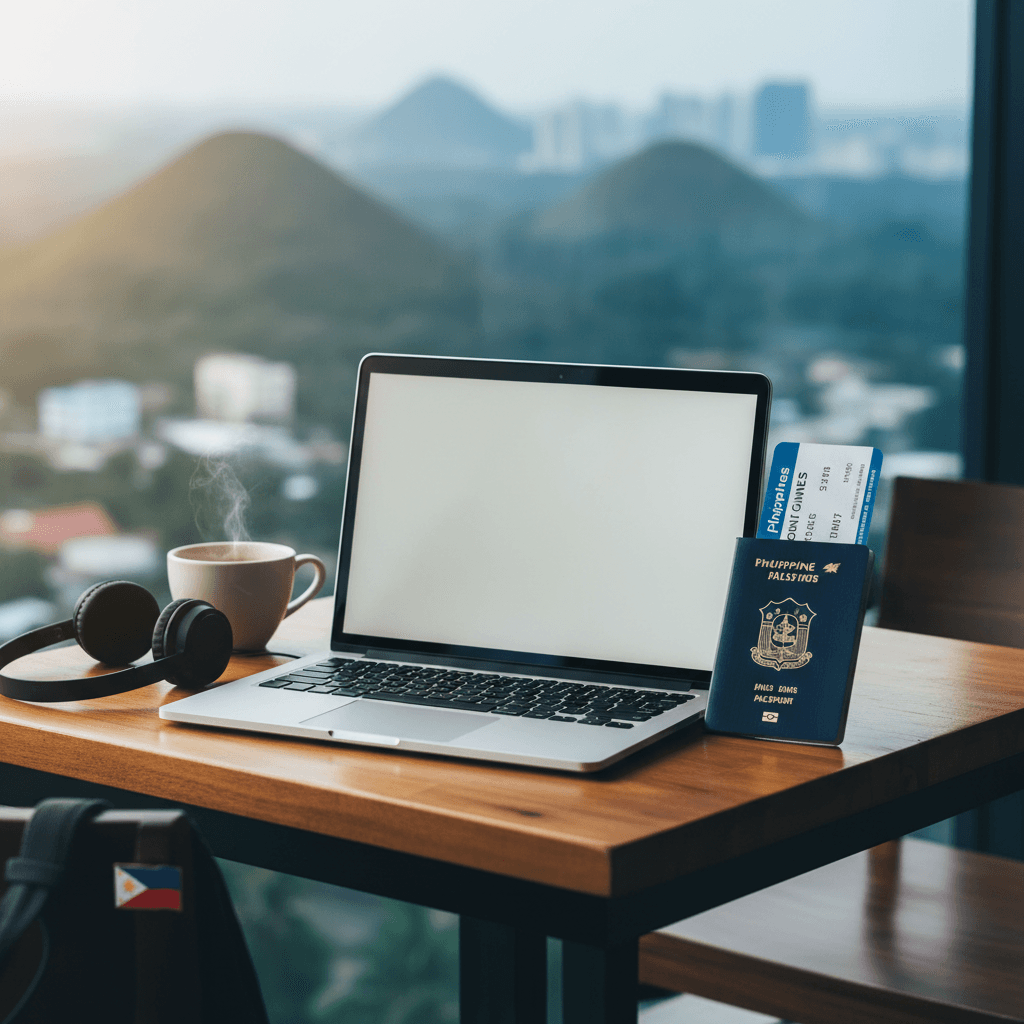
Philippines

Policy Stability
Stamped Nomad ExclusiveHow likely visa and immigration policies are to remain unchanged
Quick Facts
No
$850/mo
189 Mbps
6/10
High
High
High
PHT (UTC+8)
Entry Methods Available
Best For
Last verified: September 25, 2026
Compare Visa Programs
| Program | Best for | Minimum income or savings | Government fee | Initial stay | Where to apply |
|---|---|---|---|---|---|
| Philippines Special Resident Retiree's Visa (SRRV) | Retirement Visa | $800 a month | $1,500 one-time | Indefinite stay with multiple entry while the deposit is maintained and annual fees are paid. | With the Philippine Retirement Authority in the Philippines, while holding a valid tourist visa or visa-free stay; the deposit is remitted from a bank abroad to a PRA-accredited bank. |
The Philippines has no digital nomad visa that can be applied for today. An executive order in 2025 provided for one, but no application channel was open on official immigration or e-visa pages when this guide was checked in September 2026. Remote workers therefore choose between short visa-free stays and, for those over 40, the retirement visa.
Choosing a route
- Short and medium stays: nationals of countries under Executive Order 408 enter without a visa for an initial 30 days. Longer stays run on extensions from the Bureau of Immigration, and some nationalities get a different initial period.
- People aged 40 or older who want to settle: the Special Resident Retiree's Visa gives indefinite stay in exchange for a dollar deposit of at least $15,000 and an annual fee. It also exempts holders from separate work permits.
Anyone under 40 without a Philippine employer has no long-stay route built for remote work, so planning around visa-free extensions is the practical option until the digital nomad visa opens.
The Philippines uses the peso (PHP), so costs for someone paid in dollars or euros move with the exchange rate. In Numbeo's crowd-sourced prices, a single person's monthly spending excluding rent was about PHP 34,000 to 36,000 in the three cities with full data.
| City | One-bedroom, outside the center | One-bedroom, center | Other monthly costs | Monthly total | Numbeo data |
|---|---|---|---|---|---|
| Quezon City | PHP 11,840 | PHP 20,000 | PHP 36,263 | PHP 48,100 to 56,300 | May 2026 |
| Davao City | PHP 10,760 | PHP 17,300 | PHP 33,991 | PHP 44,800 to 51,300 | May 2026 |
| Cebu City | PHP 19,050 | PHP 31,278 | PHP 34,712 | PHP 53,800 to 66,000 | June 2026 |
| Taguig (BGC) | PHP 26,851 | PHP 32,500 | not published | not published | April 2026 |
Each total adds the average one-bedroom rent, outside the center and in it, to Numbeo's estimate of a single person's other monthly costs. The figures are averages of user reports, not official statistics.
At the ECB reference rate of Sept. 24, 2026, that is roughly $710 to $820 a month in Davao, $770 to $900 in Quezon City and $860 to $1,050 in Cebu City. Rents in Taguig's business district run well above the other cities, and furnished short lets in any of them cost more than the long-term averages.
- Taguig (BGC) and Makati: Metro Manila's business districts, with the most coworking spaces, modern apartments and international restaurants, at the highest rents in the country.
- Cebu City: the second metropolitan area, with an international airport, a large outsourcing industry and quick access to islands and dive sites.
- Davao City: the largest city on Mindanao and the cheapest of the four in Numbeo's data, suited to a quieter, lower-cost base.
- General Luna, Siargao: a surf town that draws remote workers for island life. Internet and power are less reliable than in the cities.
- Dauin and Dumaguete: a university city and nearby coast on Negros, popular with retirees and divers.
The Speedtest Global Index for August 2026 put the Philippines' median fixed broadband speed at about 189 Mbps and its median mobile speed at about 102 Mbps. Speeds vary widely between buildings and islands, so testing a connection before committing to a long stay pays off.
Coworking spaces are concentrated in Makati, Taguig's Bonifacio Global City and Cebu City, with day passes and monthly desks. A mobile data plan on a second network makes a sensible backup when a building's line or power drops.
Under the National Internal Revenue Code, foreign nationals are taxed only on income from Philippine sources; worldwide taxation applies to resident citizens. A nonresident foreigner who stays more than 180 days in a calendar year is treated as doing business in the Philippines and taxed at regular rates on Philippine-source income. Whether a foreigner counts as resident depends on residence, not a day count.
What nomads should check
- Pay from a foreign employer for work done while in the Philippines can raise a source question. The Bureau of Internal Revenue decides individual cases, so a long stay deserves a check before it starts.
- SRRV holders get one special rule: SRRV holders are exempt from tax on pensions and annuities, and from customs duties on a one-time import of household goods up to USD 7,000.
- Where a tax treaty exists between the Philippines and the home country, it decides which country taxes which income.
- Visa-free extensions: the initial 30 days can be extended through the Bureau of Immigration. Applying before the stay runs out avoids fines.
- SIM cards: the SIM Registration Act requires every SIM to be registered with a valid ID; foreigners use their passport.
- Money: cash still matters outside the big malls and business districts, so carrying pesos for trips to smaller islands is sensible.
- Weather: typhoons can close ports and airports for days, so island travel plans need slack.
- Health insurance: the best-equipped private hospitals are in the big cities, so international cover that includes evacuation is worth having for time spent on the islands.
Frequently asked questions
Does the Philippines have a digital nomad visa?
How long can visitors stay in the Philippines without a visa?
Who can get the SRRV retirement visa?
Do foreign remote workers pay tax in the Philippines?
Latest Nomad News
Philippines adds 4 dollar ticket fee for 11 airport biometric border system
Philippine tourism authorities are advocating for modernized border clearance facilities to accommodate a rapid increase in foreign retirees. The planned improvements aim to streamline airport entry processes for long-stay expats and Special Resident Retiree's Visa holders.
Philippines moves 9(a) visa applications online for U.S. and Caribbean residents
The Philippines has expanded its online e-Visa system to include U.S. residents and citizens from 19 Caribbean countries. This update allows eligible travelers to apply for entry permits digitally rather than visiting a consulate in person.
Looser visa rules drive Philippines visitor numbers to 3.7 million through July
The Philippine Department of Tourism reports a surge in international visitors through July, driven by relaxed visa policies and expanded flight capacity. Travelers from the US, Canada, China, India, Japan, and Taiwan are seeing improved accessibility and easier entry conditions.
Philippines 9-A visa holders face 500,000 peso fines for remote work
The Philippine Bureau of Immigration has launched a crackdown on foreign nationals conducting business or working while on tourist status. Travelers and remote workers must ensure they hold the correct visa category to avoid arrest and mandatory deportation proceedings.
14 day limit stays in place as Philippines extends Taiwan waiver through June
Effective July 1, Taiwan citizens can enter the Philippines for up to 14 days without a visa. This entry period is strictly non-extendible and cannot be converted to other visa categories while in the country.
More Guides from Southeast Asia
Stay Updated on Philippines
Get notified about visa changes, policy updates, and new information for digital nomads in Philippines.