Pohang
🇰🇷 South Korea
The Industrial Coast Meets the K-Drama Dream
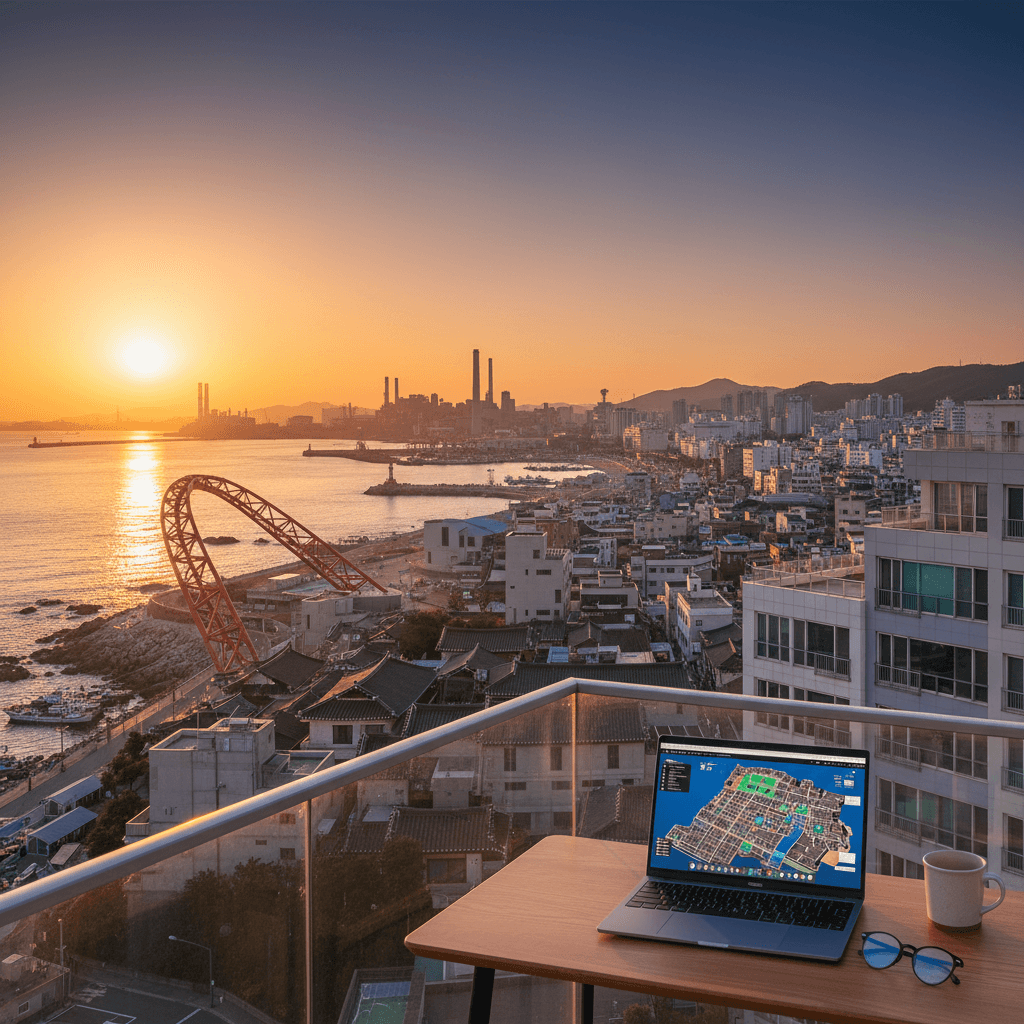
Pohang is a city of two minds. For decades, it was known primarily as the steel capital of Korea, dominated by the massive POSCO plant that lights up the coastline at night like a futuristic cityscape. But lately, the vibe has shifted. Thanks to its starring role in several hit dramas, Pohang has transformed into a destination for people looking to escape the relentless pace of Seoul without losing the high speed fiber optic infrastructure that makes Korea a nomad paradise.
You won't find the polished, international sheen of Busan here. Instead, Pohang offers a gritty, authentic coastal energy. It feels like a place where things are actually made. The air smells of salt and iron, and the local culture is built around the Yeongildae Beach strip and the sprawling Jukdo Market. It's a city for nomads who prefer a surfboard or a hiking trail over a crowded nightclub.
Why Nomads are Looking East
Most remote workers land here because they want the "real" Korea. While Seoul is a bubble of global trends, Pohang is where you’ll see the older generation hauling in fresh octopus at 5:00 AM and students from POSTECH, one of the world’s top tech universities, coding in seaside cafes. This mix of heavy industry, elite academia, and sleepy fishing village charm creates a unique friction that’s hard to find elsewhere.
The emotional experience of living here is one of quiet productivity. There is a specific kind of peace in watching the sunrise over the East Sea from a cafe window before starting your workday. It’s less about "networking" and more about finding a deep, focused flow. You’ll find yourself adopting the local pace, which means slow mornings and lively, neon lit evenings fueled by grilled seafood and cold beer.
The Practical Landscape
South Korea’s digital infrastructure is arguably the best on the planet, and Pohang is no exception. You can expect broadband speeds averaging 107.50 Mbps and nearly 100% 4G and 5G coverage across the city. This makes the "work from anywhere" promise a reality, whether you're at a beachside coffee shop or a rental in the city center.
- Connectivity: Public Wi-Fi is ubiquitous and free in most parks, transit hubs, and government buildings.
What to Expect Daily
Living in Pohang is significantly more affordable than Seoul, especially when it comes to housing and dining out. Most expats find that their money goes much further here, allowing for a higher quality of life. You can snag a modern studio apartment near the water for a fraction of the price of a shoebox in Gangnam. The trade off is a smaller international community, so you’ll want to brush up on basic Korean phrases or keep your translation apps handy.
The city layout is spread out, so you'll likely rely on the efficient bus system or the ubiquitous Kakao Taxi app. Walking along the coastal paths is a daily ritual for many, especially the Space Walk, a massive walkable art installation that gives you a 360 degree view of the bay. It’s a city that rewards those who like to explore on foot and don't mind a bit of salt spray on their laptop sleeve.
The Price of Coastal Life
Pohang hits that sweet spot for nomads who want the efficiency of South Korea without the eye watering price tags of Seoul or even Busan. You're looking at a cost of living that sits roughly 20% to 30% lower than the capital. It is a blue collar city at its heart, home to the steel giant POSCO, which means the local economy is built for workers rather than tourists. You will find that your won goes significantly further here, especially when it comes to housing and dining out.
Most expats living in the city find they can live comfortably on $1,800 to $2,400 per month. This budget covers a nice studio, plenty of restaurant meals, and weekend trips to the surrounding beaches or nearby Gyeongju. If you are frugal and stick to local markets, you could easily shave a few hundred dollars off that total.
Monthly Budget Breakdown
- Studio Apartment (One-room): $350 to $600
- Utilities and High-Speed Internet: $100 to $150
- Monthly Groceries: $300 to $450
- Dining Out (Daily): $400 to $600
- Public Transport and Taxis: $80 to $120
Housing and Neighborhoods
Rent is likely your biggest saving. Unlike Seoul, where a "key money" deposit can easily reach $10,000, Pohang landlords are often more flexible. You can find modern, furnished "one-rooms" near the university areas or the beach for very reasonable rates.
Buk-gu (North District)
- Estimated Rent: $450 to $650 per month
- Vibe: This is where you want to be for the beach life. It includes the popular Yeongildae Beach area.
- Pros: Walking distance to the water, tons of cafes, and a more active nightlife scene.
Nam-gu (South District / Near POSTECH)
- Estimated Rent: $350 to $550 per month
- Vibe: More academic and residential. It is close to the Pohang University of Science and Technology.
- Pros: Cheaper food options catering to students and a quieter atmosphere for deep work.
Eating and Drinking
Dining out in Pohang is a bargain if you stick to Korean staples. A bowl of the city's famous Mulhoe (spicy raw fish soup) will set you back about $12 to $15. If you head to the Jukdo Market, you can grab street snacks like hotteok or gimbap for just $2 to $5. Western food and specialty coffee are where the costs creep up; a latte at a trendy beachside cafe usually costs around $5 or $6, which is nearly the price of a light lunch.
Groceries are manageable if you shop at local marts like Nonghyup or the traditional markets. Imported goods at E-Mart or Lotte Mart carry a premium. Most nomads find that eating out at "Gimbap Cheonguk" style diners is actually cheaper and easier than cooking for one, given the cost of fresh fruit and vegetables in Korea.
Connectivity and Logistics
You won't have to budget much for data. Korea has some of the fastest internet on the planet, and Pohang is no exception. A local SIM card with unlimited data usually costs around $50 a month. If you are working from cafes, you will rarely find one without free, blazing fast Wi-Fi. Public transport is also a steal; a bus ride is about $1.10, and taxis are affordable for short hops across town, usually starting at a base fare of around $3.00.
For those planning a longer stay, the Hallyu Remote Work Visa requires a high income threshold, but your actual daily expenses in Pohang will remain low. It is a city that lets you bank a significant portion of your earnings while enjoying a high quality of life by the sea.
For Digital Nomads: Buk-gu and Yeongildae Beach
If you're working remotely, you'll want to be near the water in Buk-gu. This area centers around Yeongildae Beach, which is the heart of the city's social life. It's the most practical spot for nomads because you're surrounded by 24 hour cafes like Pascucci or A Twosome Place that have reliable Wi-Fi and plenty of outlets.
The vibe here is relaxed but connected. You can spend your morning answering emails with a view of the POSCO steel mill across the bay, which lights up like a sci-fi city at night. Most nomads find that the proximity to the city's main bus lines makes it easy to get to the KTX station when you need to head back to Seoul.
- Rent for a Studio: 500,000 KRW to 750,000 KRW per month
- Coworking: Mostly high end cafes; local startups often use the Pohang Creative Economy Innovation Center
- Vibe: Coastal, social, and convenient
For Expats and Professionals: Jigok-dong
Expats, especially those working in research or academia, almost always gravitate toward Jigok-dong. This neighborhood was specifically designed for the faculty and researchers of POSTECH. It feels more like a quiet, wooded suburb than a typical Korean city center. It's incredibly green, with walking paths that lead directly into the hills.
The infrastructure here is top tier. You'll find international grocery sections at the local Mart and a community that's very used to welcoming foreigners. It's a bit further from the beach, but the peace and quiet make it the preferred choice for those staying long term. You'll likely need a car or a Kakao Taxi account if you live here, as it's tucked away from the main coastal drag.
- Rent for an Apartment: 800,000 KRW to 1,200,000 KRW
- Atmosphere: Educational, quiet, and affluent
- Top Perk: Best air quality in the city thanks to the surrounding forest
For Families: Nam-gu and Hyoja-dong
Hyoja-dong is the sweet spot for families who want a mix of modern convenience and local charm. It's located right along the Hyeongsan River, which features massive parks and bike paths that are perfect for kids. The neighborhood has seen a lot of recent development, meaning the apartments are newer and the sidewalks are wider.
Parents usually appreciate the density of "hagwons" (private academies) and kid friendly restaurants in this area. There's a growing "cafe street" in Hyoja that offers great brunch spots and bakeries. It's a very safe, walkable pocket of the city where you'll see plenty of other families out after 6:00 PM.
- Rent for 3-Bedroom: 1,100,000 KRW to 1,600,000 KRW
- Amenities: Riverside parks, modern playgrounds, and large supermarkets
- Transport: Central location with easy access to both the industrial south and the commercial north
For Solo Travelers: Jungang-dong (The Old City Center)
If you're in Pohang alone and want to be where the action is, stay near the Jukdo Market area in Jungang-dong. This is the traditional heart of the city. It's gritty, authentic, and loud in the best way possible. You'll find the best street food here, from fresh "hoe" (raw fish) to spicy tteokbokki at the night stalls.
Solo travelers often say this area feels the most "Korean." You're within walking distance of the stream restoration project, which is a great place for a nightly stroll. The accommodation here is mostly smaller hotels and "officetels," which are perfect for one person. It's also the main hub for local buses, so you can reach the famous Homigot Sunrise Square without a complicated transfer.
- Rent/Stay: 40,000 KRW to 60,000 KRW per night for mid range hotels
- Food Scene: Jukdo Market is the largest traditional market on the east coast
- Vibe: Traditional, energetic, and very walkable
Connectivity and Speed
You won't have to worry about the internet in Pohang. South Korea is famous for its lightning fast infrastructure, and this coastal city is no exception. Average broadband speeds hover around over 200 Mbps, and 5G coverage is ubiquitous across the city center and the popular beach areas. Most nomads find that even the most basic studio apartment comes with a reliable high speed connection included in the rent.
Public Wi-Fi is everywhere. You can usually pick up a signal at the KTX station, inside city buses, and throughout major public parks. If you're staying for more than a few days, grab a local SIM card or an eSIM. Providers like SK Telecom and KT offer excellent coverage even if you head out toward the more remote coastal cliffs or the foothills of the nearby mountains.
Coworking Spaces in Pohang
Pohang isn't a massive nomad hub like Seoul, so the coworking scene is more focused on local startups and university students. However, there are solid professional environments if you need a dedicated desk. Most expats and remote workers head to the areas near POSTECH (Pohang University of Science and Technology) or the Nam-gu district for the best facilities.
- Study Cafes and Shared Offices: You will find various professional environments throughout the city that cater to the "workation" crowd. These are great if you want to answer emails with a view of the POSCO night lights across the bay or work in a quiet, academic atmosphere near the university.
The Cafe Culture Alternative
Since dedicated coworking spaces can be a bit corporate here, many nomads prefer the city's incredible cafe scene. In Pohang, cafes are practically designed for remote work. It is culturally acceptable to sit with a laptop for a few hours as long as you've bought a drink. Look for the larger multi story cafes along the Yeongildae waterfront or in the Hyo-ja neighborhood.
Places like Hey-an or the various spots in Buk-gu offer massive tables, plenty of power outlets, and reliable Wi-Fi. Many of these cafes stay open until 10:00 PM or 11:00 PM, making them perfect for those working on North American or European time zones. Just keep an eye out for the "No Laptop" signs on weekends at the very trendy, smaller spots, though these are rare in Pohang.
Practical Tips for Remote Workers
If you're planning to stay long term, the new Hallyu Remote Work Visa is a game changer. It allows you to stay for up to one year with the possibility of extending for another. You'll need to prove an annual income of over 85 million KRW (roughly $65,000 USD), but it beats doing visa runs to Japan every 90 days.
- KakaoMap and Naver Map: Forget Google Maps. It doesn't work well for walking or transit directions here. Download Naver Map to find cafes with the best reviews and to check if they have Wi-Fi.
- Data Costs: An unlimited data SIM usually runs about $50 USD to $60 USD per month. It's a worthy investment for the peace of mind.
- Peak Hours: Cafes near the beach get crowded and loud on Saturday and Sunday afternoons. If you have a big meeting, stick to your apartment or a dedicated office space during the weekend.
Overall, Pohang offers a much more relaxed pace than the capital. You get the same world class internet speeds but with a lower cost of living and a much shorter commute to the ocean. It's a smart choice for anyone who wants to stay productive while avoiding the frantic energy of Seoul.
A High Standard of Safety
Pohang feels incredibly secure, even compared to other developed coastal cities. You'll quickly notice that the local culture revolves around a deep respect for property. It is common to see people leave their laptops and personal belongings on cafe tables while they step away for ten minutes. While you should still use common sense, the risk of petty theft or physical confrontation is remarkably low.
Walking alone at night along the Yeongildae Beach promenade or through the narrow alleys of Jukdo Market is generally safe. The city is well lit and heavily monitored by CCTV, which acts as a major deterrent. If you ever feel uneasy, look for the bright yellow signs indicating emergency call boxes or head toward any 24-hour convenience store like GS25 or CU. These shops often serve as unofficial safe havens and are everywhere.
The biggest safety concern you'll actually face is traffic. Drivers in Pohang can be aggressive, especially delivery scooters weaving through pedestrian zones. Always wait for the green light at crosswalks, even if the road looks empty. In the summer, keep an eye on weather alerts for typhoons. The city has robust drainage and warning systems, but the wind near the coast gets intense during August and September.
World-Class Medical Care
If you get sick, you are in good hands. Pohang is home to Pohang St. Mary's Hospital and Pohang Sunlin Hospital, both of which offer high-level specialist care. For most nomads, the Pohang University of Science and Technology (POSTECH) ecosystem means the city attracts highly educated professionals, so finding English-speaking doctors is easier here than in other provincial towns.
For minor issues like a cold or a light sprain, skip the large hospitals and head to a local clinic. Look for signs marked with a green cross or the word Uiwon. These clinics are efficient and usually cost between $10 and $20 for a consultation if you are paying out of pocket. Pharmacies, marked by a red Yak sign, are located on almost every block. Pharmacists can dispense many medications that would require a prescription in other countries.
Emergency Essentials
Keep these numbers saved in your phone just in case. Most dispatchers can patch in an English translator within seconds.
- 119: Fire and Ambulance (The most important number for medical emergencies)
- 112: Police
- 1339: Medical Information Hotline (Great for finding an open pharmacy or an English-speaking doctor)
- 1330: Korea Travel Helpline (Multi-lingual support for any general trouble)
Health Insurance for Nomads
If you are staying on the new Hallyu Remote Work Visa, you will eventually be required to join the National Health Insurance Service (NHIS) after six months. This is a game changer, as it covers roughly 70% to 80% of medical costs. Until then, ensure you have a private policy like SafetyWing or World Nomads. Most local clinics expect payment upfront via credit card, and they will provide the English paperwork you need to file a claim later.
Air quality is the only other health factor to track. Like much of the peninsula, Pohang experiences "fine dust" peaks during the spring. Locals use the AirVisual app to check levels daily. On high-dust days, do what the locals do and wear a KF94 mask, which you can buy for about $1 at any pharmacy or convenience store.
The Bus Network and Local Transit
Pohang is a spread out industrial city, so you will spend a fair amount of time on the move. While it lacks the subway systems found in Seoul or Busan, the local bus network is surprisingly robust and reliable. Most nomads rely on the T-money card, which you can pick up at any convenience store like GS25 or CU for about 3,000 KRW. You just tap it when you board and tap again when you get off to ensure you get the transfer discount between routes.
The city uses a color coded system for its buses. Green buses handle the neighborhood routes, while the orange ones connect the major hubs like the Express Bus Terminal and the city center. If you are heading out to the northern beaches like Yeongildae, look for the 206 or 207 lines. A standard fare is 1,500 KRW. Download KakaoBus or Naver Maps as soon as you land; Google Maps is notoriously spotty in Korea and often fails to show real time bus arrivals.
Taxis and Ride Hailing
Taxis are everywhere and relatively affordable compared to Western standards. The base fare starts around 4,000 KRW. It is the easiest way to get home after a late night at the bars near the beach when the buses stop running around 11:00 PM. Most drivers do not speak English, so having your destination written in Korean or showing it on a map is a smart move.
Do not bother looking for Uber or Lyft here. Instead, use Kakao Taxi. You can set it up to pay the driver directly with cash or a card so you do not have to worry about linking a foreign credit card to the app, which can be a headache for short term visitors. It is fast, safe, and prevents any potential language barriers regarding your destination.
Intercity Travel: KTX and Terminals
Pohang has its own high speed rail station, Pohang KTX Station, located slightly north of the city center. It is a game changer for nomads who want to spend weekends in Seoul. The trip takes about 2.5 hours and costs roughly 53,600 KRW one way. If you are on a tighter budget, the Pohang Intercity Bus Terminal near the Sangdo-dong neighborhood offers frequent departures to Busan or Daegu for about 10,000 to 15,000 KRW.
Walking and Biking
Pohang is a city of distinct pockets. Once you are in an area like Yeongildae Beach or the Hyo-ja neighborhood near POSTECH, it is very walkable. The city has invested in seaside paths that are great for a morning run or a slow sunset stroll. For longer coastal stretches, you will see locals using the city's bike sharing system, though the registration process for foreigners can be hit or miss depending on your phone plan.
- KTX to Seoul: 53,600 KRW (2.5 hours)
- Local Bus Fare: 1,500 KRW
- Taxi Base Fare: 4,000 KRW
- T-money Card: 3,000 KRW plus top-up
Pro Tips for Getting Around
If you are planning to stay for a few months, consider buying a cheap second hand bicycle. The terrain is mostly flat along the coast, and it is often faster than waiting for a bus if you are just going a few kilometers down the road. Also, keep in mind that traffic can get heavy around the POSCO steel plant during shift changes, so try to avoid the main arterial roads between 7:30 AM and 8:30 AM.
Most expats find that a combination of the bus for daily commutes and the occasional Kakao Taxi for convenience works best. If you are heading to the more remote areas like Homigot to see the famous hand statue, leave early. It is a long bus ride from the city center, often taking over an hour, so plan your workday accordingly if you need to be back for meetings.
The Language Barrier in a Steel City
In Pohang, the linguistic landscape is a bit different than what you'll find in Seoul or Busan. Because this is primarily an industrial hub dominated by POSCO, the local dialect, known as Gyeongsang-do satoori, is prevalent. It sounds a bit more aggressive and rhythmic than the standard Seoul accent, but don't let that intimidate you. People here are generally helpful, even if they seem a bit blunt at first.
English proficiency varies significantly across the city. You'll find that younger staff at trendy cafes near Yeongildae Beach or students near POSTECH (Pohang University of Science and Technology) can communicate well. However, if you're heading to the Jukdo Market to grab some fresh hoe (raw fish), you'll likely be relying on hand gestures and translation apps. Most nomads find that learning the basics of the Korean alphabet, Hangul, is the best investment you can make before arriving. It takes about an hour to learn and makes reading menus and bus stops much easier.
Digital Tools for Survival
While Google Translate is okay for basic text, it often struggles with Korean grammar and nuances. Most expats and long term travelers in Pohang swear by Naver Papago. It has a much more accurate translation engine for Korean and a great image to text feature that handles physical menus and signs perfectly. Just snap a photo, and it overlays the English text over the original image.
Communication also happens through KakaoTalk. This isn't just a messaging app; it's the primary way to interact with local businesses, hair salons, and even your landlord. If you want to book a spot at a local guesthouse or check if a shop is open, look for their Kakao ID. You'll also want to download Naver Maps or KakaoMap immediately. Google Maps is notoriously unreliable for walking directions and bus schedules in South Korea because of local data security laws.
Key Phrases for the Daily Grind
You don't need to be fluent to get by, but showing effort goes a long way with the locals. Here are the basics that will get you through a day in Buk-gu or Nam-gu:
- Annyeong-haseyo: Hello. Use this for everyone, from the bus driver to the convenience store clerk.
- Gamsa-hamnida: Thank you. You'll use this constantly.
- Yeogi-yo: Excuse me. Use this to get a server's attention in a restaurant.
- Olma-yeyo?: How much is it? Useful for the traditional markets.
- Baedal: Delivery. You'll hear this a lot because the food delivery culture here is incredible.
Connectivity and Infrastructure
The good news is that even if you can't speak the language, the internet will always be on your side. South Korea has some of the fastest speeds on the planet, and Pohang is no exception. You can expect average broadband speeds around 100 to 110 Mbps even in standard apartments. Public Wi-Fi is everywhere, from the city buses to the public parks, and it's usually free and fast enough for a quick Zoom call.
For your phone, don't rely on roaming. Pick up a local SIM or eSIM from providers like SKT, KT, or LG Uplus. If you are on the Hallyu Remote Work Visa, you can get a long term contract once you have your Alien Registration Card. If you're just here for a few months, a prepaid SIM from a convenience store like CU or GS25 will cost you roughly 35,000 to 45,000 KRW for a month of unlimited data.
Social Etiquette and Communication
Communication in Pohang is as much about body language as it is about words. Handing over money or a credit card with two hands is a sign of respect that locals will appreciate. Similarly, a slight bow when greeting someone or saying thank you bridges the gap when your vocabulary fails. In the nomad community, you'll find most of the English speaking social life centered around the university districts or the surf shops in Wolpo, where the vibe is more international and relaxed.
Seasonal Rhythm on the East Coast
Pohang sits right on the edge of the East Sea, which means its weather is a bit more tempered than the bone chilling winters of Seoul or the sweltering humid basin of Daegu. You get a distinct four season cycle here, but the ocean breeze acts as a natural regulator. Most nomads find that the sweet spots for a productive stay are mid-April to June and September to early November.
Spring brings the cherry blossoms to the banks of the Hyeongsan River, and the air is crisp enough to keep you focused while you work from a cafe in Buk-gu. It's the most comfortable time for walking between meetings or exploring the coastal trails. By late May, the temperature sits comfortably around 22°C (72°F), perfect for outdoor laptop sessions before the summer humidity kicks in.
Surviving the Humidity and the Chill
Summer in Pohang, specifically July and August, is a test of your air conditioning tolerance. Temperatures often climb above 30°C (86°F), and the humidity makes it feel significantly heavier. This is when the city fills up with domestic tourists heading to Yeongildae Beach. If you don't mind the crowds and the sweat, the evening sea breezes are actually quite pleasant for a post-work stroll with a cold coffee.
Winter is dry and windy. While it rarely sees the heavy snow of the northern provinces, the wind coming off the water can feel biting. Between December and February, you'll want a solid "long padding" coat like the locals. The upside is that the skies are usually a brilliant, clear blue, and the cafes are cozy and well heated. It's a great time to hunker down for a deep work sprint without the distractions of outdoor festivals.
The Best Times for Your Budget
If you're looking to maximize your won, timing your arrival is key. Digital nomads often suggest avoiding the peak summer window if you're booking short term rentals, as prices near the water can spike.
- Peak Season (July to August): Expect higher prices for Airbnbs and hotels near the beach. It's loud, crowded, and hot.
- Shoulder Season (May, June, September, October): This is the goldilocks zone. Great weather, moderate prices, and the city feels lively but not overwhelmed.
- Off-Peak (November to March): You'll find the best deals on monthly stays. It's quiet, which is perfect if you're an introvert looking for a peaceful coastal retreat.
Key Events to Plan Around
There are two times a year when Pohang gets incredibly busy, and you should plan your accommodation months in advance if your stay overlaps with them. The first is the Pohang International Firelight Festival, usually held in late May or June. It turns the Yeongildae area into a massive party, and finding a quiet place to work becomes nearly impossible.
The second is New Year's Eve. Thousands of people flock to Homigot, the easternmost point of the Korean peninsula, to catch the first sunrise of the year. If you aren't there for the festivities, you might find the sudden influx of crowds and the surge in transport costs a bit frustrating. Outside of these windows, the city maintains a steady, manageable pace that suits the remote work lifestyle perfectly.
Monthly Weather Breakdown
- Spring (March to May): Temperatures range from 10°C to 20°C. Light jackets are a must. This is the best time for hiking the nearby hills.
- Summer (June to August): Highs of 30°C+ with frequent rain in July during the "jangma" (monsoon) season. Keep your electronics in a waterproof bag.
- Autumn (September to November): Generally 15°C to 25°C. Clear skies and stunning fall foliage. This is arguably the most beautiful time to be in the city.
- Winter (December to February): Lows can drop to -5°C. It's windy and dry. You'll spend most of your time in the city's excellent heated libraries and coworking spots.
Connectivity and Tech Infrastructure
You won't have to worry about your Zoom calls dropping while you're working from the coast. South Korea has some of the fastest internet on the planet, with average broadband speeds hitting 107.50 Mbps. Even if you're working from a small cafe near Yeongildae Beach, the 4G and 5G coverage is nearly universal. Most nomads find that a local SIM card is the first thing they need to grab at the airport or a local shop. Look for providers like SK Telecom or KT; they have the most reliable coverage in the Gyeongsangbuk-do province.
The Work From Anywhere Visa
The Hallyu Remote Work Visa, launched in 2024, is a game changer if you want to stay in Pohang longer than a standard tourist entry allows. This digital nomad visa lets you stay for up to one year, with the possibility to extend for another year. To qualify, you'll need to show an annual income of over 85 million KRW (roughly $65,000 USD). It is a great option if you want to use Pohang as a quiet base while exploring the rest of the east coast.
Getting Around the City
Pohang is a bit spread out, so you'll want to master the local transit apps immediately. Download KakaoBus and Naver Maps. Google Maps is notoriously unreliable for walking directions or bus schedules in Korea. Most expats recommend getting a T-Money card, which you can tap on any bus or taxi. If you're coming from Seoul, the KTX train gets you to Pohang Station in about two and a half hours, making weekend trips to the capital very doable.
Daily Costs and Budgeting
While specific prices in Pohang fluctuate, it is generally more affordable than Seoul or Busan. You'll find that your housing budget goes much further here. Most nomads suggest budgeting for these basics:
- Local Meal: 8,000 to 12,000 KRW for a solid bowl of mulhoe or a hearty stew.
- Coffee: 4,500 to 6,000 KRW at the trendy seaside cafes.
- Monthly Transport: Around 55,000 to 70,000 KRW if you're commuting daily by bus.
- Coworking: While dedicated nomad hubs are still popping up, many remote workers use study cafes which cost about 10,000 to 15,000 KRW for a full day pass.
Language and Social Life
English isn't as widely spoken in Pohang as it is in Itaewon, so having Papago installed on your phone is a lifesaver. It handles image translation perfectly for menus and official documents. To meet people, look for language exchange groups or local surfing communities at Wolpo Beach. The expat community here is smaller and more tight knit, often revolving around the university or the local steel industry hubs, so people are usually quite welcoming to newcomers.
Weather and Planning
The city gets the best of the coastal breeze, but the humidity in July and August can be intense. Most travelers say the best time to arrive is September or October when the air clears up and the temperatures sit comfortably in the 20s Celsius. Winters are cold and windy because of the sea air, so bring a heavy down jacket if you plan to be here in January.
Need visa and immigration info for South Korea?
🇰🇷 View South Korea Country GuideEasy Landing
Settle in, no stress