Podgorica
🇲🇪 Montenegro
Podgorica doesn't try to impress you, which is part of the appeal. It feels lived-in, a little rough around the edges and strangely calm for a capital, with tramless streets, air that smells like exhaust and grilled meat and riverside paths where locals walk slowly like nobody's in a hurry.
Most nomads come here for the basics, then stay because the basics work. Rent is low, fiber internet is decent in central areas and day-to-day life costs a lot less than on the coast, though the city can feel sleepy if you're used to constant noise, late dinners and packed bars. Honestly, that's the trade-off.
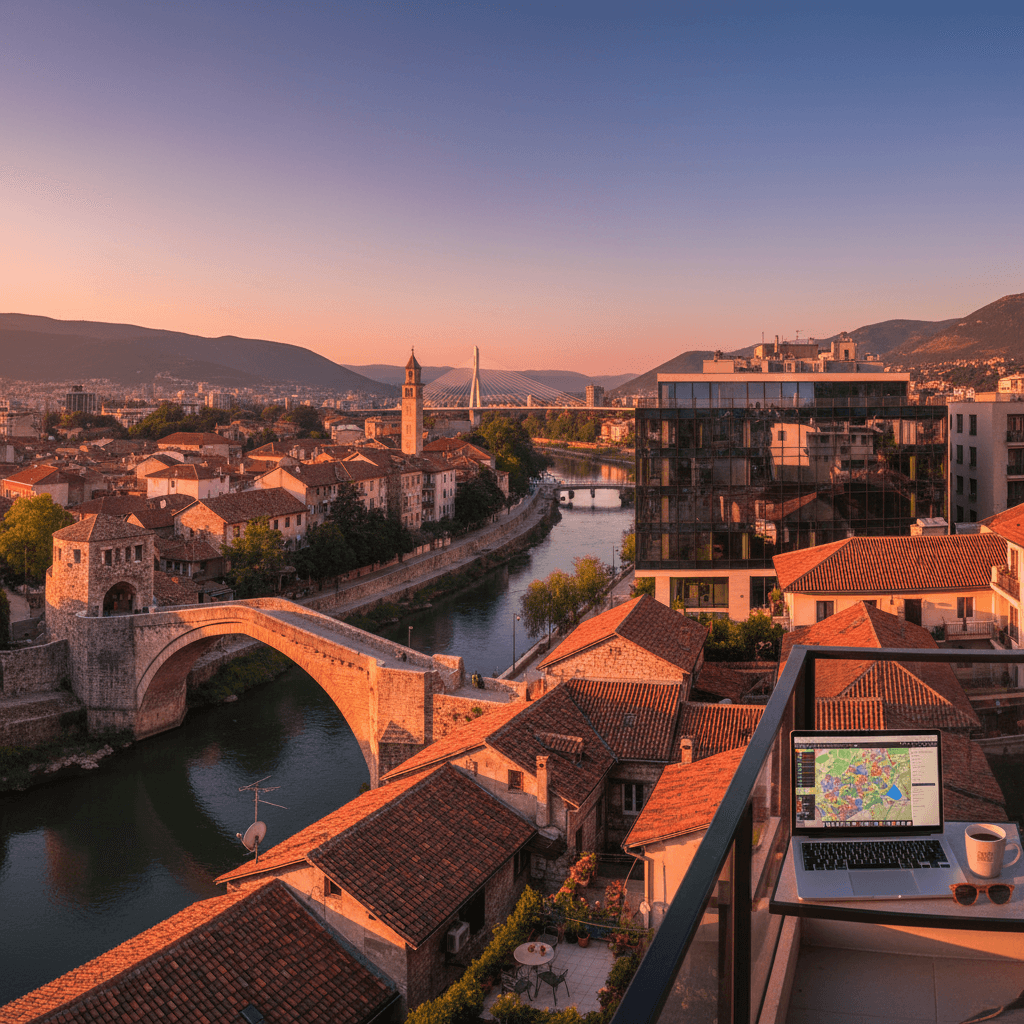
The vibe is a mix of old and new, Ottoman-era corners in Stara Varoš, Soviet-style blocks, glassy apartments, cafés full of laptop users and more than a few men nursing espresso for an hour while the barista rinses cups behind the counter. Summers get hot and sticky, winters are quieter and colder than you'd expect and the city shuts down earlier than Budva, which can be annoying if you like going out past midnight.
Where nomads usually land
- Stara Varoš: Cheapest, historic and a bit scruffy, with older buildings and the best sense of place.
- Nova Varoš, city center: Best for first-timers, food and easy walking, but prices jump fast.
- Blok 5 and Blok 6: Quieter, greener, more residential and a good fit if you want normal life over nightlife.
- Preko Morače: Polished and expensive, with newer buildings and a more upscale feel.
The social scene is smaller than in Montenegro's coastal towns and weirdly, that's part of the charm, people notice when you show up twice. Nest Coworking is the cleanest bet in town, cafés usually have WiFi and outlets and the remote work crowd is tight enough that you start recognizing faces after a week or two.
Food is easy, cheap and heavy in the best way, burek in the morning, ćevapi at lunch, coffee everywhere and portions that don't mess around. If you want beaches, Podgorica will disappoint you, but if you want a practical base with good internet, low rent and a city that feels real instead of curated, it does the job.
Cost of Living
Podgorica is cheap, honestly cheap in a way that still surprises people who’ve lived in Western Europe. A one-bedroom in Stara Varoš can run €200 to €350, while the city center usually jumps to €480 to €700 and if you want quieter residential blocks, you can often land somewhere in between without getting wrecked by rent.
Food keeps the pressure low. Street food like burek or ćevapi usually costs €3 to €5, a decent restaurant meal lands around €8 to €12 and coffee is about €1.80, which feels almost suspicious when you’re paying in cash and hearing espresso machines hiss all around you. Groceries are cheaper than on the coast, too, so you won’t get mugged by supermarket receipts every week.
Typical Monthly Costs
- Rent: €200 to €350 in Stara Varoš, €480 to €700 in the city center, €350 to €600 outside the center.
- Transport: Around €37 a month for public transit, taxis are still pretty affordable for short rides.
- Food: Budget meals start at €3, mid-range dinners sit at €8 to €12 and nicer places usually stay under €25.
- Coworking: Dedicated desks can hit about €280 a month, though many nomads just hop between cafés with free WiFi.
For a single person, the math is pretty forgiving. Budget living, with street food and public buses, can stay around €400 to €600 before rent, mid-range usually sits at €700 to €1,000 and comfortable living starts above €1,200 once you add nicer restaurants, private transport and a proper workspace.
Where Your Money Goes Furthest
- Stara Varoš: Cheapest area, historic feel, older buildings, some patchy connectivity and a lot of character.
- Blok 5 and Blok 6: Good for quieter stays, green space and local life without the center’s noise.
- Stari Aerodrom: Practical, modern and usually better value for longer stays.
- Preko Morače: Nice, but pricey and frankly you pay for polish more than convenience.
Internet is solid enough for remote work, with fiber in central areas and speeds around 26 to 50 Mbps, though older apartments in Stara Varoš can be annoying about connectivity. The coworking scene is small but functional, Nest Coworking is the main name in town and cafés are often laptop-friendly, which, surprisingly, makes Podgorica feel more nomad-friendly than it looks on paper.
Podgorica isn’t a place for postcard romance, it’s a place for people who want cheap rent, decent internet and a city that doesn’t chew through your budget. The tradeoff is real, though, because some streets feel a bit tired, the summer heat sticks to you and nightlife fades fast once the bars empty out.
Nomads
If you’re working remotely, start in Nova Varoš or close to it, because you’ll be near cafés, restaurants and the easiest walkability in town. Internet is, honestly, solid in central areas and places like Nest Coworking are a safer bet than gambling on a random apartment in an old building with flaky WiFi and thin walls.
- Best pick: Nova Varoš, for cafés, errands and easy meetups
- Backup pick: Stara Varoš, cheaper, but older buildings can be annoying
- Monthly rent: €480 to €700 in the center, less if you compromise on polish
- Reality check: the city shuts down early, so don’t expect a late laptop-and-beer scene every night
Expats
Preko Morače is the calm, grown-up choice, with newer buildings, more green space and less noise from traffic and bar chatter. It feels cleaner and a bit more settled, which, surprisingly, matters a lot once you’ve lived through a few weeks of honking taxis and summer dust.
- Best pick: Preko Morače, if you want quiet and modern housing
- Also good: Blok 5 and Blok 6, for a more local, residential feel
- Monthly rent: €350 to €500 in Blok 5 and Blok 6, €600 to €900 in Preko Morače
- Why here: better for long stays, less tourist churn and easier parking than the center
Families
Families usually do best in Blok 5, Blok 6 or Stari Aerodrom, because these areas feel more residential and less chaotic than the center. You’ll get supermarkets, parks and a more predictable daily rhythm, though you’ll give up some character and a lot of walk-to-everything convenience.
- Best pick: Blok 5 or Blok 6, for green space and local life
- Budget option: Stari Aerodrom, more modern, still fairly affordable
- Monthly rent: €350 to €500, depending on size and condition
- Watch out: some streets feel bland and spread out, so you’ll likely need a car
Solo Travelers
If you’re in town short-term, stay in Nova Varoš or Stara Varoš and keep it simple. Nova Varoš gives you food, cafés and easier socializing, while Stara Varoš is cheaper and more atmospheric, with old stone lanes, river air and the smell of grilled meat drifting from nearby places at night.
- Best pick: Nova Varoš for convenience, Stara Varoš for price
- Best for: walking, meeting people and not wasting money on taxis
- Expect: quieter nights than coastal Montenegro, so plan your fun early
- Skip if: you want beach energy or a huge expat crowd
Podgorica isn’t a café-hopping fantasy, it’s a work city with decent internet, cheap coffee and fewer distractions than the coast. For remote work, that’s a plus. The air can feel dusty in summer and the traffic hum gets loud near the center, but the connection usually holds up.
WiFi: Central neighborhoods get the best speeds, usually 26 to 50 Mbps and fiber is common in newer buildings. Stara Varoš can be hit or miss, honestly, especially in older flats with weak wiring or thick walls that trap heat and signal at the same time.
The coworking scene is small, then useful, which, surprisingly, makes it easier to find people instead of getting lost in a giant anonymous space. Local cafes and small coworking options in central areas provide fast internet, meeting rooms and space for proper desk work. Many nomads also work from cafés near Nova Varoš, where the espresso smells sharp, the chairs are fine for a few hours and nobody side-eyes a laptop unless you’ve claimed a table all day.
- Local Coworking: Best for focused work, meetings and stable internet.
- Cafés in Nova Varoš: Good for casual laptop days, though power outlets can be scarce.
SIM cards: Cheap, easy, done in minutes. Local mobile data is solid across the city and 4G usually works fine if you’re hopping on a bus or sitting by the river with a phone hotspot. Buy one early, because outside Podgorica the signal can get patchy fast.
If you’re staying a while, choose your neighborhood with internet in mind. Nova Varoš is the safest bet for work, while Stara Varoš wins on character but sometimes loses on reliability. The price gap is real, though and many nomads accept a slightly rougher setup to save a few hundred euros a month.
The social side is smaller than in coastal hubs and that’s the tradeoff. You won’t find a huge expat crowd every night, but you will find regulars in the same cafés, a few low-key meetups and enough locals who speak decent English to make daily life easy.
Podgorica feels safe in the ordinary, practical way. You won't get the constant tourist hustle here and serious crime is uncommon, but petty theft, dark side streets and the odd drunk argument can still happen, especially late near bars or underpass areas.
Stay alert, not paranoid. In the center, around Nova Varoš and Preko Morače, most evenings feel fine, though the hum of scooters, car horns and people talking over café music can make it easy to relax too much, so keep your phone tucked away and avoid wandering alone through poorly lit streets.
Emergency numbers are simple to remember:
- Police: 122, 24/7 and English is often workable.
- Ambulance: 124.
- Fire: 123.
- Tourist police: 020 234 111.
Healthcare is decent for a Balkan capital, but it isn't slick. The public system works, though queues can be annoying, paperwork can drag and you'll want patience if you're dealing with anything non-urgent, honestly private care is the smoother option for most expats.
Where people actually go: the Clinical Center of Montenegro or KCCG, is the main public hospital and the only fully equipped trauma center in the country, on Ljubljanska bb, with 24/7 emergency care. For faster appointments and less chaos, private clinics are widely available throughout the city.
Pharmacies are easy to find and they tend to be reliable, with many open late and some meds available without a prescription. Pharmacists often speak enough English to help, which, surprisingly, saves a lot of stress when you're sick, jet-lagged or dealing with the dry, dusty heat that hangs over the city in summer.
If you're staying longer, sort insurance early:
- Residents: health insurance is mandatory.
- Local option: Lovćen osiguranje is common.
- International plans: work fine for expats who want private clinics.
For most nomads, the setup is straightforward. Keep your passport handy, know where the nearest apoteka is and don't assume every clinic will move fast, because the system can be slow, but it's workable and for routine stuff Podgorica is much less stressful than people expect.
Podgorica’s getting around scene is simple, cheap and a little rough around the edges. The center is easy to cover on foot, buses do the basics and taxis are still affordable, so you won’t spend your day wrestling with transport apps or waiting forever at stops. Quietly, that’s part of the appeal.
Walking: Nova Varoš and the city center are the most walkable parts of town, with cafés, groceries and offices clustered close together. Stara Varoš has nice riverside stretches and old stone lanes, though some streets feel uneven and a bit dim after dark, so keep your phone charged and your head up.
Buses: Local buses cover most neighborhoods and a monthly pass runs about €37. They’re useful, not glamorous and the service can be patchy compared with bigger European capitals, so don’t expect a neat timetable to save you if you’re in a hurry.
Taxis and ride-hailing: Taxis are cheap by Western standards and local apps work well enough for short rides across town. A trip from Podgorica Airport to the center usually lands around €10 to €15, which is painless after a flight, though late-night drivers can be weirdly sparse if it’s raining or there’s a weekend event.
Best areas for staying mobile
- Nova Varoš: Best for walking, food runs and quick taxi hops.
- Stara Varoš: Good on foot, but older streets can feel a little less polished.
- Preko Morače: Better if you don’t mind depending on buses or cars.
- Blok 5 and Blok 6: Handy for daily life, though you’ll probably use transit more.
Bikes and scooters: They exist, but Podgorica isn’t really built for them the way the coast is. You can rent a bike and some locals do, but traffic, heat and rougher road edges can make it feel more practical for short leisure rides than for daily commuting. Summers are hot, honestly and the pavement bakes fast.
Airport access: Podgorica Airport sits about 11 kilometers from the center, so a taxi or ride-hailing app is the easiest move. There’s no drama here, just grab a car and go, because hauling luggage onto multiple buses isn’t the kind of story anyone needs.
If you’re staying a while, mix walking with taxis and a bus pass, that’s the sweet spot. It keeps costs low, avoids pointless stress and lets you skip the parts of town where you’d be stuck listening to traffic honking in the heat while waiting for a delayed bus.
Podgorica is a place where English gets you by, but not everywhere and not with everyone. In cafés, coworking spaces, hotels and younger circles, people usually switch into English without drama, though older residents often prefer Montenegrin or a bit of Russian. You’ll hear a mix of Serbian, Montenegrin and sometimes Albanian, plus the constant hum of traffic, scooters and dogs barking from apartment courtyards.
The good news, most daily life is straightforward. Menus are often translated, rideshare apps are easy enough to use and local SIM setup is quick if you bring your passport. Public signage can be patchy, so Google Maps helps and honestly, a translation app saves time when you’re trying to ask for bus stops, pharmacy basics or a landlord who keeps shrugging at your questions.
People here are generally warm, but they’re not fake-friendly. If someone says yes, they usually mean yes, if they don’t want something, they’ll often just stall, then leave you guessing, which can be maddening. A few words in Montenegrin go a long way, especially in shops, taxis and smaller neighborhood cafés where the espresso smells strong and the conversation is half-muttered over clinking cups.
Useful phrases
- Zdravo, hello
- Hvala, thanks
- Molim, please or you’re welcome
- Koliko košta?, how much does it cost?
- Gdje je...?, where is...?
- Ne razumijem, I don’t understand
For digital nomads, the real hack is keeping communication simple and direct. Say what you need, confirm the price before you sit down and don’t assume someone’s being rude if they’re brief, because that’s just the rhythm here. In rental chats, WhatsApp is common, email is slower and landlords sometimes reply like they’ve got all the time in the world, because, frankly, they usually do.
If you’re dealing with officials or paperwork, patience helps more than fancy English. Bring copies of everything, ask for things twice and expect a little friction, especially with residency or utility setup. The language barrier isn’t huge, but it’s real enough to annoy you on a hot afternoon when the air feels sticky and your coffee’s gone cold.
Podgorica gets hot, dry and a bit punishing in summer, then turns cool, grey and surprisingly quiet in winter. Spring and autumn are the sweet spots, honestly, because you get decent weather without the sticky humidity, blasting sun or the dead-still streets that show up when everyone disappears for August holidays.
Best months: April to June and September to October. Those are the months most nomads actually enjoy, because you can walk the city center without melting, sit outside for coffee without sweating through your shirt and still catch long evenings by the Morača River when the air smells like dust, grilled meat and cut grass.
Summer is rough. Not brutal every day, but close enough, with temperatures often sitting in the high 30s Celsius, the pavements radiating heat and afternoon air that feels like a hair dryer pointed at your face, so if you’re sensitive to heat, skip July and August unless you’ve got air conditioning and patience.
Season by season
- Spring: Mild, green and easy to work in. Cafés fill up, trees along the boulevards bloom and rain shows up in quick bursts that cool the city down.
- Summer: Hot and dry, with long bright evenings. Prices in the center don’t spike as wildly as on the coast, but the midday heat can make even short walks feel like a chore.
- Autumn: Probably the best overall. Warm days, cooler nights, fewer tourists and that nice shoulder-season pace where the city feels lived in instead of staged.
- Winter: Cooler, damp and calm. It’s workable, especially if you like quiet streets and lower rents, though the grey sky can drag a bit after a while.
My pick: late April, May and late September. You’ll get the best balance of weather, price and daily comfort and weirdly enough, that’s when Podgorica feels most walkable, most social and least annoying. If you’re chasing nightlife, summer weekends are livelier, but the trade-off is heat, noise and a city that seems to run on slower batteries by noon.
If you’re coming for remote work, avoid planning around peak heat unless your apartment has strong cooling and reliable internet. Winter’s fine for getting work done, spring and autumn are nicer for actually living here and summer is for people who don’t mind sweating through a coffee on Njegoševa Street.
Podgorica is easy on the wallet, but it isn’t glamorous. Rent is still low by European capital standards, the internet is solid in most central areas and you can get through a normal day without burning cash on every meal or taxi, which, surprisingly, is the main reason a lot of nomads stay longer than planned. Summers are brutally hot, though and the city can feel dusty, loud and a bit tired once the afternoon traffic starts honking.
Where to stay
- Stara Varoš: Best for old streets, lower rents and riverside walks, though some buildings have shaky WiFi and thin walls.
- Nova Varoš: Best all-around choice, with cafés, restaurants and the easiest day-to-day setup, but you’ll pay more.
- Blok 5 and Blok 6: Good if you want quieter blocks, trees and a more local feel and honestly, that matters after a few weeks.
- Preko Morače: Cleaner, calmer, pricier and better for people who want modern apartments without the city-center noise.
If you want the simplest base, pick Nova Varoš. If you want cheaper rent and don’t mind a rougher edge, Stara Varoš can work, just check the building first, because older places sometimes have patchy connectivity, cold tile floors and that faint stairwell smell of damp concrete.
Daily basics
- Food: Burek, ćevapi, pizza and coffee are cheap, a decent meal often lands at €8 to €12.
- Internet: Central Podgorica usually gets 26 to 50 Mbps, with fiber in better buildings.
- Transport: Public transit is inexpensive, taxis are still affordable and the center is walkable.
- SIM cards: Easy to buy, cheap to top up and useful if you’re heading outside the city.
Cafés are where a lot of work gets done, so try a few before settling in, since some are laptop-friendly and others treat a charger cable like a personal insult. The local scene is low-key, the espresso is strong and the air near grill spots smells like smoke, bread and meat fat by late afternoon.
Safety, health and getting around
- Safety: Podgorica is generally safe, but don’t leave valuables loose and don’t wander empty streets late at night.
- Healthcare: KCCG is the main public hospital, Codra is the faster private option.
- Emergency numbers: Police 122, ambulance 124, fire 123.
- Airport transfer: Taxis from the airport usually run about €10 to €15.
Ride-hailing and taxis are the easiest way to move around after dark, because the bus system works but isn’t exactly frequent or glamorous. If you’re staying a while, get local insurance sorted early, the paperwork can be maddening and expats usually recommend handling it before you actually need a doctor.
Frequently asked questions
How much does rent cost in Podgorica for digital nomads?
Is the internet good enough for remote work in Podgorica?
Where should digital nomads stay in Podgorica?
What is the main coworking space in Podgorica?
How expensive is food in Podgorica?
Is Podgorica safe for solo travelers and remote workers?
How do you get around Podgorica without a car?
Need visa and immigration info for Montenegro?
🇲🇪 View Montenegro Country GuideHidden Gem
Worth the effort