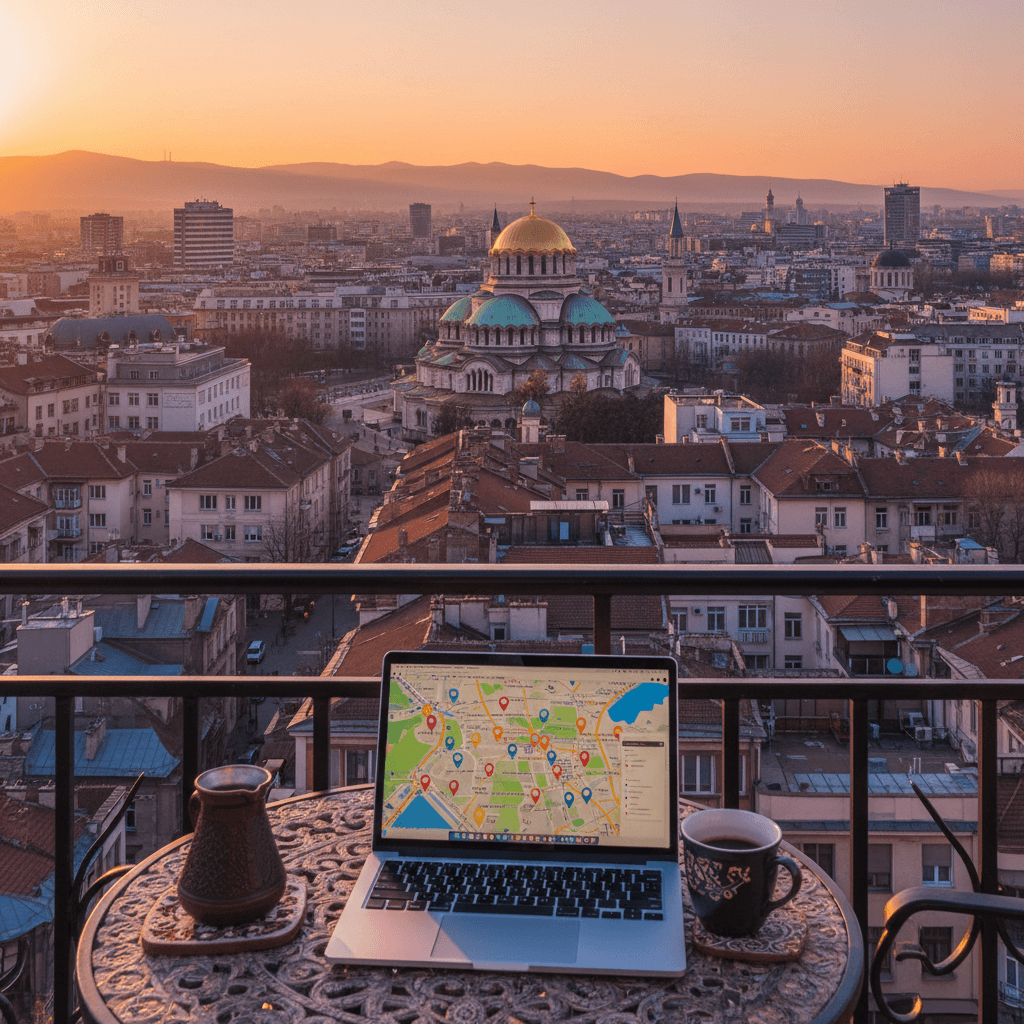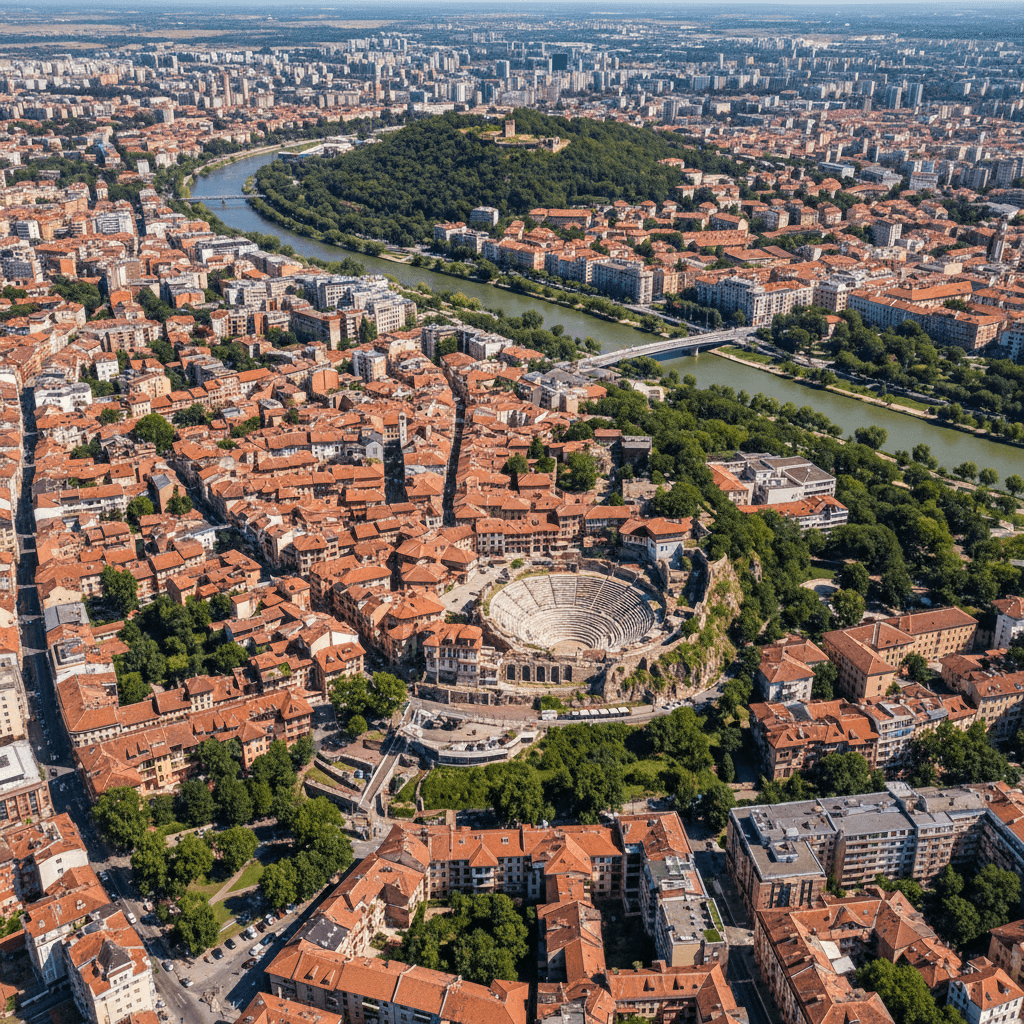
Plovdiv
🇧🇬 Bulgaria
Plovdiv is, honestly, one of those cities that sneaks up on you. You arrive expecting a smaller Sofia and leave three months later than planned, having developed opinions about which Kapana bar makes the best craft beer and a mild addiction to street banitsa at 9am. It's that kind of place.
The city sits on seven hills (they'll tell you this immediately) and has been continuously inhabited for roughly 8,000 years, which means Roman ruins share the same cobblestone streets as Ottoman mansions, which share the same neighborhood as a gallery selling contemporary Bulgarian painting. It shouldn't work. It does.
The pace here is slower than Sofia, deliberately so. Locals have a word for it: aylyak, roughly meaning the art of relaxed living without guilt. You feel it in the pedestrian center on a Tuesday afternoon, cafes spilling onto the street, nobody visibly rushing anywhere. That atmosphere is either exactly what you need or quietly maddening, depending on your personality.
Nomads tend to land in Kapana, the creative district wedged near the Old Town, where the smell of coffee and frying garlic drifts out of restaurant doors and someone's always painting a new mural on a wall that already had three murals. Rents run around $400 for a one-bedroom, coworking at IMD runs about $100 a month and a solid lunch costs you $9. The math, turns out, is pretty hard to argue with.
That said, Plovdiv isn't perfect. The expat community is genuinely small, regular meetups are rare and if you need a buzzing social calendar handed to you, you'll be disappointed. Winters are cold and damp, some bars still allow indoor smoking and once you've done the Roman theater and a wine tour through the Thracian Valley, the activity options don't exactly multiply. It's a city that rewards people who can build their own routine.
What makes it different from other cheap European bases is the texture of daily life. Walking to a coworking space past a 2nd-century amphitheater, eating well for under $10, sitting in a courtyard cafe while rain hits the cobblestones. Not glamorous. Just genuinely, weirdly good.
Plovdiv is, honestly, one of the most affordable cities in Europe for remote workers. A single nomad spending carefully can get by on around $900 a month, rent included. Push that to a comfortable mid-range life with a decent apartment and regular coworking and you're looking at $1,400. Factor in the occasional upscale dinner, a wine tour out to the Thracian Valley and a proper apartment in Kapana and $2,000 to $2,500 covers it without much stress.
Rent is where Plovdiv really earns its reputation. A studio outside the center runs about $300 a month, a one-bedroom in Kapana or the Old Town is closer to $450, you won't find that math in most European capitals. Utilities and home WiFi add maybe $50 to $60 on top, so the base cost of shelter stays genuinely low.
Monthly Budget Tiers
- Budget (~$900): Studio in Trakiya or south Plovdiv, street food and home cooking, bus pass at $25, home WiFi at $13
- Mid-range (~$1,400): One-bedroom near the center, meals at places like Aylyakria or Pavaj, occasional TaxiMe rides, hot desk at HQ coworking around $50/month
- Comfortable (~$2,500): Upscale apartment, unlimited coworking at IMD 24/7 around $100/month, dinners at Rahat Tepe, wine tours and day trips built in
Food costs are weirdly low even by Eastern European standards. A banitsa from a street bakery is under a dollar, a gyro runs $3 to $5, a proper sit-down meal at a mid-range restaurant is $9 to $15. Splurging on a full dinner with wine at somewhere upscale still rarely breaks $25 per person, that's a normal Tuesday in most Western cities.
Transport is almost free. Bus tickets are 1 BGN, about $0.55 and a monthly pass is 47 BGN. TaxiMe charges around $2 for a short trip across town, most nomads barely use it because the center is walkable enough that you don't need to.
Compared to NYC, Plovdiv runs about 59% cheaper across the board. That's not a rounding error, that's a fundamentally different financial reality for anyone working remotely on a Western salary.
Plovdiv's center is small enough to walk across in 20 minutes, which makes neighborhood choice less about logistics and more about vibe. Still, where you land shapes your whole experience here, so it's worth thinking through before you book.
Digital Nomads
Kapana is the obvious pick. It's Plovdiv's creative district, packed with street art, craft bars and the kind of low-key energy that makes a Monday feel optional. Rent runs around $400 for a one-bedroom, which is, honestly, higher than elsewhere in the city, but you're paying for walkability to every decent coworking space and cafe with reliable WiFi.
Nights in Kapana get loud. The bars don't quiet down until late, the cobblestones amplify every conversation, so if you're a light sleeper you'll want earplugs or a back-facing apartment. Most nomads find it worth the trade-off, the smell of grilling meat drifting up from Pavaj at dinner hour doesn't hurt either.
Expats
Long-termers tend to drift toward Old Town (Staria Grad) or the Center. Old Town has the dramatic stuff: Ottoman-era mansions, the Roman theater below, views that genuinely stop you mid-sentence. It's hilly, it's touristy in summer and rents skew higher, but expats who've settled there rarely leave.
The Center, along Knyaz Aleksandar pedestrian street, is turns out the most practical base for anyone staying months rather than weeks. Grocery stores, pharmacies, ATMs, parks, all within a short flat walk, it's unglamorous but functional in a way that adds up when you're living somewhere rather than visiting it.
Families
The Center wins again here. Schools are accessible, parks are nearby and the traffic noise is manageable compared to larger Bulgarian cities. Some families also look at Trakiya, the southern residential district, where a one-bedroom drops to around $300 and the streets are genuinely quiet. It's further from the action, frankly, but that's often the point.
Solo Travelers
Kapana. Full stop. Short stays belong there, you're close to the bars, the Old Town is a 10-minute walk and the neighborhood's compact enough that you'll run into the same faces within a few days, which is about as social as Plovdiv's small expat scene gets.
Plovdiv's internet situation is, honestly, better than the city's size suggests. Most cafes and apartments sit comfortably at 25 Mbps, which handles video calls and uploads without drama and free WiFi is genuinely everywhere in Kapana and the center. Not blazing fast. But reliable enough that most nomads don't think about it twice.
For SIM cards, grab a Vivacom or A1 prepaid from any of their storefronts in the center, around 10 BGN gets you 10GB and it connects quickly, no bureaucratic nonsense required. Revolut works fine at ATMs here too, so you're not stuck hunting for specific banks.
The coworking scene is small but solid. Three spaces worth knowing:
- IMD 24/7: The most popular with nomads, hot desks run 149 to 189 BGN per month (roughly $80 to $100), 24-hour access and it actually stays open when it says it will.
- HQ Coworking: The cheapest option at around 89 BGN per month, good for heads-down work, though the vibe's more corporate than creative.
- Biz Labs: Frequently recommended by expats for its community feel, worth checking if you want occasional human interaction with your desk.
Regus has a presence too, starting around 235 BGN, but it's turns out overkill for most nomads unless you need a formal address or private office for client calls.
Cafes are a legitimate alternative. Art News Cafe and Monkey House both have solid WiFi and don't rush you out after one coffee, the staff are used to laptop workers and nobody's giving you looks after hour two. The smell of fresh pastry drifting from the kitchen at Monkey House is, frankly, a productivity hazard.
One honest downside: Plovdiv's nomad community is small, so don't expect the spontaneous coworking meetups you'd find in Lisbon or Chiang Mai. The Facebook groups exist, events pop up irregularly, you'll meet people but it takes more effort. Some nomads love the quieter pace, others find it isolating after a few weeks.
Bottom line: the infrastructure works, the prices are low, the cafe culture supports working remotely. Just don't come expecting a buzzing nomad hub, it's not that city.
Plovdiv is, honestly, one of the safer cities you'll find in the Balkans. Violent crime in the center, Kapana and Old Town is rare and most nomads and solo female travelers report feeling comfortable walking at night. That said, don't get complacent.
Avoid poorly lit side streets after midnight and give the outer suburbs and transport hubs a wide berth after dark. A few areas on the city's edges have a rougher reputation, nothing dramatic, but worth knowing before you wander off Google Maps.
LGBTQ+ travelers generally report positive experiences in the central neighborhoods, though Plovdiv is still a fairly conservative city outside its artsy pockets, so reading the room matters.
Healthcare
Public healthcare here is functional rather than impressive. The Medical University Hospital handles emergencies and is the main public facility, staffed by doctors who are often well-trained but working with limited resources and, turns out, a lot of paperwork. For anything serious, expats typically prefer private clinics, which are genuinely affordable compared to Western Europe.
- Emergency number: 112 (works for ambulance, fire, police)
- Private clinics: A consultation runs roughly 50-80 BGN ($25-45), often same-day
- Pharmacies: Everywhere, seriously, you'll rarely walk more than a few blocks without spotting one; many pharmacists speak basic English and can recommend over-the-counter treatments
- Travel insurance: Get it before you arrive, not after you need it
Pharmacies are weirdly well-stocked for a city this size and minor issues like a stomach bug or a cold can usually be handled without seeing a doctor at all. Most pharmacists are pragmatic and helpful.
Air Quality & Environmental Notes
Plovdiv's air quality dips in winter, frankly more than most people expect. Wood-burning stoves and coal heating in older neighborhoods push particulate levels up from November through February and on still, cold mornings the smell of smoke sits low over the city. If you have respiratory issues, that's worth factoring in seriously.
Summers are hot and dry, occasionally hitting 34°C, which is uncomfortable but manageable. The center stays walkable because of the shade from old plane trees lining the main pedestrian streets, that genuinely helps.
Plovdiv's center is, honestly, one of the most walkable in Eastern Europe. The pedestrian zone along Knyaz Aleksandar runs straight through the heart of things and most of what you'd actually want to reach , Kapana, the Old Town, the Roman theater , is within 20 minutes on foot. You won't need a car here.
Buses are cheap and reliable, around 1.20 BGN per ticket or 47 BGN for a monthly pass, which works out to about $25 and covers the whole network. The routes connecting Trakiya and the southern neighborhoods to the center run frequently enough that waiting more than 10 minutes is unusual. Locals use them daily, they're not just for tourists.
For rides, TaxiMe is the app most nomads default to. A 3km trip runs around $2, airport transfers from PDV (15km out) cost 10-20 BGN and take 30-40 minutes depending on traffic. Skip hailing random cabs on the street; metered rides through TaxiMe are cleaner and there's no haggling involved.
Bikes are worth considering for the flatter parts of the city. Plovdiv Bike Rent charges 20 BGN per day, which is fine for exploring the riverside or cutting between Kapana and the center. The Old Town, though, is cobblestoned and hilly, cycling up there's more punishment than pleasure.
A few things to know before you assume getting around is frictionless:
- Old Town hills: The cobblestones are uneven and steep in places, worn smooth enough to be genuinely slippery after rain.
- Airport bus: Bus 99 connects PDV to the center for a fraction of a taxi fare, turns out most nomads don't know it exists until someone local tells them.
- Night transport: Buses thin out significantly after 10pm; TaxiMe becomes the only practical option late.
- Parking: If you're renting a car for day trips to Bachkovo or the Thracian Valley wine region, the center's parking is weirdly chaotic, budget extra time.
Day trips are genuinely easy. Asenovgrad is 30 minutes and 3 BGN by bus, Bachkovo Monastery takes about an hour. Organized wine tours into the Thracian Valley run around 160 BGN and are worth it at least once.
Bulgarian is the official language, written in Cyrillic script and it's genuinely foreign-looking if you've never encountered it. Don't panic. Most people working in cafes, coworking spaces and restaurants in Kapana or the Old Town speak enough English to get you sorted and younger locals especially tend to be pretty comfortable with it.
Outside the tourist zones, though, English drops off fast. Taxi drivers, market vendors, older residents in Trakiya or the southern neighborhoods, they're often working with zero English, so having Google Translate ready on your phone isn't optional, it's just how you get through the day. The Cyrillic alphabet, turns out, is learnable in a few hours and knowing it helps enormously with reading menus, street signs and bus routes.
A handful of Bulgarian phrases go a long way and locals honestly appreciate the effort more than you'd expect:
- Zdravei: Hello (informal)
- Blagodarya: Thank you
- Kolko struva?: How much does it cost?
- Izvinete: Excuse me / Sorry
- Da / Ne: Yes / No
Even a clumsy attempt at "blagodarya" after your coffee lands differently than just nodding and walking off, it signals respect and Plovdiv locals respond warmly to that. The city has a relaxed, unhurried social culture, so there's rarely pressure or impatience when communication gets awkward.
For apps, Google Translate's camera mode is the practical workhorse here, point it at a menu or a pharmacy label and it reads Cyrillic in real time. uTalk works well for building basic vocabulary if you want something more structured before you arrive. Most nomads find they don't need much beyond these two.
One thing worth knowing: Bulgarians shake their head to mean "yes" and nod to mean "no." Weirdly, this is the opposite of almost everywhere else and it will mess with you at least once in a market or shop before you adjust. Just ask for verbal confirmation when something important is on the line, don't rely on head movements alone.
Overall, the language barrier here is real but manageable, a few phrases, a translation app and a bit of patience cover most situations comfortably.
Plovdiv runs hot and cold, literally. Summers reach around 30-31°C (86-88°F) in July and August and the heat sits heavy in the Old Town's stone streets, the kind that radiates back at you long after sunset. Winters are cold and honestly a bit grim, with January highs average around 4-5°C (39-41°F) and a damp chill that gets into older apartments fast.
The sweet spot is late spring through early autumn. May and June are warm and green, though May has significant rain around 72mm, but June is often the rainiest, so pack a light jacket. July and August are the driest months with only around five rain days each, which makes them peak season for outdoor cafe culture in Kapana and long evenings at the Roman theater.
September is the quiet favorite. Locals are back from their summer escapes, the tourist crowds thin out, temperatures drop to a comfortable 25-27°C and the Thracian Valley wine harvest kicks in nearby. Most nomads who've spent real time here say September is the month they'd repeat without hesitation.
October is still pleasant, weirdly so for this far into autumn, but November is where things turn. The light goes flat, the rain picks up and Plovdiv's outdoor social scene retreats indoors. December through February isn't brutal by Eastern European standards, but it's cold, damp and the city feels smaller somehow, the cafes smokier, the days shorter than you'd expect.
A quick seasonal breakdown:
- Best months: May, July, August, September
- Shoulder season: April, June, October (still good, some rain)
- Avoid if possible: December through February (cold, damp, limited outdoor life)
Budget travelers often land in spring to dodge both the summer heat and the peak accommodation prices, which creep up in July and August as tourists come for the festivals. If you're planning a longer stay, arriving in April and leaving by October gives you the full Plovdiv experience without suffering through a winter that, frankly, the city isn't really built to make enjoyable.
Plovdiv rewards people who do a little prep work before arriving and honestly, most of it's pretty painless.
SIMs and banking are easy. Pick up a Vivacom or A1 SIM at any of their city-center stores for around 10 BGN and you'll get 10GB or more, which is plenty for navigation and calls while you're settling in. ATMs are everywhere; withdraw in larger amounts (1,000 BGN at a time) to avoid getting nickeled on transaction fees. Revolut works fine here, most nomads use it as their primary card and keep a little cash for smaller spots that don't take plastic.
Finding an apartment takes a few days if you're doing it right. Airbnb covers short stays, but local Facebook groups are, turns out, where the real deals are, you can find a solid 1-bedroom in the center for $350-450 a month if you're willing to message a few landlords directly. HousingAnywhere has listings too. Don't book anything long-term without seeing it first, damp winters mean some older apartments have mold problems nobody mentions upfront.
Getting around is simple. The center is walkable, bus tickets cost 1 BGN each or 47 BGN for a monthly pass and TaxiMe handles anything further for about $2 a ride. The airport is 15km out; a TaxiMe gets you there in 30-40 minutes for 10-20 BGN.
A few customs worth knowing:
- Tipping: 10% at restaurants is standard, not optional
- Cash: smaller cafes and markets often prefer it
- Homes: remove your shoes at the door, every time
- Churches: cover your shoulders and knees, locals notice
Day trips are genuinely one of Plovdiv's best features. Bachkovo Monastery is an hour by bus and costs almost nothing. Asenovgrad is 30 minutes and 3 BGN away. The Thracian Valley wine tours run around 160 BGN and are worth every stotinka, the region's reds are weirdly underrated for how good they actually are.
Learn a few Bulgarian words. Zdravei (hello), Blagodarya (thank you), Kolko struva? (how much?). People appreciate the effort, it opens doors a tourist phrase book can't.
Need visa and immigration info for Bulgaria?
🇧🇬 View Bulgaria Country GuideEasy Landing
Settle in, no stress
Monthly Budget Estimates
More cities in Bulgaria
Veliko Tarnovo
🇧🇬 Bulgaria
Burgas
🇧🇬 Bulgaria
Bansko
🇧🇬 Bulgaria