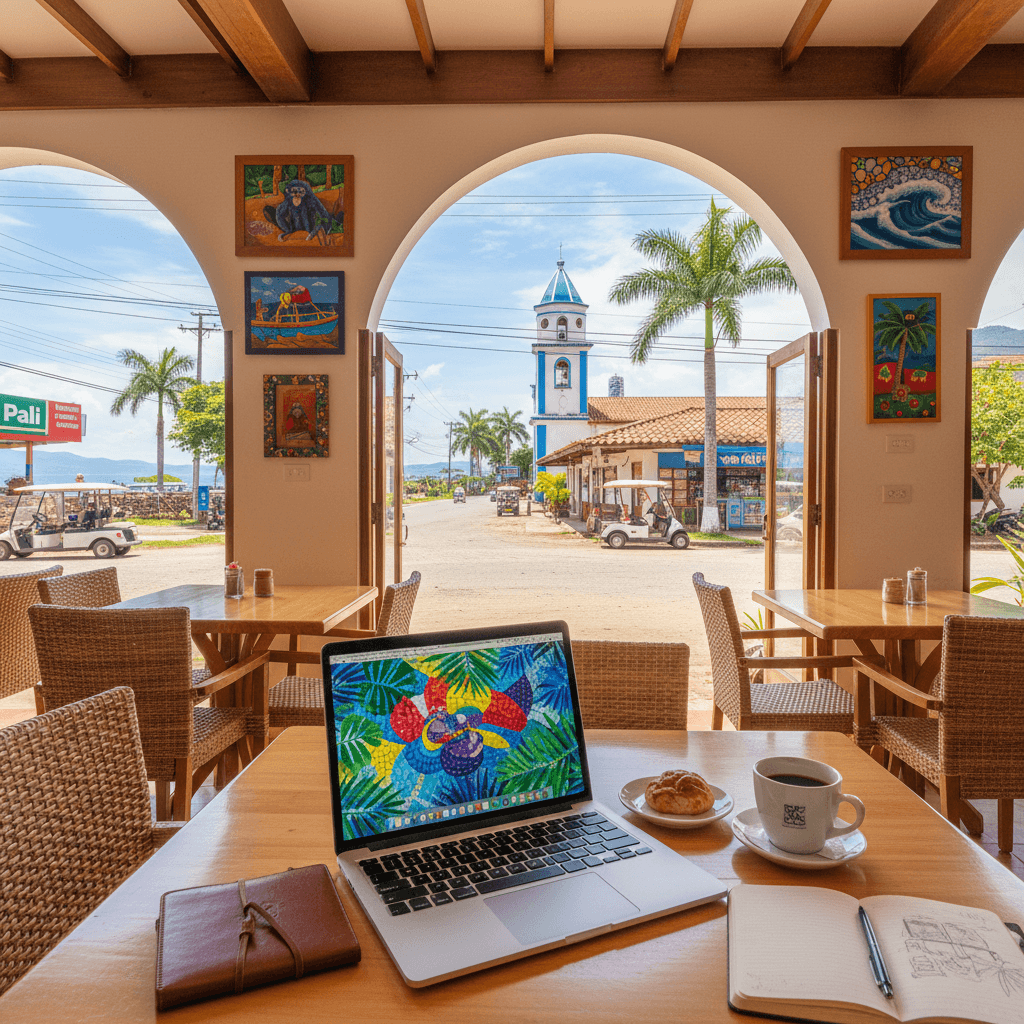
Playas del Coco
🇨🇷 Costa Rica
The Fishing Village that Grew Up
Playas del Coco isn't your typical high-energy nomad hub. It’s a town that has traded the frantic pace of the surf scene for a grounded, sun-baked stability. Originally a small fishing outpost, it has transitioned into a reliable home base for remote workers who prefer a quiet morning swim over a late-night party. You’ll find the vibe here is distinctly "Pura Vida" in its most literal sense, focused on the rhythm of the tides and the heat of the Guanacaste sun.
The town sits in a horseshoe bay with calm, dark-sand waters that are perfect for a morning paddle or a sunset stroll. Unlike the crashing waves of nearby Tamarindo, Coco is gentle. This makes it a magnet for families and retirees, but more nomads are trickling in for the 30-minute proximity to the Liberia Airport and the lack of pretension. It’s a place where you can walk everywhere in flip-flops, and the person next to you at the cafe is just as likely to be a local fisherman as a software engineer.
The Daily Rhythm
Life here centers around the main drag that leads directly to the beach. Most nomads find the social scene a bit subdued compared to other coastal spots. You won't find a massive circuit of nomad meetups or coworking events. Instead, social life happens organically at Java Coffee or Ticoffia, where the Wi-Fi is strong and the cold brew is necessary to beat the dry heat. Because the town is compact, you’ll start recognizing faces within forty-eight hours.
The climate is one of the driest in Costa Rica. From December to April, the landscape turns a dusty gold and the sky stays a constant, brilliant blue. While the lack of rain is great for your tan, travelers often mention the water shortages and the arid air as a trade-off. It feels less like a tropical jungle and more like a beachfront desert, which keeps the humidity manageable but the dust levels high.
Cost of Living Breakdown
Coco is generally more affordable than the trendy surf towns further south, but it still carries a coastal premium. You can live well here on a mid-range budget, especially if you lean into the local lifestyle. Most expats recommend shopping at the local Luperon or Auto Mercado for essentials, though eating out remains a mix of cheap local "sodas" and more expensive tourist grills.
- Budget Tier ($1,200 to $1,800/month): This covers a basic studio apartment slightly further from the beach and a diet heavy on casados (local plates of rice, beans, and protein) for $5 to $8.
- Mid-Range Tier ($2,000 to $2,500/month): You'll land a comfortable one-bedroom apartment with air conditioning and mix your meals between local spots and mid-range restaurants where dinner runs $15 to $20.
- Comfortable Tier ($2,500+ /month): This gets you a beachfront condo or a villa in a gated community, frequent upscale dining, and a car rental for weekend trips.
The Workspace and Digital Infrastructure
While there aren't dedicated coworking spaces with hot desks and networking mixers in the heart of Coco, the infrastructure is surprisingly solid. Fiber optic internet has rolled out across the town, with speeds often hitting 20 to 80 Mbps. If your rental doesn't have a backup, the local cafes are used to laptops. For a more formal office setup, some nomads take a short trip to the coworking spaces in Playa Flamingo or Potrero, about 20 minutes away.
For mobile data, grab a SIM card from Kolbi or Claro. You can pick these up at the airport or small shops in town for about $20 to $40 depending on your data needs. It’s a smart move to have a backup, as the occasional power flicker can happen during the transition into the rainy season in May.
Safety and Getting Around
One of the biggest draws of Playas del Coco is how safe and walkable it feels. You truly do not need a car if you live near the center. For longer hauls or grocery runs, Uber is reliable and cheap, with most short trips costing around $5. If you want to explore the surrounding beaches, bike rentals are available for roughly $10 a day.
Safety is generally a non-issue, especially compared to the busier tourist traps. It’s a family-friendly environment where petty theft is the only real concern. Expats suggest keeping an eye on your bags at the beach and locking your doors, but the "small town" feel means people look out for one another. If you need serious medical care, the Hospital CIMA in Liberia is a world-class facility only 30 minutes away, providing a safety net that many other remote beach towns lack.
The Price of Pura Vida
Playas del Coco sits in a sweet spot for budget management. It isn't as cheap as the mountain villages in the Central Valley, but it lacks the aggressive "tourist tax" found in nearby Tamarindo. You're paying a premium for the Guanacaste sunshine and the proximity to the airport, but the town's walkability keeps daily overhead surprisingly low.
Most single nomads find they can live a very comfortable life here on $1,800 to $2,500 per month. If you're a couple looking for a modern condo with high speed internet and air conditioning, you should budget closer to $3,000. The biggest variable is how much you rely on imported goods at the Luperon supermarket versus shopping at local stands.
Monthly Budget Breakdown
- Budget Tier ($1,200 to $1,800): This covers a basic studio apartment a few blocks back from the water, eating primarily at local sodas, and using a bicycle for transport.
- Mid-Range Tier ($2,000 to $2,500): The standard nomad experience. You'll get a 1-bedroom apartment with a pool, mix your meals between home cooking and mid-range cafes like Java Coffee, and enjoy a few weekend boat trips.
- Comfortable Tier ($2,500+): This gets you a beachfront or hilltop villa, frequent upscale dining, and perhaps a golf cart or scooter rental for the month.
Housing and Neighborhoods
Coco is compact enough that there aren't distinct neighborhoods with names, but the town is essentially split by the main road. The closer you are to the beach, the higher the price. Most nomads look for units in complexes like Coco Beach Apart or Black and White Apartment, which are known for being remote-work friendly.
- Studio/1BR Apartment: $700 to $1,200 depending on proximity to the ocean and AC quality.
- 2BR Condo: $1,400 to $2,200, often located in gated communities with shared pools.
- Utilities: Electricity is the silent budget killer in Guanacaste. If you run the AC 24/7, expect your bill to jump by $100 to $200.
Eating and Drinking
Dining in Coco is straightforward. You won't find the endless fusion options of a major city, but the local spots are reliable. A "casado" (a traditional plate with protein, rice, beans, and salad) at a local soda will run you about $8. If you head to the beach grills for a sunset dinner, expect to pay $15 to $25 for a main course and a drink.
- Coffee at Ticoffia: $3 to $5
- Local Beer (Imperial): $2 to $4
- Groceries for one week: $60 to $90
Connectivity and Transport
Since you can walk almost everywhere in the town center, your transport costs are negligible. An Uber for a quick trip across town or to a neighboring beach usually costs between $5 and $10. For your phone, grab a SIM card from Kolbi or Claro at the Liberia airport. A 20GB to 50GB data plan typically costs between $20 and $40 per month.
Internet is generally reliable, with many rentals now offering fiber optic connections reaching 50 to 80 Mbps. While there aren't dedicated coworking spaces in Coco yet, the cafe culture at Java Coffee is very welcoming to laptop users. Just be sure to buy a few lattes to keep the peace.
Safety and Health
Coco is widely considered safer and more family-friendly than the larger party towns. It's a retiree stronghold, which keeps the vibe subdued and the crime rates low. Common sense applies: don't leave your laptop on your beach towel while you go for a swim. For medical needs, there are plenty of local pharmacies, and the high-end Hospital CIMA is only 30 minutes away in Liberia for anything serious.
The Central Beach Core
Playas del Coco isn't a sprawling metropolis with distinct districts. It functions as a compact, walkable hub where everything radiates from the main beach road. Most people describe living here as being in the "center" or "just outside the center." It's a sunny, arid town where you can ditch the car and rely on your own two feet or a bicycle to get around. While the vibe is decidedly more "retired snowbird" than "startup founder," the infrastructure is surprisingly solid for anyone working remotely.
The town’s layout is simple. You have the beachfront area, which stays quiet most nights, and the main strip lined with essentials. You'll find most of the action at cafes like Java Coffee or Ticoffia, which serve as the unofficial offices for the town's laptop-toting crowd. If you need a more formal workspace, you'll likely have to head 20 minutes south to Playa Flamingo, as Coco favors a more casual, cafe-based work culture.
For Digital Nomads
If you're a solo nomad, you'll appreciate the low stress but might find the social scene a bit thin. This isn't a party town. Most nomads here prioritize deep work and morning swims over late-night bar crawls. The internet is reliable, with fiber optics delivering speeds between 20 and 80 Mbps in most modern rentals like Coco Beach Apart or the Black and White Apartment.
- Monthly Budget: Expect to spend between $1,600 and $2,500 for a comfortable lifestyle.
- Rent: A decent studio or 1BR near the water averages $800 to $1,200, though long-term deals via Facebook groups or Nomad Stays can shave off a few hundred dollars.
- Connectivity: Pick up a Kolbi or Claro SIM card at the airport for about $30 to ensure you have a backup hotspot.
- Work Spots: Java Coffee is the go-to for strong Wi-Fi and a steady supply of caffeine.
For Families
Families often find Playas del Coco to be the most practical choice in Guanacaste. The bay has very calm waters, making it much safer for kids to swim compared to the heavy surf in Tamarindo. The town is safe, the streets are easy to navigate with a stroller, and the proximity to Liberia Airport (just 30 minutes away) means no grueling four-hour drives with toddlers after a long flight.
- Daily Life: Groceries are accessible at local markets, and Hospital CIMA in Liberia provides world-class healthcare within a short drive.
- Activities: Weekends are usually spent snorkeling, fishing, or taking boat trips to nearby beaches.
- Dining: Local "sodas" serve up $8 casados (traditional plates with rice, beans, and protein) which are healthy, filling, and kid-friendly.
For Retirees and Snowbirds
This is the demographic that truly shaped Coco. Retirees love the dry heat and the fact that they don't need a vehicle to live a full life. The community is tight-knit, and you'll find most expats connecting through the Playas del Coco Expats Facebook group. The pace is slow, the "Pura Vida" philosophy is taken literally, and the noise levels stay low after 9:00 PM.
- Housing: Many retirees opt for gated communities or villas like Zephyros which offer extra security and shared pools.
- Climate: It is exceptionally dry here from December to April, so be prepared for a dusty environment and occasional water conservation efforts.
- Transport: Uber is widely available for short hops around town, usually costing between $5 and $10.
For Solo Travelers
If you're traveling alone, Coco is a safe landing pad, but it requires some effort to meet people. You won't find many hostels with a "backpacker" energy. Instead, you'll meet people at the beach at sunset or while grabbing a beer at a local grill. It’s a great base for day trips to Playa Flamingo or Tamarindo if you want a change of pace or a more active nightlife scene for a night or two.
- Safety: Petty theft is the only real concern; don't leave your phone or bag unattended on the sand while you're swimming.
- Language: You can get by with English in the cafes and rental offices, but learning basic Spanish phrases for the local shops will go a long way.
- Cost of Food: Budget travelers can eat well for $15 to $20 a day by sticking to street food and sodas, while mid-range dining will run you $15 per meal.
Connectivity and Speed
Playas del Coco has transformed from a sleepy fishing village into a reliable hub for remote work. While it doesn't have the high energy of Tamarindo, it offers stable fiber optic internet that usually ranges between 20 and 80 Mbps. This is more than enough for video calls and heavy uploads, though you might see occasional fluctuations during heavy tropical storms in the rainy season.
Most rentals and local apartments now include private Wi-Fi as a standard amenity. If you're staying long term, it's smart to ask your host for a speed test screenshot before booking. For a backup, local SIM cards from Kolbi or Claro are easy to find. You can grab one at the airport or at various minimarts in town for about $10, then load it with 20GB to 50GB of data for roughly $20 to $40 per month.
Top Places to Work
For those who need a professional environment, Cocoworking in Plaza Pacífico offers a dedicated space with high-speed internet and desks right in the heart of town. Beyond formal workspaces, many nomads embrace the local cafe culture or work from their balconies to catch the ocean breeze. If you need a change of scenery, these spots are the local favorites:
- Java Coffee: This is the go-to spot for anyone with a laptop. It has reliable Wi-Fi, plenty of power outlets, and a steady stream of expats. A coffee will run you about $3 to $5.
- Ticoffia: A quieter alternative with a great atmosphere for deep focus. The internet is snappy, and the staff won't hover if you stay for a few hours.
- Playa Flamingo (Nearby): If you absolutely need a formal coworking environment, you'll have to head about 20 minutes south to the Surfside or Potrero area, where a few dedicated spaces have opened up to serve the growing nomad community there.
The Digital Nomad Community
The social scene in Coco is a bit different than the typical nomad "party" vibe. You'll find yourself surrounded by a mix of retirees, families, and "snowbirds" who flee the northern winters. It's a quieter crowd, which means the cafes are rarely overcrowded or noisy, but it can be a little harder to find a built in community of 20-somethings.
To find your people, most residents recommend joining the Playas del Coco Expats Facebook group. It's the most active way to find out about local meetups, beach volleyball games, or villa rentals. While the town is very walkable and easy to navigate, the social life usually revolves around sunset drinks at beach bars or weekend trips to nearby spots like Playa Hermosa.
Practical Remote Work Setup
If you're planning a stay for a month or more, look into Nomad Stays or similar platforms that list vetted properties like Coco Beach Apart or Black and White Apartment. These spots are known for catering to the remote work crowd with better desk setups and reliable routers. Since the town is so compact, you can usually walk from your "office" to the beach in under 10 minutes, making it one of the better spots in Guanacaste for a true work-life balance.
Keep in mind that Guanacaste is very dry. During the peak of summer, water shortages can happen occasionally. It rarely affects the internet, but it's something to be aware of if you're staying in older buildings. Most modern developments have backup tanks, so prioritize those if you want a seamless experience.
Peace of Mind in the Sun
Playas del Coco is widely regarded as one of the safest beach towns in Guanacaste. Unlike the high energy party hubs further south, Coco attracts a more mature crowd of retirees, families, and long term snowbirds. This demographic shift naturally leads to a quieter environment where serious crime is rare. You won't find the rowdy late night scenes that often invite trouble; instead, the town settles into a sleepy rhythm shortly after sunset.
Most nomads feel perfectly comfortable walking the main drag or the beach path alone. That said, common sense is your best friend here. Petty theft is the most frequent issue, usually involving unattended bags on the sand or electronics left visible in a parked car. Expats generally recommend keeping your valuables locked up at home and only carrying what you need for the day. If you are out after dark, sticking to the well lit areas near the town center is standard practice, though the risks are minimal compared to larger Central American hubs.
Healthcare and Medical Services
One of the biggest perks of living in Coco is its proximity to world class medical care. You aren't stranded in a remote jungle here. For minor issues, the town is packed with pharmacies (farmacias) where pharmacists can often provide consultations and over the counter remedies for common ailments like tropical infections or stomach bugs.
For anything more serious, you have elite options within a short drive. Hospital San Rafael Arcangel in Liberia, a reliable private option just 30 minutes away, meets high standards, and most of the specialists there speak fluent English. Many nomads and expats keep a private insurance policy to access these facilities quickly, as the public system (Caja) can involve long wait times for non emergencies.
- Emergency Services: Dial 911 for immediate assistance.
- Tourist Police: Reach them at 2527-4733 for non emergency reports or local assistance.
- Local Clinics: Several private clinics in town offer 24/7 emergency care and routine checkups for a reasonable out of pocket fee.
Practical Safety Tips
The biggest "danger" in Coco isn't the people, it's the environment. The Guanacaste sun is incredibly intense, especially between December and April. Dehydration and heat exhaustion catch nomads off guard when they spend all day working from a breezy beach cafe without drinking enough water. Also, while the waters in the bay are generally calm and great for swimming, always check for local conditions if you head to more exposed nearby beaches like Playa Ocotal.
If you're renting a house, look for properties with basic security features like gated entries or perimeter fences. This isn't because the neighborhood is dangerous, but rather to deter opportunistic "smash and grab" thefts that can happen in any tourist destination. Most long term rentals in complexes like Coco Beach Apart or Zephyros Villa come with these features built in, giving you one less thing to worry about while you're focused on your deadlines.
Safety and Health Directory
- San Rafael Arcangel Hospital: Reliable private option in Liberia, 30 minutes away.
- Pharmacy: Multiple locations on the main road, usually open until 8:00 PM or 9:00 PM.
- Water Safety: Tap water is generally safe in Coco, but many nomads prefer filtered water or large jugs (garrafones) due to the heavy mineral content and occasional shortages in the dry season.
The Walkable Lifestyle
One of the biggest draws of Playas del Coco is its compact, circular layout. Unlike the sprawling hills of nearby Ocotal or the spread-out nature of Tamarindo, Coco is incredibly flat and easy to navigate on foot. Most nomads find they can base themselves near the town center and reach the beach, the grocery store, and their favorite cafe within a 10 to 15 minute walk. If you are staying in the Las Palmas neighborhood or near the main drag, you likely won't need a car for your daily routine.
For those times when the Guanacaste heat gets a bit too intense, Uber is the go-to solution. It is widely available, reliable, and significantly cheaper than the official red taxis. A quick hop from one end of town to the other usually costs between $3 and $6. If you are heading out for a grocery haul at Luperon or Auto Mercado, calling an Uber is the standard move for expats and locals alike.
Cycling and Local Wheels
Bicycles are a staple of the Coco lifestyle. Many long-term rentals include a cruiser bike, but you can also rent them locally for about $5 to $10 per day. It is the most efficient way to get around without breaking a sweat in the midday sun. For a bit more speed, gas-powered scooters and electric bikes are gaining popularity. These are perfect for exploring the smaller dirt roads that branch off the main paved areas, though you should always stay alert for potholes during the rainy season.
Public Transit and Regional Travel
If you are looking to explore beyond the beach, the public bus system is surprisingly efficient for budget travelers. Buses to Liberia run frequently throughout the day and cost roughly $2 to $3. It is a great way to reach the larger shopping centers or connect to other parts of the country. There are also direct routes to San Jose, though the journey takes about five hours.
For day trips to neighboring spots like Playa Flamingo or the surf breaks in Tamarindo, many nomads opt for shared shuttles or private transfers. A shuttle to Tamarindo usually runs around $25 per person. If you want total freedom to explore the Hidden Valley or the waterfalls in the interior, renting a car for a weekend is the best bet, though daily rates can spike to $70 or $100 during the peak dry season between December and March.
Arrival and Airport Transfers
Getting to Coco from Daniel Oduber Quirós International Airport (LIR) is a breeze. The town is only 30 minutes away, making it one of the most accessible beach destinations in the country. You have three main options for the final leg of your journey:
- Official Airport Taxis: These are the orange cars waiting outside. They are convenient but the most expensive, typically charging $30 to $40 for the ride to Coco.
- Uber: You can often find drivers around the airport, though they sometimes have to pick you up slightly away from the main terminal doors. Expect to pay $18 to $30 depending on demand and service.
- Pre-arranged Shuttles: Many hotels and property managers can book a private driver for you. This is the stress-free choice if you are arriving late at night or carrying heavy surf gear.
Practical Navigation Tips
Address systems in Costa Rica are notoriously informal. Instead of street numbers, people use landmarks. You might find your Airbnb described as "100 meters north of the Luperon supermarket." It takes a few days to get used to, but Waze is the gold standard for navigation here. Most travelers find it much more accurate than Google Maps for local shortcuts and real-time traffic updates. If you are planning to drive, make sure you have a local SIM card from Kolbi or Claro to keep your data running, as some of the backroads between beaches have spotty coverage.
The Local Lingo
In Playas del Coco, Spanish is the heartbeat of daily life, but you won't need to be fluent to grab a coffee or check into your apartment. Because the town is a magnet for North American retirees and families, English is widely spoken in most service environments. You'll find that staff at places like Java Coffee or the local pharmacies can switch between languages with ease. However, stepping outside the "tourist bubble" to a local soda for a $8 casado usually requires a bit more effort.
The most important phrase you will hear, dozens of times a day, is "Pura Vida." It literally means "pure life," but locals use it for everything from "hello" and "goodbye" to "it’s all good" when the internet flickers for a second. Embracing this mindset is more important than perfect grammar. If you approach a conversation with a smile and a "Pura Vida," the locals, known as Ticos, are incredibly patient with Spanish learners.
Staying Connected
For remote work, the infrastructure in Coco is surprisingly robust. Most long term rentals and newer builds offer fiber optic connections with speeds ranging from 20 to 80 Mbps. While there aren't dedicated coworking hubs in the center of town yet, the cafe culture fills the gap. Ticoffia is a favorite for nomads who need a reliable signal and a caffeine fix for a few hours. Just keep in mind that Guanacaste is arid and hot; if you're working from a patio, make sure you've got a fan or some shade, as the heat can be brutal on laptops.
To stay connected while wandering the beach or taking a $5 Uber across town, you'll want a local SIM card. Don't rely on international roaming, which gets expensive fast. You can pick up a card from providers like Kolbi or Claro right at the Liberia Airport or at small pulperias (convenience stores) in town.
- Startup Cost: Around $10 for the SIM card itself.
- Data Packages: Most nomads opt for a 20GB to 50GB plan, which typically runs between $20 and $40 per month.
- Top-ups: You can easily add credit using the Mi Kolbi or Claro apps, or by visiting any grocery store with the provider's logo in the window.
Communication Tools and Tips
While you can get by with English, having a few digital tools on your phone makes life smoother. Most expats and locals use WhatsApp for everything. If you want to book a fishing trip, reserve a table at a beach grill, or message a landlord about a listing on Nomad Stays, you'll do it through WhatsApp. It's the primary way the town communicates.
For those moments when you're off the beaten path or reading a menu at a traditional soda, Google Translate with the Spanish pack downloaded for offline use is a lifesaver. If you're staying for more than a month, spending 15 minutes a day on Duolingo will go a long way. Locals truly appreciate it when you try to ask "¿Cuánto cuesta?" (how much does it cost?) or ask for the "baño" (bathroom) in their native tongue.
One thing to remember is the "Tico time" phenomenon. Communication about schedules can be relaxed. If a technician says they'll arrive in the afternoon, they might mean 2:00 PM, or they might mean tomorrow. It isn't rudeness; it's just the slower pace of Guanacaste. Lean into it, keep your WhatsApp handy, and enjoy the slower rhythm of the coast.
The Sunniest Corner of Costa Rica
If your version of a perfect remote work setup involves a high probability of sunshine and a low chance of rain ruining your afternoon hike, Playas del Coco is your spot. Located in the Guanacaste province, this area is famously known as the driest region in the country. While the lush jungles of the south are beautiful, they come with relentless humidity and daily downpours. In Coco, you get a crisp, arid heat that makes those 80 to 90°F days feel much more manageable.
The climate here is divided into two distinct chapters: the dry season and the green season. Because of its unique geography, even the rainy months are significantly milder than what you will find in nearby Manuel Antonio or Uvita. It makes the town a magnet for snowbirds and remote workers who want to swap a northern winter for a predictable, golden summer.
Dry Season: December to April
This is the peak of the "Pura Vida" lifestyle. From December through March, rain is almost non-existent. You can plan boat trips, snorkeling sessions at the beach, or sunset drinks at a local spot like Java Coffee without ever checking a weather app. The sky stays a consistent blue, and the offshore winds keep the air moving.
- The Draw: Guaranteed beach weather every single day.
- The Trade-off: The landscape turns quite brown and dusty. Water shortages can occasionally happen in Guanacaste during these months, so most long-term residents are mindful of their usage.
- Social Vibe: This is when the town is at its liveliest, though "lively" in Coco still means a quiet dinner rather than a 2:00 AM rave.
Green Season: May to November
Locals call the rainy season the "green season" for a reason. Within a few weeks of the first rains in May, the parched, yellow hills transform into a deep, tropical emerald. For many nomads, this is actually the preferred time to be in town. The dust settles, the air cools down slightly, and the crowds thin out.
Rain usually follows a predictable pattern: sunny mornings followed by a heavy, refreshing downpour in the late afternoon. You can easily get your deep work done during the rain and head to the beach for the morning light. October and November are the wettest months, where you might see more grey days than usual, but even then, it is rarely a total washout.
When to Book Your Stay
If you are looking for the sweet spot between perfect weather and avoiding the highest rental surges, aim for May or June. You will catch the beginning of the green scenery, but the rains haven't reached their peak yet. Prices for apartments like those at Coco Beach Apart or Black and White Apartment often have more wiggle room during these shoulder months compared to the Christmas and New Year rush.
For those who hate the cold above all else, January and February are the gold standard. Just be prepared to share the beach with more retirees and families, as this is when the town hits its highest occupancy. No matter when you arrive, the water temperature remains a bathtub-warm 80°F, making a morning swim a viable part of your daily routine year-round.
Connectivity and Workspace
You won't have trouble staying connected in Coco. While there aren't dedicated coworking hubs in the town center yet, the local cafe culture has stepped up to fill the gap. Java Coffee and Ticoffia are the go-to spots for remote workers. The Wi-Fi is reliable enough for video calls, and the staff is generally cool with you lingering over a few cups of local brew.
Most rentals now offer fiber optic connections with speeds ranging from 20 to 80 Mbps. If you need a backup, grab a prepaid SIM card at the Liberia airport or a local pulperia. Kolbi and Claro are the top choices; expect to pay $20 to $40 for a monthly data plan with 20GB or more. If you're craving a formal office environment, you can make the 20 minute trek to the Surfside area in Playa Flamingo, but most nomads here prefer the flexibility of working from their terrace.
Cost of Living and Housing
Coco is more affordable than its neighbor Tamarindo, but beach town prices still apply. A single nomad can live comfortably on $1,800 to $2,500 per month, while couples should budget upwards of $3,000 for a high-end lifestyle.
- Budget ($1,200-$1,800): A basic studio apartment slightly inland, eating mostly at local sodas, and using a bicycle for transport.
- Mid-range ($2,000-$2,500): A modern 1-bedroom apartment with AC, frequent meals at mid-range restaurants, and a few weekend tours.
- Comfortable ($2,500+): Living in beachfront condos in Pacifico or similar gated communities, regular upscale dining, and a rental car for exploring.
For housing, check Nomad Stays for vetted monthly rentals like Coco Beach Apart. If you're looking for long-term deals, the Playas del Coco Expats Facebook group is the local gold mine for unlisted rentals and lease takeovers.
Getting Around
The town is incredibly compact. If you live near the main strip, you can walk to the grocery store, the beach, and your favorite cafe in under ten minutes. For longer trips, Uber is active and reliable, with short hops around town costing about $5. If you're heading to Liberia or the airport, expect to pay between $20 and $30 for a 30 minute ride.
Public buses are a steal at $2 to $5 for trips to nearby beaches or the city. Many long-term residents skip the car and rent a scooter or a sturdy beach cruiser for $5 to $10 a day. It's enough to get you to the quieter ends of the beach without the headache of parking.
Weather and Safety
Guanacaste is famous for being the sunniest province in Costa Rica. You'll see temperatures between 80 and 90°F year-round. The dry season from December to April is prime time, though it gets quite arid and dusty. The rainy season peaks in October and November, but even then, the storms are usually short afternoon bursts rather than day-long washouts.
Safety is a major draw for the families and retirees who settle here. It's much quieter than the party towns further south. Petty theft is the only real concern; don't leave your laptop or phone unattended on the sand while you go for a swim. For medical needs, the Hospital CIMA in Liberia is a world-class facility just a short drive away.
Food and Social Life
The dining scene is small but solid. For a cheap, filling lunch, hit a local soda for a $8 casado (a traditional plate with rice, beans, and protein). Dinner at a mid-range beach grill will run you $15 to $20. While the nightlife isn't wild, the sundowner crowd gathers at beach bars for happy hour. It's a social scene built on "Pura Vida" vibes rather than clubbing, making it easy to meet people if you're proactive at the local cafes or through expat meetups.
Need visa and immigration info for Costa Rica?
🇨🇷 View Costa Rica Country GuideHidden Gem
Worth the effort