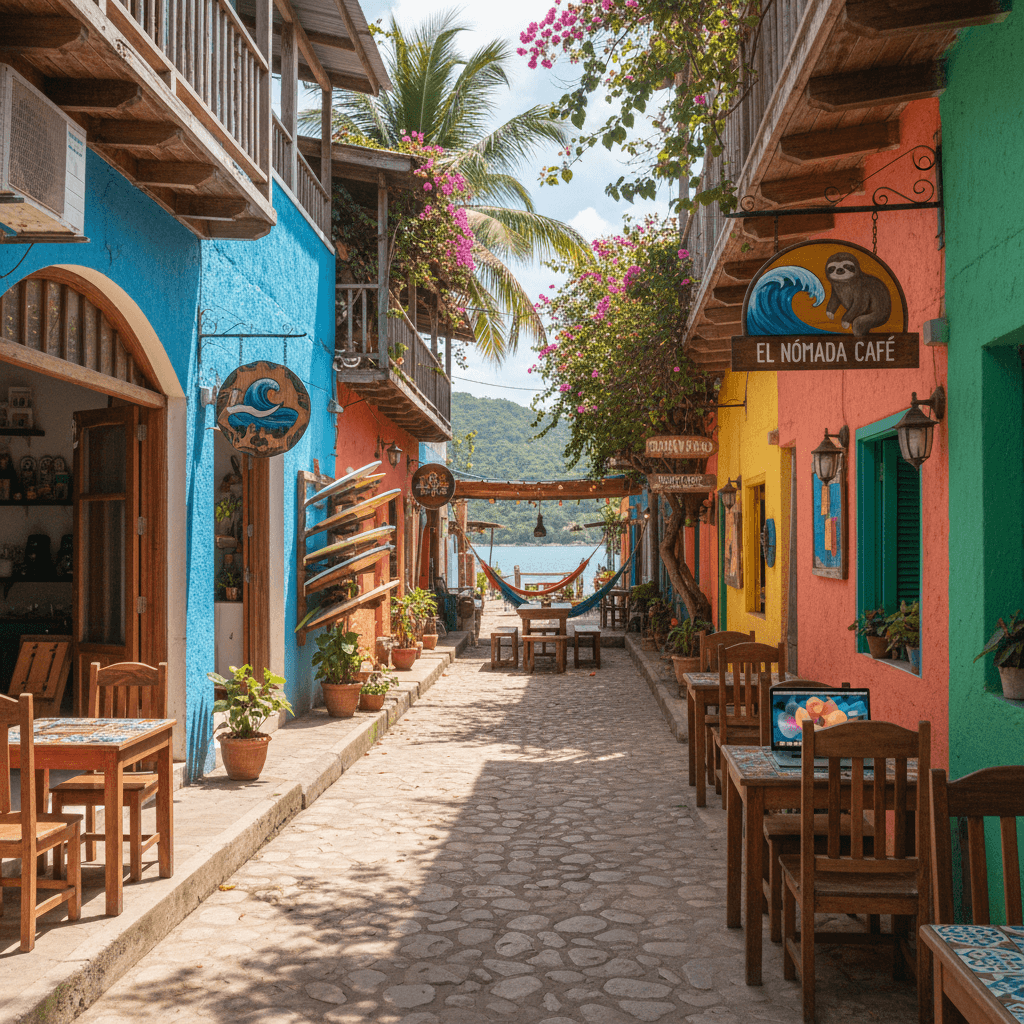
Playa Venao
🇵🇦 Panama
The Pacific Jungle Frontier
Playa Venao isn't your typical manicured resort town. It feels like a high-speed collision between raw Panamanian jungle and a modern digital nomad hub. Located about six hours south of Panama City on the Azuero Peninsula, it has evolved from a secret surf break into a sophisticated, bohemian enclave without losing its "end of the road" grit. Most nomads find that the town follows a distinct rhythm: it's a sleepy, salt-crusted surf village by day that transforms into a high-energy social scene once the sun hits the horizon.
What sets Venao apart from places like Tulum or Bali is the sense of focus. People don't just come here to "be seen"; they come for the fiber optic internet and the consistent year-round waves. The community is tight-knit, numbering around 800 full-time residents, which means you'll recognize almost everyone at the beach within a week. It’s a place where you can close your laptop after a morning of deep work and be in the water with a surfboard five minutes later.
The Vibe and Social Fabric
The culture here is driven by a mix of surfers, content creators, and remote workers in their 30s and 40s who have traded corporate ladders for sunset bonfires. It’s safe, community-oriented, and lacks the aggressive tourist hustle found in other Central American hotspots. You’ll see horses galloping along the frothy shoreline while digital nomads sit nearby in open-air cafes, taking Zoom calls with a view of the Pacific.
Expats often describe the atmosphere as "contained energy." Because the town is compact, the social life is incredibly accessible. You don't need a car to find the party or the networking event; you just follow the sound of the music. However, it’s not all sunshine and cheap beer. The town is experiencing "crazy" levels of development, and the influx of foreign capital has brought "gringo pricing" to the local supermarkets. If you’re looking for a dirt-cheap Panamanian village experience, this isn't it. You’re paying for the modern comforts, the high-speed tech infrastructure, and the curated social circle.
What to Expect on Your Wallet
While Venao is more affordable than major North American cities, it is one of the pricier pockets of Panama. A comfortable lifestyle here typically requires a monthly budget of around $1,500 to $2,000, though you can push that higher if you insist on living directly on the sand.
- Shared Housing or Coliving: Expect to pay around $400 per month for a basic setup.
- Standard Studios: These generally range from $600 to $1,000 depending on the season.
- Beachfront Casitas: Premium bungalows right on the water can command $1,000 to $2,500.
- Seasonality: Be prepared for prices to jump 20% to 30% during the high season from December to April.
Travelers often say the biggest surprise is the cost of groceries. Local shops cater to Western tastes, which keeps prices high. Many long-term residents recommend stocking up on essentials in Panama City before making the trek down. Despite the costs, the trade-off is a lifestyle defined by pure water, clean air, and a level of safety that’s becoming harder to find in other global nomad hubs.
The Reality Check
Playa Venao is perfect if you want a "work-hard, surf-hard" lifestyle, but it can feel isolating if you need constant urban stimulation. There aren't many museums, shopping malls, or diverse activities beyond what the ocean and jungle provide. It’s a place for people who find peace in the repetitive beauty of the tides and the reliability of a strong WiFi signal. If you can handle the sleepy afternoons and the occasional power surge during a tropical storm, you’ll find a community that’s as welcoming as it is ambitious.
The Bottom Line on Budgets
Playa Venao isn't the dirt-cheap Panamanian escape it was a decade ago, but for digital nomads coming from the US or Europe, it still feels like a bargain. You can comfortably get by on $1,500 to $2,000 a month if you're smart about where you stay. If you want a luxury villa right on the sand and eat out every night, expect that number to climb north of $2,500 quickly.
The town's explosive growth means prices are in flux. Long-term residents often warn about "gringo pricing" at the local mini-marts. Since everything has to be trucked into this remote corner of the Azuero Peninsula, your grocery bill might actually be higher than it would be in Panama City. Most expats recommend doing a major supply run in Pedasi or even Panama City before settling in to save some serious cash.
Accommodation Breakdown
Housing is your biggest variable. The market is shifting from short-term surf stays to more structured long-term rentals, but high season (December through April) still sees prices jump by 20% to 30%.
- Budget/Coliving: Around $400 a month. This usually gets you a bed in a shared house or a very basic setup slightly further from the surf break.
- Mid-Range Studios: Between $600 and $1,000 a month. These are typically modern, functional spaces with reliable fiber optic internet, located within a short walk or bike ride to the beach.
- Beachside Luxury: $1,000 to $2,500 a month. This tier covers the high-end casitas and bungalows where you can hear the waves from your bedroom.
Food and Dining Costs
The restaurant scene has exploded lately, with most spots being less than two years old. You'll find everything from casual fish tacos to upscale fusion. While specific meal prices vary, nomads generally bucket their spending into three tiers:
- The Budget Route ($1,000 total monthly spend): You're mostly cooking at home, buying local produce, and keeping the Balboa beers to a minimum.
- The Mid-Range Route ($1,500 to $2,000 total monthly spend): You're hitting the local cafes for a morning latte, grabbing lunch out a few times a week, and enjoying the nightlife on weekends.
- The Comfortable Route ($2,500+ total monthly spend): You're dining at the newer, upscale restaurants frequently and likely paying a premium for imported goods at the supermarket.
The Hidden Costs
Don't forget the "extras" that come with the Venao lifestyle. While the town is walkable, many nomads end up renting a scooter or an ATV to get around more easily, which adds to the monthly tally. Fiber optic internet is standard in most new builds, but if you're looking at an older "off-beach" rental, you might need to factor in the cost of a dedicated coworking membership as these spaces continue to pop up across town.
One final tip for the wallet: cash is still king in many smaller spots. While the newer, "gringo-oriented" businesses take cards, having a stash of US dollars (Panama's official currency) is a must for local markets and smaller vendors. Just be prepared for the six-hour trek from Panama City, as that initial transport cost can be a bit of a shock if you don't book a shared shuttle in advance.
For Digital Nomads and Remote Workers
If you're coming to Venao to work, you'll want to stay as close to the main bay as possible. The center of town is where the fiber optic internet infrastructure is most stable. Most nomads gravitate toward the mid-beach area, staying at places like Selina Playa Venao or Eco Venao. These spots offer dedicated coworking spaces and social hubs where you can meet other creators and entrepreneurs in their 30s and 40s.
- Rent: Expect to pay between $600 and $1,000 for a studio or a room in a high-end coliving space.
- Vibe: High energy, social, and very walkable. You can roll out of bed, hit a morning surf session, and be on a Zoom call by 9:00 AM.
- Pros: Best WiFi reliability and easy access to the growing cafe scene.
For Expats and Long-Term Residents
Expats looking for a bit more peace often head slightly inland or to the hills overlooking the bay. These "off-beach" areas provide a buffer from the vibrant nightlife and weekend crowds that flock to the shore. You'll find more traditional house rentals here rather than just hotel rooms or bungalows. Many long-termers prefer the Pedasi side of town, which is about a 30-minute drive away, for lower prices and a more authentic Panamanian feel, though they commute into Venao for the social scene.
- Rent: 1-bedroom apartments off the beach run between $400 and $600, while larger houses can climb much higher.
- Vibe: Quiet, surrounded by jungle, and more private. It's a tight-knit community of about 350 full-time residents.
- Pros: More space for your money and a break from the "gringo pricing" found directly on the sand.
For Families
Families usually opt for gated communities or managed developments slightly removed from the beachfront bars. Areas with community amenities like pools and shared gardens are becoming more common as the town grows. You'll want to look for "casitas" or villas that offer a kitchen, as eating out every meal with kids gets expensive quickly due to the high cost of imported goods in local mini-marts.
- Rent: Family-sized villas or bungalows typically range from $1,500 to $2,500 per month.
- Vibe: Safe, community-oriented, and nature-heavy. Kids often spend their days outdoors, and the beach is safe enough for supervised play.
- Pros: Access to a supportive expat parent network and a slower pace of life.
For Solo Travelers and Surfers
If you're here for the waves and the social life, beachfront is the only way to go. Staying right on the shoreline means you're steps away from the most consistent breaks and the sunset bonfires. This is where the bohemian culture is most visible. You won't need a car if you stay here; everything from the surf shops to the late-night music spots is within a ten-minute walk.
- Rent: Shared housing or budget dorms can be found for around $400, while beachfront bungalows command a premium.
- Vibe: Young, active, and loud. It's the heart of the town's social energy.
- Pros: Immediate access to the ocean and no transportation costs once you arrive.
Regardless of where you land, keep in mind that prices jump by 20% to 30% during the high season from December to April. If you're planning a stay, booking a few months in advance is the only way to snag the better deals before the crowds arrive from Panama City.
For a long time, the Azuero Peninsula was the place you went to disappear from the grid, not to join a Zoom call. That has changed fast. Playa Venao has leapfrogged over other Panamanian beach towns by skipping the slow transition from dial-up to broadband and going straight to fiber optic. It is now arguably the most reliable spot in the country for remote work outside of Panama City.
The Connectivity Reality
The days of crossing your fingers during a rainstorm are mostly over. Most high-end rentals and newer developments offer dedicated fiber lines with speeds often hitting 100 Mbps to 200 Mbps. While the town still feels like a jungle outpost, the infrastructure is surprisingly robust. You will find that video conferencing and heavy file uploads are rarely an issue, which is why the demographic here has shifted from backpackers to serious entrepreneurs in their 30s and 40s.
Tigo and Mas Movil (+Móvil) are the primary providers. Most nomads grab a local SIM card in Panama City before making the six hour drive down. Signal strength is solid along the main beach strip but can drop off quickly once you head into the hills or further down the coast toward Cañas.
Where to Get Work Done
The coworking scene is expanding to keep up with the "Silicon Venao" nickname locals sometimes joke about. You are no longer relegated to working from a sandy kitchen table. Several dedicated spaces have opened in the last two years, catering to those who need ergonomic chairs and air conditioning.
- Selina River Venao & Selina Playa Venao: These are the social anchors of the nomad scene. They offer hot desks, dedicated desks, and private phone booths. It is the easiest place to meet other remote workers, though it can get loud during the afternoon social hour.
- Beachfront Cafes: If you prefer a more casual vibe, the town is full of new coffee shops. Most are accustomed to nomads staying for a few hours. Just check for "Fibra Optica" signs out front, which are now a standard marketing tool for local businesses.
- Nao Venao (formerly Wao): A spot with co-work space slightly inland. It is popular with the crowd that wants to surf at 7:00 AM and be at a desk by 9:00 AM.
Practical Tips for Remote Workers
While the internet is great, the power grid in a remote jungle town can still be temperamental. Short outages happen, usually during the heavy tropical downpours of the wet season. Most dedicated coworking spaces have back-up generators, but if you are renting a private Airbnb, it is worth asking the host if they have a UPS (Uninterruptible Power Supply) for the router.
The "work-from-anywhere" lifestyle here usually follows the tides. You will notice the coworking spaces empty out when the swell is hitting just right and fill back up by mid-morning. If you need total silence, aim for the spaces located slightly back from the shoreline, away from the beachfront speakers and the afternoon volleyball games. Most nomads find that the cost of a coworking pass, usually around $15 to $25 per day or $150 to $250 per month, is worth it just for the guaranteed AC and the community aspect.
The Local Safety Landscape
Playa Venao is often described by the nomad community as a breath of fresh air compared to the high pressure environments of Tulum or Bali. It is a safe, peaceful, and community oriented pocket of Panama where the biggest threat to your afternoon is usually a falling coconut or a missed surf set. Because the full time expat population is small, roughly 800 people, there is a natural neighborhood watch effect. People know each other here, and that familiarity creates a protective bubble that’s hard to find in larger cities.
Violent crime is practically unheard of in the bay. Most residents feel perfectly comfortable walking the beach at night or heading home from a late night DJ set at one of the beach clubs alone. That said, petty theft can happen if you leave a MacBook or a designer bag unattended on a beach towel while you're out in the waves. Expats recommend using common sense: lock your doors at night and don't leave valuables visible in your car, especially if you're parked in the more secluded areas at the ends of the bay.
The vibe here is welcoming and friendly, which makes it an ideal spot for solo female travelers or families. You won't find "no go" zones or dangerous neighborhoods within Venao itself. It’s the kind of place where the community gathers for sunset bonfires and looks out for one another's gear. If you do run into trouble, the local police presence is minimal but accessible, though most issues are handled through the tight knit social networks of the business owners and residents.
Healthcare and Medical Access
While the lifestyle in Venao is top tier, the medical infrastructure is still catching up to the rapid development. This is a rural beach town, so you won't find a massive 24 hour hospital with specialized care right on the sand. For minor issues like surf cuts, infections, or stomach bugs, there are small local clinics nearby that can handle the basics. Most nomads keep a well stocked first aid kit for coral scrapes and stings, as these are the most common "injuries" you'll face.
For more serious medical needs, you'll likely need to head out of town. Here is how the logistics typically look:
- Pedasí: Located about 30 minutes away, this is your first stop for pharmacies and standard doctors. It’s where most residents go for routine checkups or to fill prescriptions.
- Las Tablas or Chitré: These larger hubs are about 1.5 to 2 hours away and offer more robust hospital facilities and specialists.
- Panama City: For major emergencies or specialized surgeries, you'll want to be in the capital. It’s a 6 hour drive or a short domestic flight away, but it boasts some of the best private hospitals in Latin America, many of which are affiliated with Johns Hopkins.
Expats living here long term strongly suggest carrying international health insurance that includes emergency evacuation coverage. Since the town is growing so fast, new private medical services are starting to pop up, but for now, it's best to be self sufficient. If you rely on specific daily medications, bring a several month supply from Panama City or your home country, as the local pharmacies in the Azuero Peninsula might not always have niche brands in stock.
Practical Wellness Tips
The water quality in Playa Venao is generally considered pure, but most nomads still stick to filtered or bottled water for drinking to avoid any "traveler's tummy" issues. The sun is also incredibly strong this close to the equator. Surfers often underestimate the Pacific glare; expats recommend high zinc sunblock and staying hydrated to avoid heat exhaustion, which is a much more common health complaint here than actual illness.
Overall, the "healthcare" in Venao is more about preventative wellness. Between the fiber optic internet allowing for a stress free work day and the consistent waves providing daily exercise, most people find their physical and mental health improves significantly after a few weeks in the bay.
Getting around Playa Venao is a lesson in simplicity. The town is essentially a horseshoe shaped bay where everything of importance happens along a single main road and the shoreline. Because the community is so compact, your own two feet are often your best asset. Most nomads find that once they've dropped their bags at a beachfront hostel or a nearby casita, they rarely need a motorized vehicle for daily life.
Walking and Local Movement
The layout of Venao is incredibly intuitive. Most of the coworking spots, cafes, and surf camps are clustered within a 15 to 20 minute walk of one another. You'll spend most of your time walking barefoot or in flip flops between your rental and the waves. It's common to see people moving along the sand rather than the road to get from one end of the bay to the other, especially during low tide when the beach is wide and firm.
- The Main Strip: This is where you'll find the bulk of the restaurants and the few mini marts available. It's entirely walkable, though it can get dusty during the dry season.
- Beach Access: Almost every accommodation has a direct path to the water, making "commuting" to your morning surf session a matter of seconds.
- Horseback Riding: While more of a leisure activity than a standard commute, you'll frequently see riders skirting the waves. It's a legitimate way to see the surrounding hills if you want to venture beyond the beach.
Reaching Playa Venao
Getting here is the real hurdle. Playa Venao is roughly 5 to 6 hours from Panama City. Most travelers opt for a shuttle, which typically costs $50 to $60 for shared one way. These shuttles are reliable, air conditioned, and offer door to door service, which is a lifesaver given the humidity.
If you're looking to save money, you can take a public bus from the Albrook Terminal in Panama City to Las Tablas, then catch a smaller bus to Pedasi, and finally a taxi or a local "chiva" to Venao. It's a long journey that can easily take 8 hours, but it's the most authentic way to see the Azuero Peninsula.
Wheels and Rentals
There are no ride hailing apps like Uber or Bolt in Playa Venao. If you need to go further afield, like a supply run to Pedasi, you'll need to coordinate a local taxi or have your own set of wheels. Pedasi is about 30 minutes away and is the closest spot for a proper supermarket or a bank.
- Car Rentals: If you plan on exploring the hidden beaches nearby, renting a car in Panama City and driving down is your best bet. Expect to pay $30 to $50 per day for a basic sedan, though a 4x4 is recommended if you're visiting during the rainy season.
- Bikes and Scooters: While not as ubiquitous as in Bali, some hostels offer bike rentals. They're great for ziping between the east and west ends of the bay when the midday sun is too intense for a long walk.
- Parking: Most accommodations offer free parking, and since the town isn't overly crowded yet, you won't struggle to find a spot near the beach.
Expats often recommend keeping a bicycle or a small scooter if you're staying for more than a month. It makes those quick trips for a gallon of water or a sunset beer much more manageable. However, for the average nomad staying a week or two, your legs and the occasional shuttle will serve you just fine.
While Spanish is the official language of Panama, the linguistic landscape in Playa Venao is a unique beast. Because the town has exploded in popularity among international surfers and remote workers, you'll find a community where English is often the primary language of business and social life. However, navigating the local nuances requires a bit more than just "Spanglish."
The Language Divide
In the "Venao Bubble," English is the lingua franca. Most business owners, surf instructors, and hospitality staff at popular spots like Selina or El Sitio speak excellent English. If you're coming here for a month of coworking and surfing, you could technically get by without knowing a word of Spanish, but you'll be missing out on the soul of the Azuero Peninsula.
The local Panamanian community, especially the workers who commute from nearby Pedasi or Cañas, appreciate the effort when you lead with Spanish. Outside the immediate beach strip, English proficiency drops off quickly. If you plan on buying local groceries or dealing with local contractors for long-term rentals, basic Spanish isn't just helpful; it's a sign of respect that opens doors to better service and fairer prices.
Staying Connected
Communication isn't just about what you say, it's about how you stay online. Panama has some of the best connectivity in Central America, and Venao has benefited from recent fiber optic installations. This is a game changer for nomads who used to struggle with spotty satellite signals.
- Mobile Providers: Tigo and Mas Movil (+Móvil) are the heavy hitters. Most expats recommend Tigo for better coverage along the coast, though Mas Movil (+Móvil) is catching up.
- SIM Cards: You can pick up a prepaid SIM at the Tocumen Airport (PTY) in Panama City, but you'll pay a premium. It's smarter to wait until you hit a pharmacy or a "chino" (local convenience store) in Panama City or Pedasi.
- Data Costs: Prepaid data is cheap. You can usually get 10 days of unlimited data for about $7, or a monthly plan for around $20.
- WhatsApp: This is the lifeblood of Playa Venao. From booking a surf lesson to ordering a shuttle or joining the local community groups, everything happens on WhatsApp. Make sure your account is active before you arrive.
Key Local Phrases
Panamanian Spanish has its own flavor. It's fast, and they often drop the "s" at the end of words. If you want to sound less like a tourist and more like a local, keep these in your back pocket:
- ¿Qué xopá? (pronounced Ke-so-pah): The quintessential Panamanian greeting. It's a reversed version of "¿Qué pasó?" and means "What's up?" Use this with friends, never in a formal setting.
- Ofi: Short for "oficial." It's used to say "ok," "got it," or "cool."
- Dale: Used constantly to mean "go ahead," "do it," or "see you later."
- Pueblo: While Venao is the beach, locals refer to the nearby towns as the "pueblo." When someone says they're "going to town," they usually mean Pedasi.
Digital Nomad Tip
Most nomads find that joining the Playa Venao Community WhatsApp groups is the fastest way to get local intel. There are specific groups for ride-sharing (crucial for that 6 hour trek from Panama City), buy and sell, and social events. Ask a bartender or your coliving host to add you; it's the most effective communication tool in the jungle.
The Seasonal Rhythm
Playa Venao operates on a distinct two season cycle that dictates everything from your monthly rent to the quality of the surf. Because it sits on the Azuero Peninsula, often called the "Dry Arc" of Panama, it stays sunnier and drier than the rest of the country for a larger portion of the year. This makes it a reliable escape for nomads who want to avoid the tropical downpours common in places like Bocas del Toro.
Dry Season: December to April
This is the prime time to visit and the period when the town truly comes alive. The weather is consistently sunny, with clear blue skies and a steady breeze that keeps the humidity at bay. It's the most social time of year, characterized by sunset bonfires, packed beach bars, and a high energy nightlife scene.
However, popularity comes with a price tag. You can expect rental costs to jump by 20% to 30% during these months. Short term visitors flood the town, so if you're looking for a long term apartment or a quiet beachfront casita, you'll need to book months in advance. The dust can also become a factor as the landscape dries out, though the trade off is perfect beach weather every single day.
Green Season: May to November
The "Green Season" is Panama's version of winter, but don't expect constant rain. Mornings are usually bright and sunny, with heavy, refreshing downpours occurring in the late afternoon or overnight. The surrounding hills transform from a dusty brown to a lush, electric green, which many expats actually prefer.
For budget conscious nomads, this is the best time to negotiate long term leases. You can often find 1-bedroom apartments for $400 to $600 per month, prices that disappear once December hits. The vibe is significantly more mellow, making it ideal if you're coming to Venao to focus on a deep work project or to improve your surfing without the crowds.
Surfing Conditions
Unlike many beach towns that have a "bad" time for waves, Playa Venao is famously consistent. It's a south facing bay that catches swell year round, though the experience changes with the seasons:
- December to March: Smaller, cleaner waves. This is the best window for beginners and intermediate surfers to practice.
- April to October: The "Swell Season." This is when the Pacific delivers larger, more powerful waves that attract experienced surfers from around the world.
- Water Temperature: Stays warm and comfortable year round, usually hovering between 78°F and 82°F. You won't need a wetsuit, though a rash guard is recommended for sun protection.
When to Time Your Arrival
If you want the best of both worlds, aim to arrive in November or early May. These shoulder months offer a balance of manageable prices and pleasant weather. November is particularly beautiful as the rain begins to taper off but the landscape remains vibrant and green. If you're planning to stay through the peak of the dry season, try to secure your housing by October to avoid the "Gringo pricing" spikes that hit during the holidays.
Keep in mind that Panama celebrates "Fiestas Patrias" throughout November. While the town gets festive, government offices and some services in nearby Pedasi might slow down, so plan your administrative tasks or visa runs accordingly.
The Essentials
Living in Playa Venao is a lesson in balance. You'll find world class fiber optic internet and high end sushi bars sitting right next to dirt roads and jungle trails. It's a small community, with about 350 full time residents, but that number swells during the high season from December to April. During these months, prices jump by 20% to 30%, and the sleepy surf vibe shifts into a more high energy social scene.
Most nomads find the "gringo pricing" a bit of a shock at first. While Panama is generally affordable, Venao is a bubble. Since almost everything is imported from Panama City, supermarket prices are high. Expats recommend doing a massive haul at a PriceSmart or Rey in the city before making the six hour drive down to the peninsula. It'll save you a fortune on staples and specialty items.
Budgeting for the Coast
You can get by on different tiers here, but don't expect Southeast Asia prices. It's a premium destination for those who want reliable infrastructure in a remote setting.
- The Budget Tier ($1,000 to $1,200/month): This usually involves a bed in a coliving space or a shared house for about $400, cooking almost all your meals, and sticking to free activities like surfing and hiking.
- The Mid Range Tier ($1,500 to $2,000/month): You'll land a basic studio or one bedroom apartment for $600 to $1,000. This budget allows for a few nights out at the local bars and a couple of surf lessons.
- The Comfortable Tier ($2,500+ /month): This is for those wanting a beachfront casita or a luxury apartment, which can run up to $2,500. You'll be eating at the newer, upscale restaurants and likely won't be checking the price tag on your morning latte.
Connectivity and Workspace
The biggest draw for remote workers is the fiber optic internet. Unlike many beach towns in Central America where a rainstorm kills the connection, Venao stays online. Coworking spaces are popping up all over the village to keep up with the influx of tech workers. You'll find plenty of cafes where it's perfectly normal to sit with a laptop for three hours, provided you keep the coffee orders coming.
Cell service is decent, but it's smart to grab a local SIM card before you leave Panama City. While the town is safe and peaceful, it's isolated. If the power goes out, which happens occasionally in rural Panama, having a backup data plan is a lifesaver for those on tight deadlines.
Getting Around and Staying Safe
Venao is incredibly compact. You can walk almost everywhere within the main village and along the beach. Because of this, you don't really need a car once you're there. You'll see people getting around on horseback or just barefoot on the sand. If you want to explore nearby Pedasi, which is 30 minutes away, you can usually find a shuttle or hitch a ride with a neighbor.
Safety is rarely an issue here. Travelers often say they feel much more secure in Venao than in places like Tulum. It's the kind of place where people know their neighbors. There isn't a major hospital in the immediate village, so for anything serious, you'll be heading toward larger towns. For day to day life, the biggest "danger" is usually just a sunburn or a stray surfboard.
Social Life and Dining
The town has seen an explosion of new spots in the last two years. The dining scene is surprisingly diverse for a beach town, ranging from casual taco shacks to more refined sit down spots. Nightlife starts slow with sunset bonfires and builds into lively parties with DJs and live music as the night goes on. It's easy to meet people; just head to the beach at sunset or drop into one of the local coworking hubs. You'll find a crowd that's mostly in their 30s and 40s, though the demographic is widening as more families move in.
Need visa and immigration info for Panama?
🇵🇦 View Panama Country GuideNomad Haven
Your home away from home