Pekanbaru
🇮🇩 Indonesia
The Oil Capital with a Slow Soul
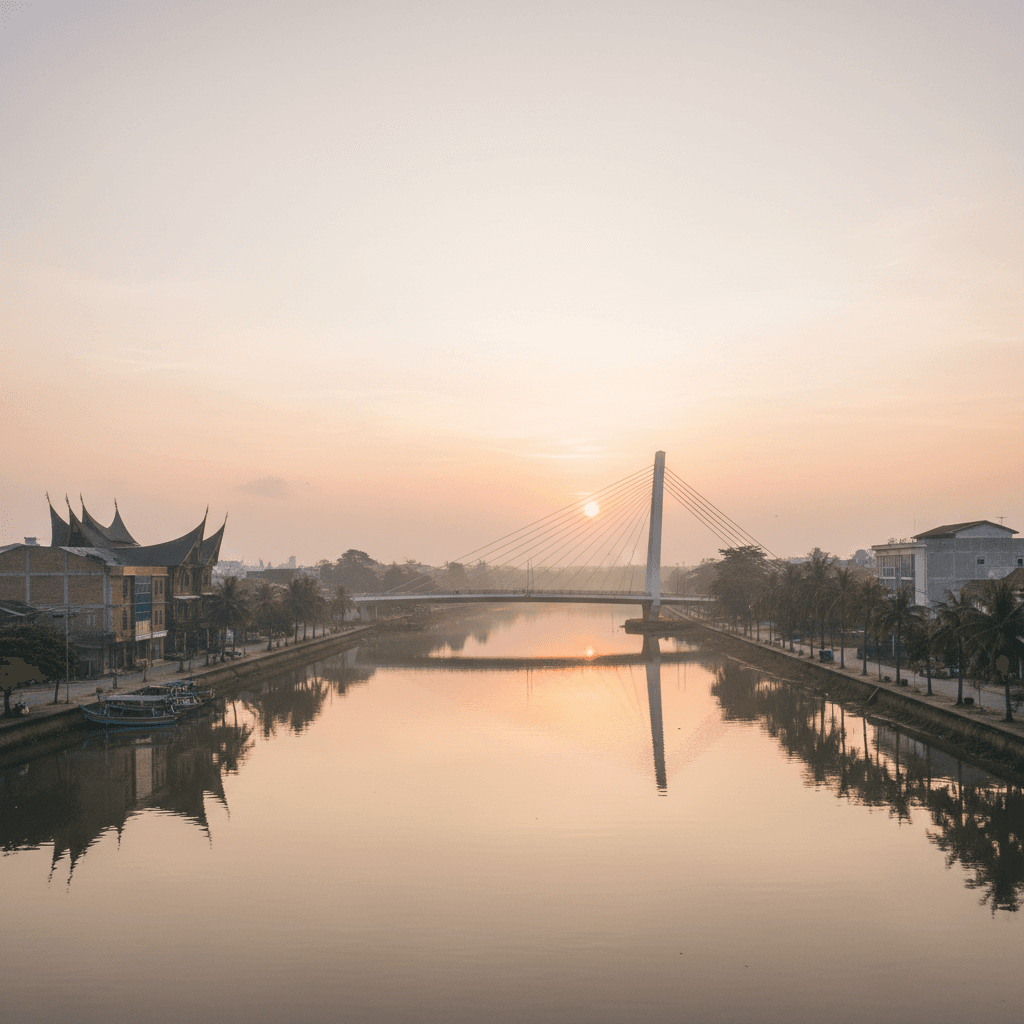
Pekanbaru doesn't try to be Bali, and that's exactly why it works for a certain type of nomad. It is a clean, wealthy, and surprisingly orderly provincial capital that feels more like a functional hub than a tourist trap. As the center of Indonesia's oil industry, the infrastructure is better than you might expect for Sumatra, yet the atmosphere remains decidedly low key. You won't find crowds of influencers here. Instead, you'll find a city that feels like a real community where locals are genuinely curious about why you've chosen their home.
The vibe is a unique blend of modern Malay culture and corporate efficiency. It is a place where gleaming shopping malls sit near traditional markets, and the call to prayer echoes over wide, paved boulevards. Most nomads who land here are looking to escape the "expat bubble" and actually get some work done. It is an ideal spot for a deep work sprint where your biggest distraction is deciding which $2 Nasi Padang joint to hit for lunch.
What It's Really Like on the Ground
Living here feels like being in on a secret. You can live a high quality life for a fraction of what you'd spend in Canggu or Jakarta. Most people find that the lack of a massive nightlife scene is actually a productivity booster. You'll spend your afternoons in air conditioned cafes like Krema Koffie or Solter Coffee, where the internet is fast and the staff won't pressure you to leave. The heat is the only real hurdle; it is consistently humid, so your daily rhythm will likely revolve around staying indoors during the midday sun.
The social scene is intimate. While there aren't dozens of nomad meetups every week, the few expats who live here tend to be very well connected. You'll likely meet people through Searah Coworking Space in Marpoyan Damai, which serves as the unofficial headquarters for the city's remote workers. It's the kind of city where you become a "regular" at your local coffee shop within three days.
The Cost of Living Breakdown
Pekanbaru is one of the most budget friendly cities in Southeast Asia that still offers reliable utilities. You can live very comfortably on $600 to $800 a month, and if you're on a strict budget, you can get by on much less.
- Studio Apartment in City Center: Expect to pay between $430 and $480 for something modern with amenities.
- Local Housing: One bedroom units outside the immediate center can go as low as $80 to $130.
- Daily Food: Street food like satay or local soups costs $1 to $3, while a meal at a mid range spot like RM Pondok Gurih runs about $5 to $12.
- Connectivity: A solid 50 Mbps home internet connection costs around $20 to $50 per month, and a mobile data plan is roughly $9.
- Lifestyle: A monthly gym membership is about $20, and a movie ticket is usually under $4.
Where to Plant Your Flag
Choosing a neighborhood depends on how much you value being near the action versus saving a few extra dollars.
Marpoyan Damai
- The Vibe: The clear winner for nomads and professionals. It feels the most "international" and has the best concentration of modern cafes.
- Key Perk: Home to Searah Coworking and the best selection of serviced apartments.
Sukajadi
- The Vibe: Central and bustling. It's a mix of residential streets and commercial strips.
- Key Perk: Great walkability by Indonesian standards and excellent access to local restaurants.
Pekanbaru City Center
- The Vibe: High energy and commercial. This is where you'll find the big malls and upscale hotels.
- Key Perk: Everything you need is within a ten minute radius, though prices are slightly higher here.
Ultimately, Pekanbaru is for the traveler who values peace, fast WiFi, and authentic Malay hospitality over parties and surf. It's a place to recharge, focus on your projects, and experience a side of Indonesia that most tourists never see.
Pekanbaru isn't the kind of place that's going to break your budget. In fact, for digital nomads who are tired of the "Bali tax" found in Canggu or Uluwatu, this city is a breath of fresh air. You can live quite comfortably here for about $600 a month, and that includes your rent. If you're really watching your pennies, you can scrape by on $300, though most professionals prefer a bit more cushion.
One of the biggest draws is how far your money goes when it comes to the basics. You aren't just surviving; you're living well. High speed internet is affordable, the food is incredible, and you won't feel like you're constantly being upcharged because you're a foreigner.
Where You'll Stay
Rent is likely going to be your biggest variable. Most nomads gravitate toward Marpoyan Damai or the City Center because that's where the modern amenities are clustered. Here is what you can expect to pay monthly:
- Modern Studio in City Center: $430 to $480. These usually come with decent AC, security, and sometimes a pool or gym access.
- Local 1BR Apartment: $80 to $130. These are found further out in neighborhoods like Sukajadi. They're basic but functional if you want to live like a local.
- 3BR Family Home (Central): $780. Great if you're traveling with a crew or need a dedicated home office.
- 3BR Budget House: $145. These are located in more residential, traditional areas and offer massive value for the space.
Daily Costs & Lifestyle
Living in Pekanbaru means you'll probably eat out more than you cook. Street food is everywhere and it is delicious. A plate of Nasi Padang or a bowl of local soup will run you between $1 and $3. Even if you head to a mid range spot like Koki Sunda, you're looking at maybe $10 for a full meal with drinks.
Utility costs are refreshingly low. Expect to pay around $20 a month for electricity and less than $5 for water. A solid mobile data plan with plenty of gigabytes costs about $9. If you want a dedicated gym membership to escape the heat, budget about $22 a month.
Transport and Getting Around
The city is sprawling, so you'll need a plan for getting around. Most expats rely heavily on Grab or Gojek. It's the easiest way to navigate without haggling. A typical car ride across town is $1 to $3, while a motorbike taxi (ojek) is pennies. If you're feeling adventurous, the Trans Metro Pekanbaru bus is a flat $0.25 per trip, but remember they only take Brizzi cards now, no cash.
Coworking and Connectivity
For work, you'll want a reliable setup. Searah Coworking Space in Marpoyan Damai is the go to spot. A hot desk there starts at roughly $22 a month, which is a steal considering it includes AC and 24 hour access. If you prefer cafes, places like Krema Koffie are laptop friendly, though you'll spend more on lattes than you would on a coworking membership over time.
Overall, Pekanbaru offers a high quality of life for a fraction of what you'd pay in Jakarta. It's a "work hard, save more" kind of destination where your biggest expense might actually be the occasional flight out to Singapore or Malaysia for a change of scenery.
For Digital Nomads: Marpoyan Damai
If you're coming to Pekanbaru to get work done, Marpoyan Damai is where you'll likely end up. It's the most modern part of the city and serves as the unofficial hub for the small nomad community. The big draw here is Searah Coworking Space, which is the only place in town that really understands the 24 hour access and high speed internet needs of remote workers.
Living here puts you close to the best infrastructure. You'll find newer apartment complexes where a 1BR studio costs around $430 to $480 per month. It's the most convenient neighborhood because you can walk to several trendy cafes like Solter Coffee when you need a change of scenery from your desk. Most nomads find the convenience of having grocery stores and gyms within a ten minute radius worth the slightly higher price tag.
For Expats and Long-Term Residents: Sukajadi
Expats who plan on staying for six months or more often gravitate toward Sukajadi. It feels a bit more "lived-in" and residential than the commercial center but still offers great access to everything. It's a central location that makes commuting to other parts of the city easy via Grab or Gojek, with most rides costing under $2.
The housing here is a mix of older local homes and mid-range apartments. You can often find better deals on long-term rentals here than in Marpoyan Damai, sometimes as low as $300 for a decent sized place if you negotiate. Expats recommend this area because it strikes a balance between local charm and modern amenities like Krema Koffie, a popular spot for afternoon meetings.
For Families: Pekanbaru City Center
Families usually prefer the City Center because it minimizes the time spent in Sumatra's humid heat. You're within walking distance of the major shopping malls like Mal SKA and Living World, which are lifesavers when you need air-conditioned playgrounds or international food options. While it's the most expensive area, the safety and proximity to services are the main selling points.
Expect to pay around $780 for a 3BR apartment in a modern building with a pool. The walkability here is better than anywhere else in the city, though you'll still want to use Trans Metro Pekanbaru buses for longer trips. The flat fare of Rp 4,000 makes it easy to get the whole family across town without breaking the bank.
For Solo Travelers and Budget Seekers: Senapelan
If you're a solo traveler looking for an authentic experience or you're on a tight budget, Senapelan is the historic heart of the city. It’s located near the river and the old markets. You won't find many other foreigners here, but you'll find the best street food and the lowest prices. It's possible to find local guesthouses or simple rooms for as little as $80 to $120 per month.
Living here is a bit more "raw." You'll be relying on Angkots (shared minivans) for about $0.60 per trip and eating at local Nasi Padang stalls where a full meal costs $2. Travelers often say this area is the best place to practice your Indonesian and really see how the locals live, away from the malls and coworking spaces. Just be prepared for the noise and the slower pace of life.
Neighborhood Comparison at a Glance
- Marpoyan Damai: Best for productivity, $450+ rent, home to Searah Coworking.
- Sukajadi: Best for long-term value, $300+ rent, central and social.
- City Center: Best for families, $750+ for large units, close to malls and hospitals.
- Senapelan: Best for budget/culture, $100+ rent, authentic street food and markets.
Internet Speed and Connectivity
If you're worried about Sumatran infrastructure, don't be. Pekanbaru is a major oil hub, which means the digital backbone here is surprisingly robust. You'll find broadband speeds hitting 50 to 100 Mbps in most modern apartments and dedicated workspaces. It's more than enough for Zoom calls or uploading large files without the dreaded lag you might find in more remote parts of Indonesia.
Most nomads rely on a mix of home fiber and local SIM cards. Telkomsel is the gold standard for mobile data here. You can pick up a plan for about $9 a month that covers you when you're out and about. Most cafes and restaurants provide free WiFi as a standard courtesy, though it's always polite to buy a coffee before asking for the password.
Dedicated Coworking Spaces
Pekanbaru isn't Bali; you won't find a coworking space on every corner, but the options available are high quality and very affordable. Searah Coworking Space in the Marpoyan Damai district is the go to spot for the local creative and nomad community. It feels professional but relaxed, featuring ergonomic chairs, standing desks, and a reliable AC system that's a lifesaver in the afternoon heat.
- Hot Desk Pricing: Around IDR 350,000 ($22 USD) per month.
- Amenities: 24 hour access, outdoor terrace, kitchen facilities, and even showers for those particularly humid days.
- Vibe: It's a mix of local entrepreneurs and the occasional remote worker, making it a great place to network if you're looking to meet people outside the usual expat bubble.
Another solid choice is MeetUp Coworking & Office Space. This spot is geared a bit more toward meetings and structured work. They offer private offices and meeting rooms equipped with projectors if you need to host a presentation. They provide free flow coffee and tea, which helps keep the overhead low while you're grinding through a project.
The Cafe Office Scene
If you prefer the background hum of a coffee shop, Pekanbaru has a thriving cafe culture. Locals love their coffee, and many spots are designed with laptop users in mind. Krema Koffie is a favorite for its consistent WiFi and plenty of power outlets. It can get busy in the evenings, so try to snag a spot earlier in the day.
Solter Coffee & Eatery is another reliable backup. It has a more modern, minimalist aesthetic and a menu that ranges from local snacks to Western style bites. Most nomads find that as long as they have a pair of noise canceling headphones, these cafes function perfectly well as an afternoon office. Just keep an eye on your gear; while the city is generally safe, it's always smart to stay aware in public spaces.
Practical Tips for Staying Connected
Power outages happen occasionally in Sumatra, though they're less frequent in Pekanbaru than in smaller towns. It's a good idea to keep a power bank charged and your mobile hotspot ready as a backup. If you're staying long term, check that your accommodation uses IndiHome or Biznet, as these are the most reliable providers in the city.
The cost of staying connected here is a fraction of what you'd pay in Europe or North America. Between a $22 monthly coworking membership and a $9 data plan, your "office overhead" will likely be under $35 a month. That's one of the biggest draws for nomads looking to extend their runway while enjoying a genuine Indonesian city.
Staying Safe on the Streets
Pekanbaru doesn't have the chaotic energy of Jakarta or the tourist traps of Bali, which naturally makes it a safer bet for most nomads. It's a conservative, family oriented city where serious crime against foreigners is rare. Most expats find they can walk around during the day without any issues at all. Like any urban center, petty theft like phone snatching can happen, so don't be that person scrolling on your iPhone 15 while standing on a busy street corner.
When you're out at night, it's best to stick to well lit areas in Marpoyan Damai or the City Center. If you're heading home after a late session at a cafe, skip the walk and use Grab or Gojek. These apps are the gold standard for safety because every ride is tracked. Most travelers say the biggest "danger" in Pekanbaru isn't the people; it's the uneven sidewalks and the unpredictable tropical downpours that turn streets into obstacle courses.
Local scams aren't really a thing here because the city isn't set up for mass tourism. You'll likely find that people are genuinely curious and helpful rather than trying to overcharge you. Still, keep your wits about you in crowded spots like the Senapelan markets. A simple cross body bag is usually enough to keep your gear secure.
Healthcare and Medical Facilities
If you get sick, you'll want to head straight to a private hospital. The public system can be slow and difficult to navigate if you don't speak fluent Indonesian. Ibnu Sina Islamic Hospital is a reliable choice for general consultations and minor emergencies. For something more modern, Awal Bros Hospital is often recommended by the local expat community for its updated equipment and specialized staff.
For basic stuff like a cold or a stomach bug, pharmacies (known locally as Apotek) are everywhere. You can find them on almost every major block, often open for 15 hours a day. Many medications that require a prescription in the West are available over the counter here for just a few dollars. However, quality can be hit or miss at tiny independent shops, so try to stick to established chains like Kimia Farma or Guardian.
While Pekanbaru can handle the basics, it's a common rule of thumb among long term nomads that if anything serious happens, you hop on a flight. Singapore is a short trip away and offers world class care. Make sure your travel insurance covers medical evacuation for this reason. If you have an immediate emergency, the number to dial is 112, but don't expect the operator to speak perfect English. It's often faster to have a local friend or your accommodation host call a taxi for you.
Health Tips for Nomads
- Don't drink the tap water. Even locals boil it first. Stick to bottled water or the large 19 liter Aqua jugs for your apartment, which cost about $1.50 for a refill.
- Air quality can occasionally be an issue during the "haze season" when agricultural burning happens in Sumatra. Most nomads keep an eye on the AQI apps and stay indoors on bad days.
- Mosquitoes are a reality in the tropics. While malaria isn't a major concern in the city center, Dengue fever pops up occasionally. A bit of repellent goes a long way, especially around dusk.
- Food hygiene is generally good, but if you're eating street food, pick the stalls that have a high turnover of local customers. If the Nasi Padang looks like it's been sitting out all day, move on to the next spot.
The Daily Commute
Pekanbaru isn't exactly a walking city. Between the tropical humidity and the sprawling urban layout, you'll find that most locals and expats rely on wheels to get from point A to point B. The infrastructure is modern for Sumatra, but the traffic can get heavy during peak morning and afternoon hours.
For most nomads, ride-hailing apps are the absolute gold standard. Grab and Gojek both operate extensively here. You can choose between a car (GrabCar/GoCar) if you want air conditioning or a motorbike (GrabBike/GoRide) if you're in a hurry and want to weave through traffic. A typical trip across town usually costs between $1 and $3. You'll need a local SIM card and phone number to set these up, but once you do, it's the most stress-free way to move around.
Public Transit Options
If you want to live like a local and save some cash, the Trans Metro Pekanbaru bus system is surprisingly decent. They have 14 lines that cover the major arteries of the city. It's a flat rate of Rp 4,000 ($0.25) no matter how far you go. Just keep in mind they stopped taking cash in mid-2023. You'll need a Brizzi card (an electronic payment card) to board. The buses generally run from 6:00 AM to 5:00 PM, though some routes might linger until 7:00 PM.
Then there are the Angkots. These are the colorful, slightly chaotic minivans that follow fixed routes. There's no formal schedule; you just wave them down on the side of the road. Expect to pay between Rp 10,000 and Rp 20,000 ($0.60 to $1.25). These are cash-only, and it's smart to carry small bills because drivers rarely have change for large notes.
Wheels of Your Own
Many long-term residents choose to rent a motorbike. It gives you the freedom to explore the outskirts or hit up a specific cafe without waiting for a driver. Renting a scooter typically costs $3 to $5 per day, though you can usually negotiate a much better rate if you're renting by the month. Just be prepared for the driving style here; it's assertive and requires your full attention. Bicycles are a rare sight because the heat is often too intense for a workout on the way to a meeting.
Getting to and From the Airport
Sultan Syarif Kasim II Airport is conveniently located, and getting into the city center is straightforward. You have three main choices:
- Trans Metro Bus #1A: This is the budget pick, connecting the terminal directly to the city center for $0.25.
- Ride-Hailing: Grab and Gojek are allowed, though you might have to walk a short distance to a designated pickup point. Budget around $5 to $10 for a ride to the main districts.
- Airport Taxis: Fixed-rate taxis are available at the arrivals hall. They're slightly more expensive than apps but easier if you have a lot of luggage and don't want to mess with your phone.
Walkability and Safety
In the Pekanbaru City Center, you'll find some decent sidewalks near the major malls and government buildings. However, in neighborhoods like Marpoyan Damai or Sukajadi, the pavement can be uneven or nonexistent. Most expats recommend walking only for short distances, like popping down the street for a coffee. For anything further than a ten-minute walk, grab a bike or a car. Safety-wise, the city is quite relaxed, but keep your phone tucked away while riding on the back of a motorbike to avoid opportunistic snatch-and-grabs.
If you're planning to spend time in Pekanbaru, you'll quickly realize it isn't like Bali or Yogyakarta where English is spoken on every street corner. This city is deep in the heart of Riau, and while the locals are incredibly friendly, the language barrier is a real thing. Understanding how to communicate here is the difference between feeling like a lost tourist and actually settling into the nomad life.
The Language Landscape
Indonesian, or Bahasa Indonesia, is the official language and what you'll hear in shops, malls, and government offices. However, Pekanbaru has a strong Malay heritage. You'll often hear a local dialect of Malay that sounds slightly different from the standard Indonesian taught on apps like Duolingo. It’s softer and uses different ending sounds, but if you speak basic Indonesian, you'll be understood just fine.
Don't expect high levels of English proficiency outside of upscale hotels or modern coworking spots like Searah. Most younger people and university students have a basic grasp of English and are usually eager to practice with you. In local markets or when dealing with Angkot drivers, you'll need at least a handful of Indonesian phrases to get by.
Essential Phrases for Daily Life
You don't need to be fluent, but mastering these basics will earn you a lot of respect and likely a few "diskon" (discounts) at the market. Most nomads find that learning numbers is the first big hurdle because of the large denominations in Indonesian Rupiah.
- Terima kasih: Thank you (The most important phrase you'll use).
- Sama-sama: You're welcome.
- Berapa?: How much? (Vital for street food and markets).
- Bisa kurang?: Can you go lower? (Use this sparingly and with a smile).
- Saya tidak bicara Bahasa Indonesia: I don't speak Indonesian.
- Pedas / Tidak pedas: Spicy / Not spicy (Crucial for your survival in Sumatra).
Digital Communication and Apps
In Pekanbaru, your phone is your best friend. Since English isn't widespread, you'll rely heavily on technology to bridge the gap. Travelers often say that Google Translate with the offline Indonesian pack downloaded is a lifesaver, especially the camera feature for translating menus at local Warungs.
- WhatsApp: This is the primary way everyone communicates. Whether you're talking to a landlord, booking a table at a restaurant, or checking if a coworking space is open, you'll do it via WhatsApp. Almost no one uses email for casual business or services.
- Grab and Gojek: These apps are essential because they eliminate the need to negotiate fares in broken Indonesian. You just set your destination, see the price, and go. The chat features in these apps also have built in translation, which makes communicating with your driver much easier.
- Social Media: If you want to find out what's happening in the city, check Instagram. It's much more active than Facebook or local websites for finding new cafes or events.
Connectivity and SIM Cards
To keep those apps running, you'll need a local SIM. While your home roaming might work, it'll be expensive and slow. Expats recommend Telkomsel for the best coverage in Sumatra. You can pick up a SIM at the Sultan Syarif Kasim II Airport, but you'll pay a premium. If you can wait, head to a Grapari (Telkomsel service center) in the city center for better rates.
Expect to pay around $9 for a monthly plan with plenty of data. Remember that you must register your phone's IMEI at customs if you're staying in Indonesia for more than 90 days, otherwise your local SIM will stop working. For shorter stays, a "tourist SIM" is usually valid for 30 to 60 days without the permanent IMEI registration headache.
Body Language and Etiquette
Communication in Pekanbaru isn't just about what you say. It's a conservative city, so being polite and patient goes a long way. Always use your right hand when shaking hands, paying for items, or eating. Using your left hand is considered rude. A small nod and a smile when passing people in your neighborhood will help you integrate quickly. Locals are genuinely curious about foreigners, so don't be surprised if people ask you "Mau ke mana?" (Where are you going?). It’s just a friendly greeting, not an interrogation.
The Tropical Reality
Pekanbaru sits almost directly on the equator, so you should prepare for a climate that doesn't really have "seasons" in the traditional sense. It is hot, humid, and tropical year round. You'll find temperatures hovering between 23°C (73°F) at night and 33°C (91°F) during the day. Because the city is inland and lacks a coastal breeze, the humidity can make it feel much hotter than the thermometer suggests.
Most nomads find that their daily schedule revolves around the heat. You'll likely want to get your errands or outdoor exploring done before 10:00 AM or after 4:00 PM. Midday is strictly for air-conditioned coworking spaces like Searah or ducking into a mall to cool off.
Dry Season: June to September
The best time to visit Pekanbaru is during the dry season, which typically runs from June through September. This is when you'll see the most sun and the least amount of rain, making it easier to zip around on a motorbike or walk between cafes in Sukajadi. July and August are generally the driest months of the year.
However, there is a major caveat for digital nomads during this window: haze. Because of "slash and burn" agricultural practices in the surrounding Riau province, the dry season can sometimes bring thick smoke and poor air quality. Travelers often check air quality apps daily during these months. If the haze gets bad, you'll want to stay indoors with a good air purifier or consider a short "visa run" to Singapore or Malaysia until the air clears.
Rainy Season: October to January
The rains start picking up in October and usually peak in November and December. Unlike the drizzly grey days you might find in Europe, rain here usually comes in intense, heavy tropical downpours. These storms often last an hour or two before the sun breaks through again.
While the rain cools the city down slightly, it also makes the humidity spike. Flooding can occasionally happen on smaller side streets, which might make getting a Grab or Gojek a bit slower than usual. If you don't mind the occasional afternoon thunderstorm, this is actually a great time to visit because the air is much clearer and the city looks lush and green.
The Shoulder Months
February through May is a bit of a wildcard. The rains start to taper off, and the haze hasn't usually arrived yet. Many long term expats recommend February and March as a "sweet spot" where the weather is relatively predictable and the skies are clear.
Key Events and Timing
When planning your stay, keep the local calendar in mind. Since Pekanbaru has a strong Malay and Muslim culture, Ramadan significantly changes the city's rhythm. During this holy month, many local eateries stay closed during the day, and the pace of life slows down significantly. While it's a fascinating cultural experience, digital nomads might find it harder to find open lunch spots outside of the major malls.
- Best weather window: June to August (but watch for haze).
- Clearest air: December to March.
- Hottest months: May and June, often reaching 34°C (93°F).
- Wettest month: November, with frequent afternoon storms.
If you're coming for a month or two, aim for February or June. You'll get plenty of Vitamin D without the worst of the monsoon rains, and you'll be able to enjoy the outdoor street food scene in Marpoyan Damai without getting soaked.
Connectivity and Power
Internet reliability is actually one of the biggest surprises for nomads in Pekanbaru. You aren't going to struggle with spotty connections like you might in more remote parts of Sumatra. Most mid range apartments and hotels offer stable broadband, usually clocking in between 50 and 100 Mbps. Expect to pay anywhere from $20 to $50 a month if you're setting up your own home office.
For dedicated work sessions, Searah Coworking Space in Marpoyan Damai is the go to spot. It feels professional with standing desks, AC that actually works, and 24 hour access for about $22 a month. If you prefer a cafe vibe, Krema Koffie and Solter Coffee are laptop friendly and won't kick you out for lingering over a latte. Just keep in mind that Indonesia uses Type C and F plugs (the two round pins), and the voltage is 230V. Power outages happen occasionally, so a good power bank is a smart investment.
Money and Budgeting
Your dollar goes incredibly far here. A single person can live a very comfortable life on about $600 a month, including rent. If you're on a tight budget, you can get by on $300 if you stick to local neighborhoods and street food. Most daily transactions are still cash based, especially at local markets or for small transport fees.
- Street food meals: $1 to $3 per plate.
- Mid range dinner: $5 to $12.
- Monthly gym membership: $20 to $22.
- Local SIM with data: About $9.
For banking, look for BNI or Mandiri ATMs, as they usually accept international cards like Visa and Mastercard. It's wise to carry a mix of cash and a digital wallet app like Dana or OVO, which locals use for everything from convenience store snacks to phone credit.
Getting Around the City
Pekanbaru is sprawling, so don't expect to walk everywhere. The humidity and lack of consistent sidewalks make it tough. Most expats and nomads rely heavily on Grab and Gojek. These apps are lifesavers. You can summon a car or a motorbike (ojek) for $1 to $3 for most cross town trips. Just make sure you have a local SIM card to set up your account.
If you want to try the local bus system, the Trans Metro Pekanbaru is modern and cheap at $0.25 per trip. They stopped taking cash in 2023, so you'll need a Brizzi card to tap on. For those staying long term, renting a motorbike for $3 to $5 a day gives you the most freedom, though the traffic can be a bit chaotic if you aren't used to Indonesian driving styles.
Health and Safety
Pekanbaru is generally a safe city. Violent crime is rare, and most travelers feel comfortable walking around during the day. Like any city, keep your phone tucked away while on the back of a motorbike to avoid "snatch and grab" thefts. The biggest health concern for most is usually "Bali Belly" (stomach issues) or the tropical heat. Only drink bottled or filtered water, and stay hydrated.
If you do get sick, Ibnu Sina Islamic Hospital is a reputable private facility. For minor issues, local pharmacies (Apotek) are everywhere and many stay open late. While you can get many medications over the counter, the quality varies, so it's best to bring a small supply of your specific prescriptions from home. For anything major, most people hop on a short flight to Singapore or Jakarta where the medical standards are much higher.
Visas and Logistics
Most nomads enter on a Visa on Arrival (VoA), which costs about $35 and is good for 30 days. You can extend it once for another 30 days. If you're planning to stay longer, look into the B211A visit visa, which allows for a 60 day stay and can be extended. Always keep a digital copy of your passport and visa on your phone. Pekanbaru isn't a "visa run" hub like Bali, so you'll likely need to fly to Kuala Lumpur or Singapore if you need to reset your entry stamp.
Need visa and immigration info for Indonesia?
🇮🇩 View Indonesia Country GuideHidden Gem
Worth the effort